
Spending Public Money Smarter for Energy Security
Successive energy price shocks this decade have left countries with a clear choice: keep paying for volatile fossil fuels or lock in cheaper, more secure energy at home.
Public financial support for renewables and clean electrification is among the most structurally effective energy-security policies for net energy importers. New analysis from the International Institute for Sustainable Development (IISD) shows that public financial support for clean energy is helping four of the world’s largest oil and gas importers—accounting for around 40% of global oil imports and 27% of gas imports—cut import bills, stabilize prices, protect consumers, and strengthen competitiveness.
These country studies show how clean energy can address different energy-security challenges. Germany and Türkiye are major gas importers that have reduced exposure to gas-price shocks by expanding solar and wind generation, resulting in major savings during the 2022 and 2026 energy crises. China faces growing electricity demand and reliance on coal and is meeting much of that demand with low-cost renewables. India is cutting its dependence on imported oil through support for electric vehicles (EVs).
Recent energy crises have been less severe for these countries because they paired short-term relief with the long-term solution: domestically generated clean energy and electrification, which have no recurring import bills. That the benefits hold across economies varying so widely in wealth, scale, and energy vulnerability suggests they are not exceptions but the norm—available to importers willing to support renewables.
These system-wide savings compare clean energy support—funded through a mix of consumer levies, electricity bills, and government budgets— with fossil fuel costs avoided. The benefits flow through the economy through lower import bills, lower electricity or transport costs, and less pressure on governments to provide emergency energy subsidies.
Across all four cases, support for clean energy and electrification is a cost-effective way to improve two key dimensions of energy security: availability and affordability. It can also strengthen resilience through diversifying the energy mix and increase energy sovereignty by giving countries greater control over the technologies, infrastructure, and resources underpinning their energy systems.
Blanket fossil fuel subsidies and support for coal, gas, and oil production have the opposite effect by prolonging fossil fuel dependence. Governments provided a record USD 1.7 trillion in fossil fuel subsidies following the 2022 energy crisis. Yet this did not reduce the underlying exposure: just a few years later, another conflict sent fossil fuel prices soaring again. Any country exposed to market-based fossil fuel pricing remains vulnerable.

Germany’s Support for Renewables Improved Affordability While Reducing Import Dependence and Exposure to Volatility
Germany’s support for renewables was born from energy-security concerns during the 1970s oil shocks. The Renewable Energy Act (EEG) later helped create an early mass market for renewables, laying the foundation for Germany’s transition away from coal and nuclear power.
Gas has proved to be an expensive and unreliable transition fuel.
Germany’s reliance on gas as a “bridging fuel” made it highly vulnerable to price shocks. The vast majority (94%) of gas is imported, and prices soared after Russia invaded Ukraine, resulting in Germany’s gas subsidies totalling USD 25 billion in 2023 alone. Shifting from pipeline Russian gas to liquefied natural gas from other suppliers did not prevent a second energy crisis in 2026: liquefied natural gas brings higher prices, supply chain disruptions, and price volatility, and, more recently, dependence on the United States instead of Russia.
Support for renewables is quickly repaid when gas prices spike.
Germany’s exposure to gas-price shocks would have been greater without the contribution of public investment in renewables. Support schemes under the EEG—feed-in tariffs and feed-in premiums—provide investors with stable revenues while helping build renewable capacity that displaces gas generation in the power mix.

Türkiye’s Support for Renewables Is Already Paying Off
Türkiye, this year’s co-host of global climate negotiations (United Nations Climate Change Conference’s 31st Climate Change Conference), is a major industrial economy that relies on imported gas for over 90% of its supply. This exposure leaves the country vulnerable to global gas-price shocks—a risk long recognized by Turkish policy-makers.
To strengthen energy independence, Türkiye has prioritized renewable energy expansion, targeting 120 GW of solar and wind capacity by 2035, with tangible results. Ember estimated that solar and wind generation displaced USD 15 billion worth of gas imports from mid-2022 to the beginning of 2025. IISD analysis shows that a large share of these savings was achieved through public renewable energy support schemes, even after factoring in the scheme costs.
The YEKDEM Effect
The program that revolutionized Türkiye’s power system is the Renewable Energy Resources Support Scheme (YEKDEM). Launched in 2011, this feed-in tariff policy provides 10-year power-purchase guarantees to renewable energy generators at predetermined prices. YEKDEM has been the main driver behind the impressive growth of solar and wind, from just 1% of the power mix in 2010 to 22% in 2025.
In 2022—when gas prices spiked across Europe—every USD 100 of YEKDEM support delivered USD 265 in avoided gas imports.
Over 2021–2025, YEKDEM resulted in a total of USD 23 billion in gas import savings, net of renewable energy support costs. Even in 2021, when gas was cheap, USD 100 in YEKDEM support offset USD 90 in gas imports and improved energy independence. That’s a clear signal that such schemes make financial sense even when fossil fuels are cheap.

Cheap renewables are making electricity more affordable.
As solar and wind became cheaper, the government also introduced Renewable Energy Resource Area (YEKA) tenders: reverse auctions for large solar and wind farms with long-term power-purchase contracts. Developers get guaranteed revenue streams and faster permitting, while consumers secure cheap domestically generated power. The 2025 solar auctions (GES-24) concluded some of the world’s lowest solar prices (USD 3.25 cents per kWh).
YEKA has already offset over USD 400 million in gas imports over the past 2 years, despite some construction delays. In 2026, plants already in operation are projected to save Türkiye USD 900 million depending on how gas prices evolve through the year.
The share of natural gas in the power mix has already fallen from 48% in 2014 to 22% in 2025. As more YEKA capacity comes online, renewables will increasingly decouple electricity prices from gas, reducing Türkiye’s exposure to volatility even further. A record surge in hydropower generation has already halved wholesale electricity prices in the first five months of 2026. Hydropower is climate-exposed, but it shows the immense potential of renewable technologies. Accelerating the build-out of storage-integrated wind and solar through faster permitting, YEKA, and other support measures would make this decoupling permanent.

China’s Decades of Support for Renewables Are Strengthening Energy Sovereignty
China’s rise as a clean energy leader reflects decades of policy support that have strengthened energy sovereignty, giving the country greater control over clean energy manufacturing, deployment, infrastructure, and the pace of its energy transition.
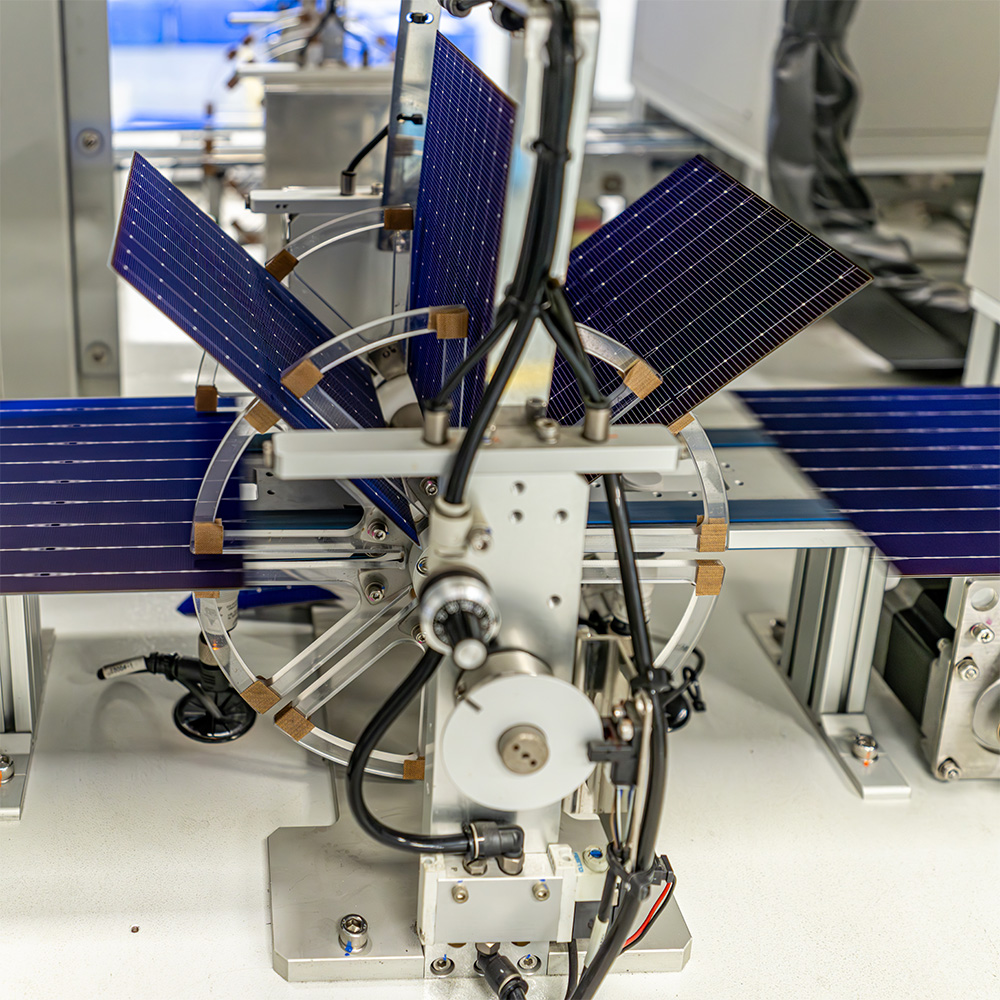
As in Germany, the roots go back to the 1970s, but momentum accelerated in the early 2000s through government investments in solar photovoltaic (PV) manufacturing for export. From 2009, China scaled domestic deployment, building the world’s largest solar market and a dominant manufacturing base. Wind followed a similar trajectory, with both technologies supported through industrial policy, deployment targets, public finance, and grid investment. Public financial support for renewable energy in China averaged USD 27 billion from 2020 to 2024.
China’s public investment in renewables will pay off for decades to come.
China’s support for renewables helped make solar and wind the cheapest sources for ongoing growth in domestic electricity. Under current policy settings, China is projected to add around 5.5 TW of solar and wind capacity from 2025 to 2050, more than the world’s entire installed renewable power capacity in 2025. We estimate that adding this capacity using solar and wind rather than coal will save China a cumulative USD 1.9 trillion by 2050, or around USD 77 billion per year.
Support for wind and solar expanded and diversified China’s electricity supply.
Between 2010 and 2025, generation from solar and wind sources increased by around 1,850 TWh—roughly equivalent to India’s annual electricity demand today. Renewables also diversified the power mix, with solar and wind rising from around 1% in 2010 to 22% in 2025, while coal’s share fell from 77% to 54%. Although much of China’s coal is domestic, it is finite, polluting, and vulnerable to supply and price pressures; renewables offer a cleaner and more durable source of energy security. China is also adding new coal and nuclear capacity, but solar and wind are projected to provide the vast majority of expanded supply to 2050.
India’s Path to Energy Independence Through Clean Electrification
Since 2014, India’s fossil fuel subsidies have decreased by 61%, while subsidies for clean energy have increased by over 590%. This has successfully enabled the rise of solar and wind from around 2% in the power mix in 2010 to 15% in 2025. Growing electricity demand is increasingly met with clean power, with a fall in coal generation registered in 2025 for the first time since 1973. (This is excluding 2020, when demand reduction was driven by the COVID-19 pandemic.) The benefits for energy security are clear—a diversified power mix, lower reliance on coal and gas imports, and reduced air pollution and greenhouse gas emissions.
Clean electricity alone is not enough—electrification is what cuts fossil fuel demand at scale.
Building clean energy capacity is only one part of reducing fossil fuel dependence across the economy. Non-fossil sources now constitute half of India’s power capacity, but the country still relies on fossil fuel imports to meet other energy needs. India is the third-largest importer of crude oil in the world, costing it over USD 123 billion in 2025. This dependence presents a major energy-security risk, and every fossil fuel shock is a stress test for the Indian economy. Electrifying sectors such as transport allows domestically generated clean electricity to displace imported oil, reducing exposure to volatile prices and supply disruptions.
India’s incentives for affordable EVs are already eating into oil demand.
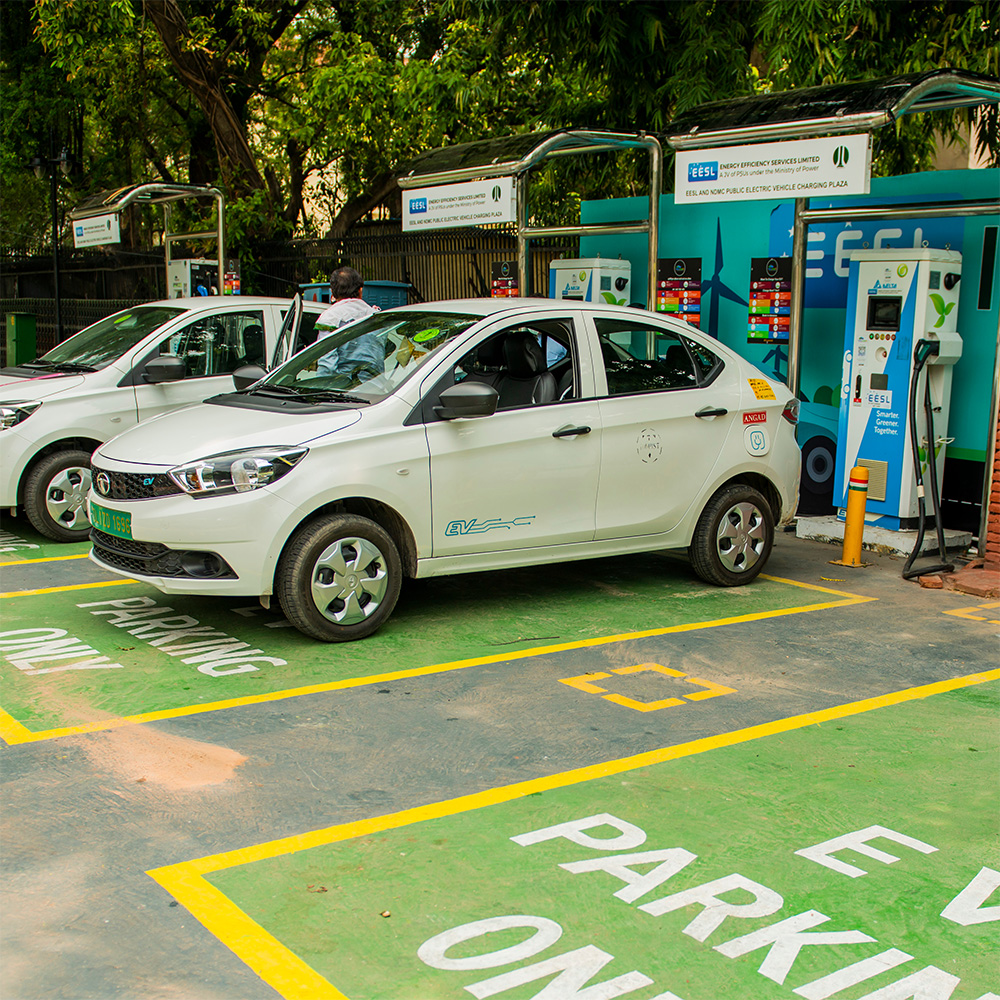
India is already extending its clean-energy transition beyond the power sector by supporting electric mobility. Central government support for EVs—in the form of a 5% GST rate, along with demand and manufacturing incentives—totalled INR 16,812 crore (USD 2 billion) in fiscal year 2025–2026. By replacing petrol and diesel use, EVs can reduce consumer fuel costs and the country’s oil-import bill, with these benefits growing as uptake increases. Early results show that this shift is already delivering measurable savings, and the 2026 crisis could accelerate the transition.
The use of over 1 billion litres of fuel has been avoided, and the benefits are set to scale up through 2035.
How All Countries Can Use Public Financial Support to Build Energy Security Now
All four examples point in the same direction: public support for clean energy locks in decades of price-stable, domestic energy, buffering fossil fuel price shocks and supply disruptions. When they respond to energy insecurity by locking in more fossil fuel consumption and production, they deepen the problem. With Türkiye co-hosting COP 31, these lessons come at a critical moment for countries revising their energy-security and transition strategies.
The task is to spend smarter, not always to spend more. For government leaders, finance and energy ministries, and public financial institutions, the priorities should be:
1. Target support at the bottlenecks and risks holding back clean energy
The barriers holding back clean energy vary by country but typically include inadequate grids and storage, limited demand flexibility, weak system planning, slow permitting, high financing costs, and concentrated supply chains.
These constraints do not make fossil-dominated systems safer: they require continuous imports from volatile global markets, whereas renewables shift trade toward equipment and infrastructure while producing energy domestically. Supply chain disruptions can delay new capacity but do not stop existing renewable assets from generating power. The energy transition is also expected to require less mining than today’s fossil fuel system, while recycling and research and development (R&D) can reduce demand for critical minerals.
Governments should target public support at these bottlenecks. Priorities include distributed renewables for the 655 million people who still lack electricity; lower financing costs, especially in emerging markets and developing economies; affordable electric mobility; and other forms of electrification that reduce import dependence. This support can accelerate deployment, strengthen energy-system resilience, and help technologies reach economic and social tipping points beyond which adoption becomes increasingly self-sustaining.
2. Use competitive, predictable, and time-bound, market-based support to scale up clean power and electrification
Our case studies show a progression from early-stage grants, manufacturing support, and feed-in tariffs toward cheaper, market-based tools such as competitive auctions and feed-in premiums, locked in through long-term power purchase agreements (PPAs).
New support policies should take advantage of this progress and rely on instruments such as contracts for difference—increasingly favoured by many governments, including those in the European Union—that give investors revenue certainty while protecting consumers from high prices and limiting public costs.
Once cost parity is achieved and the system has adapted, support can be phased out.
3. Shift public support from fossil fuels to people and clean energy
Global public financial support for fossil fuels—including subsidies, investments by state-owned enterprises (SOEs), and international public finance—exceeded USD 1.2 trillion in 2024, compared with USD 254 billion for clean energy.
The largest category of support is blanket consumer subsidies to fossil fuels that disproportionately benefit the wealthiest who use the most energy. Fossil fuel subsidies are often justified as a response to a crisis, but they have proven politically difficult to remove and leave countries exposed to the next shock. Despite repeated reform commitments since 2009, overall support has continued to rise, tied to market volatility and political dynamics. Governments can phase down untargeted subsidies and redirect that money to targeted social protection and accessible clean alternatives. This would encourage the uptake of technologies whose costs decline over time, improving long-term affordability and resilience.
Governments can also redirect investment in new fossil fuel production—particularly by public bodies such as SOEs and public banks—toward clean energy, while managing any impacts on workers, communities, and energy consumers.
There has already been progress in international public finance. Clean Energy Transition Partnership members cut fossil fuel finance by up to 78% in 2024 against the pre-partnership baseline, showing the shift can happen quickly. They now need to expand concessional finance for clean energy, backed by technology and skills transfer. Energy SOEs are also beginning to diversify.

4. Lock the transition into national plans
As countries develop and implement their nationally determined contributions (NDCs) and prepare roadmaps for transitioning away from fossil fuels (TAFF), there is a timely opportunity to put energy security at the heart of transition planning. Decisions made now can either reduce exposure to volatile fossil fuel markets or lock in continued dependence for decades.
Governments should embed clear, time-bound pathways to reduce fossil fuel exposure across national energy plans, public investment strategies, NDCs, and transition roadmaps. These should include milestones for expanding renewables, grids, storage, energy efficiency, and electrification, with clear responsibilities and timelines that guide public spending, private investment, and implementation.
You might also be interested in
From Patchwork to Production
Canadian waters hold some of the world's most promising offshore wind resources, but incomplete and fragmented regulations threaten to leave that potential stranded. Getting the rules right is now a strategic imperative.
Insights on Monitoring, Reporting, and Verification in Carbon Pricing
How governments can design monitoring, reporting, and verification systems that make carbon pricing credible, workable, and inclusive.
Making Electric Vehicles Work for More People
At least seven of the 21 BRICS+ economies are directing subsidies toward electric vehicles (EVs) and transport services widely used by lower- and middle-income people—from two- and three-wheelers to buses and shared transport.
Sustainable and Resilient Value Chains: Gender Equality
How voluntary sustainability standards and private sector actors can advance gender equality and women's economic empowerment in agricultural value chains.