Insight

INC-4 Is an Opportunity to Address Fresh Water Pollution – This is how

April 17, 2024

Fresh water is vitally important to everyone. It’s the water we drink and use to hydrate our agricultural lands and livestock. It’s the water in our communities' ponds, lakes, and wetlands.  

Every year, more plastic is being released into these environments, including microplastics, even in the most remote freshwater environments, and the North American Great Lakes, where 90% of water samples had microplastics levels surpassing safe levels for aquatic wildlife. That’s why current research at IISD Experimental Lakes Area is tackling the problem head on.
 

“Microplastics pollution is impacting even the most remote lakes in the world. We need better policies to protect freshwater ecosystems.”

– Michael Rennie, Research Fellow, IISD Experimental Lakes Area

The World Coming Together to Tackle Plastics Pollution

The world has a problem with plastics, and countries are collaborating to find solutions. Negotiators are meeting in Ottawa April 2329, 2024, for the fourth meeting of the International Negotiating Committee (INC-4) to develop an international legally binding instrument on plastic pollution.

A revised draft text for the agreement has already been made available, and from a freshwater perspective, there are reasons for hope and some opportunities for improvement.

We Need to Focus More on Plastics Pollution in Freshwater

The most recent version of the agreement is holistic in scope, accounting for the entire life cycle of plastics. This is encouraging because minimizing plastic production and use is one of the most effective ways to prevent plastic pollution from damaging the environment. The text also takes careful consideration of chemical additives to plastics, acknowledging that they are known to have their own environmental harms.

Even so, we need to go further; freshwater pollution needs to be addressed more explicitly and comprehensively. After all, freshwater bodies have seen an exponential increase in the presence of plastic waste in the past few decades, and act as a source of plastics into marine environments.

Freshwater environments are explicitly mentioned in two sections of the preliminary text going into INC-4, which has a central focus on marine environments—understandable, considering the title of the negotiation itself includes references to marine environments. However, this agreement represents an opportunity to protect all natural environments from plastic pollution that the international community will not want to miss.

There are currently several options for what different parts of the text could look like. In some of these options, broader language such as “aquatic environments” or “water” is used in place of “marine environments” or “ocean” to better represent how various types of environments might all be affected by the same pollution sources. This is a positive step forward that opens opportunities for additional revisions to explicitly address freshwater concerns within the treaty.
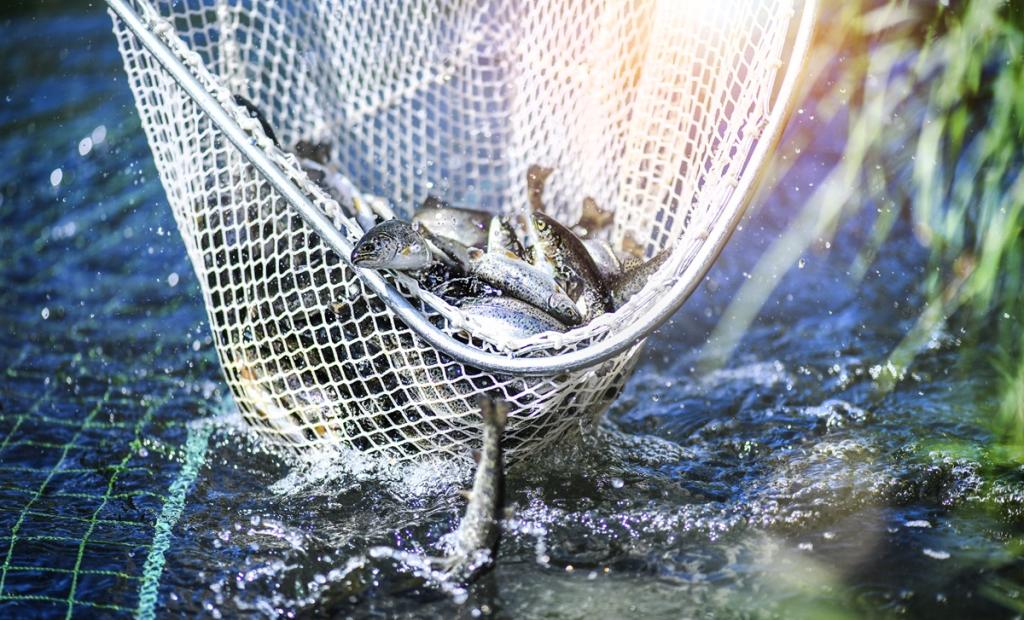
Trout caught in a net


Bringing Fresh Water Into INC-4: A few examples

Looking at the revised draft through the lens of freshwater protection, there are areas where it would make sense to include specific references to freshwater environments, but they are overlooked.

In nearly every section of the draft agreement, the word “marine” is mentioned, appearing 51 times. Meanwhile, specific references to fresh water are made only seven times.

There are many opportunities within the full text of the document released ahead of INC-4 to bolster and explicitly reference freshwater protection in the context of plastics pollution.

Below, we will highlight a few specific options; however, if you are interested in reading the plastic treaty document shared before INC-4 in full, click here.

  • Plastic waste being generated from fishing gear is the specific focus of Section 9b, without considering the hundreds of inland freshwater fisheries worldwide. As the word “marine” is in the agreement title, inclusion of freshwater fisheries would need to be made explicitly to encompass these systems.
     
  • In all clauses that specifically impact freshwater environments, there should be an inclusion of the term “fresh water.” Alternatively, we recommend using the term “aquatic environments” to include both marine and freshwater environments.
     
  • An example of bringing freshwater concerns seamlessly into the INC-4 document can be found in Section 8, Option 4.4 on the Emissions and Releases of Plastics Throughout Its Lifecycle. In this paragraph, which pertains to an aspect of plastic pollution that may specifically threaten freshwater ecosystems, the text reads:

“The governing body,* at its first session, shall adopt guidelines … on preventing and controlling emissions and releases … and remove plastic waste, including microplastics from freshwater bodies, the marine environment and ecosystems.”

Here, freshwater bodies are specifically referenced alongside marine environments, acknowledging their distinct, important role in managing the impacts of plastic pollution.

Overall, the negotiation of such a treaty and the current draft text provide reason for optimism. The inclusion of detailed clauses for preventing the initial release of plastics into the environment, considerations of problematic chemical additives, and plastic emissions throughout the life cycle of plastic products are potentially impactful elements.

INC-4 is a critical international process, and the much-anticipated binding global agreement on plastic pollution could and should have major implications for freshwater quality around the globe.

The global living treaty developed by the end of INC-5 is important for the protection of all natural environments. We eagerly await a final draft at the end of next week that incorporates freshwater considerations as a means for a stronger and more effective agreement to ensure healthier lakes, fish, and drinking water for all.


 

Insight details

Topic
Water
Region
Canada
Impact area
Nature
Statement

IISD Applauds Canada’s Reaffirmation to End Domestic Public Finance for Fossil Fuels in Budget 2024

April 16, 2024

Today's federal budget announcement delivers new measures to support affordability and reaffirms Canada’s commitments on climate action. IISD is encouraged by the government’s renewed pledge to release a policy to eliminate domestic public finance for the fossil fuel sector by fall 2024.  

Building on its existing policies to end international public financing for fossil fuels and phase out inefficient fossil fuel subsidies, Canada can continue to be a global leader in this area by eliminating public finance for fossil fuels domestically, capturing the bulk of the nation's financial support for the sector.  

Public financing for the fossil fuel industry far outweighs support for clean energy in Canada. Analysis shows Canadian public finance institutions provided at least CAD 8.1 billion to CAD 14.1 billion annually in domestic fossil fuel support between 2020 and 202296% of which comes from Export Development Canada. Eliminating subsidies for fossil fuels also requires stringent implementation of the Inefficient Fossil Fuel Subsidy Framework released last year, with increased public reporting.   

"It’s good to see the government restate its pledge to phasing out public finance for fossil fuels," says IISD President and CEO Patricia Fuller. "A strong commitment to future generations also requires moving to end all subsidies for fossil fuels."

In addition, this budget provides important supports for workers, investing CAD 100 million in skilled trades and apprenticeships and CAD 50 million to improve foreign credential recognition. These programs should ensure the jobs created are sustainable, provide decent work, and help advance Canada’s climate commitments. The announcement of consultations on the development of a Youth Climate Corps program is a positive step forward in this regard, as it could serve as an avenue for young people to help build a more resilient future. We hope to see these announcements followed with further investment in the year ahead to ensure workers and communities are involved in decision making and supported through the energy transition with good green jobs across sectors.  

Addressing affordability and climate change can and must go hand-in-hand, and this budget offers several new measures that reflect this, such as the Green Building Strategy and climate conditionalities on investment in housing and transit. Expanding such safeguards to all major investments can ensure that federal resources are leveraged as effectively as possible to advance climate goals while reducing inequality.  

Experts estimate that Canada needs to spend approximately 2% of GDP on climate investments each year to remain globally competitive and avoid the worst impacts of climate change. This budget marks progress on key issues, but more is needed to scale up equitable investments on climate that can help move us beyond the boom and bust of fossil fuels to a more stable, resilient economy. 

Statement details

IISD in the news

Canada is still backing the fossil fuel industry with billions, report finds

A new report says the federal government is providing billions of dollars in financial support for the fossil fuel industry, despite measures announced last year to limit certain types of subsidies for the oil and gas industry. The analysis, released by the advocacy group Environmental Defence, estimated that Ottawa offered up at least $18.6 billion in support of the fossil fuel and petrochemical industries in 2023.

March 27, 2024

IISD in the news details

Topic
Subsidies
Energy
Region
Canada
IISD in the news

The carbon tax truth is out there

Conservative Party Leader Pierre Poilievre is misleading Canadians about the carbon tax in his attempt to sink the governing Liberals, experts say.

March 26, 2024

IISD in the news details

Topic
Energy
Region
Canada
Impact area
Sustainable Economies
Climate
Press release

IISD Mourns the Loss of Brian Mulroney

March 1, 2024

Winnipeg — The International Institute for Sustainable Development is deeply saddened at the passing of The Right Honorable Brian Mulroney, former Prime Minister of Canada (1984 – 93).

It was in 1988 that Mulroney announced the creation of IISD at the United Nations, promising “Mankind is not destined to destroy itself; war is not inevitable; poverty can be alleviated; the environment can be preserved; injustices can be made right.”

These powerful words have continued to drive IISD for more than 30 years, as we strive to fulfill this commitment and create a world where people and the planet thrive.

In 1987, Mulroney played an integral role in convincing more than 40 world leaders to drastically cut the use of ozone-destroying CFCs, signing what would become known as the Montreal Protocol (since then, more than 150 other nations have signed the treaty).

A year later, he hosted the landmark World Climate Change Conference in Toronto, a conference that represented a major stepping stone in getting climate change on the global agenda. And in 1991, Mulroney signed the Canada-United States Air Quality Agreement with President George H. W. Bush to reduce pollution caused by acid rain.

“Brian Mulroney was a visionary when it comes to the environment, and we are proud to be part of his legacy,” said Patricia Fuller, IISD President and CEO. “We are filled with profound sadness at his passing, and express our deepest condolences to his wife Mila, and to his family.”

He is survived by his wife and four children, Caroline, Ben, Mark, and Nicholas.

Press release details

Region
Canada
IISD in the news

Sewage leak into Red River slows after 2nd pump installed, City of Winnipeg says

A sewage leak that has dumped hundreds of millions of litres of untreated sewage into the Red River has slowed dramatically after crews installed a second pump on a bypass system, the City of Winnipeg says.

February 22, 2024

IISD in the news details

Topic
Water
Region
Canada
IISD in the news

Carbon capture tax credit could cost taxpayers $1B more than expected, PBO warns

A controversial tax credit meant to help jump-start carbon capture projects could cost $1 billion more than the federal government estimated, says the independent parliamentary budget watchdog. In several federal budgets, Finance Canada forecast that the carbon capture, utilization and storage (CCUS) investment tax credit would cost $4.6 billion between 2022-28. The Parliamentary Budget Officer now estimates the CCUS investment tax credit will cost $5.7 billion.

February 1, 2024

IISD in the news details

Report

Northwest Ontario Side Story: IISD Experimental Lakes Area Annual Report 2022-2023

It’s certainly no secret that IISD Experimental Lakes Area is a place where world-class and unique scientific approaches to discovering what threatens the health of our fresh water truly thrive.

January 30, 2024

What we manage to obscure a little better is that, despite all the incredible scientific discoveries that go down at the world’s freshwater laboratory, we also harbour some artistic flourishes, theatrical leanings, and even full-on musical talents.

This year's annual report is a celebration of all things creative at the world's freshwater laboratory, from the science to music, photography and theatre.

Report details

Topic
Water
Region
Canada
Project
IISD Experimental Lakes Area
Impact area
Nature
Publisher
IISD
Copyright
IISD, 2023
Insight

Canadian Youth Want to See Stronger Climate Policy in 2024

IISD takes a look at what Canada's Local Conference of Youth is asking of policymakers after COP 28.

January 25, 2024

The 28th UN Climate Change Conference (COP 28) ended in late 2023, with negotiators heading back to their home countries and member states turning their focus inward to their national climate strategies. However, the discussions on climate policy and strategies don’t end with the COP, and Canadian youth still have a lot to say about what they want to see in the future.

In the months leading up to COP every year, youth from all over the world gather in Local Conferences of Youth (LCOYs), which fall under the UNFCCC’s official youth constituency. Ultimately, they produce policy documents that outline the priorities of young people on climate policy.

Canada’s LCOY in 2023 was hosted by the Human and Nature Youth Club and the Asia Forest Research Centre at the University of British Columbia. It brought together 250 youth from across the country to discuss their priorities in three major areas: sustainable systems, planetary health, and political, societal, and governance practices. They aimed their policy document at Canada’s federal and provincial level governments and focused on changes they would like to see here at home now that negotiations are over.

IISD’s Water Policy and Youth Engagement Officer, Emily Kroft, was one of the youth involved, helping create a policy document outlining key points and demands from Canadian youth on climate policy in Canada.

A Focus on Sustainable Systems

The 10 demands from the LCOY about sustainable systems cover everything from low-carbon energy to climate finance. Focusing on themes of carbon pricing, fossil fuel subsidies, and the need for a climate finance taxonomy, the participants want to see provincial and federal governments divesting from fossil fuels while at the same time investing in sustainable alternatives that align with the warming target of 1.5°C outlined in the Paris Agreement. They acknowledge Canada’s strengths and weaknesses regarding low-carbon energy. The prevalence of low-carbon electricity throughout the country is a strength; however, transportation is highlighted as an area that needs significant improvement. The authors also remind us that even non-carbon-emitting energy sources can have other environmental drawbacks that should also be accounted for. The list also has a section on sustainable cities, where the primary areas of concern are the importance of protecting urban green space and the need to transition away from automobile dependency. The common thread between both of these is intentional urban planning that encourages alternative modes of transportation, like cycling and public transit, and the incorporation of green space into urban areas.  

Cyclist Commuting In Calgary

Prioritizing Our Planet and a Focus on Food

In terms of the health of our planet overall, the youth authors’ statement featured 12 demands. Canada contains a unique richness of biodiversity as well as multiple anthropogenic factors that place this biodiversity at risk. While the authors feel Canada has generally been doing well in meeting commitments to the Aichi Biodiversity Targets, there is still significant room for improvement when it comes to protecting biodiversity. The authors promote the conservation of natural areas as a key priority, as well as using a diverse suite of metrics when measuring biodiversity and determining which areas need special protection. The three oceanic coastlines of Canada are facing plastic pollution and issues regarding sustainability in the fishing industry. Young people prioritize increased protections for the Arctic coast (which is at particular risk from oceanic warming) and greater transparency in the marine fishing industry on all coasts.

A topic that many Canadians are focusing on—food and agriculture—is highlighted in the youth statement, which encourages policy-makers to consider regionally specific strategies that account for the diversity of biomes across the country. The document also urges the reduction of greenhouse gas emissions at all points along the food production chain, from agriculture to household food waste. Reducing excess emissions produced by animal agriculture was also highlighted, in addition to offering more education about sustainable diets for regional populations. They also demand the implementation of easily accessible municipal composting programs so households can better manage their food waste.

Youth discussing climate adaptation

Political, Societal, and Governance Practices

While there were only two demands covering political, societal, and governance practices, the importance of these points highlights the eagerness and ambition of young leaders who want to take action to improve Canada and the world. There is a call for greater accountability from the federal government on hitting climate-related targets and greater inclusion of Indigenous Peoples at all levels of decision making. This takes into consideration climate justice, as Indigenous Peoples are disproportionately harmed by climate change.

Finally, the demands serve as a reminder that Canadian youth are highly motivated when it comes to climate politics and are participating in many different ways, from volunteering during elections to sitting on advisory committees. The contents of this policy document speak for themselves—Canadian youth are knowledgeable when it comes to sustainability policy. All governments need to do is open a seat at the table, and Canadian youth will contribute their incredible passion and knowledge to policy at all levels. Specifically, the authors demand greater inclusion of Indigenous youth, meaningful opportunities for youth co-leadership, and that youth stakeholders who participate in meetings be provided with the same exclusive documents available to other stakeholders.

Pedestrians walking in Montreal

Themes for Our Future

The full list of demands for policy-makers created by the Canadian LCOY goes into greater depth into these points and delves beyond what is covered here. However, there are a few themes emerging as priorities for the Canadian youth involved in its development.

First is the importance of taking greenhouse gas emissions seriously across all sectors of the economy. Whether it be demands for divesting from fossil fuels in the climate finance sector, calls for reduced emissions in agriculture, or reduced automobile dependency, every focus area ultimately comes back to this one issue. Canadian youth name the limiting of fossil fuel emissions as a high priority.

Indigenous inclusion in decision making is at the heart of what Canadian youth want to see when it comes to impacting climate policy. Indigenous Peoples are disproportionately affected by the impacts of climate change, and Canadian youth are taking notice, making clear how important it is that diverse voices are heard.

Finally, the report stresses the need to set up Canadians for success when it comes to living sustainably. This includes designing cities to reduce the necessity of car ownership, making food production more sustainable, and making it easier for everyday Canadians to avoid plastic waste. Canadian youth have identified how hard it is to live a sustainable lifestyle without the help of strong, sustainable policies being implemented at all levels. Policy-makers should take note of this concern among the next generation of leaders.

Canadian youth have a lot to say when it comes to climate policy in Canada, and they have the knowledge to back it up. Make sure to check out the LCOY 2023 Policy Document whether you are a decision maker, a climate expert, or even just a supporter of youth leaders.

If you are a Canadian youth who wants to learn more about policy and its impact or want to prepare for a career in sustainable development, IISD Next hosts a Campus Workshop Series on Sustainability each academic year. Sign up to learn when registration opens and to learn more about the series.

Insight details

Topic
Climate Change Adaptation
Region
Canada
Impact area
Climate
Nature
Press release

IISD Welcomes Patricia Fuller as President and CEO

January 24, 2024

Winnipeg—The International Institute of Sustainable Development (IISD) is pleased to announce that Patricia Fuller will be stepping into the role of President and CEO, leading the organization into an exciting new chapter.

Currently a senior fellow at the University of Ottawa, Fuller has more than 30 years of experience in public policy and diplomacy, with a focus on climate change, energy, and trade policy. She previously served as Canada’s Ambassador for Climate Change, where she built international coalitions and partnerships to advance action on climate change and climate finance and, before this, headed the Office of Energy Efficiency at Natural Resources Canada. Her diplomatic career included representing Canada as Ambassador to Chile and to Uruguay.

"IISD is an organization with global reach and deep expertise in the key sustainability issues of our time," says Fuller. "It’s an honour to be named as IISD’s next leader."

Appointed as the new President and CEO by IISD’s board of directors after a months-long search process, Fuller will be leading the institute at a time of growth. With more than 260 staff, IISD is now influencing global agreements and sustainability policy in over 50 countries, expanding its reach and increasing its impact more than ever before.

"The Board is delighted that Patricia is joining to lead IISD and looks forward to working with her as the team continues to excel in its important work," says Michelle Edkins, Chair of the Board for IISD. "I also want to take this opportunity to extend my deepest thanks to IISD’s interim co-CEOs, Martha Casey and Nathalie Bernasconi, whose leadership throughout this transition has been invaluable."

Fuller starts at IISD on February 2, 2024.


For further information or press inquiries, please contact [email protected].

Press release details

Region
Canada