Insight

Canada’s Task to Leave No One Behind During COVID-19 Pandemic

In their COVID-19 responses, Canadian leaders are making public commitments to protect and prioritize vulnerable groups during the pandemic.

April 30, 2020

In their COVID-19 responses, Canadian leaders at all levels of government are making public commitments to protect and prioritize vulnerable groups during the pandemic.

Many are being praised for pledges that are both compassionate and—considering how coronavirus spreads—bluntly practical. At the same time, it’s hard to know exactly how they’re doing, with pandemic data on race, gender, and income largely hidden. That’s a huge problem since Canada is only as resilient to a pandemic as its least resilient people.

Some prominent voices—the Prime Minister, Montreal Mayor Valérie Plante, a major union—have landed on a particular promise to “leave no one behind” (“ne laisser personne pour compte”). The phrase has stirring battlefield allusions but also forms a pillar in the United Nations Sustainable Development Goals, which Canada and all United Nations member states adopted in 2015 as a blueprint to build a more just, sustainable world.

There are early wins in our country’s pandemic response that seem to match this vision. Compared with other developed countries, Canada has done relatively well in limiting the spread of coronavirus. Combined with economic relief that’s flowed more rapidly and generously than expected—and contrasted by the chaos of the American response—early polls understandably show Canadians pleased with how Prime Minister Trudeau and the premiers have handled the crisis.

The federal government’s best-known action—the Canadian Emergency Response Benefit of $2,000 per month for four months for those laid off by the Great Shutdown—has been widely praised for keeping the vast number of Canadians who barely break even each month from coming closer to losing their shelter. Weekly, the federal government includes new provisions for the CERB to support students who lost their summer jobs, musicians, and artists, offering a glimpse of how Universal Basic Income could take shape in Canada.

Special funding for First Nations, Metis and Inuit communities acknowledges the varied needs of different groups of Indigenous Peoples, while the Prime Minister’s early support of women’s organizations signals an awareness that isolating at home could lead to increased cases of domestic violence, demonstrating an understanding of the gendered impacts of social distancing. Provincial governments sequestered long-term care facilities to protect their immunocompromised residents. Some cities have used emergency measures to open hotel rooms to people experiencing homelessness.

Man in wheelchair in hallway
Isolation—the main weapon in efforts to flatten the curve of coronavirus infections—can be a double-edged sword.

But these actions aren’t reaching everyone equally and often carry unintended consequences. Isolation—the main weapon in our efforts to flatten the curve—is a double-edged sword. People living in long-term care homes are more completely at the mercy of an overstretched, underfunded system than ever before, with sometimes disastrous results. Canadians with disabilities are going without the support workers and programs that make life manageable, while support has not yet reached some women’s shelters whose bed space has been reduced for social distancing needs. Meanwhile, some advocates for people experiencing homelessness say the emergency shelters being newly offered fall far short of the need.

This is on top of a disease that spreads along fault lines of inequality; that threatens a healthcare workforce that’s predominantly female; that spreads easiest to transient people without easy access to handwashing; that holds particular menace for historically marginalized First Nations without access to clean water, adequate housing, and health care.

This is an unprecedented crisis. Government responses will not be perfect, even as they pivot quickly with economic relief and new regulations to protect the vulnerable. But a lack of precedent is more reason for strong, constructive criticism.

If we truly want to leave no one behind in the COVID-19 recovery process, Canada must take two steps.

First, in line with calls from the Ontario Human Rights Commission, the federal and provincial governments must collect and make available disaggregated data on those contracting COVID-19. Neither provincial nor federal governments are currently collecting robust disaggregated data, though the City of Toronto is taking a strong lead that others can follow.

Geographical data on infection rates currently being shared is essential to understanding community spread. However, it is equally important to understand the spread of COVID-19 by race, gender, age, and socioeconomic class if we want to curb its growth and impacts.

Drawing of person caught by net
Any substantive recovery process must consult and collaborate with Canada's strong civil society organizations.

Second, any substantive recovery process must be consultative and collaborative. Canada has strong civil society organizations that understand the intersecting vulnerabilities of different groups. They must be meaningfully consulted—especially organizations at the frontline of anti-discrimination efforts—or this crisis and recovery could exacerbate existing inequalities that hinge on race, gender, and class.

In a crisis, quick action is needed. But the impacts of COVID-19, both socially and economically, will be felt for generations. Canada’s aspirational commitment to leave no one behind must inform our actions along this marathon, addressing inequality as a root cause of vulnerability if we ever hope to increase our resilience to disasters.

The pandemic has begun to show how brittle Canadian society can be, where our collective resistance to a virus is only as strong as the vulnerabilities we’ve long let sit on the shoulders of marginalized groups. Early praise for Canada’s response to the crisis is well-founded, but there’s more work to be done.

Insight details

Region
Canada
Impact area
International Governance
Guide

Tomorrow Needs Us Today: Water (brochure)

Learn how your voice and actions can inspire generations to come. Your critical support will allow us to expand our research to keep tackling emerging threats to one of the most essential elements we need to survive: fresh water. 

April 30, 2020

Learn how your voice and actions can inspire generations to come.

The world’s freshwater supplies are under serious threat from pollution, climate change, growing populations, and competition over resources. Researchers at IISD Experimental Lakes Area are currently studying the effects of oil spills, prescription drugs, cannabis, and plastics on our lakes and rivers.

Your critical support will allow us to expand our research to keep tackling emerging threats to one of the most essential elements we need to survive: fresh water.

The time to act is now. Help us protect our precious fresh water.

Visit iisd.org/donate and make a difference today.

Guide details

Topic
Water
Region
Canada
Project
IISD Experimental Lakes Area
Impact area
Nature
Publisher
IISD
Copyright
IISD, 2020
Insight

The First Earth Day: A founder of the original teach-in remembers

Arthur J. Hanson helped to launch Earth Day in 1970. He reflects on how plans for a "relatively small event" exploded into a global movement.

April 21, 2020

The original Earth Day took place on April 22, 1970, following on the heels of a teach-in on the environment, hosted by a handful of students and staff at the University of Michigan. Arthur J. Hanson, a former president of IISD, was one of them. Here, he reflects on how plans for a "relatively small event" exploded into a global movement.

I spent five days at the University of Michigan this March, celebrating the 50th anniversary of the Teach-in on the Environment that was held there from March 11 to 14, 1970.

At the time, I was studying for my PhD in ecology. The teach-in concept was cooked up by a small group and led by three of us—at first independently of Senator Gaylord Nelson and his idea of Earth Day, though we ultimately joined forces after a great deal of cross-communication. We mutually agreed that the University of Michigan event in mid-March would be the testing ground for the first Earth Day on April 22, 1970.

We had in mind a relatively small event, perhaps a thousand people. Given the times in the United States, we envisioned patterning it after the recent teach-ins on the Vietnam War.

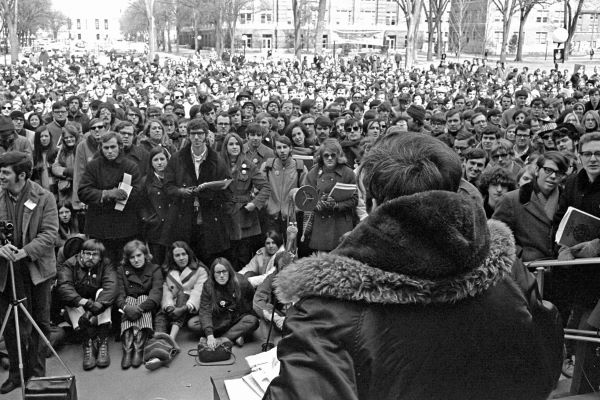
A black and white photo of the first Earth Day showing hundreds of people gathered outside to watch a man speaking
A crowd gathers on April 22, 1970, for the inaugural Earth Day event in Ann Arbor, MI / Credit: University of Michigan School for Environment and Sustainability

To our surprise, it became one of the largest events in the history of the university, involving the whole town of Ann Arbor, popular celebrities of the day such as Gordon Lightfoot and the cast of the musical Hair, and some 150 events spread over a week. By some estimates, 50,000 people participated. There were more than 13,000 attendees at the kick-off event, and we had to turn people away.

The inaugural Earth Day: "Four solid days of soul-searching"

Our theme was “Give Earth a Chance,” which saw great publicity across the nation. We attracted to the event all the major TV networks and reporters from all the big papers, including the New York Times, which described the event as “one of the most extra ordinary ‘happenings’ ever to hit the great American heartland: Four solid days of soul‐searching, by thousands of people, young and old, about ecological exigencies confronting the human race.”

Newsweek magazine ran an article with a picture of our button, and we were inundated with orders for buttons from groups across the country planning for Earth Day.

Our event was a huge success and launched subsequent teach-ins and community gatherings on a scale never seen before in the United States or perhaps anywhere.

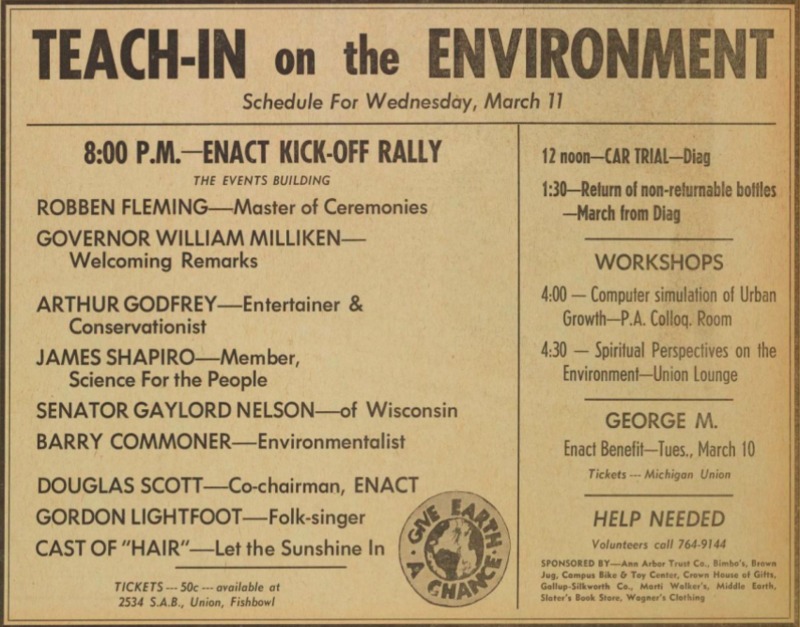
An advertisement from 1970 for Earth Day or a "Teach In for the Environment"
"Teach-In on the Environment" Ad in The Michigan Daily, March 10, 1970 / Credit: Bentley Historical Library

The triumvirate of leaders included an undergrad student, Doug Scott; a Canadian PhD student, David Allan; and me. Doug and David were co-chairs and I was the finance chair, among other responsibilities (we raised about half a million dollars in today’s value plus untold amounts of in-kind contributions).

Preparations took six months, and we worked with an incredible team of hundreds of volunteers, a steering group of about 13 people—many of whom were from the community of Ann Arbor, including university professors and students—and expertise drawn from sources around the continent. We had the full support of the senior administration, from the U of M president down.

Many stories can be told, but what I discovered personally was the magnitude of what can be accomplished by a small group of people in the right place at the right time. We were riding a wave and, it seemed, could achieve the impossible. This was an experience never to be forgotten and, in some ways, never to be repeated. It helped shape the lives and careers not only of the three of us who started it but also of many others, as we discovered at the 50th anniversary celebration. For me, it changed my career goal from scientist to interpreter of science for new directions in public policy.

Many stories can be told, but what I discovered personally was the magnitude of what can be accomplished by a small group of people in the right place at the right time. We were riding a wave and, it seemed, could achieve the impossible.

We had some funds left over after the event and wanted the teach-in to leave a legacy for the City of Ann Arbor. So we invested these funds to start a non-governmental organization, for which I was one of five people who signed the inception papers and turned over the seed funds. We patterned this organization, The Ecology Center, after one started the year before in Berkeley, California. It took off from ENACT (Environmental Action Now!), the registered student organization we set up for the original teach-in.

Earth Day, ENACT, and The Ecology Center

The Ecology Center was an almost immediate success and became deeply involved in recycling initiatives. Since that time, it has undertaken many good efforts, not only in the city but elsewhere in Michigan and other places. Over the years, the Ecology Center has raised more than USD 200 million and has an annual budget of about USD 8 million. All from a starting investment of only USD 10,000. 

In 1970–71, Dave Allan and I co-authored a book with articles by various speakers from the teach-in with the not-very-inspired title Recycle This Book. It is now out of print, but when I look at some of the articles, it seems they could have been written yesterday.

Adam Rome, now at Buffalo University, wrote a very thoughtful book in 2013 called The Genius of Earth Day: How a 1970 Teach-in Unexpectedly Made the First Green Generation. It starts with the University of Michigan event and runs through the beginning of the second decade of this century. He paints a picture that suggests a freshness to the U of M event that was hard to replicate later, despite the great success of some subsequent Earth Day events.

Matthew Lassiter, a history professor at the University of Michigan working with his students, university archivists, and others, is keeping alive the 1970 event and asking what has changed since then. He recently helped prepare an article on the U of M teach-in for the Smithsonian Magazine, which includes a half-hour video made at the time in 1970.

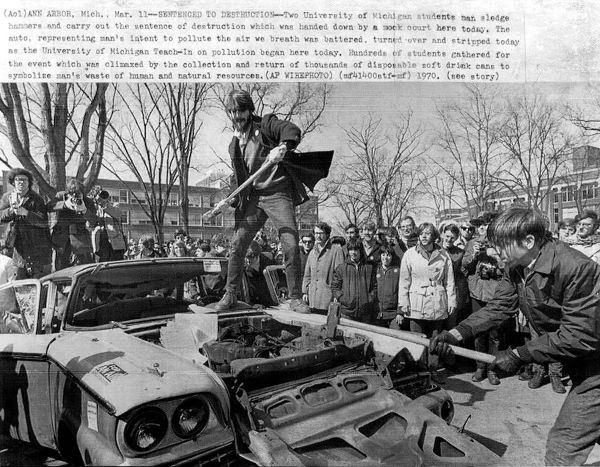
Students at the University of Michigan smash a car at the first Earth Day event in 1970
The automobile goes on trial and is sentenced to destruction at an Earth Day event in 1970 / Credit: Wystan

One event that happened during the teach-in that seems to be fascinating for many people is the trial of an automobile, leading to its execution on the University Quad. Brave, considering that, at the time, Detroit was the leading car manufacturer in the world.

We talk about “flattening the curve” to control the pandemic, but it is “bending the curve” for the environment that must happen to bring about harmony between people and nature.

The biggest difference between 1970 and today is our ability to communicate globally about everything. I have celebrated Earth Day in various parts of the world—Indonesia, China, and of course, Canada. Back in 1970, we were thrilled just to have a film crew show up from Japan. At that time, we talked about the Great Lakes dying; now, we talk about global warming, climate change, and the worldwide environmental crisis.

Until the COVID-19 pandemic came along, 2020 was expected to be the Super Year of the Environment. It is urgent that even as we “virtually” celebrate Earth Day 2020, we should make the coming years a Super Decade of the Environment. We talk about “flattening the curve” to control the pandemic, but it is “bending the curve” for the environment that must happen to bring about harmony between people and nature.

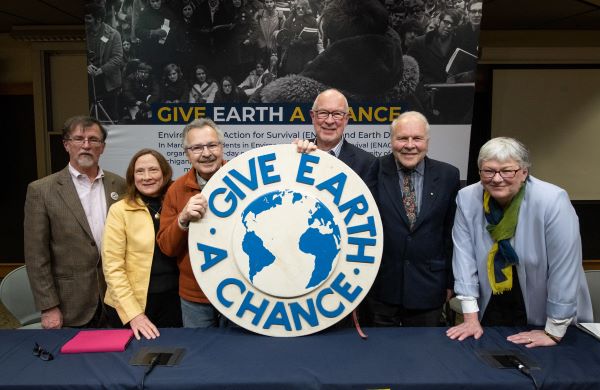
The founders of Earth Day sit at a long table at an event hosted by the University of Michigan
Arthur J. Hanson stands second from right at a recent gathering of the founders of Earth Day at the University of Michigan / Credit: University of Michigan School for the Environment and Sustainability

National Geographic magazine recently put out a special issue devoted to Earth Day 2070. They made it a flip issue, half devoted to a grim future and half to an optimistic view of what can be expected by Earth Day’s centennial birthday. For the sake of our children and our grandchildren, I hope reality will be the latter.

Speaking of children, it bears mentioning that, six years after the very first Earth Day, our daughter was born—on April 22, 1976. So we now have two excellent reasons to honour that day in our family!

Arthur J. Hanson is an Officer of the Order of Canada and a Distinguished Fellow with IISD following his term as President and CEO from 1991-98. For more information on the origins of Earth Day, see the Environmental Justice HistoryLab site.

Insight

COVID-19 Shows How Canada Needs to Prepare for the Next Crisis

As communities across Canada grapple with the deadly and damaging effects of the COVID-19 pandemic, we have a rare window right now into how important it is to prepare for a crisis.

April 20, 2020

As communities across Canada grapple with the deadly and damaging effects of the COVID-19 pandemic, we have a rare window right now into how important it is to prepare for a crisis.

Preparedness is the kind of thing you often think about only when it’s too late. Other, more immediate priorities always seem to steal our attention. But we are seeing up close what a difference advanced planning can make: it has been heartbreaking to see healthcare workers scrambling to find protective gear and equipment, including masks that cost less than a dollar.

As a nation, Canada can learn from this and do a better job of being prepared for the next shocks, especially the ones we know are coming from climate change: more severe floods, droughts, heatwaves, and hurricanes.

What types of advance planning matter most in Canada?

First, we need to know what’s coming and what’s at stake. We should act now to pull together accessible data and identify climate risk priorities across the country so that we have a roadmap in hand, one we can use to accelerate efforts to prepare ourselves. Many communities still need to better understand and analyze their risks and the investments they should be making. A 2019 study about preparedness in Manitoba municipalities showed that very few of them had brought climate change into their development plans.

Second, clear communication is essential. As we’ve seen during the COVID-19 crisis, people need to make quick and informed decisions to protect themselves and their loved ones. Taken early enough, these decisions can help prevent a crisis from escalating. But getting people to understand a threat and change their behaviours means communicating complex information—which can be riddled with uncertainty—in clear, timely, and accurate ways. It also means being coordinated and integrated; we must ensure cities, provinces, and the federal government have complementary messaging throughout the crisis.

Communications during a crisis must be coordinated and integrated to be effective; we must ensure cities, provinces, and the federal government have complementary messaging.

Looking ahead to climate impacts, we should act now to link our disaster risk reduction community—government departments like Public Safety and humanitarian organizations like the Canadian Red Cross—directly to the new Canadian Centres for Climate Services being set up across the country to better communicate with Canadian communities.

Third, we need to act. This pandemic has made it clear how important it is to continuously invest in protection against possible crisis scenarios. We’ve seen how not replacing expired stockpiles of medical masks has proven dangerous. There are various lists of priority infrastructure investments that Canada should address immediately to get prepared. Some are small and can be done quickly at home—such as installing backwater valves in new home construction to help avoid basement flooding. Some, like protections against seawater rise, are large enough to help with economic stimulus efforts. At the very least, all infrastructure projects should continue to be subject to the federal climate lens.

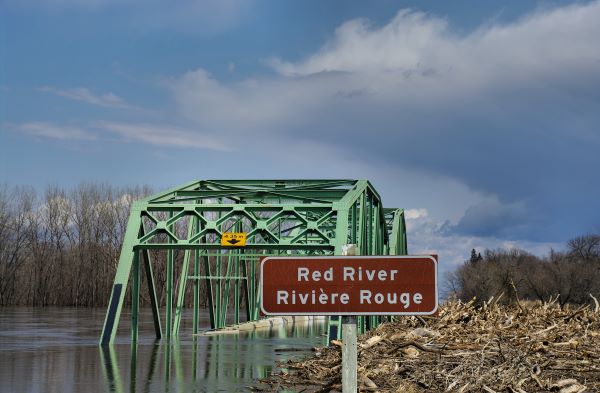
Flooded Red River in Manitoba with bridge in background for story on COVID-19 and how to prepare for crisis
A flooded bridge in Manitoba / Credit: iStock

Infrastructure investments should also include nature-based solutions, where sustainably managing our landscapes helps us prevent future damage. Launching a massive effort to plant two billion trees or restore wetlands has the added benefit of replenishing the natural world that is so important to our physical and mental health in times of crisis.

Taking these steps requires collaboration. The final critical lesson we have learned over the past few weeks is how important strong social networks are in times of stress. Exchanging strategies for homeschooling, talking to loved ones in care homes, giving children a number to call if staying home is more dangerous than going to school—these have all been key to helping us do our part. And social distancing has shown us how critical, even life-saving, reliable Internet access is, reinforcing the need to address rural broadband issues and close the digital divide.

Sustainably managing our landscapes helps prevent further damage. Launching a massive effort to plant two billion trees or restore wetlands has the added benefit of replenishing the natural world that is so important to our physical and mental health in times of crisis.

Networks can also be useful in advance of a shock. In fact, they can be used to plan for one. For years, networks like C40 Cities have been sharing experiences and best practices for adapting to a hotter future. International networks of developing countries hardest hit by climate change are using innovative peer learning to make sure they mount effective defences. Inspired by an example in Vanuatu shared through a global climate adaptation network, Madagascar set up a specific national committee to coordinate it’s planning. And Grenada, informed by experiences in Albania, decided to involve the private sector and community organizations in their preparations for climate shocks. We should be investing in these preventative networks and opportunities for shared learning across Canada now.

If there’s one thing to take away from the events of the last month, it's that sometimes, to avoid the worst, we need to act in ways that seem disproportionate to our current reality. Let’s make sure the hard lessons we’re learning during this global pandemic don’t go to waste when the next crisis hits.

This article originally appeared in The National Observer on April 23, 2020.

Insight details

Insight

Doubling Down on Alberta's Oil and Gas Sector Is a Risk Canadians Can’t Afford to Take

There's no question that people across Alberta need urgent help. But is injecting tens of billions into oil and gas corporations the right kind of help?

April 9, 2020

In times of unprecedented crisis, government leadership means being bold. But as Canada and its provinces prepare to roll out record-breaking emergency responses to help the newly jobless and throw lifelines to drowning sectors, it’s becoming clear that not all support is created equal.

Alberta Premier Jason Kenney announced Tuesday that unemployment could rise to at least 25%, or upwards of 500,000 workers. To bolster Alberta’s economy, he called for the federal government to commit at least CAD 20 billion to CAD 30 billion in liquidity for oil and gas producers. This came on the heels of the province’s announcement last week of almost CAD 8 billion in equity infusion and loan guarantees for the Keystone XL oil pipeline. There have also been calls for the feds to purchase oil and gas sector accounts receivable at a discount. For its part, the federal government is finalizing the specifics of their promised emergency response package for the sector.

As Canada and its provinces prepare to roll out record-breaking emergency responses to help the newly jobless and throw lifelines to drowning sectors, it’s becoming clear that not all support is created equal.

There’s no question that people across Alberta need urgent help. In the accommodation and food service sector alone, nearly 100,000 workers have already lost their jobs, and similar numbers seem likely in retail trade. The oil and gas sectors have seen thousands of layoffs and postponed labour as the province’s companies limit production and shelve all plans for expansion, upgrades, and maintenance.

Two Key Features When It Comes to a Strategic Response

Is injecting tens of billions of dollars into oil and gas corporations the right kind of help? As well as addressing immediate needs, the strategic emergency response should have two critical features:

  1. It should address the root causes of the crisis and reduce vulnerability to future crises.
  2. It should take advantage of the dynamism that crisis creates to build back better and achieve important public policy goals that may have been harder to reach in more settled times.

Would the proposed assistance address the root causes of the crisis? Alberta’s economic crisis started well before COVID-19 and is rooted in overdependence on inherently cyclical commodities: oil and gas. But rather than pursue diversification that could shelter Albertans from the pain of future shocks, these sorts of investments double down on the status quo, hitching the wagon firmly to volatility and uncertainty.

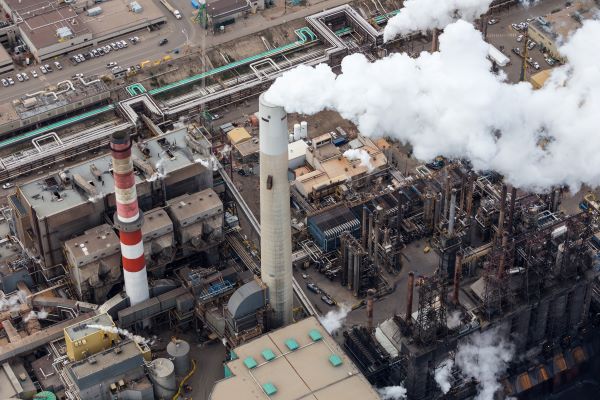
An aerial shot of an oil refinery in Alberta
An oil refinery near Fort McMurray, Alberta / Credit: iStock

There will be future shocks, whether it’s another 2008-style financial crisis, a climate-induced crisis such as the 2016 Fort Mac fires, or—dare we say it—another COVID-19-style pandemic. Placing heavy bets on the oil and gas sector nearly guarantees we will be here again, with similar social and economic pain for people across the province.

Placing heavy bets on the oil and gas sector nearly guarantees we will be here again, with similar social and economic pain for people across the province.

Bets like these assume the oil and gas sectors will return to business as usual after COVID-19, that demand will be strong for decades in spite of increasing climate change mitigation efforts, that pipelines will be built despite sustained opposition or political delays, and that major producers like Saudi Arabia, Russia, and perhaps the U.S. can reverse course, defy history, and cobble together some sort of supply-limiting deal that makes the sector profitable for high-cost producers.

An Underlying Problem Isn't Being Addressed

Even if all those assumptions prove right and the bet pays off, that success doesn’t address the underlying problem of overdependence—it aggravates it.

Would the proposed assistance take advantage of the opportunity to build Alberta back better? We know that, whether through market forces or government policies, Canada’s oil and gas sector will eventually decline, hopefully, to be replaced by more diversified and sustainable economic drivers. As the head of the International Energy Agency, the UN Secretary-General, and others have recently argued, our response to the current crisis must accelerate this urgently needed transition. If Alberta is to rebuild its damaged house after this unprecedented crisis, why not build a stronger house?

For Alberta and the federal government, this should mean investing tens of billions of dollars in sectors that can bring long-term prosperity for Alberta’s workers and families, such as hydrogen, health sciences, renewable energy, clean transport, sustainable agriculture, innovation in oil and gas well reclamation, and prevention of fugitive methane emissions, building on the province’s world-class institutions and infrastructure and the strengths of its people. It’s frustrating to watch Alberta charge full steam away from that course, committing billions to support the Keystone XL pipeline after using austerity as a rationale to axe popular investment tax credits for high-tech entrepreneurs, and laying off tens of thousands of education workers—the foundation for future prosperity.

The coming economic downturn will swallow up the unprecedented torrents of financial support we’re assembling and still call for more. But let’s remember that this spending can be a historical force for positive change to ensure that when we come out the other end, our society is more equitable, sustainable, and resilient—ready for whatever the future might throw at us.

Policy Analysis

Help Canada’s Workers Now—But Don’t Lock Us Into a High-Carbon Future

Instead of a bailout for Canada's oil and gas sector, government and industry should pursue investments that will help develop new energy solutions and markets: IISD's Richard Florizone in The Hill Times.

March 26, 2020

Times of high unemployment and low interest rates are the right time for new, low-carbon investments and infrastructure.

Originally published in the Hill Times on March 25, 2020. Reposted with permission.

The COVID-19 pandemic is a human tragedy. Containing the virus and supporting people in crisis are of critical importance. For governments in Canada, and elsewhere, that includes financial assistance to keep individuals and businesses afloat.

The economic impact on Canada’s oil and gas sector has been particularly acute, driven both by a drop in demand and an international price war. As part of its response, the Government of Canada is now considering a multi-billion dollar bailout of the oil and gas industry.

Providing support for hard-hit Albertans and other energy workers across Canada is clearly the right thing to do. But an outright bailout that preserves the industry status quo is not. When Canada and the United States bailed out the automotive industry in 2009 it wasn’t just to continue business as usual—they also insisted on new commitments to fast-track increased efficiency standards.

Instead of a bailout for the oil and gas sector, government and industry should pursue investments that will help us develop new energy solutions and markets—ideas such as large-scale wind and solar, geothermal, hydrogen, bioenergy, and storage—the kinds of things forward-thinking industry leaders were already considering before this crisis hit.

To be effective, any government support must focus on the immediate needs of workers while also considering what lies ahead. That means investments that get money into their pockets now, without locking us in to a high-carbon destiny.

It does not mean cutting carbon taxes, as some have suggested. This would only result in a scattershot short-term subsidy for everyone, at the cost of our shared future. Instead, government and industry should pursue investments that will help us develop new energy solutions and markets—ideas such as large-scale wind and solar, geothermal, hydrogen, bioenergy, and storage—the kinds of things forward-thinking industry leaders were already considering before this crisis hit. Now is also the time to clean up inactive and orphan wells, improving corporate balance sheets and the environment while putting people immediately back to work.

As we respond to the sharp drop in demand and prices, let’s draw on other lessons from Western Canada’s history, including the collapse in wheat prices in the 1970s. In that instance, industry, government, and universities came together in new initiatives like the Crop Development Centre at the University of Saskatchewan, giving birth to a multi-billion dollar pulse crop industry—creating new jobs that feed the world, alongside a vibrant and thriving wheat industry that ultimately recovered.

Looking even further back to the 1930s, we can find inspiration in the Prairie Farm Rehabilitation Administration (PFRA), which helped conserve land, prevent erosion, and develop water resources—investments that met urgent needs during the Great Depression while still paying dividends today.

Supporting energy workers across Canada is essential. Subsidizing the status quo and ensuring increased carbon emissions is not. Times of high unemployment and low interest rates are the right time for new, low-carbon investments and infrastructure. By focusing our support on workers and the environment, Canada can address the current crisis while investing in the future.

Insight

Who Will Pay for Alberta's Orphan Wells?

Alberta's orphan wells require proper decommissioning to prevent harm to the environment and surrounding communities. Who will pay for this?

March 26, 2020

Canadians are facing many struggles right now: an unprecedented economic slowdown due to COVID-19, a global oil price shock, and the still-urgent challenge of transitioning to a low-carbon future. We know the federal government is stepping in to support the oil and gas sector, and more stimulus decisions will play out over the next few months. The way this help is provided could make or break the ability of communities to prosper in the long run, something that is especially the case for the tricky issue of orphaned oil and gas wells in Alberta.

Of the province’s 300,000 or more un-reclaimed oil and gas wells, about half are inactive, and around 3,500 are so-called “orphans.” These wells require proper decommissioning to prevent harm to the surrounding environment and those who call it home. But if the company that owns a well declares bankruptcy and walks away, who pays for this decommissioning?

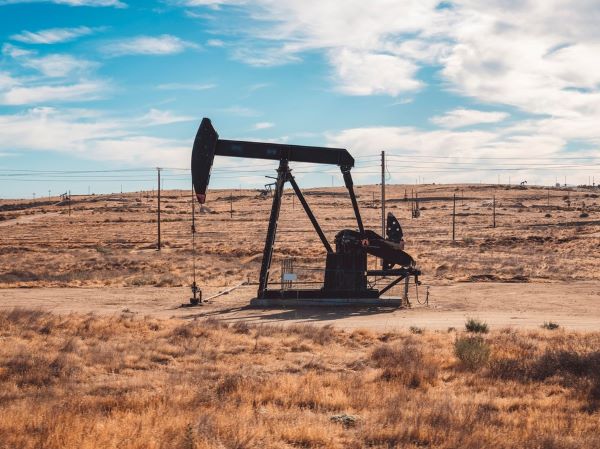
Orphan well in a field during daylight
An old oil rig sits in an open field / iStock

A Growing List of Unpaid Bills is Hurting Albertans

The growing list of unpaid bills by oil and gas companies is already harming Albertan communities. Companies haven’t paid $20 million in compensation to landowners since 2010, and 2019 alone saw $173 million in unpaid municipal taxes. But costs for orphan well cleanup are by far the highest.

The Alberta Energy Regulator has privately estimated the cost of cleaning oil and gas wells at a staggering $100 billion, but the actual amount to clean up Alberta’s oil patch could be much higher. And while Alberta’s Orphan Well Association is supposed to take over managing these wells, they’re having serious trouble keeping up.

Now, with the effects of COVID-19 and oil price drops creating new challenges, the impacts on communities could worsen significantly.

With the effects of COVID-19 and oil price drops, the impacts on communities could worsen significantly. The math is frightening.

The math is frightening, yet it seems increasingly likely that these rising costs will be passed on to taxpayers rather than the companies who are responsible. And making taxpayers pay for cleanup adds insult to injury: inactive and depleted wells already pose a massive and unfair burden to communities’ health and well-being, including the farmers and ranchers who are now stuck with these wells on their land. Leaks from inactive and depleted wells can contaminate the soil and water used to grow food, accumulate in nearby areas, and pose dangerous health risks.

At IISD, we have documented the sizable subsidies provided to the oil and gas industry by both the Albertan and federal governments. Directing even more public money toward cleanup of inactive and depleted wells could constitute a significant new fossil fuel subsidy.

More importantly, it wouldn’t solve the problem that got us here.

Caught Between a Rock and a Hard Place

Right now, communities in Alberta are caught between a rock and a hard place. Targeted support from the federal government could help address environmental issues and inject economic and job activity in the province. But support needs to come with a firm commitment to assist communities with energy transition and economic development issues first as our economic landscape shifts.

Directing more public money toward cleanup of inactive and depleted wells could constitute a significant new fossil fuel subsidy. And it wouldn't solve the problem that got us here.

Government has the power to stimulate the economy in the short term and put in place policies to ensure Canadian communities thrive in the long term. When it comes to inactive and depleted wells, here’s how Canada could do this:

Ensure industry remains responsible for cleanup. Short-term targeted support could help kickstart well reclamation, but it is critical that Canadian governments do not become the long-term funders of the cleanup. Ultimately, the oil and gas industry should be funding cleanup, so mechanisms need to be set up now to ensure this is possible well into the future. It’s also important that the laws that govern the Orphan Well Association be followed, which will save taxpayers’ money, reduce the need for loans to the association, and accelerate cleanup.

An abandoned orphan well in rural Alberta
An abandoned oil well in rural Alberta / iStock

Support measures for well cleanup should be community-focused and not take the form of entrenched fossil fuel production subsidies. There are already proposals to do this, which ultimately would not solve the problem over the long term. On the contrary, using flow-through shares or similar tax instruments for well reclamation means higher subsidies going to companies with no guarantee that communities will benefit.

It is critical that the oil and gas industry—not Canadian governments—become long-term funders of the cleanup.

The Redwater decision makes it clear that governments have the power to uphold the “polluter-pays principle,” even if a company goes bankrupt. It is possible to do this by looking back at the former owners of the well (or the directors or shareholders of the bankrupted company) to ensure that liabilities are addressed. But it’s important to note that many inactive wells are held by large and financially successful companies. In these cases, the companies should foot the bill.

Create a stronger inactive well regime. Governments must find a way to make sure we never end up in this situation again. If federal and provincial support is provided, it must come with a more effective inactive well regime, following best practices from other jurisdictions such as mandatory timelines for well remediation, more stringent up-front security bond requirements before drilling, tightened liability rules, and the monitoring of bankruptcy courts to prevent liabilities being left to government.

Alberta is currently updating its system for environmental oil & gas liabilities, but it looks unlikely the update will result in the kind of rules that are needed. The framework for dealing with inactive wells must be fixed to prevent the current situation from worsening exponentially. And when developing and improving policies, governments should be consulting with affected communities.

Guarantee tangible benefits for Albertan workers and communities. Any federal and provincial assistance for inactive and depleted wells should have a clear link to reclamation and create opportunities for Albertans. There is significant potential for oil well reclamation to open up new jobs. Old well sites could be used for renewable power installations, including solar and geothermal, which could help farmers earn additional income.

There is significant potential for oil well reclamation to open up new jobs.

Canada should commit to policies and programs that advance just transition principles. With the ongoing shuttering of several oil and gas companies, clear strategies are needed to help those who have historically relied on the industry. Reclamation jobs are only a small part of the picture, and not everyone will be able to benefit from cleanup work. Canada should be proactive in prioritizing and supporting communities impacted by transition across the country, for example, by introducing a progressive and expansive Just Transition Act and by listening to what communities need at a local level.

It’s clear that the way inactive and depleted wells are being managed is not working for communities or the environment. The good news is that addressing well cleanup now can help put people to work while at the same time getting local economies back on track. Let’s do it in a way that ensures industry stays accountable so that communities and taxpayers aren’t on the hook in the long run.

Insight details

Topic
Energy
Subsidies
Just Transition
Region
Canada
Impact area
Climate
Report

Canada's Federal Fossil Fuel Subsidies in 2020

Federal fossil fuel subsidies in Canada reached at least CAD 600 million in 2019, but more transparency is needed from government to understand the full picture.

February 19, 2020

Key Messages

  • Federal fossil fuel subsidies in Canada reached at least CAD 600 million in 2019, but this figure does not include subsidies for which publicly available data was lacking, such as tax-related subsidies or potential subsidies related to the Trans Mountain pipeline and expansion.
  • Subsidies have shifted from an emphasis on exploration to one on the development of infrastructure for fossil fuel production and exports (including for liquefied natural gas). 
  • Fossil fuel subsidies undermine climate action objectives. The Canadian government should be transparent about the full amount of fossil fuel subsidies and accelerate subsidy phase-out to meet international commitments.

Canada has announced plans to achieve net-zero emissions by 2050 but is currently not on track to meet its 2030 emissions reduction target. Meanwhile, fossil fuel subsidies undermine federal action on climate change and divert important financial resources to polluting forms of energy.

IISD identified nearly CAD 600 million in federal fossil fuel subsidies in 2019. This figure does not include figures where data was lacking, such as for tax measures or potential subsidies related to Export Development Canada and the Trans Mountain pipeline expansion. 

Canada is currently undergoing a peer review of fossil fuel subsidies with Argentina as part of its G20 commitment to phase out inefficient fossil fuel subsidies by 2025. Progress on the peer review has been slow and needs a strong commitment to transparency. Canada should complete the peer review in 2020, release quantified information on all federal fossil fuel subsidies on an annual basis and commit to not introducing new fossil fuel subsidies.

Canada should also accelerate the phase-out of existing fossil fuel subsidies and develop a roadmap to meet or exceed the 2025 phase-out commitment.

We also recommend that Canada include subsidy reform as a key element of focus in the next Nationally Determined Contribution under the Paris Agreement. Fossil fuel subsidy reform would strengthen and support wider federal action on climate change and help Canada to meet its climate targets.

Report details

Topic
Climate Change Mitigation
Subsidies
Energy
Just Transition
Region
Canada
Impact area
Climate
Sustainable Economies
Publisher
IISD
Copyright
IISD, 2020
Report

Leveraging Payments for Ecosystem Services: Poplar River First Nation leads the way with innovative conservation

Poplar River First Nation (PRFN) has been working for years on management planning for its traditional territory. A critical next step is for the community to develop third-party partnerships to pursue payments for ecosystem services (PES). Through PES, PRFN's forest management strategies can better contribute to community and regional socioeconomic and environmental well-being.

February 18, 2020
  • Over the past 20 years, Poplar River First Nation has taken unprecedented steps to conserve and protect the 862,000-hectares of its traditional territory, Asatiwisipe Aki.

  • Payment for the ecosystem services Poplar River First Nation provides could help them develop an effective forest-based economy.

As the steward of its traditional territory for generations, Poplar River First Nation (PRFN) has an immense opportunity to undertake and lead on nature-based and land-management projects.

The community wants to maximize the potential of nature-based solutions to support climate and biodiversity co-benefits and create positive socioeconomic outcomes for both PRFN and Manitobans more generally. PRFN's successes could spur the adoption of nature-based solutions and innovative conservation efforts by other communities, including the 70% of Indigenous communities in Canada that are located in the boreal forest.

PRFN has been working for years on management planning for its traditional territory. A critical next step is for the community to develop third-party partnerships to pursue payments for ecosystem services (PES). Through PES, PRFN's forest management strategies can better contribute to community and regional socioeconomic and environmental well-being.

Entering into a PES agreement with potential funders is a way to ensure financial sustainability to support the community through socioeconomic and environmental stewardship. To illustrate how such an agreement might look, this study provides a working draft of a possible PES agreement between PRFN and a buyer of the goods and services. This agreement is drawn from several established national and international examples of PES agreement frameworks, and its main point of reference is the guidance documents from the Katoomba Group, an international working group dedicated to advancing payments for ecosystem services including watershed protection, biodiversity habitat and carbon sequestration.

Report details

Topic
Climate Change Mitigation
Region
Canada
Impact area
Climate
International Governance
Sustainable Economies
Publisher
IISD
Copyright
IISD, 2020
Report

2019 Our City: A Peg Report on Winnipeg and the Sustainable Development Goals

A Peg Report on Winnipeg and the Sustainable Development Goals

The Peg report 2019 Our City is a window into how Winnipeg is progressing and where we need to focus more energy to move toward targets set by the United Nations’ Sustainable Development Goals (SDGs).

January 9, 2020

The Peg report 2019 Our City is a window into how Winnipeg is progressing and where we need to focus more energy to move toward targets set by the United Nations’ Sustainable Development Goals (SDGs).

The report comes from Peg—an online tool that graphically presents more than 60 data indicators to shed light on the well-being of our city and encourage evidence-based policy.

As a collaboration by United Way Winnipeg and the International Institute for Sustainable Development, Peg is a way to not only measure our progress but also inspire Winnipeggers to work together towards positive change in our community and beyond.

Peg provides leaders in all sectors of our city with knowledge and insights to see how we can make a difference and ensure that nobody is left behind.

Report details

Topic
Sustainable Development Goals
Measurement, Assessment, and Modelling
Region
Canada
Project
Peg
Impact area
International Governance
Publisher
United Way of Winnipeg
Copyright
IISD and United Way of Winnipeg, 2020