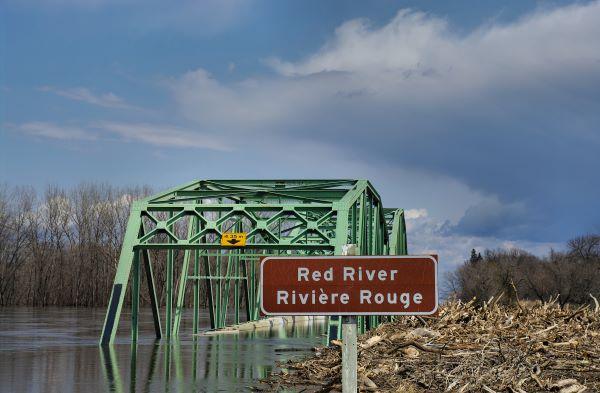
Canada Water Agency: Government hopes to consolidate water data and management
Fresh water is critical to the country’s economy and health, and a key part of the nation’s identity. And yet, experts say the country is suffering a drought when it comes to accessing data on water quality and quantity.
IISD at New Advances for Sustainable Contaminated Lands Management
The workshop will bring together local British Columbia and international speakers to facilitate diverse and wide-ranging sharing of knowledge and best practices.
September 30, 2020 9:00 am - 12:00 pm PST
(Open to members)
In the past decade there has been significant progress on incorporating sustainability in the contaminated lands investigation and remediation process. There has been increased recognition of the importance of multiple dimensions of sustainability and need to balance the social, economic and environmental aspects of a project. When viewed from a social lens, stakeholder input and indigenous participation is vital to the success of a project.
There is also increasing recognition of the need to consider adaptation and resiliency of remediation to climate change impacts such as sea level rise or extreme weather events as this affects sustainability. With the global coronavirus pandemic, there are unknown implications for longer-term impacts ranging from work practices to possible effects of intensive use of chemicals for disinfection and cleaning on the environment.
This workshop hosted by the BC Science Advisory Board for Contaminated Sites (SABCS) and GeoEnviroPro Training Professionals aims to take a broad view of sustainability through multiple themes including:
Innovative technologies and new developments to achieve more sustainable solutions to contaminated sites issues including nature-based solutions
Sustainable remediation in brownfields or infrastructure developments, including approaches and tools for evaluating and rating sustainability
Perspectives, practices and regulatory frameworks in different countries
Implications of carbon neutrality for projects
Considering the perspectives of stakeholders
Vulnerability, adaptation and resiliency of remediation to sea-level rise and extreme weather events
Day 1: Wednesday September 30: International and Local Perspectives on Sustainability and Climate Change
Moderator: Shannon Bard (SABCS) & Jennifer Mayberry (GeoEnviroPro)
Event Kickoff: Zahra Pirani (President, SABCS)
Lynn Wagner, International Institute for Sustainable Development: "The Sustainable Development Goals and Lands Management"
Jonathan Smith, Shell Global Solutions (UK) Ltd: "Debunking Myths about Sustainable Remediation"
Dianna Allen, Simon Fraser University: "Connecting the Dots...Groundwater, Surface Water, and Climate Connections"
Canada Can't Afford to Put Climate Adaptation on the Back Burner
Investing in climate adaptation measures is an opportunity to demonstrate foresight, show leadership, protect our economy, and keep Canadians safe.
September 29, 2020
You may have heard Justin Trudeau and other leaders use the phrase “build back better” to highlight the importance of not merely enduring the COVID-19 pandemic and its economic and social challenges but acting decisively to come back even stronger.
If Canadians truly want to build back better, there must be greater focus now—urgently—on adapting to a changing climate.
Canada, like the rest of the world, is experiencing more severe weather events and natural disasters linked to climate change. The raging wildfires along the U.S. West Coast are only the latest example. The human and financial costs of climate-influenced events continue to escalate.
Between 1983 and 2008, insured losses from natural catastrophes in Canada averaged about CAD 400 million a year. In the last 10 years, that number has jumped to more than CAD 1 billion a year. This year, we expect to exceed that amount in Alberta alone. Just two major events—flooding in northern Alberta and a hailstorm in Calgary—resulted in close to CAD 2 billion in insured losses, along with personal hardship for those affected.
The message is clear: Canada can be a global leader in adaptation and recovery, but we must invest today to reduce the risks we collectively face due to climate change.
Confronting climate change is a two-pronged fight. We absolutely need to reduce emissions. That’s a long-term imperative. But in the immediate future, we also need to adapt. We must take action to defend ourselves against the initial impacts of our changing climate.
Unfortunately, the slow pace of climate adaptation measures has left Canadians increasingly vulnerable to these more frequent severe weather events. It is also putting financial pressure on families and governments and causing heartache and anxiety for Canadians who live in harm’s way.
No single industry or government can solve this on their own. But if we act now and act together, we can begin to make meaningful progress.
An example is the Task Force for a Resilient Recovery, an independent and diverse group of Canadian finance, policy, and sustainability leaders (including both authors of this blog post) that just released its final report. In it, we recommended five bold yet achievable measures to help Canada build back better, with a focus on investing in the low-carbon economy and bolstering our climate resilience.
Among the recommendations, we called on the Canadian government to put in place a national program that supports efforts to retrofit existing buildings and infrastructure for enhanced climate resilience. This will create good new jobs and position Canada to better endure the growing impacts of our changing climate.
Investing in climate adaptation measures is an opportunity to demonstrate foresight, show leadership, protect our economy, and keep Canadians safe.
To be certain, this isn’t a challenge unique to Canada. The Global Commission on Adaptation, led by former UN Secretary-General Ban Ki-moon, is calling on political leaders around the world to “incorporate climate resilience into [their] economic recovery packages.” In particular, the commission is urging accelerated investments in urban resiliency and disaster prevention.
Here in Canada, the Federation of Canadian Municipalities estimates that CAD 5.3 billion is required annually to help protect our infrastructure from emerging climate risks.
The message is clear: Canada can be a global leader in adaptation and recovery, but we must invest today to reduce the risks we collectively face due to climate change.
Canada’s recent Speech from the Throne had promising signals, with a focus on building retrofits, clean energy, and investments in nature. Canada would benefit from such investments and other achievements in sustainability. But any truly green recovery plan must also recognize and respond to the new reality of climate risk.
Better preparation today—a national flood management plan, for instance—will pay dividends down the road. Smart investments will result in future savings. The longer we delay, the higher the costs and the greater the risk to human life and our natural and human-built areas.
There’s an old saying: Within every crisis is an opportunity. We build back better when we build back smarter, with an eye to confronting the immediate challenges and impacts of climate change, even as we continue working to reduce emissions over the long term.
Investing in climate adaptation measures is an opportunity to demonstrate foresight, show leadership, protect our economy, and keep Canadians safe.
Dr. Richard Florizone is the President and CEO of IISD. Don Forgeron is the President and CEO of the Insurance Bureau of Canada. Both were members of the Task Force for a Resilient Recovery, which just concluded its work.
Canada’s Long-Term Plan Sets a Course for a Strong, Resilient Recovery
In its Speech from the Throne, the Government of Canada charted an important path forward, setting the course for clean economic growth.
September 25, 2020
This week, in a Speech from the Throne, the Government of Canada outlined its broad plan to respond to COVID-19. The first priorities in that plan are to fight the pandemic and deal with its immediate health and economic impacts—which is exactly where all governments must focus amid this crisis.
The plan also lays out a long-term recovery strategy to "build back better" by fighting climate change and keeping Canada competitive in the fast-growing global clean economy. Canada is not alone in trying to address the twin challenges of economic growth and climate change. Tackling them is a top concern for governments around the world, driving intense study and historic new investment.
With a focus on building retrofits, clean energy, and investments in nature, Canada’s plan aligns well with international efforts and leading academic research.
In July, the European Union committed at least 30% of its extraordinary EUR 1.8 trillion multi-year budget and COVID-19 recovery fund to climate objectives. That is in addition to billions more in green stimulus in member countries. As the UK’s Conservative Prime Minister, Boris Johnson, said: "The green recovery is going to be essential to this country’s success in the next few years."
With a focus on building retrofits, clean energy, and investments in nature, Canada’s plan aligns well with international efforts and leading academic research.
How should this investment be best spent to meet job creation and climate goals? Earlier this year, a group of academics and economists, including Nobel laureate Joseph Stiglitz and Lord Nicolas Stern, tackled the question head-on, identifying five measures with the highest potential on economic and environmental metrics. Those recommended measures include building efficiency retrofits, clean energy infrastructure, and investments in nature—all of which feature prominently in Canada’s plan.
For Canada, we addressed the question through the Task Force for a Resilient Recovery, an independent group of Canadian finance, policy, and sustainability experts that gathered and assessed recovery ideas from across Canada and around the world. Over months of analysis and debate, we landed on similar priorities: building retrofits, clean energy, and investment in nature—along with production and adoption of zero-emission vehicles (ZEVs) and efforts to grow clean tech across the Canadian economy.
Of course, much more remains to be done, with a long road to implementing the lofty goals of the Speech from the Throne. A planned economic update this fall is the next major milestone, when the government will put money against its commitments.
Aligned with global efforts and leading expertise, the Government of Canada has charted an important path forward, setting the course for a strong, resilient recovery. For that, it should be congratulated.
Dr. Richard Florizone is the President and CEO of IISD. Bruce Lourie is President of the Ivey Foundation. Both were members of the Task Force for a Resilient Recovery, which just concluded its work.
Throne Speech’s climate promises draws mixed reviews, with NDP saying it’s a rehash of old pledges
The Liberal government’s anticipated “ambitious green agenda” in its Throne Speech is garnering mixed reviews among environmental and political experts, with some saying it was stuffed with recycled pledges.
Justin Trudeau’s Liberals are betting that electric vehicles can recharge the economy. But a vision is not a plan
Canada is jumping into the electric vehicle market with both feet, and that sure seems like it will be a great thing for labour, investment and the environment.
Young Canadians eye basic income, climate action in throne speech
Young people are eager for word that universal basic income and an ambitiously green recovery are on the agenda when the Liberal government unveils its reworked COVID-19 pandemic recovery plan.
The investments that Canada makes today will have long-lasting implications for years to come, with the world needing to accelerate efforts to address the climate and biodiversity crises. The past few months have shown how crucial it is that governments shift funds to important priorities beyond fossil fuels, such as clean energy, healthcare, and social protection. This webinar will illustrate how fossil fuel subsidy reform can support a green and just recovery.
We’ll deep dive into how subsidy reform can contribute to Canada’s short-term and long-term national priorities including COVID-19 economic recovery and achieving our climate change targets. We’ll analyze Canada’s existing fossil fuel subsidies and their COVID-19 response so far, in the context of the government’s commitment to phase out inefficient fossil fuel subsidies that encourage wasteful consumption. Finally, we’ll turn to assess Canada’ progress on the G20 fossil fuel subsidy peer review with Argentina and see how Canada compares internationally.
The webinar will feature Canadian and international climate change and fossil fuel subsidy experts, including a representative from the Friends of Fossil Fuel Subsidies Reform (FFFSR).
Task force crosses partisan lines to call for $55 billion for climate, clean energy
OTTAWA — A new report from an independent task force says Canada’s economic recovery from the COVID-19 pandemic needs massive investments in clean energy, climate-resilient buildings and electric cars to keep up with a greener-shifting world.
John Ivison: Freeland may have changed her thinking toward fiscal restraint, but will Trudeau follow?
A group of policy, finance and green thinkers, including Trudeau’s former principal secretary, Gerald Butts – the Taskforce for Resilient Recovery – released its final report, which recommended the government spend $55.4 billion over five years on clean initiatives. As these things go – and they usually go nowhere – the report is realistic and practical.