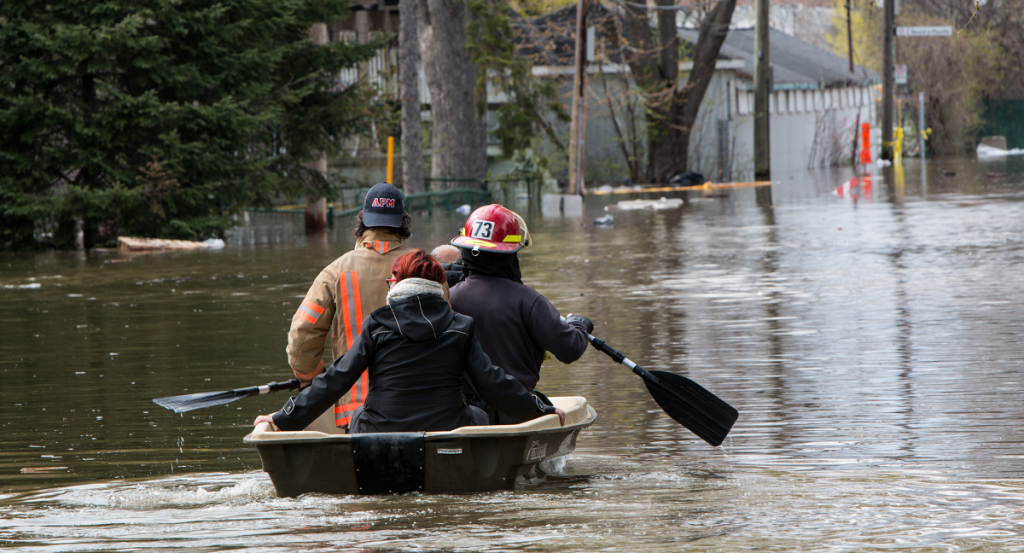
How should Canada prepare for the extreme weather events, floods and wildfires related to climate change? On September 23 The Globe and Mail convened a group of climate change experts and adaptation proponents to discuss how cities, communities and industries can become safer and more resilient.
Foreign policy will hurt Canada's oil and gas sector more than anything: Economist
The Liberals take a minority government and with that comes stricter cuts to the oil and gas industry to meet a net-zero goal by 2050. Aaron Cosbey, economist at the International Institute for Sustainable Development joins BNN Bloomberg to discuss the future of climate policy in Canada.
Equity, diversity, and inclusion in Canada's National Adaptation Strategy: Why it matters and what it means
How can the diversity of identities and experiences of Canadians be reflected in a national strategy on climate adaptation and why does social inclusion matter? Lessons from other countries can help show the way.
September 20, 2021
Adaptation to climate change has been a pressing topic in Canada in recent months. Raging wildfires in British Columbia, drought on the Prairies, and heatwaves across the country—compounded by the dire messages contained in the latest report from the Intergovernmental Panel on Climate Change (IPCC)—have placed the climate crisis at the forefront of people’s minds.
Canada’s federal government committed to developing a National Adaptation Strategy (NAS) as part of its 2020 climate plan and has charted a way forward for its development. Alongside reconciliation and nation-to-nation engagement with Indigenous Peoples, the government has committed to advancing social equity and using inclusive processes as a guiding principle for the NAS. These principles are also reflected in Canada’s recently submitted Adaptation Communication to the United Nations Framework Convention on Climate Change, which identified the links between climate change and social and economic inequalities, highlighting the need to understand how gender, age, and Indigeneity intersect with other factors to disproportionately impact some Canadians.
But why is this focus on inclusion important? How can the diversity of identities and experiences of Canadians be reflected in a national strategy? We delved into the literature and explored lessons learned from other countries’ experiences to better understand which groups may need particular attention if Canada’s NAS is going to be truly inclusive.
Here is what we learned.
Climate-related disasters can place LGBTQ2+ people at greater risk of violence and discrimination.
The impacts of climate change mean that more and more people will be exposed to natural disasters. During these types of emergencies, LGBTQ2+ people may face more barriers and challenges than non- LGBTQ2+ people. Though the impacts of climate change on the 1 million people making up Canada’s LGBTQ2+ communities have not been well explored, there is some evidence from research on disasters in other countries that provides useful insights.
For example, research in Australia and New Zealand found that during evacuations caused by events such as floods and bushfires, LGBTQ2+ individuals may be exposed to greater discrimination and hostility, whether from fellow evacuees or from relief services. Trans people may face barriers to accessing services when registration processes assume gender binary norms, and the facilities at evacuation sites may not be appropriate for non-binary individuals. Though not specifically focused on events linked to climate change, these examples are illustrative of the issues Canada’s NAS process must consider if it is to meet the needs of Canada’s LGBTQ2+ communities.
People with disabilities are particularly vulnerable in extreme weather events.
The specific climate-related vulnerabilities of people with disabilities are increasingly acknowledged, most recently and notably in the preamble to the 2015 Paris Agreement. However, the risks posed by the effects of climate change to people with disabilities are still not as visible in the Canadian discourse on climate change as they should be, given that 1 out of 5 Canadians is living with one or more disabilities (physical, sensory, cognitive, or mental health-related).
Mobility-related disabilities can endanger an individual during disasters wherein evacuation is necessary. A 2013 global survey by the United Nations Office for Disaster Risk Reduction found that only 21% of persons with disabilities believed they could evacuate without difficulty. Beyond the immediate physical danger, climate disasters that result in displacement can be especially difficult for people with disabilities who require access to certain services and accessible accommodations.
A review of evidence (largely from the United States) found that many factors exacerbate the vulnerability of people with disabilities to climate change, including non-physical ones. For example, several conditions and medications can reduce a person’s ability to thermoregulate, placing them at greater risk of heat stress. Cognitive impairments such as Alzheimer’s disease can impede individual preparedness for emergencies, as well as the ability to evacuate and recover.
Climate change compounds the marginalization experienced by racialized groups.
Canadians from racialized groups, who in 2016 accounted for 22% of the population, report lower socioeconomic outcomes as compared to non-racialized populations. Though there is limited evidence focusing on the Canadian context, research from the United States found that racialized populations are among the groups that have lower adaptive capacity due to a range of issues linked to socioeconomic factors, including poor-quality housing and gaps in insurance coverage. They also tend to live in areas that are more exposed to climate-related risks such as flooding—this was also found to be the case in this study of social disparities in exposure to flooding in Houston, Texas, following Hurricane Harvey. New analysis by the Environmental Protection Agency provides additional insights into the particular vulnerabilities of different racialized groups in the American context. Engagement of racialized groups in the NAS process is essential to better understand these issues in the Canadian context and what they mean for the NAS.
Research from the United States shows that visible minority individuals tend to live in areas that are more exposed to climate-related risks such as flooding. (Photo: iStock)
An intersectional approach is essential for effective inclusion.
Indigenous rights, gender equality, diversity, equity, and inclusion are closely intertwined. An effective NAS demands an intersectional approach, recognizing the particular needs of, for example, two-spirited individuals and racialized people who have disabilities—as well as their knowledge and resilience. Similarly, the experiences of women within the different groups may require particular attention to ensure that actions are tailored to their needs and that outcomes are gender equitable. Meaningful participation of Canadians in all their diversity in the NAS process requires concerted attention to these intersectional factors and how they influence adaptation needs and capacities.
People who face discrimination are skilled at assessing and managing risks—this knowledge can improve adaptation planning processes.
Though the above cases highlight the particular vulnerabilities faced by marginalized groups, the literature also includes many examples of their resilience. Case study research in the Philippines, Indonesia, and Samoa found that people in LGBTQ2+ communities tend to have strong social networks and flexible skills that they can employ in times of disaster—important resources for adaptation to climate change. For example, non-binary bakla people in the Philippines flexibly take on roles that are traditionally played by both women and men in post-disaster contexts, and in one example played a leadership role in organizing relief operations after cyclones in 2009.
These examples illustrate that an inclusive process is not only the right thing to do—it will make Canada’s NAS more effective.
Based on research in the Asia-Pacific region, this article argues that people with disabilities are skilled at “anticipating, assessing, and improvising in the face of risk” and that they are often in the position of needing to problem solve and self-advocate to overcome the barriers they face. Again, this is essential knowledge and experience for climate change adaptation planning. These examples illustrate that an inclusive process is not only the right thing to do—it will make Canada’s NAS more effective.
The ongoing National Adaptation Plan (NAP) process provides Canada with an opportunity to be a global leader in promoting equity, diversity, and inclusion in its adaptation efforts. Drawing on international experiences, the federal government can design a participatory, well-informed NAS process—supported by a comprehensive, intersectional gender analysis—that can help to ensure that no one is left behind in Canada’s efforts to adapt to climate change.
Jagmeet Singh calls Liberals' climate record 'abject failure' in home stretch
As the Canadian federal election campaign nears its end, NDP Leader Jagmeet Singh is fighting off criticism from progressive environmentalists by trying to shift the focus back to Justin Trudeau's climate record.
Fossil fuel subsidies are one of Canada's biggest climate conundrums: where do the parties stand?
In 2009, when Canada and other G20 nations first pledged to tackle fossil fuel subsidies, a collective promise was made to do away with 'inefficient' subsidies. But the term inefficient has never been defined, giving governments and political parties during this election a significant amount of wiggle room.
Are you hearing what you've wanted to about climate in the election campaign?
Aaron Cosbey of the International Institute for Sustainable Development helps decipher the climate claims and rhetoric from the Canadian federal election campaign on Radio Noon Quebec with Shawn Apel.
Promise tracker: What the parties are pitching on the campaign trail
A running list of specific promises announced by the Liberals, Conservatives, NDP, Greens and People's party since the official start of the Canadian federal election campaign on Aug. 15.
'It’s no longer a hypothetical': Communities across Canada demand climate action
This summer redefined the way Bradley Cox thinks about climate change. Although he remembers the 2019-20 Australian wildfire season as pivotal, seeing the wildfires in British Columbia destroy the community of Lytton after a deadly heat dome blanketed the province was a huge wake-up call.
Liberal government would commit millions to help 'stressed' Lake Winnipeg
Liberal members of Parliament up for re-election in their Winnipeg ridings say a Liberal government will commit substantial funding increases to protect Manitoba's freshwater resources, including the Lake Winnipeg basin.