IISD in the news

Lake Superior's shipwrecks aren't immune to invasive species in the Great Lakes

Beneath the cold blue waters of Lake Superior lie hundreds of shipwrecks, which serve as underwater time capsules of travel, trade and turbulence dating back more than a century. While the fate of these structures is largely subject to the hands of time, new foes have crept on board: zebra and quagga mussels. These invasive species have stirred up concern among archaeologists, historians and divers, who are reporting increased cases of the mussels coating wrecks across the Great Lakes, causing accelerated deterioration.

October 3, 2023

IISD in the news details

Topic
Water
Region
Canada
IISD in the news

Montreal hosts global climate adaptation conference amid unseasonable heat

This year Montreal saw many extreme climate events: deep freezes, an ice storm, tornado warnings, torrential rain, flooding, forest fires up north, and extreme heat. The first week of October is bringing more heat to the city with temperatures of up to 32 degrees with the humidex. This is all happening as the city is hosting the largest global conference on adaptation to climate change. Over 1,500 global experts in climate change adaptation, along with politicians and citizens, are at the Palais des congrès this week for the seventh edition of the Adaptation Futures conference.

October 3, 2023

IISD in the news details

Topic
Climate Change Adaptation
Region
Canada
Impact area
Climate
Webinar

Overcoming Capacity Limitations for Rural and Small Municipalities Across the Prairies

This webinar explores the challenges of Prairie municipalities as they struggle with capacity limitations in resilient infrastructure, as well as the efforts of Canadian organizations to help address the lack of capacity.

October 27, 2023 1:00 pm - 2:00 pm CT

(Open to public)

Municipalities own nearly two thirds of the core infrastructure assets—roads, bridges, water, and wastewater facilities—that are critical to Canadians’ quality of life and our country’s competitiveness. Yet many rural municipalities with limited tax bases and capacity struggle to meet their resilient infrastructure needs, including both traditional infrastructure and natural infrastructure.

This session explores the challenges of Prairie municipalities as they struggle with capacity limitations, as well as the efforts of Canadian organizations to help address the lack of capacity. The webinar will begin with representatives from two Prairie communities describing the capacity limitations, followed by a presentation on support available for rural and small municipalities and a discussion with the participating municipalities to address their specific needs.

Some key takeaways from this webinar were:

  • Despite the capacity challenges facing rural and small municipalities, the RM of Piney and Parkland County are advancing natural infrastructure and natural asset management with:

    • careful planning that allows them to strategically select opportunities that meets their needs, and

    • by harnessing the abilities and skills of their local community to help address gaps and promote community leadership.

  • Unlike grey infrastructure, which depreciates overtime and requires significant financial investment for maintenance and replacement, natural infrastructure provides greater infrastructure services over time, with less cost as compared to grey.

This webinar took place on October 27, 2023. Watch the full recording below or on YouTube.


This webinar is the first in a series of three fall webinars by IISD's Natural Infrastructure for Water Solutions (NIWS). Watch the other webinars in this series: Pathways to Financing Natural Infrastructure in Canada and Strengthening Natural Infrastructure Through Public Policy.


Our Speakers

Dustin Carey

Dustin Carey is the Lead, Climate Adaptation with the Federation of Canadian Municipalities' Green Municipal Fund and an Expert Consultant with the United Nations Department of Economic and Social Affairs. After receiving his Master of Climate Change degree from the University of Waterloo, he applied his understanding of climate science to practical municipal climate solutions. Specializing in climate adaptation, municipal asset management, capacity development, and sustainable land-use practices, Dustin works to enable local governments to create low-carbon, resilient communities. He wrote the Climate-Resilient Asset Management chapter of the United Nations' Managing Infrastructure Assets for Sustainable Development: A Handbook.

Martin Van Osch

Martin Van Osch is Chief Administrative Officer with the Rural Municipality of Piney in southeast Manitoba. He’s spent the last 21 years working throughout Manitoba in various municipal roles. With a diverse background, Martin Van Osch embraces municipal challenges with an innovative approach, understanding what is necessary to develop and implement services in rural or remote communities. He is currently working on projects that will address seniors' housing, rural transit supports, and climate action. His success is supported by a strong team approach with the goal of bettering the community, improving the lives of residents, and protecting the environment. Martin holds a Diploma from Keewatin Community College in Natural Resource Management and a certificate in Manitoba Municipal Administration from the University of Manitoba. He is a certified Level 2 Water and Wastewater Operator.

Parkland County Logo placeholder

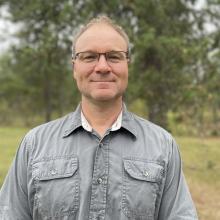
Stephanie Over is the Natural Asset Project Coordinator for Parkland County’s Agriculture and Environment Services Department. In her current role, Stephanie is responsible for coordinating the county’s Natural Asset Inventory and Valuation Project. Stephanie worked in the environmental consulting industry prior to starting with Parkland County as a Monitoring Technician over 3 years ago.


Resources:


Thanks to our funder and to our webinar series partner:


NAI logo

Webinar details

Topic
Infrastructure
Water
Region
Canada
Impact area
Nature
Engage
IISD in the news

Canada, a giant oil producer, urges others to end fossil fuel subsidies

Canada is pushing the United States and other major economies to follow through on pledges to phase out "inefficient" fossil fuel subsidies, which have soared despite the growing threat of climate change. Such subsidies hit records last year, according to several watchdog groups, including one that estimated that major world economies—members of the G-20 cooperation forum—surpassed $1 trillion in subsidies for the first time in 2022. That’s a fourfold increase over subsidy levels in 2010, the year after G-20 nations agreed to phase out support for fossil fuels.

September 22, 2023
IISD in the news

Carbon sequestration among a plethora of carbon delusions

A recent report sponsored by an environmental advocacy group and think tank, the International Institute for Sustainable Development, examined carbon capture and storage. The new research draws on available data from about 30 currently operating commercial carbon capture facilities globally, including a handful in Canada.

September 21, 2023

IISD in the news details

IISD in the news

What happens to Canada after oil demand peaks?

What will the energy transition mean for Canada's oil and gas sectors, which have long been a powerhouse of the country's economy? Aaron Cosbey, a senior associate and economist at the International Institute for Sustainable Development, lays out what he sees happening to demand for fossil fuels in the next decade, and how the country can navigate the transition to minimize economic disruption.

September 20, 2023

IISD in the news details

Webinar

From Promise to Practice: Unpacking Canada’s Sustainable Jobs Act and its impact on a just transition

September 28, 2023 12:00 pm - 1:30 pm ET

via Zoom

(Open to public)

Canada has started acting on its international commitments to ensure a just transition for workers and communities as we move away from oil and gas. The government recently introduced the Sustainable Jobs Act and the Sustainable Jobs Interim Strategy, along with initial funding commitments. Does this draft legislation meet the needs of workers and communities, or could it be strengthened to do so? What are the next steps forward for a just transition in Canada? In this webinar, labour, Indigenous, and environmental experts share their analysis of the federal sustainable jobs legislation and key amendments, their assessments of the government’s progress to date, and their visions of the path forward.

The webinar comes at a critical time, as the legislation will move through committee hearings this fall, with opportunities for amendments. The session includes short presentations from each speaker, followed by a moderated Q&A.

Agenda

Welcomes and Introduction

Laura Cameron, Policy Advisor, International Institute for Sustainable Development

Speaker Presentations

Ken Bondy, National Representative, Health, Safety, and Environment, Unifor

Cara Sanders, Board of Directors Chair, Indigenous Clean Energy

Megan Gordon, Senior Analyst, Pembina

Matt Hulse, Lawyer, Ecojustice

Q&A

Closing Comments

Webinar details

IISD in the news

Alberta and Canada are talking about claiming emissions reduction credits for exporting fossil fuels

Alberta and Ottawa are searching for ways to claim credit for potentially reducing greenhouse gas emissions in countries that swap their coal-fired power plants with Canadian gas, documents obtained by Canada's National Observer reveal. Energy discussions between Canada's largest oil-producing province and the federal government are taking place over the next year. A draft text of the working group's terms of reference shows the two sides, which are usually at odds over climate policy, are teaming up to explore how to use Article 6 of the Paris Agreement to the fossil fuel sector's advantage.

September 14, 2023

IISD in the news details

Topic
Energy
Region
Canada
Impact area
Climate
Press release

Freshwater connectivity can transport environmental DNA through the landscape

A new paper published in the journal Proceedings of the Royal Society B used environmental DNA (eDNA) metabarcoding to analyze fish and zooplankton communities. 

September 13, 2023

The study found that the movement of water between freshwater bodies, or freshwater connectivity, can transport eDNA. This highlights the potential of eDNA to provide a comprehensive view of freshwater biodiversity.

Aquatic ecosystems are connected by waterways, which allow fish, plants, and other organisms to move from one place to another. This connectivity is important for the resilience of aquatic populations, but it can also make it difficult to track the DNA of these organisms. 

The study, led by Dr Joanne Littlefair, a lecturer in biological sciences at Queen Mary University of London, looked at three lake networks containing 21 lakes in Canada’s Boreal Forest at IISD Experimental Lakes Area. The researchers found that within-lake eDNA generally reflected the habitat preferences of the species, but that some eDNA was also transported into downstream lakes. Lakes with a higher degree of connectivity had more eDNA detections that could not be explained by conventional monitoring techniques. 

The findings have implications for the use of eDNA to monitor biodiversity in freshwater ecosystems. eDNA is a promising tool for biodiversity monitoring, but data must be interpreted in light of connectivity in the landscape. 

“eDNA can be used to detect the presence of species that are not easily monitored using conventional methods, including invasive species, or for monitoring the presence of rare or endangered species,” said Dr Littlefair”.  

“But it’s not all bad news. Our study showed that eDNA surveys can be carefully designed to consider the connectivity of the freshwater system being studied. In systems with high levels of connectivity, it is important to collect samples from multiple locations, which will allow us to build a complete picture of the biodiversity present”. 

The study also highlights the need for more research on the factors, such as effects of water movement, influencing the spatial resolution of eDNA detection. For example, if the water in an ecosystem is moving quickly, then it may be necessary to collect more samples to increase the chances of detecting eDNA. This research will help to improve scientists' understanding of how eDNA can be used to monitor and conserve aquatic biodiversity. 

The study was funded by the Natural Sciences and Engineering Research Council of Canada (NSERC) and the WSP Montreal Environment department. The study was a collaboration between researchers from the UK’s Queen Mary University of London and the following Canadian institutions: McGill University, Lakehead University, IISD Experimental Lakes Area, and SHARCNET. Dr Littlefair worked at McGill University and then QMUL during the study.  

IISD in the news

New Report Finds Carbon Capture And Storage Far Too Expensive

A new report by the International Institute for Sustainable Development found carbon capture and storage (CCS) technologies to be very expensive in Canada.  According to the report, which focuses on carbon capture in the context of Canada's oil and gas industry, the climate solution’s persistently high costs are rooted in the "high design complexity and the need for customization."

September 11, 2023