Insight

Citizen Science: Gathering rivers of information for the knowledge pool

Karla Zubrycki describes some of the exciting "citizen science" work happening in the Lake Winnipeg Basin and explains why it can be so important for governments and the scientific community.

February 23, 2017

There must be something in the water in the Lake Winnipeg Basin because an increasing number of groups, from non-governmental organizations to schools, are taking an interest in how citizen science can help us understand the one million-km2 basin.

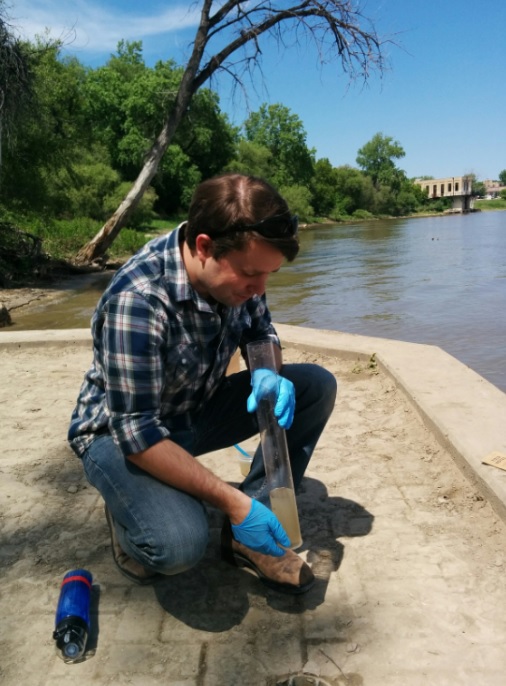
“Citizen science” is a term used to describe when members of the public collect—and even analyze— scientific data, often in collaboration with professional scientists. For example, a member of the public might collect samples of water from a stream close to his or her house, or take samples of soil from a nearby park. With its use of non-professional volunteers to help answer questions about the environment, citizen science employs engaged citizens interested in understanding their world.

IISD president Scott Vaughan has even suggested that citizen science can help increase compliance with environmental regulations and standards, through such things as air quality apps on smartphones and other user-friendly technologies.

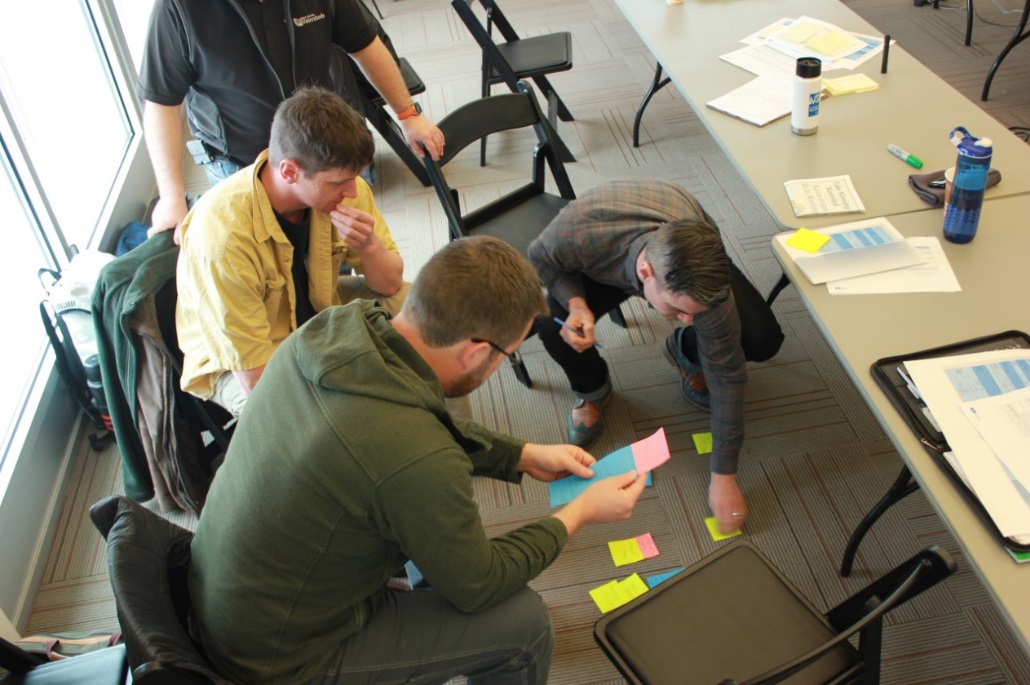
On January 24 and 25, 2017, groups from both sides of the Canada and U.S. border convened for a workshop at the International Peace Garden in Manitoba, Canada to discuss existing citizen science programs and the potential for collaboration—including on a transboundary basis.

Many of the organizations at the workshop are already engaged in citizen science in some way. The Lake Winnipeg Foundation has developed a new phosphorus monitoring approach to help it gather data on areas of southern Manitoba that are contributing the most phosphorus to Lake Winnipeg. The River Watch program of the Minnesota-based International Water Institute and Manitoba-based South Central Eco-Institute connect with students and other volunteers to monitor water quality in Minnesota, North Dakota and Manitoba. Here at IISD, we have partnered with Canadian Geographic Education to engage with schools in Manitoba, Saskatchewan, and North Dakota. These students explore land and water linkages by collecting aquatic and terrestrial (e.g., species) data that can be put in a larger context using the following established citizen science programs: Freshwater Watch, Community Collaborative Rain Hail and Snow Network (CoCoRaHS) and iNaturalist.

 

Citizen Science and Policy

Some citizen science initiatives form in reaction to the belief that governments and professional scientists have not—for varying reasons—gathered adequate data. At the same time, some governments are now recognizing that citizens can be a valuable resource; data collection can be time-consuming and, by harnessing the interest of volunteers more data can be collected, providing better information with which to make informed decisions.

The European Commission (EC) has recognized the value of citizen science in recent years, funding a two-year initiative to research and advise on the use of citizen science in the bloc. Two of the outputs, a green paper (2014) and white paper (2014) on citizen science in Europe, make links to large-scale European policies, such as the Europe 2020 Strategy focus on innovation—suggesting that citizen science is a "social innovation" that could help fuel the region’s growth.

Specific countries are also exploring citizen science as a tool. The Citizen Science Strategy 2020 for Germany makes a case for the "transformation potential" of citizen science. One of its recommendations encourages “incorporating citizen science results into decision-making processes,” suggesting that “scientific results from citizen science projects can provide evidence for decision-making policy and planning processes.” As with the EC papers, the German strategy also emphasizes the need to develop systems for volunteer training and data quality. However, it assumes that if project design is appropriate, credible data can be collected and used by scientists and governments for evidence-based decision-making. Data quality is one of the most common hesitations about citizen science, and it is a valid one. A recent article in Frontiers in Ecology and the Environment suggests additional measures for quality assurance and control can include iterative development of protocols, using standardized and properly calibrated equipment, data validation by experts, replication and calibration across multiple volunteers and statistical modelling of systematic errors. The authors comment that “each citizen-science dataset should therefore be judged individually, according to project design and application, and not assumed to be substandard simply because volunteers generated it.”

Yet not all locations in the world are as welcoming of citizen science. For instance, Wyoming brought in a data trespassing law in 2015 that, depending on the interpretation, may make citizen science illegal on federal lands. Notwithstanding such exceptions, citizen science is increasingly accepted in many places.

Water-Related Citizen Science

Canadians have grasped the value of citizen science, with initiatives growing across the country, from the Columbia Basin headwaters, where volunteers are collecting samples to help researchers understand climate change effects on the basin’s water balance, to Atlantic Canada’s Community-Based Environmental Monitoring Network , which has collected environmental data in eastern provinces since 2004.

Water-focused citizen science initiatives are also growing around the world. Since 2007, nearly 1 million people in the United Kingdom have participated in the Open Air Laboratories Network, a national initiative to collect a range of environmental data, from invertebrates in waterways to air quality (measured by lichens and fungus observed on trees). For an initiative called NETLAKE, participants are collecting data on 25 lakes across Europe to help scientists understand a range of water quality parameters, including the presence of microplastics. Volunteers in 17 countries monitor nearshore ocean ecosystems through Seagrass Watch, one goal of which is “to provide an early warning of major coastal environment changes.”

Citizen Science in the Lake Winnipeg Basin

It is important to monitor changes in the Lake Winnipeg Basin. We know major changes have occurred in recent decades—from increased nutrient loading, to the spread of invasive species to the emerging effects of climate change. The more information we have, the better our ability will be to identify and adapt to these changes.

The organizations and participants at January’s citizen science workshop realize it is not solely the government's role to track what is happening in our watersheds. Citizens can be an active part in their management, helping governments to identify what actions would be most effective to achieve desired outcomes such as reduced nutrient loading and climate change adaptation.

At the same time, these exciting initiatives that harness citizens’ enthusiasm for science also provide students with hands-on experiences, build the capabilities of communities, and encourage groups on both sides of the border to work together to improve their environment.

 

Insight details

Topic
Water
Region
Canada
Insight

Webinar: Zombie Energy: Climate benefits of ending subsidies to fossil fuel production

On Thursday February 16, 2017, IISD’s Global Subsidies Initiative presented a webinar which convened experts who have crunched the numbers on both fiscal and climate benefits of ending fossil fuel subsidies at the level of countries, markets, and the entire world. This is a recording of that webinar.

February 23, 2017

On Thursday February 16, 2017, IISD’s Global Subsidies Initiative presented a webinar which convened experts who have crunched the numbers on both fiscal and climate benefits of ending fossil fuel subsidies at the level of countries, markets, and the entire world.

This is a recording of that webinar.

For more information on the webinar click here.

Insight

Comprehensive Wealth in Canada: IISD's report launch

On December 1, 2016, IISD publicly released a report on measuring Comprehensive Wealth, an innovative approach, never before undertaken in Canada, to measuring wealth that looks beyond merely GDP.

February 22, 2017

On December 1, 2016, IISD publicly released a report on measuring Comprehensive Wealth, an innovative approach, never before undertaken in Canada, to measuring wealth that looks beyond merely GDP.

The report was launched at the Canadian Parliamentary Press Gallery, by Scott Vaughan, President-CEO, IISD and Canada’s former Environment Commissioner and Robert Smith, lead author of the report, IISD.

This is a recording of the press conference.

Insight

Taking the Leap to Realign Trade and Sustainable Development: Now is the time

Senior Fellow Mark Halle explains why now, at this critical juncture, is the time to realign the trade sector and the concerns of the sustainable development agenda.

February 21, 2017

In the early years of the World Trade Organization (WTO), advocates for sustainable development built up considerable frustration at the condescending and often dismissive attitude of the trade policy community towards their concerns.

Trade was deemed to be “hard” policy, along with fiscal, investment and security policy. Sustainable development was “soft” policy—important, but only in the way that sports, youth and cultural policy might be. Sustainable development is from Venus; trade is from Mars. The hardscrabble horse-trading of the mercantilist trade culture really did seem planets away.

Of course, most trade policy professionals would readily concede that sustainable development is the long-term goal, the exalted end point on which humanity must set its sights. After all, this is enshrined in the preamble to the WTO agreements. However, in the meantime, there were deals to be crafted and the challenges were tough enough without over-complicating them with additional requirements relating to social justice or environmental responsibility. Sustainable development is a good objective in principle; in practice, the trade community sees its role as limited to helping generate growth, which, in turn, will enable countries to address poverty and environment. Anything more requires too many sacrifices.

As advocates for sustainable development we tend to focus on another range of sacrifices—those that we are asking future generations to make without consulting them. Trade assumes the rewards of liberalization and asks concrete evidence of those doubting them. We ask that any aspect of trade policy and practice prove its compatibility with the longer-term goals set by our community of nations—for example, the Sustainable Development Goals (SDGs). For us, any aspect of trade practice that impedes or undermines progress in that direction should be dropped, amended or redesigned. If it is not, our chances of achieving the SDGs by 2030 are bleak.

It is not that trade rules directly or immediately undermine sustainable development. Mostly, they are put in place for honourable and objectively defensible reasons. The harmful effect comes from the fact that their impact is positive only if other policy measures are taken in parallel—such as retraining of workers whose jobs are lost to more competitive trading nations. And while the trade rules are binding and enforceable as international commitment, the domestic policies needed to avoid harm are often not put in place. Trade liberalization brings a mix of benefits and costs, with the benefits generally prevailing in aggregate. But this is scant comfort to those on the losing end of the equation, especially if the competitive pressures placed on states by liberalization prevent them from adequately addressing the predicament of the losers. Constantly repeating the mantra that trade is good (and justifying the claims with models based on inflated forecasts and dubious assumptions) and that a robust, rules-based, multilateral framework for trade offers the best of all possible worlds is no substitute for public policy that addresses job dislocation, rampant unemployment or environmental degradation.

Many sustainable development advocates gave up on trade agreements long ago. They regard the current wave of incipient multilateral trade agreements as an unwelcome extension of an economic system that benefits the rich and that has signally failed to deliver balanced—much less sustainable—development. Instead, it has tended to exacerbate social exclusion while undermining the environmental foundation on which the society depends. Others continue to believe that there is considerable common ground to be found if only the will to explore it could be located.

Many sustainable development organizations relish the prospect that public rejection of the Trans-Pacific Partnership (TPP) or the Transatlantic Trade and Investment Partnership (TTIP) might force countries back to their drawing boards with the instruction better to address the social and environmental consequences of their implementation. Others see these and similar agreements as irreparable and would be happy to see them simply sink beneath the waves. Few suspected, however, the scale and force with which the very fundamentals of open, rules-based trade would be called into question

Recent political developments like the Brexit vote, the election of Donald Trump and, more generally, the political capital that populist parties derive from slamming trade have taken the wind out of the sails of trade negotiations. More serious, there is talk of dismantling existing agreements and introducing protectionist measures that are entirely incompatible with WTO rules. So not only is trade liberalization no longer moving forward, there is a real chance that it might slip back, perhaps even dramatically.

Some will say that the trade community is getting what it deserves. It studiously ignored those who insisted that the real-life consequences of trade liberalization had to be taken seriously, failing which a strong backlash might occur. That backlash against trade liberalization has now arrived with a vengeance. And yet it is a Pyrrhic victory. Only the most radical anti-trade advocates have reason to celebrate. A more sober assessment of the risks and benefits of dismantling the international trade policy architecture would quickly conclude that there are no real winners, and that the potential harm to both trade and sustainable development are considerable.

Maybe the glowering storm cloud has a silver lining? The present situation might provide an opening for genuine cooperation and innovation between the trade and sustainable development communities. Clearly trade policy will now need to rebuild public trust, and that will involve demonstrating how the benefits of open trade can be achieved without paying an unacceptable price in social and environmental terms. And the sustainable development community will need to defend open trade if it genuinely does advance social inclusion and environmental responsibility. The search for this middle ground will require a great deal of creativity and innovative thinking. It will require rallying both communities around a new narrative and binding them together in a common culture, not least to address the SDGs that specifically link trade to broader public policy targets like employment and health.

This opportunity would not have been possible without the slap in the face that the multilateral trade policy community has received. But given the dangers represented by nascent protectionism, the trade and sustainable development communities should join forces to move forward toward a form of trade policy and practice that genuinely advances sustainable development now, and not in some ill-defined and distant future.

Insight details

Insight

Facing the Climate Change Conundrum: A pessimist’s and an optimist’s perspective

We asked a “pessimist” and an “optimist” to share their hypothetical views about climate change futures.

February 16, 2017

According to the World Meteorological Organization (WMO), 2016 was the hottest year on record.

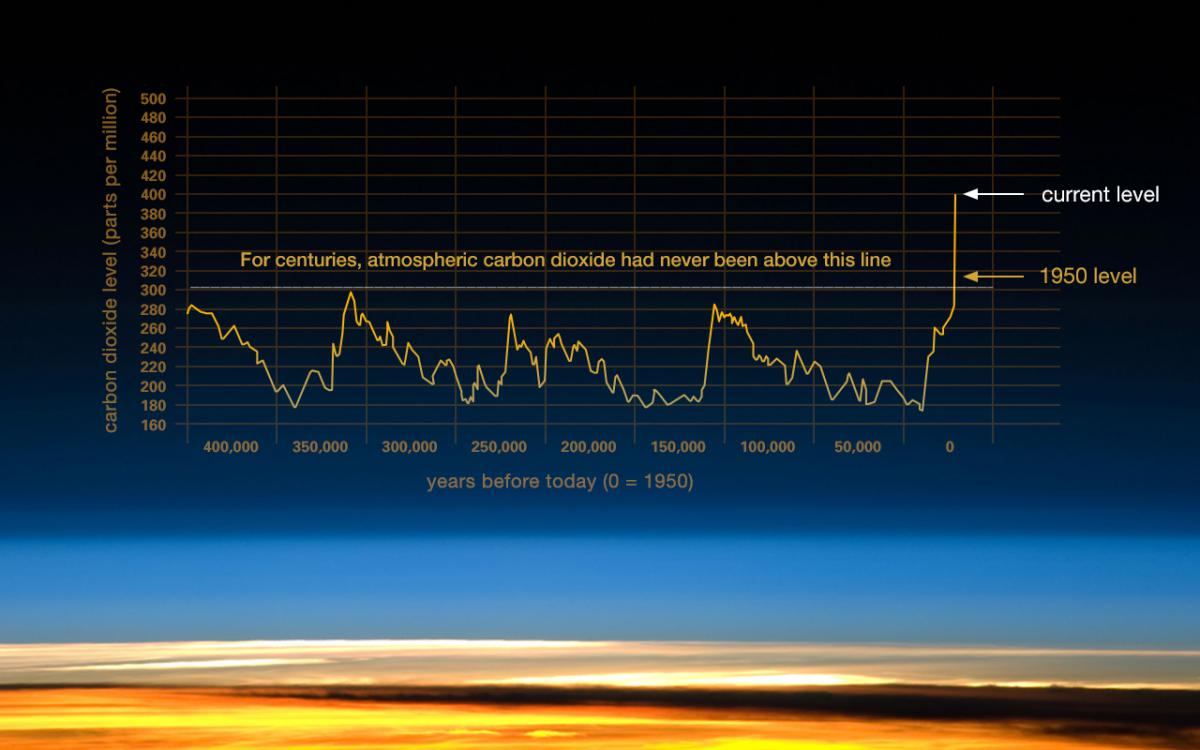
Global average temperature in 2016 was about 1.1°C higher than the pre-industrial period. This may sound like a small increase, but it is not trivial. Scientists are concerned about the speed of the increase: a temperature rise that would typically occur over a few centuries has happened over just a few decades. Since the industrial revolution, we have seen a rise in greenhouse gases exceeding levels not experienced for over 650,000 years. The science is clear—the climate is changing, and this change is caused by human activity.

Source: NASA. Data: National Oceanic and Atmospheric Administration. Some description adapted from the Scripps CO2 Program website, "Keeling Curve Lessons."

These changes are troubling, and forecasts are not any better. To stay within climate-safe limits, we must reduce our emissions and limit temperature increases to no more than 2°C while aiming to stay below 1.5°C. If all countries deliver on their current climate pledges, the world will likely experience a 2.9 to 3.4°C average temperature increase. Inaction could cause warming of over 4.5°C. These troubling forecasts are twice the maximum temperatures we have committed to. The next few years will be critical to bending our emissions curve, or it will become incredibly difficult to reduce the pace of increasing emissions.

As researchers and practitioners in the field of climate change, our work is inseparable from scientific evidence and the willingness of governments, the private sector and individuals to take action. For some, it is about preparing for a rather grim future characterized by more frequent and intense climatic impacts. For others, is about building resilience and taking advantage of opportunities despite adversity—it is about hope. For many, the future oscillates between the two.

With the new U.S. administration, the future of climate action is even more uncertain. Will the international community fill the gap and take bolder steps with the potential absence of U.S. leadership on climate? Will market forces and private sector ingenuity get us there?

One of the key conundrums is how we can remain hopeful while facing the growing—and, for some, irrefutable—evidence of change around us.

We asked a “pessimist” and an “optimist” to share their hypothetical views about climate change futures. They provide contrasting approaches to ingenuity, entrepreneurship and social movements, which can be bastions of hope (or a lack thereof) in response to climate change impacts.

Opening Arguments

The Optimist​: Being “hopeful” about climate change requires a strong foundation of reality. As stewards of our planet for generations to come, climate science and projections are not just useful but essential to informing and strengthening local, national and international responses to climate change impacts. Climate science is necessary in order to prepare for and respond to present and future challenges, but also to benefit from the opportunities that may emerge with change.

Emerging evidence related to climate change impacts is also revealing creative responses and collaborative efforts to cope with those impacts, and is helping us to understand that, as a global community, we are able not only to survive and recover from shocks, but also to adapt and even thrive amidst change. There are “bastions of hope” emerging constantly around the world—from communities, to governments and organizations, and in particular, as the result of their joint efforts. There is a lot that we can learn about hope from adaptation and resilience-building initiatives in developing countries.

The Pessimist​: Being “realistic” about climate change means accepting that we have inflicted irreversible damage, locking in emissions that will stay in the atmosphere for hundreds of years. The best we can “hope” for is avoiding the worst-case scenario. Climate projections show that even if we aim for 2°C, we will still cross that threshold.

Adaptation is accepting the fact that we have changed our climate. Sure, some people can adapt, but many will suffer. Adaptation efforts also fall far short of what is needed for conservation efforts, with an increasing number of species facing extinction as the temperatures rise, all because of human activity. Finally, as much as we can learn from science, we cannot predict how bad it could be. The web of life is complex, and science has not been able to project what the extinction of one species would mean for others. Climate modelling has likely underestimated current emissions and future emissions, as well as runaway impacts of climate change that can put us at a point of no return.

Ingenuity

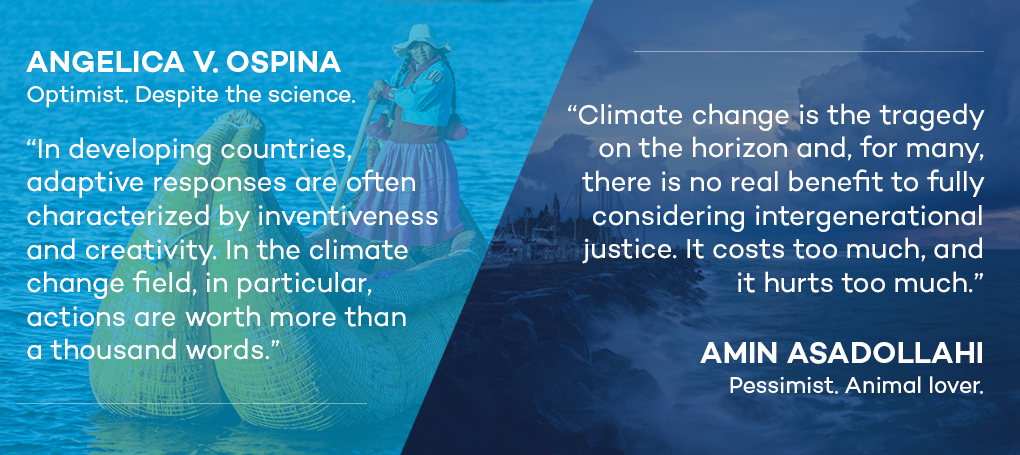
The Optimist: In developing countries, adaptive responses are often characterized by inventiveness and creativity, which are key to circumventing the challenges posed by limited resources and institutional barriers. In the climate change field, in particular, actions are worth more than a thousand words. Examples of these responses are highlighted yearly as part of the UNFCCC’s Momentum for Change initiative, demonstrating that ingenuity in climate action is making a difference. Among them, a project by a women-led NGO in Morocco is harvesting fog from the air to provide drinking water for people on the edge of Morocco’s Sahara Desert, and, in Seangor, Malaysia, a Connected Mangroves initiative is combining cloud, machine-to-machine and mobile broadband to help the local community to better manage the growth of new mangrove saplings.

The Pessimist​: The problem is not on whether we have the ability to come up with technological solutions to reducing emissions, but rather that we do not have the will. It is easier to live within the status quo of a mode of production that capitalizes on short-term benefits at the expense of future generations. Climate change is the tragedy on the horizon and, for many, there is no real benefit to fully considering intergenerational justice. It costs too much, and it hurts too much. How likely are we to give up our current way of living so that future generations have a planet that is livable? Would you start taking public transit? Live closer to work? Change your daily consumption behaviour to minimize your footprint? I would think a majority would have a beef with that (literally, for example, being unwilling to give up GHG-intensive beef). Finally, as the impacts of climate change become more pressing, survival will be the modus operandi for the masses.

Entrepreneurship

The Pessimist​: Our societies are based on ever-growing consumption and a profit-driven mentality. Some have suggested, without offering a real and practical alternative, that capitalism as the root cause of environmental destruction. It’s not like socialism has been better at protecting the environment—just look at the cotton production in the Soviet Union that led to the collapse of the Aral Sea. Some refer to electric mobility revolutionizing transportation and the masses giving up their fossil fuel-powered vehicles for electric cars. Let’s be honest: at least in the case of the many, people are not buying a Tesla to save the planet—they are buying it because it’s cool and it’s fast (that is, if they can afford it). Environmentally friendly products have also become products of entitlement, not accessible or affordable, with a yuppie culture that is fonder of the label than the action.

The Optimist​: The sustainability of climate change strategies is a crucial component in the achievement of a resilient future. New forms of entrepreneurship suggest that it is possible—and increasingly necessary—to combine adaptive responses with income generation opportunities. For example, the Women’s Empowerment for Resilience and Adaptation Against Climate Change initiative has formed an “association of women-led groups that collect individual-savings of at least USD 1 once a week to generate a pool of funds, from which women borrow and invest into income-generating activities that address climate change. This initiative also empowers women [to] undertake land planning, agro-forestry and soil conservation practices and use energy saving stoves.”

Social movements

The Pessimist​: Organizing the majority to act on climate is a futile act. Sure, you’ll see a protest here and there with possibly a visible turnout, but don’t expect to see a movement that lasts the life of an election cycle. They come and they go. And when they come back, you’ll see the same people, over and over again. Finally, ask the masses whether climate is changing and they will likely say “yes.” But ask them whether they will change their behaviour, especially if it costs them, they would likely say “no.” After all, it is easier to pass the cost down to future generations than to be responsible for one’s own actions (and it’s cheaper for the polluter).

The Optimist​: There is growing evidence of the power and the potential of social-driven change in the climate change field. Although changing behaviours and perceptions of risk is a long-term process, there are collective efforts emerging around the world. In Australia, women are building a movement to take action on climate change in their households, workplaces and communities. The organization 1 Million Women aims at getting one million women to pledge to take small steps in their daily lives that save energy, reduce waste, cut pollution and lead change. There are increasing examples of the use of social media (Facebook, Twitter) to organize and mobilize citizens for disaster risk reduction, early warning and response.

Concluding Remarks

The Pessimist​: Climate is changing and the human species is responsible for it. Without a doubt, we will live in a very different world as we age, and the world we pass on to future generations will not be a pretty one. The question is not whether we can keep within a climate-safe limit—we should find every opportunity to demand that our politicians take action and raise ambition. That said, we need to act on climate not because politicians will act to keep the world within climate-safe limits, but because giving up is not option. We must avoid the worst case of a world in which climate change exceeds 2, or 3, or 4+ degrees Celsius.

The Optimist​: To date, 126 parties have ratified the Paris Agreement. Change is already underway. Being hopeful is not at all about denying or minimizing the role of climate change science. It is about understanding it and using it to shape our future, with the conviction that we still can—and will—make a positive impact on the lives of the most vulnerable. It is about owning the consequences of our actions on the environment, on each other and on future generations. It is about constantly recognizing, learning from and being inspired by emerging “bastions of hope.” It is about engaging in a constructive dialogue with the pessimists and the skeptics, and meeting somewhere in the middle in order to enable action and change.

#ClimateChangeHope
#ClimateChangeDespair
#SomewhereInTheMiddle

Insight

Carbon Without Borders: Can trade policy support ambitious climate action?

The multilateral trade and climate regimes both face unprecedented uncertainty and strain. How should countries advance the urgent need for climate action without resorting to protectionism?

February 15, 2017

You can always see it coming, but you can never stop it.
Cowboy Junkies, “Bea’s Song”

Today, the European Parliament approved two historic agreements. First, they agreed to strengthen the EU climate plan. Hopefully, this will reinforce the EU emissions trading system (ETS), which has languished for the past decade due to problems of its initial design, an early over-allocation of free credits and a price stalled below EUR 10 per tonne.

The second vote in today’s European Parliament saw the approval of the Canada–Europe Comprehensive Economic and Trade Agreement (CETA), which signals a new generation of comprehensive trade and investment policy liberalization.

That both a climate and trade vote occur on the same day is ominous. While the European Parliament explicitly rejected the Commission’s proposal to include a border carbon adjustment, the drumbeat of demands to shield imports based on carbon action will undoubtedly grow louder in the weeks before the issue reappears before the Council of Ministers.

Earlier this week, the Chairman of ArcelorMittal—Europe’s largest steel manufacturer—called on Brussels to introduce a border carbon adjustment, arguing that without an adjustment at the border, countries with weaker or non-existent carbon measures will have an unfair cost advantage compared to European workers.  The argument went straight to anxiety and a core grievance in many western democracies, by arguing that with a tax on imports, more than 300,000 European steel jobs could vanish.

Last week, American leaders led by James Baker called for a USD 40 per tonne carbon tax, and a border carbon adjustment scheme to shield U.S. industries from those states that have either no or lower carbon taxes.

The urgent question now concerns how the trade system, reeling from calls for protectionism, will approach this fundamental question of climate and trade policy. Can trade policy support ambitious climate action?

There is no question that the World Trade Organization (WTO) allows countries to condition or block the entry of thousands of goods that fail to meet domestic environmental, public health or safety standards. For example, countries disallow imports of goods that contain leaded paint or that fail to meet minimum energy efficiency standards, provided their domestic goods are treated in the same way. On fiscal measures, the WTO (in GATT Article II), allows different kinds of border tax policies to smooth out differences in fiscal rates, permits some subsidies, and allows scope for trade remedies to redress differences.1

What has paralyzed WTO discussions around environmental standards is not related to specifications embedded in the physical aspects of the product (such as leaded paint) but rather characteristics of production. That is, what kind of energy systems or chemicals were used in production, but that cannot be tested at the border based on physical inspections. Several high-profile WTO legal disputes in the 1990s involved environmental production-process methods relating to marine life protection. One country (the United States) demanded that its domestic production methods—codified through law to safeguard dolphins and turtles—must be applied to all countries hoping to gain access to the lucrative U.S. market. It lost each case.

After decades of debate in committees, the WTO hoped the day would never come when climate change would be used to condition market access and equalize climate action. Part of its misgivings relate to the scope and complexity of possible action. Could winter vegetables that rely on solar-heated greenhouses have preferential import tariffs compared to those grown in greenhouses heated from coal-fired energy sources? And if the WTO allowed this practice, how could would it distinguish in tax treatment a carbon-intensive tomato, automobile, aircraft, smart phone, tonne of steel, cement, aluminum, iron ore or other imports from their lower-carbon or carbon-taxed equivalents?

That day has arrived. Others sectors will surely be lining up behind ArcelorMitall, waiting for similar treatment to shield them from lower-cost producers with no or lower carbon pricing or equivalent measures.

Unfortunately, WTO committees will not be a source of thoughtful policy here. Instead, the WTO Trade Monitoring Reportswill be an important resource for tracking increases in the use of trade measures. Like others, IISD will be watching the trends in this monitoring system.

Calls for border tax adjustment are hardly isolated to climate change, and there is no doubt a convergence of some interests. The Trump White House has hinted at sweeping border adjustments, vacillating between systemic measures to offset differences with countries that have lower corporate tax rates than promised, to a 20 per cent tariff aimed at specific countries like Mexico and China.

The complexity of these different demands is stunning. Would Europe leverage its border tax adjustment not only at China, which has introduced bold climate action, but also at the United States? How would Brussels approach those jurisdictions like Canada, with a proposed carbon price but lower initial rate than EUR 30 per tonne?

It is very likely the question of carbon border adjustment will end up as a legal dispute before the WTO.  This week, the EC Trade Commission reassured observers that any carbon tax adjustment will be compatible with WTO rules. But this is a guess, because the legal case history of border tax adjustment cases that fall under the applicable discipline (i.e., GATT Article II (2)a) is remarkably thin.

In 1987, the trade body ruling in the U.S. Superfund case argued that taxes or charges intended to curb pollution were no different from general revenue-generating taxes. Legal scholar Steve Charnovitz3 has argued that that the Superfund case has promoted a series of still-unanswered questions that still perplex the trading system, including a lack of clarity on exactly what kinds of taxes are eligible for border adjustment under the WTO, under what conditions are rebates applied to environmental, energy or climate taxes allowed (and when they might be construed as a prohibited export subsidy), and more broadly whether the WTO will allow special space for climate and other environmental policies.

In contrast, the WTO has signalled that various domestic environmental actions—be they regulations, standards, disciplined trade measures, market-based approaches—taken under the umbrella of multilateral environmental agreements (MEAs) should be compatible with WTO disciplines, insofar as they differ from unilateral action taken by countries as the extra-jurisdictional application of stand-alone domestic laws.  Yet details matter in trade law, and while the 2015 Paris Climate Agreement saw nearly all countries promising bold domestic climate mitigation action, it is unclear what measures are deemed to be broadly compatible with the Paris agreement.  

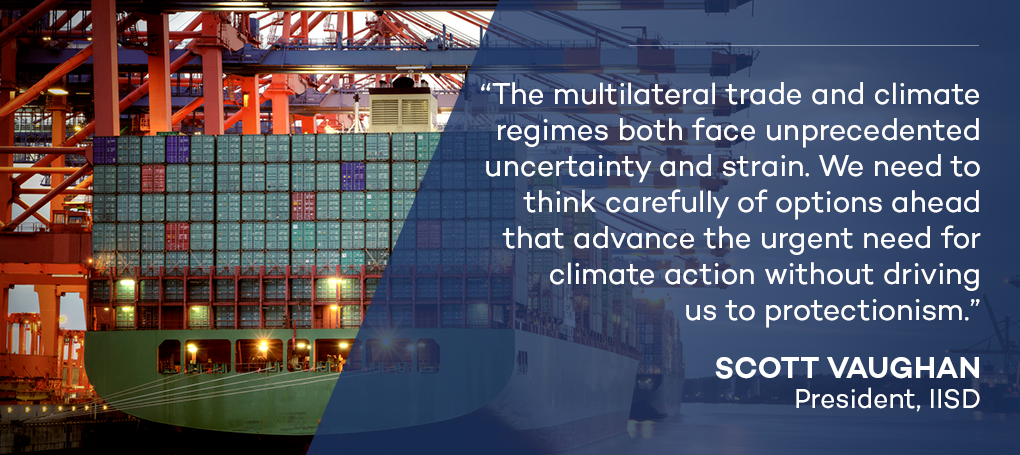
The multilateral trade and climate regimes both face unprecedented uncertainty and strain. We need to think carefully of options ahead that advance the urgent need for climate action without driving us to protectionism.

IISD is working on a number of trade matters, including using a global model to estimate the carbon-intensity of key traded sectors and products, the scope of a new generation of domestic industrial policy that fits with a rules-based system, and the relationship of investment treaties with trade agreements such as CETA and a reopened NAFTA.

NOTES

1. Article II:2(a) states: “Nothing in this Article shall prevent any contracting party from imposing at any time on the importation of any product: (a) a charge equivalent to an internal tax imposed consistently with the provisions of paragraph 2 of Article III* in respect of the like domestic product or in respect of an article from which the imported product has been manufactured or produced in whole or in part.”

2. Available at https://www.wto.org/english/tratop_e/tpr_e/trade_monitoring_e.htm.

3. Charnovitz, S. (2014, Sept. 29). Border tax equalization (Draft Paper Prepared for the Conference on Challenges September 29, 2014). Retrieved from http://indianeconomy.columbia.edu/sites/default/files/paper2-bordertax.pdf.

Insight details

Topic
Trade
Insight

Raisons pour lesquelles nous devrions nous inquiéter à propos de la richesse du Canada

In a French-language blog post, Scott Vaughan and Robert Smith explain why we need to reconsider how we measure wealth in Canada.

February 7, 2017

Les électeurs des démocraties occidentales sont en colère. La mondialisation ayant déplacé les emplois à l’étranger et les innovations technologiques visant en supprimer maints autres, la situation des emplois et de leur rémunération les inquiète.

L’insécurité culturelle causée par l’intolérance à l’échelle communautaire et les plus importants changements survenus depuis des décennies révèlent une augmentation inquiétante du nationalisme économique et politique, de la démondialisation et du protectionnisme commercial. 

L’inégalité des revenus est un important moteur de ces changements. Selon la Banque mondiale, un milliard de personnes, dont un très grand nombre vivent en Chine, sont sorties de la pauvreté au cours des dix dernières années. Néanmoins, on estime que 767 millions de personnes continuent aujourd’hui à vivre dans une pauvreté extrême. Pour 23 pays, principalement des pays d’Afrique, on estime que le revenu des 40 pour cent les plus défavorisés a décliné au cours des dernières années. Il ne s’agit toutefois que d’estimations, car la piètre qualité des données dans de nombreux pays se traduit par le fait que nous manquons de statistiques solides pour mesurer la situation à l’échelle nationale, sans parler de l’échelle des foyers individuels.   

L’analyse de la Banque mondiale révèle que malgré la réduction de l’inégalité des revenus entre pays, l’inégalité au sein même des pays a augmenté. Elle est plus importante qu’il y a trente ans. L’économiste français Thomas Piketty a averti que les politiques publiques devraient être axées sur la « spirale sans fin de l’inégalité » connexe à la mondialisation, et cela sans attendre [traduction]. Selon lui, il faudrait obtenir de meilleures données et une analyse plus approfondie pour comprendre la relation entre la mondialisation et l’inégalité.

C’est exactement ce qu’a fait un nouveau rapport publié par l’Institut international du développement durable. Ses auteurs se sont penchés sur la situation des Canadiens au cours des trente dernières années; situation mesurée non pas en fonction du produit intérieur brut (PIB), mais du patrimoine compréhensif. Alors que le PIB est devenu l’un des indicateurs mondiaux ayant le plus d’influence—utilisé quotidiennement par les ministres des Finances, les investisseurs et les foyers—il est, de par sa conception même, axé très étroitement sur le revenu. Ce que Thomas Piketty et maints autres demandent, c’est la mesure de notre richesse collective. Plutôt que de mesurer des flux de revenu trimestriel, comme le fait le PIB, le patrimoine compréhensif mesure les actifs fondamentaux qui, ensemble, constituent l’assise du bien-être  sociétal. Ces actifs sont le capital naturel (nos terres, ressources et écosystèmes), le capital produit (ponts, métros, bâtiments et autres infrastructures similaires), le capital social (confiance et coopération résultant de normes communes) et, ce qui est le plus important, notre capital humain.

Alors, quels sont les résultats du Canada depuis trente ans? En bref, pas très bons. Le patrimoine compréhensif du pays a presque stagné, croissant de moins de 0,2 pour cent par an, compte tenu de l’inflation et de l’augmentation de la population. Il s’agit du taux de croissance du patrimoine compréhensif le plus bas des pays membres du G7.

Selon notre rapport, trois préoccupations très inquiétantes sous-tendent ce piètre résultat. La première concerne le capital humain, qui constitue 80 pour cent de notre richesse. Malgré le fait qu’un nombre jamais égalé de Canadiens investissent dans l’éducation, la formation et les diplômes, leurs gains moyens pendant la durée d’une vie sont aujourd’hui exactement les mêmes qu’en 1980.  Étant donné que l’expression « Canadien moyen » recouvre les personnes dont les perspectives de gains se sont améliorées, cela suggère que pour certains, les gains moyens pendant une vie ont décliné au cours des trente dernières années.

La deuxième préoccupation quant au piètre résultat du Canada dans le domaine de la richesse concerne notre capital naturel. Au cours des trente ans se terminant en 2013, dernière année de notre analyse,  notre inventaire de capital naturel a diminué de 25 pour cent, un chiffre tout à fait étonnant. Une partie de ce capital, par exemple l’argent et le plomb, a été presque complètement épuisé. Une autre, dont  notamment le pétrole et le gaz, a subi des pressions encore plus fortes en raison de l’effondrement des prix du pétrole à l’échelle mondiale en 2015. De nouvelles données très récemment publiées par Statistique Canada indiquent que la valeur des sables bitumineux est passée d’environ 535 milliards de dollars en 2014 à juste 50 milliards en 2015. À moins que les prix du pétrole ne remontent, cette perte massive de richesse, soit plus de 115,000$ pour chaque Albertain, pourrait s’avérer permanente.  

Seul le capital produit a accusé une solide croissance pendant la période étudiée (une croissance moyenne de 1,7 pour cent par an). Cependant, près de 70  pour cent de l’investissement dans le capital produit étaient concentrés dans seulement  deux secteurs : le logement et l’exploitation pétrolière et gazière. L’instabilité des prix des logements est notoire. Ainsi, la Banque du Canada a récemment prévenu qu’un détenteur d’hypothèque à « proportion élevée » sur trois ne serait pas admissible à un financement en vertu des nouvelles règles adoptées par le gouvernement fédéral. Le pétrole et le gaz non seulement font face à une volatilité à court terme, mais à des déclins à long terme dus aux promesses faites par le Canada (et 165 autres pays) lors du sommet de Paris sur les changements climatiques de réduire de 80 pour cent l’utilisation des combustibles fossiles.

Étant donné l’importance de ce qu’a révélé notre rapport, on pourrait assumer que le gouvernement fédéral et ceux des provinces surveillent déjà le patrimoine compréhensif du Canada, et le renforcent activement. Cependant, ce n’est malheureusement pas le cas. Aucun gouvernement au Canada, ni ailleurs dans le monde, ne mesure le patrimoine compréhensif. Les pouvoirs publics ne peuvent prendre de mesures à l’égard de ce qui n’est pas évalué. Nous sommes convaincus qu’il est temps de remédier à cette situation.  

Insight

As U.S. and Canadian Climate Policies Diverge, How Do We Ensure Canada’s Competitiveness?

With relatively new administrations on both sides of the border, the United States and Canada have staked out opposing views on climate change. That has environmentalists and businesses worried. This has potentially damaging consequences for Canada’s trade competitiveness.

January 27, 2017

With relatively new administrations on both sides of the border, the United States and Canada have staked out opposing views on climate change. That has environmentalists and businesses worried.

The former fear a downgrading of environmental protection in the world’s biggest economy. The latter point to the risk of increasingly divergent regulatory regimes in the two countries, with potentially damaging consequences for Canada’s trade competitiveness. We spoke with Aaron Cosbey, an IISD senior associate, to understand the consequences of that divergence, and what Canada might do to safeguard its economic and environmental interests. What follows is an edited transcript of the conversation.

Let’s start with the gap that appears to be forming between U.S. and Canadian climate policies. In broad strokes, what do we know?

Well the new U.S. president hasn’t announced his climate change policies yet. But we have a pretty good indication that we won’t be seeing an activist administration, or Congress, over the next four years when it comes to climate change. For example, President Donald Trump's choice for the Environmental Protection Agency’s administrator has spent his career fighting that agency’s regulations, such as the Clean Air Act. We therefore expect that we won’t see high carbon prices attached to U.S. production or exports. On the other hand, the Canadian government has announced that all provinces and territories will need to introduce a carbon tax, or some sort of equivalent, by 2018. That will result in a distinct difference in the costs borne by some U.S. and Canadian producers—and that matters in Canada because over half of our imports come from the United States, and over three quarters of our exports go there.  

What industries are most vulnerable?

Basically, industries producing goods that are highly energy intensive and highly traded. Energy intensity means carbon pricing will increase costs. And being highly traded means that producers can’t just pass on those costs to their consumers because a foreign producer will undercut them. There is a small number of goods that actually pass that filter. For example, it probably excludes most manufactured goods, because the cost of the embodied carbon in those goods is minor relative to the overall cost of the good. In other words, there is so much that goes into the value of that good other than the steel (or other energy-intensive components) of which it is made. 

However, it does hit some well-known sectors, including cement, aluminum, iron and steel, paper, plastics and some chemicals—and Canada’s top 10 imports from the United States include some items on that list. It includes iron and steel, at over USD 5 billion a year. It includes plastics at over USD 11 billion a year. It includes pulp and paper at over USD 4 billion a year. If we want to know exactly which sectors will be vulnerable, we need a pretty sophisticated analysis of what the trade patterns and emission profiles look like in those sectors. However, the starting point would be sectors like these.

What options does Canada have to preserve its competiveness, and at the same time nudge the United States into taking action to curb climate change?

One option is a levy on goods imported from the United States that tries to make up for the burden that Canada’s industries bear for their carbon pollution. This is what we call a border carbon adjustment (or BCA). In effect, it is a levy that tries to level the playing field of the costs of abating climate change between domestic and foreign industries. You can also use a BCA to reduce that levy on your industry’s exports by rebating that tax at the point of export.

How would it work in practice?

The concept itself is simple, but when you get down to the details, it is devilishly difficult. For example, you can’t just target the United States; that would be illegal under the World Trade Organization (WTO) rules. You also can’t make exceptions for other countries—you have to apply it to everyone equally. That is a problem, because you might want, for example, to exempt less developed countries. Or you might also want to exempt those countries that are party to the Paris Climate Change Agreement, and that are implementing their commitments faithfully. But again, trade law doesn’t allow that unless there is a strong environmental argument for doing so, and it is not clear the Paris Climate Change Agreement obligations actually amount to a strong enough argument of that type.

Another challenge is measurement. Ultimately, you are trying to figure out how much carbon is embedded in each good that arrives at your border, and set your charges accordingly. However, different producers have different carbon emissions for the same goods. Producers in different countries buy their electricity from a whole bunch of different producers that, in turn, have different carbon emission profiles. It becomes very complicated when you get down to trying to figure out exactly what you are going to charge each producer in different countries.

As well, you would ideally adjust the BCA levy to take account of any carbon price that foreign producers face, even if it is less than what your own producers face.  But it is not simple to calculate the amount of the adjustment: how do you translate a raft of foreign climate policies into a single dollar figure for a given good?

Keep in mind though, that to be administratively feasible, a BCA would not apply to every good. It would target those that we discussed earlier—energy-intensive and highly traded products.

This points to how a BCA could run afoul with international trade law. Is it possible to design a scheme that would be compliant with WTO rules?

There is a tension between international trade law and any BCA scheme. You can design a very simple scheme that will be effective in incentivizing your competitors to mitigate their carbon emissions, but it will be illegal under WTO rules. The more you strive for legality, the more complex your scheme gets. That’s because the WTO demands that your scheme is based only on environmental objectives. To be 100 per cent safe under WTO law, you would need a scheme that accounted for exactly how much carbon is embedded in every good. It may be possible—but certainly difficult—to find a balance somewhere in the middle: a scheme that is WTO-legal and environmentally effective.

To sum up, what is the biggest benefit and risk of a BCA?

The headline benefit is preventing leakage. If you put in place a carbon tax, but all you do is chase away your industries that then go and emit carbon somewhere else, then you haven’t achieved your environmental objectives. The big risk is that you have done it in a way that is illegal under international trade law, and therefore you are going to have to dismantle the scheme. And also that you have done it in a way that is politically fractious, in which case it could backfire. If your ultimate goal is to encourage your trade partners to take more action on climate change, a BCA could do the opposite by poisoning the waters of international cooperation on climate change matters.

Thank you Aaron. Where can our readers learn more?

This is a paper that I co-authored that explains what BCAs are all about, and explores the different sorts of options available to policy-makers.

Another good resource is a shorter piece I authored that explores the challenges a government would have to consider in setting up a BCA regime.

Insight details

Insight

Durwood Zaelke Talks HFCs, Kigali and Multilateralism

The Montreal Protocol was recently amended to set up a pathway to phase out HFCs after talks in Kigali, Rwanda. We spoke with Durwood Zaelke, who was present at the talks and highly instrumental in the process, to give us an inside look into the Kigali talks, explain why phasing out HFCs is so important and indicate where we go from here.

January 26, 2017

In October 2016, representatives from 170 countries reached a landmark agreement in Kigali, Rwanda, to eliminate 90 per cent of climate-warming hydrofluorocarbons (HFCs). The amendment to the Montreal Protocol will—by some estimates—prevent up to 0.5 degrees Celsius of future global warming.

The agreement, which will commence in 2019, is complicated, as are the internal processes of such multilateral agreements. Now that the amendment is in the process of being ratified, IISD spoke with Durwood Zaelke, president of the Institute for Governance and Sustainable Development (IGSD), who has been highly instrumental in the campaign to phase out HFCs, and who was, of course, present at the Kigali talks. This is an edited transcript of our conversation.

Tell me a little about how the IGSD approaches the fight against climate change.

Here at the IGSD we focus on fast mitigation strategies, which include reducing the number of short-lived climate pollutants that are released into the atmosphere, including HFCs under the Montreal Protocol, methane and black carbon soot.

But our approach is multi-pronged. We believe that, if we are to truly mitigate the effects of climate change, we need to reduce the amount of carbon dioxide entering the atmosphere, remove carbon from the atmosphere and also get rid of those short-lived climate pollutants as aggressively as possible. This is a triple-barrelled strategy—you can’t win the fight unless you do all three.

For the last few years at IGSD, we have really focused our efforts of cutting HFCs, as they are the exemplar of how we can reduce short-lived climate pollutants using what is widely considered the most effective environmental and climate treaty ever created: the Montreal Protocol.

HFCs are organic compounds that were originally introduced to replace chlorofluorocarbons, which were discovered to contribute to the weakening of the ozone layer. Commonly found in refrigerators and air conditioning units, HFCs are a short-lived climate pollutant that contribute to climate change, but, as opposed to greenhouse gases, can be quickly removed from the atmosphere.

The Montreal Protocol was recently amended in Kigali, where more than 150 countries agreed to limit their use of HFCs. Can you tell me a little about what it was like to be inside the process, and what role you and the IGSD had?

The first thing you need to understand about these kinds of meetings is that there is always a rhythm. There are high points, where, for example, a country announces that they are ready to be more ambitious in their pledges, and then there are low points, where, for example, a country says, “We can never agree to this.” And then there is another high point, and another low point—it’s a cycle. If you are not experienced with this, you can despair when you hit the bottom, but the key is, of course to end on the upswing.

The Kigali talks were no exception to this rule. We made sure we ended on that upswing by keeping everyone there until about 8 a.m. on the Saturday, and worked as diligently as we could to address every country’s concerns. For example, there were countries, mostly the Gulf states, which were worried about high ambient temperature, and so they were given an exception. Other countries, such as India and Pakistan, were concerned that they would not be able to meet the 2024 compliance date, so they were given a slight exception, until 2028. There was, therefore, an effort to be scrupulously fair to all concerned, and this was key to getting countries to agree on the amendment. We had removed the political rhetoric from the process, and focused just on the technical aspects—exactly how these kinds of negotiations should play out.

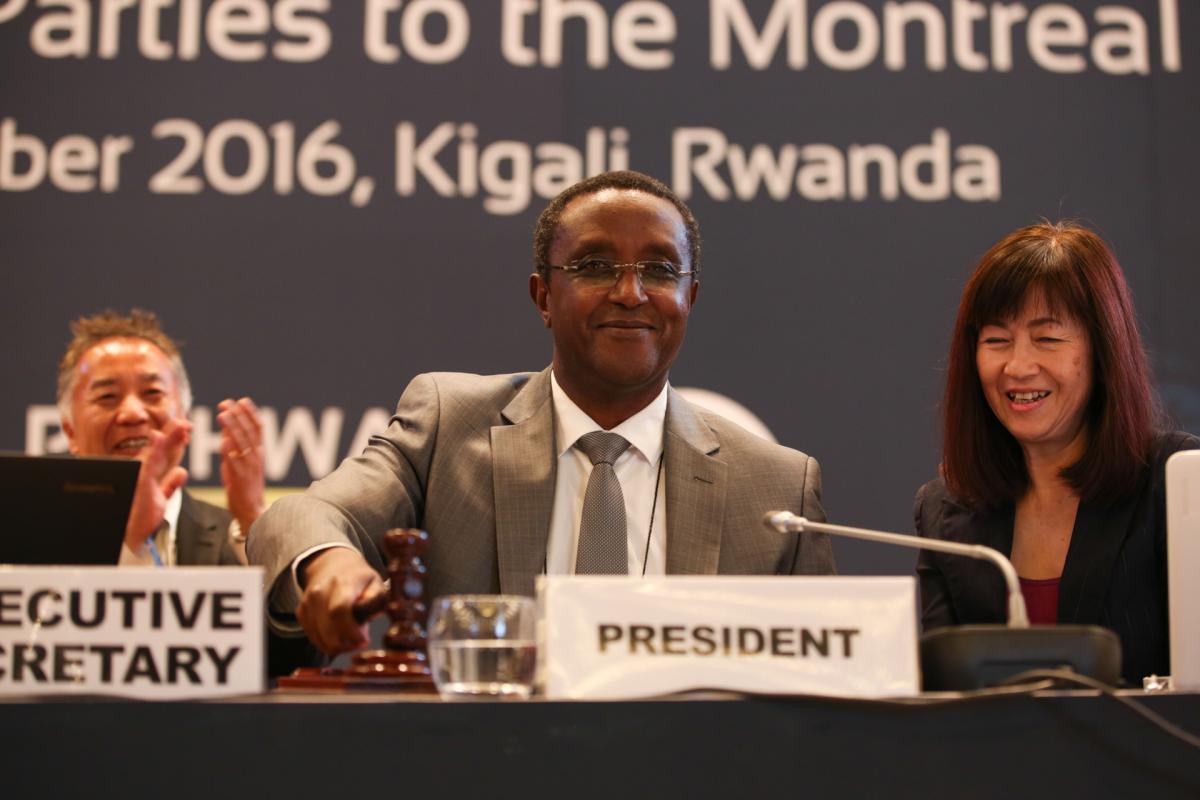
On the Friday night it looked as though we were set, but then the process of converting what had been decided into legal text began, well into the night. 1 a.m., 2 a.m., 5 a.m. came and went. There were huddles; there were translation issues. The draft text was then circulated to be looked over by all parties, and then the text had to be adjusted to meet all concerns that were raised. It was only at 8 a.m. that the gavel was banged, and the whole audience erupted in cheers, when we knew we finally had the deal. All tension was finally released, and the negotiators and experts were dancing in the aisles!

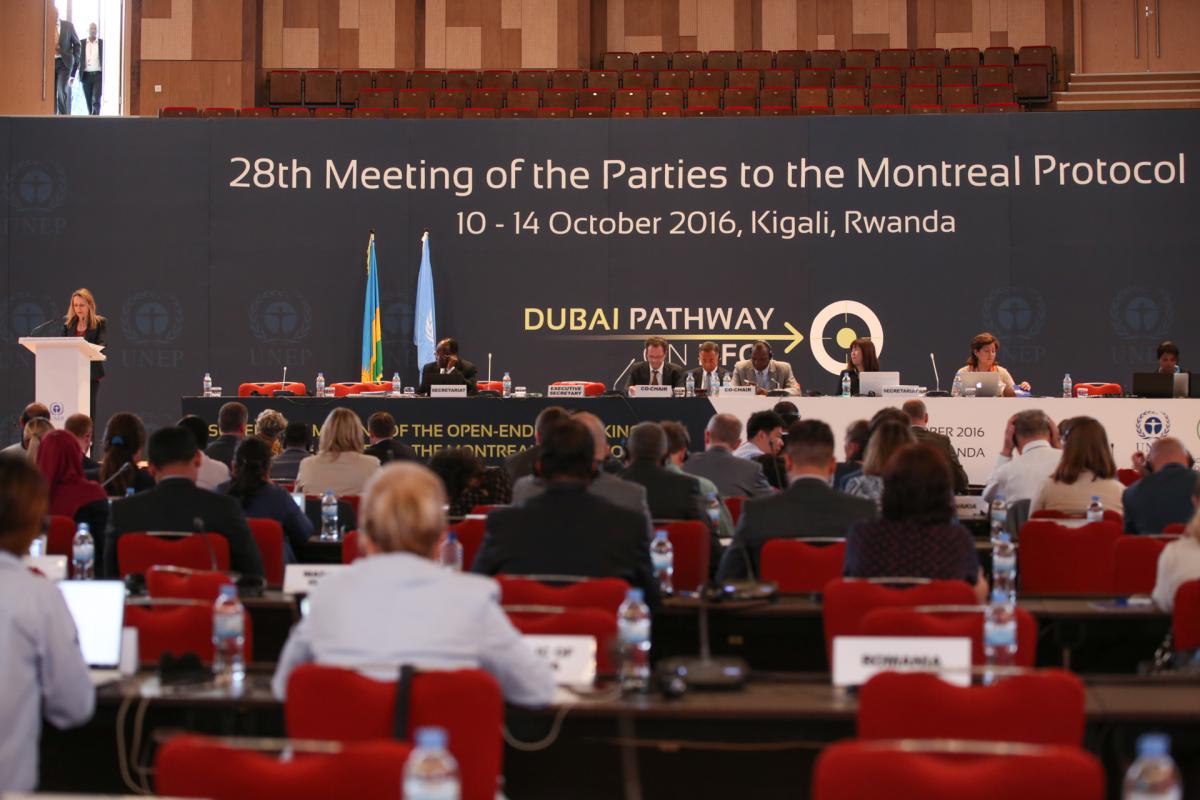
MOP 28 is gaveled to a close

MOP 28 is gavelled to a close

Who, for you, really stood out during the negotiations?

The United States, including John Kerry, Gina McCarthy, John Thompson, Jennifer Haverkamp and Rick Duke, all did a really great job, and showed great talent and the great stamina required for the talks.

The Rwandans were also great; Vincent Biruta, the Minister of Natural Resources, and his team really did a great job. Colombia and Mexico were terrific; the island states had some great representation; and the African group as a whole, led by Senegal, worked very well as a bloc.

What we saw was a unique and productive coalition of countries working together. There weren’t the problems that can plague other talks, such as a noticeable chasm between the developed and developing countries. And at the end of the day everybody said yes, and everybody felt good about saying yes, and everybody is going to feel good about strengthening this treaty as we go forward.

Vincent Biruta, MOP 28 President, gavels the adoption of the Kigali Amendment to the Montreal Protocol

Vincent Biruta, MOP 28 president, gavels the adoption of the Kigali Amendment to the Montreal Protocol

The negotiations involved more than 150 countries collaborating to come to an agreement. What does this agreement say about the importance of multilateral negotiations?

It proves that multilateralism still exists, and it proves that multilateralism still works.

I think 2016 was a very important year for multilateral action: we have kicked Paris into action a little earlier than expected, and we have achieved some big deals with the Antarctic Agreement and the Montreal Protocol, to name a few. We are in a pretty good multilateral groove right now, but we still have a long way to go to keep the increase in global emissions below 2 degrees Celsius. 

Here is my prediction for the next few years: Just as global warming leads to more global warming, initial success feeds into more success. When those negotiators in Kigali were dancing in the aisles, they got the taste of victory—and it’s a wonderful feeling, and you want more and you feel like you can get more because you have seen it done. Moreover, the fair processes seen in the Kigali talks have bred a lot of good will amongst the international community. Therefore, the multilateral success we have seen in 2016 bodes well, I believe, for the coming years.

Now we have to concern ourselves with speed. You can’t solve a fast-moving—indeed, accelerating—problem like climate change with a series of slow-moving solutions. You need to get ahead, and we can only do that by accelerating along this existing trajectory.

Why do you think the agreement is significant, and what are the next steps?

What these kinds of agreements do is make the Paris Agreement on Climate Change real. Paris is essentially a platform by which countries can some together and pledge to work together. The Montreal Protocol, on the other hand, is a mandatory treaty, to which parties must adhere, under penalty of heavy sanctions, but with a commitment of funds and support to reach those goals and keep countries’ economies growing.

This treaty will work, and consumers will benefit because the operating costs of their goods will go down. Countries will benefit because the strain on their grids will be lessened, and, of course, we will all benefit from the reduced global warming of the future.

Admittedly, it is only a step along the way, but it is a critical step.

View of the dais during the morning plenary on Saturday, October 8, 2017

Insight

Introducing the National Adaptation Plan (NAP) Global Network

This video introduces the National Adaptation Plan (NAP) Global Network, whose secretariat is hosted by the IISD Resilience program.

January 23, 2017

This video introduces the National Adaptation Plan (NAP) Global Network, whose secretariat is hosted by the IISD Resilience program.

The NAP Global Network is a group of individuals and institutions working to enhance national adaptation planning and action in developing countries through coordination of bilateral support and in-country actors. The Network also facilitates international peer learning and exchange.


Insight details