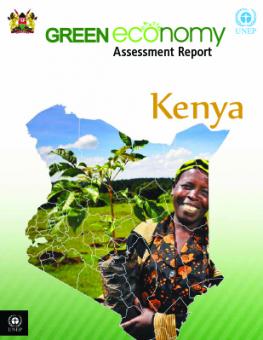
As part of its green economy work, UNEP is conducting green economy assessments for a number of countries.
IISD (Jason Dion) contributed to the underlying analysis and recommendations of a study that looked at the possibility of shifting to a green economy in Kenya. This work included considering the macroeconomic profile of the country and the overarching challenges it faces, looking at the existing policy landscape in the country and analyzing particular sectors. The sectors of agriculture, energy, manufacturing and transport were determined to be of particular importance to the country, and recommendations for the greening of each of these four sectors—as well as recommendations to create strong enabling conditions—are provided.
Fuel subsidies are a significant fiscal burden in India, costing on average 1.4 per cent of GDP since fiscal year 2008.
This paper provides a concise overview of subsidies for liquefied petroleum gas (LPG), which is widely used as a cooking fuel, particularly in urban areas. The paper also describes recent reforms to LPG subsidies and the impacts of those reforms on consumption, subsidy expenditure and distribution and targeting.
CRiSTAL Food Security is a decision-support tool for local-level government staff and development practitioners to support climate resilience of food systems at the community level.
It aims to help users to understand the key elements of a community food system and their sensitivity to climate variability and change; the resilience of food system elements to climate variability and change, and how to improve it; and what indicators can help monitor the evolution of community food system resilience over time. CRiSTAL Food Security is mainly targeted at local-level decision-makers, such as municipal or district-level government staff, project managers of development organizations and local community leaders. The tool consists of a series of Microsoft Excel spreadsheets and produces as a main output a series of automatically generated reports based on information entered into the spreadsheets. This manual guides users through each analytical step of the CRiSTAL Food Security tool.
The CRiSTAL Food Security tool is available in English and Spanish versions.
The relationship between climate resilience, food security and the policies and actions of multiple levels of government is complex.
Government decision makers who want to build more climate resilient food systems need an analytical tool to help them identify required resilience actions, monitor food system resilience over time, and assess the extent to which current policies strengthen food system resilience.
The Food Security Indicator & Policy Analysis Tool (FIPAT) has been developed to address this need. It provides a logical sequence of analytical steps that help users to:
Identify key elements of their food system and their vulnerability to climate shocks and stresses;
Identify relevant resilience actions to strengthen these vulnerable elements;
Select indicators to monitor changes in food system resilience over time; and
Assess the extent to which public policies support the implementation of required resilience actions; the capacity of actors to reduce risk and promote resilience; and the creation and maintenance of food system resilience.
This guidebook helps the leaders and facilitators of a FIPAT assessment to understand the conceptual foundation of the tool and to prepare for and conduct the assessment process.
The FIPAT Tool is available inEnglishand Spanish versions.
The Member States of the Association of Southeast Asian Nations (ASEAN) are not only deepening their economic integration, but are also aactively pursuing free trade agreements (FTAs) with their strategic economic partners (SEPs).
Despite these development, there are concerns over the extent to which micro, small, and medium-sized enterprises (MSMEs) have benefited from these commercial pacts. Numerous studies suggest that such trade agreements are rarely used by MSMEs in the region. This policy brief has two main goals: to identify key challenges and opportunities confronted by ASEAN-based MSMEs in taking advantage of ASEAN-led FTAs; and to provide practical and policy recommendations that could allow the greater use of these FTAs by these enterprises.
This briefing note examines the relationship between fossil-fuel subsidies and Indonesia's broader policy interventions to promote social welfare.
Traditionally, Indonesia has used fossil-fuel subsidies to help alleviate poverty and to control inflation. However, over time, this policy has grown increasingly expensive. It has also been criticized for being inefficient and regressive, given that the rich enjoy a greater proportion of the benefits than the poor. This paper reviews the evidence to explore two contrary beliefs: on the one hand, that fossil-fuel subsidies cannot be reduced because this would harm the poor; and, on the other hand, that reforming fuel subsidies is in fact fundamental to the improvement of social welfare policy in Indonesia. Who is right? What are Indonesia's ambitions to improve social welfare and how do fossil-fuel subsidies fit in?
This briefing note examines the practical short-term implications for Indonesia's energy supply chain of steps towards fossil-fuel subsidy reform.
What impacts were witnessed following recent gasoline and diesel price hikes in June 2013? What might we expect in the future? What does this mean for the planning of more comprehensive, long-term fossil-fuel subsidy reform?
The nexus between water, energy and food (WEF) security is a critical component of human well-being, and billions of dollars are spent annually on investments intended to ensure that it is adequately addressed.
A central concept throughout this guidebook is that the rural poor (i.e., those who benefit most from investments in agricultural productivity) will fare best if the underlying environmental determinants of water, energy, and food security—the WEF nexus—are protected and enhanced.
The purpose of this guidebook is to provide a practical, spatially explicit, ecosystem-based framework for the design and management of land investments that deliver increased water, energy and food security. It also provides an implementation-oriented means of operationalizing an otherwise theoretical concept highlighted as a significant global risk and opportunity for integration. This publication is aimed primarily at those involved in strategic planning and allocation of domestic and foreign investments as well as international agencies supporting or evaluating investments in other countries.
This document provides specific guidance structured around four mains steps: 1) Assessing the WEF Security system; 2) Envisioning future landscape scenarios; 3) Investing in a WEF-secure future; 4) Transforming the system. This guidebook provides specific goals, approaches and tools as well as illustrative examples for these main steps for implementation of an inclusive process for optimizing WEF security.
Growing a Green Bonds Market in China: Reducing costs and increasing capacity for green investment while promoting greater transparency and stability in financial markets
Green bonds provide an ideal opportunity to pilot transparency measures in fixed-income markets while helping to achieve the environmental goals of China's 12th Five-Year Plan.
They also provide an opportunity to demonstrate China's leadership position in addressing environmental protection challenges. This paper provides an overview of the green bonds theme, innovative structures in the international market and potential applications in China. It also examines how to develop a green bonds market in China, and how this opportunity can introduce needed market transparency while allowing investors to channel their capital into green growth areas that secure a sustainable future for China's economy.
This paper explores the importance of guiding legal principles in protecting beneficiaries and society from abuse of delegated investment powers by fiduciary agents.
It argues that countries that can most effectively navigate the transition to modern and sustainable fiduciary investment practices will be able to allocate capital more efficiently, reduce the negative side effects of investment practices and have a long-term competitive advantage in the 21st century. Given the growing economic significance of China's pension funds, the National Social Security Fund and other assets managed by delegated agents on behalf of third-party beneficiaries, this could be an opportune time to establish culturally appropriate fiduciary principles for China. Pension funds in South Africa, the Netherlands, Norway and the United States offer models for the People's Republic of China (PRC) to consider in planning its transition to fiduciary standards and investment practices that support sustainable development.