Report

Financing Models for Soil Remediation in China

This report examines seven different types of soil remediation projects in China and provides a "state-of-play" survey of financing models for soil rehabilitation in China.

September 4, 2018

China is facing an urgent soil contamination problem. According to the National Soil Pollution Survey carried out in 2014, over 16 per cent of total soil in China is contaminated.

Estimates of the cost of cleaning these contaminated soils run up to USD 1.3 trillion, more than 10 per cent of China’s annual GDP. According to the 12th Five-Year Plan, the Chinese central government budgeted for less than USD 5 billion, leaving a considerable gap for private funding to invest. The challenges are two-fold. The first is how to make soil remediation a worthwhile investment for holders of private capital. The second is to ensure that the limited investments from the public purse are used optimally—namely that they are deployed in such a manner as to leverage the maximum private investment. To meet both challenges, the full range of innovative financing vehicles and “new finance” approaches will need to be assessed and tested—something that has never before been undertaken at this scale.

By examining seven different types of soil remediation projects, this report presents the state-of-play of the current situation of soil remediation financing in China. 

This report is a part of a series of outputs of a four-year project, Financing Models for Soil Remediation. The overall objective of the project is to harness the full range of green finance approaches and vehicles to manage the associated risk and fund the remediation of contaminated soils.

Report details

Topic
Sustainable Finance
Public Procurement
Region
China
Project
Financing Models for Soil Remediation in China
Impact area
Sustainable Economies
Publisher
IISD
Copyright
Chinese Academy for Environmental Planning (CAEP), 2018
Report

Green Conflict Minerals: The fuels of conflict in the transition to a low-carbon economy

This reports seeks to understand how the transition to a low-carbon economy—and the minerals and metals required to make that shift—could affect fragility, conflict and violence dynamics in mineral-rich states.

August 14, 2018

Mapping Analysis


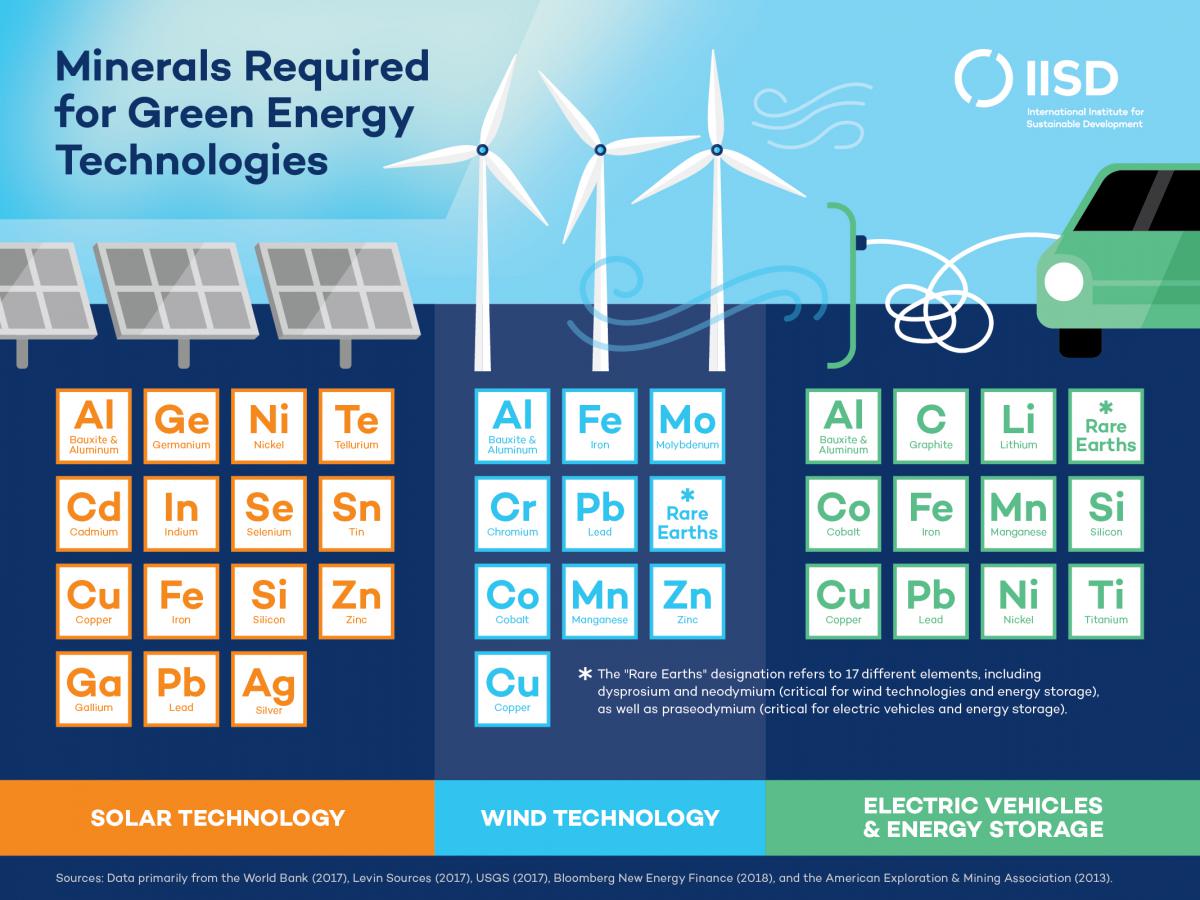
The mining sector will play a key role in the transition toward a low-carbon future.

The technologies required to facilitate this shift, including wind turbines, solar panels and improved energy storage, all require significant mineral and metal inputs and, absent any dramatic technological advances or an increase in the use of recycled materials, these inputs will come from the mining sector. How they are sourced will determine whether this transition supports peaceful, sustainable development in the countries where strategic reserves are found or reinforces weak governance and exacerbates local tensions and grievances.

Through extensive desk-based research, a mapping analysis, stakeholder consultations, case studies and an examination of existing mineral supply chain governance mechanisms, this report seeks to understand how the transition to a low-carbon economy—and the minerals and metals required to make that shift—could affect fragility, conflict and violence dynamics in mineral-rich states.

For the minerals required to make the transition to a low-carbon economy, there are real risks of grievances, tensions and conflicts emerging or continuing around their extraction. In order to meet global goals around sustainable development and climate change mitigation, while contributing to lasting peace, the supply chains of these strategic minerals must be governed in a way that is responsible, accountable and transparent. Achieving this vision will require concerted action from civil society, the private sector and governments.


Report details

Topic
Environment, Conflict and Peacebuilding
Mining
Impact area
Climate
Publisher
IISD
Copyright
IISD, 2018
Report

A Dialogue on a Just and Managed Transition to a Paris-Aligned Low-Carbon Future

The International Institute for Sustainable Development (IISD) and Oil Change International (OCI) hosted a Chatham House Rule round table discussion on Canada's energy transition in May 2018. This discussion paper highlights key outcomes from this round table for the purposes of informing continuing conversation.

August 13, 2018

In Paris in 2015, the world agreed to limit global warming to well below 2°C and aspired to keep it to 1.5°C.

Canada was a champion of this ambitious outcome and now faces the task of both meeting existing targets and increasing ambition.

As a wealthy, major fossil fuel producer, Canada has the opportunity to be among the leaders in charting abpathway away from fossil fuel production toward a low-carbon future.

Movement to end the expansion of oil, gas and coal production is quickly becoming a hallmark of climate leadership, as are calls to begin a managed phase-out and just transition in line with the Paris goals. Canada has taken important steps with its Just Transition Task Force and the phase-out of coal, but this work should inform a near-term parallel process for oil and gas.

A dialogue to define how to manage this transition such that it protects workers, communities, economies and the climate is a critical one that can only benefit from starting sooner rather than later. To this end, the International Institute for Sustainable Development (IISD) and Oil Change International (OCI) hosted a Chatham House Rule round table discussion on the topic in May 2018.

This discussion paper highlights key outcomes from this round table for the purposes of informing continuing
conversation.

Report details

Topic
Climate Change Mitigation
Region
Canada
Impact area
Climate
Publisher
IISD
Copyright
IISD, 2018
Report

Economic Instruments to Leverage Clean Energy Investment

August 11, 2018

There is widespread recognition that the bulk of the investment needed to meet the Paris objectives and SDGs will have to come from private investors aiming to make commercial returns.

Many of the needed investments are not currently considered to be attractive private sector opportunities. How can those opportunities be made sufficiently attractive for private investors to dedicate their funds at the scale needed for the necessary energy transition? Answers to this question suggest a strong role for economic instruments capable of leveraging private investment.

This report focuses on specific fiscal policies in three major developing economies and discuss the extent to which they support—or detract from—Nationally Determined Contribution and SDG achievement, and the emerging energy transition:

  • India – Goods and Services Tax (GST) reform
  •  Mexico – Renewable Energy Certificates (RECs) market
  • Indonesia – Fossil fuel subsidy reforms

It finds that Indonesia, Mexico and India are all pursuing a shift to renewable and clean energy, in part to achieve their Paris climate targets. Their experience in introducing new economic instruments or in reforming existing ones highlights their critical importance in planning the achievement of NDCs and energy-related SDGs. On the one hand, they can impede renewable energy investment, a situation that calls for urgent reforms to better align the economic policy environment to the countries’ international commitments. On the other hand, the use of new economic instruments must be part of policy packages used to incentivize desirable private investments to drive the energy transition. Mexico’s case highlighted the use of a CEL market alongside other climate-focused policies to promote clean energy investment.

It concludes by submitting four broad recommendations to governments:

  1. Seek to align economic policies with NDC targets and energy-related SDGs.
  2. Ensure economic instruments, taken as a whole, send an overall signal to investors that is clear and strong enough to shift investments.
  3. Consider using public finance raised by economic instruments in a way that fosters the energy transition.
  4. Build an evidence base for the careful design of economic instruments and their ongoing assessment and adjustment.

Report details

Topic
Climate Change Mitigation
Impact area
Climate
Publisher
IISD
Copyright
IISD, 2018
Report

Floating Treatment Wetlands: Keeping our fresh water clean and healthy

This short, engaging storybook takes you through what Floating Treatment Wetlands are, and how they could really help us keep bodies of fresh water clean and healthy.

July 30, 2018

Freshwater lakes around the world, especially shallow lakes, are in trouble.

Wetlands can improve water quality of storm water runoff and manage watershed nutrients, as well as treatment of wastewater and other industrial contaminants.

IISD is exploring how Floating Treatment Wetlands could be used to improve fresh water health, even potentially after an oil spill.

Floating treatment wetlands (FTWs) or islands are small artificial platforms that allow these aquatic emergent plants to grow in water that is typically too deep for them. The unique ecosystem that develops creates the potential to capture nutrients and transform common pollutants that would otherwise plague and harm our lakes into harmless byproducts.

We have just started exploring the role of FTWs in cleaning up lakes in Canada and at IISD Experimental Lakes Area.

This short, engaging storybook takes you through what FTWs are, and how they could really help us keep bodies of fresh water clean and healthy.

Floating treatment wetlands or islands are small artificial platforms that allow these aquatic emergent plants to grow in water that is typically too deep for them.

Report details

Report

Adaptive and Inclusive Watershed Management: Assessing policy and institutional support in Uganda

This report looks at how Uganda’s various institutions and policies incorporate climate change and gender considerations into planning, budgeting and monitoring in the water sector. 

July 19, 2018

This report explores existing institutional linkages between gender, water and climate change in Uganda.

Climate change is affecting water quantity and quality in Uganda and is an emerging major threat to health and well-being in the country. In addition to climate change impacts, a rapid population growth rate is anticipated to sharply increase demands for water and create challenges for the country in achieving its development goals.

At the same time women who are the main users of water for household and small-scale agriculture, have limited access to resources - land, credit, education, control over household income - needed to effectively adapt to climate change impacts and are affected the most when water catchments are degraded.

Responding to these challenges, Uganda is showing leadership in its policy and institutional systems in relation to climate and gender mainstreaming in water management. A number of policies and institutions consider gender equality and climate change in planning, budgeting and monitoring activities at various levels.

This research is the result of a desk review of policies, plans and strategies and interviews with key informants from Uganda’s water sector institutions and institutions working on issues of gender and climate change. These included officials involved in gender mainstreaming from the Ministry of Water and Environment, and experts involved at local, national and international level planning on these issues.

See our similar analysis on Kenya.

Report details

Report

Kerosene to Solar PV Subsidy Swap: The business case for redirecting subsidy expenditure from kerosene to off-grid solar

If kerosene subsidies are being gradually removed, can a share of the subsidy savings not be reinvested in helping the most vulnerable households access electric lighting through off-grid solar technologies? This paper explores the idea of a “kerosene to solar subsidy swap” or a “subsidy swap.”

July 18, 2018

Solar power has a key role in India's transition towards universal household electrification by March 2019. India has a growing market for off-grid products, recording its highest sales volume of off-grid products in 2017.

Despite recent progress and the wide range of on- and off-grid electricity and lighting options, a large number of marginalized households in India continue to remain without power and rely on subsidized kerosene.

Kerosene subsidies, originally provided as a way to promote access to affordable fuel for lighting and cooking, create negative health impacts and household pollution. They are also inefficient because it is easy for fuel to be illegally diverted in the distribution system. For many years, the Government of India has sought to gradually reduce kerosene subsidy expenditure by increasing product prices and restricting the volume of subsidized fuel supply.

If kerosene subsidies are being gradually removed, can a share of the subsidy savings not be reinvested in helping the most vulnerable households access electric lighting through off-grid solar technologies? This paper explores this idea in detail, referring to it as a “kerosene to solar subsidy swap” or a “subsidy swap.” The paper lists pico solar PV products currently available on the market to provide an affordable, reliable, direct replacement for lighting with kerosene. It then examines how the current business models and market structure for the suppliers of these products could enable a subsidy swap. The paper ends by reviewing the suitability of Uttar Pradesh and Odisha to host a subsidy swap pilot study, assessing the real-world impact of increased adoption of solar energy and a reduction in kerosene consumption.

Report details

Topic
Subsidies
Energy
Region
India
Impact area
Climate
Publisher
IISD
Copyright
IISD, 2018
Report

Getting on Target: Accelerating energy access through fossil fuel subsidy reform

How can reforming fossil fuel subsidies accelerate universal energy access (SDG 7)? This paper reviews the financial and practical implications of fossil fuel subsidies for SDG 7.

July 17, 2018

Sustainable Development Goal (SDG) 7 calls upon the global community to ensure access to affordable, reliable, sustainable and modern energy for all by 2030.

Often people assume that fossil fuel subsidies help the poor by making energy more affordable. In fact, most fossil fuel subsidies are not working well for energy access and poverty goals. The annual fossil fuel subsidy expenditure of USD 425 billion could be better invested by governments towards SDG outcomes. This is already recognized by SDG 12, in which the UN General Assembly’s 193 members included the reform of inefficient fossil fuel subsidies as a means of implementation to achieve more sustainable consumption and production. Subsidy savings could be invested to get on target for many development goals—not least, those on energy access.

This paper reviews the financial implications of fossil fuel subsidies and takes a closer look at how reforming fossil fuel consumption subsidies could interact with energy access goals.

Report details

Topic
Subsidies
Energy
Sustainable Development Goals
Impact area
Climate
Publisher
IISD
Copyright
IISD, 2018
Report

Developing a Progressive Agenda for Reform of International Investment Law: Canadian perspectives

This report presents the ideas posited by various Canadian stakeholders in an IISD expert meeting on a progressive agenda on investment, held in Ottawa, Canada, June 13, 2018.

July 13, 2018

On June 13, 2018, IISD hosted an interactive expert meeting in Ottawa, Canada, to assess and articulate Canadian perspectives—including government, civil society and academia—on a progressive agenda on investment.

Participating experts discussed global developments in international investment negotiations and disputes, as well as challenges and opportunities facing the Government of Canada in developing a progressive agenda on investment.

The meeting provided an opportunity for government officials and other stakeholders to engage on investment law and policy issues, particularly in the context of the Government of Canada's upcoming consultation and potential revision of the Foreign Investment Promotion and Protection Agreement (FIPA) model.

Throughout the meeting, several ideas were posited by different participants as proposed solutions to the various problems identified in investment treaties and investor–state dispute settlement (ISDS) mechanisms. This report presents some of the main points that emerged from the contributions of the various stakeholders.

Report details

Report

Inventory of Energy Subsidies in the EU's Eastern Partnership Countries

This publication aims to provide the first comprehensive and consistent record of energy subsidies in the Eastern Partnership (EaP) region, with a view to improving transparency and establishing a solid analytical basis that can help build the case for further reforms in these countries (this study covers Armenia, Azerbaijan, Belarus, Georgia, Moldova and Ukraine). 

July 6, 2018

This publication aims to provide the first comprehensive and consistent record of energy subsidies in the Eastern Partnership (EaP) region, with a view to improving transparency and establishing a solid analytical basis that can help build the case for further reforms in these countries (this study covers Armenia, Azerbaijan Belarus, Georgia, Moldova and Ukraine).

Based on Organisation for Economic Co-operation and Development (OECD) standard methodology, the study provides quantitative estimates of government support provided to consumers and producers of coal, oil and related petroleum products, natural gas, and electricity and heat generated on the basis of these fossil fuels. This report also briefly looks at public support allocated to energy-efficiency measures and renewable energy sources in the EaP countries and discusses the taxation and energy pricing policies that underpin the analysis of energy subsidies.

This publication was prepared within the framework of the Greening Economies in the Eastern Neighbourhood (EaP GREEN) Project, supported by the European Union and co-ordinated with governments of the EaP countries and United Nation partners: UNECE, UN Environment and UNIDO.

The project was carried out by the Global Subsidies Initiative (GSI) of the International Institute of Sustainable Development (IISD), with support from Sigra Group and SST-Poland.

Country chapters are also available in their national languages below:

Report details

Topic
Subsidies
Region
Armenia
Azerbaijan
Belarus
Georgia
Ukraine
Impact area
Climate
Publisher
OECD
Copyright
OECD, 2018