Deep Dive

Pathways to Sustainable Cities

Still Only One Earth: Lessons from 50 years of UN sustainable development policy

Most of the world’s population lives in urban areas, with the proportion projected to reach 68% by 2050. Increasing urbanization contributes to biodiversity loss, increased material consumption, and climate change. Moving forward, urban planning needs to be inclusive and responsive to the needs of local communities and build on participatory approaches that foster the engagement of marginalized actors while advancing access to basic services such as water and sanitation. Achieving sustainable cities requires overcoming barriers between different levels of government, attending to urban-rural linkages, and fostering decarbonization across the energy, transport, and building sectors. (Download PDF) (See all policy briefs) (Subscribe to ENB)

April 28, 2022

Urban sustainability initiatives regularly make headlines. Paris, France, for example has received much attention for new bike lanes and a generalized speed limit of 30 km/h for motorized traffic. Havana, Cuba, is famous for its urban agriculture; Curitiba, Brazil, is a pioneer in bus rapid transit systems; and Amsterdam, the Netherlands, is referred to as the world’s cycling capital.

Green roofs in Singapore
Green roofs, like this one in Singapore, reduce cities’ heat island effect, decrease energy costs, improve air and water quality, sequester carbon, and provide habitat for urban wildlife. (Photo: CHUTTERSNAP/Unsplash)

Yet, often enough, when cities are featured in the news, headlines sound the alarm on the detrimental impacts of unsustainable urban development: Jakarta, Indonesia, is sinking; New Delhi, India, shut down schools amid high levels of air pollution; and residential buildings are collapsing due to lack of maintenance in Marseille, France. Recent reports highlight key figures, including:

  • the proportion of the world’s population living in urban areas grew from 30% in 1950 to 55% in 2018 and is projected to reach 68% in 2050, with almost 90% of the projected increase to take place in Asia and Africa (UNDESA, 2019)
  • in 2018, 24% of the global urban population lived in slums, often with limited access to basic services and with the proportion being as high as 56% in Sub-Saharan Africa (UNDESA, 2021)
  • urban areas have more than doubled between 1992 and 2018, contributing to biodiversity loss (IPBES, 2019)
  • cities are powerhouses of economic growth—contributing about 60% of global gross domestic product (GDP), but also account for a high percentage of global carbon emissions and natural resource use (UN, 2019)
  • urbanization has exacerbated the impacts of global warming, with urban centres being warmer than their surrounding areas due to the urban heat island effect (IPCC, 2021)

Although sustainable urban development is receiving increased attention, the topic is not new. In fact, it was on the agenda of the very first multilateral environmental conference, the landmark 1972 United Nations Conference on the Human Environment in Stockholm, Sweden. At the time of the conference, which convened in the context of the decolonization process, urbanization was much lower, though growing. Policymakers nevertheless recognized urban sprawl has destructive impacts on the environment and that, while people move to urban areas with hopes of better employment opportunities and living conditions, cities often struggle to meet the increased demand for housing, mass transit, and other infrastructure. The question of how to ensure sustainable urban development has been on the global agenda ever since.

Planning must be applied to human settlements and urbanization with a view to avoiding adverse effects on the environment and obtaining maximum social economic and environmental benefits for all. In this respect, projects which are designed for colonialist and racist domination must be abandoned.

1972 STOCKHOLM DECLARATION, PRINCIPLE 15

Selected Sustainable Urban Development Milestones

1972 UN Conference on the Human Environment
• Adopted the Stockholm Declaration, which featured a principle on sustainable urban development
• Adopted the Stockholm Action Plan, which recommended the planning and management of human settlements for environmental quality
• Recommended convening a thematically dedicated conference on human settlements
1976 First UN Human Settlements Conference (Habitat I)
• Adopted the Vancouver Declaration and recommendations for national planning
• Initiated the creation of the UN’s focal point for sustainable urbanization, the United Nations Commission on Human Settlements, an intergovernmental body, and its secretariat, the UN Centre for Human Settlements (commonly referred to as “Habitat”)
1987 Our Common Future,” the report of the World Commission on Environment and Development
• Featured a chapter on “The Urban Challenge,” which put into perspective urbanization challenges in the Global South and the Global North
1992 UN Conference on Environment and Development
• Adopted Agenda 21, a program of action that featured a chapter on promoting
sustainable human settlement development
1996 Second UN Human Settlements Conference (Habitat II)
• Adopted the Habitat Agenda by which governments committed themselves to
achieving the goals of adequate housing for all and sustainable human settlements, and which contains a global plan for action to support its implementation
2015 Sustainable Development Goals (SDGs)
• The UN General Assembly adopted the SDGs that include a dedicated goal for
sustainable urban development, SDG 11, which calls for making cities and human
settlements inclusive, safe, resilient, and sustainable
2016 UN Conference on Housing and Sustainable Urban Development (Habitat III)
• Adopted the New Urban Agenda, which sets out a 20-year action agenda
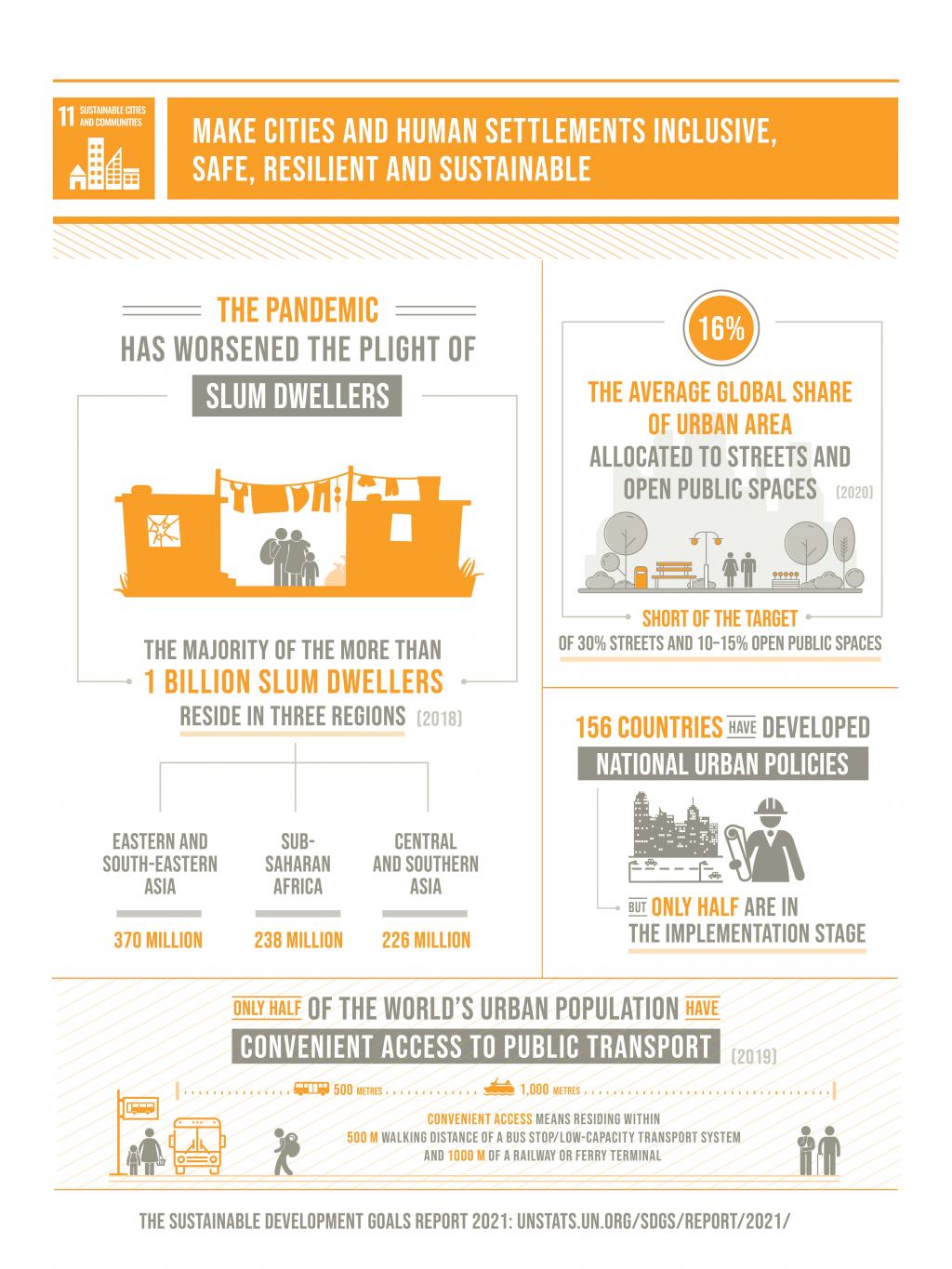
SDG 11 infographic
COVID-19 has worsened the plight of slum dwellers suffering from a lack of adequate and affordable housing, insufficient public health systems, and inadequate urban infrastructure such as public transport and open public spaces (Photo: Sustainable Development Goals Report 2021)

Multi-dimensional Issue

As set forth in the Vancouver Declaration adopted at the 1976 UN Human Settlements Conference (Habitat I), the most important objective of urban development policy is the improvement of the quality of life for all people, beginning with satisfying basic needs such as food, shelter, clean water, employment, health, and education. This objective has been reconfirmed throughout the years, including in the 2016 New Urban Agenda.

This underscores a fundamental reality: the starting line is not the same for all. Whereas fulfilling fundamental needs—such as through improving access to clean piped water and sanitation—remains an important part of urban planning in many cities of the Global South, discussions on sustainable cities in the Global North mainly centre on how to make existing infrastructure more efficient and less wasteful. In the latter, the aim is for a “transformation” of building, energy, transport, and other systems toward enhanced environmental sustainability—for example, promoting better building insulation for reduced heat waste or fostering waste recycling. As Youba Sokona, South Centre, and Vice-Chair of the Intergovernmental Panel on Climate Change (IPCC), recently noted, “In Africa the question is less about transformation and more about ‘jump starting’ their development in a sustainable manner.”

Beyond this stark global divide, there are significant differences within individual cities: higher-income neighborhoods are typically better serviced than low-income areas and some communities face discrimination that hampers the fulfillment of their fundamental needs. Life in Banana Island, one of Lagos, Nigeria’s gated communities, with wellmaintained roads and a central sewerage system, is vastly different from that in the nearby Makoko slum, where residents live under the threat of eviction and lack access to basic services (Ajayi et al., 2019). Roma people, Europe’s largest ethnic minority, continue to struggle with precarious housing and the US city of Flint, Michigan, whose African-American inhabitants suffered years of lead-poisoned water before a court confirmed wrongdoing, became the poster child of environmental racism. Today, discussions on ensuring access to basic services for all stand side-by-side with futuristic reflections on urban air mobility and drone-based delivery systems.

Sustainable urban development also spans various sectors, key among them housing, transportation, energy, water, waste, food, and health. But that’s not all. As multilateral declarations adopted over the past fifty years highlight, sustainable urban development also touches on heritage preservation, disaster planning, urban-rural linkages, and much more. Striving for sustainable cities requires a holistic vision for how to accommodate increasingly large urban populations, ensuring sustainable livelihoods, quality of life, and social cohesion, while minimizing cities’ and city dwellers’ immediate and long-term impact on the environment. Consequently, all challenges associated with the very notion of sustainability come to the fore in urban areas.

Finally, sustainable urban development is multi-dimensional because it spans a wide array of urban realities. Cities vary in size, with metropolises such as Manila, Philippines, or Beijing, China, having populations ten times larger than entire countries, such as Slovenia and Lesotho. These cities, which would rank among the top 60 most populous countries of the world, must deal with sustainable urban development challenges on a different scale than cities of little more than 50,000 inhabitants. And differences do not only relate to cities’ sizes, but also to factors such as their historical development and geographic location. Coastal cities must plan for sea level rise, while other cities might face water scarcity or must deal with an industrial downturn. There is no single recipe for sustainable urban development. It materializes differently, depending on cities’ specific contexts.

Urban Sustainability is Shaped by Many Actors

Local governments are the key players for fostering of urban sustainability as they can take measures within their own jurisdiction. They are also increasingly engaged in transnational networks, such as ICLEI – Local Governments for Sustainability and the C40 Cities Climate Leadership Group. These networks provide space for peer-learning among local governments from different countries and serve to feed urban perspectives directly into regional and global sustainability debates. But fostering sustainable cities is not only a matter for local governments. Other actors have power to steer cities toward sustainability.

For one, while the concrete allocation of authority differs between countries, actors at varying government levels have a role to play. National governments might set up an overall housing strategy with tax incentives for the development of new rental housing or pass legislation on insulation or energy efficiency, while cities can develop specific building codes and measures to support social housing. Others can also influence urban sustainability by adopting specific policies and standards, such as influencing norms or opening funding opportunities. This includes state, provincial, or regional governments in federally structured countries, supranational entities, where relevant, and multilateral fora.

World Urban Forum
The World Urban Forum provides space for peer-learning among local governments from different countries and serves to feed urban perspectives directly into regional and global sustainability debates. (Photo: Natalia Mroz, IISD/ENB)

Further, non-governmental actors—including businesses, civil society organizations, schools, research institutions, and faith-based organizations—are also sustainability agents. They can self-govern toward sustainability, such as by adjusting diets in canteen menus or switching to renewable energy. At a larger scale, they can take outward-facing initiatives, such as hosting a repair café to help people fix broken household items and sharing information on grant programs for home retrofits, and pressure governments by lobbying for cities to phase out fossil fuels. Corporate initiatives toward enhanced urban sustainability can help develop new technologies and business models, with many leveraging big data and sharing economy approaches. Actors engage in sustainability initiatives for various reasons. As Westman et al. (2021) show, small- and medium-sized enterprises notably aim to improve their reputation in the local community, increase efficiency, or align with personal values. Some initiatives—such as when exasperated citizens build their own bike lanes—are disruptive and constitute a push for change from the bottom, while at other times windows of opportunity are opened from the top. Change often relies on the interplay between different kinds of actors, both governmental and non-governmental. Fostering urban sustainability nevertheless remains a protracted undertaking. Key challenges include that local governments at times lack the autonomy or fiscal and human capacity to undertake sustainability measures and that powerful actors—such as central governments or large businesses—might stand in the way of change (Beermann et al., 2016).
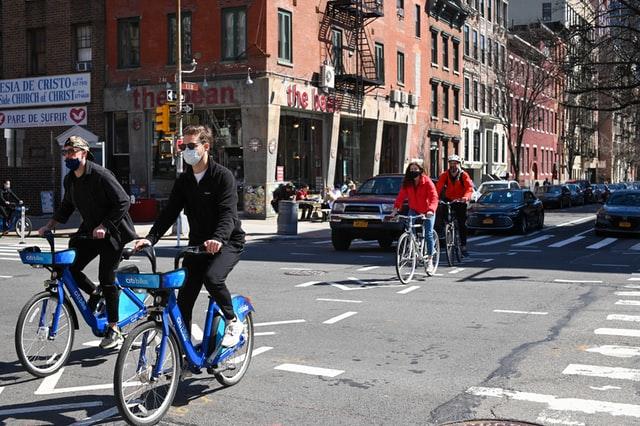
Cyclers riding in the city
In recent years, an increasing number bicycle sharing systems emerged in cities across the world, like New York City’s Citi Bike. (Photo: Robinson Greig/Unsplash)v

Key Trends in Sustainable Urban Development

Many new approaches to sustainable urban development are breaking with the long predominant mindset of “taming nature” and are bringing back greenery into the infamous concrete jungle. Think of urban agriculture, which is gaining ground in the collective imagery of sustainable cities.

More broadly, there is a strong move toward what is increasingly termed “nature-based solutions.” A look at urban water management provides many examples: New York City is restoring oyster reefs, cities like Seoul are daylighting water streams buried under concrete for many decades, and China is supporting the development of so-called sponge cities. Rather than relying only on hard engineering, these cities leverage natural infrastructure to achieve multiple benefits, not only enhancing flood management but also providing recreational opportunities and supporting biodiversity, among other benefits. Many such measures are designed to address climate change, especially from an adaptation and resilience standpoint. They can mitigate the urban heat island effect and flooding—both from increased precipitation events and, where relevant, storm surges. Plants are not only used on the ground and on roofs but also on facades, with architects and urban residents increasingly experimenting with vertical gardens. Similarly, urban wastelands and unused industrial infrastructure are being renatured to provide habitat for urban biodiversity and recreational spaces for city dwellers, with New York City’s High Line and Atlanta’s BeltLine in the US as flagship projects.

Cities are also grappling with the detrimental effects of decades of car-centred urban planning, which fostered urban sprawl, placed a barrier on other forms of transportation, contributed to a large share of cities’ greenhouse gas emissions, and lead to local air pollution (OECD, 2018). Multimodal transportation initiatives are sprouting up around the world in various forms, including: establishing toll roads (Singapore; London, UK), enabling free public transportation for residents (Aubagne, France; Tallinn, Estonia), installing cable cars (Medellín, Colombia; Constantine, Algeria), and giving priority traffic lights to cyclists as a default or when it rains (Odense, Denmark; Rotterdam, the Netherlands). Additionally, there are corporate initiatives such as bicycle and scooter rentals, and civil society actions, such as the collective bike rides of the Critical Mass movement. Most recently, the COVID-19 pandemic brought about a reckoning about the immense amount of urban space allocated to cars. In many cities, residents have become fond of newly extended sidewalks and parking spaces converted for outdoor dining. Whether this will truly bring about permanent change remains to be seen.

More fundamentally, equity considerations are increasingly coming to the fore, as people grapple with the fact that urban development has failed to make cities liveable for all. Building on the work of feminist and disability studies scholars, the World Bank (2020) provides a toolkit for redressing the fact that “In general, cities work better for heterosexual, able-bodied, cisgender men than they do for women, girls, sexual and gender minorities, and people with disabilities” (p. 8). Meehan et al. (2020) draw attention to intersecting social and racialized inequalities that curtail access to basic services, even in some of the most affluent cities in the world. This reckoning not only pertains to the detrimental effects of past urban planning, but also relates to more recent developments. For example, hostile architecture that has flourished in many places with the aim of banishing homeless people is increasingly decried as a manifestation of failures to address the root causes of homelessness and for rendering public spaces unwelcoming to urban dwellers at large. This critical reflection also relates to the potential negative effects of some sustainability measures, where green gentrification can increase local property values and displace existing residents who can no longer afford to live in the neighbourhood (Anguelovski, 2016).
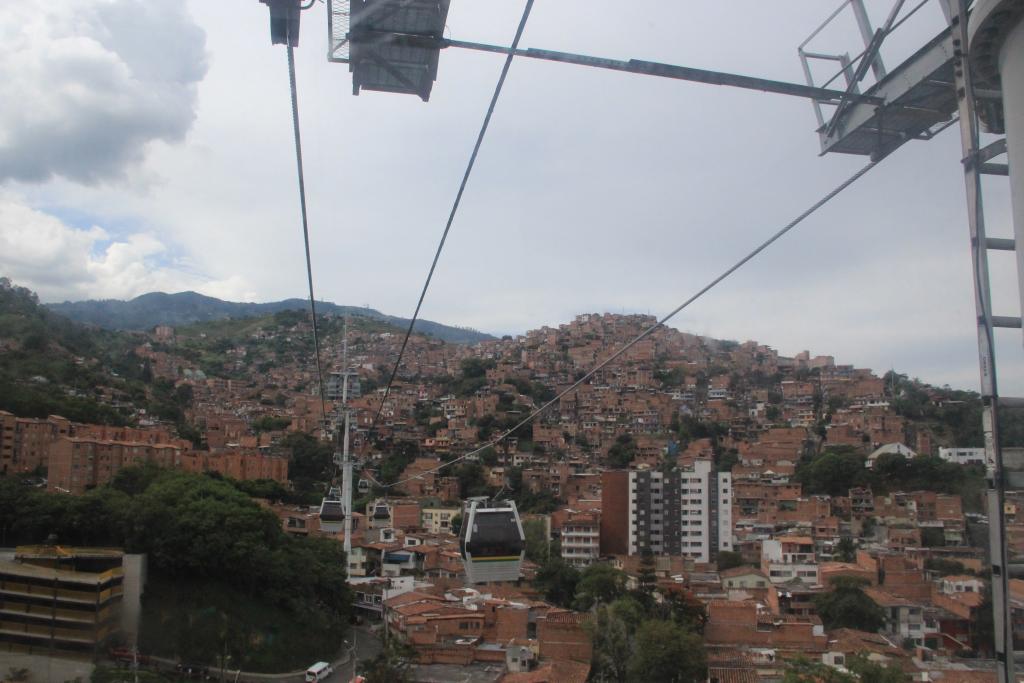
Cable cars in Medellin, Colombia
Multimodal transportation initiatives, like the cable cars in Medellín, Colombia, are sprouting up around the world. (Photo: iStock)

Against this background, it is important to pay attention to inclusive urban planning. Decisions adopted at Habitat I in 1976 already stipulated that “Public participation is a right that must be accorded to all segments of the population, including the most disadvantaged” (p. 76) and that “Citizens must be provided opportunities for direct involvement in the decisions that profoundly affect their lives” (p. 71). This can foster democratic legitimacy and adapt measures to specific local contexts, which can enhance their effectiveness. Yet, as UN-Habitat (2019) notes, ensuring public participation in practice remains a challenge and “when deliberation occurs it is often biased towards more powerful stakeholders with greater resources” (p. 23). To overcome long-standing challenges with implementing participation ideals, scholars, community organizations, and some local governments are experimenting with different approaches, including participatory budgeting and community mapping exercises (Calisto Friant, 2019; Klopp & Cavoli, 2019).

As more and more people live in urban areas, coupled with worsening impacts from climate change and natural resource loss, the magnitude of the urban sustainability challenge and the need for decisive action is bigger than ever. As the world saw with the COVID-19 pandemic, overcrowding and poverty make it difficult to follow recommended measures such as social distancing and self-isolation. This calls for a holistic rethinking about how to make cities liveable for all while minimizing adverse impacts on the environment.

Striving for sustainable cities requires overcoming barriers between different levels of government as well as vested interests in preserving the status quo. It requires looking beyond the sphere of the urban to attend to urban-rural linkages, foster circular resource use, and decarbonize the energy, transport, and building sectors. Urban sustainability requires cross-sectoral planning and attention to the differentiated needs of all urban dwellers so as to leave no one behind in the necessary transformation. Sustainability pathways should be tailored to specific urban contexts. As such, there will never be one single model for what a sustainable city looks like.

Works Consulted

Ajayi, O., Soyinka-Airewele, P., & Samuel, O. (2019). Gentrification and the challenge of development in Makoko, Lagos State, Nigeria: A rights-based perspective. Environmental Justice, 12(2), 41-47. doi.org/10.1089/env.2018.0020

Anguelovski, I. (2015). From toxic sites to parks as (green) LULUs? New challenges of inequity, privilege, gentrification, and exclusion for urban environmental justice. Journal of Planning Literature, 31(1), 23-36. doi.org/10.1177/0885412215610491

Beermann, J., Damodaran, A., Jörgensen, K., & Schreurs, M. A. (2016). Climate action in Indian cities: An emerging new research area. Journal of Integrative Environmental Sciences, 13(1), 55-66. doi.org/10.1080/1943815x.2015.1130723

Calisto Friant, M. (2019). Deliberating for sustainability: Lessons from the Porto Alegre experiment with participatory budgeting. International Journal of Urban Sustainable Development, 11(1), 81-99. doi.org/10.1080/19463138.2019.1570219

Intergovernmental Panel on Climate Change. (2021). Regional fact sheet - urban areas. Sixth Assessment Report. Working Group I - The Physical Science Basis. ipcc.ch/report/ar6/wg1/downloads/factsheets/IPCC_AR6_WGI_Regional_Fact_Sheet_Urban_areas.pdf

Intergovernmental Science-Policy Platform on Biodiversity and Ecosystem Services. (2019). Summary for policymakers of the global assessment report on biodiversity and ecosystem services of the Intergovernmental Science-Policy Platform on Biodiversity and Ecosystem Services. S. Díaz, J. Settele, E. S. Brondízio E.S., H. T. Ngo, M. Guèze, J. Agard, A. Arneth, P. Balvanera, K. A. Brauman, S. H. M. Butchart, K. M. A. Chan, L. A. Garibaldi, K. Ichii, J. Liu, S. M. Subramanian, G. F. Midgley, P. Miloslavich, Z. Molnár, D. Obura, A. Pfaff, S. Polasky, A. Purvis, J. Razzaque, B. Reyers, R. Roy Chowdhury, Y. J. Shin, I. J. Visseren-Hamakers, K. J. Willis, and C. N. Zayas (Eds.). ipbes.net/sites/default/files/inline/files/ipbes_global_assessment_report_summary_for_policymakers.pdf

Klopp, J. M., & Cavoli, C. (2019). Mapping minibuses in Maputo and Nairobi: Engaging paratransit in transportation planning in African cities. Transport Reviews, 39(5), 657-676. doi.org/10.1080/01441647.2019.1598513

Meehan, K., Jurjevich, J. R., Chun, N. M. J. W., & Sherrill, J. (2020). Geographies of insecure water access and the housing–water nexus in US cities. Proceedings of the National Academy of Sciences, 117(46), 28700-28707. doi.org/10.1073/pnas.2007361117

Organisation for Economic Co-operation and Development. (2018). Rethinking urban sprawl: Moving towards sustainable cities. doi.org/10.1787/9789264189881-en

UN-Habitat. (2019). Mixed reality for public participation in urban and public space design: Towards a new way of crowdsourcing more inclusive smart cities. unhabitat.org/mixed-reality-for-public-participation-in-urban-and-public-spacedesign-towards-a-new-way-of

United Nations. (2019). The Sustainable Development Goals report 2019. unstats.un.org/sdgs/report/2019/

United Nations. (2021). The Sustainable Development Goals report 2021. unstats.un.org/sdgs/report/2021/

United Nations Department of Economic and Social Affairs. (2019). World urbanization prospects: The 2018 revision. population. un.org/wup/Publications/Files/WUP2018-Report.pdf

UN-Water. (2021). Summary progress update 2021: SDG 6 – water and sanitation for all. unwater.org/publications/summary-progress-update-2021-sdg-6-water-andsanitation-for-all/

Westman, L., Luederitz, C., Kundurpi, A., Mercado, A. J., Weber, O., & Burch, S. L. (2018). Conceptualizing businesses as social actors: A framework for understanding sustainability actions in small- and medium-sized enterprises. Business Strategy and the Environment, 28(2), 388-402. doi.org/10.1002/bse.2256

World Bank. (2020). Handbook for genderinclusive urban planning design. worldbank.org/en/topic/urbandevelopment/publication/handbook-for-gender-inclusive-urban-planning-and-design

Deep Dive

Indigenous Peoples: Defending an Environment for All

Still Only One Earth: Lessons from 50 years of UN sustainable development policy

Lands inhabited by Indigenous Peoples contain 80% of the world’s remaining biodiversity. Indigenous Peoples’ traditional knowledge and knowledge systems are key to designing a sustainable future for all. International environmental negotiations need to go beyond tokenistic participation of Indigenous Peoples to a genuine integration of their worldviews and knowledge. Respecting and promoting their collective rights to their lands, self-determination, and consent is vital to strengthening their role as custodians of nature and agents of change. (Download PDF) (See all policy briefs) (Subscribe to ENB)

April 22, 2022

"Only when the last tree has died and the last river has been poisoned and the last fish has been caught will we realize that we can not eat money.” Chief Seattle

There are approximately 370 million Indigenous Peoples today representing thousands of languages and cultures. Indigenous lands make up around 20% of the Earth’s territory, containing 80% of the world’s remaining biodiversity—a sign Indigenous Peoples are the most effective stewards of the environment. In contrast with models of individual ownership, privatization, and development that have led to climate change, pollution, land degradation, and biodiversity loss, Indigenous Peoples have practiced sustainability for centuries.

There is no formal definition of Indigenous Peoples in international law. According to one definition, Indigenous Peoples are those who lived on their lands before colonial powers claimed the land through problematic legal doctrines of conquest, occupation, or other means. This resulted in dispossession, oppression, and creation of dependency. The international remedy to colonization is the right to self-determination, which is set out for Indigenous Peoples in Article 3 of the United Nations Declaration on the Rights of Indigenous Peoples (UNDRIP).

A modern understanding of who is Indigenous is based on different elements. A key one is self-identification as Indigenous and recognition and acceptance by the group as one of its members. This is well established, including in the International Labour Organization Convention Nº 169, the Committee on the Elimination of Racial Discrimination and in Article 33 of UNDRIP, adopted in 2007 by the UN General Assembly. Other important elements to identify Indigenous status include a strong link to territories and natural resources, and distinct social, economic, or political systems.

At the First International Conference of Indigenous Peoples in 1975 in Port Alberni, British Columbia, Canada, Indigenous representatives decided to use the term “Indigenous Peoples” to refer to themselves at the international level. They adopted the 1975 Solemn Declaration where they refer to themselves as those “who have a consciousness of culture and peoplehood on the edge of each country’s borders and marginal to each country’s citizenship.” They did not feel represented by country governments at the United Nations. Almost 50 years after intense advocacy efforts in the international arena, the use of the term “Indigenous Peoples” is well-established at the UN, as is their right to self-determination, which is recognized not only in UNDRIP, but also in many other international human rights instruments and multilateral environmental agreements.

The Aboriginal vision of property was ecological space that creates our consciousness, not an ideological construct or fungible resource...Their vision is of different realms enfolded into a sacred space...[the] notion of self does not end with their flesh, but continues with the reach of their senses into the land but continues with the reach of their senses into the land

DAES, 2000, P.7

Recognition of the right to self-determination of Indigenous Peoples is vital to protect their traditions, and their social, cultural, economic, and political characteristics that are distinct from those of dominant governments. Indigenous Peoples hold unique knowledge systems and practices for the sustainable management of natural resources. Many have a special relationship with the environment, the land, and all living things. Against this backdrop, the Western view of land, natural resources, and nature in a commodified and more tradable manner stands in stark contrast.

Grand Chief George Manuel from the National Indian Brotherhood in Canada
Grand Chief George Manuel from the National Indian Brotherhood in Canada was part of the Canadian delegation to the UN Conference on the Human Environment. (Photo: Manuel family collection)

Indigenous Peoples’ Participation at the UN

In 1923, Chief Deskaheh of the Iroquois Confederacy brought the Iroquois dispute with the Canadian Government over their sovereignty to the League of Nations. The dispute was dismissed as the League considered it a domestic matter (Anaya, 1996). Despite opposition from some states, including legislative prohibitions on organizing around land issues, Indigenous Peoples again ventured into the international arena half a century later. In 1972, Grand Chief George Manuel from the National Indian Brotherhood in Canada was part of the Canadian delegation to the UN Conference on the Human Environment in Stockholm, Sweden (Crossen, 2017). This was the beginning of Indigenous participation in international environmental negotiations. However, the resulting Stockholm Declaration and Action Plan did not acknowledge Indigenous Peoples, demonstrating the need for more organizing. As a result, Manuel founded the first modern pan-Indigenous organization, the World Council of Indigenous Peoples (WCIP).

In 1977, the first UN conference with Indigenous delegates participating alongside states, the International NGO Conference on Discrimination Against Indigenous Populations in the Americas, convened in Geneva, Switzerland. It had far-reaching repercussions, including the adoption of the “Declaration of Principles for the Defense of the Indigenous Nations and Peoples of the Western Hemisphere.” It also resolved “to observe October 12, the day of so-called ‘discovery’ of America, as an International Day of Solidarity with the Indigenous Peoples.” This conference also recommended creating the UN Working Group on Indigenous Populations (WGIP), which came to fruition in 1982. The WGIP gave Indigenous Peoples visibility at the UN (Dahl, 2012). Moreover, it provided a space for Indigenous Peoples to substantially contribute to the draft of UNDRIP, facilitated by Erica-Irene Daes, who played a pivotal role in promoting the Indigenous cause, both within and beyond the WGIP.

The process of drafting UNDRIP took almost three decades of intense and complicated negotiations. From the outset, controversial issues included the recognition of the right to self-determination, collective land rights, and the requirement of their free, prior, and informed consent (FPIC) to major projects on their lands and territories. UNDRIP enshrines these three elements and has since guided developments on Indigenous rights across international negotiations.

Indigenous Peoples wanted to create a permanent forum as high in the UN hierarchy as possible, with a mandate beyond human rights. This was achieved in 2001, when the UN Permanent Forum on Indigenous Issues (UNPFII) was established under the UN Economic and Social Council (ECOSOC). UNPFII began to integrate Indigenous Peoples as participants with similar rights to states for the first time in UN history (Dahl, 2012). Eight members of the UNPFII are appointed by governments and eight by the president of ECOSOC on the recommendation of Indigenous Peoples’ representatives. At the UNPFII, Indigenous Peoples’ appointed experts adopt resolutions, and provide recommendations to governments and UN bodies. The UNPFII, together with the appointment in 2001 of a Special Rapporteur on the Rights of Indigenous Peoples and the 2007 Expert Mechanism on the Rights of Indigenous Peoples under the UN Human Rights Council, have expanded awareness on the views and situation of Indigenous Peoples.

Challenging the Prevailing Discourse on Sustainable Development

Indigenous Peoples challenge prevailing Western discourses, such as on human rights and on the normative foundations of the international world order and the UN (Tauli-Corpus, 1999). The worldviews of Indigenous Peoples have also challenged the prevalent discourse on sustainable development, calling for recognition and respect of their traditional knowledge and collective rights to use and control the lands and natural resources that they depend on and strive to protect.

Elle Merete Omma of Saami Council
Elle Merete Omma, Saami Council, speaking at the Marine Regions Forum 2019 in Berlin, Germany. (Photo: Mike Muzurakis, IISD/ENB)

Indigenous Peoples occupied a prominent role in the preparatory sessions for the 1992 Conference on Environment and Development (Earth Summit) in Rio de Janeiro, Brazil (Tauli-Corpus, 1999). Their lobbying and organizing efforts, which began in Stockholm 20 years earlier, resulted in a wider recognition of Indigenous Peoples in Agenda 21, the programme of action adopted in Rio. In addition to being referenced throughout the 40-chapter action programme, Chapter 26 explicitly called for establishment of a process to empower Indigenous Peoples and their communities through various measures. Chapter 26 also called for the involvement of Indigenous Peoples and their communities at the national and local levels in resource management and conservation strategies to support and review sustainable development strategies.

We also recognize the importance of the United Nations Declaration on the Rights of Indigenous Peoples in the context of global, regional, national and subnational implementation of sustainable development strategies.

THE FUTURE WE WANT, PARAGRAPH 49

Since 1992, Indigenous Peoples have engaged directly in UN processes on sustainable development, including in the Commission on Sustainable Development (1993-2013) and its successor, the High-level Political Forum on Sustainable Development. At the UN Conference on Sustainable Development (Rio+20) in 2012, the outcome document, “The Future We Want,” recognized the importance of the participation of Indigenous Peoples in the achievement of sustainable development.

Indigenous Peoples’ organizations also worked on the sidelines of the sustainable development process adopting a Universal Declaration of the Rights of Mother Earth at the World People’s Conference on Climate Change and the Rights of Mother Earth, in Cochabamba, Bolivia, in 2010. This declaration stands in opposition to the green economy and growth narrative, which later underpinned the 2030 Agenda for Sustainable Development.

Elder Alex Sonny Diabo of the Mohawk Nation
Elder Alex Sonny Diabo, Mohawk Nation, opens the 2017 meeting of the Convention on Biological Diversity Working Group on Article 8(j) with a Mohawk prayer. (Photo: Francis Dejon, IISD/ENB)

Protecting Biodiversity

Indigenous Peoples are recognized in the 1992 Convention on Biological Diversity (CBD) as essential to reaching the convention’s objectives (Schabus, 2017). In CBD Article 8(j), in particular, parties agree to respect, preserve, and maintain the knowledge, innovations, and practices of Indigenous Peoples relevant for the conservation of biological diversity and to promote their wider application with the approval of knowledge holders and to encourage equitable sharing of benefits arising out of the use of biological diversity.

Indigenous Peoples at the Fiji/Bonn Climate Change Conference
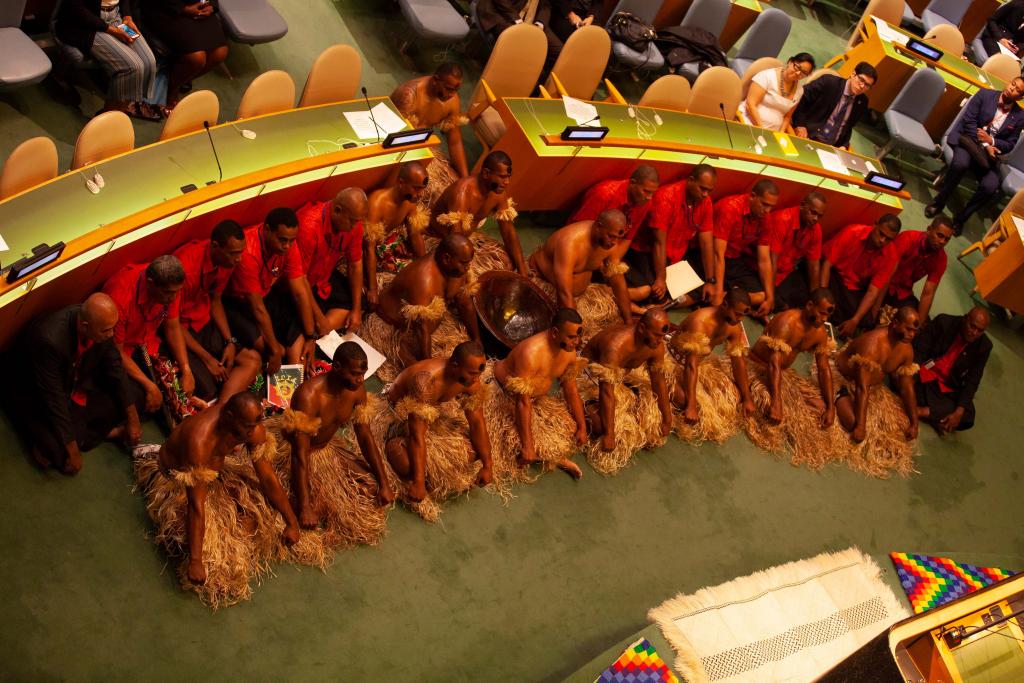
Many Indigenous communities in the Pacific have unbreakable ties to and invaluable knowledge of the ocean. This was honored at the 2017 UN Ocean Conference, which opened with a traditional Fijian kava ceremony. (Photo: Mike Muzurakis, IISD/ENB)

The establishment of the CBD Working Group on Article 8(j) and Related Provisions in 1998 resulted from intense and effective lobbying efforts of Indigenous Peoples. The Working Group provides a forum for Indigenous Peoples, local communities, and other nonstate actors to participate in similar ways as states, albeit without the right to vote. Even though states must endorse their proposals, the space and instruments created for Indigenous Peoples in the CBD negotiations are “unprecedented” in the environmental arena (Schabus, 2017). Furthermore, considerations relating to the traditional knowledge of Indigenous Peoples have been incorporated into all the programmes of work under the Convention. Under its programme of work to implement the commitments of Article 8(j), the CBD has adopted a number of key voluntary guidelines:

  • Akwé: Kon Voluntary Guidelines for the conduct of cultural, environmental and social impact assessments regarding developments proposed to take place on, or which are likely to impact on, sacred sites and on lands and waters traditionally occupied or used by Indigenous and local communities
  • Tkarihwaié:ri Code of Ethical Conduct to Ensure Respect for the Cultural and Intellectual Heritage of Indigenous and Local Communities
  • Mo’otz Kuxtal Voluntary Guidelines for the development of mechanisms, legislation, or other appropriate initiatives to ensure the “prior and informed consent,” “free, prior and informed consent,” or “approval and involvement,” depending on national circumstances, of Indigenous Peoples and local communities for accessing their knowledge, innovations and practices, for fair and equitable sharing of benefits arising from the use of their knowledge, innovations, and practices relevant for the conservation and sustainable use of biological diversity, and for reporting and preventing unlawful appropriation of traditional knowledge
  • Rutzolijirisaxik Voluntary Guidelines for the repatriation of traditional knowledge relevant for the conservation and sustainable use of biological diversity

The adoption of the Nagoya Protocol on Access and Benefit-sharing was a milestone in the recognition of the intrinsic link between genetic resources and Indigenous knowledge and associated rights. The Protocol is the first multilateral environmental agreement with substantive provisions on Indigenous rights (Schabus, 2017, p. 271). It states that traditional knowledge and associated genetic resources can only be accessed with the prior informed consent (PIC) of Indigenous Peoples, and if such access is authorized, fair and equitable sharing of benefits must be ensured.

But challenges to integrate Indigenous Peoples’ knowledge and worldviews in the environmental field continue, as illustrated by experiences at the Intergovernmental Science-Policy Platform on Biodiversity and Ecosystem Services (IPBES). IPBES embodies “one of the most ambitious attempts to date to bridge the divide between scientific and indigenous and local knowledge” (Löfmarck & Lidskog, 2017 p. 22). To bridge this divide, IPBES established a task force on Indigenous and local knowledge systems, methodologies and an approach to recognize and work with Indigenous and local knowledge across all its assessments, most recently for those on sustainable use of wild species, values of nature, and invasive alien species. However, IPBES struggles to live up to its ambitions within the confines of the Western scientific system. For instance, it focuses mainly on the inclusion or exclusion of different actors instead of how their visions and values are represented through the selection of authors and evidence for IPBES assessments (Beck & Forsyth, 2020). This matters as power resides with those who frame issues and processes, which for IPBES largely remains with people within the Western scientific worldview.

Adapting to and Mitigating the Climate Crisis

Climate change aggravates the disadvantages already faced by Indigenous Peoples, including human rights violations, poor socio-economic conditions, and discrimination (ILO, 2017). At the same time, measures to address climate change, such as the construction of dams, biofuel plantations, tree farms, and nuclear power plants can also have negative effects on Indigenous communities, including by restricting access to their land and natural resources. Such measures often lead to a rise in land grabs, disruption of traditional practices, and community displacement (Recio & Wallbot, 2017). Indigenous Peoples’ participation in climate politics is key to reducing the risks to their livelihoods.

Indigenous Peoples have criticized the predominant Western understanding of climate change, which they see as a result of the same mindset that promoted the exploitation of people and resources during colonization (Gram-Hanssen, Schafenacker & Bentz, 2021). Their historic experience and holistic perspective of nature-human relationships makes them key agents in developing climate solutions.

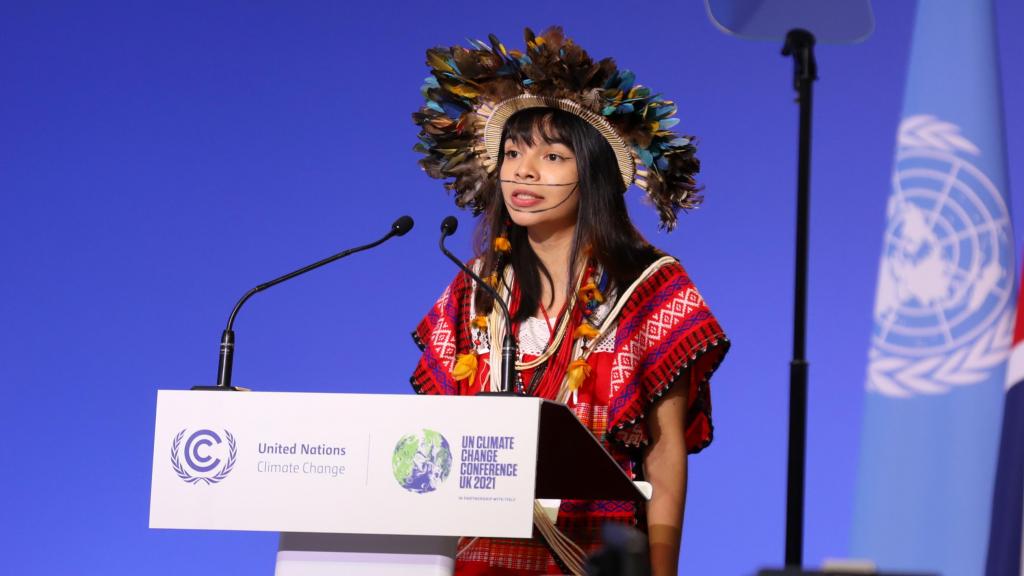
Txai Suruí, founder and coordinator of the Movement of Indigenous Youth of Rondônia, Brazil
Txai Suruí, founder and coordinator of the Movement of Indigenous Youth of Rondônia, Brazil, addressing world leaders at the Glasgow Climate Change Conference in 2021 (Photo: Mike Muzurakis, IISD/ENB)

However, the 1992 United Nations Framework Convention on Climate Change (UNFCCC) did not include any reference to Indigenous Peoples and they were not formally recognized as a constituency in the UNFCCC until 2001. In 2008, the International Indigenous Peoples Forum on Climate Change (IIPFCC) was established as the caucus for Indigenous Peoples participating in UNFCCC processes. They have lobbied, unsuccessfully so far, for equivalent participatory rights to states, including through a working group on Indigenous Peoples, similar to that of the CBD Working Group on Art 8(j) (Powless, 2012).

The UNFCCC continues to marginalize Indigenous knowledge in the climate discussions (Comberti et al., 2016), with the 2015 Paris Agreement failing to fully recognize the role of and the need to further integrate Indigenous Peoples’ knowledge and practices in climate change mitigation and adaptation efforts. One case in point is an initiative under the UNFCCC called Reducing Emissions from Deforestation and Forest Degradation (REDD+). REDD+ intends to financially compensate developing countries for keeping their standing forests and has raised huge but short-term expectations for funding. However, much of the standing forests in the developing world are inhabited by Indigenous Peoples (Frechette et al., 2016). Implementation of REDD+ can therefore cause severe constraints to their access to forest resources, affecting traditional livelihoods and aggravating their socio-economic conditions. But Indigenous Peoples were barely considered in the initial proposal.

Only when the last tree has died and the last river has been poisoned and the last fish has been caught will we realize that we can not eat money.

CHIEF SEATTLE

Indigenous Peoples’ efforts played a pivotal role in the adoption by the UNFCCC of the 2010 Cancun Safeguards, which recognize the need to ensure respect for the knowledge and rights of Indigenous Peoples, although avoiding the term “traditional knowledge.” The Safeguards require “the full and effective participation of relevant stakeholders, in particular, Indigenous Peoples and local communities,” instead of acknowledging Indigenous Peoples’ right to the free, prior, and informed consent called for under UNDRIP.

REDD+ was also criticized by Indigenous Peoples as grounded on a materialist and simplistic view of forests. Some communities in the Amazon have put forward an Indigenous version of REDD+, based on a traditional combination of productive use of the forest with simultaneous protection (Alonso, 2016). The proposal in Peru, for example, is principled on the primacy of collective rights of Indigenous Peoples, including to self-determination, consent, and lands. However, as Dupuits and Cronkleton (2020) argue, these initiatives must still overcome fragmented institutional governance of forests and continued challenges related to Indigenous tenure security.

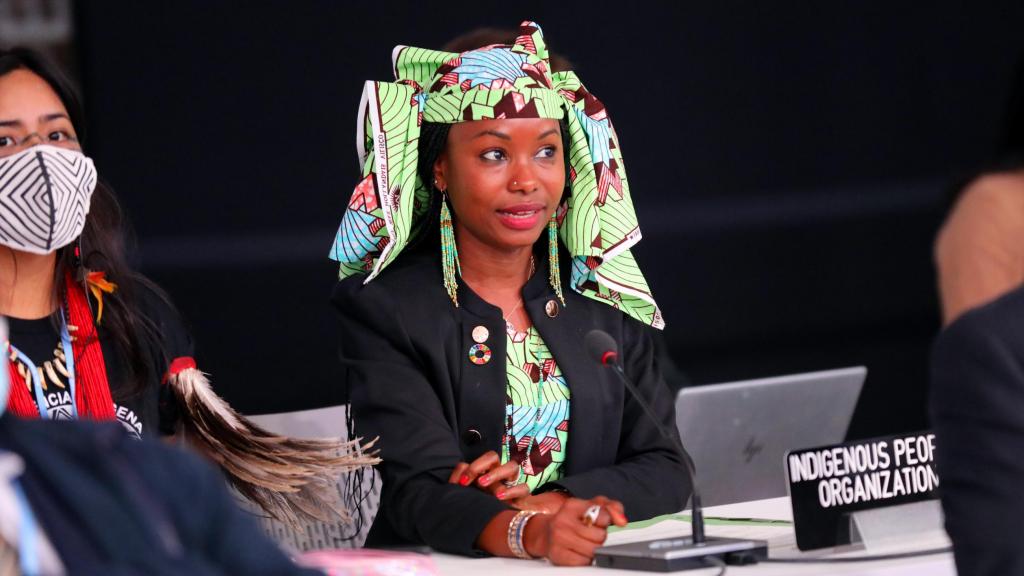
Hindou Oumarou Ibrahim of Association des Femmes Peules et peuples Autochtones du Tchad
Hindou Oumarou Ibrahim, Association des Femmes Peules et peuples Autochtones du Tchad and Co-Chair, Local Communities and Indigenous Peoples Platform Facilitative Working Group, at the Glasgow Climate Change Conference in 2021. (Photo: Mike Muzurakis, IISD/ENB)

Beyond Inclusion for Improved Outcomes

Indigenous Peoples are critical to sustaining the diversity of life on Earth. Many Indigenous Peoples are at the frontlines of resisting the drivers of the global environmental crisis. During the Glasgow Climate Change Conference in 2021, the Guardian highlighted the leadership of six young Indigenous women, arguing that Indigenous Peoples have done more than any government to solve climate change. Yet, international and national policies and laws do not recognize and support their collective rights (Tauli-Corpus et al., 2020). Respecting their rights and ensuring sufficient legal and financial support for their significant role as guardians of nature, culture, knowledge holders, and agents of change is essential, and a necessary first step.

It is time to get serious about Indigenous Peoples’ leadership and integrating new and traditional knowledge to create solutions—and systems—that work both for people and the planet. If the international community is to succeed with its sustainability agenda, it matters what worldviews underpin its creation and control. If Western cultures continue to subjugate Indigenous knowledge, humanity’s collective future will be compromised. It took many years for Indigenous Peoples to put forward their rich and long-lasting traditional knowledge and worldviews in the international arena. Indigenous Peoples are willing and able to lead and “require only that other... actors... sit down and talk—or simply catch up” (Powless, 2012, p. 421).

If traditional knowledge is integrated with other scientific and technological knowledge, innovative and equitable ways of creating a better future for all can be found. An example is the AI Laboratory, which develops and applies Indigenous protocols to the making of artificial intelligence based on caring for country and kin. The IPBES assessments, the post-2020 global biodiversity framework, and implementation of the Paris Agreement on climate change present significant opportunities for further dialogue, leadership, and convergence in the international arena. A key question is whether the international community will finally have the courage to move away from the status quo and follow the lead of Indigenous Peoples.

Works Consulted

Alonso, J. (2016). Colombia, Ecuador y Perú apuestan por incluir un enfoque indígena en la gestión de los bosques. p.dw.com/p/1IsR5

Beck, S., & Forsyth, T. (2020). Who gets to imagine transformative change? Participation and representation in biodiversity assessments. Environmental Conservation, 1-4. doi.org/10.1017/S0376892920000272

Comberti, C., Thornton, T., & Korodimou, M. (2016). Addressing Indigenous Peoples’ marginalisation at international climate negotiations: Adaptation and resilience at the margins. Social Science Research Network. doi.org/10.2139/ssrn.2870412

Crossen, J. (2017). Another Wave of Anti-Colonialism: The Origins of Indigenous Internationalism. Canadian Journal of History 52(3), 533-559. doi.org/10.3138/cjh.ach.52.3.06

Daes, E-I. (2000). Indigenous Peoples and their relationship to land. E/CN.4/Sub.2/2001/21. digitallibrary.un.org/record/419881?ln=en

Daes, E-I. (2009). The contribution of the Working Group on Indigenous Populations to the genesis and evolution of the UN Declaration on the Rights of Indigenous Peoples. In C. Charters & R. Stavenhagen (Eds.), Making the declaration work (pp. 48-77) IWGIA.

Dahl, J. (2012). The Indigenous space and marginalized peoples in the United Nations. Palgrave Macmillan.

Dupuits, E., & Conkleton, P. (2020). Indigenous tenure security and local participation in climate mitigation programs: Exploring the institutional gaps of REDD+ implementation in the Peruvian Amazon. Environmental Policy and Governance 30(4), 209-220. doi.org/10.1002/eet.1888

Frechette A., Reytar, K., Saini, S., & Walker, W. (2016) Toward a global baseline of carbon storage in collective lands. Rights and Resources Initiative. rightsandresources.org/wp-content/uploads/2016/10/Toward-a-Global-Baseline-of-Carbon-Storage-in-Collective-Lands-November-2016-RRIWHRC-WRI-report.pdf

Gram-Hanssen, I., Schafenacker, N., & Bentz, J. (2021). Decolonizing transformations through ‘right relations.’ Sustainability Science. doi.org/10.1007/s11625-021-00960-9

Löfmarck, E., & Lidskog, R. (2017). Bumping against the boundary: IPBES and the knowledge divide. Environmental Science & Policy, 69, 22–28. doi.org/10.1016/j.envsci.2016.12.008

Powless, B. (2012). An Indigenous movement to confront climate change. Globalizations 9(3), 411–424. doi.org/10.1080/14747731.2012.680736

Schabus, N. (2017). Traditional knowledge. In E. Morgera & J. Razzaque (Eds.), Biodiversity and nature protection law (pp. 264-279). Elgar.

Tauli-Corpuz, V. (1999). Thirty years of lobbying and advocacy by Indigenous Peoples in the international arena. Indigenous Affairs 1, 4–11.

Tauli-Corpuz, V., Alcorn, J., Molnar, A., Healy, C., & Barrow, E. (2020). Cornered by PAs: Adopting rights-based approaches to enable cost-effective conservation and climate action. World Development 130, 104923. doi.org/10.1016/j.worlddev.2020.104923

Wallbott, L., & Recio, E. (2018). Practicing human rights across scale: Indigenous peoples’ affectedness and recognition in REDD+ governance. Third World Thematics 3(5–6), 785–806. doi.org/10.1080/23802014.2018.1599691

Deep Dive

A Warming Arctic is a Warning for the World

Still Only One Earth: Lessons from 50 years of UN sustainable development policy

The Arctic is warming at a faster rate than other regions in the world and summer sea ice could disappear entirely as early as 2035. The decline in sea ice is causing changes in atmospheric circulation patterns—resulting in more extreme temperature fluctuations around the world—while increasing potential for more militarization, commercial shipping, tourism, and oil and gas drilling in one of the world’s most fragile ecosystems. Cooperation among Arctic states is needed more than ever to ensure the Arctic, its inhabitants, and their way of life survive. (Download PDF) (See all policy briefs) (Subscribe to ENB)

April 11, 2022

In 2016, Italian pianist Ludovico Einaudi played a hauntingly beautiful composition, “Elegy for the Arctic,” as he floated on an artificial ice platform in the Arctic Ocean constructed for the occasion. Seeking to raise awareness about the “purity and fragility” of the Arctic, he played a grand piano against the backdrop of the stunning Wahlenbergbreen glacier in Svalbard, Norway (Knijf, 2016). Greenpeace Spain organized the event to bring the world’s attention to the need for an Arctic sanctuary to protect one of the world’s most fragile ecosystems; one whose existence as we know it is threatened by climate change, pollution, and biodiversity loss.

The ancient Greeks named the region Arktos, meaning bear, “a reference to the Great Bear constellation that circles the northern sky” (New Internationalist, 2009). The name is fitting as the polar bear has become the most iconic symbol of the Arctic. Increasingly unable to access once plentiful food as sea ice disappears, the world’s largest land-based predator and other Arctic wildlife are struggling to survive. As the glaciers around them melt, their very existence is threatened, as are the ways of life of Indigenous Peoples who have called the Arctic home for thousands of years. As climate change opens up shipping routes and access to mineral deposits, this environmental devastation is likely to accelerate.

Given the immense challenges posed by climate change and other environmental threats, cooperation among the Arctic states, and the international community more generally, is needed now more than ever to ensure the Arctic, its inhabitants, and their way of life survive.

What Is the Arctic?

The Arctic is the northernmost region on Earth. It is dominated by the Arctic Ocean basin, with the Russian Federation, the United States, Canada, and the five Nordic countries (Denmark, Finland, Iceland, Norway, and Sweden) all claiming part of it.

It is a place of extremes that easily capture the imagination: hard to reach; hostile, yet stunningly beautiful; fragile, yet rugged.

About four million people live in the Arctic region, with Indigenous Peoples making up a minority of the population. They include, to name a few: the Inuit in Canada, Alaska (US) and Greenland; the Yu’pik, Iñupiat, and Athabascan in Alaska; and the Sami in Norway, Sweden, Finland, and the Russian Federation. Although ethnically diverse and geographically dispersed, they hunt the same animals, organize their communities along cooperative lines, and have adapted to “a harsh, yet abundant, environment” (New Internationalist, 2009).

Climate Change and the Arctic

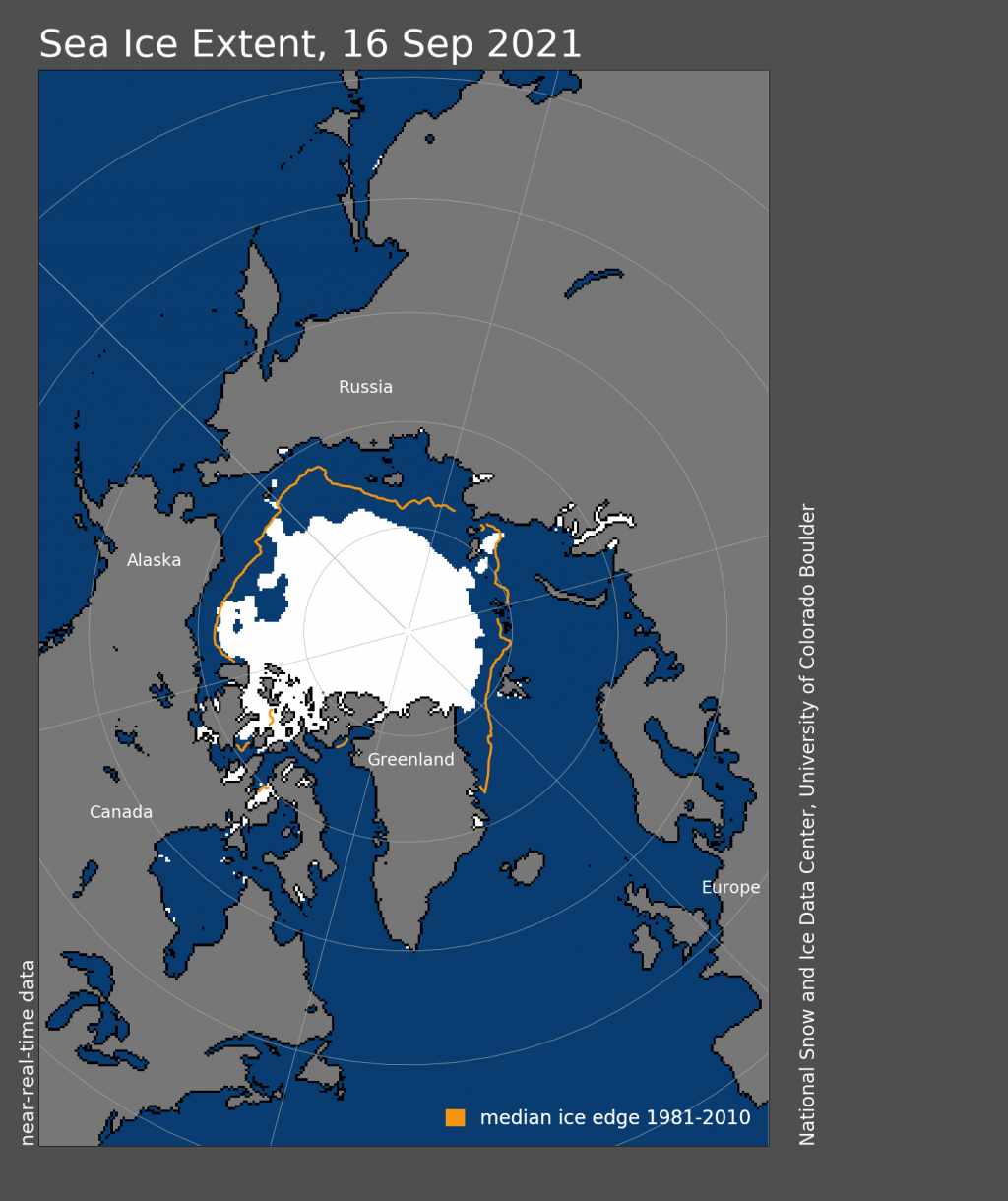
The Arctic could be warming up to four times as fast as other regions in the world, according to research undertaken by a team of climate scientists (Voosen, 2021), with a recent study predicting summer sea ice could disappear entirely as early as 2035 (Borunda, 2020).

Sea ice extent in the Arctic
On September 16, 2021, Arctic sea ice reached its annual minimum extent of 4.72 million square kilometres (1.82 million square miles), which is the 12th lowest on record. The orange line shows the 1981 to 2010 average extent for that day (Photo: National Snow and Ice Data Center)

Arctic sea ice extent is declining each year (IPCC, 2019), with approximately 75% of ice volume disappearing in the last 15 years alone. The remaining ice is thinner and of poorer quality (Purtill, 2021). For the first time since record keeping began, rain fell on the summit of Greenland, a “reliably frozen region” that sits two miles above sea level (Sierra Club, 2021). Scientists have recorded the calls of orcas in areas of the Arctic once blocked by sea ice, threatening the survival of animals up and down the food chain (Purtill, 2021). And in 2020, 21,000 tonnes of diesel spilled from a storage tank at Norilsk Nickel’s power plant in Siberia, polluting rivers and lakes. Investigators believe the tank sank because of melting permafrost due to global warming, which weakened the tank’s supports. Hence, the accident both caused and was the result of environmental destruction in the Arctic (BBC, 2021).

Melting permafrost not only releases carbon dioxide, but also methane and black carbon—short-lived climate pollutants that, while remaining in the atmosphere for shorter periods of time, are 25 times more potent and powerful than carbon dioxide in terms of their contribution to global warming. Black carbon, which causes up to a quarter of warming in the Arctic, is a dark soot that deposits in snow and ice when released, accelerating melting (Shankman, 2018).

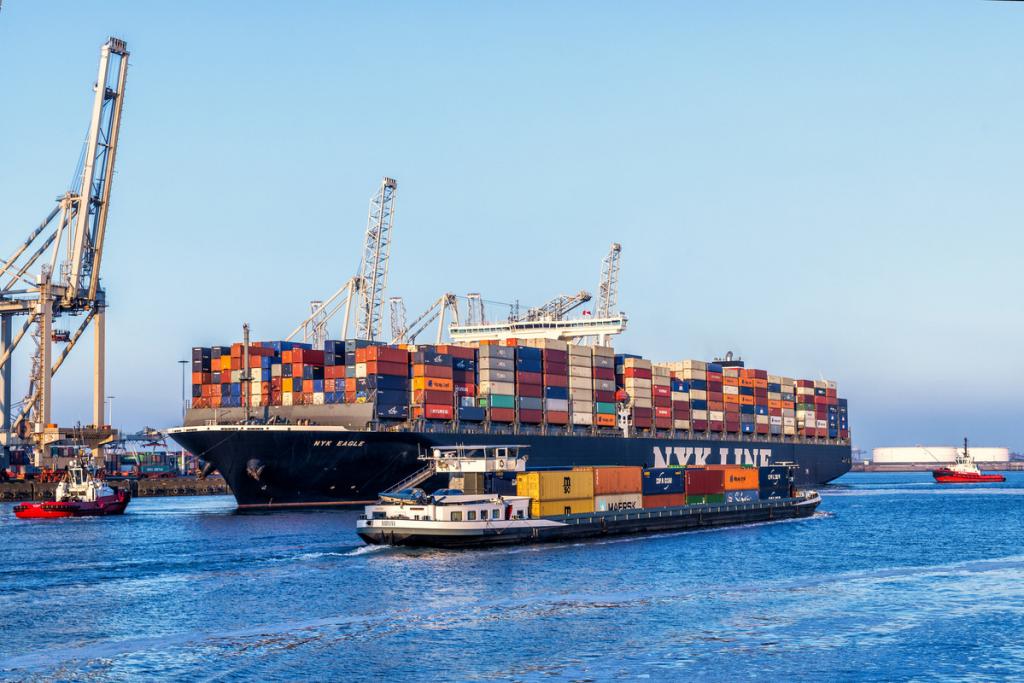
Declining sea ice also means the Arctic Ocean will likely see increased commercial shipping and tourist cruises. Large commercial ships are increasingly entering once inaccessible areas, disturbing wildlife and dumping trash as new commercial shipping routes across the Arctic shorten the distance between Europe and Asia. The Arctic is also rich in mineral resources, including vast oil and gas reserves, with the US Geological Survey estimating the Arctic has around a quarter of the world’s oil and gas deposits. As the ice retreats, oil, gas, and other mineral deposits become accessible, drawing private sector actors to the region.

While further environmental damage is inevitable, it can be minimized if actions are taken to restrict or outright ban some of these activities. However, this can only be done through cooperation among Arctic states and the larger international community. No one country can do it alone.

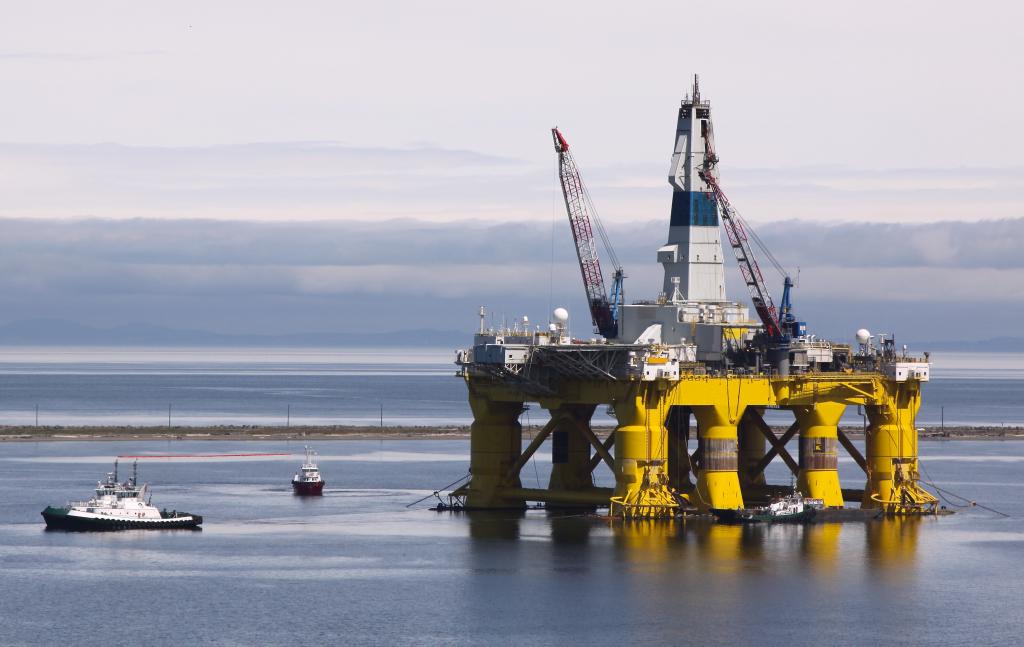
Offshore oil and gas drilling in the Arctic Ocean
The Arctic Ocean could see increased offshore oil and gas drilling, which would further threaten one of the world’s most fragile ecosystems. (Photo: davelogan/iStock)

Arctic Cooperation

International cooperative efforts on the environment can be traced back to the 1972 UN Conference on the Human Environment, held in Stockholm, Sweden, which opened a new era of environmental diplomacy. The Stockholm Conference first expressed the idea that marine environmental protection is the international community’s responsibility and is not a matter subject to the discretion of the world shipping industry or individual countries (Lamson, 1987). While not explicitly mentioned in the Stockholm Action Plan, protecting the Arctic represents an example of where bordering countries from different continents with varied interests can cooperate.

On 1 October 1987, then Soviet leader Mikhail Gorbachev called for international cooperation and a “zone of peace” in the Arctic. Speaking in Murmansk, the largest city above the Arctic Circle in what was then the Soviet Union, he called for East-West talks to restrict military activity in the northern seas. While military cooperation was met with resistance and has yet to be realized, many viewed his entreaties on the environmental and economic fronts as “laying the foundation” for future cooperation in the Arctic. The steps he outlined, often referred to as the Murmansk Initiative, provided inspiration for some tangible achievements. His call for scientific research coordination provided additional impetus to talks already underway for what became the International Arctic Science Committee in 1990. More significantly, his call for cooperation on environmental protection and management contributed to the establishment of the Arctic Council, the preeminent international forum on Arctic issues.

The community and interrelationship of the interests of our entire world is felt in the northern part of the globe, in the Arctic, perhaps more than anywhere else.

Following Gorbachev’s speech, Finland’s Foreign and Environment Ministers invited the Arctic States to Rovaniemi in 1989 to discuss how they could address Arctic degradation. Two years later, they established the Arctic Environmental Protection Strategy (AEPS) to address the region’s environmental challenges. While the AEPS was considered a “landmark” step, Canada supported a more formal and expanded forum to enhance cooperation among Arctic countries, and ensure the inclusion of Indigenous Peoples. In 1995, under the leadership of Mary Simon, a member of the Inuit community, Canada initiated discussions with other Arctic countries to transform the AEPS into a new organization with a broader mandate and Indigenous participation (Arctic Council, 2021).

On 19 September 1996 in Ottawa, Canada, the Arctic Council was established. The Council consists of the eight Arctic countries: the Arctic Five (the five coastal states)—the United States, the Russian Federation, Canada, Denmark, and Norway—plus Sweden, Finland, and Iceland. It is unique in that Indigenous communities are formal “Permanent Participants,” a status that ensures their full participation in Council deliberations. In addition to the eight Arctic states and six Permanent Participants (representing Indigenous groups from all over the Arctic), the Council has 38 observers, including 13 non-Arctic states, intergovernmental and interparliamentary organizations, and nongovernmental organizations (NGOs).

The Ottawa Declaration set up the basic framework and mandate of the Council, which currently has six working groups:

Three legally binding agreements have been negotiated under the auspices of the Arctic Council:

Expert groups address pressing and emerging issues, such as black carbon and methane and litter and microplastics. An expert group addressing the latter is developing the first comprehensive monitoring plan for plastics in the Arctic.

The Arctic Council is a model for global governance. It is inclusive of Indigenous Peoples and perspectives, committed to scientific-based decision-making, and a champion of regional peace and stability. However, it remains constrained by funding and its relatively weak legal structure. Its two-year rotating chairmanship has led to a lack of continuity in the Council’s work. New agendas are introduced every second year that often reflect the domestic interests of the host country more than the needs of the region (Exner-Pirot et al., 2019).

And in the rare case of a war initiated by an Arctic Council country, no less the current Chair, work can be essentially halted. On 3 March 2022, Canada, Denmark, Finland, Iceland, Norway, Sweden, and the US issued a joint statement following Russia’s invasion of Ukraine, stating that their representatives would not travel to the Russian Federation for Arctic Council meetings. Additionally, the statement notes a temporary pause in participation at all Council meetings and those of its subsidiary bodies, pending consideration of modalities to enable work to continue in view of the circumstances (US Department of State, 2022).

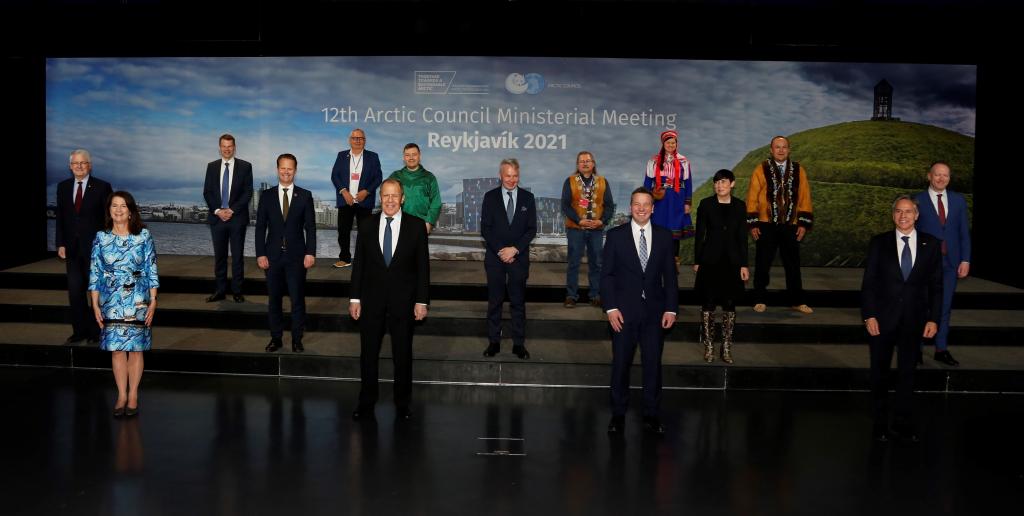
Arctic Council Ministerial Meeting in Reykjavík, Iceland
The 12th Arctic Council Ministerial Meeting in Reykjavík, Iceland, convened in the midst of the COVID-19 pandemic to address the challenges facing the Arctic (Photo:Icelandic Ministry for Foreign Affairs/Gunnar Vigfússon)

Persistent Organic Pollutants

One successful example of international cooperation in the Arctic was the response to the discovery of high levels of persistent organic pollutants (POPs) in the 1970s and 1980s. POPs, which are produced and released by mines, military sites, smelters, power stations, and other sources, can cause cancer, damage to the nervous system, reproductive disorders, and disruption of the immune system. POPs generally do not originate in the Arctic but are transported over long distances via air, water, and to a lesser extent migratory species. A 1997 AMAP study, Arctic Pollution Issues: A State of the Arctic Environment Report, found caribou in Canada’s Northwest Territories had 10 times the levels of polychlorinated biphenyls (PCBs) as the lichen on which they grazed, and wolves, which eat the caribou, had nearly 60 times as much (US EPA, 2009). Indigenous Peoples in the Arctic are exposed to POPs by consuming fish and other animals. This discovery served as a catalyst for what ultimately became the Stockholm Convention on Persistent Organic Pollutants, which calls on governments to eliminate or reduce the release of POPs into the environment.

Inuit carving of a mother and child
This Inuit carving of a mother and child, a gift of the Inuit Circumpolar Council to UNEP in 1999, is often displayed at Stockholm Convention meetings to remind participants of the significance of their work to protect human health and the environment. (Photo: Kiara Worth IISD/ENB)

A soapstone carving of an Inuit mother cradling her child symbolizes the importance of this issue to Indigenous Peoples in the Arctic. It sat by John Buccini, a Canadian diplomat, as he chaired the Intergovernmental Negotiating Committee responsible for the final legally binding agreement on POPs. The carving was a gift from Sheila Watt-Cloutier, an Inuit woman, who was influential in getting the Stockholm Convention negotiated and adopted.

[A] poisoned Inuk child, a poisoned Arctic, and a poisoned planet are all one and the same.

The Convention’s preamble acknowledges Arctic ecosystems and Indigenous communities are particularly at risk because of the “biomagnification of POPs and that contamination of their traditional foods is a public health issue.” A report has found that restricting and banning the use of these chemicals has had positive impacts on the Arctic (NIST, 2018), confirming the successful implementation of the Stockholm Convention.

The MV Plancius cruises the polar waters
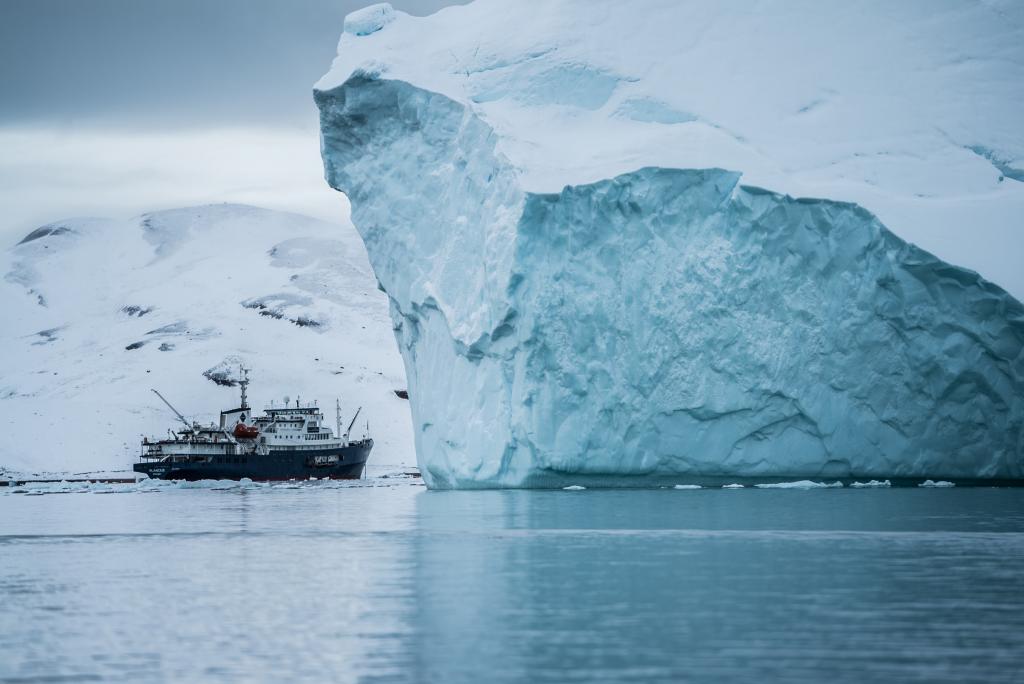
The MV Plancius is a renovated oceanographic research vessel of the Royal Netherlands Navy now employed as a polar expedition cruise vessel (Photo: Hubert Neufeld/Unsplash)

The Arctic as a Bellwether

While what happens in the rest of the world affects the Arctic, the reverse is also true. “The Arctic is a bellwether,” warned former UN Secretary-General Ban Ki-moon. What is happening in the Arctic affects other parts of the world and should serve as a warning to us all. Direct links can be made between more extreme temperature fluctuations—including hotter summers in the US and Canada, warming of the Mediterranean Sea and East Asia, and colder winters and more snow in mid-latitudes across North America, Europe, and East Asia—and diminishing summer Arctic sea ice that changes atmospheric circulation patterns (Thompson, 2016). To ensure the Arctic survives, economic development in the region must be balanced with environmental protection.

Greenpeace first floated the idea of an Arctic sanctuary at the UN Conference on Sustainable Development (Rio+20) in Rio de Janeiro, Brazil, in 2012. Greenpeace called for a protected area that would be off-limits to extractive and destructive uses, covering the central Arctic Ocean beyond the 200-nautical mile limit of Arctic coastal states’ exclusive economic zones. Fishing, exploration, and extraction of hydrocarbons or other minerals from the seabed, as well as military activity would be prohibited. Strict environmental controls would apply to shipping in the area, including the prohibition of heavy fuel oil use (Greenpeace, 2014). As the proposed sanctuary would be “beyond national jurisdiction,” the Arctic Council and other members of the international community would need to work together to make it happen.

Short of an Arctic sanctuary, a range of policy options exist, many of which are under discussion in various international fora or at the national level. For example, a network of marine protected areas could also be established to help halt and reverse environmental damage that is already occurring from increased shipping.

We need to save the Arctic not because of the polar bears, and not

because it is the most beautiful place in the world, but because our very survival depends upon it.

Lewis Pugh, Ocean advocate, after swimming across the North Pole in 2007.

The International Maritime Organization’s (IMO) International Code for Ships Operating in Polar Waters (Polar Code), which entered into force in 2017, includes measures to mitigate the impacts of shipping in the Arctic. It details ship designs to prevent accidents and limits the discharge of oil, chemicals, sewage, and garbage. However, it does not go far enough to prevent shipping accidents and pollution (Schopmans, 2019). While a “ban” on heavy fuel oil, a source of black carbon emissions, was adopted in 2021, most ships are likely to continue using it until 2029 and beyond (Reuters, 2021). By then, it may be too late to reverse any environmental devastation caused by shipping.

Nevertheless, most Arctic issues—from Indigenous knowledge and livelihoods to shipping to sanitation to wildlife protection—come back to climate change and its impacts. The reluctance of some countries, especially the United States and Russia, over the years to commit to mitigating climate change through reducing greenhouse gas emissions, let alone discuss the challenges of adapting to a post-petroleum future, has prevented the Council from addressing this major threat (Exner-Pirot et al., 2019). Stronger and broader local, national, and international measures to reduce greenhouse gas emissions must be implemented. Increased funding and investment, as well as capacity, is also critical to implement these and other actions in the region.

The disappearance of sea ice and the plight of Arctic wildlife and Indigenous culture should serve as a wake-up call. It is not too late to reverse the trend and slow the melting—but that window of opportunity may close in the face of continued inaction.

Works Consulted

Adler, N. (2020). 10 million snowblowers? Last-ditch ideas to save the Arctic ice. The Guardian. https://www.theguardian.com/usnews/2020/oct/20/last-ditch-ideas-to-save-the-arctic-ice

Arctic Council. (2021). History of the Arctic Council. https://www.arctic-council.org/about/timeline

Beers, R. (2018). Treaty banning dangerous chemicals helped Arctic wildlife, study shows. CBC News. https://www.cbc.ca/news/canada/north/stockholm-convention-arctic-wildlife-pollutants-1.4804089

BBC. (2020). Russian Arctic oil spill pollutes big lake near Norilsk. https://www.bbc.com/news/world-europe-52977740

BBC. (2021). Norilsk Nickel: Mining firm pays record $2bn fine over Arctic oil spill. https://www.bbc.com/news/world-europe-56350953

Borunda, A. (2020). Arctic summer sea ice could disappear as early as 2035. National Geographic. https://www.nationalgeographic.com/science/article/arctic-summer-sea-ice-could-be-gone-by-2035

Comer, B. (2020). IMO’s draft HFO “ban” is nothing of the sort. International Council on Clean Transportation. https://www.theicct.org/blog/staff/imo-draft-hfo-ban-2020

Comer, B., Olmer, N., Mao, X., Roy, B., & Rutherford, D. (2017). Prevalence of heavy fuel oil and black carbon in Arctic shipping, 2015 to 2025. International Council on Clean Transportation. https://www.theicct.org/publications/prevalence-heavy-fuel-oil-and-black-carbon-arctic-shipping-2015-2025

Council on Foreign Relations. (2014). The Emerging Arctic. https://www.cfr.org/emergingarctic/#!/

Dennis, B., & Patel, K. (2021). The Arctic could get more rain and less snow sooner than projected. Here’s why that matters. Washington Post. https://www.washingtonpost.com/climate-environment/2021/11/30/arctic-rain-snow-climate-change

Dickie, G. (2020). The Arctic is in a death spiral. How much longer will it exist? The Guardian. https://www.theguardian.com/us-news/nginteractive/2020/oct/13/arctic-ice-melting-climate-change-global-warming

Exner-Pirot, H. (2016). How Gorbachev shaped future Arctic policy 25 years ago. Anchorage Daily News. https://www.adn.com/arctic/article/how-gorbachev-shaped-future-arctic-policy-25-years-ago/2012/10/01/

Exner-Pirot, H., Ackrén, M., Loukacheva, N., Nicol, H., Nilsson, A. E., & Spence, J. (2019). Form and Function: The Future of the Arctic Council. Law and Governance. Arctic Institute. https://www.thearcticinstitute.org/form-function-future-arctic-council/

Greenpeace. (2014). Arctic Sanctuary: Global Commons, Environmental Protection & Future Proofing. https://www.greenpeace.org/static/planet4-internationalstateless/2014/06/190fb9b9-arcticsanctuary.pdf

Heikkilä, Markku. (2016). It all started in Rovaniemi. Shared Voices. https://www.uarctic.org/shared-voices/shared-voices-magazine-2016-special-issue/it-all-started-inrovaniemi/

Intergovernmental Panel on Climate Change. (2019). Special Report on the Ocean and Cryosphere in a Changing Climate: Summary for Policymakers. https://www.ipcc.ch/srocc/

Kankaanpää, P., & Young, O. (2012). The effectiveness of the Arctic Council. Polar Research, 31(1). https://www.doi.org/10.3402/polar.v31i0.17176

Kaplan, S. (2021). Climate change has destabilized the Earth’s poles, putting the rest of the planet in peril. Washington Post. https://www.washingtonpost.com/climateenvironment/2021/12/14/climate-change-arctic-antarctic-poles/

Knijf, N. (2016). Pianist performs in Arctic to raise awareness. Popular Mechanics. https://www.popularmechanics.co.za/videos/pianist-preforms-arctic-raise-awareness/

Kuersten, A. (2016). The Arctic five versus the Arctic Council. Arctic Yearbook. https://www.arcticyearbook.com/images/yearbook/2016/Briefing_Notes/9.Kuersten.pdf

Lamson, C. (1987). Arctic shipping, marine safety and environmental protection. Marine Policy, 11(1), 3-15. https://www.doi.org/10.1016/0308-597X(87)90035-2

Manulak, M. W. (2015). Multilateral solutions to bilateral problems: The 1972 Stockholm conference and Canadian foreign environmental policy. International Journal, 70(1), 4-22. https://www.doi.org/10.1177/0020702014546338

McCrystall, M. R., Stroeve, J., Serreze, M., Forbes, B. C., & Screen, J.A. (2021). New climate models reveal faster and larger increases in Arctic precipitation than previously projected. Nature Communications, 12, 6765. https://www.doi.org/10.1038/s41467-021-27031-y

National Institute of Standards and Technology. (2018). Many Arctic pollutants decrease after market removal and regulation: Stockholm Convention having impact. Science Daily. https://www.sciencedaily.com/releases/2018/08/180827180752.htm

New Internationalist. (2009). The Arctic: A History. https://www.newint.org/features/2009/07/01/arctic-history

Purtill, C. (2021). Melting Arctic is a bonanza for the ocean’s natural born killers. New York Times. https://www.nytimes.com/2021/12/02/science/killer-whales-arctic-ocean.html

Reuters. (2021). UN adopts ban on heavy fuel oil use by ships in Arctic. https://www.reuters.com/business/energy/un-adopts-ban-heavy-fuel-oil-use-by-ships-arctic-2021-06-17/

Schopmans, H. (2019). Revisiting the Polar Code: Where do we stand? Arctic Institute. https://www.thearcticinstitute.org/revisiting-polar-code/

Shankman, S. (2018). These climate pollutants don’t last long, but they’re wreaking havoc on the Arctic. Inside Climate News. https://www.insideclimatenews.org/news/19032018/global-warming-arctic-airpollution-short-lived-climate-pollutants-methane-black-carbon-hfcs-slcp/

Thompson, K. (2016). What happens in the Arctic doesn’t stay in the Arctic. Greenpeace Research Laboratories Technical Report (Review), No. 04-2016. https://www.archivo-es.greenpeace.org/espana/Global/espana/2016/report/artico/ArticoEN-LR.pdf

Thorsberg, C. (2021). Rain fell for the first time on Greenland’s summit. Here’s why it matters. Sierra Club. https://www.sierraclub.org/sierra/rain-fell-for-first-time-greenland-s-summit-here-s-why-it-matters

US Department of State. (2022). Joint Statement on Arctic Council Cooperation Following Russia’s Invasion of Ukraine. Press Release. www.state.gov/joint-statement-on-arctic-council-cooperation-following-russias-invasion-of-ukraine/

US Environmental Protection Agency. (2009). Persistent organic pollutants: A global issue, a global response. https://www.epa.gov/international-cooperation/persistent-organic-pollutants-global-issue-global-response

US Environmental Protection Agency. (2016). Methane and black carbon impacts on the Arctic: Communicating the science. https://www.epa.gov/sites/production/files/2016-09/documents/arctic-methane-black-carbon_communicating-the-science.pdf

Voosen, P. (2021). The Arctic is warming four times faster than the rest of the world. Science. https://www.science.org/content/article/arctic-warming-four-times-faster-rest-world

Deep Dive

The Water and Sanitation Challenge

Still Only One Earth: Lessons from 50 years of UN sustainable development policy

Water and sanitation services have been on the international agenda since the 1972 Stockholm Conference on the Human Environment. But long-term financial investments into the necessary infrastructure have been insufficient, and international targets were initially set too low. For universal access to become a reality, governments and private-sector service providers should adopt a human rights-based approach to ensure water and sanitation services are safe, available, accessible, affordable, and culturally acceptable. (Download PDF) (See all policy briefs) (Subscribe to ENB)

March 22, 2022

At some time, most of us have experienced the frustration of a blocked toilet for a few hours or days. Now imagine your life without a working toilet—ever.

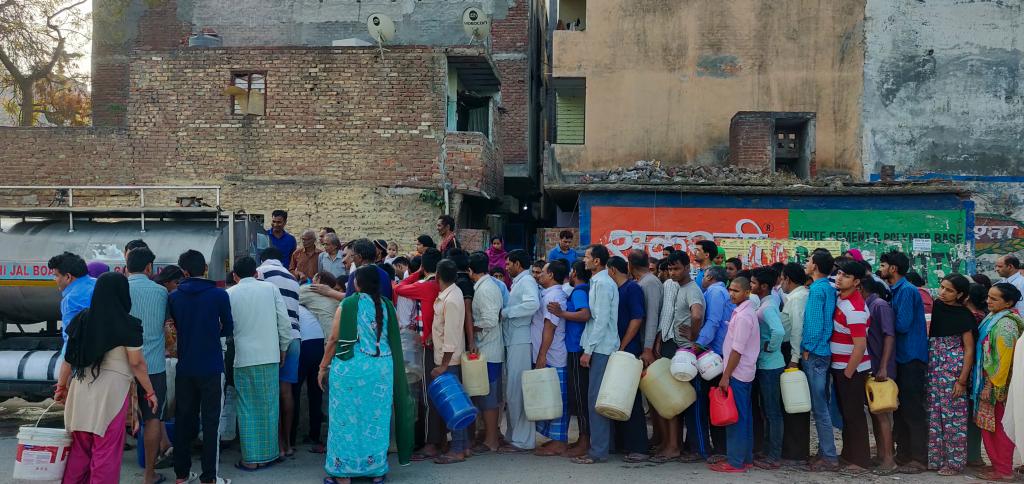
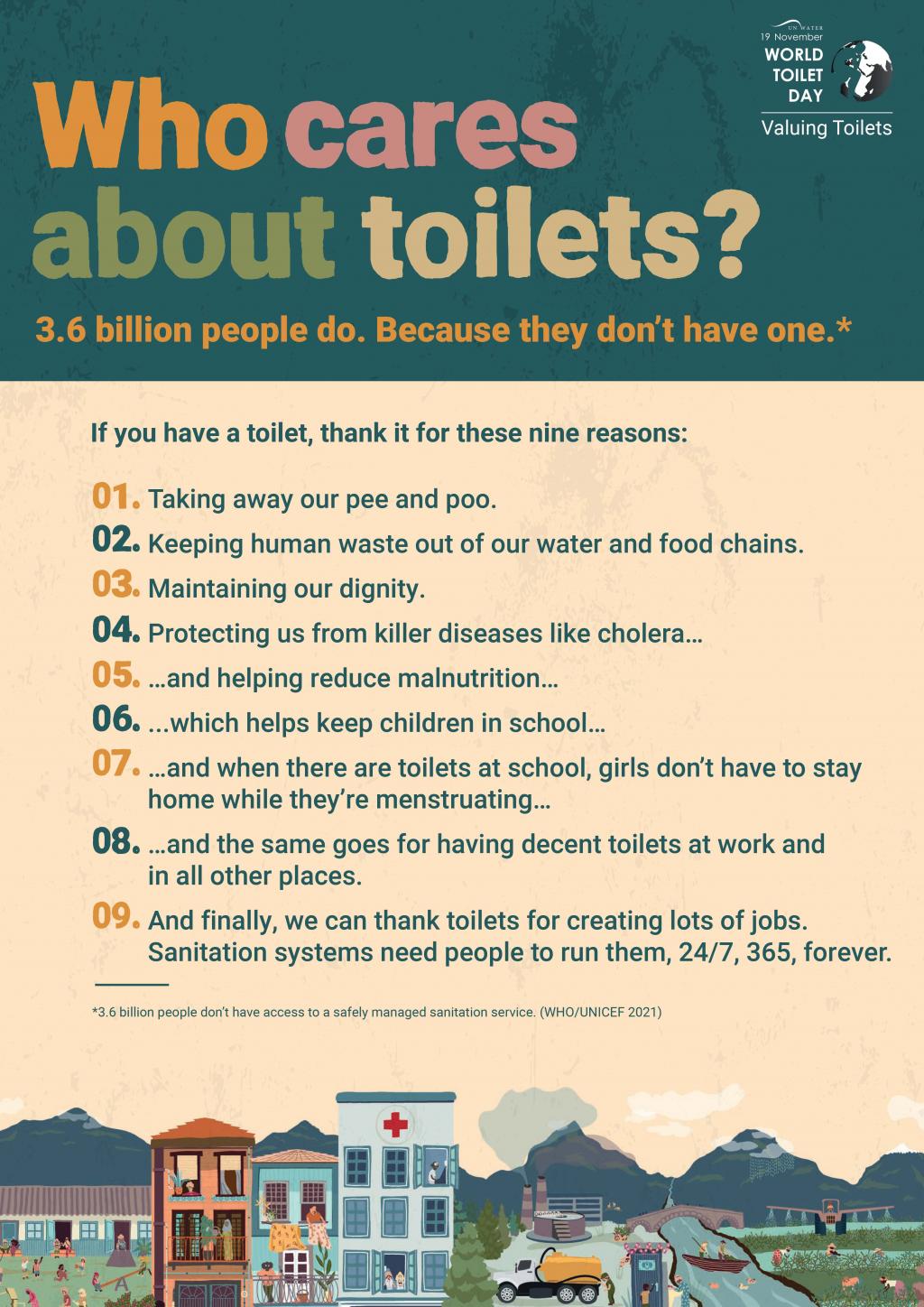
This is the reality for 673 million people in the world today—about twice the population of the United States—who don’t have a toilet in their homes (UNICEF & WHO, 2020). Moreover, 698 million school-age children do not have basic sanitation services at school and more than half the world’s population—4.3 billion—use sanitation services that release untreated human waste into the environment, contaminating water sources (UNICEF & WHO, 2020).

That is not all. Three of every 10 people, or 2.1 billion, still do not have access to safe drinking water, whether from household or public taps, bottled water deliveries, rainwater, borewells, or natural springs protected from contamination (WHO & UNICEF, 2017). Every day, 700 children under five years of age die from a diarrheal disease. That is about one child every two minutes. If you have an average reading speed, by the time you reach the end of this brief, 11 children will have died.

Many such deaths could be prevented if everyone had access to safe drinking water, sanitation services, and good hygiene. Access to water, sanitation, and hygiene (WASH) also improves opportunities for education and work; for example, availability of facilities to manage menstrual hygiene in schools clearly improves girls’ attendance, in both rich and poor countries alike (Tegegne & Sisay, 2014; Sebert Kuhlmann et al., 2020).

The 1972 Stockholm Conference on the Human Environment identified “health and sanitation” as necessities for a decent life, along with food, clothing, shelter, and education. The resulting Stockholm Action Plan’s 109 recommendations included calls for water supply, sewerage and waste disposal systems adapted to local conditions. Yet, 50 years later, ensuring water and sanitation for all remains one of the world’s biggest challenges.

Did International Action Achieve Water and Sanitation Targets?

Five years after the 1972 Stockholm Conference, the first-ever UN international water summit convened in Mar del Plata, Argentina. The summit discussed water use and efficiency, environment, and health and pollution control, among other objectives. The summit also adopted the Mar del Plata Action Plan and called for an International Drinking Water Supply and Sanitation Decade to be observed from 1981-1990—a recommendation the UN General Assembly later adopted.

The Mar del Plata summit and the International Decade boosted action to improve the lives of the millions without access to potable water and toilets and drew attention to the need for a holistic approach that would include care for water in the environment. But toward the close of that decade, despite some progress, developing countries still lacked the necessary financing, technology, and human resource capacity to fulfil their own national action plans on water and sanitation (Biswas, 1988). One reason was that development banks had introduced stricter conditionalities on borrowing during the 1980s, limiting the opportunities for poorer countries to establish the large-scale infrastructure they needed (Muller, 2015). Other factors, such as rapid urbanization and rise of informal urban settlements around many cities, also posed challenges for governments in providing water and sanitation services.

People queue for water in the early morning in New Delhi, India
People queue for water in the early morning in New Delhi, India, where there is urban water scarcity (Photo: abhisheklegit/iStock)

The 1992 International Conference on Water and the Environment in Dublin, Ireland, convened just prior to the UN Conference on Environment and Development (Earth Summit) in Rio de Janeiro and set the framework for integrated water resource management (IWRM) that governments and others sought to implement in the long term. The “Dublin Principles” that emerged from these deliberations were incorporated into Chapter 18 of Agenda 21, the programme of action adopted in Rio in June 1992. The Principles addressed catchment management, the importance of the role of women, and participation by local communities and other stakeholders in water management. They became widely accepted in the world of water policy, at least in principle. However, developing countries and poorer populations did not necessarily benefit from technical advice on institution building and stakeholder participation when what they wanted was water pipes and treatment plants. The deliberative democracy approach promoted through IWRM was also difficult to achieve, even in countries with strong and liberal democratic systems (Muller, 2015).

The water and sanitation agenda received a boost when UN Member States adopted the Millennium Development Goals (MDGs) in 2000. The MDGs focused on solving global poverty and served as a framework to coordinate donor aid toward implementing international commitments. MDG 7 contained a suite of environmentally related targets, including target 7C that pledged to halve the proportion of the world’s population lacking sustainable access to safe drinking water and basic sanitation by 2015.

UN agencies reported achievement of MDG target 7C by 2010, five years ahead of schedule, with 2.6 billion people reportedly gaining access to “improved” drinking water sources. The criteria for achievement, however, were set too low. The indicator, “access to an improved water source,” did not consider water quality. A new tap or pump well could be delivering contaminated water and would still qualify as “improved,” under this criterion (Weststrate et al., 2019). Another indicator, “access to an improved sanitation facility,” did not include any requirement for the safe collection, treatment, and disposal of wastewater and fecal sludge. While the UN’s Joint Monitoring Programme estimated 62% of the world’s population had access to basic sanitation, other assessments that included sewage treatment as a criterion placed that figure at just 40% (Weststrate et al., 2019).

The extent to which water resources development contributes to economic productivity and social well-being is not usually appreciated, although all social and economic activities rely heavily on the supply and quality of freshwater

AGENDA 21, PARAGRAPH 18.6

UN Member States committed to a higher level of ambition when they adopted the 17 Sustainable Development Goals (SDGs) in September 2015. SDG 6 on access to water and sanitation contains targets for wastewater treatment, water-use efficiency, IWRM (including transboundary cooperation), and the protection and restoration of water-related ecosystems. SDG 6 also includes implementation-focused targets for international cooperation and capacity building, and for participation of local communities in improving water and sanitation management.

While the MDG target was limited in scope, SDG 6 reflects the holistic approach that was advocated in the early global conferences on water. It takes into account the entire water cycle, as well as the human and institutional capacities that will be needed to deliver water and sanitation for all.

SDG 6: Ensure availability and sustainable management of water and sanitation for all

6.1 By 2030, achieve universal and equitable access to safe and affordable drinking water for all
6.2 By 2030, achieve access to adequate and equitable sanitation and hygiene for all and end open defecation, paying special attention to the needs of women and girls and those in vulnerable situations
6.3 By 2030, improve water quality by reducing pollution, eliminating dumping, and minimizing release of hazardous chemicals and materials, halving the proportion of untreated wastewater, and substantially increasing recycling and safe reuse globally
6.4 By 2030, substantially increase water-use efficiency across all sectors and ensure sustainable withdrawals and supply of freshwater to address water scarcity and substantially reduce the number of people suffering from water scarcity
6.5 By 2030, implement integrated water resources management at all levels, including through transboundary cooperation as appropriate
6.6 By 2020, protect and restore water-related ecosystems, including mountains, forests, wetlands, rivers, aquifers, and lakes
6.A By 2030, expand international cooperation and capacity-building support to developing countries in water- and sanitation-related activities and programmes, including water harvesting, desalination, water efficiency, wastewater treatment, recycling, and reuse technologies
6.B Support and strengthen the participation of local communities in improving water and sanitation management

Going Beyond Toilets and Taps

Human health and environmental quality are connected. Rivers, lakes, forests, and all water-related ecosystems influence the quality and quantity of available water for urban and rural populations. Where environmental degradation occurs, the goal of providing safe drinking water and sanitation gets harder to reach. Deforestation of watersheds can increase flash floods and landslides, increasing the sediment load and turbidity of water sources, and decreasing household access to clean drinking water (Mapulanga & Naito, 2019). Water quality is also affected by excessive nutrients from fertilizers and detergents, salinity intrusion, and organic waste. Developing countries discharge almost 90% of sewage untreated into water bodies, and 1.8 billion people use a source of drinking water with fecal contamination (Bhaduri et al., 2016). The UN Joint Monitoring Programme on water and sanitation anticipates that, at the current rate of progress, by 2030 there will still be 1.6 billion people in the world without access to safe drinking water at home.

These pressures have increased in the 50 years since the Stockholm Conference and the impacts are not limited to developing countries. In 2021, UN-Water reported 80% of the world’s wetland ecosystems, which play important roles in filtering out sediment and pollutants, are already lost.

For everyone to have access to safe drinking water and properly managed sanitation services, water security is an integral concern. There needs to be greater emphasis on managing water risk and adopting a precautionary approach at every level of governance.

The World Water Assessment Programme, coordinated by the UN Educational, Scientific and Cultural Organization (UNESCO), issues regular assessments on the state of the world’s freshwater resources. Such reports have promoted understanding of water risk as a product of drivers such as agriculture, food and energy demand, international trade, and climate change.

Concepts of “virtual water,” “water footprint,” and “green water” underline the interconnections between water resources and environmental quality with trade and land use patterns, and show who benefits, or not, from available water. For example, the calculation of water footprints—the amount of water used to produce particular goods or services—can show which activities are the most water- intensive. The water footprint of a golf course requiring lavish watering may be difficult to justify in places where residents are subject to water rationing as reservoir levels fall. Similarly, the concept of virtual water takes into account the water used in traded products, from coffee to cars to computers. Some products may be grown or manufactured in water-scarce regions and then exported to water-rich regions, compounding patterns of global inequity (Gupta et al., 2013).

Green water—the water available to support terrestrial ecosystems—maintains the healthy forests and grasslands that support the water cycle. Water is indeed “the bloodstream of the biosphere” (Falkenmark, 2017).

Over 2 billion people live in countries experiencing high water stress, and about 4 billion people experience severe water scarcity during at least one month of the year. Stress levels will continue to increase as demand for water grows and the effects of climate change intensify

Climate change is leading to greater variability in the water cycle and is one of the global drivers of demand for water resources for use in producing energy, food, and other necessities. UN-Water, which coordinates the efforts of UN entities and international organizations working on water and sanitation issues, has called for greater investment in producing hydrological data, conducting risk assessment, and educating water users, ultimately building capacity and expertise for better water management. As countries prepare their national adaptation plans (NAPs) and other climate-related strategies, action on water risk must be a key part of solutions.

Participants at the 2017 People’s Climate March in Washington, DC
Participants at the 2017 People’s Climate March in Washington, DC, stress the importance of clean water. (Photo: Vlad Tchompalov/Unsplash).

Focusing on the Poorest

Exposure to water risk is not the same for everyone. Minorities, slum dwellers, and the poor face higher levels of risk. Even in places where water is abundant and infrastructure sufficient, issues of social exclusion and inequality can limit universal access to water and sanitation.

The UN World Water Development Report 2019 noted poor communities often do not benefit from government investment in water and sewage infrastructure. They may live in temporary dwellings or shantytowns that don’t have infrastructure connections. They may pay higher prices for water they buy directly from vendors than they would for piped water.

For example, women and girls in low-income countries spend some 40 billion hours a year collecting water. That is equivalent to the annual effort of the entire workforce of a country like France. The time spent could be much better invested in earning a livelihood or—in the case of girls—attending school. It is time to change how we value and manage water (Guterres, 2018).

For universal access to become a reality, governments and private-sector service providers should adopt a human rights-based approach to ensure water and sanitation services are safe, available, accessible, affordable, and culturally acceptable. Access to services should be monitored through the experiences of women and minorities. Setting global priorities for climate-resilient water and sanitation could address, for example, the provision of drinking water and sanitation services in places where there is large-scale human displacement. While cost recovery measures for water and sanitation services are appropriate in some contexts, collecting disaggregated data will help determine which groups are at highest risk of being left behind and what services should be subsidized.

More than 30 UN organizations conduct water and sanitation programmes. UN-Water convenes meetings twice a year as a global coordinating platform for the UN family of organizations active in this area. The UN-hosted Sanitation and Water for All (SWA) partnership, founded in 2009, has more than 270 voluntary partners, including development banks and philanthropic foundations, as well as more than 170 civil society, private sector, and academic organizations.

World Toilet Day infographic about the benefits of toilets
3.6 billion people don’t have access to a toilet. Clean water, sanitation, and hygiene education are basic necessities for a healthy environment and a productive life (Photo: UN Water)

Despite these efforts, the world is far from achieving water and sanitation for all by 2030. To meet the 2030 deadline for the SDGs, progress on some targets needs to be about four times faster, according to UN-Water’s own monitoring mechanism on SDG 6.

The UN launched a new International Decade for Action on Water and Sanitation in 2018. International campaigns and special days, such as World Water Day and World Toilet Day, continue to promote action on water and sanitation through public awareness activities, conferences, and events. In March 2023, UN Member States will hold a three-day high-level summit and mid-term review of the Decade’s achievements. At the 35th UN-Water meeting in 2021, delegates proposed the summit should link SDG 6 targets to other objectives, including good governance, gender equality, climate action, and human rights.

World Water Day 2022 infographic
The theme of World Water Day 2022 highlights groundwater as a hidden resource located within aquifers that supplies the water we use for drinking, sanitation, food production and industrial processes. (Photo: UN Water)

For all the goodwill and political commitment expressed, meetings and targets on water will not be enough. Water and sanitation are also influenced by action on biodiversity, land use, chemicals and waste, and disaster risk reduction, in addition to the crosscutting objectives proposed by UN-Water. Global agreement-making in all these areas already includes commitments to increase development aid, enable access to technology, and promote a just and fair society. Concerted efforts across all these areas are needed to achieve water and sanitation for all. Fulfilment of countries’ commitments under various global agreements will contribute to achievement of SDG 6—and failure to meet commitments will hinder it.

For example, increasing financing for adaptation to climate change—a promise of the 2021 Glasgow Climate Change Conference—could help protect threatened water resources. Tree planting to counter rising temperatures in cities, say, would also increase green water in the landscape, promoting water security. Infrastructure to protect coastal communities against storm surges could also prevent salinization of freshwater sources. Projects to house displaced people could include connections to wastewater and sewage treatment.

There needs to be a greater focus on the governance of water security, including responsibility and accountability for agreed standards, enforcement against polluters, and anti-corruption measures—issues that often block progress. Creative financing methods such as Costa Rica’s wastewater discharge environmental fee, Cambodia’s sanitation development impact bond, and Kenya’s credit rating scheme for utilities—described in a 2020 handbook for finance ministers released by SWA in 2020—could be part of the policy mix. Education for “water literacy” to increase understanding of the water cycle and the drivers of water risk will also promote adoption of strict policy measures in favor of needed water security.

It is time to change how we value and manage water.

UN SECRETARY-GENERAL ANTÓNIO GUTERRES

Drinking a glass of water straight from the tap or flushing a toilet in the privacy of one’s home cannot be taken for granted. Social inequalities mean many people today do not have these two options. For many more, water risk in their part of the world also means the future might not include them.

A Slovakian proverb states, “Pure water is the world’s first and foremost medicine.” The world should prioritize action for universal access to water and sanitation—not only for human health, but also because ensuring water supply and treating wastewater are among the best ways to maintain a healthy planet.

Works Consulted

Bhaduri, A., Bogardi, J., Siddiqi, A., Voigt, H., Vörösmarty, C., Pahl-Wostl, C., Bunn, S. E., Shrivastava, P., Lawford, R., Foster, S., Kremer, H., Renaud, F. G., Bruns, A., & Osuna, V. R. (2016). Achieving Sustainable Development Goals from a water perspective. Frontiers in Environmental Science, 4. doi.org/10.3389/fenvs.2016.00064

Biswas, A.K. (1988). United Nations water conference action plan. International Journal of Water Resources Development, 4(3), 148-159, doi.org/10.1080/07900628808722385

Falkenmark, M. (2016). Water and human livelihood resilience: A regional-to-global outlook, International Journal of Water Resources Development 33(2), 181-197. doi.org/10.1080/07900627.2016.1190320

Gupta, J., Pahl-Wostl, C., & Zondervan, R. (2013). ‘Glocal’ water governance: A multi-level challenge in the anthropocene. Current Opinion in Environmental Sustainability, 5 (6), 573–580. doi.org/10.1016/j.cosust.2013.09.003

Guterres, A. (2018). Remarks at launch of International Decade for Action “Water for Sustainable Development” 2018-2028. un.org/sg/en/content/sg/speeches/2018-03-22/decade-action-watersustainable-development-remarks

Mapulanga, A.M., & Naito, H. (2019). Effect of deforestation on access to clean drinking water. Proceedings of the National Academy of Sciences, 116(17), 8249-8254 doi.org/10.1073/pnas.1814970116

Muller, M. (2015). The ‘nexus’ as a step back towards a more coherent water resource management paradigm. Water Alternatives 8(1). 675-694. water-alternatives.org/index.php/all-abs/271-a8-1-4/file

Sebert Kuhlmann, A., Key, R., Billingsley, C., Shato, T., Scroggins, S., & Teni, M. T. (2020). Students’ menstrual hygiene needs and school attendance in an urban St. Louis, Missouri, district. The Journal of Adolescent Health, 67(3), 444–446. doi.org/10.1016/j.jadohealth.2020.05.040

Tegegne, T.K., & Sisay, M.M. (2014). Menstrual hygiene management and school absenteeism among female adolescent students in Northeast Ethiopia. BMC Public Health 14, 1118. doi.org/10.1186/1471-2458-14-1118

United Nations Children’s Fund & World Health Organization. (2020). State of the world’s sanitation: An urgent call to transform sanitation for better health, environments, economics and societies. who.int/publications/i/item/9789240014473

Weststrate, J., Dijkstra, G., Eshuis, J., Gianoli, A., & Rusca, M. (2018). The Sustainable Development Goal on water and sanitation: Learning from the Millennium Development Goals. Social Indicators Research, 143(2), 795–810. doi.org/10.1007/s11205-018-1965-5

World Health Organization & United Nations Children’s Fund. (2017). Progress on drinking water, sanitation, and hygiene: 2017 updates and SDG baselines. data.unicef.org/resources/progress-drinking-watersanitation-hygiene-2017-update-sdgbaselines/

Deep Dive

Five Key Elements for a Gender Lens in Trade

In June, trade ministers from a large group of WTO members will adopt a declaration on trade, gender equality, and women’s economic empowerment. This move confirms that gendered aspects of trade are firmly on the international trade policy agenda. For this to have tangible benefits for women, though, it will be necessary to get the “gender lens” right. Here are five elements that should be considered when defining a gender lens for trade.

March 14, 2022

The gendered impacts of trade policy

Around the world, policy-makers, academics, and others are paying more and more attention to whether trade rules take sufficient account of the differentiated impacts of trade on different groups, whether and how social issues need to be incorporated in trade policy-making, and what information would be needed to do so.

Parties to regional trade agreements are increasingly considering these questions and articulating dedicated measures in favour of gender equality in their trade policies. Some countries, such as Canada, Chile, and New Zealand, are leading the way through such measures as stand-alone trade and gender chapters in their trade agreements, the recently-adopted trade and gender arrangement, or gender reviews of their trade policies.

Trade and gender at the World Trade Organization

Many World Trade Organization (WTO) members remain reluctant to discuss social issues—including gender—within the organization. Some are concerned that doing so could pave the way for new reasons for discriminating against their imports. Others are disinclined to tackle new topics at the WTO before agreement has been reached on items that are already part of the multilateral negotiating agenda, such as agriculture, and which have yet to reach agreed outcomes since the Doha Ministerial Conference in 2001.

Still, over the past year, some 130 WTO members have been sharing experiences and exchanging views on trade and gender equality in an Informal Working Group on Trade and Gender (IWG). The IWG was established following the 2017 adoption of the Joint Declaration on Trade and Women’s Economic Empowerment (Buenos Aires Declaration) by a group of 118 WTO members and observers on the sidelines of the WTO’s 11th Ministerial Conference (MC11) in Buenos Aires.

As the International Institute for Sustainable Development reported in July, the IWG’s work is articulated around four pillars:  

  1. Sharing best practices on removing trade-related barriers and increasing women’s participation in trade.
  2. Reviewing gender-related research by the WTO Secretariat and others on women’s economic empowerment. 
  3. Clarifying what a “gender lens” is and how it could be applied to the work of the WTO.
  4. Contributing to the WTO’s Aid-for-Trade Work Programme. 

Notwithstanding its essentially descriptive and technical nature, work under these four pillars has laid the ground for deeper analysis and action, as well as for greater acceptance of trade and gender within the organization. The November 2021 report of the IWG co-conveners noted that IWG discussions have enabled a “better understanding of the trade and women’s economic empowerment nexus and how it is integrated into Members’ trade and trade policies.” This article will focus on the third pillar and how to get the “gender lens” right.  

The Ministerial Declaration

The imminent adoption of a Ministerial Declaration on trade, gender equality, and women’s economic empowerment sends a clear signal that work in trade and gender is here to stay at the WTO, even if it is not yet on the formal WTO agenda. Participating members had been due to adopt the Declaration in late 2021 during the WTO’s 12th Ministerial Conference (MC12), which has now been postponed until June 2022. In the meantime, support for the Declaration has grown. Over half a dozen members have already joined the 115 that had signed on in November. New supporters include Bahrain, China, Jordan, Macao, Panama, and the United States. As of March 1, 123 WTO members had joined, and more are expected to express their support for the Declaration in the weeks leading up to MC12.

The Declaration recommends that the IWG continues its efforts based on the IWG’s four work pillars. It also calls for developing a 2-year work plan that includes concrete action points towards the 13th WTO Ministerial Conference (MC13).

This opens up a new space to look in more detail at how to design trade and trade rules so as to enable tangible benefits for women worldwide. 
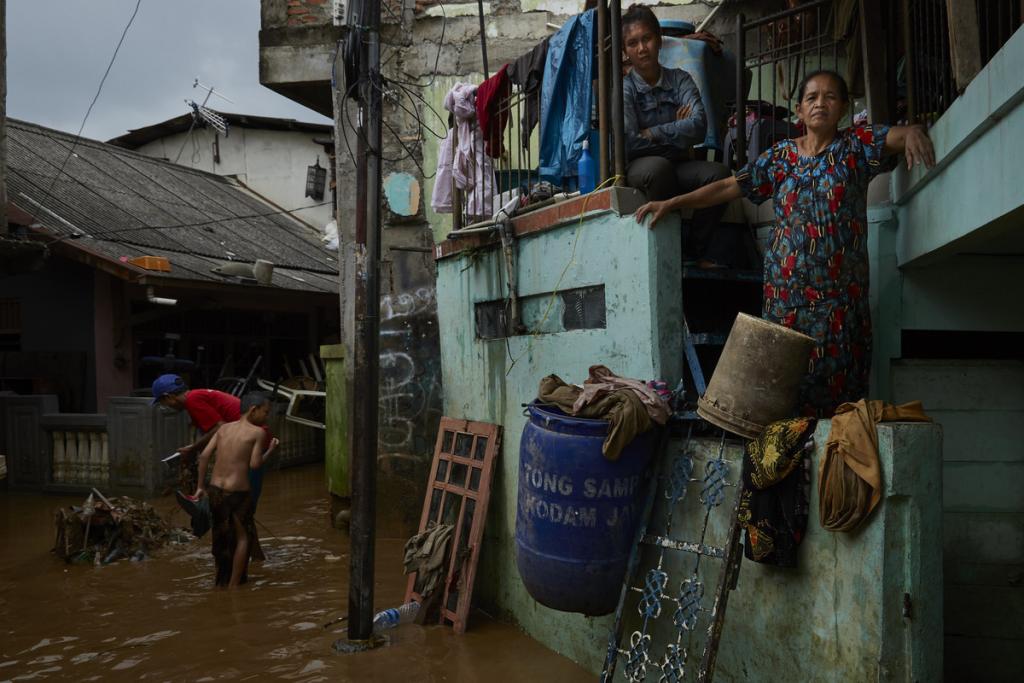
Getting the gender lens right is essential to ensuring that work on trade and gender contributes to the Sustainable Development Goals.

Framing the gender lens

IWG participants have arguably focused the least on the gender lens pillar of its work plan in the course of their technical work on trade and gender during 2021. Looking at reports of the IWG’s work over the past year, the references that participating members have made to this issue suggest disparate understandings of what applying a gender lens to trade means and what it should cover.

Over the last few months, analytical work on this aspect is being led by the International Trade Centre’s (ITC) SheTrades Initiative. The ITC is a joint agency of the WTO and the United Nations. The analytical work in this area aims to develop “a gender lens framework for the work of the WTO and maximize opportunities for trade agreements to promote women’s economic empowerment and participation in trade-related activities and ensure that trade agreements do not inadvertently undermine national gender-equality commitments.”

As the IWG prepares to chart out its work for the next 2 years, policy-makers should step back and reflect carefully on how the gender lens—or “gender perspective,” to use the words of the Ministerial Declaration—should be framed. Getting the gender lens right is essential to ensuring that work on trade and gender contributes to the Sustainable Development Goals and is consistent with members’ gender equality and women’s rights commitments, such as the International Convention on the Elimination of Discrimination Against Women (CEDAW).

Young man and woman consult in a warehouse filled with cardboard boxes
Getting the gender lens right is essential to ensuring that work on trade and gender contributes to the Sustainable Development Goals and is consistent with members’ gender equality and women’s rights commitments. (Photo: kate_sept2004/iStock)

To get the gender lens right, it will be necessary to pay heed to the following five essential elements.

Five essential elements for clarifying the gender lens

1. Distinguish between women’s economic empowerment and gender equality

First, we need to clarify the meaning of—and distinction between—commonly used terms. The 2017 Buenos Aires Declaration expresses the concepts of gender equality and women’s economic empowerment. They are closely related yet distinct. 

Gender equality refers to the equal rights, responsibilities, and opportunities of women, men, girls, and boys. It implies that the interests, needs, and priorities of both women and men are taken into consideration, recognizing the diversity of different groups of women and men.

Empowerment refers to whether women have the ability to exercise control and have options and choices over the practical and strategic decisions that shape their lives and their futures. Women’s economic empowerment is one means of achieving gender equality.

The Buenos Aires Declaration also speaks to the need to remove barriers to women’s participation in international trade and increase the number of women in such trade. Removing these barriers is a step toward economic empowerment and gender equality. 

In sum, increasing the number of women in international trade is a narrower objective than women’s economic empowerment, which in turn is narrower than achieving gender equality. 

The concept of gender equality should guide members as they clarify how a gender lens can apply in their work at the WTO. There are several reasons for this. One is that all WTO members except one have committed to achieving gender equality, specifically by signing or ratifying CEDAW and other international, legally binding human rights instruments. Second, significant conceptual work has already been undertaken on how to achieve and measure gender equality. Third, there are situations where women’s engagement in economic activities can increase their dependence on men

The assumption that women’s economic empowerment will foster both gender equality and economic development is not always borne out in practice, which is another reason why it is important to maintain a focus on gender equality and women’s rights when considering women’s economic empowerment. 

Increasing the number of women in international trade is a narrower objective than women’s economic empowerment, which in turn is narrower than achieving gender equality.

2. Identify women’s multiple economic roles

To understand how economic factors—including new trade rules—affect women differently than men, it is necessary to acknowledge women’s multiple roles in the economy. Like men, women are workers, entrepreneurs, producers, traders, consumers, carers, decision makers, rights-holders, users of public services, and taxpayers. These roles overlap (a producer may also be a trader), and women usually occupy multiple roles at the same time (a woman who works will be a rights-holder and a user of public services). A woman may be exposed to different sources and forms of gender inequality in each of her multiple roles. Trade and trade-related rules may bring opportunities or challenges in each of these roles.

Trade affects economies through different channels. When it leads to changes in the structure of production, it influences employment opportunities, wages, and the quality and security of work, thus affecting women in their role as workers or producers. Trade and trade rules may induce changes in the price of goods and services, which impacts the cost of living and women in their role as consumers. Trade agreements often result in a reduction of tariffs and corporate taxes. This diminishes—or changes the source of—government revenues, which may have gendered implications and affect women in their role as taxpayers. Lower public revenues may curtail a government’s ability to provide public services, which can affect women who rely on some public services to a greater degree than men. 

Trade-related rules, such as on investment and on trade in services, may also affect women’s rights in different ways. For instance, governments may face new rules on applying certain types of performance requirements, including gender equality programs that favour women producers over men. 

3. Consider both sides of the trade–gender relationship

To ensure a fully-rounded, 360° analysis of interactions between trade and gender equality, both sides of the trade and gender relationship must be borne in mind. On one side of this relationship is the fact that the distributional outcomes of trade and trade-related rules vary by gender. Within a country, men and women may be affected differently by changes in trade patterns, volumes, and regulations.

On the other side of the relationship is the effect of gender inequalities on trade strategies and outcomes. These effects manifest in two main ways: (1) the relatively cheaper cost of women’s labour creates a situation where women may be sources of competitive advantage in international trade; (2) gender inequalities constitute barriers to women entrepreneurs or traders from benefitting equally from the new opportunities that trade offers.
 

4. Recognize domains in which gender (in)equality plays out

When applying a gender lens to economic analysis, it helps to identify the domains in which gender inequalities are expressed to formulate appropriate policy responses. We can categorize the domains of gender inequality under the headings of capabilities, access to resources and opportunities, and security. Inequality in available time, also known as women’s time poverty, as well as prevailing social norms about gendered roles, must also be taken into account, as they underlie all three domains to varying degrees.

The capabilities domain refers to basic human abilities, such as knowledge and health. These generate the preconditions for engaging in production and economic decision making. The access to resources and opportunities domain refers to conditions that enable individuals to earn adequate livelihoods for themselves and their families by accessing economic assets and resources and exercising political decision making. The security domain refers to vulnerability to violence or conflict. The physical and psychological harm that these can cause undermines the ability of individuals and communities to fulfill their potential.

5. Ensure the gender lens analytical framework is applied at all trade policy stages 

When considering the impacts of a trade-related policy or rule through a gender lens, policy-makers should apply the analytical framework to the four stages of a trade agreement: (i) the negotiation process, for instance, through ex ante gender impact assessments of the planned agreement; (ii) the outcome or text of the agreement; (iii) implementation, enforcement, and review mechanisms; and (iv) complementary laws, policies, and programs. 

An opportunity for future trade and gender work

With the WTO poised to more formally turn its attention to questions at the intersection of trade and gender, it is time for participating members to make sure they have a clear understanding of the scope of the gender lens. This will be crucial for them as they define the content and scope of their future trade and gender work for the next 2 years in the lead-up to MC13 and well beyond. 

A range of groups, including feminists, human rights advocates, and development professionals, has criticized the WTO’s work on trade and gender as framed so far. Common criticisms are that the approach that the IWG currently uses focuses too narrowly on women’s economic empowerment rather than the broader goal of gender equality or women’s rights objectives; that it commodifies women; or that it entrenches reliance on trade, which can perpetuate existing inequalities if parallel steps are not taken to remedy those inequalities. Similar critiques have been voiced regarding trade and gender work in other international forums.

Women working at industrial sewing machines making pink garments
With the WTO poised to more formally turn its attention to questions at the intersection of trade and gender, it is time for participating members to make sure they have a clear understanding of the scope of the gender lens. (Photo: andresr/iStock)

WTO members participating in the IWG have an invaluable opportunity to take a 36o° approach to understanding the role international trade and trade rules can play in enhancing—or undermining—gender equality, women’s rights, and economic empowerment. A clear and comprehensive definition of the gender lens in trade is crucial for realizing this opportunity.

Deep Dive details

Deep Dive

Protecting Endangered Species

Still Only One Earth: Lessons from 50 years of UN sustainable development policy

Despite continued conservation efforts, the status of many endangered species remains unchanged. The Convention on International Trade in Endangered Species of Wild Fauna and Flora (CITES) and the Convention on Migratory Species of Wild Animals (CMS) are the primary treaties tasked with protection of endangered species. But moving forward, species conservation efforts should expand to include lesser known species that serve important ecosystem services. (Download PDF) (See all policy briefs) (Subscribe to ENB)

March 3, 2022

The Persian leopard (Panthera pardus tulliana), the largest subspecies of leopards, used to roam widely across Central Asia and the Caucasus. They are large spotted cats—about five feet in length—with slender hindquarters and long, thick tails. Both male and female leopards lead solitary lives, though they come together during winter mating. They are very territorial, patrolling wide home ranges to scent-mark trees, shrubs, and rocks. The leopard inhabits a wide variety of habitats: from mountain crags up to 3,000 meters in elevation, to grasslands and cold desert ecosystems, with a preference for cliff and rocky areas, as well as juniper and pistachio woodlands that give them cover for hunting.

During the past century, human-wildlife conflict, indiscriminate killing of their prey, habitat loss, and bounties incentivizing their killing have reduced their historic range by 72-84% (Jacobson et al., 2016). Today, according to the International Union for Conservation of Nature (IUCN) Red List of Threatened Species—the world’s most comprehensive inventory of the global conservation status of species and subspecies, which uses a set of defined criteria to evaluate their extinction risk (Rodrigues et al., 2006)—the Persian leopard is endangered.

The story of the Persian leopard is the story of many species pushed by human action to the brink of extinction. Strong conservation measures can still reverse the course for some species. For many others, it is too late.

During the past century, human-wildlife conflict, indiscriminate killing of their prey, habitat loss, and bounties incentivizing their killing have reduced the leopard’s historic range by 72-84%

JACOBSON ET AL., 2016

The foundations of global species conservation measures date back to the 1972 Stockholm Conference on the Human Environment. Principle 2 of the Stockholm Declaration says “the natural resources of the earth, including the air, water, land, flora and fauna and especially representative samples of natural ecosystems, must be safeguarded for the benefit of present and future generations.” Principle 4 reads “Man has a special responsibility to safeguard and wisely manage the heritage of wildlife and its habitat, which are now gravely imperilled by a combination of adverse factors.”

Among the 109 recommendations found in the Stockholm Action Plan, Recommendation 99 calls for the preparation and adoption of an international treaty to regulate international trade in certain species of wild plants and animals. This treaty, the Convention on International Trade in Endangered Species of Wild Fauna and Flora (CITES), had been drafted as a result of a resolution adopted in 1963 at a meeting of members of IUCN. As a result of the push provided by the Stockholm Conference, the Convention was finally adopted at a meeting of representatives of 80 countries in Washington, D.C. on 3 March 1973.

Leopard
During the past century, human-wildlife conflict, indiscriminate killing of their prey, habitat loss, and bounties incentivizing their killing have endangered the Persian leopard’s survival as a species. (Photo: Team Bars Turkmenistan)

There are a few other relevant recommendations. Recommendation 29 draws attention to species of wildlife that may serve as indicators for future wide environmental disturbances. Recommendation 30 emphasizes drawing attention to the situation of animals endangered by their trade value. The Stockholm Declaration and Action Plan also legitimized the role of IUCN and especially the Red List, which had been established in 1964. In fact, IUCN was one of the few environmental organizations formally involved in the preparations of the Stockholm Conference and in the drafting and implementation of the three conventions that followed it: the Convention Concerning the Protection of World Cultural and Natural Heritage (1972), CITES, and the Ramsar Convention on Wetlands of International Importance (1971).

What are Endangered Species: The Role of the IUCN Red List

Since its establishment, the IUCN Red List has been the key tool to assess the status of species and catalyze action for conservation and policy change. Through the List’s rigorous assessment processes, experts linked to the IUCN Species Survival Commission’s specialist groups collect information on a species’ range, population size, habitat and ecology, use and/or trade, threats, and conservation actions that inform necessary conservation decisions.

The assessments published in the IUCN Red List are used by governments, nongovernmental organizations (NGOs), and multilateral environmental agreements. The assessments drive conservation action and funding, albeit still in insufficient ways to always ensure saving species. In fact, Betts et al. (2020) noted that without successful communication between species experts, academics, policymakers, funders, and practitioners, IUCN Red List assessments may not lead to development and implementation of conservation action plans.

Irrawaddy dolphin
The irrawaddy dolphin is listed as "Endangered" on the IUCN Red List and are being threatened by entanglements in fishing gear, habitat loss, pollution etc. (Photo: isuaneye/iStock)

The IUCN Red List has nine categories to indicate how close a species is to becoming extinct. The closest to extinction is the “critically endangered” category, with a species example being the Asiatic cheetah (Acinonyx jubatus venaticus), a subspecies found only in Iran that has dwindled to fewer than 50 animals remaining in the wild. The least critical category is defined as “least concern.” For example, the global brown bear (Ursus arctos) population is considered to be of “least concern” because it is large and spread over three continents, even though there are some local populations that are under threat. The categories in the middle, i.e., “vulnerable” and “endangered,” are for species considered under threat.

In other words, if a species is either critically endangered, endangered, or vulnerable, it is in popular terms “endangered.”

This mismatch between the technical terms of the IUCN Red List and common language can lead to confusion. In 2016, a re-assessment of the snow leopard prompted an outcry from some members of the conservation community due the species’ being reclassified from endangered to vulnerable (McCarthy et al., 2016). Their anger was echoed by members of the public, in part because they did not understand “being vulnerable” under IUCN Red List criteria still means at high risk of extinction.

The way a species is assessed under the IUCN Red List can also determine whether such species deserve protection under two international treaties aimed at species conservation: CITES and the Convention on Migratory Species of Wild Animals (CMS). Listing an endangered species under either of these two conventions can catalyze further action and, possibly, save a species from extinction (Zahler & Rosen, 2013).

Without successful communication between species experts, academics, policy makers, funders, and practitioners, IUCN Red List assessment may not lead to development and implementation of conservation action plans.

BETTS ET AL. (2020)
IUCN red list infographic
More than 40,000 species on the IUCN Red List are threatened with extinction (www.iucnredlist.org).

Regulating the Protection of Endangered Species

CITES and CMS are the key conventions tasked with regulating protection of endangered species.

CITES regulates international trade and therefore looks at the impact of trade on species conservation. Annually, international wildlife trade is estimated to be worth billions of dollars and to include hundreds of millions of plant and animal specimens. The trade is diverse, ranging from live animals and plants to an array of products derived from them, including food, exotic leather goods, wooden musical instruments, timber, tourist curios, and medicines. Since trade in wild animals and plants crosses borders between countries, the effort to regulate it requires international cooperation to safeguard certain species from over-exploitation. Today, CITES accords varying degrees of protection to more than 37,000 species of animals and plants, whether they are traded as live specimens, fur coats, or dried herbs (CITES, n.d.)

In the language of CITES, species listed under Appendix I are considered threatened with extinction and afforded the highest level of protection, including restrictions on commercial trade. Examples of the 931 species currently listed under Appendix 1 include gorillas (Gorilla sp.), tigers (Panthera tigris), and snow leopards (Panthera uncia). Appendix II includes species that, while currently not threatened with extinction, may become so without trade controls. It also includes species that resemble other listed species and must be regulated to effectively control the trade in those other listed species. Currently 34,419 species are listed under Appendix II, including saiga antelope (Saiga tatarica), wolf (Canis lupus), argali sheep (Ovis ammon), and kiang (Equus kiang). Appendix III includes a list of wildlife and plant species identified by particular CITES parties as being in need of international trade controls.

The purpose of CMS is conservation of migratory species, their habitats, and migration routes. “Migratory” is broadly defined as species that straddle international borders (Lewis & Trouwborst, 2019). Migratory species threatened with extinction are listed in Appendix I of the Convention. Appendix I listing is a mechanism to promote conservation measures called, in CMS terminology, “Concerted Action” among the range states of the listed species. CMS parties commit to ensure strict protections under national laws and conserving their habitats, mitigating obstacles to migration, among other threats. Migratory species viewed as benefiting from international cooperation are listed in Appendix II of the Convention (CMS, n.d.). To date, seven specialized regional agreements and 19 memoranda of understanding have been concluded for Appendix II species under the CMS.

Representative Frameworks for the Conservation of Endangered Species

The development of models tailored to conservation needs throughout migratory ranges is a unique feature of the CMS. Along these lines, there are two important initiatives benefiting endangered species in Africa and Central Asia under the CMS umbrella.

One is the Central Asian Mammals Initiative (CAMI) and its associated Programme of Work. Established in 2014, CAMI aims to strengthen the conservation of Central Asian migratory mammals through a common framework to coordinate conservation activities in the region and coherently address major threats to migratory species. By developing an initiative for Central Asian mammals, CMS is catalyzing collaboration between all stakeholders, with the aim of harmonizing and strengthening the implementation of the Convention (Rosen & Roettger, 2014). One of the most recent projects under CAMI is the proposed development of a regional strategy for the conservation of the Persian leopard.

The Joint CITES-CMS African Carnivores Initiative (ACI), established in 2017, stems from the recognition of the importance of synergies and coordination of measures toward species that are protected under both Conventions. Supported by IUCN Species Survival Commission’s specialist groups, the Secretariats are tasked to drive effective conservation of African lion, leopard, cheetah, and wild dog, and help avoid duplicate activities and associated costs, and generate funding.

By developing an initiative for Central Asian mammals, CMS is

catalyzing collaboration between all stakeholders, with the aim of

harmonizing and strengthening the implementation of the Convention

ROSEN & ROETTGER, 2014

There are also two other important frameworks, each focused on the conservation of single species. One is the Global Tiger Initiative Council (GTIC), and the other is the Global Snow Leopard Ecosystem Protection Program (GSLEP).

GTIC was originally set up as the Global Tiger Initiative (GTI), a global alliance of governments, international organizations, NGOs, and the private sector, with the goal to save tigers from extinction. Established by the World Bank, the Global Environment Facility (GEF), the Smithsonian Institution, Save the Tiger Fund, and International Tiger Coalition (representing more than 40 NGOs), the initiative is led by the 13 tiger range countries. The St. Petersburg Declaration, adopted in 2010 at the Tiger Summit in Russia, defines the priorities.

GSLEP, propelled by GTI and established in 2013, is driven by 12 snow leopard range states, NGOs, and international organizations, which sit on a steering committee. The foundation of the GSLEP is 12 individual National Snow Leopard and Ecosystems Priorities (NSLEPs). Under GSLEP, specific activities are grouped under broad themes that correspond to the commitments of the Bishkek Declaration adopted at the 2013 Global Snow Leopard Conservation Forum (Zakharenka et al., 2016).

Some of these initiatives have successfully catalyzed attention, resources, and conservation action. They have received a high level of political attention, especially GTI in Russia and GSLEP in Kyrgyzstan, as respective hosts of the Tiger Summit and Snow Leopard Forum. However, some conservationists argue, especially in relation to tigers, that results have fallen short, and lack of transparency and accountability is compromising progress in tiger conservation efforts. Slappendel (2021) writes that “tiger-range countries are responsible for making tiger conservation efforts and holding themselves accountable for their methods and results. There’s no authority above them, so they can do whatever they want.

Tiger
Lack of transparency and accountability is compromising progress in tiger conservation efforts as they remain endangered. (Photo: Hans-Jurgen Mager/Unsplash)

While the reach and influence of CAMI and ACI are more limited compared to GTI and GSLEP, they have also generated important resources for conservation and could likely have a stronger policy-driving role in the future.

Generally, these four frameworks serve as important examples for directing donor resources.


The Role of UN Agencies and Donors

The GEF, established in 1992, is the largest multilateral fund focused on enabling developing countries to invest in nature. It supports the implementation of major international environmental conventions including on biodiversity, climate change, chemicals, and desertification. Endangered species prioritized under CITES and CMS, such as GTI and GSLEP, are also prioritized for GEF funding.

In 2010, the GEF indicated it would provide up to USD 50 million in grants to save the tiger through contributions to be invested by developing countries using their GEF allocations in biodiversity, supplemented by investments from its REDD+ Program (reducing emissions from deforestation and forest degradation in developing countries, and the role of conservation, sustainable use of forests, and enhancement of carbon stocks) (GEF, 2010). Since 1991, the GEF has invested nearly USD 100 million toward snow leopard projects implemented by the United Nations Development Programme (UNDP). The GSLEP Forum in 2013 catalyzed nine further GEF-financed, UNDP-implemented projects, representing an investment of about USD 45 million to support snow leopard range countries. These nine projects also leveraged over USD 200 million in co-financing from national and international partners (UNDP, 2016).

UNDP has emerged as one of the key implementing UN agencies when it comes to endangered species and conservation projects more broadly. The United Nations Environment Programme (UNEP) has also spearheaded initiatives for the conservation of endangered species, such as Vanishing Treasures. This EUR 9 million project, funded by the Grand Duchy of Luxembourg, seeks to better understand the vulnerability to climate change of the snow leopard, tiger, and gorilla and the ecosystems being affected.

Why Do Many Species Continue to be Endangered?

The Intergovernmental Science-Policy Platform on Biodiversity and Ecosystem Services (IPBES) warned in its Global Assessment Report on Biodiversity and Ecosystem Services that “nature is declining globally at rates unprecedented in human history—and the rate of species extinctions is accelerating” (IPBES, 2019).

Despite continued conservation efforts, the status of many endangered species remains unchanged—including tigers, lions, and cheetahs. The question is: Why? With our growing knowledge of the fragility of the planet’s ecosystems, why are we pushing entire species out of existence?

The limited amount of funding benefiting species research and conservation is one reason. Often these funds are short term, whereas to really see progress and results, a longer funding commitment is necessary. Some projects are also too narrowly focused on protection and enforcement, without seeking ways local communities can be part of the solution. Likewise, some projects do not address root causes of decline.

But there are also issues of capacity. In many countries that provide habitat for endangered species, there is limited technical capacity to protect such species. Local and national conservation organizations also would benefit from greater capacity building.

At the national level, species conservation may not be prioritized. This is often reflected in ministries tasked with both environment and agriculture or economic and mining issues—with the latter issues prioritized over conservation. Species conservation also does not operate in a vacuum, but must be considered alongside mechanisms to address threats to their survival, which may be exacerbated by conflicting development goals. For example, a development project aimed at improving access to water, through building dams and irrigation channels, may hurt access by salmon species to spawning grounds or damage riparian habitat. Finally, conservation organizations—with their own agendas and issues of competition for funding that leads to lack of cooperation—sometimes fail to create better synergies for conservation.

There are also many other endangered species that are not as well known or do not have the appeal of more popular endangered species, such as snow leopards or tigers. Some of these species have disappeared from large swaths of their range, including the striped hyaena (Hyaena hyaena), which can no longer be found in parts of Central Asia and Caucasus regions. The lesser-known Saint Lucia racer (Erythrolamprus ornatus), listed as Critically Endangered, numbers fewer than 20 individuals and is considered one of the rarest snakes in the world. Similarly, the Daguo Mulian tree (Magnolia grandis) is listed as critically endangered due to habitat loss for agricultural expansion and logging.

Moving Forward

Protecting iconic endangered species is still important for promoting policies and measures that can benefit entire ecosystems and many other endangered species. Nevertheless, species conservation efforts must expand to include many more species that are lesser known and serve important ecosystem services. Such efforts should also create incentives for local communities to conserve them, including through sustainable use when that is recognized as the only or the most effective measure. Finally, greater financial resources have to be allocated. Many hope the post-2020 global biodiversity framework will help guide the most pressing actions to keep entire species from being erased from our shared world.

Works Consulted

Betts, J., Young, R. P., Hilton-Taylor, C., Hoffmann, M., Rodríguez, J. P., Stuart, S. N., & Milner-Gulland, E. J. (2020). A framework for evaluating the impact of the IUCN Red List of threatened species. Conservation Biology: The Journal of the Society for Conservation Biology, 34(3), 632–643. doi.org/10.1111/cobi.13454

Convention on International Trade of Endangered Species of Wild Fauna and Flora. (n.d.). What is CITES? cites.org/eng/disc/what.php

Convention on the Conservation of Migratory Species of Wild Animals. (n.d.). CMS. cms.int/en/legalinstrument/cms

Global Environment Facility. (2010). Global Environment Facility to support $50 million in grants to save the tiger. thegef.org/newsroom/news/global-environmentfacility-support-50-million-grants-save-tiger

Intergovernmental Science-Policy Platform on Biodiversity and Ecosystem Services. (2019). Global assessment report on biodiversity and ecosystem services of the Intergovernmental Science-Policy Platform on Biodiversity and Ecosystem Services. doi.org/10.5281/zenodo.3831673

Jacobson, A.P., Gerngross, P., Lemeris, Jr., J.R., Schoonover, R.F., Anco, C., Breitenmoser-Würsten, C., Durant, S.M., Farhadinia, M.S., Henschel, P., Kamler, J.F., Laguardia, A., Rostro-García, S., Stein, A.B., & Dollar, L. (2016). Leopard (Panthera pardus) status, distribution, and the research efforts across its range. PeerJ 4:e1974. doi.org/10.7717/peerj.1974

Lewis, M., & Trouwborst, A. (2019). Large carnivores and the Convention on Migratory Species (CMS)—definitions, sustainable use, added value, and other emerging issues. Frontiers in Ecology and Evolution 7. frontiersin.org/article/10.3389/fevo.2019.00491

McCarthy, T., Mallon, D., Jackson, R., Zahler, P., & McCarthy, K. (2017). Panthera uncia. The IUCN Red List of Threatened Species 2017. Panthera uncia (Snow Leopard) (iucnredlist.org)

Rodrigues, A.S.L., Pilgrim, J.D., Lamoreux, J.F., Hoffmann, M., & Brooks, T.M. (2006). The value of the IUCN Red List for conservation. Trends in Ecology & Evolution 21(2), 71-76. doi.org/10.1016/j. tree.2005.10.010

Rosen, T., & Roettger, C. (2014). Central Asian Mammals Initiative: Saving the last migrations. CMS. cms.int/sites/default/files/publication/Central_Asian_Mammals_Initiative.pdf

Slappendel, C. (2021). What’s stopping some countries from keeping up with tiger conservation promises? Commentary. Mongabay news.mongabay.com/2021/11/whats-stopping-some-countries-from-keeping-up-with-tiger-conservationpromises-commentary/

UNDP. (2016). Silent Roar - UNDP and GEF in the snow leopard landscape. undp.org/publications/silent-roar-undpand-gef-snow-leopard-landscape

Zahler, P., & Rosen, T. (2013). Endangered mammals. Encyclopedia of Biodiversity. Elsevier.

Zakharenka, A., Sharma, K., Kochorov, C., Rutherford, B., Varma, K., Seth, A., Kushlin, A., Lumpkin, S., Seidensticker, J., Laporte, B., Tichomirow, B., Jackson, R. M., Mishra, C., Abdiev, B., Modaqiq, A. W., Wangchuk, S., Zhongtian, Z., Khanduri, S. K., Duisekeyev, B., … Yunusov, N. (2016). The Global Snow Leopard and Ecosystem Protection Program. Snow Leopards, 559–573. doi.org/10.1016/b978-0-12-802213-9.00045-6

Deep Dive

Advancing Green Public Procurement and Low-Carbon Procurement in Europe: Insights

In 2021, IISD began a collaboration with SKAO (funded by the IKEA Foundation) to scale up the uptake of the CO2 Performance Ladder in Europe. The goal of the project is to identify potential pilot projects in European countries in order to demonstrate the effectiveness of a tool that works towards advancing green public procurement and carbon reduction goals. The first step toward that goal was to carry out a "quick scan" of the GPP situation and the possibilities for the Ladder across 28 European countries through desk research. This resulted in a number of observations regarding GPP in the region.


March 2, 2022

Public procurement provides a key entry point for governments to change the trajectory of their greenhouse gas emissions and to meet climate goals in line with their international commitments to the Paris Agreement, the Sustainable Development Goals, and—in Europe—to the European Green Deal. In the coming years, it is essential for public procurement, which accounts for 15% of carbon emissions globally, to become a driver of innovation and commercialization of low-carbon infrastructure, goods, and services.

This is the challenge that the CO2 Performance Ladder was designed to address. Developed in the Netherlands in 2009 for the rail sector, it is now owned and managed by the Foundation for Climate Friendly Procurement and Business (SKAO). The CO2 Performance Ladder helps organizations structurally reduce their carbon emissions as both a CO2 management system and a procurement tool. Over 4,000 organizations are certified on the Ladder, and it has been used by over 200 public procurement agencies in the Netherlands and Belgium in their tendering processes.

The CO2 Performance Ladder offers the following advantages as a procurement tool:

• It is user friendly and has low transaction costs for getting started. Procuring authorities simply offer companies the option to submit a form along with their bid attesting to their proposed level of commitment on the Ladder.

• It is an optional tool in the tendering process, whereby CO2 reduction is rewarded with an award advantage for the bidding companies. The higher the ambition level of the company, the higher the award advantage.

• It requires third-party accreditation, which lowers the burden on procurement authorities to verify that companies are doing what they say they will do in their bids.

• The CO2 Performance Ladder has been developed and used in compliance with the European Union (EU) Procurement Directive, making it immediately applicable in other EU countries.

In 2021, IISD began a collaboration with SKAO (funded by the IKEA Foundation) to scale the uptake of the CO2 Performance Ladder beyond the Netherlands. The goal of the project is to identify potential pilot projects in other European countries (apart from Belgium, where pilots are already underway) that demonstrate the effectiveness of a tool that is trialled, tested, and ready to support governments with their carbon reduction goals. We hope that these pilot projects will further inspire other countries and regions to consider the CO2 Performance Ladder as a practical instrument for green public procurement (GPP).

Initial scoping work


In 2022, IISD and SKAO will collaborate with 10 European countries to identify the building blocks required to implement and use the CO2 Performance Ladder. This scoping work was initiated based on our quick scan, which included a review of countries’ broad situations with regard to GPP implementation, their enabling policy environment, recent progress on low-carbon infrastructure, and geographic locations. Alongside these 10 countries, SKAO is exploring possibilities for the CO2 Performance Ladder in France and Luxembourg, on the basis of existing connections between those countries and the pilot programme already running in Belgium.

1. GPP frontrunners

Europe’s Nordic countries are generally advanced in GPP, specifically in low-carbon procurement. We will explore the extent to which contracting authorities in Denmark and Sweden may find the CO2 Performance Ladder complementary to their ongoing efforts to lower carbon emissions in the construction of public works.

2. Large European economies with a GPP track record

GPP has been gaining prominence across Europe. We are looking at Germany, Austria, Spain, and Italy to highlight some of the different approaches to GPP implementation, as well as capture the challenges and opportunities, in large EU economies. For instance, GPP efforts have been mostly decentralized in Germany and Spain, whereas they have been more centralized in Austria. Exploring different governance approaches to GPP and carbon mitigation activity across Europe may provide insights into how the CO2 Performance Ladder can have the greatest value and impact.

3. New policy space for GPP countries

The United Kingdom and Ireland currently have quickly evolving policies for GPP activity, specifically related to low-carbon procurement. Ireland has announced the National Action Plan on Green Tenders and the upcoming Circular Economy Bill, and the United Kingdom has introduced the National Procurement Policy Statement (2021) and upcoming procurement reforms. While these countries already have experience with GPP, more effective policy action on procurement as a driver for low-carbon development may be further leveraged with a tool like the CO2 Performance Ladder.

4. GPP ambition countries

The GPP policy space in Slovenia and Poland demonstrates political willingness to use GPP as a driver for low-carbon development—with recent initiatives such as the Care4Climate Project and the Green City and Climate Action Plan (GCCAP), respectively. In these countries, the CO2 Performance Ladder could be positioned as a tool for scaling up GPP efforts and driving low-carbon infrastructure procurement at national or subnational levels.

Observations on the status of GPP in Europe


More and more mandatory GPP


Through its Most Economically Advantageous Tender (MEAT) process, the 2014 Public Procurement Directive has made it possible to procure goods, services, and infrastructure based not only on the lowest-cost criterion but also considering other features, such as quality, innovation, social characteristics, and life-cycle costs.

However, increasingly, European countries and subnational governments are making GPP mandatory. In Austria, Finland, Germany, Norway, the Czech Republic, Italy, Spain, Cyprus, and the United Kingdom, GPP is mandatory for central government procurement. In a subset of this group—Norway, Czech Republic, Cyprus, and Italy—GPP is mandatory for all levels of government. Mandatory GPP is implemented in different ways but could oblige the procuring authority to use minimum GPP criteria in all tenders, oblige procurers to give preference to the most environmentally friendly bid, or mandate the incorporation of life-cycle analysis and/or quality considerations.

There are some other noteworthy updates. In Ireland, the incorporation of green criteria will be mandatory in all public procurement from 2023 onwards. In Croatia, GPP becomes mandatory in central procurement “where feasible” in 2022. In Switzerland, from 2021 onwards, public authorities are obliged to award tenders based on consideration of the most “advantageous” tender—not the most “economically advantageous” tender—and to consider price and quality equally in their procurement. Interestingly, another country outside of the EU, the United Kingdom, is planning similar revisions to procurement legislation in the future, transitioning from a MEAT to a MAT—the “Most Advantageous Tender”—approach in awarding contracts in order to give more flexibility to qualitative and sustainability objectives.

In many other countries in Europe, GPP is mandatory in certain product and service categories only. Some of the mandatory GPP categories include Denmark (wood products), Estonia (furniture, cleaning products, IT), Slovenia (buildings, roads), Latvia (street lighting, food), France (energy efficiency, waste requirements), Greece (transport, road lighting), Malta (office buildings, roads) Slovakia (roads), and Norway (construction, food catering). Lithuania has another approach, where GPP must account for an increasing share of public procurement, aiming for 100% from 2023 onwards.

Wide variations in implementation levels

GPP is voluntary for public authorities in the European Union. Across Europe, there are wide variations in levels of GPP implementation, as well as in levels of ambition. In some countries, such as Poland, Romania, and Slovakia, less than 5% of public sector contracts include any kind of GPP criteria. Desk-based research revealed little to no GPP activity in countries such as Bulgaria and Romania (though language barriers may have impeded getting a fuller picture). Similarly, while other countries may demonstrate a higher share of contracts using GPP, its application can be limited to minor spend categories such as office paper or cleaning products. While all efforts to incorporate GPP are worthwhile, the scale of the environmental and climate challenges will require greater efforts in the years ahead.

At the same time, there are national or local governments blazing very ambitious GPP trails, and some with an explicit focus on reducing carbon emissions. In Norway, they are focusing on completely decarbonizing the transport and construction sectors; Spain has the Carbon Footprint Registry for public procurement; Germany uses Environmental Product Declarations; and Sweden regularly uses a wide range of sustainability criteria and LCC tools in procurement. These few examples from our database will hopefully soon become more commonplace in procurement, especially in carbon-intensive sectors. Compiling lessons learned from successful and unsuccessful attempts to lower carbon emissions in public procurement will be extremely valuable for countries currently scaling up their efforts.

Cities that stand apart

It should be mentioned that, in many cases, cities stand out for their advanced GPP activities at a municipal level. Oslo has ambitious “zero-emission construction sites”; Helsinki has projects to advance climate neutrality through public procurement; Copenhagen has rigourous standards for construction and civil works; and Stockholm set a goal to become the European leader in sustainable public procurement in the coming years. Outside of the Nordic region, the city-states of Berlin, Hamburg, and Bremen have made GPP mandatory, as have the cities of Vienna and Barcelona. Recently, Tallinn won the 2023 European Green Capital City Competition based in part on their use of environmentally friendly public procurement.

Monitoring GPP activity: A common challenge

Across Europe, governments are finding it challenging to monitor and report on GPP activity systematically. For most countries, a rough indication of GPP as a percentage of total government procurement is usually available, deduced from information on e-procurement platforms such as the number of contracts awarded that include some environmental criteria. Beyond that, however, there does not seem to be systematic data collection, aggregation, or reporting on, for example, avoided carbon emissions or avoided waste for even the most advanced or “frontrunner” GPP countries. While further research is needed to understand the nature of the challenge, it likely comes at least in part from the difficulty of finding shared baselines and indicators across many levels of government. This should be an area of focus for the GPP community in the coming years, as it will also represent an important way for governments to report against their commitments to international agreements such as the Paris Agreement or the Sustainable Development Goals.

Countries that seem to have the most robust GPP monitoring systems in place are France, which has mandatory reporting for ministries against standardized sustainable public procurement targets; Germany, with annual GPP monitoring at the federal and state levels (including on CO2 emissions impacts); and Croatia, where the Ministry for the Environment must publish CO2 savings generated by the implementation of GPP annually. These might be countries to look to for inspiration and good practices on GPP monitoring and reporting, particularly for carbon, moving ahead.

Plans to improve GPP monitoring and reporting are already foreseen in Ireland, Greece, and Malta in the next few years.

Opacity regarding uptake of GPP tools

Our desktop research revealed a plethora of GPP tools across Europe that are available to procurement authorities. The most common tools referenced are life-cycle costing-based tools or calculators, International Organization for Standardization (ISO) standards, and sector/product-specific GPP criteria (either the EU GPP criteria directly or bespoke GPP criteria at the national or subnational level). Other tools mentioned include other carbon footprint tools, Environmental Management Systems, eco-labels for specific categories of products or services, Environmental Product Declarations, and Environmental Spend Analysis .

Apart from citing the existence of these tools in policies or action plans on GPP, however, it is difficult to discern how often these tools are used, at what stage of the procurement process, and their specific applications to infrastructure procurement. Procurement authorities may also still be searching for the most appropriate tools to use to meet their needs. As such, in the next phase of research for this project, IISD and SKAO will work with procurement agencies at national or subnational levels, as well as with buyer networks and other stakeholders, to understand the use of GPP tools in practice and the value added of the CO2 Performance Ladder in implementing GPP across Europe.  

If you are interested in learning more about the CO2 Performance Ladder or would like to pilot it in your jurisdiction, contact us! We are keen to explore options for how the tool can add value to your Green Public Procurement journey

Deep Dive

Trade and the Environment: The Search for Sustainable Solutions

Still Only One Earth: Lessons from 50 years of UN sustainable development policy

While interactions between trade and the environment are complex, pursuing policy coherence is key to reversing degradation while leaving no one behind. A core dilemma is ensuring stricter environmental rules do not create competitive disadvantages, or negatively affect the least developed countries. Recent country-led initiatives on trade and environmental sustainability, trade and plastics pollution, and fossil fuel subsidies, plus the ongoing talks on fisheries subsidies, offer hope for breaking the years-long deadlock on trade and the environment. (Download PDF) (See all policy briefs) (Subscribe to ENB)

February 22, 2022

Roughly every minute, USD 11 million in subsidies flow into coal, oil, and natural gas, according to the International Monetary Fund (IMF). In fact, in 2020 alone, fossil fuel subsidies were worth USD 5.9 trillion or about 6.8% of global gross domestic product (GDP). This is expected to rise to 7.4% of GDP by 2025 in stark contrast to scientific calls for a carbon neutral economy by 2050 (Parry, Black & Vernon, 2021).

Growing fossil fuel subsidies are only one example of a worrisome trend. Instead of investing in a green and forward-looking recovery with COVID-19 economic stimulus packages, decision makers are continuing to funnel public money toward unsustainable patterns of development. Without clear pathways toward decarbonized economies and innovative ways to measure economic success to capture these unsustainable patterns, existential risks to future generations increase.

In the context of a planetary emergency characterized by multiple crises—climate, biodiversity, pollution, and social inequalities—the relationship between trade and environment merits further examination. While the interactions between trade and environment are complex, pursuing policy coherence is imperative to respond to this emergency while leaving no one behind.

Container ships
The volume of world trade today is roughly 40 times the level recorded in the early days of the GATT (4,100% growth from 1950 to 2020). (Photo: Sjo)

The Ambivalent Relationship between Trade and Environment

In preparation for the 1972 United Nations Conference on the Human Environment, the Secretariat of the General Agreement on Tariffs and Trade (GATT), the multilateral treaty charged with promoting free trade, was asked to contribute an assessment of concerns around economic growth and growing pollution. Beginning in the 1960s, social movements helped raise awareness about human-caused pollution and demanded stronger environmental protection. While governments responded with science-based legislation designed to protect the environment, trade rules had yet to be re-examined.

In 1971, GATT Director-General Olivier Long presented the GATT assessment, “Industrial Pollution Control and International Trade.” The study reflected the concern of trade officials with environmental policies, which were perceived as potential obstacles to free trade and could constitute “green protectionism.” In response, the GATT created the Group on Environmental Measures and International Trade (known as the “EMIT” group) in November 1971. Curiously, this group could only convene at the request of GATT members, which did not happen for 20 years. Finally, in 1991, the European Free Trade Association members broke the silence and asked for a meeting because another large environmental meeting was on the radar: the 1992 United Nations Conference on Environment and Development (Earth Summit) in Rio de Janeiro, Brazil (WTO, n.d.).

Heading into the Earth Summit, the conflict between environmental protection policies and trade came to the fore in the 1991 “Tuna-Dolphin” dispute between Mexico and the US. The case focused on the US embargo on tuna imported from Mexico caught using “purse seine” nets that could entangle and kill dolphins and other marine mammals. The GATT dispute settlement panel favored Mexico, which argued the embargo was inconsistent with international trade rules. Its ruling was criticized by environmental groups arguing trade rules were an obstacle to environmental protection (WTO, n.d.).

The Earth Summit highlighted the role of international trade in alleviating poverty and combating environmental degradation. The resulting programme of action, Agenda 21, and the Rio Declaration on Environment and Development, like Stockholm before it, promoted an international trading system that considers the needs of developing countries and sustained economic development.

States should cooperate to promote a supportive and open international economic system that would lead to economic growth and sustainable development in all countries, to better address the problems of environmental degradation.

Rio Declaration, Principle 12

The Earth Summit, however, did have an impact on the outcome of the GATT’s 1986–1994 Uruguay Round of trade negotiations. The Uruguay Round established the World Trade Organization (WTO) and brought about the biggest reform of the world’s trading system since the GATT’s establishment after World War II. And trade-related environmental issues were on the agenda.

The WTO and the Committee on Trade and Environment

The preamble to the Marrakesh Agreement, which established the WTO, refers to the importance of sustainable development. In Marrakesh in April 1994, ministers also signed a “Decision on Trade and Environment,” stating: “There should not be, nor need be, any policy contradiction between upholding and safeguarding an open, non-discriminatory and equitable multilateral trading system on the one hand, and acting for the protection of the environment, and the promotion of sustainable development on the other.”

The decision also created the WTO Committee on Trade and Environment (CTE), which was charged with identifying the relationship between trade measures and environmental measures to promote sustainable development and make appropriate recommendations on whether any modifications of the multilateral trading system are required. To date, the CTE has yet to agree on any recommendations.

Item 1 of the CTE’s mandate, addresses the relationship between the primary goal of the WTO—facilitating trade—and the objectives of multilateral environmental agreements (MEAs). According to the WTO, 15 MEAs incorporate trade measures to help them achieve their goals. This means the agreements can use restraints on trade in particular substances or products. Although this represents a relatively small number of MEAs, they include some of the most important, including the Convention on International Trade in Endangered Species of Wild Fauna and Flora (CITES); the Montreal Protocol; the Basel, Rotterdam, Stockholm, and Minamata Conventions; and the Cartagena Protocol on Biosafety (Chasek & Downie, 2021, p. 268). However, to date no formal dispute involving a measure under any MEA has been brought to the WTO.

A second issue, contained in Item 3(b), looks at GATT Article XX, which lays out specific cases where WTO members may be exempted from GATT rules. Concerning the environment, WTO members can adopt measures necessary to protect human, animal or plant life or health (paragraph (b)) or relate to the conservation of exhaustible natural resources (paragraph (g)). But can countries discriminate against goods whose production involves negative ecological consequences (e.g., pollution, deforestation, carbon emissions)? On this matter, there are competing views.

For example, under Paragraph 32 of the 2001 Doha Ministerial Declaration, the CTE was mandated to identify areas of the WTO in need of clarification, including ecolabels, which identify products that meet specific environmental performance criteria. Many developed countries and environmental organizations see ecolabels as a tool to inform consumers that the production of this good or service is environmentally sustainable. According to the WTO, its members generally agree ecolabels can be useful for consumers, and tend to restrict trade less than other methods, especially if these schemes are voluntary, based on the market, and transparent. However, others are concerned ecolabels could be used to protect domestic producers, and discriminate against small businesses and developing countries, thus restricting their market access.

A third issue is that the WTO and the CTE do not have a strong science-policy interface. The WTO lacks a “consistent, principled manner in which to take into account the scientific uncertainty” underlying policy decisions that must determine whether domestic environmental policies are legitimate or a form of trade protectionism (Green & Epps, 2007, p. 286). Furthermore, the Uruguay Round negotiations only applied a scientific evidence requirement to health measures, specifically the Technical Barriers to Trade Agreement and the Agreement on the Application of Sanitary and Phytosanitary Measures (SPS Agreement), and not to environmental measures (Green & Epps, 2007).

WTO Committee on Trade and Environment Mandate (1994)

Item 1: The relationship between the provisions of the multilateral trading system and trade measures for environmental purposes, including those pursuant to multilateral environmental agreements.

Item 2: The relationship between environmental policies relevant to trade and environmental measures with significant trade effects and the provisions of the multilateral trading system.

Item 3(a): The relationship between the provisions of the multilateral trading system and charges and taxes for environmental purposes. 

Item 3(b): The relationship between the provisions of the multilateral trading system and requirements for environmental purposes relating to products, including standards and technical regulations, packaging, labelling, and recycling.

Item 4: The provisions of the multilateral trading system with respect to the transparency of trade measures used for environmental purposes and environmental measures and requirements which have significant trade effects.

Item 5: The relationship between the dispute settlement mechanisms in the multilateral trading system and those found in multilateral environmental agreements.

Item 6: The effect of environmental measures on market access, especially in relation to developing countries, in particular to the least developed among them, and environmental benefits of removing trade restrictions and distortions.

Item 7: The issue of exports of domestically prohibited goods.

Item 8: The relevant provisions of the Agreement on Trade-Related Aspects of Intellectual Property Rights.

Item 9: The work programme envisaged in the Decision on Trade in Services and the Environment.

Item 10: Input to the relevant bodies in respect of appropriate arrangements for relations with intergovernmental and non-governmental organizations referred to in Article V of the WTO.

Subsidies and Sustainable Development

Then there are subsidies. A subsidy is money given by a government to assist an industry or business so that the price of a commodity or service remains low or competitive. Subsidies distort markets by failing to reflect the true costs of production, including environmental harm. Subsidies on goods traded internationally also give unfair price advantages compared to similar goods from countries without subsidies. Yet despite widespread condemnation, the actual removal of subsidies remains a contentious topic. The principal subsidy sectors in question are agriculture, fossil fuels, fisheries, and forestry.

Industrial fishing
Improving regulation and governance of fisheries would not only accelerate the implementation of the SDGs, but would restore depleted fisheries, and protect the rights of small-scale artisanal fishers. (Photo: cweimer4/iStock)

Many hoped trade and environment-related decisions would be part of the outcome of the Doha Development Round of trade negotiations. The 2001 Doha Ministerial Declaration included more language on sustainable development and environmental issues than any of its predecessors. In addition to liberalizing global agricultural trade by reducing agricultural subsidies and addressing fishing subsidies, the Doha Round sought to further reduce barriers to trade in services, such as business and finance, and nonagricultural goods (Chasek & Downie, 2021, pp. 267-268). However, even after 20 years, WTO members have not concluded these negotiations.

Getting the nexus between trade and the environment right requires addressing subsidies. For example, governments around the world provide over USD 600 billion per year in subsidies to support their agricultural sectors. However, research shows this support does not align with achieving collective benefits under the 2030 Agenda for Sustainable Development and its Sustainable Development Goals (SDGs) in improving food security and nutrition, reducing poverty, combating inequalities, decarbonizing economies, or protecting biodiversity. Allocating resources fairly and sustainably, rather than through subsidies that generally benefit industrial agriculture, can support an SDG-based agri-food transformation by making food and agriculture markets more resilient to shocks and accessible to people in vulnerable situations. The climate crisis also necessitates market actors include environmental costs in the food system (FAO, 2018). To do that, coherent policies are required across the entire food value chain.

Fisheries subsidies also offer somber examples of unsustainable agri-food systems. “If we were to remove all harmful fisheries subsidies we could have a 12.5% increase in fish biomass, or 35 million metric tonnes of fish by 2050,” stated Peter Thomson, the UN Secretary-General’s Special Envoy for the Ocean. Moreover, one in five fish caught may come from illegal, unreported, and unregulated (IUU) fishing. Some estimates suggest eliminating fishing subsidies would significantly decrease high seas overfishing, 77% of which is due to activities of fishing vessels from China, Taiwan, Japan, Indonesia, Spain, and the Republic of Korea. Eliminating these subsidies would not only accelerate the implementation of the SDGs but would restore depleted fisheries and protect the rights of small-scale artisanal fishers.

I am convinced that eliminating these subsidies is the single most important measure governments can take to reverse the plundering of the fish in the ocean… I am still waiting for WTO members to do the right thing.

Peter Thomson, UN Secretary-General's Special Envoy for the Ocean

Fossil fuel subsidies also have cross-cutting effects on sustainable development, in particular climate change, poverty, and governance. Fossil fuel subsidy reform is seen not only as a macroeconomic necessity, but also as a valuable tool for tackling the climate crisis (Bassetti & Landau, 2021). Indeed, one study found eliminating fossil fuel subsidies alone would reduce global greenhouse emissions up to 10% by 2030 and between 6.4% and 8.2% by 2050.

Fossil fuel subsidy protestor
NGOs call for ending fossil fuel subsidies at the Katowice Climate Change Conference in December 2018. (Photo: Kiara Worth, IISD/ENB)

With science urging leaders to become carbon neutral by 2050, much needs to change quickly. For example, the Paris Agreement must deliver a long-term reduction in greenhouse gas emissions from cross-border transport and trade, at the same time the WTO is facilitating their expansion. Solving the climate puzzle cannot be done in isolation.

Optimizing Trade Governance for Sustainable Development

Growing pressure for new rules and agreements that meaningfully consider sustainable development and trade is challenging multilateralism, especially at the WTO, which is haunted by a two-decade deadlock (Hopewell, 2016). How can the WTO emerge from this paralysis? Several recent initiatives offer hope.

In November 2020, 50 WTO members announced they would organize structured discussions to advance work on trade and environmental sustainability. In the year that followed, the “Trade and Environmental Sustainability Structured Discussions,” coordinated by Canada and Costa Rica, met five times with the participation of 71 members representing 82% of world trade. In December 2021, the group issued a Ministerial Statement, which sets out future work for the initiative in areas such as trade and climate change, trade in environmental goods and services, circular economy, and sustainable supply chains. It also sets a road map for advancing discussions (WTO, 2021a).

Similarly, in November 2020, WTO members established an informal dialogue on plastics pollution and environmentally sustainable plastics trade to promote trade as a tool for reining in plastics pollution. Another December 2021 Ministerial Statement spells out the way forward in support of global efforts to reduce plastics pollution and transition toward an environmentally sustainable plastics trade (WTO, 2021a).

In a third Ministerial Statement on fossil fuel subsidies, 45 WTO members affirmed their intention to phase out inefficient fossil fuel subsidies, consider the specific needs of developing countries, and advance discussions at the WTO (WTO, 2021a).

While this is positive news, the WTO still faces challenges moving forward. One such challenge is the diverse views on the pertinence of its existence and competing narratives on the value of globalization and free trade (Roberts & Lamp, 2021). In this basket of competing narratives, the view that everyone loses with the current support for unsustainable economic growth must be considered. On one hand, incoherent trade policies could lead to more resource use and pollution, putting vulnerable communities at a disadvantage and, ultimately, accelerating an existential threat to humanity.

An Agreement on Fisheries Subsidies, one that will help both the planet and people, is within our grasp. It is also an opportunity to build trust in multilateralism, and the opportunity for WTO members to succeed in negotiating new rules for the 21st century.

Ambassador Santiago Wills, Colombia, Chair of the Fisheries Subsidies Negotiations

On the other hand, defenders of free trade argue value chains lead to more efficient use of resources globally. They note it all depends on domestic environmental policies. The main challenge is to shift the narrative regarding the trade-environment nexus. More emphasis on how to address harmful impacts of trade or trade agreements on the environment deserves consideration, while recognizing the needs of developing countries. (Deere Birkbeck, 2021).

Going forward, the WTO could accomplish the following.

  1. Place sustainable development in the WTO at the same level as its goals on trade liberalization. Harmful subsidies, for example, must be considered against their effects on the health and resilience of people and the planet, instead of being assessed exclusively through their degree of trade disruption.
     
  2. Increase science-policy interactions at the WTO to enhance policy analysis of environmental effects related to trade in partnership with the UN system and other stakeholders. The WTO would benefit from a more influential, systematic, and inclusive science-policy interface that could analyze cases where trade supports the environment, such as through green products and technology, and how the removal of perverse subsidies can contribute to achieving sustainable development.
     
  3. Use current trade rules to advance the Paris Agreement on climate change. The WTO needs to consider the impact of inefficient fossil fuel subsidies on climate action and strengthen countries’ disclosure rules.
     
  4. Accelerate agreement on decisions related to fisheries subsidies. WTO negotiations on fisheries subsidies have been ongoing for 20 years. The adoption of the SDGs in 2015, particularly target 14.6 on fisheries subsidies, has given new momentum to the talks, which many hope will conclude in 2022 (WTO, 2021b). Restoring overexploited fish stocks would increase the economic benefits by a factor of almost 30, from USD 3 billion to USD 86 billion and reducing the global fishing effort by 5% a year for a 10-year period would allow this level to be reached in about 30 years.

Trade rules that ignore the negative impacts of trade on our planet, our only home, are counterproductive. Despite the substantive knowledge about the growing risks of social and environmental tipping-points, several trade policy-induced crises are creating new sources of risks and uncertainties. The trade wars between the US and China and vaccine inequities during the COVID-19 crisis are two emblematic examples.

Change is the only certainty we have. While structural transformations do not happen overnight, applying a systemic approach to the trade-environment interface is not only cost-effective but an essential step toward the survival of our planet.

Works Consulted

Bassetti, V., & Landau, K. (2021). Seizing opportunities for fuel subsidy reform. Brookings Institution. https://www.brookings.edu/blog/up-front/2021/02/25/seizing-opportunities-for-fuel-subsidy-reform/

Chasek, P., & Downie, D. (2021). Global environmental politics (8th ed.). Routledge.

De Paula, N. (2021). Breaking the silos for planetary health – A roadmap for a resilient post-pandemic world. Palgrave McMillan.

Deere Birkbeck, C. (2021). Greening international trade: Pathways forward. Global Governance Centre and the Forum on Trade, Environment & the SDGs. https://tradehub.earth/wp-content/uploads/2021/11/Greening-International-Trade_18.07.2021.pdf

Food and Agriculture Organization. (2018). The state of agricultural commodity markets 2018. https://www.fao.org/publications/soco/2018/en/

Food and Agriculture Organization, International Fund for Agriculture Development, United Nations Children’s Fund, World Food Programme & World Health Organization. (2021). The state of food security and nutrition in the world 2021. https://www.fao.org/publications/sofi/2021/en/

High Level Panel of Experts on Food Security and Nutrition of the Committee on World Food Security. (2020). Food security and nutrition: Building a global narrative towards 2030. https://www.fao.org/cfs/cfs-hlpe/reports/en/

Hopewell, K. (2016). Breaking the WTO: How emerging powers disrupted the neoliberal project. Stanford University Press.

Organisation for Economic Co-operation and Development. (2019). Recommendation of the Council on Policy Coherence for Sustainable Development. OECD/LEGAL/0381. https://legalinstruments.oecd.org/en/instruments/OECD-LEGAL-0381

Parry, I., Black, S., & Vernon, N. (2021). Still not getting energy prices right: A global and country update of fossil fuel subsidies. IMF Working Paper. https://www.imf.org/en/Publications/WP/Issues/2021/09/23/Still-Not-Getting-Energy-Prices-Right-A-Global-and-Country-Update-of-Fossil-Fuel-Subsidies-466004

Roberts, A., & Lamp, N. (2021). Six faces of globalization: Who wins, who loses, and why it matters. Harvard University Press.

Santarius, T., Dalkmann, H., Steigenberger, M., & Vogelpohl K. (2004). Balancing trade and environment: An ecological reform of the WTO as a challenge in sustainable global governance. Wuppertal Institut für Klima. https://core.ac.uk/download/pdf/35133134.pdf

World Trade Organization. (2021a). State of play 15 December 2021: Trade and the environment. https://www.wto.org/english/thewto_e/minist_e/mc12_e/briefing_notes_e/bfenvir_e.htm

World Trade Organization. (2021b). Draft agreement on fisheries subsidies submitted for ministers’ attention ahead of MC12. https://www.wto.org/english/news_e/news21_e/fish_25nov21_e.htm

World Trade Organization. (n.d.) Early years: Emerging environment debate in GATT/WTO. https://www.wto.org/english/tratop_e/envir_e/hist1_e.htm

Deep Dive

How to Enforce the Polluter-Pays Principle

Still Only One Earth: Lessons from 50 years of UN sustainable development policy

The simple but compelling idea that the "polluter pays" comes with considerable uncertainties and ambiguities during its use. Outside of developed countries and European environmental law, the application of polluter pays principle (PPP) is limited. We explore how the PPP can contribute to environmental protection as well as sustainable development of all — if it is implemented in conjunction with other principles. (Download PDF) (See all policy briefs) (Subscribe to ENB)


February 8, 2022

Let’s say you decide to buy a car. Who should be responsible for the pollution caused by that vehicle, including its production and use? Should the manufacturer or you, the purchaser, bear that cost?

In practice, the costs of pollution are likely to be covered by regulations that force the producer to take measures to reduce the pollution. Similarly, if a factory or a mining operation produces toxic or hazardous waste, who should be responsible for cleaning it up? Who should be responsible for the environmental and human health impacts of air pollution or water pollution?

These are questions that inform the polluter-pays principle (PPP), which requires those who produce pollution to bear the costs of managing it to prevent damage to human health and the environment. The PPP has its origin in economic discussions on assuming responsibility for costs arising from pollution, referred to as a “Pigouvian tax” or the social tax of negative externalities, which occur when the production or consumption of a product results in a cost to a third party. This principle has found its way into the legal realm through different international instruments, and today it is recognized as a principle of international environmental law within the European Union and the Organisation for Economic Co-operation and Development (OECD) and has been used by courts in their interpretation of cases (De Sadeleer, 2020). Likewise, it has been gradually incorporated into international climate change law (Kodolova & Solntsev, 2020).

Despite these positive advances and the seemingly straightforward application of the PPP—polluters should pay for the environmental harm they cause by taking on the costs of preventing pollution and control measures—its use in contemporary international environmental law shows there are still considerable uncertainties and ambiguities (Beyerlin & Marauhn, 2011). Unlike the principle of common but differentiated responsibilities (CBDR), the PPP refers to economic reparations from those responsible for environmental harm—an issue of individual responsibility rather than state responsibility.

The PPP thus helps establish a mechanism to reduce environmental degradation but does not determine who the polluter is. Unsurprisingly, few people or organizations step forward to claim the title of “the polluter.” This lack of clarity on who makes up the links of the chain of polluters is why the PPP has found its way into regulations of some countries, particularly in the European Union, but has not uniformly been incorporated into universal international agreements, which would require all countries enforce its rules.

Emissions being released from a factory
Who should be responsible for the environmental and human health impacts of air pollution? (Photo: acilo)

The Evolution of the Polluter-Pays Principle

From a case law perspective, there have been precedents referring to the obligation of states to guarantee and demand compensation from polluters. This occurred as early as the 1938-1941 Trail Smelter arbitration between Canada and the United States, where the court required Canada and the Consolidated Mining and Smelting Company to reduce and prevent damage from air pollution in the state of Washington.

As Europe sought to incorporate common solutions to reduce environmental pollution, the PPP emerged in the 1968 “Declaration of Principles” on air pollution control, adopted by the Committee of Ministers of the Council of Europe. Principle 6 on financing states: “The cost incurred in preventing or abating pollution should be borne by whoever causes the pollution. This does not preclude aid from Public Authorities.” Later, in response to similar concerns for the environment, it was included in a non-binding instrument of the OECD: the 1972 Recommendation on Guiding Principles concerning International Economic Aspects of Environmental Policies, which is recognized as the first international document that regulates the PPP. This recommendation establishes the principle as follows:

The principle to be used for allocating costs of pollution prevention and control measures to encourage rational use of scarce environmental resources and to avoid distortions in international trade and investment is the so-called ‘Polluter-Pays Principle’. This Principle means that the polluter should bear the expenses of carrying out the abovementioned measures decided by public authorities to ensure that the environment is in an acceptable state. In other words, the cost of these measures should be reflected in the cost of goods and services which cause pollution in production and/or consumption.

The European Community (now European Union) also articulated the application of the PPP progressively: in 1973 with its Program of action on the environment; in 1975 with its Recommendation 75/436, regarding cost allocation and action by public authorities on environmental matters; and in 1986 with the Single European Act. In the latter, the PPP guides and applies the environmental policy of the European Union as a key principle and as a hard law standard of the European legal system. Even though the principle is not widely used outside the EU and the US, other countries, such as Australia, Ghana, and Zimbabwe, have incorporated the principle into policy and/or regulation.

Such regulations follow the line of international cooperation regarding liability and compensation from the effects of pollution, which emerged during the 1972 United Nations Conference on the Human Environment, and was incorporated in Principle 22 of its Stockholm Declaration. Twenty years later, the PPP was included broadly in Principle 16 of the Rio Declaration on Environment and Development, adopted at the UN Conference on Environment and Development (Earth Summit).

National authorities should endeavor to promote the internalization of environmental costs and the use of economic instruments, taking into account the approach the polluter should, in principle, bear the cost of pollution, with due regard to the public interest and without distorting international trade and investment.

It should be noted that a legal instrument containing reference to the PPP can use it either as a non-binding approach or as binding rule. De Sadeleer (2020) points out the following examples of both approaches:

Non-binding:

Legally binding:

Today the jurisprudence built around the PPP considers it “as the backbone of environmental policy” (Heine, Faure & Dominioni, 2020). Yet, it is still the subject of much debate.

Chemicals being sprayed on a crop field
The polluter pays principle is an important part of chemicals policies aiming at the elimination of hazardous substances, such as many pesticides used in agriculture. (Photo: Susan H. Smith)

Current Debate

Despite its potential to be applied to many global environmental issues, the PPP is still not recognized as a customary international norm (Heine, et al., 2020). This is due to the myriad ways states define the PPP and configure its implementation in their internal legal systems—a complexity that emerges precisely because the PPP relates to so many wide-ranging areas, including the protection of the environment and human health, with incentives for economic activities (Schwartz, 2010). Beyerlin and Marauhn (2011) describe the PPP as having a normative quality as a rule rather than a principle, since it is neither designed to be considered in relevant decision-making that occurs when the production or consumption of a product results in cost to a third party, nor intended to be used merely for interpretative guidance. They state the PPP directly calls upon states to ensure that in every case where the environment has been, or is going to be, polluted, the accountable person bears the costs of clearing or preventing pollution.

Sands and Peel (2012) explain that the application of the PPP to specific cases and situations remains open to interpretation, particularly in relation to the nature and extent of the costs included and the circumstances in which the principle will not apply. Nevertheless, the principle has attracted broad support and is closely related to the rules governing civil and state liability for environmental damage, the permissibility of certain forms of state subsidies, and the acknowledgement in various instruments by developed countries of the responsibilities they bear in the international pursuit of sustainable development in view of the pressures their societies place on global development. This is also expressed in the CBDR principle, which is contained in many environmental treaties adopted over the past 30 years.

More recently, the PPP has been discussed within the context of international climate change law, although it is not expressly mentioned in the United Nations Framework Convention on Climate Change (UNFCCC), the Kyoto Protocol, or the Paris Agreement (Mayer, 2018; Kodolova & Solntsev, 2020). However, the PPP has been relevant in discussions on both loss and damage, and the CBDR principle.

Flooding in Jakarta, Indonesia
For years, parties to the UNFCCC have discussed who should assume direct and indirect responsibility for the adverse effects of climate change, including more frequent flooding in cities like Jakarta Indonesia. (Photo: Ed Wray)

The UNFCCC defines loss and damage to include harm resulting from climate change—both sudden-onset events, such as cyclones, and slow-onset processes, such as sea level rise. Loss and damage can include economic losses and non-economic losses (i.e., individual loss of life, health, or mobility; loss of territory, cultural heritage, Indigenous or local knowledge). For years, parties to the UNFCCC have discussed who should assume direct and indirect responsibility for the adverse effects of climate change (Heine et al., 2020). The PPP is especially meaningful in this debate, particularly with regard to the cost of forecast and actual damages as well as the mechanisms to obtain fair, viable, and comprehensive reparations arising from climate-related impacts.

Yet, this remains difficult to achieve. While the CBDR principle promotes international cooperation to tackle environmental degradation, the PPP includes methods to allocate the costs of pollution through taxation, charges, and liability laws that are often more effective when used within a country, as opposed to deployed internationally. In the context of the Paris Agreement, it is clear the greenhouse gas emissions of developed country parties largely determine current global emissions (Kodolova & Solntsev, 2020). Consequently, it is those emissions that will make it possible—or impossible—to limit temperature increases to 1.5°C from pre-industrial levels. This does not mean developing country parties are exempt from any responsibility. In fact, under the PPP approach all parties to the Paris Agreement would have the status of polluters. In this sense, indirect forms of the PPP can be found in the Paris Agreement’s nationally determined contributions, obligations of climate finance, and emission trading schemes. With these mechanisms, states recognize their responsibilities in exacerbating climate change and propose ways to reduce their emissions and offer other solutions.

Without trying to underestimate the flexibility and the approach offered by the CBDR principle, some scholars try to apply the Principle of Prevention of Transboundary Harm (PTH) in lieu of a substantial principle that guides states in the fight against climate change (Zahar, 2020). The PTH relies on the obligation of states not to emit greenhouse gas emissions that go beyond the capacity of their sinks, in accordance with the UNFCCC preamble:

States have… the sovereign right to exploit their own resources pursuant to their own environmental and developmental policies, and the responsibility to ensure that activities within their jurisdiction or control do not cause damage to the environment of other States or of areas beyond the limits of national jurisdiction.

Other scholars believe state practice does not conceive that all costs should be assumed by the polluter (Mayer, 2018). An example of this can be found in the International Law Commission’s Draft guidelines on the protection of the atmosphere. This document expressly excludes questions concerning the PPP, the precautionary principle, and the CBDR principle at the request of states (ILC, 2020). Despite this, climate defenders rely on the CBDR principle to hold states accountable for much of the negative impacts of climate change (Mayer, 2018).

These developments in the international climate regime are finding their way into the work of the World Bank and the International Monetary Fund through the Helsinki Principles of 2019 (Principle 3), “Work towards measures that result in effective carbon pricing,” where the world’s finance ministers committed to make polluters pay for carbon emissions through taxes, trading schemes, and reduced or eliminated fossil fuel subsidies (De Sadeleer, 2020). The Explanatory Note to the Helsinki Principles references the use of price-based instruments to reach the emission-reduction objectives of the Paris Agreement (Heine et al., 2020). The draft Global Pact for the Environment mentions the PPP in the following terms: “Parties shall ensure that prevention, mitigation and remediation costs for pollution, and other environmental disruptions and degradation are, to the greatest possible extent, borne by their originator” (Article 8).

Climate activists at the UNFCCC Conference of the Parties
Climate activists at the UNFCCC Conference of the Parties point out that no funding has been allocated to address loss and damage due to climate change (Photo: Kiara Worth, IISD/ENB)

Moving Forward

One of the main obstacles in international environmental law is creating enforceable rules that can apply to all countries, considering the different conditions and capabilities of states. Developed countries have considerable advantage in this regard, since they usually have the necessary economic and institutional foundations in place. While it would be ideal to have consistent regulations across all countries, in the Global South environmental protection must compete for policymakers’ attention with high priority issues such as nutrition, health, safety, and education. So, the question is: how can a principle of international law such as the PPP contribute not only to environmental protection in all countries, but also harmonize with sustainable development for all, particularly in the North-South context?

The PPP includes some elements for the application of responsibility, prevention, and compensation that could be used to reduce the impacts of environmental issues, such as climate change, the degradation of ecosystems, and biodiversity loss. And considering the difficulties in applying this principle in all countries, incorporating elements of CBDR—such as state cooperation and differentiation—could be useful when considering the PPP in international law. This is a process Peces-Barba (1995) called “specification,” and would translate to countries and corporations of the Global North absorbing the costs of environmental harms caused in the Global South. This would shift the current common practice of favouring products that have low environmental impacts in the places where these are used, but high impacts where they are manufactured or where their materials are extracted.

Increasing scrutiny on businesses that have long profited from “passing the bill” from their pollution to communities and the environment could fit together with carefully examining the substance of the PPP, applying to environmental issues without prejudice to borders between the North and the South. Modern international agreements are finding ways to incorporate these concerns into legally binding mechanisms, but the evolution of international law is slow, and issues for which we could have reasonable solutions still have a long road ahead.

Works Consulted

Beyerlin, U., & Marauhn, T. (2011). International environmental law. Hart. De Sadeleer, N. (2020). Environmental principles: From political slogans to legal rules (2nd ed.). Oxford University Press.

De Sadeleer, N. (2020). Environmental principles: From political slogans to legal rules (2nd ed.). Oxford University Press.

Heine, D., Faure, M. G., & Dominioni, G. (2020). The polluter-pays principle in climate change law: An economic appraisal. Climate Law, 10(1), 94-115. doi.org/10.1163/18786561-01001004

International Law Commission. (2020). Sixth report on the protection of the atmosphere by Murase Shinya, Special Rapporteur. digitallibrary.un.org/record/3856187?ln=en

Kodolova, A. V., & Solntsev, A. M. (2020). Application of the polluter-pays principle in Russian legislation on climate change: Problems and prospects. Climate Law, 10(2), 197-210. doi.org/10.1163/18786561-01002003

Mayer, B. (2018). The international law on climate change. Cambridge University Press.

Peces-Barba, G., de Asis Roig, R., Liesa, C. R. F., & Cascon, A. L. (1995). Curso de derechos fundamentales: Teoría general. Instituto de derechos humanos Bartolomé de las Casas, Universidad Carlos III.

Sands, P., & Peel, J. (2012). Principles of international environmental law. Cambridge University Press.

Schwartz, P. (2010). The polluter-pays principle. In M. Fitzmaurice, D. M. Ong & P. Merkouris (Eds.), Research handbook on international environmental law (pp. 243-261). Edward Elgar Publishing.

Zahar, A. (2020). The polluter pays principle and its ascendancy in climate change law. National Taipei University Law Review, 14, 129-180. dx.doi.org/10.2139/ssrn.3479845

Deep Dive

Science-Policy Interfaces: From Warnings to Solutions

Still Only One Earth: Lessons from 50 years of UN sustainable development policy

How are scientists supposed to convey timely warnings and inform policymaking? Since 1972, a variety of formal mechanisms called science-policy interfaces (SPIs) have been set up in global environmental governance to identify risks and propose solutions. As countries debate possible new stand-alone SPIs—one on food systems and another on chemicals and wastes—we review the lessons learned. (Download PDF) (See all policy briefs) (Subscribe to ENB)

January 24, 2022

In many big-budget disaster movies early scenes often show scientists raising the alarm about what’s to come, from pandemics to impending asteroid strikes. Their warnings go unheeded, setting the stage for spectacular special effects before the protagonist eventually saves the day and the planet. 

While it is seldom as cinematically thrilling as the movies, societies often do rely on the science community to identify environmental risks early enough so they can be avoided or, if necessary, controlled and resolved.

In the lead up to the first global environmental summit in Stockholm in 1972—the United Nations Conference on the Human Environment—environmental disasters had already captured public attention. Hunting and/or habitat destruction had driven certain species, such as humpback whales and Bengal tigers, close to extinction. Exposure to long-term discharges of methyl mercury into Minamata Bay in Japan had led to widespread mercury poisoning, known today as Minamata Disease, among communities consuming fish from the Bay. Deadly short term pollution events brought entire cities to a standstill, as was the case in London during its Great Smog of December 1952, which killed thousands. Industrial accidents had become commonplace. Oil spills had not only fouled coastlines but trapped sea life in their morass.

While these high visual-impact events can belatedly raise the alarm for policy action, the Stockholm Conference conceptualized an early warning role of science and technology in Principle 18 of the Stockholm Declaration: “Science and technology, as part of their contribution to economic and social development, must be applied to the identification, avoidance and control of environmental risks and the solution of environmental problems and for the common good of mankind.”

By emphasizing identification, avoidance, and control of environmental risks, the Declaration highlights that science and technology communities should play a central role in the application of the precautionary principle to avoid disasters. By including references to control and solutions, the Declaration also identifies the need for a partnership between policymakers and science and technology communities to address planetary challenges.

But how are scientists supposed to convey timely warnings and inform policymaking? If each country relies on their own science advisors or advisory process, how can conflicting advice be resolved when trying to set coordinated policy responses to global challenges?

Since 1972, a variety of strategies have been employed to facilitate constructive exchanges at the interface of science and policy arenas. The resulting formalized mechanisms aimed at bridging the enduring gulf between science and policy are now called science-policy interfaces (SPIs); many operate in the arena of global environmental governance. Among these, the Intergovernmental Panel on Climate Change (IPCC) has come to be the most visible model of such institutions. This prominence is reflected in calls for an “IPCC for land” (Chasek, 2019), an “IPCC for food systems” and an “IPCC for chemicals and wastes.” Other models include SPIs that are subsidiary to a single treaty, such as the Stockholm Convention’s Persistent Organic Pollutants Review Committee. Given enduring and worsening global environmental challenges, what lessons have been learned over the last five decades to live up to the ambition in Principle 18?

Science-policy interface meeting
The Stockholm Convention’s Persistent Organic Pollutants Review Committee is an example of a limited membership expert committee. (Photo: IISD/ENB)

Successes at the Science-Policy Interface

The science institutions that helped advise the international community as they came together to address ozone layer depletion are perhaps some of the best known early SPIs. Prior to the adoption of the Montreal Protocol in 1987, governments heeded scientists’ warnings on the need to collaborate on research and monitoring of the ozone layer. Under the Montreal Protocol, parties established three assessment panels to continue this work: the first reviewing the science of the ozone layer, the second the environmental effects of ozone layer depletion, and a third focused on technological and economic issues. The latter includes specialized technical options committees that have guided parties as they have phased out ozone-depleting substances.

Even as the Montreal Protocol was being finalized (it has since been heralded as the most successful environmental treaty), global attention shifted to the threat of climate change. The IPCC was established in 1988 under the umbrella of both the UN Environment Programme (UNEP) and the World Meteorological Organization (WMO). The first assessment produced by the IPCC in 1990 played an integral role in supporting negotiations that culminated in the adoption of the 1992 UN Framework Convention on Climate Change (UNFCCC). The UNFCCC established a Subsidiary Body for Scientific and Technological Advice (SBSTA), and yet this subsidiary body has never supplanted the IPCC in the way that the Montreal Protocol assessment panels supplanted their predecessors. Indeed, the landscape of SPIs is now divided among subsidiary SPIs, with agendas set by parties to a convention, and stand-alone SPIs with a designated governing body (Kohler et al., 2012).

When improvements in scientific knowledge are brought to the attention of global decision-makers through fora such as the United Nations, effective global action can be taken to protect the environment, the people, and the planet.

Tina Birmpili, former Executive Secretary, Ozone Secretariat

Among subsidiary SPIs, many institutional models exist. A common set-up involves an open-membership body, such as the UNFCCC’s SBSTA or the Committee on Science and Technology under the 1994 UN Convention to Combat Desertification (UNCCD). These bodies often operate in a similar manner to the Convention’s main policymaking body, the Conference of the Parties (COP), just on a smaller scale. As a result, such bodies have frequently been criticized for politicization. In fact, the Convention on Biological Diversity’s Subsidiary Body on Scientific, Technical and Technological Advice has long been considered a “mini-COP” with more government representatives than scientists (Mulongoy, 2011).

Other arrangements involve limited membership expert committees, such as those established under the Montreal Protocol, the Stockholm Convention on Persistent Organic Pollutants, and the Ramsar Convention on Wetlands, as well as the UNCCD’s Science-Policy Interface. There is much variation across treaties regarding how experts are selected to serve on such committees, whether they serve in their individual capacity, whether their meetings are open to other participants, and in how their mandates are delineated.

UNCCD Science-Policy Interface infographic
The UN Convention to Combat Desertification’s Science-Policy Interface works to translate current science into policy-relevant recommendations resulting from assessment and synthesis of current science. (Photo: ©UNCCD (Science Policy Interface of the UNCCD))


As a stand-alone SPI, the IPCC has overseen the preparation of periodic assessment reports as well as an array of specialized technical guidance on climate change. The IPCC is well known for its “policy-relevant but not policy prescriptive” assessments, and in 2007 its work and impact were recognized when it was jointly awarded the 2007 Nobel Peace Prize with former US Vice President Al Gore. This is not to say the IPCC has been without controversy, and for more than three decades the IPCC has continually adjusted and improved its working practices, notably regarding how it controls for conflicts of interest and through broadening the geographic affiliation of its experts and authors.

Policymakers tackling other global environmental challenges have sought to emulate and build upon the IPCC model to improve or establish SPIs in other environmental domains. Following negotiations launched in 2005, the Intergovernmental Science-Policy Platform on Biodiversity and Ecosystem Services (IPBES) was established in 2012. In addition to generating assessments, like the IPCC, IPBES also supports knowledge generation, capacity building, and policymaking as additional and complementary functions (Brooks, Lamoreux & Soberon, 2014). Recognizing the importance of Indigenous and local knowledge to the conservation and sustainable use of ecosystems as a cross-cutting issue relevant to all of its activities, IPBES has an objective in its rolling work programme up to 2030 to this end: “Enhanced recognition of and work with Indigenous and local knowledge systems.”

The IPCC and IPBES have themselves become objects of study from scholars across several disciplines. Some studies hold them up as examples for other SPIs, others point to the unresolved crises of climate change and biodiversity loss as evidence of these panels’ failings (Lidskog & Sundqvist, 2015; Beck et al., 2016).

IPCC authors huddle
IPCC Working Group Co-Chairs, Technical Support Unit members, and Lead Authors conferring during the approval session for the Special Report on the Ocean and Cryosphere in a Changing Climate (Photo: Mike Muzurakis, IISD/ENB)

There have also been parallel and connected efforts to professionalize how science—and scientists—can advise policymakers. Following an initial conference on Science Advice to Governments convened in 2014, the International Network for Government Science Advice was established, under the umbrella of the International Science Council, by a network of experts with practical experience in serving in SPIs at national, regional, and global levels (Gluckman & Wilsdon, 2015; Gluckman et al., 2021). Participants included members of UN Secretary-General Ban Ki-moon’s 26-member Science Advisory Body, which operated from 2014 until the end of Ban’s term in 2016. The International Science Council recommended in 2021 that current UN Secretary-General António Guterres reconvene such a body.

Scholars and practitioners agree that the most effective SPIs satisfy certain key criteria. A 2020 UNEP report reviewed science-policy interfaces, as mandated by the fourth meeting of the UN Environmental Assembly (UNEA 4). The report stated: “[c]redibility, relevance, legitimacy, transparency, iterativity and inclusiveness are the hallmarks of an effective SPI platform, as well as being policy relevant, but not policy prescriptive” (UNEP, 2020, p.17). But what strategies can be deployed to achieve these goals?

Proposing New Science-Policy Interfaces

Over the last year, calls for an “IPCC for Chemicals and Wastes” and an “IPCC for Food” have been discussed in both policy and scientific arenas. Given that these arrangements are intended to improve how scientists can inform policymaking, it is particularly striking that the former has largely been supported by the scientific community while the latter has not.

An IPCC for Chemicals and Wastes? UNEA 4 called on UNEP to assess options for strengthening the science-policy interface at the international level for chemicals and wastes. The resulting 2020 report assesses an option for an intergovernmental panel for chemicals and wastes. The value of such a proposal has since been supported by several constituencies. In February 2021, a group of experts published a policy forum piece in Science titled “We need a global science-policy body on chemicals and waste” (Wang et al., 2021, p. 774). The International Panel on Chemical Pollution, a global network of scientists, coordinated an online petition for practitioners and scientists to support the idea. Stakeholders from the health arena also supported the proposal.

In July 2021, Marcos Orellana, Special Rapporteur on the implications for human rights of the environmentally sound management and disposal of hazardous substances and wastes, presented his annual report to the UN Human Rights Commission on the “Right to science in the context of toxic substances.” The report supported establishing a global SPI on chemicals and wastes, underscoring the importance of applying the precautionary principle.

The creation of effective channels connecting science with policymaking is indispensable to advancing the contribution of scientific knowledge to human rights protection.

Marcos Orellana, Special Rapporteur

Following a series of regional presentations in December 2021, Costa Rica, Ghana, Mali, Norway, Switzerland, the UK, and Uruguay released a draft resolution for a Science-Policy Panel to support action on chemicals, waste, and pollution for consideration by UNEA in 2022. The draft envisions the establishment of a working group to prepare a detailed proposal for establishing such a panel. The draft resolution further provides for the panel to be “an autonomous intergovernmental body; and that the ultimate authority shall rest with Governments to ensure the programme of work delivers policy-relevant evidence.”

An IPCC for Food? Just a few months after the group of experts called for a global science-policy body on chemicals and wastes, another group of scientists took to the pages of Science to discuss a proposed SPI for food systems (Turnhout et al., 2021). But this was not an endorsement supported by extensive petitions. Instead, the authors—experts with first-hand engagement with several science-policy platforms—raised several concerns with a proposal that had earlier been traced to a 2017 World Economic Forum report (Clapp et al., 2021, p. 2).

In their article, the authors warned “if pluralism, equitable participation, and inclusion of diverse forms of knowledge cannot be ensured, a new platform could do more harm than good.” They concluded “The implicit suggestion in many science-policy interface initiatives that the synthesis, assessment, and communication of knowledge will strengthen governance in and of itself is misguided and overly simplistic, and it risks detracting attention away from actual policy action” (Turnhout et al., 2021, p. 1095).

Challenges. Each of these proposals relate to very broad issue areas that already engage actors and institutions from multiple ministries in a typical country. For food systems, this involves not only environment, but also agriculture, development aid, health, and labour. Similarly, for chemicals and wastes, while several of the existing treaties are housed under UNEP, the Inter-Organization Programme for the Sound Management of Chemicals (established in 1995) brings together the work of nine organizations, including the Food and Agriculture Organization, the World Health Organization, the International Labour Organization, and the World Bank.

These two issue areas share not only a wide breadth of stakeholders, but also enduring power imbalances. Some of the largest multinational corporations are key players in these arenas (and indeed some of these players, such as pesticide producers, operate in both arenas). In contrast, farmers, local communities, Indigenous Peoples, and other civil society actors face financial and logistical challenges to participate in global SPIs. These power imbalances may help to explain the difference in how these proposals have been received among expert communities.

In a report released in July 2021, the International Panel of Experts on Sustainable Food Systems (IPES-Food), an organization established in 2015 with a panel of 24 scientists, called out the proposal, arguing: “The calls for a new ‘IPCC for Food’ originated from a small group of actors whose views have been amplified by a powerful network of organizations, many of which are closely aligned with business and industry” (Clapp et al., 2021, p. 2). In contrast, experts mostly affiliated with universities have long been calling for an “IPCC for Chemicals,” having already established, in 2008, the International Panel on Chemical Pollution as an international network of researchers with a mandate that includes the identification of emerging issues.

Lessons for Science-Policy Interfaces

The “hallmarks” of “credibility, relevance, legitimacy, transparency, iterativity, and inclusiveness” (UNEP, 2020, p. 17) are difficult to attain while also contending with logistical and financial constraints. Policymakers negotiating a new SPI may be tempted to disregard one in favour of another, yet this risks the SPI’s long-term effectiveness. The following three-pronged approach to SPI design can guide policymakers as they aim to maximize these hallmarks while also ensuring they engage scientists and incorporate a diversity of sources of knowledge (Kohler, 2020).
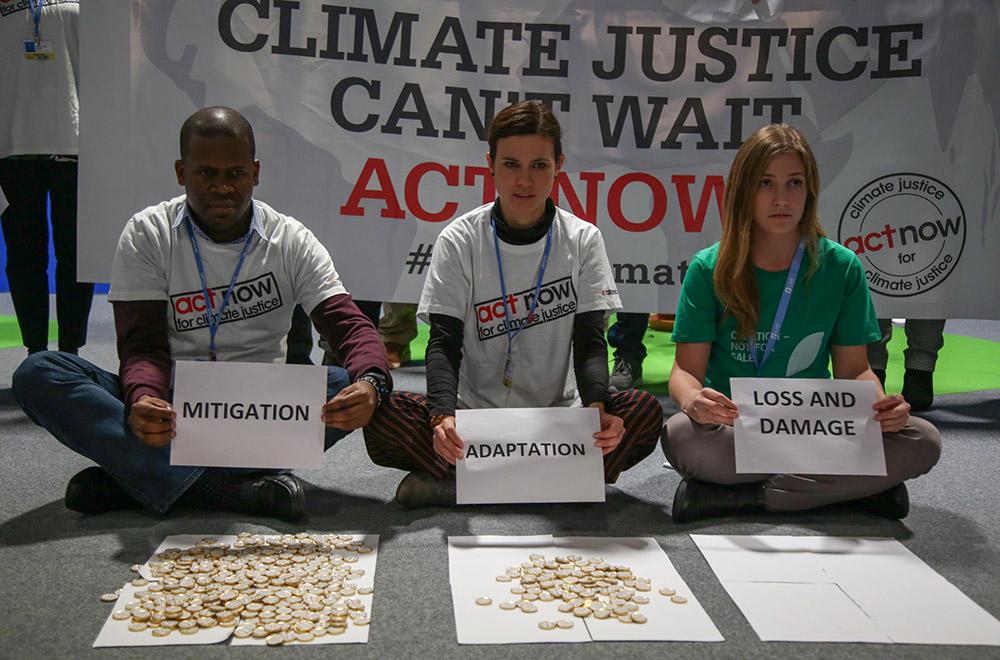
IPBES meeting
A group of IPBES members finalizing amendments to the summary for policy makers of the Global Assessment Report in 2019. (Photo: Diego Noguera, IISD/ENB)

First, who are the experts who make up the membership of the SPI? At the global level, it is not surprising the focus has often been on achieving geographical diversity of members. Increasingly, the focus on ensuring representation has also included age, career stage, gender, and institutional affiliation. In establishing a new SPI, it is important to clarify whether experts are serving in their individual capacity or as government representatives, or whether there is a need for both types of appointments. Indeed, this dual approach in both IPCC and IPBES has facilitated government buy-in of their reports.

Second, what institutional rules and processes should govern how the SPI functions? These rules might address not just what information can be considered (i.e., does it need to be peer-reviewed) but also how members deliberate and reach agreement. On this latter point, some SPIs might allow for voting as a last resort, while others, such as the IPCC, rely on word-by-word consensus on reports. When considering proposals for any new panel, codifying conflict of interest procedures for experts and clarifying how proprietary industrial knowledge might be taken into consideration are key for alleviating concerns over undue influence from industry stakeholders.

Third, which disciplines and ways of knowing should inform the SPI’s work? It is striking to see the differences between the bodies of knowledge engaged in the work of IPCC and IPBES, with social sciences and Indigenous and local knowledge systems more prevalent in the latter. These choices influence not just who contributes to the SPI’s work, but also what assumptions shape the SPI’s agenda. In considering proposals for future panels, tensions could arise among stakeholders relating to the inclusion of knowledge gained in the field and in the lab, as well as the inclusion of the critical social sciences and humanities that have been studying the injustices and inequities that persist in both food systems and the governance of chemicals and wastes.

As experts and policymakers look to existing SPIs to inform the design of new ones, there is much to learn from looking beyond the IPCC and IPBES. The urgent challenges we face require timely and effective advice on solutions. Other SPIs, notably those advising on ozone layer depletion, chemical pollution, and desertification, have valuable experience supporting decision-making. SPIs must create avenues for the science communities to not just sound the alarm but to work with policymakers to craft just and sustainable solutions.
Works Consulted

Beck, S., Forsyth, T., Kohler, P.M., Lahsen, M., & Mahony, M. (2016). The making of global environmental science and politics. In U. Felt, R. Fouché, C.A. Miller, & L. Smith-Doerr (Eds.), The Handbook of science and technology studies, (4th ed., pp. 1059-1086). MIT Press.

Brooks, T. M., Lamoreux, J. F., & Soberón, J. (2014). IPBES≠ IPCC. Trends in Ecology & Evolution, 29(10), 543-545. doi.org/10.1016/j.tree.2014.08.004

Cash, D. W., Clark, W. C., Alcock, F., Dickson, N. M., Eckley, N., Guston, D. H., ... & Mitchell, R. B. (2003). Knowledge systems for sustainable development. Proceedings of the National Academy of Sciences, 100(14), 8086-8091. doi.org/10.1073/pnas.1231332100

Chasek, P. (2019). Linking scientific knowledge and multilateral environmental governance. In M.J. Peterson (Ed.) Contesting global environmental knowledge, norms and governance (pp. 17-32). Routledge. doi.org/10.4324/9781315166445

Clapp, J., Anderson, M., Rahmanian, S., & Suárez, S. M. (2021). An ‘IPCC for food’. How the UN Food Systems Summit is being used to advance a problematic new science-policy agenda. Briefing note 1 on the governance of food systems. IPES Food. ipes-food.org/_img/upload/files/GovBrief.pdf

Gluckman, P. D., Bardsley, A., & Kaiser, M. (2021). Brokerage at the science–policy interface: From conceptual framework to practical guidance. Humanities and Social Sciences Communications, 8(1), 1-10. doi.org/10.1057/s41599-021-00756-3

Gluckman, P., & Wilsdon, J. (2016). From paradox to principles: Where next for scientific advice to governments? Palgrave Communications, 2(1), 1-4. doi.org/10.1057/palcomms.2016.77

Kohler, P.M. (2020). Science advice and global environmental governance: Expert institutions and the implementation of international environmental treaties. Anthem Press. doi.org/10.2307/j.ctvq4bzt8

Kohler, P.M., Conliffe, A., Jungcurt, S., Gutierrez, M., & Yamineva, Y. (2012). Informing policy: Science and knowledge in global environmental agreements. In P.S. Chasek & L.M. Wagner (Eds.) The Roads from Rio: Lessons learned from twenty years of multilateral environmental negotiations. (pp. 59-82). Routledge. doi.org/10.4324/9780203125564

Lidskog, R., & Sundqvist, G. (2015). When does science matter? International relations meets science and technology studies. Global Environmental Politics, 15(1), 1-20. doi.org/10.1162/GLEP_a_00269

Mulongoy, K. J. (2011). Mobilizing the scientific community for the United Nations Decade on Biodiversity. cbd.int/doc/meetings/sbstta/sbstta-15/other/sbstta-15-presentation-jo-en.pdf

Turnhout, E., Duncan, J., Candel, J., Maas, T. Y., Roodhof, A. M., DeClerck, F., & Watson, R. T. (2021). Do we need a new science-policy interface for food systems? Science, 373(6559), 1093-1095. science.org/doi/10.1126/science.abj5263

Wang, Z., Altenburger, R., Backhaus, T., Covaci, A., Diamond, M. L., Grimalt, J. O., ... & Suzuki, N. (2021). We need a global science-policy body on chemicals and waste. Science, 371(6531), 774-776. science.org/doi/10.1126/science.abe9090