Guide

Tracking Progress on the Integration of Nature-Based Solutions in National Adaptation Plan Processes

This infographic summarizes the extent to which countries have integrated nature-based solutions (NbS), ecosystem-based adaptation (EbA), and biodiversity considerations into their national adaptation plan (NAP) documents. It also offers action points to further strengthen the integration of NbS and EbA into NAP processes. 

June 17, 2025

Key Findings

  • There is a clear trend that the terms NbS and EbA are increasingly being integrated into NAP documents.

  • All NAPs include one or more NbS and/or EbA actions.

Actions to protect and restore biodiversity and ecosystems, such as NbS and EbA, can support climate adaptation and resilience, while NAPs offer a strategic framework for mainstreaming, mandating, and scaling up these actions. 

This infographic highlights key findings from the NAP Global Network's synthesis report, Tracking Progress on the Integration of Nature-Based Solutions and Ecosystem-Based Adaptation in National Adaptation Plan Processes. It outlines how biodiversity, ecosystems, NbS, and EbA are being integrated into NAP documents and provides a set of action points to further strengthen the integration of NbS and EbA into NAP processes. The findings are the result of a desk-based review of 57 multi-sector NAP documents that were submitted to the United Nations Framework Convention on Climate Change as of July 31, 2024.

Guide details

Topic
Climate Change Adaptation
Nature-Based Solutions
Project
NAP Global Network
Impact area
Climate
Publisher
IISD
Copyright
IISD, 2025
Guide

Tariff Analysis and Cost-Benefit Tool for Solarizing Irrigation

This is a comprehensive tool designed to support state policy-makers, regulators, and solar developers in calculating market-aligned tariffs for projects to solarize irrigation power demand, including under different components of the Pradhan Mantri Kisan Urja Suraksha Evam Utthaan Mahabhiyan (PM-KUSUM) scheme. It also helps quantify the costs and benefits associated with solarizing irrigation power demand in Indian states and explores financial instruments that state policy-makers can use to support deployment.

May 28, 2025

Key Findings

  • The tariffs calculated using the tool are indicative, and the users are provided the flexibility to change most of the input parameters to factor in local conditions in different states and arrive at a realistic tariff.

  • Factors such as grid unavailability significantly impact the levelized cost of energy tariff. The grid unavailability clauses must be properly exercised, and solar developers must be compensated appropriately for the loss of generation due to grid unavailability.

Meeting agricultural electricity needs—mostly for irrigation—from solar power can improve energy access, reduce greenhouse gas emissions, facilitate the cost-effective integration of renewable energy, and reduce state subsidy obligations and power procurement costs. Solarizing agricultural power demand can be achieved by requiring farmers to draw electricity for productive purposes during solar peak hours and adding solar power installations to relevant feeder stations. 

Recognizing the benefit of solarization, the Government of India launched the PM-KUSUM scheme in 2019. Two of the components (A and C-FLS) incentivize the installation of medium-scale distributed solar power plants (1 to 10 MW) connected to the distribution substations to cater to agricultural power demand. 

However, progress under the scheme has been slow. Key challenges include lack of buy-in to the idea of solarizing irrigation power demand within various state administrations, unviable tariffs offered by the state regulators for solar projects, and difficulty in financing projects. 

The Tariff Analysis and Cost-Benefit Tool for Solarizing Irrigation (TACTS) aims to help policy-makers, distribution companies, and developers tackle three of these barriers. The Excel-based spreadsheets draw on the most recent data. The Tariff Calculation section estimates viable tariffs for projects under different deployment models. The Financing section projects the potential impact of different financial instruments in improving the ease of financing projects. And the Costs and Benefits section quantifies the pros and cons of solarizing agricultural power demand to encourage policy-makers to accelerate the implementation of the scheme. 

Instructions before opening the workbook

  1. This file has macros. Please download and save the file—do not open it yet.
  2. Macros for files from external sources may be blocked in your system due to admin settings. Follow the next steps before using the file: 

    Right-click on downloaded file --> Properties --> In the dialogue box: General tab --> At the bottom, there will be a Security section; select the box next to Unblock --> Apply --> OK.

  3. Open the file only in the desktop version of Excel—not in the online version of Excel or in Google Sheets.
  4. After opening the file, you may receive a prompt suggesting some active content has been disabled. Select the Enable Content option and click Connect in the dialogue box that opens.
  5. Macros may be disabled in your Excel by default. If so, you will receive a prompt stating that Excel has blocked macros from running. Follow the next steps to enable macros. 

    File --> Options (at the bottom of the left panel) --> Trust Centre --> Trust Centre Settings --> Macro Settings --> Enable Macros.

  6. Some calculations have circular referencing. Enable iterative calculation by: 

    File --> Options (at the bottom of the left panel) --> Formulas --> Calculation Options --> Enable Iterative Calculation.

Guide

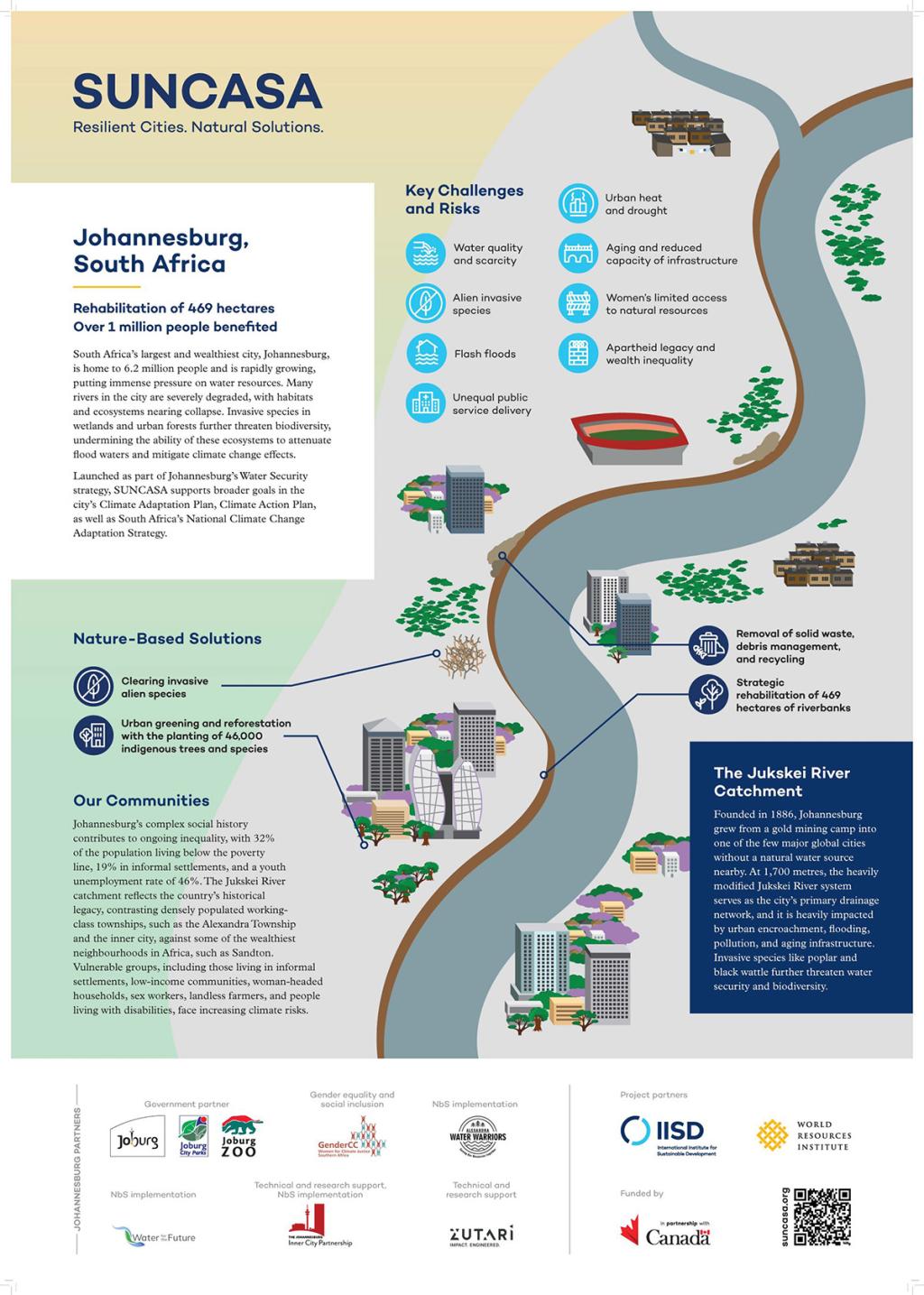
SUNCASA City Infographics

The SUNCASA project is working with local organizations and communities to strengthen the resilience of 2.2 million people across sub-Saharan Africa, while advancing gender equality, social inclusion, and biodiversity conservation. Through nature-based solutions (NbS), such as reforestation, agroforestry, urban greening, invasive species removal, and indigenous tree planting, SUNCASA is helping to restore vital urban river watersheds in Dire Dawa (Ethiopia), Kigali (Rwanda), and Johannesburg (South Africa).

Explore our city infographics for a closer look at SUNCASA's nature-based solutions actions and project sites.

April 11, 2025

Guide details

Initiatives
SUNCASA | Resilient Cities. Natural Solutions.
Publisher
IISD
Copyright
IISD, 2025
Guide

Library of Selected Due Diligence Measures in the Agri-food and Mining Sectors

Mapping common themes – Due diligence regulations workbook

This workbook aims to provide a systematic overview and analysis of due diligence regulations by mapping their main provisions against common themes, serving as an initial step toward promoting interoperability.

April 4, 2025

Key Messages

  • The workbook unpacks requirements of selected regulations into common themes of risk management, transparency, traceability, accountability, stakeholder engagement, and legality—key elements for companies navigating compliance with due diligence laws.

  • Understanding due diligence regulations against common themes can support businesses and policy-makers in navigating compliance and promoting interoperability across frameworks.

Governments have implemented, or are implementing, institutional frameworks that aim to encourage businesses to perform better—for instance, by identifying risks, mitigating and responding to them, and holding the private sector accountable for the impacts of its practices. In that context and specifically in the last 2 decades, due diligence regulations have taken centre stage, with several regulations being adopted by governments, mainly in the Global North, that promote responsible business conduct and respect for human rights and environmental standards.

This workbook aims to provide a systematic overview and analysis of due diligence regulations by mapping their main provisions against common themes, serving as an initial step toward promoting interoperability. Importantly, this workbook should not be regarded as legal advice or an exhaustive resource. Instead, it is intended as a starting point for understanding the compliance landscape.

This workbook uses the Organisation for Economic Co-operation and Development's (OECD's) definition of due diligence. Specifically, it draws on the OECD Review of G7 Government-led Voluntary and Mandatory Due Diligence Measures for Sustainable Agri-food Supply Chains (2024) to identify relevant regulations and develop the analytical framework for mapping them. According to the OECD, responsible business conduct due diligence "helps companies to identify, prevent, mitigate, and account for potential and actual adverse environmental and social risks and impacts of their operations, supply chains, and other business relationships." This workbook focuses on 12 mandatory public policy measures that incentivize due diligence practices:

  1. U.S. Lacey Act
  2. California Transparency Act
  3. UK Modern Slavery Act
  4. Japan Clean Wood Act
  5. French Duty of Vigilance
  6. EU Conflict Minerals Regulation
  7. Swiss Ordinance on Due Diligence and Transparency in Relation to Minerals and Metals From Conflict-Affected Areas and Child Labour
  8. UK Environment Act
  9. U.S. Uyghur Forced Labour Prevention Act
  10. German Supply Chain Due Diligence Act
  11. EU Deforestation-Free Regulation
  12. EU Corporate Sustainability Due Diligence Directive

The requirements of these selected regulations are shown under the following common themes: risk management, transparency, traceability, accountability, stakeholder engagement, and legality.

Guide details

Topic
Food and Agriculture
Responsible Business
Standards and Value Chains
Publisher
IISD
Copyright
IISD, 2025
Guide

Early-stage screening for responsible investment in agriculture and food systems

Guidance for agribusinesses

A new due diligence tool developed by the United Nations Food and Agriculture Organization (FAO) and IISD helps agribusinesses align investments with the Committee on World Food Security's Principles for Responsible Investment in Agriculture and Food Systems (CFS-RAI), guiding early decisions to ensure sustainable and responsible investment.

January 24, 2025

Responsible investment is crucial to long-term success in food and agriculture. Businesses that neglect sustainability and social impact face higher costs and lower returns.

This screening tool helps agribusinesses assess the socio-economic and environmental impacts of potential investments, ensuring alignment with CFS-RAI and other international standards. It covers key areas such as food security, land rights, employment, gender inclusion, child labour, environmental sustainability, and community engagement.

By using this tool, companies can strengthen feasibility studies, impact assessments, and compliance with global regulations, including the European Union's deforestation law and human rights due diligence legislation.

Participating experts

Guide details

Topic
Food and Agriculture
Impact area
Nature
Sustainable Economies
Publisher
FAO
Copyright
FAO, 2024
Guide

The Chemical Analysis of Fresh Water (Third Edition)

This publication describes the protocols used in the IISD Experimental Lakes Area Analytical Service Laboratory for the measurement of chemical constituents in freshwater samples.

October 30, 2024

The chemical constituents measured in these samples include:

  • anions (Cl and SO4),
  • cations (Na, Mg, K, Ca, Mn, and Fe),
  • carbon speciation (dissolved inorganic carbon, dissolved organic carbon, absorbance scan to assess dissolved organic carbon quality, and particulate carbon),
  • chlorophyll-a,
  • conductivity,
  • dissolved oxygen,
  • gran alkalinity,
  • nitrogen speciation (nitrite, nitrate, ammonia, total dissolved nitrogen, and particulate nitrogen),
  • particulate iron,
  • pH,
  • phosphorus speciation (total dissolved phosphorus and particulate phosphorus),
  • soluble reactive silicon, and
  • turbidity.

In addition to the analytical methods used, the publication also provides guidance on quality assurance and quality control protocols used for labware cleaning, calibration and verifications, sample tracking and data recording, as well as sample preparation, filtration, and storage.

Guide details

Topic
Water
Project
IISD Experimental Lakes Area
Impact area
Nature
Publisher
IISD
Copyright
IISD, 2024
Guide

Inclusive Nature-Based Solutions for Climate Adaptation

Reducing climate impacts in a way that works for everyone

This booklet illustrates how climate change and biodiversity loss impacts people in different ways and how gender-responsive and socially inclusive nature-based solutions (NbS) for adaptation can help to reduce the differentiated impacts of these crises. This booklet aims to inform practitioners and local communities about these concepts and provide practical tips for designing and implementing responsive and inclusive NbS for adaptation.

October 1, 2024

Climate change affects our natural environment and can result in the loss of nature. These changes impact people in different ways depending on who they are and how their identity influences their position in society. Recent evidence shows that NbS for adaptation are more effective when gender issues are considered and delivered in a gender-responsive and socially inclusive manner. This booklet provides practical tips on how to recognize differences in needs and priorities to ensure that everyone can benefit from NbS for adaptation.

This guide is a knowledge product of the Climate Adaptation and Protected Areas (CAPA) Initiative.

Inclusive Nature-Based Solutions for Climate Adaptation guide illustrating the effects of climate changes on communities.

Guide details

Topic
Climate Change Adaptation
Gender Equality
Nature-Based Solutions
Project
Climate Adaptation and Protected Areas Initiative
Impact area
Climate
International Governance
Publisher
IISD
Copyright
IISD, Wildlife Conservation Society, and World Wide Fund for Nature, 2024
Guide

Planning for the Future

Guidance and tools for enhancing the climate resilience of Manitoba's integrated watershed management plans

A guidebook to help watershed planners, water planning authorities, and project management teams tasked with leading the development and update of integrated watershed management plans (IWMP).

August 30, 2024

Manitobans are experiencing warmer temperatures, severe wildfires, changing precipitation patterns, and more frequent floods and droughts. Without adaptation planning, watershed residents face greater risk to their property, livelihoods, and mental and physical health.

Watershed districts must consider how to incorporate climate adaptation in their management plans and programs to maintain the health of the watershed and the delivery of ecological, economic, and social benefits that residents enjoy and rely upon, all while facing an uncertain future.

In Manitoba there are 27 integrated watershed management planning areas, all responsible for water-related issues, water management programs, and finding a balance between ecosystem, community, and economic health. Each produces an integrated watershed management plan (IWMP) to act as a guiding document, which are periodically reviewed and updated. With the renewals, there is a great opportunity to incorporate more climate adaptation planning entry points in the process.

The guidebook is structured to incorporate climate adaptation planning into the existing IWMP processes by identifying entry points at different stages of the IWMP process.

This guidebook includes

  • ways to help assess how anticipated impacts of climate change will affect the watershed and identify actions that will reduce the risk and severity of these impacts;
  • ways to increase knowledge about climate change risks within watersheds and suggest how to build capacity to manage these risks;
  • suggestions on how to ensure that investments in watersheds are appropriate to the changing climate in the long term;
  • an easy-to-follow guide for using the Climate Atlas of Canada for accessing and interpreting climate data;
  • five worksheets to help with adaptation planning; and
  • an extensive list of helpful resources.

Guide details

Topic
Climate Change Adaptation
Climate Change Mitigation
Water
Publisher
IISD
Copyright
IISD, 2024
Guide

The Responsible Agricultural Investment Tool for Agribusiness

This tool aims to support agribusinesses in aligning their practices, procedures, and operations with principles of responsible investment in agriculture and food systems.

July 10, 2024

Agribusinesses and investors in the food and agriculture sector are increasingly motivated to ensure their operations and investments generate positive social and environmental outcomes. But they need support to translate these aspirations into responsible business practices and responsible investments.

The RAI Tool for Agribusiness is a reference tool developed by IISD, Cerise+SPTF, and partner organizations with support from the Swiss Agency for Development and Cooperation. It aims to help agribusinesses assess how well aligned their practices and operations are with international principles for responsible business conduct, such as the Committee on World Food Security’s Principles for Responsible Investment in Agriculture and Food Systems, the ASEAN Guidelines on Promoting Responsible Investment in Food, Agriculture, and Forestry, and the International Finance Corporation Performance Standards.

The RAI Tool for Agribusiness provides a framework that integrates these high-level principles into the language of agribusiness operations, structures, procedures, and management practices. Such a framework makes it easier for agribusinesses to understand responsible business practices, to identify where their existing practices fall short of international principles and best practice, and to prioritise steps to apply these principles in their operations.

The development of the RAI Tool for Agribusiness builds on existing best practice and performance indicators. The Tool has been tested by agribusinesses in Africa and Asia and refined based on their input and feedback. A Guidance Document and Reporting Template have also been developed to facilitate use of the Tool.

Guide

Nature-Based Solutions for Climate Adaptation | Infographic

Natural solutions for strengthening climate resilience and protecting biodiversity

Climate change impacts greatly affect ecosystems and the communities who depend on them. Nature-based solutions for adaptation (NbS) can play a vital role in helping people and biodiversity build resilience to climate risks. Learn more about what effective NbS for adaptation are and their practical application across different ecosystems to strengthen their resilience.

May 2, 2024


CAPA Initiative Nature-Based Solutions for Climate Adaptation poster

Guide details

Topic
Nature-Based Solutions
Initiatives
Climate Adaptation and Protected Areas (CAPA) Initiative
Publisher
IISD
Copyright
IISD, 2024