Report

Nature-Based Solutions for Adaptation in Uganda

An inventory of projects using nature-based solutions for adaptation to address climate and biodiversity challenges (2015–2026)

This inventory showcases interventions implemented in Uganda from 2015 onward that employ ecosystem processes, ecosystem restoration, ecosystem management, or sustainable ecosystem use to reduce climate vulnerability and enhance resilience. It documents the approaches taken by each intervention, the climate and biodiversity risk they address, the ecosystems they target, and the beneficiaries they are intended to serve.

June 5, 2026

Key Findings

  • Uganda’s NbS for adaptation are not dominated by a single ecosystem; they are distributed across wetlands and associated catchments, protected areas and forest landscapes, mountains, peatlands, river systems, and savannah, spanning both rural agricultural landscapes and ecologically sensitive areas.

  • The societal challenges addressed by the NbS projects are coupled rather than treated as separate. Food insecurity, water stress, exposure to floods and droughts, declining agricultural production, degradation of ecosystem services, and pressure on biodiversity repeatedly appear together.

  • From a biodiversity perspective, most NbS in Uganda are not designed around species-specific conservation. Their biodiversity value lies primarily in reducing habitat degradation, wetland encroachment, riverbank erosion, forest loss, invasive species pressure, and catchment decline.

  • Social inclusion is visible but uneven across the portfolio. Some projects provide explicit evidence of gender-responsive design, women’s participation, targeted livelihood benefits, or focus on marginalized groups.

Uganda is experiencing increasing climate variability alongside ongoing ecosystem degradation and biodiversity loss. Changes in rainfall patterns, rising temperatures, and more frequent extreme events, such as floods, droughts, and landslides, are interacting with degraded wetlands, declining forest cover, and stressed catchment systems to intensify vulnerability across both rural and peri-urban areas. 

These interacting pressures place particular stress on water security, climate-sensitive agricultural systems, and exposure to climate-related disasters, reinforcing the case for adaptation measures that restore and strengthen ecosystem function. 

This inventory has been developed to identify and analyze nature-based solutions (NbS) for adaptation implemented in Uganda since 2015. Its purpose is not only to compile a list of projects but also to establish how ecosystem-based interventions are applied in practice to reduce climate vulnerability, strengthen resilience, and provide a structured basis for comparing them across landscapes, ecosystems, and risk contexts. The inventory documents the approaches taken by each intervention, the climate and biodiversity risks they address, the ecosystems they target, and the beneficiaries they are intended to serve.

Report details

Topic
Climate Change Adaptation
Nature-Based Solutions
Region
Uganda
Impact area
Climate
Nature
Initiatives
Climate Adaptation and Protected Areas (CAPA) Initiative
Publisher
IISD
Copyright
IISD, Wildlife Conservation Society, and World Wildlife Fund for Nature, 2026
Insight

One Underestimated Threat to Biodiversity, and How We Can Invest Wisely to Overcome It

Invasive alien species (IAS) are a key driver of biodiversity loss, driving up to 60% of all recorded global extinctions either on their own or alongside other factors. However, with early detection, this loss is preventable. On International Day for Biological Diversity, Susan Sekirime, the International Institute for Sustainable Development’s (IISD's) Climate Adaptation and Protected Areas (CAPA) Initiative Africa Lead, explains why we must make stopping the spread of IAS a priority, and the difference it can make to wildlife, ecosystems, and communities in protected areas.

May 20, 2025

Home to over 95 mammal and 600 bird species, Uganda’s Queen Elizabeth National Park (QENP) is being dramatically altered by invasive plant species whose arrival is being supercharged by increasing temperatures. Once a healthy savannah grassland, the park is rapidly transforming into a dense, thorny scrubland. Most problematic among these invasive species is dichrostachys cinerea, commonly known as sicklebush.

Each year, on International Day for Biological Diversity, we are called upon to reexamine our relationship with the natural world and recommit to respecting and protecting it.

This year, the focus is on the linkages between the 2030 Agenda and its Sustainable Development Goals (SDGs) and the goals and targets of the Kunming–Montreal Global Biodiversity Framework (GBF) as two universal agendas that must be pursued in tandem. The call to action is to accelerate action on the SDGs and the GBF in the last 5 years before the agreed implementation period expires.

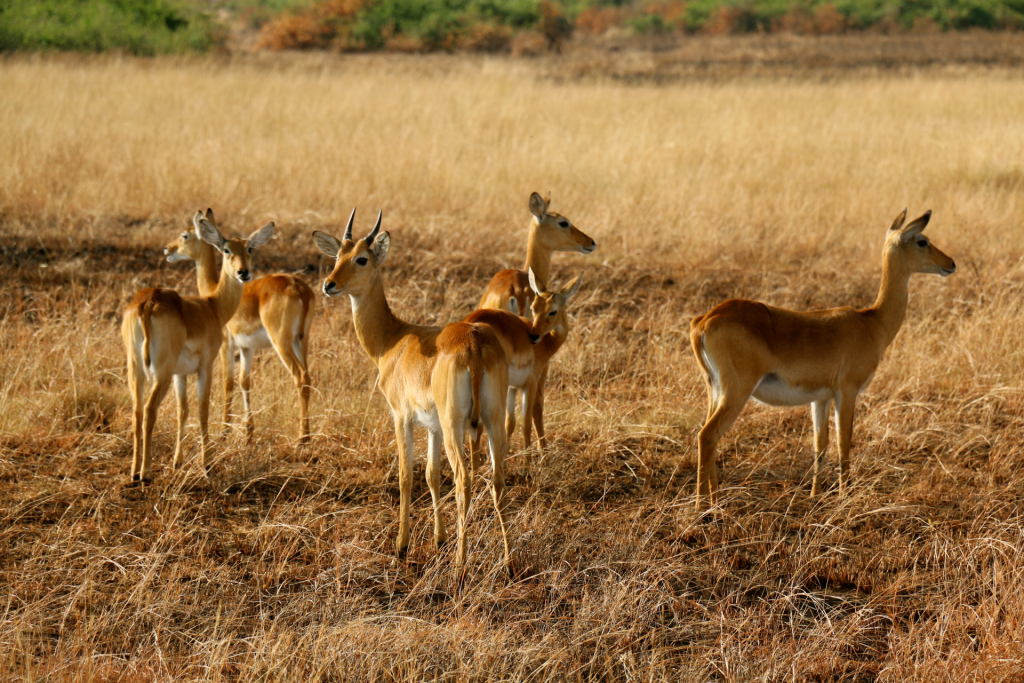
Wildlife stood in a field

The threat of IAS was last highlighted in 2009 as an issue of concern and theme for the International Day for Biological Diversity. This threat continues to grow, and, according to a recent report by the Intergovernmental Science-policy platform on Biodiversity and Ecosystem Services, it is now one of the five major drivers of biodiversity loss.

According to the report, IAS are the sole driver in 16% of documented global extinctions, and have contributed, alone or alongside other drivers, to 60% of all recorded global extinctions. The scale and severity of the problem helped ensure that minimizing the spread and impact of IAS is enshrined as a core target for the GBF (Target 6)

Besides the threat they pose to wildlife, IAS impose enormous costs on agriculture, forestry, fisheries, and other natural resource-based sectors and human health. These costs have been estimated at more than USD 423 billion per year—an amount scientists believe has quadrupled every decade since 1970. Without concerted effort, and with the increased movement of people and goods brought about by globalization, as well as the compounding effects of climate change and habitat degradation, the number of IAS and their impacts are projected to increase.

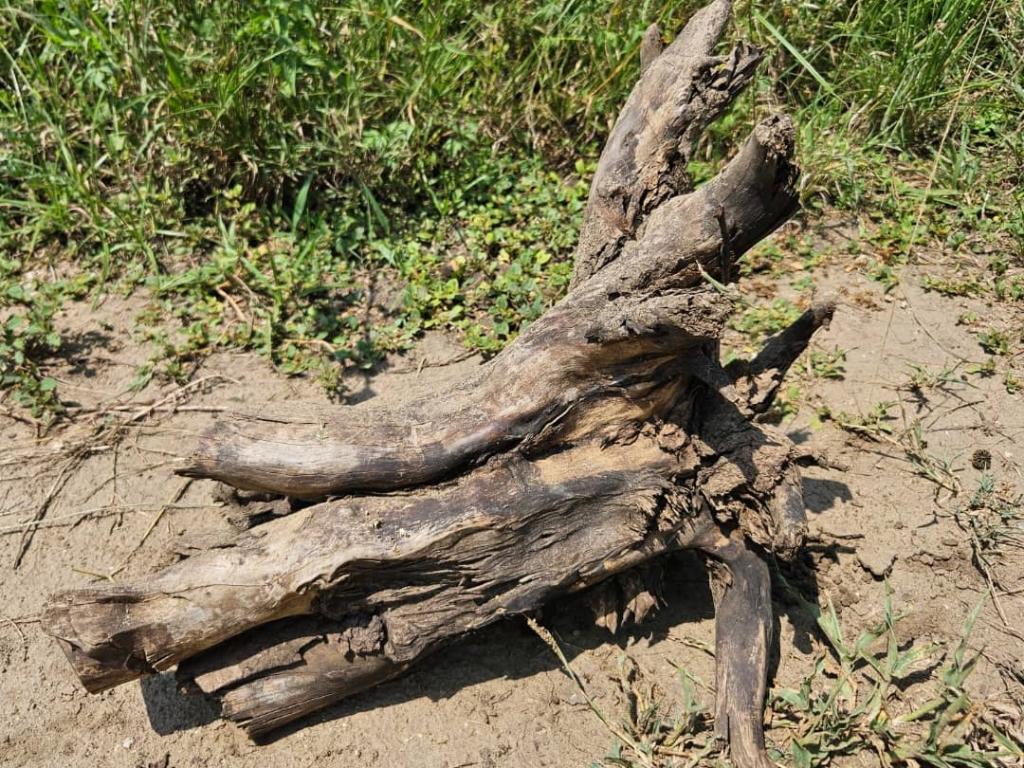
Sicklebush

Removal Brings Relief, but at a Price

The most economical way to manage IAS is through prevention, along with early detection and rapid response (EDRR). These two approaches are much more effective than trying to manage a widespread infestation. What is now happening in QENP is proof of this.

Sicklebush has a wide natural distribution, ranging from southern and tropical Africa to India, though its true native range is still disputed. What is true for QENP is that while sicklebush has always existed in the park, its rapid spread, driven by drought conditions and higher temperatures, has meant that it now covers almost 50% of the park, according to the Uganda Wildlife Authority (UWA). This has created impenetrable thickets that have lowered the park's carrying capacity for grazing wildlife species, restricted wildlife movement, and blocked access to water points. Animals, both prey and predators, are now leaving QENP to seek food and water in the neighbouring communities, exacerbating human–wildlife conflict in the area, affecting the lives, livelihoods, food security, and well-being of many already-vulnerable people living in and around the protected area. This is also affecting the tourism industry—a significant source of revenue for the country and the local communities—as those animals remaining in the park are increasingly difficult to see.

Under the CAPA Initiative, IISD and the Worldwide Fund for Nature have worked with local communities to clear sicklebush from over 200 hectares in strategically important areas in QENP, providing urgent relief to wildlife that could no longer access critical grazing grounds and watering points. The work made an impact quickly, but it is just a drop in the ocean given the scale of the problem. A total of 110,000 hectares of the park are estimated to be impacted by sicklebush and other IAS, according to the UWA.

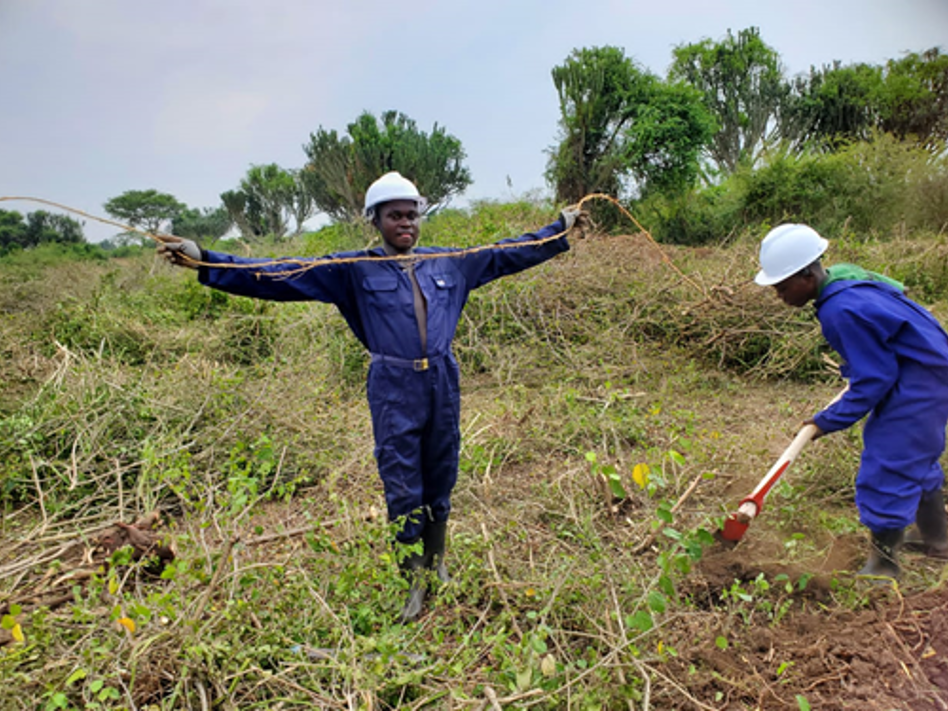
Invasive alien species being removed

The cost of removing these invasive plants is high; it costs roughly USD 1,120 to clear 1 hectare of sicklebush manually. With the affected area totalling close to 110,000 hectares, roughly USD 124 million would be needed to fully eradicate the problem, and this would only cover the initial removal. To achieve effective results, more funding would be needed for follow-up management action to eliminate resprouts. UWA had attempted to eliminate and control sicklebush in QENP and other protected areas across the country through mechanical removal, but the use of machinery, while less expensive, did not adequately remove the root structure of the plant and catalyzed massive sprouting through remnant root systems, as well as leaving soils over-compacted, which hindered natural regeneration.

Investing in Early Detection

similar trend of overly costly removal of IAS is observed in most cases where attempts are made to eradicate IAS after it has spread, making investment in EDRR by far the best way forward. This is even more important now, with more than 1 million animal and plant species considered to be threatened with extinction and given the stark shortfall in global conservation funding [paywall] revealed last year at the 16th United Nations Biodiversity Conference (COP16) in Cali, Colombia. Tight budgets mean that conservation decision-makers must identify and prioritize those management strategies and investments in critical ecosystems that are most likely to achieve better results per dollar invested for species’ recovery and conservation.

Addressing tomorrow’s IAS invasions must begin today, with smart investments in EDRR in the form of surveillance systems to detect invaders in areas at high risk or of high biodiversity value, and aggressive quarantine and eradication techniques to eliminate potential IAS from specific locations before they spread and cause harm. Given the current climate change context, it will also be essential to recognize the interactions between IAS and climate change so that the appropriate forward-looking adaptation management strategies can be considered and adopted.

In QENP, the removal of invasive species had an immediate, localized impact. Within a day of the clearance work being completed, antelope and buffalo were once again grazing in these areas, and elephants were drinking from the Kazinga Channel; their path was no longer blocked by thorny scrub. Native plants are regenerating because they have more room. The ecosystem, including its wildlife, can recover; we just need to make the right decisions for its future.  

Deep Dive

How to Make Nature-Based Solutions for Adaptation Work for Everyone

To be effective, nature-based solutions (NbS) for adaptation need to consider how our unique identities influence our interactions with the natural world and our capacity to adapt to the impacts of climate change. It sounds challenging, but it starts with integrated climate risk assessments. We share three key take-aways from IISD’s Climate Adaptation and Protected Areas Initiative (CAPA) that will help practitioners plan for effective, inclusive, and sustainable NbS for adaptation.

October 15, 2024

NbS for adaptation can enhance biodiversity and strengthen climate resilience for both communities and ecosystems. However, communities are made up of diverse people with different needs, who experience the impacts of climate change and biodiversity loss in distinct ways.

Knowing this, how can we ensure that NbS for adaptation benefit everyone?

It all starts with planning.

Planning for NbS for adaptation requires recognizing how different people are impacted by climate change, understanding the factors that influence their vulnerability and exposure to climate hazards, and working with them to identify which adaptation options might work for them.

It means identifying how adaptation priorities differ within and among groups and what factors might enable—or inhibit—their ability to access and share in the benefits of nature.

To ensure that NbS for adaptation initiatives are effective and sustainable, gender and social differences must be considered in the planning process.

The Intergovernmental Panel on Climate Change’s Sixth Assessment Report on Climate Change (2022) says that equity and justice are key considerations in climate change adaptation, and these principles cannot be advanced without attention to the adaptive capacity and disproportionate risks experienced by vulnerable people.

Globally, we know that people’s vulnerability to climate change varies depending on social factors, such as gender, sexuality, age, socio-economic status, race, ethnicity, Indigeneity, nationality, and ability, among others. We also know that people have different roles and responsibilities in the access, use, and management of natural resources, and this, too, can influence vulnerability to climate change. There is also now evidence that attention to gender and social differences improves the effectiveness of adaptation efforts overall. Additionally, policy initiatives focused on global biodiversity conservation (such as the IUCN (International Union for Conservation of Nature) Global Standard for Nature-based Solutions and Target 23 of the Global Biodiversity Framework) also highlight the importance of considering gender equality and social inclusion (GESI).

Women working on the land in Zambia

Including more diverse perspectives in resource governance and conservation efforts can also yield better results, given the unique and specialized relationships with nature possessed by different groups, such as women and Indigenous Peoples.

Having this information on how different groups interact with nature and how they are impacted by climate change and biodiversity loss is critical to the development of effective NbS for adaptation.

If NbS for adaptation are not designed with these differences in mind, they will miss the mark, which may lead to maladaptation and worsen vulnerabilities for some groups.

So, how can you collect this essential information during the planning process?

Understanding Gender and Social Issues in NbS for Adaptation: Our approach

IISD experts leading the CAPA Initiative, a 3-year project funded by Global Affairs Canada, recommend starting the planning of nature-based adaptation projects with an integrated climate risk assessment.

Seeking to promote natural solutions and strengthen climate resilience in Belize and the Greater Virunga and Kavango-Zambezi landscapes*, they first gathered information on climate change and biodiversity loss and assessed how these issues impact communities within or adjacent to the Protected Areas.

*Fiji's integrated climate risk assessment is currently ongoing.

A key aim of the process was to better understand the different impacts of these issues based on gender and other social factors. This information was gathered by integrating GESI criteria into the climate risk assessment. This involved attention to GESI both in the questions the assessment aimed to answer (for example, assessing the relative decision-making power and opportunities of different groups in conservation planning processes) and in the process undertaken (for example by ensuring gender-responsive methodologies were used to collect data through separate, confidential focus group discussions that were inclusive of underrepresented groups, such as women and youth).

The assessments, implemented together with the World Wide Fund for Nature Africa and the Wildlife Conservation Society in Belize, analyzed gender differences and helped to determine which groups within the landscapes are considered “underrepresented” regarding their participation in and leadership of natural resource and/or Protected Areas management.

In Belize and the Greater Virunga landscape, the groups identified as underrepresented consist of youth and Indigenous Peoples: the Garifuna in Belize and the Batwa populations in the Greater Virunga landscape. In the Kavango-Kambezi landscape, they consist of youth and persons with disabilities. Across the landscapes, women were identified as facing barriers due to gender inequality. These groups became the focus of the assessments, which enabled the CAPA initiative to better understand the unique constraints and opportunities they experience to design NbS for adaptation activities that could encourage their active participation and leadership.

What follows are three key take-aways that highlight important insights gathered from the assessments and how this information will help project partners plan for just and effective, fit-for-purpose NbS for adaptation.

Key Take-Away #1: People of different genders and social groups rely on different livelihood activities, which influences their adaptation priorities

Findings from the assessments demonstrated that men, women, and underrepresented groups undertake different livelihood strategies according to roles, responsibilities, and cultural norms that influence their daily activities. Gendered roles within key resource sectors mean that women and men are affected by the impacts of climate change in different ways. For example, in both the Greater Virunga and Kavango-Zambezi landscapes, women are often responsible for gathering water and fuelwood, as well as procuring food, which becomes more arduous during drought.

In Belize, fishing is dominated by men, who are strongly affected by declining fish stocks due to rising sea temperatures. The degree of dependence on a particular resource or livelihood strategy also plays a role in vulnerability to climate change. For example, climate hazards have resulted in Belize’s Garifuna communities scaling back their traditional farming practices. In the Kavango-Zambezi landscape, people with disabilities are facing challenges in cultivating home gardens—a key source of food security—because the river they previously relied on has dried up.

Group of people discussing in a circle

These differences in livelihood activities influence people’s priorities when it comes to adaptation. In Belize, youth expressed a preference for options that gave them hands-on, practical experience, such as coral, mangrove, and beach restoration, while women were least interested in options linked to forests and forestry due to safety concerns. In both the Greater Virunga and Kavango-Zambezi landscapes, both men and women expressed an interest in NbS for adaptation that were linked to the diversification of livelihoods to build resilience.

Having information on these differences in livelihoods and preferences is key to planning NbS for adaptation that can benefit everyone.

Key Take-Away #2: Resource access and control strongly influence barriers and opportunities for NbS for adaptation

Across the CAPA landscapes, the assessments highlighted the critical role that land tenure and other natural resource access and control issues play in shaping people’s livelihood opportunities and, consequently, their vulnerability to climate impacts.

In Belize, more women are interested in taking up livelihood strategies such as farming, yet many lack ownership of key assets, including land. Indigenous groups such as the Batwa in the Greater Virunga landscape and the Shangaani in the Kavango-Zambezi landscape have seen their traditional territories appropriated to create Protected Areas. In the latter, local communities have access to buffer zones with key natural resources, yet traditional authorities (often men) govern the use of communal resources. In the former, both men and women have access to ecosystem services, yet land is primarily owned by men who make decisions on land allocation and associated activities. Lack of land ownership is linked to less decision-making power regarding natural resource management in the Greater Virunga landscape.

NbS for adaptation are long-term investments in climate resilience and biodiversity conservation outcomes, which require secure land access or ownership. It is simply not feasible to expect community members to invest in long-term solutions if they face immediate climate risks and lack secure tenure. It is important to recognize that some groups, such as women, may not benefit in the same way if NbS for adaptation activities, such as land restoration, are prioritized over others. This is why it is helpful to gather information on the gender and social dimensions of resource access and use it to plan NbS for adaptation that can deliver equitable benefits to communities.

Key Take-Away #3: Women and underrepresented groups play important roles in natural resource management but often experience structural challenges and capacity gaps

In all three landscapes, the assessments revealed persistent barriers that limit the meaningful participation of women and other underrepresented groups in decision making related to NbS for adaptation. In the Greater Virunga and Kavango-Zambezi landscapes, most local Protected Areas management plans have demonstrable gaps in inclusivity. Often, women are present in planning meetings to give a semblance of participation, but the final decisions and plans do not reflect their concerns, needs, or goals. Similarly in Belize, the Garifuna are not always consulted on the management of ecosystems that hold cultural and traditional importance.

Across the landscapes, women and underrepresented groups expressed that they lack opportunities, knowledge, and technical skills to engage in NbS for adaptation.

In Kavango-Zambezi, women noted a desire for technical skills to enable their participation in agroforestry. In Belize, women and youth are highly motivated to participate in NbS for adaptation, yet they lack confidence in their ability to influence conservation and Protected Areas management priorities.

Mapping conservation and natural resource management structures to understand capacities, needs, and gaps is essential to planning NbS for adaptation. Often, women and underrepresented groups provide leadership within community-level groups. In Greater Virunga, there are many women involved in savings and loan programs, as well as livelihoods-related groups that deal with conservation issues. However, many of these groups are informal and lack broader decision-making power, technical skills, and access to information. The sustainability and success of NbS for adaptation is contingent on improved and inclusive governance over the long term, and women and underrepresented groups are key players in these efforts.

What Do These Findings Mean for Planning NbS for Adaptation?

In learning from CAPA, it is clear that NbS for adaptation must be planned with consideration for how people’s unique identities influence their interactions with the natural world and their capacity to adapt to the impacts of climate change. This can be accomplished by conducting an integrated climate risk assessment that incorporates GESI and using the findings to inform NbS for adaptation options.

Gathering this information can help identify creative ways to ensure different groups can benefit from various NbS for adaptation actions. What matters is finding balance in the planning of NbS for adaptation options, being honest about who may benefit and who may not, and ensuring options address different needs, capacities, and priorities. Planning NbS for adaptation with this information in mind will ensure that the solutions proposed are effective, inclusive, and sustainable.

For more on inclusive NbS for climate adaptation, see our guide for practitioners and communities here.  


This piece was largely informed by the reports produced by the two integrated assessment consultancy teams in the African landscapes and in Belize, which will be published and shared on the CAPA website. In the African landscapes, the consultancy team that performed the assessment consisted of the following: Luckson Zvobgo (Climate Change Context; NbS for Climate Adaptation; Governance, Gender, and Social Context); Evidence T. Kasinganeti (Governance, Gender, and Social Context as well as Conflicts Context); Sandra Bhatasara (Governance, Gender, and Social Context); Felix Kalaba (Ecosystem Context); and Andreas L. S. Meyer (Biodiversity; Climate Change Context). In Belize, the consultancy team Compass Communication and Research performed the assessment with assistance from the Wildlife Conservation Society Conservation Planning Team.

Insight

Biodiversity Is in Crisis—Here's one way to fix it

A growing movement of projects and partnerships is using locally driven and gender-responsive nature-based solutions to address the twin crises of climate change and biodiversity loss. Scaling up this work to match the urgency and reach of the crises will be a challenge—but it’s one we must embrace.

May 21, 2024

The Rwenzori Mountains loom large over the surrounding scenery in southwestern Uganda. Here, snowmelt and rainwaters flow through alpine meadows and forests of otherworldly flora, including giant lobelia and heather taller than a person, to provide the source waters of the Nile. Moving south, the lakes, rivers, and grasslands of Queen Elizabeth National Park are home to not only elephants, buffalo, and hippopotami but also vast herds of kob—and the tree-climbing lions that prey on them.

Standing within these beautiful settings, you could be forgiven for thinking that nature is thriving. However, these exceptional places, inscribed as part of our collective natural heritage by UNESCO, are increasingly islands of ecosystem health in fragmented landscapes and seascapes beset by outside pressures.

The Sixth Extinction

It is a well-known story, and the headlines are often dire. Rates of species extinction and ecosystem degradation are accelerating; according to the 2019 Global Assessment Report by the Intergovernmental Science-Policy Platform on Biodiversity and Ecosystem Services (IPBES), 1 million animal and plant species are currently threatened with extinction, many within decades, unless urgent, transformative action is taken. Abundance has plummeted for many of those species not yet gone; WWF’s 2022 Living Planet Report notes an average decline of 69% in the relative abundance of monitored wildlife populations around the world between 1970 and 2018. The scale of the problem is so large that it is now commonly referred to as the sixth extinction: the loss of an unusually large number of species in a short time, driven by human activities.  

Compounding Crises

IPBES cites five anthropogenic factors as key drivers of this crisis: land- and sea-use change; direct exploitation of natural resources; climate change; pollution; and invasive species.

Nature has a foundational role in global health, food systems, livelihoods, climate adaptation, economies, and security. Thus, the acceleration of nature loss, when considered in the context of rising demands from growing populations for both ecosystem services and natural resources, means that avoiding further degradation or loss of biodiversity and ecosystem services should be an increasingly important consideration for governments, communities, and the private sector.

This crisis is unfolding in the context of rising global temperatures. The climate crisis is having a significant impact on the natural world. While land- and sea-use changes are currently the greatest drivers of nature loss, a failure to limit planetary warming to 1.5°C will result in climate change becoming the dominant cause of global biodiversity loss and ecosystem degradation in the coming decades.

Climate change is disrupting natural feedback loops and altering the habitats and ranges of various fauna and flora. Its impacts also undermine the delivery of ecosystem services, harming human lives and livelihoods and compromising efforts to eradicate poverty and hunger and provide safe water for billions of people. Achieving the United Nations Sustainable Development Goals, alongside the Paris Agreement and the Kunming-Montreal Global Biodiversity Framework, will depend on a coordinated response to these deeply connected emergencies.

How Can Nature-based Solutions Build Climate Change Resilience?

But while climate change and biodiversity loss often act to reinforce one another, so do effective climate change adaptation and nature protection. Nature-based Solutions (NbS) have emerged as an integrated concept beyond climate change adaptation and traditional conservation. NbS may have the potential to tackle multiple societal challenges, such as protecting, managing, and restoring biodiversity and ecosystems. Their services are increasingly seen as an effective way to address some of the shared root causes and impacts of the biodiversity and climate crises.

In Belize, Fiji, and the Greater Virunga and Kavango-Zambezi (KAZA) landscapes in sub-Saharan Africa, NbS are being rolled out to increase the resilience of both communities and ecosystems to climate change. Through the Climate Adaptation and Protected Areas (CAPA) Initiative, IISD is working with the Wildlife Conservation Society, the World Wide Fund for Nature, and local partners and communities within these spaces to conserve, protect, restore, and sustainably manage protected areas.

More than 50 km from the mainland of Belize, Glover’s Reef atoll lies just inches above the deep blue waters of the western Caribbean. Glover’s is a critical link in a chain of reefs and islands that form the largest barrier reef in the Western Hemisphere. Here, IISD and the Wildlife Conservation Society are working to strengthen the reef's health and its ability to support local livelihoods, remain a suitable habitat for marine species, and provide coastal protections against extreme weather events.

Half a world away, in southwestern Uganda, lies what is arguably Africa’s most biodiverse landscape. The Greater Virunga Landscape stretches along the shared borders of Uganda, Rwanda, and the Democratic Republic of Congo—a mosaic of mountains, savannas, rivers, lakes, swamps, tropical rainforests, and volcanoes. Here, conservation interventions implemented by the World Wide Fund for Nature and partners focused on reforestation, invasive species removal, land restoration, and nature-based livelihoods will help build the resilience of three national parks (Rwenzori Mountains, Queen Elizabeth, and Bwindi Impenetrable) and the communities that surround them to rising temperatures, increased flood risk, landslides, and erosion. Even more work is happening under the project in the KAZA landscape and in Fiji to support reforestation, restock wildlife, promote sustainable fisheries, and improve flood mitigation, among other activities.

The threats facing these ecosystems—and, by extension, the conservation practitioners that manage and support them; the communities that sustain and depend on them; the flora and fauna that make them indispensable—can often seem insurmountable. But there is hope. CAPA is one small part of a growing movement of projects, partnerships, and approaches using NbS to simultaneously address these two existential emergencies. Scaling up this work to match the urgency and reach of the crises will be a challenge, but it is a challenge we must embrace.

To learn more about the CAPA Initiative, please visit www.iisd.org/capa.

Conference

COP 28 Side Event | Tackling Climate Change in Africa's Protected Areas

December 2, 2023 5:00 pm - 6:00 pm GST (GMT+4)

WWF Pavillion

(Open to public)

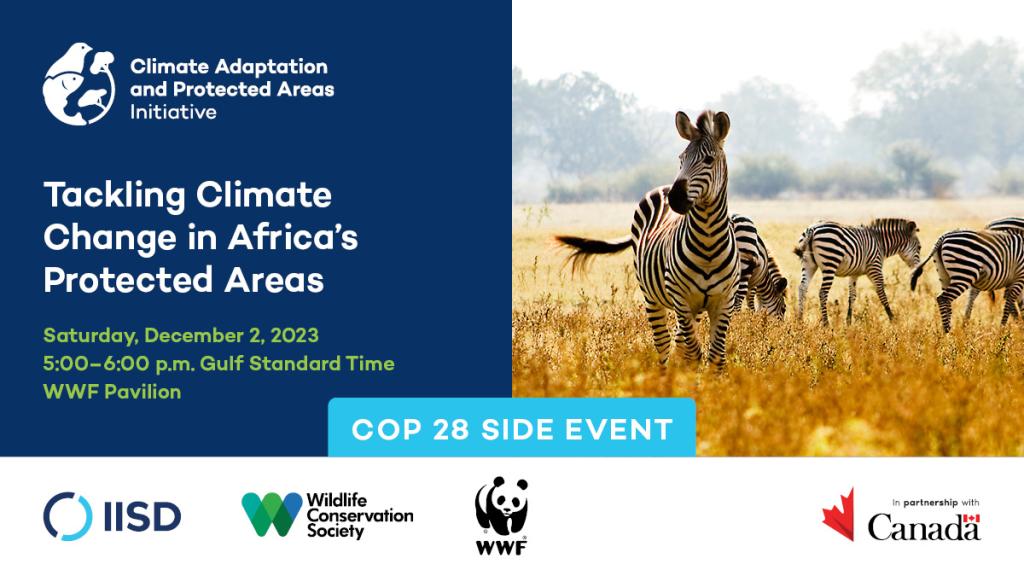
Card announcing CAPA Event at COP 28

Taking place on Africa Day, this event, hosted jointly by WWF’s Regional Office for Africa and IISD, will focus on climate change challenges in protected areas, showcasing the Climate Adaptation and Protected Areas (CAPA) Initiative, funded by Canada’s Partnering for Climate Initiative. It will provide a space to unpack the complexity of climate change impacts and potential interventions, including through nature-based solutions. This event will also highlight the benefits of transboundary protected areas to enhance adaptation, biodiversity conservation, and development cooperation among neighbouring countries.

Speakers:

Evelyn Namubiru-Mwaura, Director, Program Quality and Resource Acquisition, WWF International

Andrew Hurst, Executive Director, Climate Finance, Global Affairs Canada

Alec Crawford, Director, Nature for Resilience, IISD

Harisoa Hasina Rakotondrazafy, WWF Madagascar and West Indian Ocean Programme Office

Her Worship Gladys Kamasanyu, Chief Magistrate, Uganda Wildlife Court

Press release

New initiative taps into the power of nature to build resilience and protect biodiversity amid climate crisis

September 8, 2023

September 8, LUSAKA—The three-year Climate Adaptation and Protected Areas (CAPA) initiative, launching today in Zambia’s capital, will use nature-based solutions to support local communities in adapting to climate change while safeguarding critical ecosystems in and around protected areas in the Kavango-Zambezi and Greater Virunga landscapes in sub-Saharan Africa, as well as in Belize and Fiji.

“CAPA will bridge the gap between protected areas management and climate change adaptation planning, while involving women and marginalized groups at all stages to ensure an inclusive approach,” said Anne Hammill, Associate Vice President, Resilience, at IISD.

Through the CAPA initiative, IISD, along with the World Wide Fund for Nature (WWF) and the Wildlife Conservation Society (WCS), with support from Global Affairs Canada, will work with local communities, traditionally marginalized groups, women, and national and local authorities to design and implement concrete gender-responsive, conflict-sensitive, nature-based solutions for adaptation that can be implemented right away.

WWF Zambia Country Director, Nachilala Nkombo, says “CAPA represents a valuable opportunity to enhance climate change adaptation measures in the Kavango-Zambezi landscapes. By working closely with local communities, we can develop solutions that not only address climate change impacts but also empower communities to actively participate in safeguarding Zambia’s natural heritage.”

CAPA will implement a wide range of activities in each site to achieve its objectives, such as

  • establishing native tree nurseries to support reforestation efforts, restocking community game ranches with native wildlife to restore ecological balance, and initiating the establishment of community forests in Zambia; 
  • supporting restoration activities of agricultural lands adjacent to protected areas, through soil and water conservation, in Uganda; 
  • promoting sustainable fisheries and establishing marine protected areas while supporting the development of climate-resilient alternative livelihood options in two communities in Fiji;
  • establishing financial protections for marine reserves in the event of natural hazards in Belize.

“Through the CAPA initiative, Canada reaffirms its commitment to climate action and supporting sustainable development in international contexts,” said Honourable Ahmed Hussen, Canada’s Minister of International Development, at today’s launch event. “We are proud to partner with organizations like IISD, WWF, and WCS in implementing gender-responsive approaches that ensure inclusive and equitable outcomes for all.”

“CAPA aligns with Zambia’s commitment to sustainable tourism development and the conservation of our natural resources,” said Honourable Rodney Sikumba, Zambia’s Minister of Tourism. “By establishing community forests and engaging with traditionally marginalized groups, we can ensure that local communities are at the forefront to drive the climate adaptation agenda, fostering long-term resilience in line with our global goals on adaptation commitments.”

Media Contacts

For further information or interview requests, please contact:

Hazel Zulu

Senior Liaison Officer, Canadian High Commission

Email: [email protected]

Mobile: +260 979 473 284                                   

Benetria Milambo

Communications Coordinator, WWF Zambia

Email: [email protected]

Mobile: +260 772 099 733

Marie Royer

Communications Officer, IISD

Email: [email protected]


Climate Adaptation and Protected Areas Initiative

The Climate Adaptation and Protected Areas (CAPA) Initiative will use nature-based solutions to strengthen climate resilience and protect biodiversity in and around protected areas in the Kavango-Zambezi and Greater Virunga landscapes in sub-Saharan Africa, as well as in Belize and Fiji.

Through this project, IISD along with the World Wide Fund for Nature (WWF) and the Wildlife Conservation Society (WCS), with support from Global Affairs Canada, will work with local communities, traditionally marginalized groups, women, and national and local authorities to design and implement concrete gender-responsive, conflict-sensitive, nature-based solutions for adaptation in and around protected areas and critical landscapes.

The CAPA Initiative seeks to:

  • tap into the potential of nature-based solutions to support local communities in adapting to climate change while safeguarding critical ecosystems and biodiversity in and around protected areas;

  • better integrate climate adaptation considerations into the management of protected areas; and

  • allow more women, in all their diversity, and marginalized groups to participate in the design and implementation of nature-based solutions for adaptation and in climate-resilient management plans for protected areas.​

The project is being implemented across four landscapes:

  • In Belize it will address water security concerns, improve biodiversity and hydrological functions, stabilize and enhance degraded soil and provide ecosystem services to local communities.​

  • In Fiji it will promote sustainable fisheries, safeguard locally managed marine areas, train local communities, preserve functional and healthy ecosystems and improve flood mitigation, nutrient cycling, and the provision of downstream ecosystem benefits to coral reefs and adjacent coastal habitats.​

  • In the Greater Virunga Landscape (Uganda) it will focus on nature-positive livelihood interventions and restoration of agricultural lands adjacent to protected areas and the establishment of tree nurseries and beekeeping.

  • In the Kavango-Zambezi Landscape (Angola, Namibia, Zambia, Zimbabwe) it will promote the restoration of forest cover, restocking wildlife, strengthening indigenous forest systems and stabilizing headwater, riverine, and functions on natural lagoons wetlands to enhance ecosystem integrity and biodiversity.​

Podcast

Down to Earth: How to Protect Africa's Great Lakes

There are great lakes all over the world.

But you may have only heard of the Laurentian—or North American—Great Lakes.

July 15, 2021

In this episode of Down to Earth, we want to introduce you to the African Great Lakes and explain why they matter to so many people—and why they may be more familiar than you think.

We also hear from two researchers, from very different backgrounds, who explore a new partnership between the International Institute for Sustainable Development and the African Center for Aquatic Research and Education that brings researchers across two continents together to work to protect the African Great Lakes.

Insight

National Oil Companies and Climate Change: Economic Challenges and Potential Responses

Policy-makers and climate activists alike often overlook National Oil Companies’ role in global efforts to address climate change.

May 4, 2021

National oil companies (NOCs) are key players in the global oil and gas industry—they produce half of the world’s oil and gas, and invest 40% of capital into the sector. But policy-makers and climate activists alike often overlook NOCs’ role in global efforts to address climate change. Omission of NOCs from climate strategies will significantly hamper governments’ attempts to meet global climate goals, and NOCs—along with the countries that depend on their revenues—could be left behind.

On April 21, the National Resource Governance Institute (NRGI) and IISD co-hosted the first in a series of webinars aiming to fill this gap. Three key lessons emerged:

  1. Political will is crucial. Governments must drive the energy transition. This is valid for both producer country governments, which should direct their NOCs in line with national strategic and political priorities, and wealthy consumer country governments, which must provide climate finance to enable developing and emerging producer countries to overcome the serious challenges of transition.
     
  2. Tunnel vision is deadly. NOCs can’t continue on the costly assumption the oil market won’t change. Climate advocates must increasingly consider the developmental challenges of producer countries and the needs, and potential roles, of NOCs.
     
  3. Economic diversification is key. Oil- and gas-producing countries have struggled with diversification for decades. Solving this is even more urgent now as producer countries must start actively investing in the long-term future. New producers should avoid making investments from the beginning that lock the country into a high-carbon pathway.

No more business as usual

Making incremental reductions in emissions compared to a business-as-usual baseline is no longer enough to mitigate the effects of climate change. This is because of the rapid and fundamental transformation in the way we produce and consume energy.

This change creates a challenge for companies whose core business is extraction of oil and gas, and especially for governments heavily dependent on revenues from NOCs.

Making incremental reductions in emissions is no longer enough to mitigate the effects of climate change.

These companies and governments should consider any new oil and gas investments in light of the significant uncertainty about future demand for their products and the economic returns they will generate, as well as their impact on climate change targets. Meanwhile, the status quo approach in many countries—whereby NOCs reinvest most of their oil revenues straight back into the sector—poses a growing risk to efforts to move away from fossil fuels.

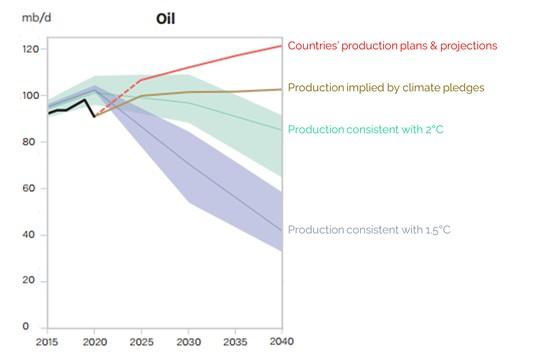
Global oil production would have to decline by 4% every year from 2020 to 2030 to be consistent with a 1.5°C pathway, according to the Production Gap Report. Yet current government plans and projections indicate an average 2% annual increase. This raises the question: what is the role for NOCs in a world of climate change adaptation and declining oil?

Graph showing oil production pathways.
Source: The Production Gap


Experts weigh-in

Executives from two NOCs, Colombia’s Ecopetrol and Uganda’s UNOC, joined our event to share their approaches to energy transition. Valérie Marcel of Chatham House, one of the world’s leading experts on NOCs, also contributed.

Juan Manuel Rojas shared Ecopetrol’s climate strategy, based on four pillars. While still focused on oil and gas, Ecopetrol aims to diversify its business into other sources of energy. The company bid for 51% of ISA, the state electricity grid operator. While many NOCs aim to reduce their direct operational emissions—so-called scopes 1 and 2—Ecopetrol’s energy transition strategy also targets scope 3, the indirect emissions that occur in its products’ value chain. The company aims to reduce emissions across scopes 1, 2 and 3 by 50% by 2050.

Asked to what extent these changes are driven by investors (88.5% of the company is state-owned and the rest is held by private investors), Rojas said often they are skeptical of the importance of an energy transition. From a financial perspective, many investors prefer their holdings to focus on one business area: if they want more electricity or more renewables, they would make those choices themselves. This creates a key tension in NOCs’ diversification efforts.

NOCs have two purposes: to deliver revenues to governments and to meet energy demand in their countries.

Peter Muliisa of UNOC shared Uganda’s challenges as new petroleum producer and a country with pressing socio-economic development needs. Like other countries in Africa, Uganda is highly vulnerable to climate change, and many officials and citizens see oil revenue as a means to help the country cope. However, with the global energy transition underway, UNOC has expressed a desire to develop a clear strategy on what the company needs to do to avoid exacerbating the effects of climate change on Uganda. Muliisa shared that, as a first step, early discussions are under way on how to restructure UNOC as an energy company rather than an oil company, ensuring Ugandans increasingly gain access to clean energy.

However, the government’s green light for construction of the East Africa Crude Oil Pipeline, which will carry Uganda’s oil to the Tanzanian coast, raises the question of potentially stranded assets. Muliisa explained that Ugandan officials hope to export oil through the pipeline before energy demand significantly shifts to renewables, but that the energy transition may affect longer-term production in the country.

Valérie Marcel, drawing also on the experience of these two companies, observed that NOCs have two purposes: to deliver revenues to governments and to meet energy demand in their countries (including often non-commercially). While clean energy is generally profitable, it does not create economic rents in the way oil does, which raises challenges for the countries’ economic strategies and government revenues. The second part of NOCs’ mandate could point to a role for NOCs in supplying renewable energy domestically. However, while NOCs can focus on reducing their costs or operational emissions, transitioning to renewable energy requires clear direction from their governments and consistent development strategies and climate policies, especially given the political consequences of lost economic rents.

Finally, Marcel said, the transition will affect different types of NOCs variously: high-cost versus low-cost, exporting versus importing, gas-focused versus oil-focused. Will it be easier for NOCs in new producing countries to transition than for established producers? In some ways yes, she said, as they are not yet locked into an oil development pathway. However, these producers often lack the financial resources needed for such a transition.

Our discussion series aims to increase learning between experts in the extractives governance and climate change fields, who have too often worked in silos. Our next event, on May 27, will explore whether NOCs should get directly involved in renewable energy investment and economic diversification.

Register now.

Patrick Heller is an advisor at NRGI and a senior visiting fellow at the Center for Law, Energy & the Environment, University of California, Berkeley. Greg Muttitt is senior policy advisor for energy supply at IISD.

Insight details

Webinar

Virtual Fireside Chat: How Two Continents Are Working Together to Improve The Health Of The African Great Lakes

Did you know that scientists across North America and Africa are putting their heads—and expertise—together on issues including algal blooms, climate change, invasive species, fragile fisheries, to name but a few, to improve the health of the African Great Lakes?

October 28, 2020 9:00 am - 10:00 am Central

(Open to public)

And this matters because the seven African Great Lakes contain around 25% of the world's fresh water and underpin the welfare and livelihoods of over 50 million people across 10 countries.

To hear their stories, and to learn more, we invite you to a virtual fireside chat on Wednesday, October 28, 2020, at 9:00 a.m. (CDT); 10:00 a.m. (EDT); 3:00 p.m. (CET); 4:00 p.m. (CAT); 5:00 p.m. (EAT).

You will discover:

  • Exactly what the African Great Lakes are, and why we need to collaborate in order to protect them
    • from Dr. Kevin Obiero, Chair, ACARE & Centre Director, Kenya Marine and Fisheries Research Institute
  • The critical role that women are playing
    • from Stephanie Smith, Strategic Advisor, IISD-ACARE
  • A case study of work already underway to protect the African Great Lakes
    • from Ms. Cecilia M. Githukia; Research Scientist; Kenya Marine and Fisheries Research Institute, Aquaculture Division


REGISTER HERE