Press release

Scientists from Two Continents to Work Together to Improve the Health of the African Great Lakes

The International Institute for Sustainable Development and the African Center for Aquatic Research and Education join forces to strengthen the global large-lakes scientific community.

September 15, 2020

ANN ARBOR, MI—World-class scientists and researchers from across North America and Africa will soon be putting their heads (and expertise) together to tackle some of the most pressing issues—algal blooms, climate change, invasive species, fragile fisheries, to name but a few—facing the African Great Lakes (AGL).

The AGL are highly valuable natural resources, renowned for their rich fisheries and "biodiversity hotspots." Consequently, they, and the ecosystem services they provide, underpin the welfare and livelihoods of over 50 million people across 10 countries.

This is all thanks to a new major partnership announced today between the International Institute for Sustainable Development (IISD) and the African Center for Aquatic Research and Education (ACARE). The IISD-ACARE collaboration will provide an opportunity for the world’s freshwater laboratory and networks on the African Great Lakes to come together and strengthen science on large freshwater resources and the countries in which they reside.

Despite the recognized importance of the AGL, these vital ecosystems and their livelihood support systems are threatened by the impact of human activity, such as overfishing and pollution at local, regional, and global scales.

To address some of the challenges on the African Great Lakes, IISD-ACARE, will combine the legal and policy expertise of IISD’s vast expert staff with ACARE’s African network of large-lakes experts in Burundi, the Democratic Republic of the Congo, Ethiopia, Kenya, Malawi, Mozambique, Rwanda, Tanzania, Uganda, and Zambia.

“We have recognized that no one organization, institution, or even country, can address the challenges that our global freshwater resources face. It is essential, therefore, to strengthen collaborations for leveraging the combined skills, assets, technologies and resources of public, private, and non-profit entities to deliver sustainable instruction, guidance, and research to protect these resources,” said Dr. Kevin Obiero, Chair, ACARE’s Board of Directors.

“Partnering with the International Institute for Sustainable Development will enhance our ability to strengthen science and positively affect policy and management on these critical resources and provide the experience of working with the global scientific community.”

Strengthening the IISD-ACARE approach is IISD’s Experimental Lakes Area (IISD-ELA)—the only place in the world where scientists can manipulate real lakes to understand what human activity does to fresh water. A series of 58 lakes and their watersheds in northwestern Ontario, Canada, IISD-ELA brings over 50 years of freshwater research like no other and policy analysis to inform decision making.

“ACARE has created a world-class, highly collaborative network of experts on each of the African Great Lakes,” said Dr. Matthew McCandless, Executive Director, IISD-ELA. “Resources from IISD and ACARE’s combined networks will allow us to accomplish three long-term goals: strengthening global and regional research partnerships; facilitating existing, and boosting new, transboundary and inter-jurisdictional lake advisory groups; and, strengthening the capacity of freshwater scientists through experiential education and public engagement.”

During its first year, the new partnership will boost the activities of six Advisory Groups that were created to address issues on each of the African Great Lakes (considered to be lakes Albert, Edward, Kivu, Malawi/Nyasa/Niassa, Tanganyika, Turkana, and Victoria). Members of each group are harmonizing priorities on the lakes to advance work on scientific inquiry, monitoring, climate change, and education and training, among other issues.


To learn more about the partnership and programs, click here.

For more information, or to arrange an interview, please contact:

Ted Lawrence, Executive Director, African Center for Aquatic Research and Education, [email protected]

Sumeep Bath, Communications Manager, IISD Experimental Lakes Area, [email protected]


About ACARE

The African Center for Aquatic Research and Education (ACARE) was established to help strengthen and harmonize science and information exchange through a highly collaborative network of freshwater experts.
Scientists from Two Continents Working Together to Improve the Health of the African Great Lakes

World-class scientists and researchers from across North America and Africa are putting their heads, and expertise, together to tackle some of the most pressing issues—algal blooms, climate change, invasive species, fragile fisheries, to name but a few—facing the African Great Lakes (AGL) today.

What are the African Great Lakes?

The AGL are highly valuable natural resources, renowned for their rich fisheries and "biodiversity hotspots." Consequently, they, and the ecosystem services they provide, underpin the welfare and livelihoods of over 50 million people across 10 countries. Despite the recognized importance of the AGL, these vital ecosystems and their livelihood support systems are threatened by the impact of human activity by numerous anthropogenic stressors at local, regional, and global scales.

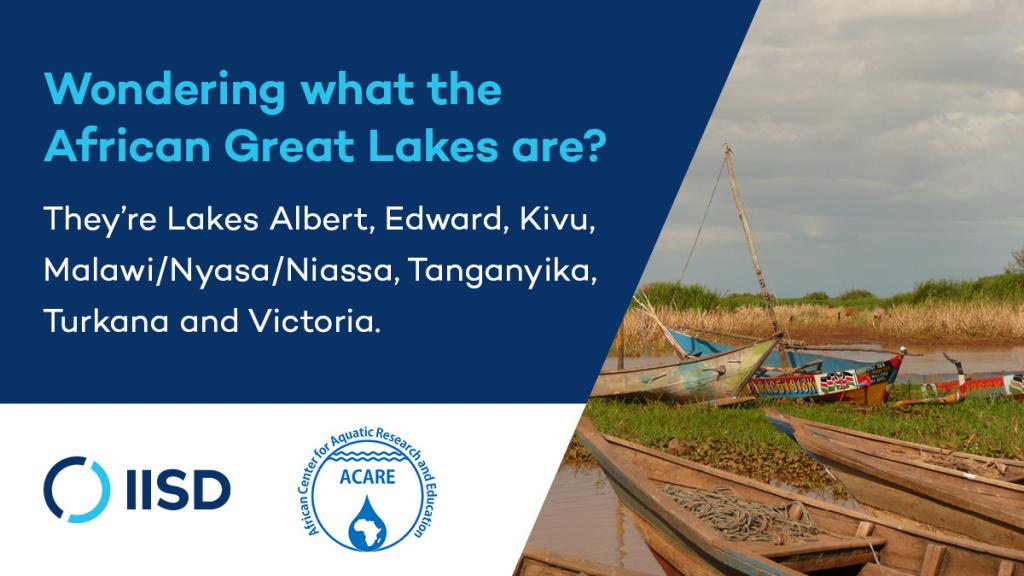
The African Great Lakes are lakes Albert, Edward, Kivu, Malawi/Nyasa/Niassa, Tanganyika, Turkana, and Victoria. You can learn more about the African Great Lakes here.

List of the African Great Lakes


How does this project work?

The partnership between the International Institute for Sustainable Development (IISD) and the African Center for Aquatic Research and Education (ACARE) provides an opportunity for the world’s freshwater laboratory and networks on the African Great Lakes to come together and strengthen science on large freshwater resources and the countries in which they reside.

IISD-ACARE combines the legal and policy expertise of IISD’s vast expert staff with ACARE’s newly created African network of large-lakes experts and scientists in Burundi, the Democratic Republic of the Congo, Ethiopia, Kenya, Malawi, Mozambique, Rwanda, Tanzania, Uganda, and Zambia.


What are we working on?

The partnership works to boost the activities of six advisory groups that were created to address specific issues on each of the African Great Lakes. Members of each group are harmonizing priorities on the lakes to advance work on scientific inquiry, monitoring, climate change, and education and training, among other issues.

An exciting flagship project of the initiative—the African Women in Science program—is a 10-month program designed by women, for women, to support the interests, needs, and goals of early-career scientists working on Africa’s freshwater issues. Dozens of women in science have now benefited from the program, including those who share their stories, and how the program has benefited their career, in the video below.


How can I learn more?

To learn more about the project, or to discuss research and collaboration opportunities, you can visit the ACARE website, or contact us directly.

Brief

Integrating Climate Adaptation in Water Catchment Planning in Uganda

This briefing note provides an overview of the results of a climate risk assessment of water resources in the Ruhezamyenda catchment in Uganda, sets out recommendations on how to incorporate the learning into planning and implementation at the catchment level, and describes lessons for the country’s National Adaptation Plan (NAP) process.

February 22, 2019

The Government of Uganda is assessing climate risks and supporting the integration of climate change adaptation into water resources management at the national, sectoral and district levels, including at the catchment level.

Water resources management needs to consider and address climate risks given the expected impacts of changing temperatures and rainfall patterns, and increasing extreme weather events.

This briefing note provides an overview of the results of a climate risk assessment of water resources in the Ruhezamyenda catchment in Uganda, sets out recommendations on how to incorporate the learning into planning and implementation at the catchment level, and describes lessons for the country’s National Adaptation Plan (NAP) process.

Participating experts

Brief details

Topic
Climate Change Adaptation
Region
Uganda
Project
NAP Global Network
Impact area
Climate
Publisher
IISD
Copyright
IISD, 2019
Report

Adaptive and Inclusive Watershed Management: Assessing policy and institutional support in Uganda

This report looks at how Uganda’s various institutions and policies incorporate climate change and gender considerations into planning, budgeting and monitoring in the water sector. 

July 19, 2018

This report explores existing institutional linkages between gender, water and climate change in Uganda.

Climate change is affecting water quantity and quality in Uganda and is an emerging major threat to health and well-being in the country. In addition to climate change impacts, a rapid population growth rate is anticipated to sharply increase demands for water and create challenges for the country in achieving its development goals.

At the same time women who are the main users of water for household and small-scale agriculture, have limited access to resources - land, credit, education, control over household income - needed to effectively adapt to climate change impacts and are affected the most when water catchments are degraded.

Responding to these challenges, Uganda is showing leadership in its policy and institutional systems in relation to climate and gender mainstreaming in water management. A number of policies and institutions consider gender equality and climate change in planning, budgeting and monitoring activities at various levels.

This research is the result of a desk review of policies, plans and strategies and interviews with key informants from Uganda’s water sector institutions and institutions working on issues of gender and climate change. These included officials involved in gender mainstreaming from the Ministry of Water and Environment, and experts involved at local, national and international level planning on these issues.

See our similar analysis on Kenya.

Report details

Brief

How Small Businesses Can Support Climate-Resilient Value Chains: Lessons from Uganda

This brief focuses on investments by domestic seed companies in quality seeds, including climate-resilient varieties, in developing countries and the climate risk management benefits for other actors along the value chain. It is designed for researchers and practitioners working on agricultural value chains, food security and climate resilience in developing countries. 

October 26, 2016

Small businesses in developing countries already support climate risk management (CRM) along value chains by developing new products and providing complementary services that reduce the negative impacts of climate change on their suppliers and clients.

Investments in quality seeds by domestic seed companies are one such example. However, more can be done to ensure that these new products and services support CRM along value chains.

Domestic seed companies should facilitate more informed decision making about seed choices; increase knowledge on the benefits of climate-resilient seeds; and strengthen systems for production, distribution and quality control of climate-resilient products and services through standards and partnerships.

Development practitioners can contribute by: strengthening the broader systems that support value chain development such as infrastructure, information and markets; capacity building of small businesses on the integration of climate risks into their decision making (including on the use of climate and weather information); and helping small businesses access climate finance.

Researchers should explore the role of small businesses as potential climate knowledge brokers. 

Insight

Private Sector Investments in Climate Risk Management in Uganda

This video highlights the role of private sector investments in climate resilient rice value chains in Uganda. It focuses on the experiences of Equator Seeds Limited and Centenary Bank in the Eastern and Northern regions of Uganda.

September 13, 2016

This video highlights the role of private sector investments in climate resilient rice value chains in Uganda. It focuses on the experiences of Equator Seeds Limited and Centenary Bank in the Eastern and Northern regions of Uganda.

IISD is implementing the project Private Sector Investment in a Changing Climate: Resilient rice value chain development in Uganda in collaboration with Uganda's Ministry of Finance, Planning and Economic Development and the Economic Policy Research Center (EPRC).

Report

Review of Current and Planned Adaptation Action in Uganda

This report summarizes the climate risks and vulnerable sectors in Uganda, providing an overview of its current and upcoming efforts to implement climate change adaptation policies and initiatives at the national and sub-national levels.

August 28, 2016

As described in this report, climate change challenges Uganda’s efforts to become a middle-income country by 2040.

Rising temperatures and variable rainfall patterns are expected to negatively affect important sources of livelihoods and economic activity, including commercial and subsistence crop production, livestock, forestry and fisheries. These changes are of particular concern for Uganda’s semi-arid northern and northeastern regions, as well as its “cattle corridor.” Concerted adaptation and poverty reduction efforts will be required in these areas to build resilience to climate change. The Government of Uganda has recognized climate change as a risk to its national development plans and responded by developing a National Climate Change Policy as well as a supporting political structure for its implementation. A process to develop a National Adaptation Plan is under way. The majority of international financial support for adaptation is concentrated in the agriculture and water sectors. There are also ongoing projects that aim to strengthen governance capacity, provide climate information and improve disaster risk management. Gaps remain in mainstreaming adaptation into sectoral strategies and plans, as well as decision-making at the district level. Greater investment could also be made to improve adaptive capacity in the fisheries, forestry, energy and health sectors. These issues are explored more fully in this report, which is one in a series of country reviews prepared by IISD in support of the Collaborative Adaptation Research Initiative in Africa and Asia (CARIAA).

Report details

Topic
Climate Change Adaptation
Region
Uganda
Project
Review of Adaptation Action in 15 Asian and African Countries
Impact area
Climate
Publisher
IDRC
Copyright
IDRC, 2016
Brief

Financial Services for Climate-Resilient Value Chains: The case of the Centenary Bank in Uganda

This briefing note presents the results of case study research on financial services and climate risk management along agricultural value chains, focusing on the Centenary Bank’s services to rice value chain actors in Eastern Uganda. 

July 12, 2016

This briefing note presents the results of case study research on financial services and climate risk management along agricultural value chains, focusing on the Centenary Bank’s services to rice value chain actors in Eastern Uganda.

The note discusses the need for climate risk management (CRM) along agricultural value chains, the role of financial services in enabling CRM by value chain actors, and practical options for financial service providers to realize their potential in this area. It also provides recommended areas of action for researchers and practitioners to move forward on financial services for CRM. 

Brief

Enabling Climate Risk Management Along Agricultural Value Chains: Insights from the rice value chain in Uganda

This briefing note proposes a framework of core functions for climate risk management (CRM) along agricultural value chains and highlights the role of service providers in supporting CRM efforts.

June 30, 2016

This briefing note proposes a framework of core functions for climate risk management (CRM) along agricultural value chains and highlights the role of service providers in supporting CRM efforts.

It draws on findings from research conducted by IISD and its partners on the rice value chain in Uganda, as well as existing resilience and adaptive capacity frameworks, applying these to the particular case of agricultural value chains. The brief primarily targets development agencies involved in agricultural value chain development in developing countries, providing insights into the necessary conditions to protect investments and enable CRM by actors all along the chain. It aims to support development actors in better targeting investments and designing interventions for value chains that are resilient to current and future climate hazards and changes.

Insight

Policy Solutions for Climate-Resilient Agricultural Value Chains

Climate change poses serious risks to agriculture in many developing countries. 

March 2, 2016

Climate change poses serious risks to agriculture in many developing countries.

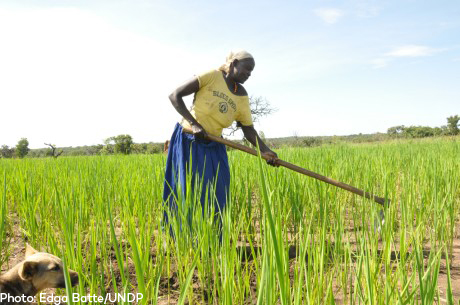
Grace Lawilu, a rice farmer in Northern Uganda. Photo: Edga Batte/UNDP

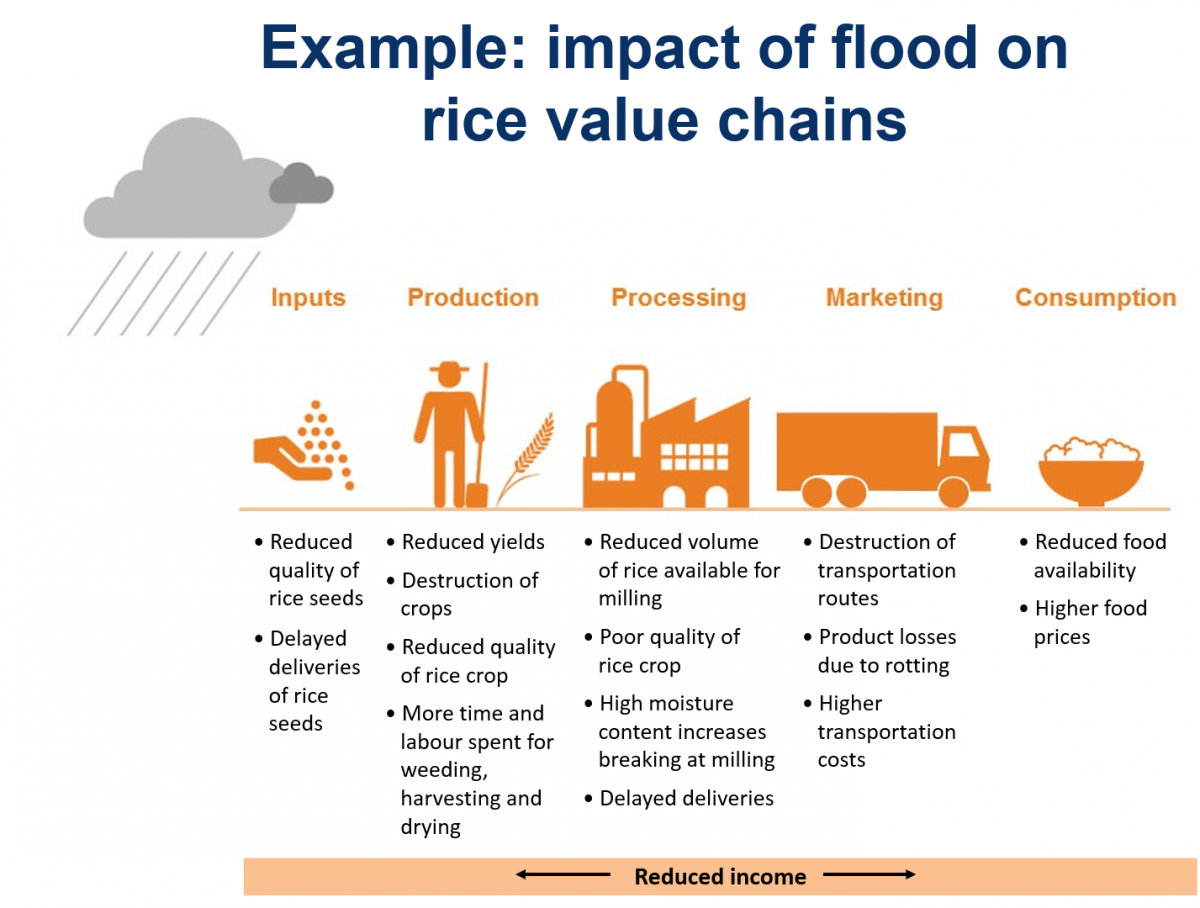
Unpredictable weather can be disastrous for agricultural production, but climate change's impacts extend beyond just production: they affect the entire agricultural value chain, from the quality of seeds through to how food is processed, transported and consumed.

To date, most of the action taken to address climate challenges in agriculture has focused on production alone. However, IISD believes that we need policies and approaches that recognize that climate risks affect the entire value chain.

We have been partnering with the Economic Policy Research Centre to look at what kinds of policies can best support climate risk management along agricultural value chains.

Rice Value Chains in Uganda

Our research focused on rice value chains in Uganda—a priority crop for the Government of Uganda—and found that private sector investment has a key role to play in supporting climate risk management along the value chains. Our question at a recent policy dialogue in Kampala was: What can government do to promote private sector investment in climate-resilient rice value chains?

Based on data since 1960, Uganda is experiencing more frequent and intense droughts and rising temperatures. Climate projections suggest that temperatures in Uganda will continue to rise, and this rise will be accompanied by a decrease in rainfall and more frequent extreme weather events. According to value chain actors, these droughts, floods and changing rainfall patterns are already affecting their rice-related activities, as shown in the diagram below.

PSI-climate-infographic

Recognizing the potential for increased risk and uncertainty, integrating climate change into policies and strategies related to agricultural value chain development will be critical for Uganda to achieve its development objectives, and the private sector is a key stakeholder in these processes.

Finance for Climate Risk Management

Financial services are a key enabling factor for climate risk management by actors involved in the Ugandan rice value chain. For example, credit allows them to diversify their income sources, while savings provide a buffer when shocks occur. The bank also benefits from their clients having stable incomes, as it means there is less chance of clients defaulting on loans because of climate hazards.

Our project involved a partnership with Centenary Bank, a Ugandan commercial bank that considers risk management a priority and part of its core business. Because of the mutual benefits for them and their clients, they want to build climate risk management into their banking practices by, for example, offering a better interest rate on loans for value chain actors who implement particular climate risk management activities.

Promoting Climate-Resilient Seeds

Like commercial banks, small and medium-sized enterprises (SMEs) are well placed to make the rice value chains better able to withstand climate hazards—for example, by promoting seeds that are tolerant to drought.

Our project also involved a partnership with Equator Seeds, a domestic seed company that invests in producing, processing and marketing climate-resilient seeds. For realizing the potential of climate-resilient seeds, Equator Seeds clients need to be further supported to make informed decisions about seed choice to improve climate risk management and business objectives.

Promoting these seeds' benefits in the market will take collaboration between a number of SMEs: agrodealers need to support access to the seeds; local radios need to inform farmers about the seeds’ benefits; and other actors in the value chain can develop demonstration plots near stock shops to show the seeds' advantages.

What Does It Mean for Policy?

For governments seeking to foster resilient agricultural sectors, climate risk management needs to be part of policies and strategies. For climate-resilient agricultural value chains in Uganda and other developing countries, our research suggests that the domestic private sector plays a vital role, and SMEs and commercial banks must be involved in the process of integrating climate change into relevant policies and strategies.

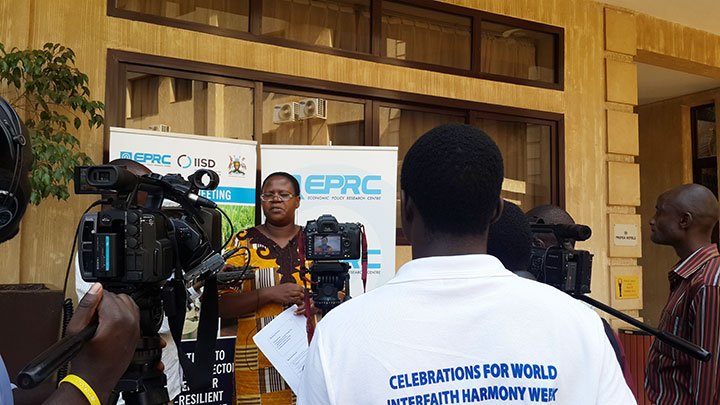
Annette Kuteesa from the Economic Policy Research Centre speaks to media about private-sector investment in climate-resilient value chains at an event in Kampala. Photo: Angie Dazé

Dr. Annette Kuteesa from the Economic Policy Research Centre speaks to media about private-sector investment in climate-resilient value chains . Photo: Angie Dazé

Read the event proceedings report for "Policy Options to Support Private Sector Investment for Climate-Resilient Agricultural Value Chains in Uganda"​ held February 4, 2016, in Kampala.