Press release

New EcoFilter System to Help Tackle Pollution in Johannesburg’s Jukskei River

The EcoFilter system will officially launch on April 23, 2026, at 10:00 a.m., at Victoria Yards—16 Viljoen St, Lorentzville, Johannesburg, South Africa. 

April 22, 2026

Johannesburg, April 22, 2026—A new nature-based EcoFilter system in Johannesburg is transforming how polluted urban rivers can be managed by combining water treatment, real-time data generation, and community benefits in a single solution.

Installed in the Upper Jukskei River catchment, the EcoFilter system is designed to address persistent and chronic pollution challenges, including microbial contamination, excess nutrients, organic waste, and heavy metals. The system aims to provide accurate monitoring data, demonstrating the potential of nature-based solutions to improve water quality, while supporting the irrigation of women-led community gardens at Victoria Yards, in Johannesburg’s inner city.

The system will officially launch on April 23, 2026, at 10:00 a.m., at Victoria Yards—16 Viljoen St, Lorentzville, Johannesburg. 
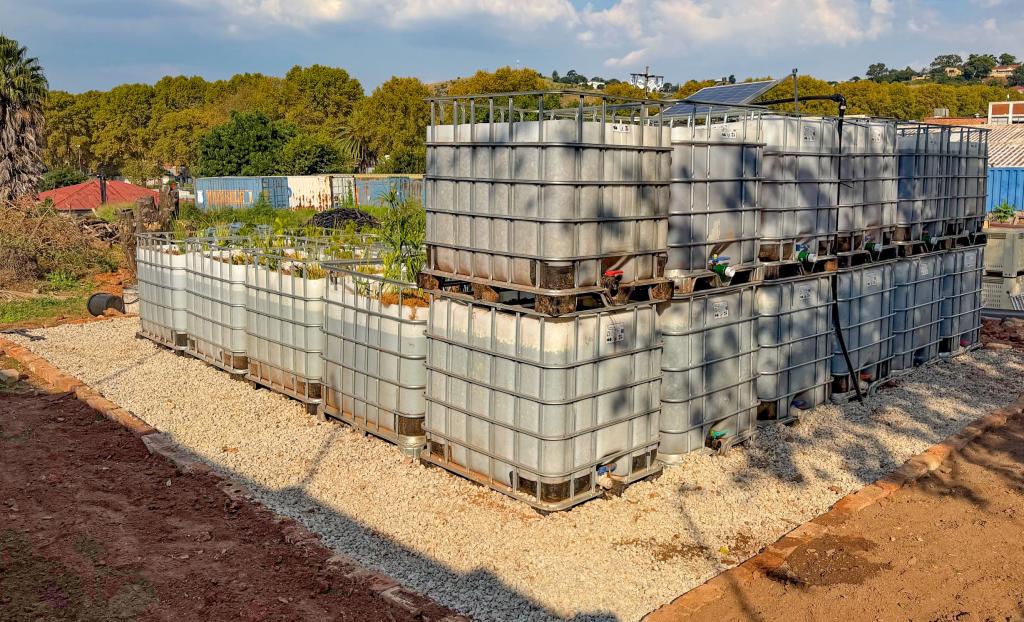
SUNCASA | Ecofilter System at Victoria Yards, Johannesburg
Installed in the Upper Jukskei River catchment, the EcoFilter system will address persistent and chronic pollution challenges. 

Designed to function like a natural wetland, the system enables continuous water-quality monitoring, generating long-term datasets to assess performance and inform evidence-based decision making. These data will help document progress, highlighting both successes and ongoing challenges in catchment management while supporting learning and replication in other parts of Johannesburg and across sub-Saharan Africa.

The EcoFilter consists of modular 1,000-litre units arranged in a series of ecological treatment cells that support both anaerobic and aerobic processes for water purification. While its primary function is to support biophysical monitoring of the Jukskei River and to evaluate its benefits for improving water quality, it also delivers direct benefits to the local community by supplying water for the irrigation of community gardens in the area. It will also provide a platform for education and research.
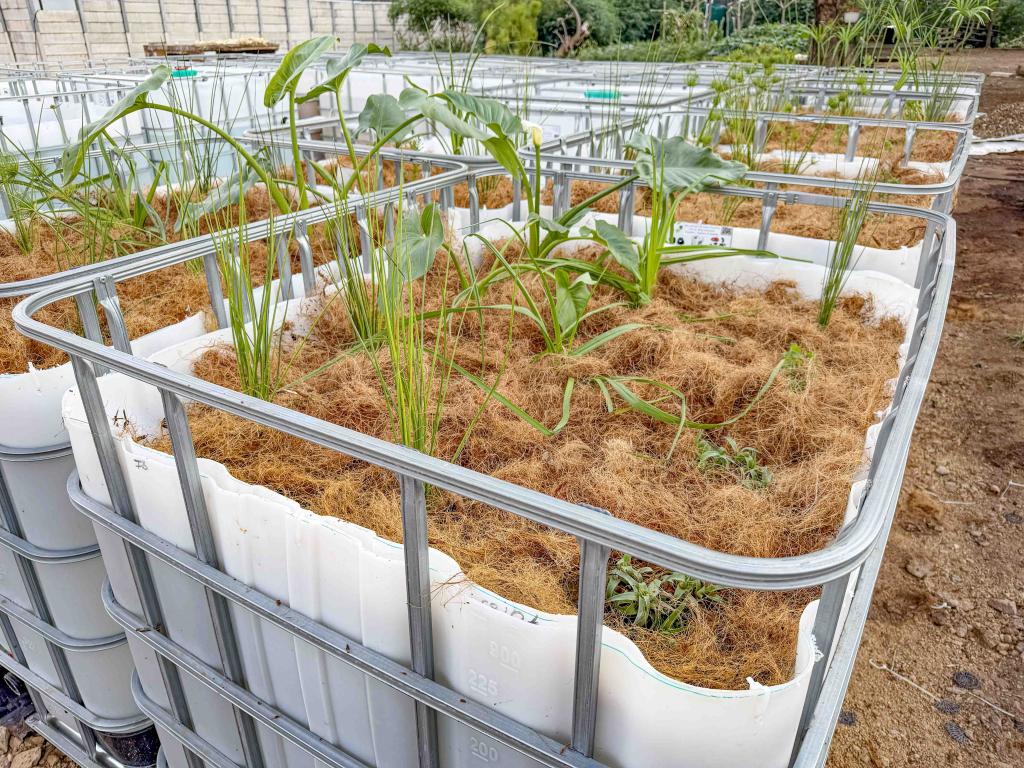
SUNCASA | Ecofilter System at Victoria Yards, Johannesburg
Designed to work like a natural wetland, the system enables continuous water-quality monitoring, generating long-term datasets to assess performance. 

The system was developed under the SUNCASA project (Scaling Urban Nature-based Solutions for Climate Adaptation in Sub-Saharan Africa) through a collaboration between Isidima Design and Development, Water For The Future, Zutari, and the University of Johannesburg. The system will be operated by trained staff from Water for the Future (WFTF).

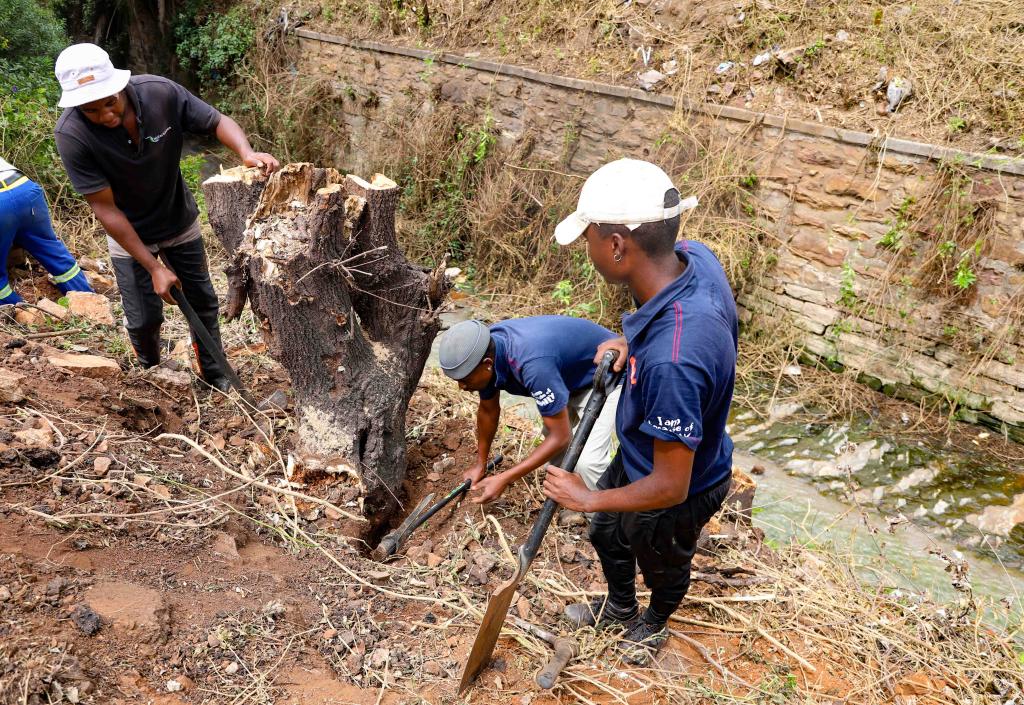
SUNCASA works with local partners and communities to restore the Upper Jukskei River catchment through nature-based solutions. Interventions include removing invasive species and riverine waste, restoring riparian buffer zones, and expanding green spaces by planting indigenous vegetation. These interventions aim to strengthen the climate resilience of more than 1 million residents, particularly in relation to flooding, erosion, and water pollution.
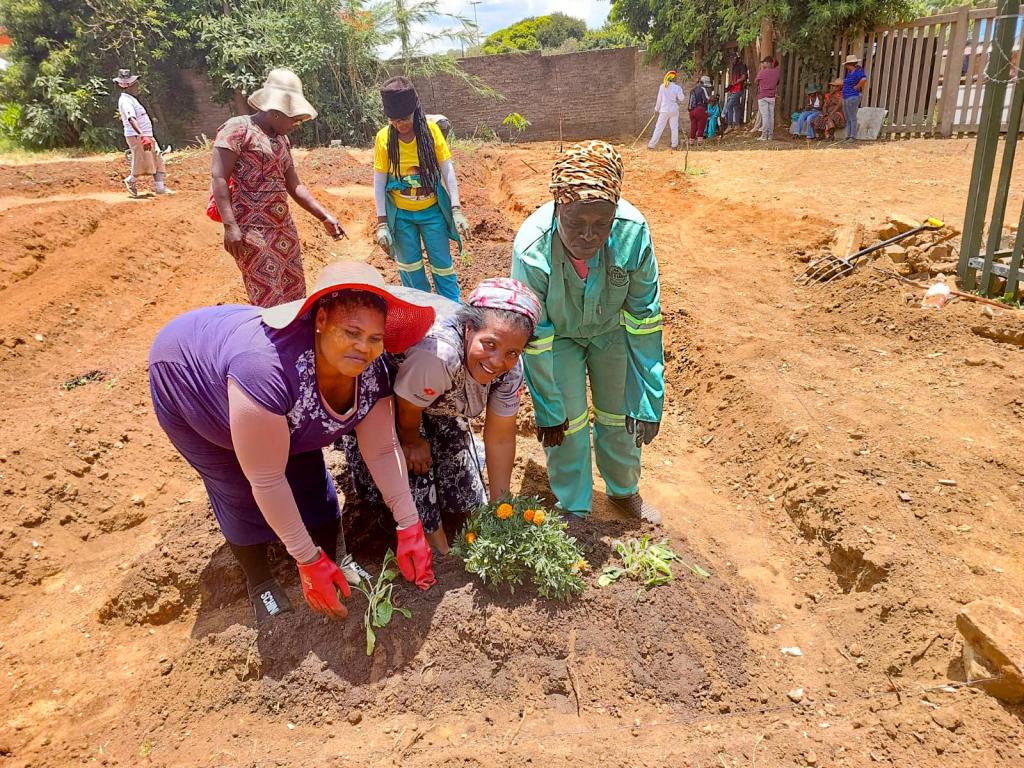
SUNCASA | Women-led community garden at Victoria Yards, Johannesburg.
Women-led community gardens at Victoria Yards will benefit from the water filtered by the EcoFilter system. 


QUOTES

“The City of Johannesburg is committed to transitioning from reactive pollution management to innovative, sustainable solutions that restore the health of our urban rivers. The implementation of the eco-filter system in the Upper Jukskei River catchment represents a significant step forward in integrating nature-based solutions with smart monitoring technologies.

This initiative not only improves water quality and strengthens our ability to respond to pollution in real time but also demonstrates how environmental interventions can deliver meaningful socio-economic benefits. By supporting community-led urban agriculture at Victoria Yards, the project contributes to food security, job creation, and inclusive development.

As a city, we see this as a scalable model for urban water resilience—one that aligns with our broader objectives of ecological restoration, climate adaptation, and sustainable service delivery.”— Daniel Masemola, Director of water management and biodiversity, City of Johannesburg

“The EcoFilter system offers an innovative approach to improving water quality while generating the data needed to support scaling, policy relevance, and learning across SUNCASA. While it is not designed to make Jukskei water potable or address catchment-wide pollution on its own, it provides a visible, monitored bioremediation node, reducing pollution loads and demonstrating the potential of integrated green infrastructure at scale. We believe this solution can be successfully replicated in other cities.”— Richard Grosshans, IISD and SUNCASA bioremediation lead

“Protecting communities and river ecosystems will require eco‑filters to move from pilots to city‑wide deployment as a core part of Johannesburg’s wastewater treatment strategy.”—Amanda Gcanga, WRI country lead for urban water resilience &  senior urban policy analyst, and SUNCASA lead in Johannesburg

“Since 2017, WFTF has spearheaded the vision for a rehabilitated Jukskei, securing the land and pioneering the scientific partnerships—such as our work with Dr. Simon Lorentz (SRK Consulting) and UJ-PEETS—that ultimately made this EcoFilter possible. This system is the next evolution of our nature-based strategy, through which WFTF has transformed brownfields into thriving, women-led urban agricultural sites. By integrating years of river monitoring with community-driven action, we aren’t just filtering water; we are proving that local leadership is the essential catalyst for urban resilience. We are proud that our foundational work, including the water monitoring station established with Dr. Lorentz and continuous testing by Dr. Kousar Hoorzook and her team at UJ-PEETS, created the blueprint for SUNCASA to assist in scaling these vital interventions. For WFTF, this project represents the culmination of a community’s commitment to reclaiming their environment and securing a climate-resilient future for the Upper Jukskei.”— Romy Strander, Water for the Future 

“We have been monitoring the Jukskei River discharge, water quality, and meteorology at Victoria Yards in collaboration with Water for the Future for the past 6 years to improve our knowledge of urban hydrology and provide information for remediation systems like the EcoFilter." — Dr Simon Lorentz, SRK Consulting (SA) 

“The Jukskei River is in a poor state—and we should not accept that. This project is a demonstration, a practical step to show what works so we can do more of it across the city. It also needs to create opportunities for the people living closest to these conditions. What we’re learning is that nature-based solutions and placemaking are one system—when you repair the environment, you restore the place. ”— David van Niekerk, CEO, Johannesburg Inner City Partnership


MEDIA CONTACTS

Cesar Henrique Arrais, Senior Communications Officer, IISD; [email protected]

Bridget van Oerle, Marketing Manager, JICP; [email protected]

Muskaan Malik, Communications Manager, Water For The Future; [email protected]
Success story

How Sub-Saharan African Cities Are Building Climate Resilience Through Nature-Based Solutions

By combining community engagement and multistakeholder governance, the SUNCASA project enters its third year of implementation with 2.4 million trees and shrubs planted over 3,500 hectares of restored land, and tangible impacts already enhancing urban communities’ resilience to climate change.

April 10, 2026

Restoring nature and strengthening community resilience to climate change are long-term efforts that often take years to produce tangible results. Entering its third year of implementation, the Scaling Urban Nature-based Solutions for Climate Adaptation in Sub-Saharan Africa Project (SUNCASA Project) has already delivered concrete benefits to communities, with 2.4 million trees and shrubs planted, restoring over 3,700 hectares of degraded watershed. This progress has been driven by inclusive, participatory community engagement and a unique multistakeholder partnership model.

Across Dire Dawa (Ethiopia), Kigali (Rwanda), and Johannesburg (South Africa), local organizations and communities scaled up nature-based solutions (NbS) that are both climate-focused and socially inclusive. These efforts have expanded agroforestry, reforestation, afforestation, riparian buffer zones, urban greening, and the removal of harmful alien invasive plants, achieving 85% of the project’s 3-year targets in the first 2 years of operations.

“It's exciting to see we're right in stride, which is not to say the teams haven't faced challenges. Those include erratic rainfall patterns that have made it very challenging to plant the seedlings, but the teams have figured out ways to overcome that,” said Lisa Beyer, World Resources Institute’s senior manager of Nature for Urban Resilience and SUNCASA’s NbS co-Lead.

“At the heart of SUNCASA is its unique partnership model, bringing together municipalities, interdisciplinary experts from academia, local organizations, women's groups, and our global team. Above all, however, it is the leadership and dedication of local communities that made these achievements possible in just 2 years—they are truly the engine of SUNCASA's success,” said IISD’s Samantha Boardley, SUNCASA’s interim project lead and NbS co-lead. 

According to Professor Kibebew Kibret, SUNCASA's deputy technical lead in Dire Dawa and NbS expert from Haramaya University, the project’s design takes a singular approach by enabling strong multistakeholder coordination to advance NbS implementation. “I could say that, for the first time, science and society truly connected. Science and society came together to create real impact—scientific institutions brought technical knowledge, skills, and best practices, while communities contributed with their experience, including Indigenous perspectives,” said Professor Kibret.

For Kibret, a key factor behind achieving results in just 2 years has been the deep engagement of local communities. “They have fully embraced the project,” he highlighted. “On top of that, there has been a strong commitment from all of us—we are genuinely excited about the changes SUNCASA is bringing. Bringing all of this together, even in the harsh environment of Dire Dawa, has led to truly remarkable outcomes.”

Dire Dawa: From drylands to green growth

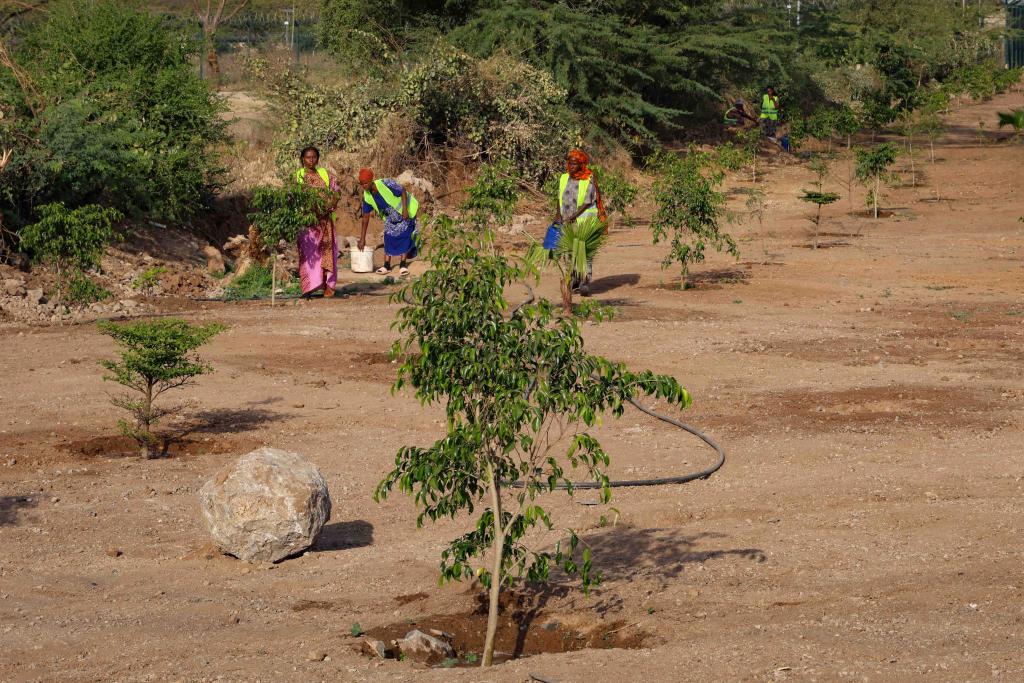
SUNCASA | Women working on a SUNCASA afforestation site in Dire Dawa, Ethiopia.
SUNCASA afforestation site in Dire Dawa, Ethiopia: 70% of the afforestation target achieved by the end of 2025 (Photo: Cesar Henriique Arrais/SUNCASA)

SUNCASA partners from 14 organizations had the opportunity to see first-hand how NbS are transforming both rural and urban areas of Dire Dawa. During their second Peer Learning Event, participants witnessed the commitment of local communities and the results achieved so far.

By December 31, 2025, a year before the project’s deadline, local partners and communities had reached 70% of the afforestation target, planting more than 500,000 trees and restoring 246 hectares of degraded land along the Dechatu River catchment. These efforts are helping address soil erosion, improve soil fertility, and enhance groundwater recharge.

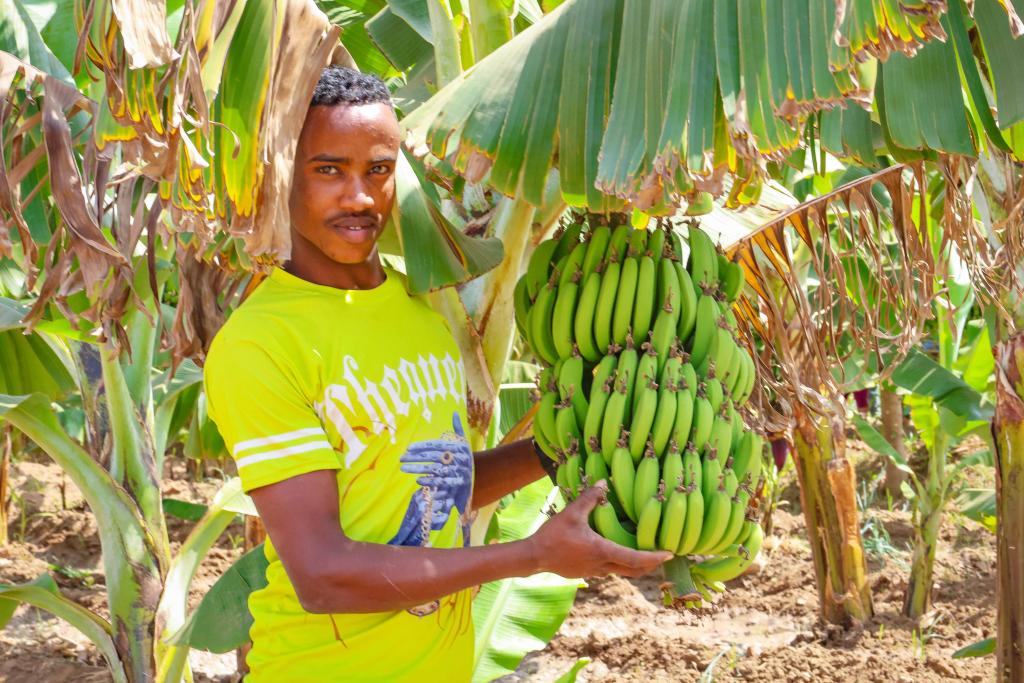
Partners in Dire Dawa have also achieved 93% of the project’s agroforestry target, with nearly 380,000 trees planted across 359 hectares, generating new livelihood opportunities while strengthening food security.

“With trees bearing fruit, people are selling those fruits in the market and making some additional cash. And then they start to save money and purchase livestock. This brings advantage to our local community, other than just increasing green coverage and improving groundwater recharge,” said Matiwos Belayhun, SUNCASA monitoring, evaluation and learning coordinator at the Hararghe Catholic Secretariat.

The project has also exceeded its buffer zone restoration target, with 95 hectares restored, while achieving an impressive 94% tree survival rate overall. 

“The major secret, I have to say, is getting along with communities. As long as you keep the interest of the community and try to be scientific, practical, and realistic—without exaggeration—I think the impact will come.”

Arbo Feyisa, Agroforestry and Forestry Specialist at Haramaya University.

“Within this short period of time, the life of the community has transformed significantly because of SUNCASA interventions,” remarked Professor Kibebew Kibret.

For the Mayor of Dire Dawa, Kedir Juhar, the impacts of SUNCASA’s NbS are already visible. “We see urban river catchments coming back to life. Green spaces are expanding, and communities are seeing tangible, practical change,” he said during the opening of the project’s second Peer Learning Event. “Every NbS we invest in our cities generates many benefits—saving lives, protecting infrastructure, and helping nature to come back.” 

SUNCASA | Community member showing a bunch of bananas grown in a SUNCASA agroforestry site
Community member showing a bunch of bananas grown in an agroforestry site: 93% of SUNCASA's goal reached in only two years. (Photo: Cesar Henrique Arrais/SUNCASA)

According to the SUNCASA integrated cost-benefit analysis for Dire Dawa, the city will save USD 1.35 million in flood-related repairs by 2050 as a result of the projects’ NbS investments. An additional USD 930,000 will be saved in avoided health expenses linked to floods, water pollution and urban heat. By working with local organizations and communities, SUNCASA is strengthening the climate resilience of 220,000 people in Dire Dawa. 

Kigali: Transforming Urban Landscapes and Livelihoods

SUNCASA’s NbS implementation in Kigali is advancing well, with significant progress observed in the restoration of 362 hectares of riparian buffer zone area (92% of the project target) and 1,654 hectares of agroforestry system established – surpassing the initiative's target by over 450 hectares. By the end of the project’s second year, local partners and organizations had planted 1,267,559 trees and buffer plants across critical micro-catchments of the Nyabarongo River.

“The community working with SUNCASA says that the project is transforming the reality of the community, not only the landscape, the nature itself, but the reality of the real people,” underscored Benigne MUGWANEZA, project manager with the Rwanda Young Water Professionals (RYWP). 

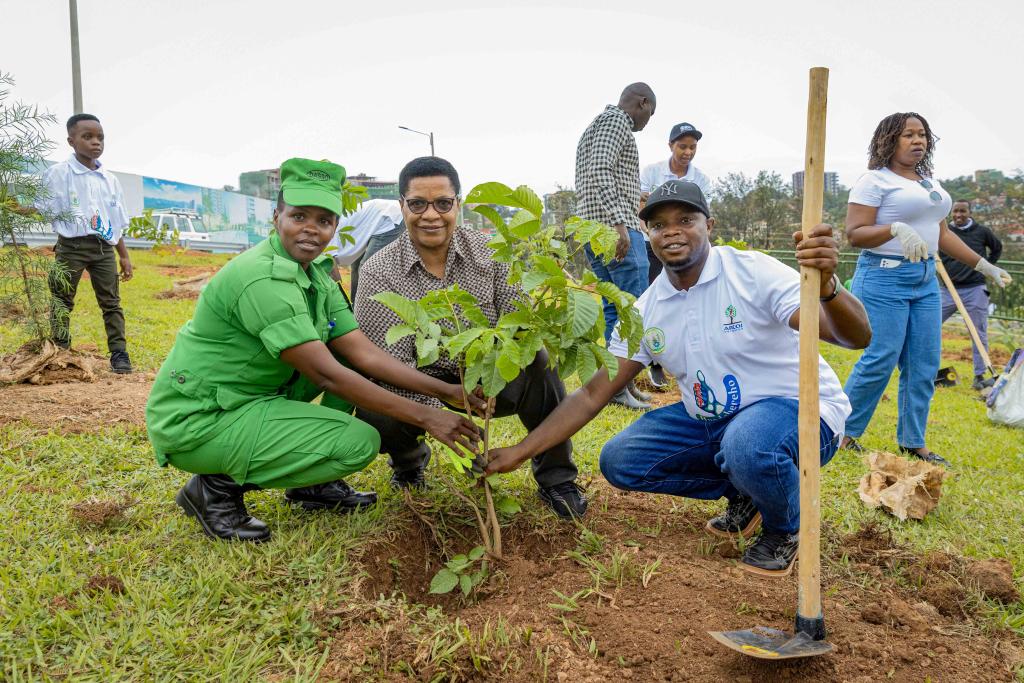
SUNCASA | Community planting trees during a Umuganda with SUNCASA support
Local partners planting trees during an Umuganda, a monthly community-led initiative to improve the city's green infrastructure. (Photo: William Bidibura/ARCOS Network)

According to Theodore NSHIMYUMUREMYI, Monitoring, Evaluation and Learning Officer with ARCOS Network,  SUNCASA is providing jobs to thousands of community members, particularly underrepresented groups such as women, youth, and people with disabilities.

For Mugwaneza, the impact extends beyond immediate job creation and landscape restoration. “The interactions SUNCASA has had with communities have brought people together and created opportunities to reconnect with nature and reflect on the role they can play in protecting it,” she explained.

She added that participation in NbS activities also builds valuable skills. “Every time someone participates in NbS work, they gain experience—strengthening their resume, expanding their knowledge, and building practical skills for working with nature.”

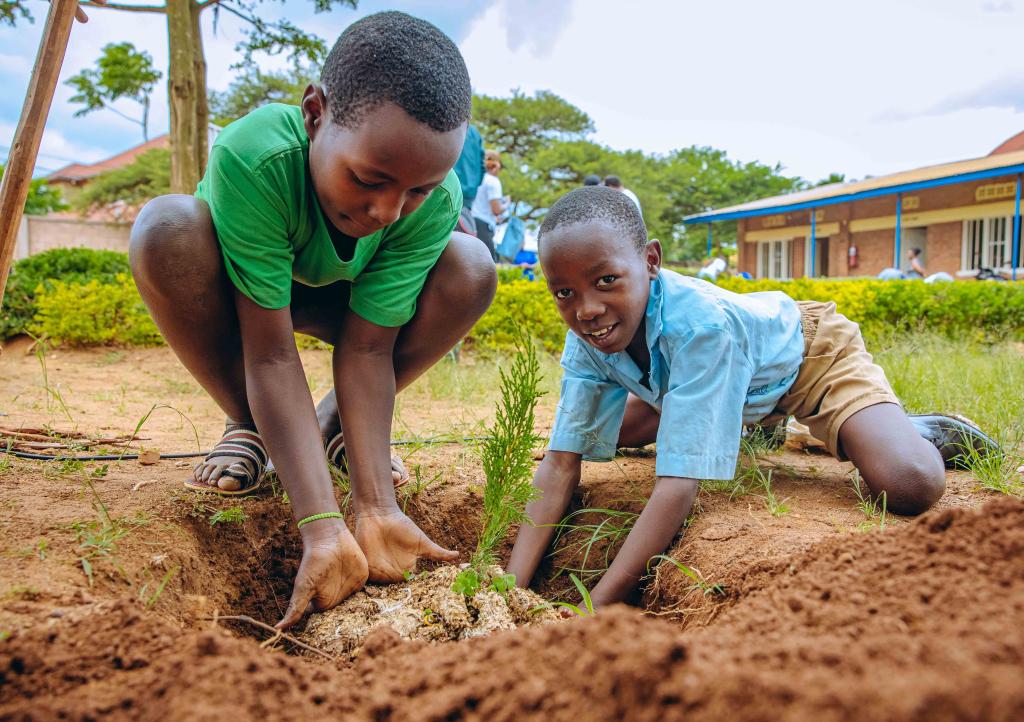
SUNCASA | Kids receive training on trees maintenance at a school in Kigali.
Kids across 17 schools in Kigali received training for maintaining the trees planted through SUNCASA (Photo: Rwanda Young Water Professionals).

SUNCASA’s integrated cost-benefit analysis for Kigali indicates savings of USD 12 million in avoided costs from flood-related infrastructure damages by 2050, along with USD 5.57 million in health savings. The study projects that investments will pay back in just seven years, with every USD 1 invested in NbS generating USD 2.09 in combined economic, social, and environmental benefits. Nearly 1 million residents are having their resilience strengthened through SUNCASA NbS.

Johannesburg: Fight Against Invasive Species 

Communities and partners in Johannesburg have shown strong commitment to implementing NbS, exceeding targets in tackling one of the city’s most pressing environmental challenges: the spread of alien invasive plants.

“Alien invasives are damaging the water quality and competing with our indigenous plant population, and this is destroying the ecosystem in the Jukskei River space,” explained Gugu Zondi, Integrated Catchment manager at Johannesburg City Parks and Zoos. “SUNCASA is one way of saying nature-based solutions work—we are letting nature work for itself.”

SUNCASA | Community removing invasive alien species next to Jukskei River in Johannesburg
Community members removing invasive alien plants next to the Jukskei River: Savings of USD 2.2 million as a result of SUNCASA's intervention. (Photo: Cesar Henrique Arrais/SUNCASA)

Restoring land in densely populated parts of Johannesburg, like Alexandra Township, is challenging due to limited land availability and competing demands. 

By the end of Year 2, 496 hectares of riparian corridor from the source of the Jukskei River in Victoria Yards to Alexandra Township and critical sections of Braamfontein Spruits had been revitalized through the removal of invasive alien species and strategic rehabilitation using native indigenous plants. This represents 99% of the projects’ three-year target in Johannesburg. Revitalization efforts included the removal of 532 tonnes of debris from the river—much of it later transformed into sculptures and litter traps, fostering the eco-tourism in the area.

SUNCASA has helped capacitate many people to obtain PCO (Pest Control Operator) licenses, enabling them to identify [invasive] species and apply effective clearing methods. “NbS projects should leave a legacy—not only in the landscape, but in the people they reach,” said Boaz Tsebe, rehabilitation and invasive species specialist with Water for the Future.
 

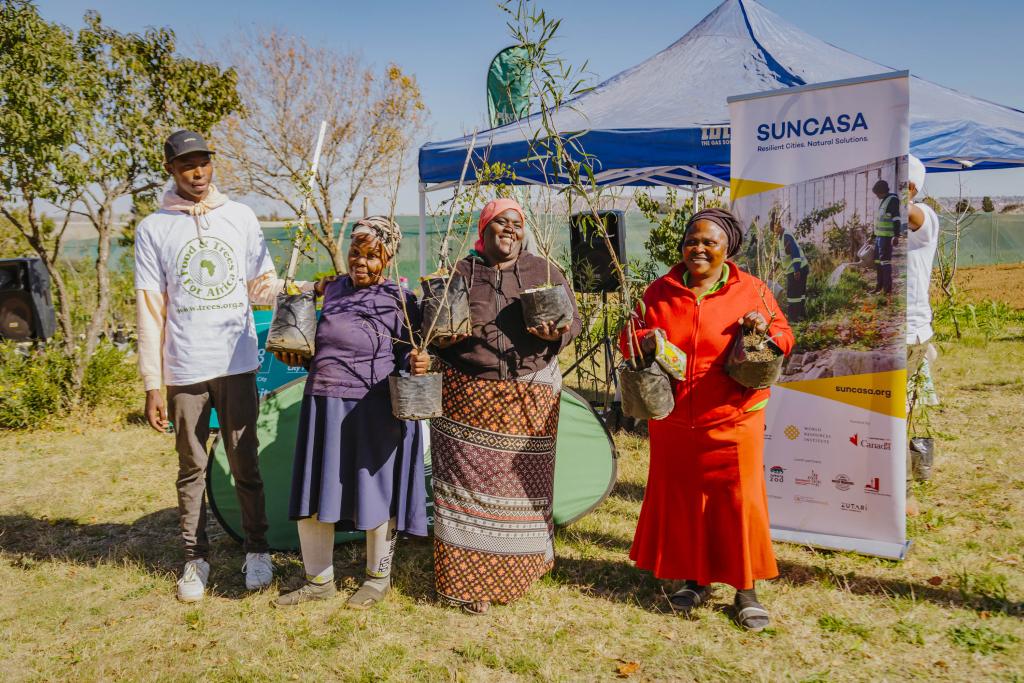
SUNCASA | Trees distribution in Johannesburg.
Community members receiving seedlings to plant in their homes: nearly 28,000 indigenous and fruit trees have been planted to replace invasive species. (Photo: Jenna Eckhart/SUNCASA)

To support ecosystem recovery, nearly 28,000 indigenous and fruit trees have been planted to replace invasive species. These efforts are strengthening biodiversity, reducing flood risks and soil erosion, and expanding green spaces for local communities. 

“The urban greening and the planting of indigenous trees interventions around our parks, around our catchment, around our residents, have given us the chance to introduce an educational element which will assist locals to support these initiatives, safeguard resources, and put them to greater use,” noted Semadi Manganye, co-founder and director of the Alexandra Water Warriors

The integrated cost-benefit analysis for Johannesburg demonstrates that for every USD 1 invested in SUNCASA NbS, it will return USD 3.06 in socio, economic and environmental benefits. By 2050, the city is expected to save USD 2.2 million in alien invasive species management, USD 3.5 million in avoided flood-related infrastructure repairs, and USD 4.83 million in health expenses related to water pollution, urban heat, and flooding. Around 1 million residents are benefitting from SUNCASA NbS.

Challenging Gender-biased Norms and Practices

Gender equality and social inclusion (GESI)are at the core of SUNCASA’s approach and achievements. Through its local GESI partners, the project has made significant progress in challenging discriminatory norms and practices, promoting the meaningful participation of women and underrepresented groups in climate change adaptation policymaking and NbS implementation, as well as encouraging more equitable divisions of labour and inclusive decision-making at the household level.

By the end of year two, three major workshops on gender-responsive NbS, biased barriers to NbS governance and policy making, and strengthening women’s participation in municipal NbS decision-making, had been delivered, reaching a total of 1,247 participants across the project cities.

These trainings, which focused on household power dynamics and gender-biased norms, yielded notable results. Post-training evaluations showed an 82% increase in participants’ knowledge of gender equality and social inclusion issues, significantly exceeding the project target of 50%.

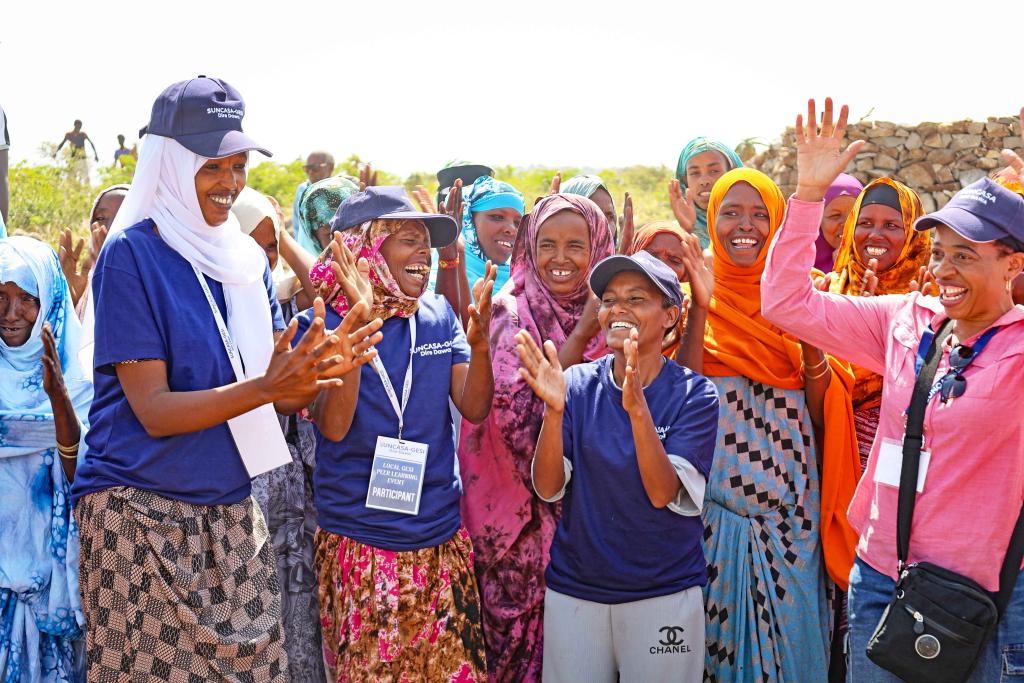
SUNCASA | GESI partners in Dire Dawa, Ethiopia, welcome SUNCASA teams during the project's 2nd Peer Learning Event.
Community members and GESI partners during the field trip of the project's 2nd Peer Learning Event: 82% increase in GESI workshop participants’ knowledge of gender equality and social inclusion issues. (Photo: Cesar Henrique Arrais/SUNCASA)

“We know very well that women are the ones who first face the consequences of climate change issues. In Rwanda, we have already had a leverage of women contributing, participating, always proactive. But what SUNCASA did was to emphasize that and make sure this would be impactful. Everyone—young people, women, children—are all working together on this, because it's not about one person, it is about a whole community,” said RYWP’s Benigne Mugwaneza.

Scaling Impact and Securing SUNCASA’s Legacy

As SUNCASA enters its third year of implementation—with several targets already achieved—local organizations and communities, as well as government stakeholders, are shifting their focus toward scaling up the impact of NbS and ensuring a lasting legacy in beneficiary communities.

“In 2026, I’m expecting that we, as governments, community organizations, and the private sector, all come together and sustain it. We try our best to work together and collaborate to make SUNCASA a long-term thing,” highlighted Gugu Zondi from Johannesburg City Parks and Zoos.

“My expectation is to finalize the remaining activities of SUNCASA, capitalize on the lessons learned, and work decisively to ensure the project’s sustainability,” said Professor Kibebew Kibret from Haramaya University.

Echoing this, Theodore Nshimyumuremyi from ARCOS Network emphasized: “By the end of this year, my expectation is to build on the success we have achieved through the SUNCASA project, working toward a lasting impact that won’t be forgotten.”

For WRI’s Lisa Beyer, the capacity built across the three cities will be key to sustaining long-term outcomes. “By the end of 2026, I think we’ll have built an amazing workforce—a GESI-responsive workforce that is balanced in terms of gender and inclusive of other marginalized groups,” she said.

“We are going to see not just restoration of land and the environment, but widespread changes for families and for those working and living in these communities. Local communities, governments, and leaders are all coming together to ensure that these projects truly support those most vulnerable, particularly in cities,” she added.

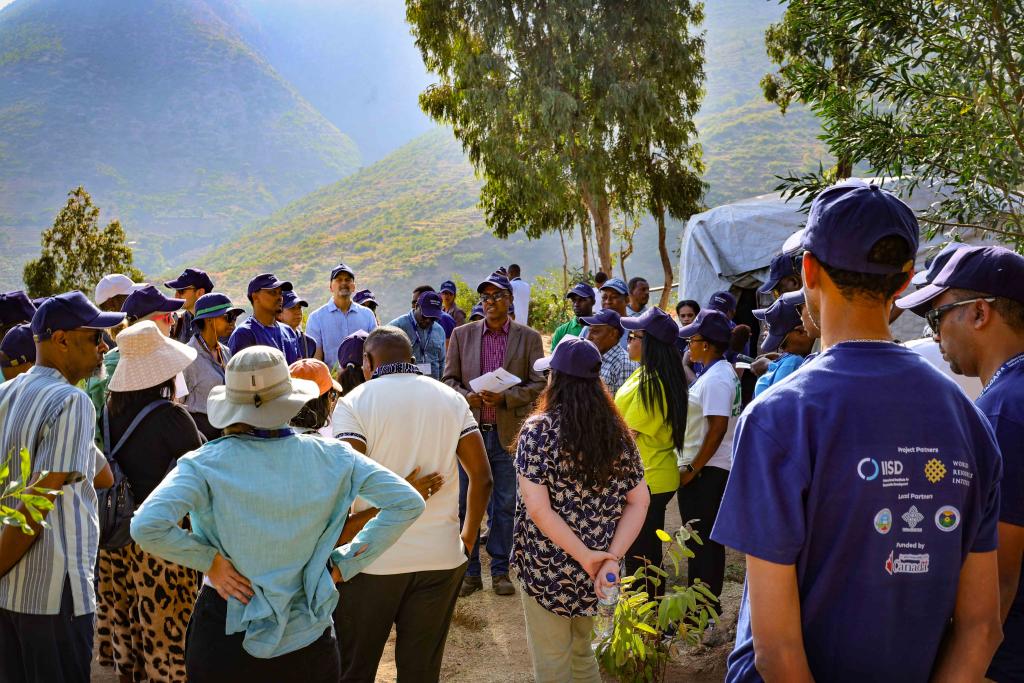
SUNCASA | SUNCASA teams gathered in a project site in Dire Dawa, Ethiopia.
SUNCASA's teams gathered at Adada Kebele, in Dire Dawa, during the latest peer learning event: Securing SUNCASA's legacy in the long run. (Photo: Cesar Henrique Arrais/SUNCASA)


For Marc Manyifika, WRI Africa's Country Lead for Urban Water Resilience, the true success of SUNCASA lies in what remains after it ends, like stronger communities, empowered local leaders, and NbS that continue to shape more resilient cities. "Our priority now is to scale what works and ensure it lasts, so that SUNCASA’s impact continues to benefit communities and ecosystems well into the future," he said. 
 

About SUNCASA

SUNCASA is a 3-year project enhancing resilience, gender equality, social inclusion, and biodiversity protection in urban communities in Ethiopia, Rwanda, and South Africa. It is delivered by the International Institute for Sustainable Development and the World Resources Institute, funded by the Government of Canada, and implemented with a wide range of local organizations and communities. 

SUNCASA restores urban watershed areas through gender-responsive NbS such as agroforestry, afforestation, reforestation, buffer zone creation, and urban tree planting, ultimately strengthening the resilience of 2.2 million people.

Success story

Gender Equality in Action: Childcare program enables mothers to work on nature-based solutions in Kigali

SUNCASA partners from AVEGA Agahozo have established a childcare program for children aged 9 to 35 months at tree nurseries to support women by providing care while parents work.

March 10, 2026

Beyond advancing climate change adaptation through nature-based solutions (NbS), the SUNCASA project (Scaling Urban Nature-based Solutions for Climate adaptation in Sub-Saharan Africa) is strongly committed to promoting gender equality and social inclusion across the implementing sites in Kigali (Rwanda), Dire Dawa (Ethiopia), and Johannesburg (South Africa). A core target is that at least 50% of all community members engaged with SUNCASA’s activities are women or individuals from underrepresented groups.

However, turning this commitment into concrete action—and ensuring women can meaningfully participate in NbS activities—remains challenging, particularly for women with young children. In Kigali, SUNCASA’s partner AVEGA Agahozo has responded by establishing a childcare program at tree nursery sites. This initiative allows women involved in NbS activities to bring their children aged 9 to 35 months to work, where they are cared for on-site through a rotation of parents and caregivers at dedicated childcare facilities.
 

SUNCASA | Childcare facility in the nursery in Kigali.
Parents, children, and caregivers in front of one of the childcare program facilities (Photo: Avega Agahozo)

Why a Childcare Program in NbS?

In Kigali, around 30 women are employed in Kabuye and Mageragere tree nurseries, and 17 of them have children eligible for these childcare services. Previously, while these women carried out NbS activities, many of these children stayed near the nurseries without adequate supervision. They were exposed to harsh weather, safety hazards such as pits and stagnant water, and other risks, while also sometimes damaging seedlings or engaging in unsafe play.

This situation placed a heavy burden on mothers, who had to balance their work with constant concern for their children’s safety. It also affected their ability to fully participate in NbS activities and maintain productivity.

“Before the childcare program began, I had to leave my child with neighbours,” said Mukeshimana Alice from the Kabuye tree nursery. “Sometimes they weren’t available, and I had no choice but to miss work. It was stressful and unpredictable.”

Establishing a childcare program close to the nurseries has had a dual impact on both children and recent mothers. It provides a safe, structured environment for children, while enabling women to participate in NbS activities with greater focus and efficiency—supporting both their productivity and their children’s well-being and development.

SUNCASA | Kids assisted by SUNCASA childcare program in Kigali, Rwanda. (Photo: Avega-Agahozo)
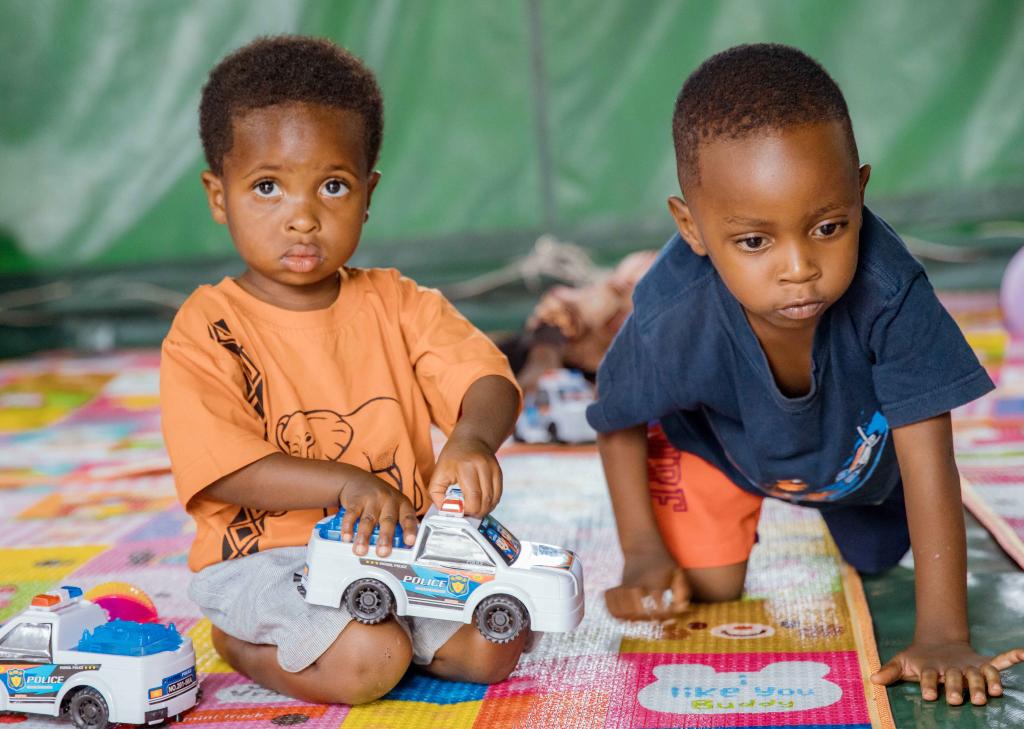
Children aged 9 to 35 months are assisted by the childcare program, a safe environment that enables recent mothers to work on NbS implementation. (Photo: AVEGA Agahozo) 

Capacity Building on Early Childhood Development

To support the rollout of the childcare program, parents working in seedling production joined a 3-day early childhood development (ECD) training. They learned about the basics of child development, positive parenting and responsive caregiving, and how childcare can support both children’s well-being and the productivity of workers involved in NbS. The training also included practical activities, such as making simple toys using locally available materials.

Local leaders and community health workers attended the training sessions, learning alongside parents to strengthen community-wide engagement. Following the training, each childcare site established a management committee to oversee daily operations, working closely with the site manager from the ARCOS Network, SUNCASA’s NbS partner in Kigali. Local leaders and nearby health facilities also provide ongoing support to ensure the program runs smoothly.

SUNCASA | First aid training at childcare facility in Kigali.
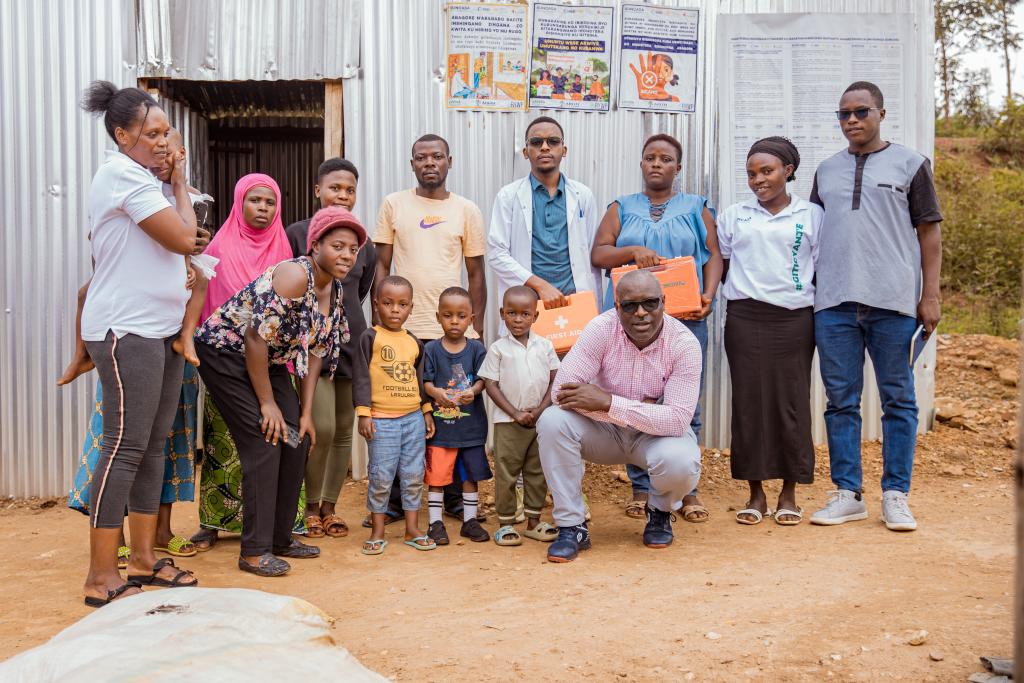
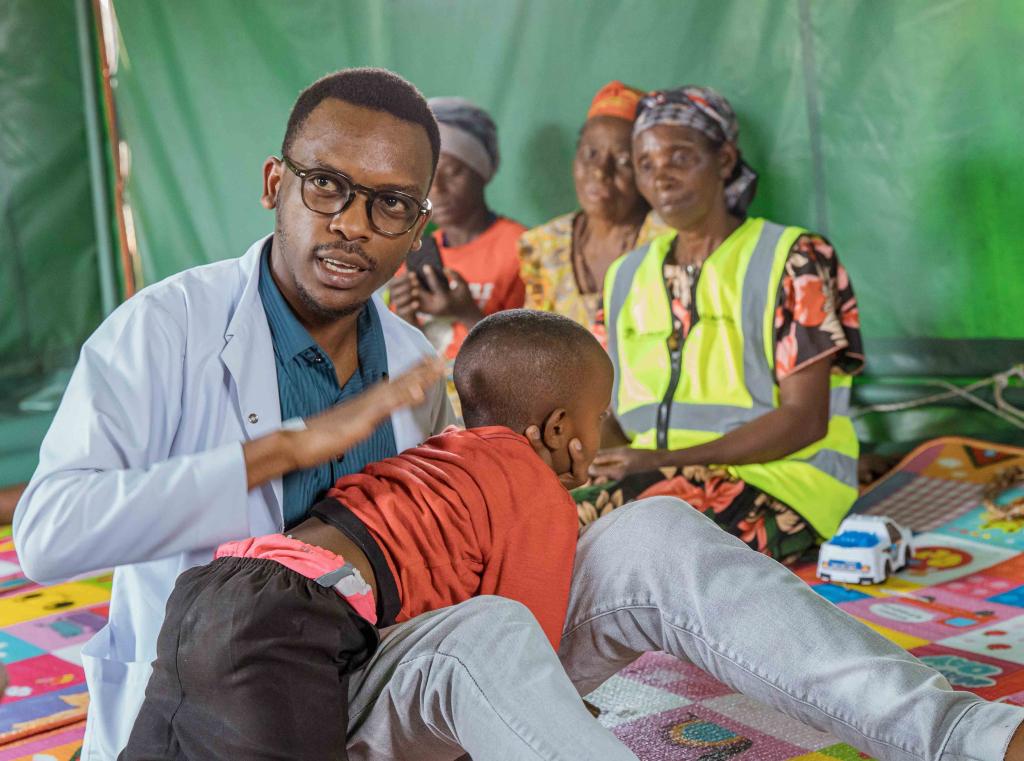
Parents and caregivers attended a 3-day training on early childhood development, which included a hands-on first aid session. (Photo: AVEGA Agahozo)

At the same time, parents began creating toys for their children using locally available materials, enriching their learning and play environments while fostering creativity and resourcefulness. Their ingenuity has led to soft balls made from recycled materials, toy vehicles crafted from plastic bottles, dolls sewn from old clothes, and jump ropes made from banana leaves.

What Has Been Done So Far

The AVEGA Agahozo team, in collaboration with the ARCOS Network, began implementing the childcare program by identifying 20 parents with children aged 9 to 35 months. The teams then assessed the materials and equipment needed—including tents for children, mobile toilets, hand-washing stations, hygiene supplies, milk, toys, first-aid kits, plastic mats, and other essentials.

To ensure safety, AVEGA assigned a medical staff member to deliver practical training on the proper use of first-aid kits at each tree nursery site for caregivers and personnel.

Before launching the program, AVEGA Agahozo and ARCOS teams held meetings with caregivers to assess readiness and establish a clear plan. A rotation schedule was created to define how parents and caregivers would take turns managing childcare activities. Each caregiver also signed a code of conduct outlining expectations, prohibited behaviours, and consequences for non-compliance, ensuring a safe and well-organized environment for the children.

Supporting Parents and Boosting Productivity 

The participants of the program underlined the importance of adequate nutrition and care provided for their children. Parents also anticipate improvements in their productivity, particularly mothers engaged in NbS activities. 

“Our productivity increases because mothers are no longer managing a double role—caring for children while participating in NbS activities. We are confident that our children are safe.”

Mother from the Magegagere tree nursery

Local sector officials noted that the initiative is the first of its kind in Kigali. “This is a new initiative that will improve the lives of our children by supporting their holistic development. Mageragere Sector is committed to collaborating effectively with the project to ensure the program achieves its objectives,” said Jean Pierre Maniragaba, the Mageragere Sector social affairs officer.

Webinar

Enabling Women Leaders in Building Equitable, Inclusive, and Climate-Resilient Cities

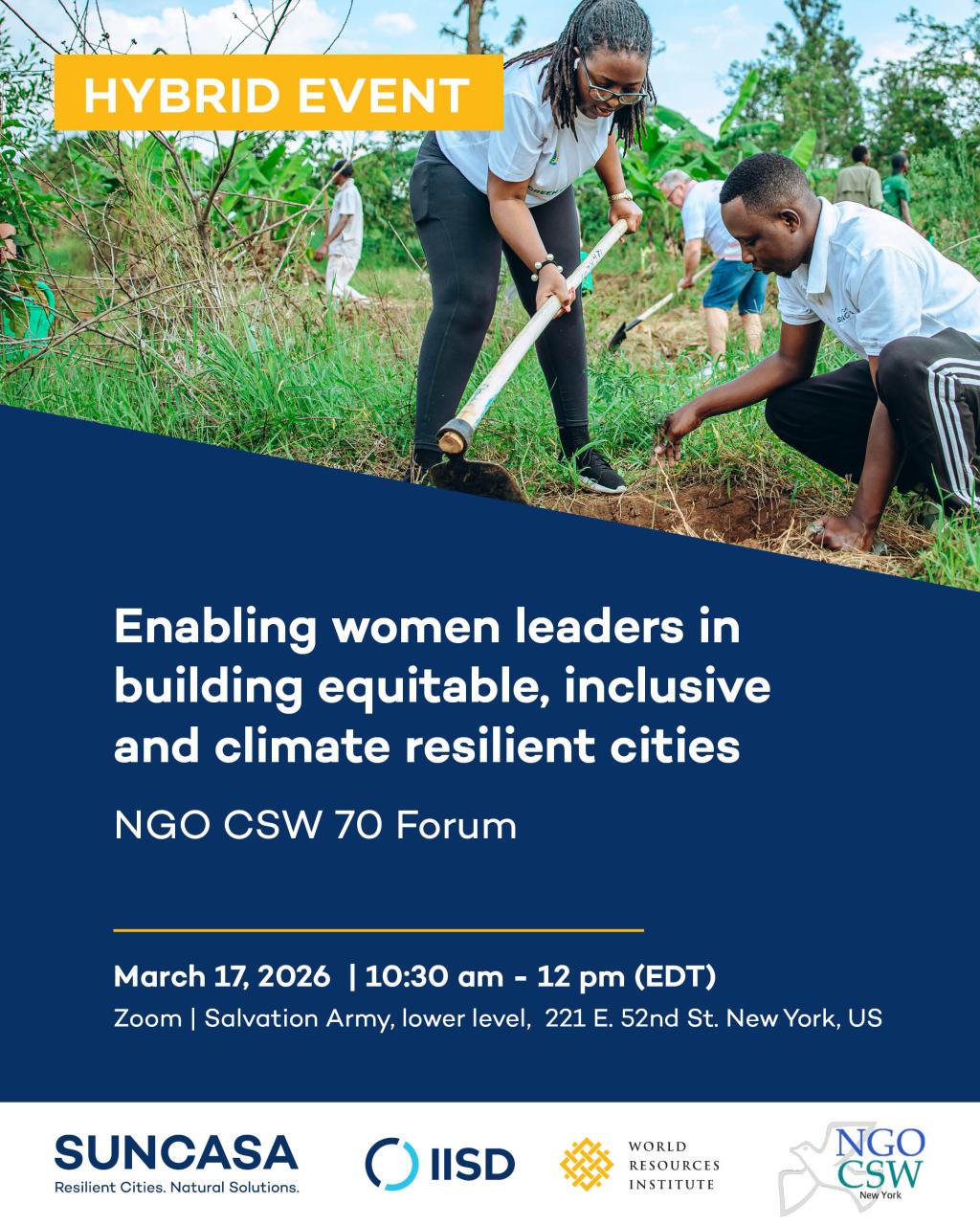
SUNCASA presented its gender equality and social inclusion (GESI) approach and achievements at the NGO CSW 70 Forum in New York.

March 17, 2026 10:30 am - 12:00 pm EDT

Salvation Army, lower level, 221 E. 52nd St., New York, NY 10022

(Open to public)

SUNCASA | NGO CSW 70 Forum


The NGO Committee on the Status of Women (NGO/CSW) Forum celebrates 70 years in 2026. Held annually in New York, the Forum connects global civil society, non-governmental organizations (NGOs), and feminists with the official United Nations Commission on the Status of Women (UN CSW) process.

This year, the Forum featured a dedicated hybrid session highlighting the gender equality and social inclusion (GESI) approach and outcomes of the Scaling Urban Nature-based Solutions for Climate Adaptation in Sub-Saharan Africa (SUNCASA) Project.


Two thirds of African cities face extreme climate risks, with impacts falling hardest on the most vulnerable urban populations. Nature-based solutions (NbS) offer a cost-effective pathway to reduce climate vulnerabilities while enhancing biodiversity. However, women and other underrepresented groups are often excluded from shaping these interventions, despite their central role in stewarding natural resources.

The SUNCASA project addresses this gap by advancing gender responsive, socially inclusive NbS in Dire Dawa (Ethiopia), Kigali (Rwanda), and Johannesburg (South Africa). By responding to locally identified priorities, SUNCASA strengthens community resilience to climate change impacts such as flash floods, landslides, urban heat, and water scarcity, through NbS approaches that intentionally integrate gender equality and social inclusion.

At NGO/CSW 70, SUNCASA’s GESI experts and local GESI partners highlighted the project’s commitment to elevating women’s leadership within urban NbS. Discussions explored the project’s climate adaptation and GESI strategy.

A panel featuring women’s rights and community organizations from all three cities further explored how they are shifting norms, designing inclusive practices, and expanding opportunities—from engaging women in restoration work in Dire Dawa, to establishing a GESI code of conduct and supportive services in Kigali, to facilitating community dialogues on gender norms and intersecting vulnerabilities in Johannesburg. Together, these stories underscore the essential role of gender-responsive NbS in building more equitable and climate-resilient urban futures. 

PANEL

Moderators:

  • Ayushi Trivedi, SUNCASA GESI Lead, World Resources Institute
  • Meghan Stromberg, SUNCASA Project Manager, World Resources Institute

Panellists:

  • Bertha Chiroro, GenderCC, Johannesburg, South Africa
  • Hadas Temesegen, Harraghe Catholic Secretariat, Dire Dawa, Ethiopia
  • Theogene Niyirora, Avega Agahozo, Kigali, Rwanda


ABOUT SUNCASA

SUNCASA is a 3-year project enhancing resilience, gender equality, social inclusion, and biodiversity protection in urban communities in Ethiopia, Rwanda, and South Africa. It is delivered by the International Institute for Sustainable Development and the World Resources Institute, funded by the Government of Canada, and implemented with a wide range of local organizations and communities.

SUNCASA restores urban watershed areas through gender-responsive NbS such as agroforestry, afforestation, reforestation, buffer zone creation, and urban tree planting, ultimately strengthening the resilience of 2.2 million people.


Press release

Dire Dawa Shares Key Lessons for Nature-Based Solutions in Arid Landscapes

DIRE DAWA, ETHIOPIA – As the SUNCASA Project (Scaling Urban Nature-based Solutions for Climate Adaptation in sub-Saharan Africa) enters its third and final year, over 2 million trees and shrubs have already been planted, and the revitalization of degraded urban river catchments is increasingly becoming a reality for local communities in Ethiopia, Rwanda, and South Africa. Looking ahead to 2026, more than 60 partners will come together in Dire Dawa, Ethiopia, to share best practices, reflect on lessons learned, take stock of achievements and challenges, and align priorities for the final phase of implementation.

January 22, 2026

In the second year of the SUNCASA project, which focuses on harnessing the power of nature to adapt to the impacts of climate change, Dire Dawa, Ethiopia's second-largest city, has already exceeded its agroforestry targets, restoring or revitalizing more than 550 ha of land and planting more than 500,000 trees. The 95 ha of established buffer zones have also exceeded targets. Experts who led or supported these efforts will be sharing critical lessons learned from the experience at an upcoming event.

A peer-learning event taking place from January 26 to 29 will convene partners from Dire Dawa, as well as Kigali (Rwanda) and Johannesburg (South Africa), to discuss early impacts in each city, long-term sustainability goals, and the potential scalability of SUNCASA’s nature-based solutions (NbS), which also promote gender equality and social inclusion. Hosted at the Sharaf Hotel, the event will open at 9:30 a.m. local time with remarks from the Mayor of Dire Dawa, H.E. Kedir Juhar. 

As the host city, Dire Dawa will spotlight the unique challenges of implementing NbS in arid and semi-arid environments. Experts from the Dire Dawa Administration, Haramaya University, and the Hararghe Catholic Secretariat will lead discussions on local constraints—including limited water availability, extreme temperatures, and shallow soils—while also highlighting the strategies that have enabled the city to achieve a remarkable 94% tree survival rate under these conditions. 

Held under the theme “Green Cities for People and Planet,” the event will focus on the opportunities and challenges shaping the project’s final year. Through peer-led discussions, technical exchanges, and site visits, partners will reflect on progress to date and explore how SUNCASA’s results, partnerships, and lessons can be leveraged to secure sustained political, institutional, and financial support for NbS as an inclusive pathway to climate-resilient urban development. 

“The Dire Dawa peer learning event marks an important step forward for SUNCASA, creating space not only to exchange best practices, but to reflect critically on what it takes to deliver lasting impact,” said Samantha Boardley, SUNCASA’s interim project lead and one of the event’s lead facilitators. 

Partners from Kigali will showcase strong progress in agroforestry, with 1,344 ha planted, alongside the expansion of urban green spaces where more than 108,000 trees had been planted by September 20, 2025. Discussions will also highlight innovative community engagement approaches, including student-led climate action initiatives, nursery creation to support parents involved in project activities, and measures to prevent gender-based violence at project sites.

From Johannesburg, participants will share lessons from efforts to restore the Jukskei River, including the removal of alien invasive species and debris, the establishment of buffer zones, and extensive urban tree planting. Partners will also present successful public engagement initiatives, such as environmental education activities in Alexandra Township and the “Art and Litter Traps” project, which transforms waste collected from the river into sculptures and functional litter traps to address flooding and pollution.

Launched in 2024, SUNCASA is a 3-year initiative developed and implemented in close collaboration with local organizations. Delivered by the International Institute for Sustainable Development (IISD) and the World Resources Institute (WRI) with funding from the Government of Canada, the project aims to strengthen climate resilience, promote gender equality and social inclusion, and protect biodiversity in urban communities across Ethiopia, Rwanda, and South Africa. An estimated 2.2 million people living in climate-vulnerable areas benefit from this project.


SUNCASA’s 2nd Peer Learning Event

Where: Sharaf Hotel, 3000 Sabyian Sabian sub city, Dire Dawa, Ethiopia

Available Interviews
H.E. Kedir Juhar, Mayor of Dire Dawa City Administration
Benjamin Simmons, SUNCASA Senior Director, IISD
Aklilu Fikresilassie, Director, Thriving Resilient Cities, WRI Africa
Project scientists and community leads are available for interviews. (Please request in advance to confirm availability.)


Quotes

“In a short period of time, SUNCASA has shown what is possible when communities are placed at the centre of restoration. By restoring Dire Dawa's land, creating green jobs for women and youth, and protecting our natural habitats with more than a million trees, we are proving that environmental action can also strengthen livelihoods and well-being. We're pleased to share these lessons with other cities as part of this exchange.” 

—H.E. Kedir Juhar, Mayor of Dire Dawa

“What we are learning in Dire Dawa through SUNCASA has relevance far beyond this city. The results show how coordinated and locally led implementation of nature-based solutions (NbS) can be scaled and replicated in other climate-vulnerable cities facing water and land degradation challenges. Peer learning is an important platform for sharing these insights and more."

—Aklilu Fikresilassie, Regional Director for Cities, WRI Africa

“The Dire Dawa peer-learning event marks an important step forward for SUNCASA, creating space not only to exchange best practices, but to reflect critically on what it takes to deliver lasting impact. Anchored in site visits, peer-led dialogue, and technical exchange around the themes of (Re)Connect, Explore, Engage, and Sustain, the event will elevate city experiences while turning attention to sustainability and scale. At a time when expectations for nature-based solutions are higher than ever, this event invites partners to build trust, challenge norms, and explore how SUNCASA’s results, relationships, and lessons can extend far beyond the life of the project.”

—Samantha Boardley, IISD’s climate adaptation, PLE2 Lead Facilitator.


SUNCASA NbS Implementation Progress

  • Afforestation - 244/565 ha (43%)  
  • Agroforestry – 1,703/1,585 ha (107%)  
  • Buffer zones – 660/974 ha (70%)  
  • Reforestation – 68/494 ha (11%)  
  • Urban greening – 134,669/ 143,500 trees planted (94%)  
  • Invasive plant removal – 120/117.3 hectares cleared (78%)  

    *As of September 30, 2025  
     

For media inquiries, please contact:

Cesar Henrique Arrais, Senior Communications Officer, IISD, [email protected]
Eden Takele, Engagement & Communications Specialist, WRI Africa, [email protected] 
Report

A Sustainable Asset Valuation Assessment of Nature-Based Solutions in Kigali, Rwanda

This Sustainable Asset Valuation (SAVi) assessment evaluates the economic, social, and environmental performance of nature-based solutions (NbS) implemented under the SUNCASA project. Using an integrated cost–benefit analysis, the report quantifies how afforestation, reforestation, agroforestry, riparian restoration, and urban tree planting can reduce flood damage, improve public health, create jobs, and strengthen Kigali’s long-term climate resilience. 

January 20, 2026

Key Findings

  • NbS significantly reduce flood damage to Kigali’s urban infrastructure, protecting flood-prone areas and delivering the largest share of total benefits.

  • Over a 25-year period, investing in NbS generates more than USD 2 in benefits for every USD 1 invested, with a benefit–cost ratio of 2.09 and a payback period of 7 years, making NbS a cost-effective option for urban climate adaptation.

  • By restoring ecosystems, SUNCASA NbS are projected to increase carbon storage by 30% (approximately 600,000 tons of carbon dioxide) compared to current levels. These interventions also deliver substantial public health savings by improving water quality and moderating extreme urban heat.

Kigali faces mounting climate and development pressures. Rapid population growth and urban expansion have increased surface runoff and soil erosion, while climate change is intensifying extreme rainfall and heat. Floods and landslides regularly damage homes, roads, and public infrastructure, as well as degrade water quality and pose serious health risks, particularly in informal and low-income settlements. 

To address these challenges, the Scaling Urban Nature-based Solutions for Climate Adaptation in Sub-Saharan Africa (SUNCASA) project supports gender-responsive NbS across Kigali. Implemented by the International Institute for Sustainable Development and the World Resources Institute, the project promotes afforestation and reforestation, agroforestry, riparian buffer restoration, and urban tree planting to restore ecosystems and reduce climate risks. The interventions target 2,500 hectares across six critical micro-catchments, including the planting of 85,000 urban trees. 

The Nature-Based Infrastructure Global Resource Centre conducted a SAVi assessment to evaluate the full life-cycle costs and benefits of these NbS interventions compared to a business-as-usual scenario. 

The results show that investing in nature delivers strong and resilient returns. Over a 25-year period, NbS in Kigali generate benefits more than twice their costs, with a payback period of just 7 years. The largest gains come from avoided flood damage to urban infrastructure, protecting hundreds of buildings and critical road networks, alongside major reductions in health costs linked to water pollution, floods, and heat.

Insight

How Biophysical Monitoring Turns Data into Action for Nature-Based Solutions

Nature-based solutions expert, Stanley Chasia, explains how rigorous and consistent data analysis helps to refine strategies, attract investment, and strengthen natural infrastructure in Sub-Saharan Africa.

December 2, 2025

In 2024, water quality monitoring in Johannesburg’s Jukskei catchment, South Africa, revealed a remarkable seasonal pattern: concentrations of sulphate, phosphate, nitrate, ammonia, and chemical oxygen demand surged during the dry winter months of June to August—when rainfall was at its lowest—before dropping sharply in the rainy season from October to April. Collected by the City of Johannesburg’s Department of Environment, Infrastructure and Services, these findings show how rainfall-driven surface runoff dilutes pollutants in wetter months, while drier conditions concentrate them, offering crucial insight into the catchment’s ecological health. 

Such findings, obtained through rigorous analysis of biophysical data, informed the design and selection of nature-based solutions (NbS) interventions—for example, the use of biofilters to reduce water pollution—within the SUNCASA project (Scaling Urban Nature-Based Solutions for Climate Adaptation in Sub-Saharan Africa) in Johannesburg. This highlights how biophysical monitoring is essential not only for tracking environmental indicators such as water quality, soil erosion, and flood risk—and making adjustments as needed—but also for scaling up successful interventions.

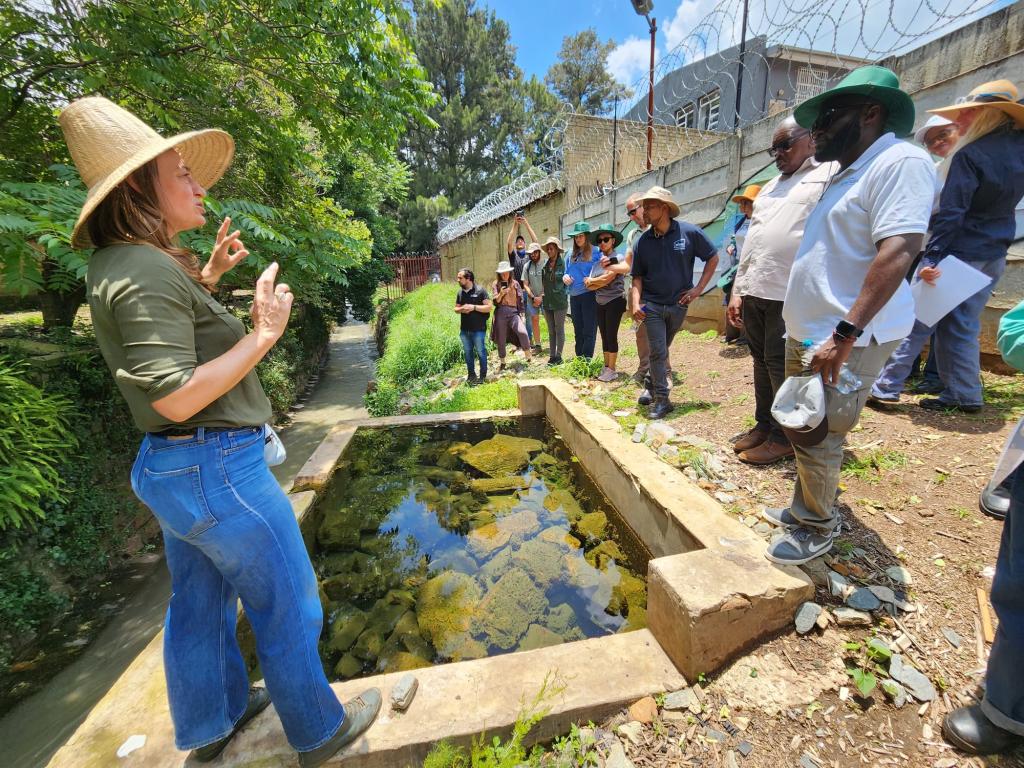
SUNCASA | SUNCASA Water team and Johannesburg partners during a biophysical monitoring training.
SUNCASA biophysical monitoring training in Johannesburg: water quality monitoring of the Jukskei River at Victoria Yards. (Photo: Joey Simoes | SUNCASA)

Operating in water catchments of three major African cities—besides Johannesburg, Dire Dawa, Ethiopia, and Kigali, Rwanda—SUNCASA project teams are planting millions of trees and removing invasive species to demonstrate how NbS interventions can deliver better returns on investment than traditional grey infrastructure for cities trying to reduce flash flood damage and tackle other growing climate change impacts. Rigorous, consistent data—like how effectively the project’s biofilters impact Johannesburg’s seasonal swings in pollutants—provides the feedback needed to refine SUNCASA’s strategies, attract investment, win over policymakers, and strengthen natural infrastructure that delivers multiple social, environmental, and economic benefits. 

The Challenge: Building robust monitoring systems

Effective biophysical monitoring depends on more than occasional data collection. It requires extensive investments in reliable monitoring systems anchored on robust data collection regimes and sound institutional frameworks. Tools, models, and technical skills are also needed to transform monitoring data into actionable insights and knowledge products which can support decision-making and adaptive management. 

In many catchments across Sub-Saharan Africa, regular monitoring is limited or absent, with existing datasets often incomplete or inconsistent due to gaps, duplication, or errors. Contributing factors include aging equipment, insufficient funding, limited technical capacity, and even vandalism of monitoring stations. The need for expertise in artificial intelligence, big data analytics, and data science is growing, as these fields are key to turning complex, multi-source datasets into guidance for community leaders.

SUNCASA’s biophysical monitoring approach 

In SUNCASA, the impact of NbS interventions is tracked by monitoring key biophysical parameters, such as improvement in water quality and quantity, changes in soil condition and health, soil erosion control, and reduction in floods and landslides vulnerability. Both baseline and monitoring data are gathered from primary and secondary sources, such as regular government monitoring data (e.g., water quality), global data repositories from remote sensing missions, and data portals hosting various biophysical datasets for each of the three SUNCASA project cities. This information—often in different formats, scales, and resolutions—must be standardized and processed before integrating it with on-the-ground measurements. 

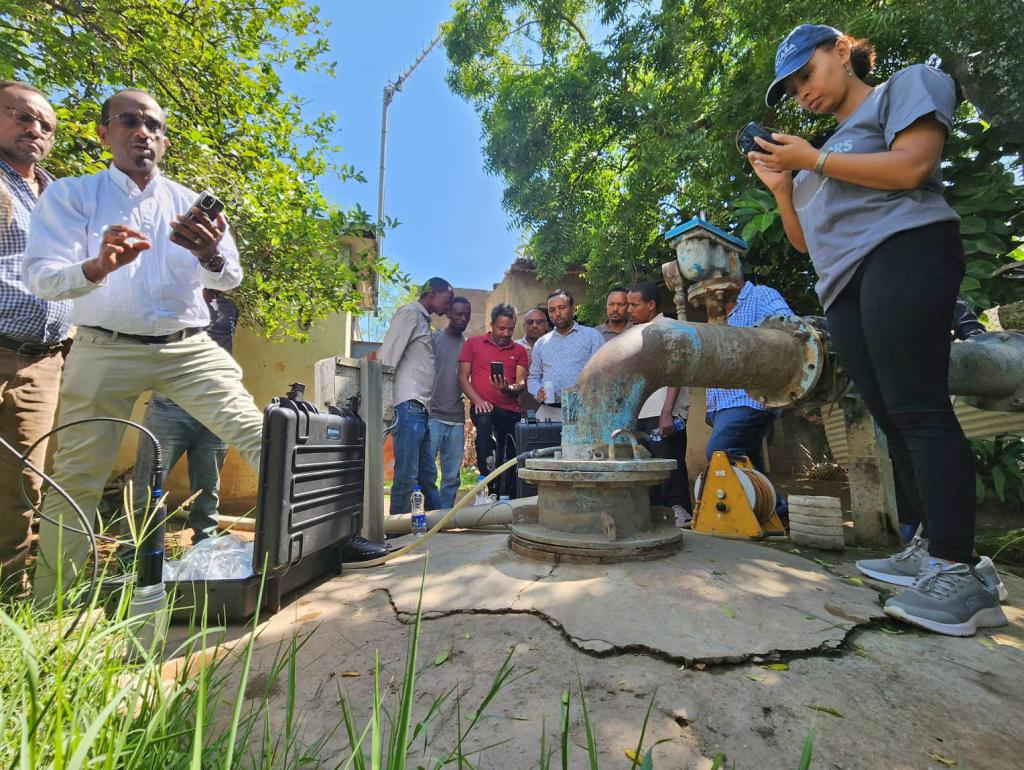
SUNCASA | Partners in Dire Dawa, Ethiopia, measuring water quality.
SUNCASA NbS specialists in Dire Dawa conducting biophysical monitoring.

The situation varies between project sites:

  • Dire Dawa – No recent formal monitoring has taken place, limiting effective resource management.
  • Kigali – The Rwanda Water Board operates automatic hydrometric stations, but other biophysical data is typically gathered only when needed.
  • Johannesburg – The city conducts monthly water quality sampling in its catchment but requires additional hydrometric stations to enhance flood modelling and improve understanding of the hydrological regime.

Catchments with limited to no monitoring data can use secondary data from Earth observation missions to monitor environmental changes at NbS implementation sites. In SUNCASA, satellite imagery, such as Sentinel-2 from the European Space Agency, and Landsat from the United States Geological Survey, is being used in Dire Dawa to monitor soil moisture anomalies between precipitation, surface and sub-surface soil moisture content. Vegetation indices (e.g., Normalized Difference Vegetation Index and Enhanced Vegetation Index) are also being used to track vegetation health and changes in our NbS intervention sites. 

Across all three cities, NbS scenarios are being applied with hydrological and hydraulic models to understand how different interventions improve flood mitigation outcomes. In the Dechatu (Dire Dawa) and Jukskei (Johannesburg) catchments, SUNCASA is also supporting monitoring efforts by investing in additional monitoring equipment to carry out regular data collection. 

For instance, in Dire Dawa, a multiparameter probe and contact gauge meter have been acquired to monitor groundwater quality and water level, respectively, to measure long-term impacts of NbS activities on groundwater recharge. In Johannesburg, the installation of additional stream gauge equipment in the Jukskei River will provide data to improve hydrological model performance and calibration, which in turn improves the accuracy of flood models and gives earlier warnings to the city.

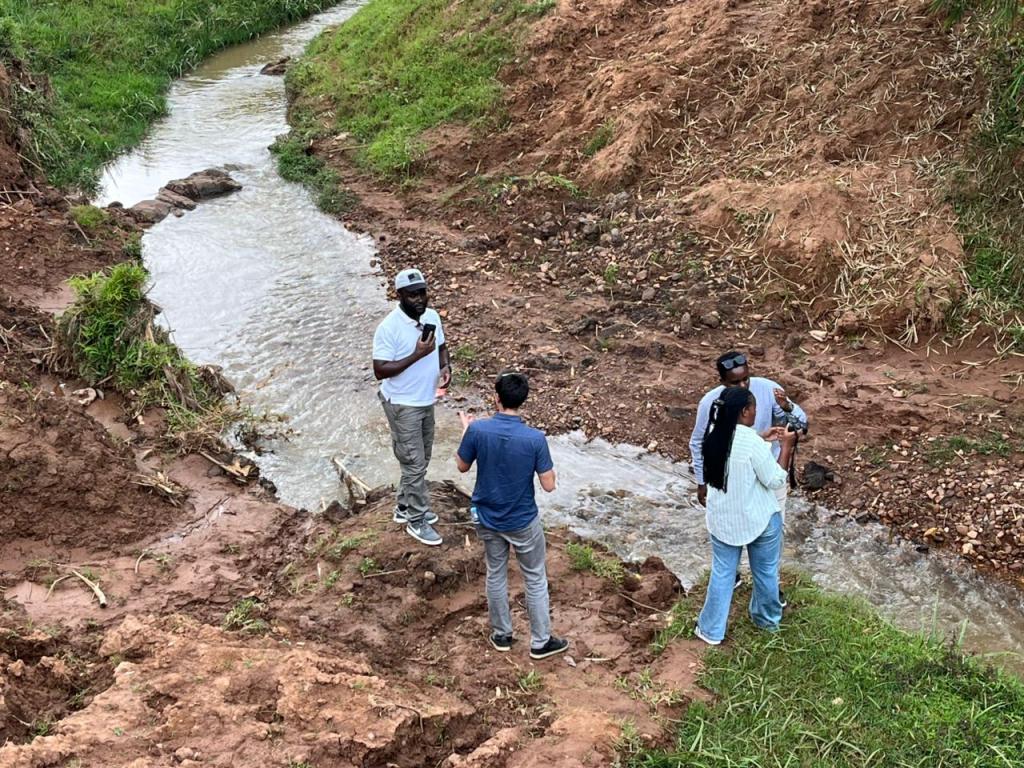
SUNCASA | Biophysical monitoring training in Kigali
SUNCASA Water team and local partners by the Nyabarongo River during the biophysical monitoring training in Kigali. (Photo: Tigist Bekele | SUNCASA)

Engaging communities in monitoring

In Sub-Saharan Africa, where an average of around 60% of people depend on agriculture, soil erosion and drought threaten food security by removing nutrient-rich topsoil. Natural ecosystems, such as trees and wetlands, help protect soil, purify air, and recharge groundwater—services that benefit communities directly.

SUNCASA is exploring participatory monitoring tools to involve community members in NbS biophysical monitoring. The growing availability of smartphones and mobile apps creates opportunities for citizen science, allowing community members to contribute to data collection, observation, and analysis—helping safeguard the ecosystems they depend on.

Insight

“I Am a Tree”: Students Bring Climate Awareness to Life Through Creativity

In Kigali, Rwanda, youth are taking the lead in climate action by turning dance, drama, poetry, visual arts, and even fashion into powerful platforms for environmental awareness. Gender and Climate Resilience Specialist Rita Nishimwe has witnessed the impact of these young people firsthand and shares what goes into a “youth movement.”

October 2, 2025

What if the next generation of environmental changemakers weren’t in a conference room, but in a vibrant space of learning and creativity? In Kigali, Rwanda’s capital city, this vision is becoming a reality through a powerful youth-led initiative called Green City Clubs. Blending environmental education with art, community, and leadership, these school-based clubs are not only planting trees—they’re sowing the seeds of long-term change among students, parents, teachers, and surrounding communities.

Led by the Rwanda Young Water Professionals (RYWP) and supported by the Scaling Urban Nature-based Solutions for Climate Adaptation in Sub-Saharan Africa (SUNCASA) Project, the Green City Clubs are an inclusive, community-driven initiative already established in 17 schools across Kicukiro, Gasabo, and Nyarugenge Districts.  

On June 5, 2025, to mark World Environmental Day, Green City Clubs organized a student-powered environmental competition hosted at Group Scolaire Kimisagara School in Nyarugenge district. The event wasn’t just a celebration; it was a revelation.

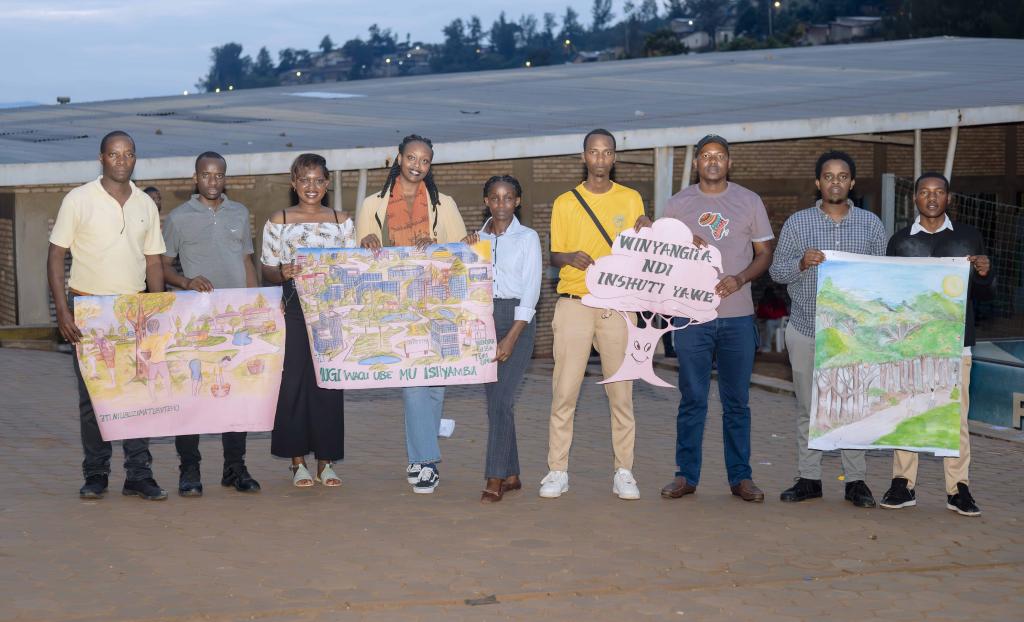
Under the theme “Igiti Cyanjye, Nkurane Na Cyo,” or “My tree, I grow with it,” students turned ideas into action. Over 100 students from ages 9 to 18 participated in an array of creative activities: a poetry slam, singing contests, a dancing contest, drawing exhibitions, and a nature-themed fashion show. The school yard buzzed with music, energy, and connection. 

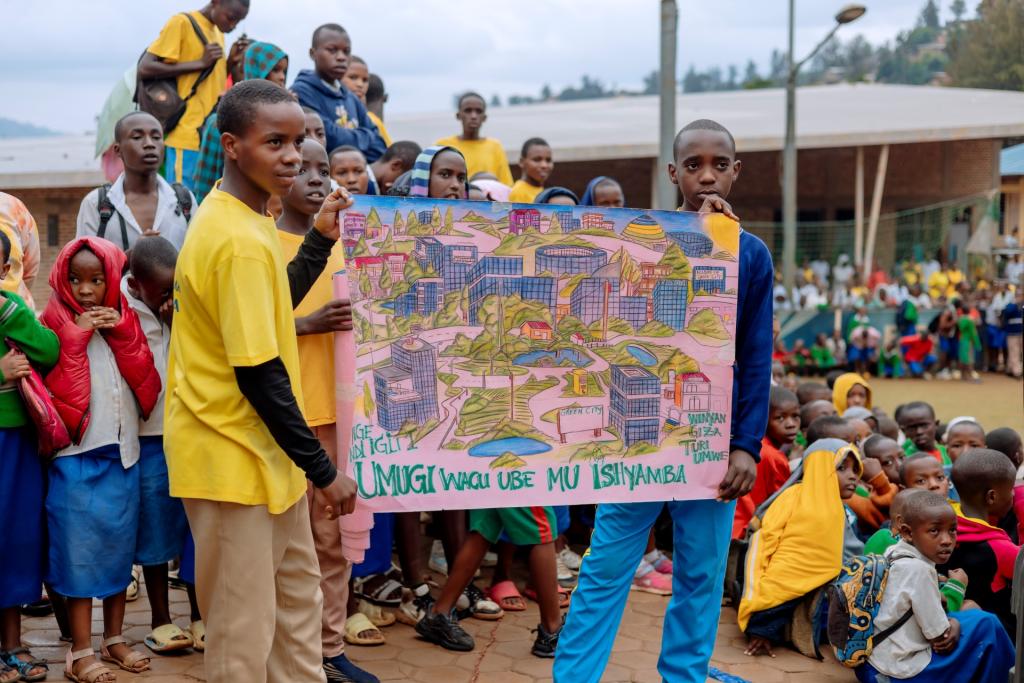
Two students present an artwork to a group of their peers. The piece depicts a city full of greenspace.
Celebrating creativity: students showcase a winning artwork at the Green Clubs environmental competition. (Photo: Rwanda Young Water Professionals)

Behind it all was the RYWP team, who not only coordinated the event but also reimagined what climate education could look like. It was clear that to truly engage young people, they needed more than another lecture—it had to be a vibrant, lived experience.

Working closely with school staff, RYWP introduced creative categories based on how students best express themselves. The impact was instant. In front of an audience of 1,500 students, the performers made clear that climate change is not only a scientific issue, but an experience shared by communities everywhere.

 “I am a Tree”: The power of performance

One phrase echoed again and again throughout the competition: “I am a tree.

In song lyrics, poems, and spoken word performances, students imagined themselves as trees—leading, inspiring, and teaching. One student recited a poem called “Let Me Tell You About My Beautiful Tree,” giving voice to a tree that offered shade, fruit, beauty, and life. 
 

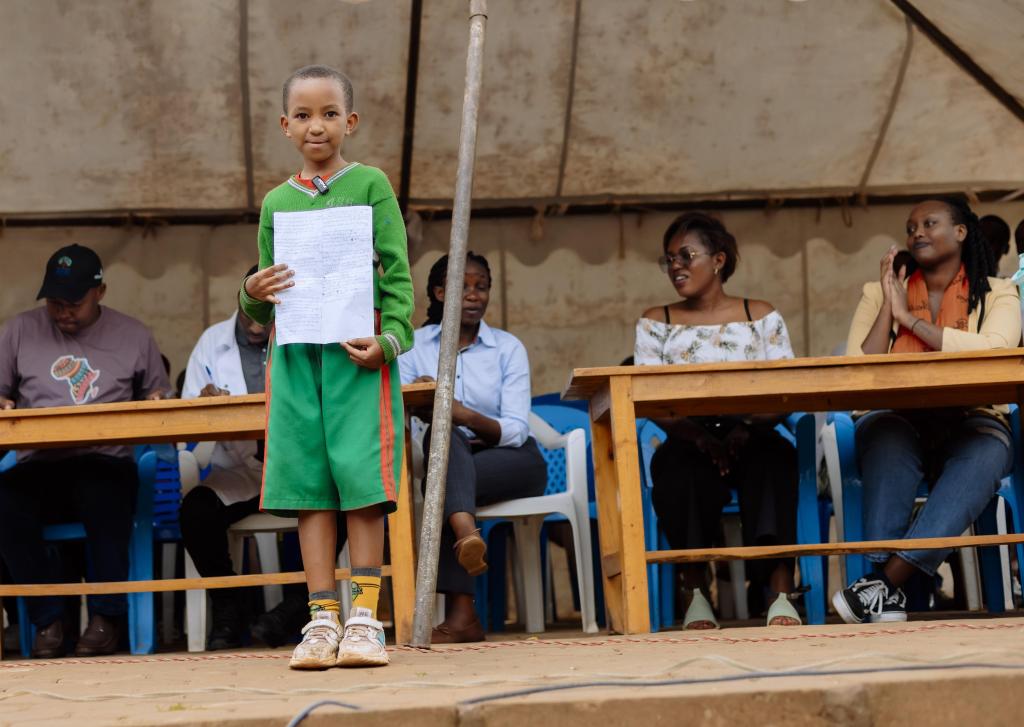
A young student stands on a stage holding a piece of paper and looks into the camera.
A young poet reciting “Let Me Tell You About my Beautiful Tree,” captivating the audience with emotional storytelling. (Photo: Rwanda Young Water Professionals)

Another student presented a drawing titled “Don’t cut me, I am your friend,” portraying trees kneeling to humans, hands extended in peace, begging not to be cut down. One dance performance paired students as tree roots and branches, showing the interconnection between nature and humanity.

These were not just creative choices—they were emotional statements. By embodying trees, students made us feel the pain of nature. That kind of empathy stays with you.

Many students carried on with their art and awareness projects after the event ended, without any prizes to motivate them. The message had truly taken root. 

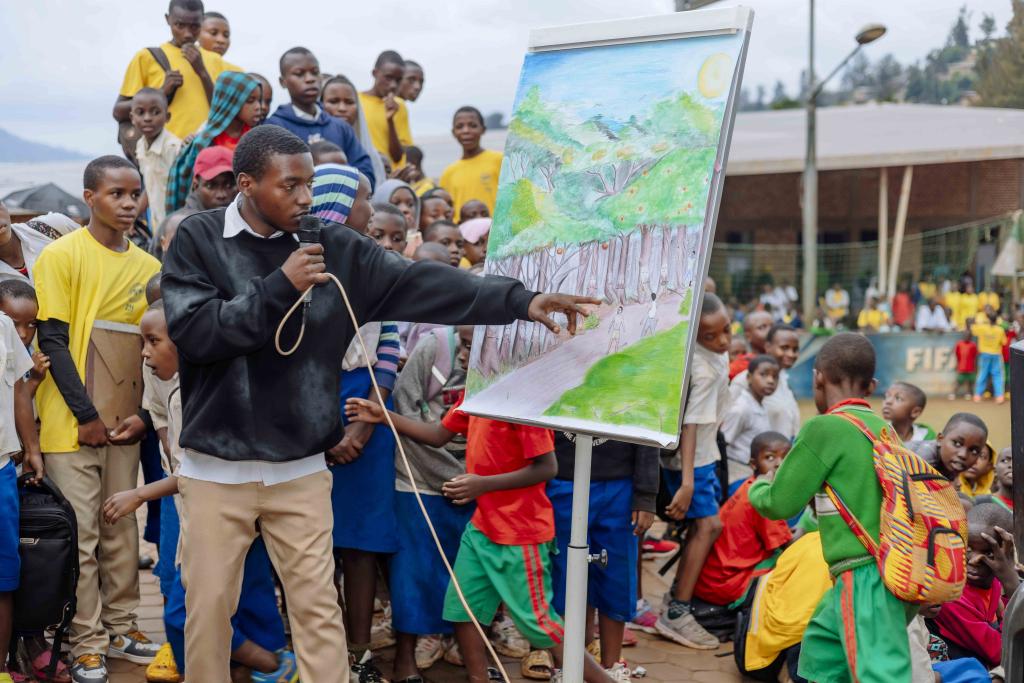
A student holds a microphone and points to an artwork, explaining its message to his peers.
A student displays a drawing titled “Don’t cut me, I am your friend,” portraying trees pleading for preservation. (Photo: Rwanda Young Water Professionals)

Students Take the Lead

One of the defining principles of the Green City Clubs is that students are not just participants: they are leaders.

Each club established a leadership committee, including president, vice president, event coordinator and secretary. These roles come with responsibility. Students organize meetings, design activities, and mobilize their peers. They choose which environmental projects to pursue, from setting up recycling stations to planning tree-planting drives. This is not just about school credits—these students are taking responsibility for their environment and showing others the way.

At Kimisagara and other schools, students brainstormed original songs, sourced materials for costumes made of leaves and bark, and even wrote scripts about environmental justice. Given the space to lead, students led boldly. This approach flipped the traditional dynamic. Instead of adults teaching kids, it became a mutual learning journey; students educating communities, parents, and even government officials through their projects.

Inclusive Engagement 

By fostering genuine representation and fairness, the Green City Clubs did more than teach sustainability—they brought it to life, showing students how inclusion and climate action go hand in hand.

From the outset, gender equity was a priority. Each club election ensured balanced representation, resulting in 17 girls and 16 boys elected to leadership roles in all 16 schools engaged under the Green City Club Initiative. Two students with disabilities were also elected, ensuring that environmental action is accessible for all.
 

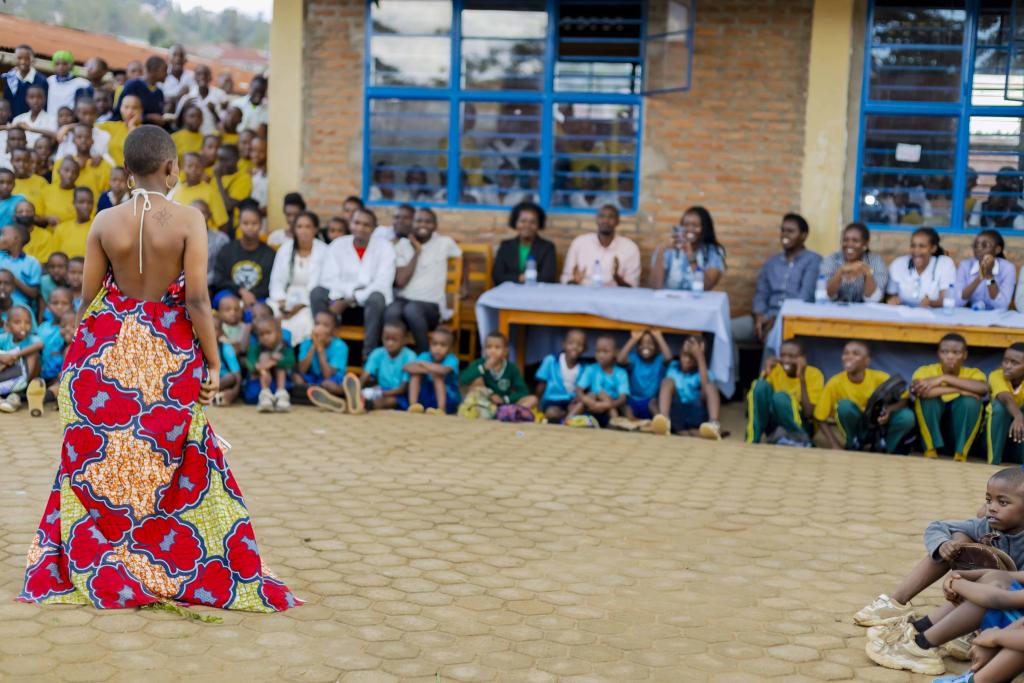
A student presents a dress to a group during a fashion show.
Students perform at a nature-themed fashion show in the Green Clubs competition. (Photo: Rwanda Young Water Professionals)

Moreover, participation in competitions and club activities was intentionally gender inclusive. From fashion showcases featuring both boys and girls in traditional eco-outfits, to poetry and dance duets, the project highlighted a truth often overlooked: everyone has a role to play in protecting the planet.

As one student poet boldly stated on stage, “A tree doesn’t choose who to shade, it protects all of us.”

Behind the Scenes

While students were the stars, none of this would have been possible without the steady support of school focal persons from each participating school.

They were with the students every day, organizing logistics, keeping schedules on track, making announcements, helping with rehearsals, and ensuring everything ran smoothly.

From coordinating club launches to setting up competition stages, focal persons were the project’s silent champions. They helped integrate the clubs into school life without disrupting academics, ensuring both educational quality and project success.

Perhaps more importantly, they became mentors, encouraging student creativity, celebrating small wins, and holding space for young leaders to grow.
 

Nine people stand and pose for a photo. They hold up artwork to the camera in pairs.
Rwanda Young Water Professionals team and school focal persons coordinating the competition setup at Kimisagara. (Photo: Rwanda Young Water Professionals)

What’s Next for Green City Clubs?

Building on the momentum of the environmental competition, the Green City Club's journey is now entering an exciting new phase of hands-on environmental action and strategic growth. 

In the months ahead, all the participating schools will plant trees, a cornerstone of the club's practical impact. Through the “Grow With Your Tree” care and monitoring campaign, students will take responsibility for the tree's health and survival, learning how to nurture green life from the ground up. It's a long-term commitment to environmental stewardship rooted in accountability and care. 

Additionally, the success of the environmental competition has sparked a growing interest in continued creative expression. More schools are now preparing for follow-up poetry, art, and performance showcases, providing platforms for students to express messages about climate change and the environment through talent and imagination. 

Three students perform a dance for a group of their peers.
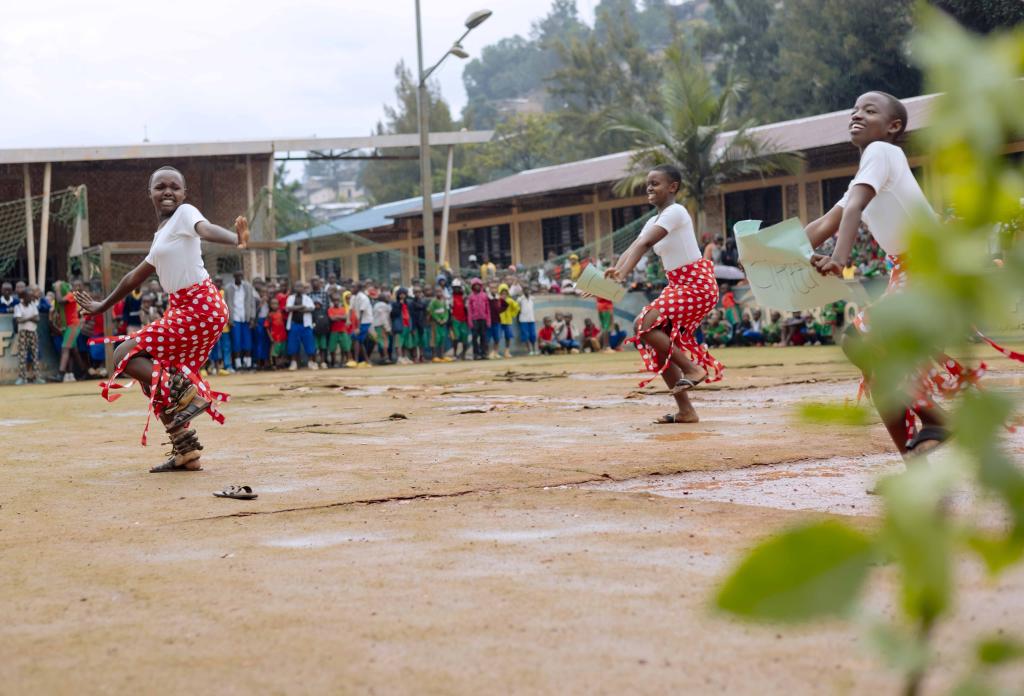
Students perform a dance during the Green Clubs competition. (Photo: Rwanda Young Water Professionals)

Beyond awareness, the clubs are expanding into student-led recycling programs and school greening projects. These initiatives empower learners to address everyday environmental challenges in schoolyards, from waste separation to the creation of eco-friendly zones. Perhaps most excitingly, the team is now working on a Green City Club toolkit, a practical guide designed to help more schools and students replicate the model. 

The vision is bold and clear: create a national network of youth climate champions who are not only aware of the environmental issues but fully equipped to inspire and to lead the response.


News

Year One of SUNCASA Progress: Lessons in Nature-Based Solutions

In its first year of implementation, the Scaling Urban Nature-based Solutions (NbS) for Climate Adaptation in Sub-Saharan Africa (SUNCASA) project has delivered significant results, laying the foundation for scaling up gender-equitable and socially inclusive climate adaptation efforts in 2025 and 2026 in Dire Dawa (Ethiopia), Kigali (Rwanda), and Johannesburg (South Africa).

March 7, 2025

As we celebrate the achievements of SUNCASA’s first year, IISD also extends its heartfelt support to our colleagues in Johannesburg who have been facing severe storms and flash floods in the past few days. Moments like these reinforce the importance of our shared work in building more resilient cities that are better protected from the impacts of climate change. This sentiment came through loud and clear most recently when SUNCASA partners from 14 organizations reviewed progress made in the first year of the project at SUNCASA’s inaugural peer learning event (PLE) in Kigali.

More trees, fewer invasives, cleaner rivers

In Kigali, Rwanda, 60% of the agroforestry target for the project was achieved in 2024, with 820 hectares out of the 1,262-hectare goal planted with fruit trees. This addresses flood and landslide risks and will help with the future food security and enhanced livelihoods of local communities. Regarding urban tree planting, 94% of the goal was reached with 56,000 trees planted along roadways to increase canopy coverage and green corridors within the city, tackling urban heat and contributing to increased biodiversity. 

SUNCASA | ARCOS Network staff working on a reforestation site in Kigali.
SUNCASA reforestation site in Kigali: 60% of agroforestry and 94% of urban greening targets were achieved in project's first year. 

"In just 1 year, we have been able to achieve remarkable milestones," said Kigali’s Mayor Samuel Dusengiyumva during the opening of the PLE. "We have made tremendous strides in urban greening. More importantly, we have ensured that these efforts directly benefit our communities by distributing 32,000 fruit trees to households, reinforcing the idea that sustainability and well-being go hand in hand."

SUNCASA | Mayor of Kigali, Samuel Dusengiyumva, opening the SUNCASA Peer Learning Event in Kigali
Kigali’s Mayor Samuel Dusengiyumva: “In just 1 year, we have been able to achieve remarkable milestones. We have made tremendous strides in urban greening.”

In Dire Dawa, Ethiopia, 313,330 seedlings were planted during SUNCASA’s first year. Over 128,000 of those were planted as part of the afforestation efforts, recovering 60 hectares of bare land—more than half of the 105-hectare target. When it comes to agroforestry, the goal of 115.5 hectares was overachieved in just one year, with the planting of 142,600 trees on 131 hectares. Additionally, 14 hectares of buffer zones—56% of the project’s target—were created with over 42,000 trees and shrubs planted to protect the banks of the Dechatu River.

In Johannesburg, South Africa, where activities are much more concentrated in densely populated urban areas, 80% of the urban greening and buffer zones target was attained in 2024 with the planting of 6,324 trees. "SUNCASA partners have made incredible progress on our NbS targets during the first year of project implementation," said Janina Schnick, International Institute for Sustainable Development Project Lead. "Bringing everyone together in Kigali to exchange achievements, challenges, and learnings allowed them to optimize their approaches and interventions and maximize the project's impact. I can’t wait to see what they accomplish in year two of SUNCASA."

SUNCASA | Community members working on an afforestation site at Harla Kebele, in Dire Dawa, Ethiopia.
In Dire Dawa, Ethiopia, the agroforestry goal for the entire project was overachieved in year one.

For Marc Manyifika, the World Resources Institute’s Lead for Urban Water Resilience, the first year of SUNCASA has showcased the transformative potential of gender equality and social inclusion (GESI)-responsive nature-based solutions—not only in strengthening climate resilience but also in promoting social inclusion and economic opportunity.

"Across Kigali, Dire Dawa, and Johannesburg, we’ve made remarkable progress—restoring landscapes, enhancing urban green spaces, and improving community well-being," said Manyifika. "What excites me most is that this is just the beginning. With the momentum we’ve built and the enthusiasm from communities and city leadership, SUNCASA is set to scale its impact even further in the years ahead, demonstrating that climate adaptation, biodiversity, and local livelihoods can go hand in hand."

SUNCASA | Afforestation site next Victoria Yards in Johannesburg, South Africa
Afforestation project site in Johannesburg: 80% of the urban greening and buffer zones target was attained in 2024.


"What excites me most is that this is just the beginning. With the momentum we’ve built and the enthusiasm from communities and city leadership, SUNCASA is set to scale its impact even further in the years ahead."

Marc Manyifika, WRI’s Lead for Urban Water Resilience


In its first year, SUNCASA both advanced NbS and strengthened local capacity through 11 training sessions for local partners. These sessions covered key topics such as urban NbS implementation, procurement, vulnerability and risk assessments, biophysical water monitoring, economic valuation, monitoring, evaluation, and learning, strategic communications, and GESI.

For GESI targets, SUNCASA collaborated with AVEGA Agahozo in Kigali, Hararghe Catholic Secretariat in Dire Dawa, and Gender CC in Johannesburg to deliver workshops for 694 community members, including women, men, youth, elders, local leaders, and people with disabilities. These workshops focused on addressing social and gender biases, promoting equitable participation in NbS planning and implementation, and encouraging shared decision-making within households.

These training sessions sparked discussions on marginalization, exclusion, and gender-based violence in the context of NbS and climate adaptation, fostering shifts in gender and social norms at the personal and family levels. SUNCASA is committed to protecting the rights of women and other underrepresented groups, ensuring that at least 50% of participants came from marginalized communities.

SUNCASA | Participants of the GESI workshop in Dire Dawa, Ethiopia, holding a SUNCASA banner. (Photo: Hararghe Catholic Secretariate)
GESI training sessions brought together 694 community members from the three SUNCASA cities, including women, men, youth, elders, local leaders, and people with disabilities.


SUNCASA Year One in Numbers
 

Dire Dawa

  • 313,330 seedlings planted.
  • Afforestation: 128,550 trees planted, recovering 60 hectares of bare land—more than half of the 105-hectare target.
  • Agroforestry: 142,600 fruit trees planted in 131 hectares, overachieving the project’s initial goal of 115.5 hectares.
  • Buffer Zones: 56% of the target achieved with 42,000 trees and shrubs planted in 14 hectares.

Kigali

  • Agroforestry: 60% of the project target achieved with 820 hectares out of the 1,262-hectare goal planted with fruit trees
  • Urban Greening: 94% of the goal reached, with 56,000 trees planted along roadways to increase canopy coverage and green corridors.
  • Gullies: Planting of 31,900 trees out of 46,000 in ravines.

Johannesburg

  • Urban greening and buffer zones: 80% of the project’s target achieved with the planting of 6,324 tress in highly populated urban areas.
  • Remove an alien species, Kikuyu grass, from two hectares.
  • Development and installation of litter traps along the Jukskei River in Alexandra Township.

 Training sessions

  • 11 training sessions for local partners, including urban NbS implementation, procurement, vulnerability and risk assessments, biophysical water monitoring, economic valuation, monitoring, evaluation, and learning, strategic communications, and GESI.
  • Gender equality and social inclusion workshops for 694 community members, including women, men, youth, elders, local leaders, and people with disabilities.
Press release

Kigali Shares Lessons on Flood Risk Reduction and Gender Equality With Other Sub-Saharan African Cities

KIGALI, RWANDA—Representatives from 14 organizations and city governments delivering the CAD 29 million (USD 21 million) SUNCASA project will meet in Kigali this week to exchange experiences and insights on advancing nature-based solutions (NbS) for reducing flood and climate risk while improving the lives of women and vulnerable groups.

February 6, 2025

From February 10 to 12, experts in NbS, climate change adaptation, gender equality and social inclusion (GESI), water systems, and data management drawn from governments and civil society organizations in Kigali, Johannesburg, and Dire Dawa will come together for the SUNCASA project’s peer learning event. The event will take place at the Mille Collines Hotel and will be opened by the Mayor of Kigali, Samuel Dusengiyumva, on February 10 at 9 am.

Experts will review the first year of the SUNCASA’s project’s activities, which included tree planting, invasive species removal, watershed restoration, and community workshops to set out strategies grounded on the lessons learned across the three cities.

"At the heart of this event is the opportunity to come together and learn from one another what works, what doesn't, for whom, and why. It's a chance to exchange, engage and reflect on the SUNCASA story so far across three very unique, dynamic African cityscapes,” explains Samantha Boardley, IISD’s climate adaptation specialist and one of the event’s lead facilitators. “It is an occasion so few projects or stakeholders make the time for, but one that offers so much not only to the project but to our broader understanding of nature-based solutions for climate change adaptation."

The first year of SUNCASA in Kigali achieved significant results. Fruit trees and shrubs were planted in 820 hectares and urban green areas were expanded with 56,000 new trees. Other NbS actions, such as reforestation and afforestation, will kick off in March 2025.

In Dire Dawa, Ethiopia, implementing partners planted more than 313,000 seedlings in 2024, established new forests on 60 hectares, revitalized 131 hectares with 142,600 fruit trees, and created 14 hectares of buffer zones along the Dechatu River.

In Johannesburg, South Africa, the tree-planting activities started in December 2024, with more than 6,300 seedlings planted to expand urban areas and create buffer zones to protect the Jukskei River. Additionally, alien invasive species were removed from 2 hectares, and another hectare was strategically rehabilitated by planting indigenous species. In one of the crucial project sites, Alexandra Township, local communities are manufacturing litter traps from waste collected in the river, which will contribute to reducing watercourse pollution.

Launched in 2024, SUNCASA is a 3-year project developed and implemented in close collaboration with local organizations. Delivered by the International Institute for Sustainable Development (IISD) and the World Resources Institute (WRI), with funds from the Government of Canada, SUNCASA seeks to enhance resilience, gender equality, social inclusion, and biodiversity protection in urban communities in Ethiopia, Rwanda, and South Africa. The project aims to benefit 2.2 million people living in climate-vulnerable areas.

SUNCASA PEER LEARNING EVENT

Where: Mille Collines Hotel, 2 KN 6 Ave, Kigali

Available Interviews: 

  • Lord Samuel Dusengiyumva, Mayor of Kigali
  • Janina Schnick, Lead, SUNCASA Project
  • Marc Manyifika, Country Lead for Urban Water Resilience, WRI Africa
  • Project scientists and community leads are available for interview. (Please request in advance to confirm availability.)

QUOTES

“Climate change is a reality. As a matter of fact, this year alone (2024), in the month of September, Kigali recorded its highest urban heat in history. And if you look at the amount of rain we are having, we have to do something. And I have to say that it can only be done in a coordinated manner. SUNCASA project is an initiative that symbolizes not only progress but a shared vision for our city and our continent. Kigali has long been a city that embraces bold ideas and transforms them into tangible results.”

Lord Samuel Dusengiyumva, Mayor of Kigali

“SUNCASA partners have made incredible progress on our NbS targets during the first year of project implementation, and we are excited to bring them together in Kigali to exchange achievements, challenges, and learnings. This will allow them to optimize their approaches and interventions in the three SUNCASA cities and maximize the project's impact. I can’t wait to see what they accomplish in Year 2 of SUNCASA!”

Janina Schnick, Lead, SUNCASA, IISD

“The peer learning event is SUNCASA’s first milestone—after a year of implementation, it’s bringing together partners from all three cities to exchange lessons, share valuable tools, and inspire new approaches for advancing nature-based solutions and gender equality and social inclusion. From the ARCOS Network showcasing their approach to community engagement, Haramaya University spotlighting their research on soil moisture and GenderCC sharing their expertise in integrating gender & social inclusion, participants will have the chance to learn, collaborate, and spark new and innovative pathways for building more inclusive and resilient cities.”

Marc Manyifika, Urban Resilience Lead, World Resources Institute - Africa

SUNCASA IN NUMBERS

  • 2.2 million people benefited from the NbS actions.
  • CAD 29 million will be invested in NbS actions in the three cities.
  • reforestation: 640 ha will be recovered with the planting of 1.4 million trees.
  • afforestation: More than 1.5 million trees will be planted in 867 ha of degraded land.
  • agroforestry: Over 500,000 fruit trees will be planted in an 885-ha area.
  • 1,143 ha of buffer zones will be established to protect the riverbanks.
  • 469 ha will be revitalized by removing alien invasive species and debris.
  • Public green spaces will be expanded with the planting of 150,000 trees.
  • Around 22,000 people from vulnerable communities will directly benefit from capacity-building and implementation activities.


For media inquiries, please contact:

Cesar Henrique Arrais

Senior Communications Officer, IISD

[email protected]

Eden Takele

Engagement & Communications Specialist, WRI Africa

[email protected]