Webinar

Funding the Future: Enabling natural infrastructure through federal programs

From restored wetlands to urban tree canopies, natural infrastructure is proving to be a cost-effective, multi-benefit solution to Canada's infrastructure challenges. IISD's new report, Funding the Future, highlights how federal programs can better support these nature-based solutions—and why doing so matters now more than ever. The webinar will share the results of the report, the updated design of a federal funding program, and municipal perspective on accessing federal funding, wrapping up with discussion and audience questions. 
 

May 22, 2025 10:00 am - 11:15 am CT

(Open to public)

A flexible approach to infrastructure funding, including natural infrastructure, can help Canada build resilience while making the most of every dollar invested. Natural infrastructure, like restored wetlands, urban tree canopies, or rain gardens, can provide specific infrastructure benefits, with the potential for many other social, economic, and environmental benefits. There is increasing evidence that natural infrastructure can deliver much-needed water outcomes cost efficiently while also providing areas for recreation, habitat to support wildlife, and improving the overall resilience of our communities.

IISD's recently published “Funding the Future: Enabling natural infrastructure through federal infrastructure programs” assesses six federal infrastructure programs against 14 enabling criteria for natural infrastructure. Results show two programs are leading the way. IISD recommends 14 practical criteria to better enable natural infrastructure within major infrastructure programs, while highlighting existing models that work well with nature. 

This webinar brought together experts to discuss why incorporating enabling criteria for natural infrastructure is so important, especially as aging infrastructure, decades of underinvestment, and the growing impacts of climate change strain local governments who are grappling for sustainable infrastructure solutions. The webinar shares results from the report, the updated design of a federal funding program, and municipal perspective on accessing federal funding, wrapping up with discussion and audience questions. 

Key Takeaways from the Webinar: 

  • Natural infrastructure can help to deliver critical infrastructure services, while providing solutions at the nexus of interconnected crises; climate, biodiversity, housing, and infrastructure.
  • Of the 6 programs reviewed, the Natural Infrastructure Fund and the Local Leadership for Climate Adaption were identified as the most natural infrastructure “friendly”, with GMF “willing to put more money on the table for projects that incorporate natural infrastructure”.  
  • In order to design federal funding programs that support natural infrastructure, as opposed to exclusively grey infrastructure, the desired outcomes should be identified early on. For the LLCA, GMF was intentional in elevating equity and the delivery of benefits to those that are disproportionately vulnerable to climate impacts and that natural infrastructure is the preferred solution where feasible.    
  • Both dedicated funding programs (like the Natural Infrastructure Fund) and embedded within major funding programs (like the Disaster Mitigation & Adaptation Fund) are critical to enhancing natural infrastructure implementation. Dedicated funds can give local governments the opportunity to try a new approach, while embedded will support more widespread use and application.  
  • “Every infrastructure project should have a natural infrastructure component” where possible, as people are a part of nature, not apart from nature. With Canada’s newly re-elected Liberal party committing to protect nature and fight climate change, with nature-based solutions front and centre to the interlinked crisis, there is anticipation that natural infrastructure could play a role. 

This webinar took place on May 22, 2025. Watch the full recording below or on YouTube.


Our Speakers

Christine Mettler

Christine Mettler is a green infrastructure policy expert and designer. She is currently in school pursuing her Master's Degree in Landscape Architecture to learn how to better support designers and planners to implement functional, beautiful, and thriving GI. Before that, she was the director of Green Infrastructure at Green Communities Canada—a national non-profit organization with member organizations across the country. There, she co-authored the Framework for Living Cities with a research team from the University of Toronto, and worked with environmental organizations across Canada to better integrate GI into local policy, engage local community members, and support the planning and designing equity-oriented GI projects. 
Joanna Eyquem

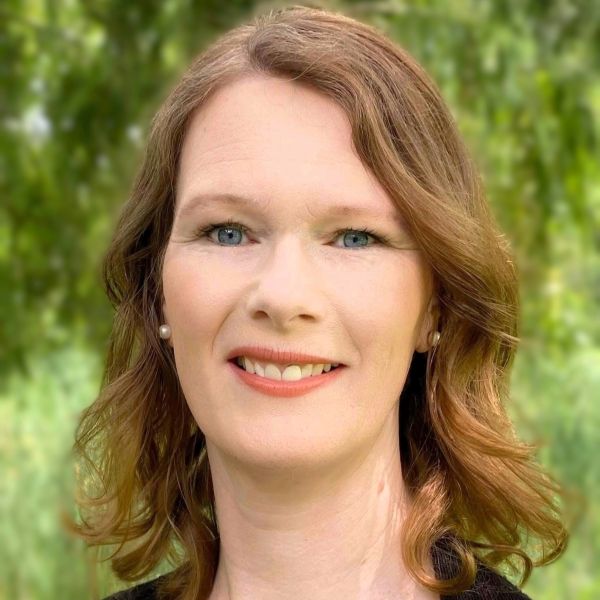
Joanna Eyquem is an internationally-recognized leader in climate adaptation and nature-based solutions, with 25 years experience in Europe, North America and Western Africa. Her work at the Climate Risk Institute focuses on managing climate risk, including flooding, erosion and extreme heat, in particular working with nature and the financial sector. As part of this work, Joanna leads the development of national guidance and tools for climate resilience and nature-based solutions, including disclosures of natural assets in financial statements and sustainability reporting. In addition, Joanna serves on over 30 boards and committees, including the Canadian Infrastructure Council, the Canadian Sustainable Finance Network, Canada’s TNFD Working Group, the National Research Council of Canada, the Government of Quebec’s Expert Group on Adaptation, and as Chair of the Board for the Natural Assets Initiative.

Dustin Carey

Dustin Carey is the Lead, Climate Adaptation with FCM's Green Municipal Fund and an Expert Consultant with the United Nations Department of Economic and Social Affairs. After receiving his Master of Climate Change degree from the University of Waterloo, he applied his understanding of climate science to practical municipal climate solutions. Specializing in climate adaptation, municipal asset management, capacity development and sustainable land use practices, Dustin works to enable local governments to create low-carbon, resilient communities. He wrote the Climate-Resilient Asset Management chapter of the United Nations' Managing Infrastructure Assets for Sustainable Development Handbook. 
 

Our Moderator:

Asha Nelson

Asha Nelson is a Project Coordinator at ClimateWest, where she manages numerous climate adaptation initiatives and supports the organization’s reconciliation and equity efforts. She brings nearly a decade of experience working in the non-profit sector in Manitoba, leading projects, programs and community-based research in the areas of food sovereignty, climate change, and refugee resettlement. Previously, she worked at Fireweed Food Co-op helping develop critical infrastructure for local food distribution and continues to be an active member of the Winnipeg Food Council. Asha is an experienced facilitator and is based in Winnipeg on Treaty 1 Territory. 


Resources:


Thanks to our webinar series partner:

Climate West Logo


Funded in part by:

BHP Foundation logo


Webinar

Beyond Words: Concrete actions for intergenerational equity in policy-making

In the face of the triple planetary crisis, growing inequality, deep technological shifts and associated disruptions ahead, it is time we question and add nuance to what we consider desirable development and what it takes to make this development sustainable from a long-term perspective.

May 4, 2025 10:00 am - 11:30 am PDT

(Open to public)

Drawing on insights and lessons learned about today’s development paradigms and placing young people and future generations at the centre of the conversation, we ask ourselves, What’s next for the future of sustainable development? How can we harness collective intelligence through interactive, immersive, and sometimes unconventional ways and formats? How can we create safe spaces for youth, civil society, international organizations, academia, and the private sector to come together and explore emerging insights, ideas, trends, and concepts that "go beyond" conventional sustainability and toward a hopeful and trusting future?

At the upcoming 11th International Youth Conference (IYC11), under the theme “Better Future with Progressive and Forward-Thinking Youth for Positive Change, the Beyond Lab at UN Geneva and its institutional partner the International Institute for Sustainable Development (IISD), will unpack these questions, and showcase concrete initiatives and examples of inclusive and meaningful participation of youth in policy-making processes. The event will specifically dive into two main initiatives:

  1. The Beyonds Challenge: This initiative, designed by the Beyond Lab at UN Geneva in partnership with IISD and supported by the German government, encourages the public to provide personal interpretations and definitions of four key elements (the “Beyonds”) defining what a sustainable, socially owned, and aware future should look like, under formats such as traditional essays or short movies, sculpture or artistic performances, architectural designs or mathematical formulas, policy proposals or clothing lines, or more. These four elements, which emerged from years of multistakeholder consultations conducted by the Lab on key concepts to look for when reflecting upon the future of sustainable development beyond 2030 (hence the name “The Beyonds”), are: Regeneration; Constructive Hope; Debt to the Future; and the Great Unknowns. The challenge will be officially launched during the event at IYC11.
     
  2. Youth Moving Beyond GDP: Launched in 2024 by the Beyond Lab, IISD, UN Trade and Development, and the student-movement Rethinking Economics International, the initiative gathered voices of more than 600 young people from more than 50 countries on key elements needed in a framework that complements or moves beyond GDP. Such insights were presented in several key multilateral dialogues and moments, such as the Summit of the Future at UN NY and the Beyond GDP What’s Next at UN Geneva, and have become instrumental in influencing the language and ambitions of the international community on reshaping economic systems and well-being. This session, developed in partnership with the International Development Research Centre, will also provide an overview of IISD's work with countries to estimate a beyond index on “Comprehensive Wealth” and efforts to improve capacities of educational institutions to advance efforts to move beyond GDP, developed in partnership with Rethinking Economics International.

Agenda and Speakers

Introduction to The Beyond Lab at UN Geneva: Vision, mission, and lenses
Jose Negrete, Beyond Lab

The Beyonds Challenge Launch
Davide Fanciulli, Beyond Lab

Crafting the Beyonds Mini-Interactive Workshop
Davide Fanciulli, Beyond Lab

Youth Moving Beyond GDP Initiative Presentation
Nathalie Delorme, Beyond Lab

Youth Moving Beyond GDP: Insights and reflections by participant/essay finalist
Maria Alejandra Perez, essay competition winner

Moving Beyond GDP Through Comprehensive Wealth
Livia Bizikova, IISD

Closing Remarks and Q&A
Davide Fanciulli, Beyond Lab

Webinar

Building Climate Resilience Through Protected Areas

On May 21, IISD hosted a webinar in collaboration with the Wildlife Conservation Society (WCS) and the World Wide Fund for Nature (WWF) to unpack what protected areas are, the benefits they offer for both people and nature, and why they are a vital part of climate adaptation. The webinar also showcased real-world examples of how nature-based solutions, local community engagement, and climate adaptation efforts can work together to build more resilient ecosystems and livelihoods.

May 21, 2025 2:00 pm - 3:00 pm GMT/UTC

(Open to public)

About the event

Protected areas are powerful tools for tackling the twin crises of climate change and biodiversity loss. They help protect ecosystems, support local livelihoods, and offer natural solutions to adapt to a changing climate.

Recognizing this critical role, the Climate Adaptation and Protected Areas Initiative (CAPA) focuses on strengthening the resilience of protected areas and the communities that rely on them. By ensuring climate risks are considered in how these areas are managed, CAPA promotes nature-based solutions (NbS) that integrate conservation, community priorities, and climate action—recognizing that effective climate adaptation should benefit both ecosystems and the communities who depend on them.

This one-hour webinar:

  • Highlighted the importance and relevance of protected areas in building climate resilience
  • Showcased real-world examples of how conservation, climate adaptation, and local communities’ involvement can support more resilient ecosystems and livelihoods
  • Shared insights from CAPA’s work in Belize, Fiji, and two key African landscapes
  • Fostered knowledge exchange among practitioners, policymakers, and researchers

Moderator

  • Onyinye Oguntoye - Communications Officer, International Institute for Sustainable Development (IISD)

Panel

  • Alec Crawford - Director, Nature for Resilience, International Institute for Sustainable Development (IISD)
  • Annet Tumwine - Project Manager, World Wide Fund for Nature (WWF), Uganda
  • Nicole Auil Gomez - Country Director, Wildlife Conservation Society (WCS), Belize
capa-webinar-card-building-climate-resilience
Webinar

How Can WTO Rules Foster Climate Change Adaptation in Agriculture in Developing Countries?

May 8, 2025 1:30 pm - 3:00 pm CEST

(By invitation)

About the event

Despite the volatility and uncertainty in current trade policy, adaptation in the agriculture sector remains an immediate priority for developing countries. To bring this challenge to the fore, IISD organized a webinar to share insights from the research community on how changes to WTO rules could foster climate change adaptation in agriculture in developing countries.

During the webinar, experts discussed (i) the possibilities of identifying adaptation goods in agriculture, making these more affordable and increasing their uptake by developing country farmers, and (ii) repurposing agricultural support toward adaptation-friendly crops and practices while avoiding trade distortions and breaching subsidy limits under the WTO Agreement on Agriculture.

Agenda

1:30–1:35 pm. Welcome Remarks

  • Ieva Baršauskaitė, Lead, Trade and the Green Transition, IISD

1:35–1:50 pm. Developing Countries' Adaptation Challenges in Agriculture

  • Philip Osano, Centre Director, Africa, Stockholm Environment Institute

1:50–2:05 pm. Adaptation Goods in Agriculture: What do they look like, and how can we increase access to them?

  • Katharina Schmidt, Policy Advisor, IISD

2:05–2:20 pm. Policy Space for Climate Change Adaptation Under the WTO Agriculture Agreement

  • Lars Brink, Agricultural trade expert, and David Orden, Professor Emeritus, Virginia Polytechnic Institute and State University

2:20–2:40 pm. Q&A.

2:40–2:45 pm. Wrap-up and Conclusions

  • Ieva Baršauskaitė, Lead, Trade and the Green Transition, IISD
Webinar

Evolving Standards on Stabilization: New norms, practical insights, and emerging risks

Stabilization clauses were once accepted as an automatic part of investor-state contracts in mining and several other sectors. However, the norms around stabilization are evolving away from a presumption that they should be automatically granted. This webinar explains the evolution of the norms and standards on stabilization and how policy-makers can adapt.

April 15, 2025 9:00 am - 10:30 am EDT

(Open to public)

Download IGF presentation slides


Stabilization clauses were once accepted as an automatic part of investor-state contracts in mining and several other sectors. They also began to appear in national mining and investment laws over the past two decades. However, the norms around stabilization are evolving away from a presumption that they should be automatically granted. This new approach, outlined in Principles VII and VIII of the OECD Guiding Principles on Durable Extractives Contracts, calls for a more limited, narrow approach to stabilization of fiscal terms, and an outright ban on stabilization of non-fiscal issues such as environmental protection, human rights, and labour rights. In doing so, the OECD re-asserts the right of governments to regulate and legislate according to their needs and objectives.

To support countries and companies seeking to modernize their approach to stabilization, the IISD-hosted Intergovernmental Forum on Mining, Minerals, Metals and Sustainable Development has published a detailed review of the OECD Principles VII and VIII, along with practical guidance on how to translate these normative principles into legal text in investment contracts and laws.

We also hosted a webinar for policy-makers and other stakeholders interested in learning more about the evolution of the norms and standards on stabilization and how to reform their approach. During the event, experts explained how the new norms evolved, provided practical insights for implementation, and identified emerging risks for resource-rich countries. The discussion also touched on the wider applicability of these evolving standards across different sectors, offering valuable perspectives to those looking to address stabilization in industries beyond mining.


Speakers

  • Alexandra Readhead, Director, Tax and Sovereign Debt, IISD 
  • Howard Mann, International Arbitrator and lead author of the IGF practice note
  • Solongoo Bayarsaikhan, First Deputy Chief of the Cabinet Secretariat, Government of Mongolia 
  • Prof. Fabien Nkot, Professor of Public Law and Political Science, University of Yaoundé II 
  • David Murray, Head of Tax Policy & Sustainability, AngloAmerican 
  • Nicola Woodroffe, Senior Legal Analyst, NRGI 
  • Lahra Liberti, Head of the Natural Resources and Development Unit, OECD Development Centre
Webinar

Navigating Investment Governance and International Commitments: Introduction to the IPF Manila tool kit for policy coherence

April 29, 2025 10:00 am - March 25, 2025 12:00 pm Central European Summer Time

(By invitation)

From addressing climate change and tax avoidance to upholding labor standards and protecting biodiversity, countries’ investment governance overlaps with a web of international commitments.

The Investment Policy Forum (IPF) Manila Tool Kit—created together with investment officials from 35 developing countries at the 2024 IPF—helps investment policy-makers map out and navigate their country’s international agreements and commitments, enabling informed decisions in line with their policy priorities.

On April 29, IISD will hold a webinar to:

  • introduce the final version of the IPF Manila Tool Kit as a practical resource for policy-makers,
  • lead a discussion with investment policy-makers and experts on how the tool kit can best be used and the importance of coherent investment governance across international commitments and policy areas.
  • explore the tool kit's application in different country contexts.

The webinar will wrap up with an announcement regarding the 2026 IPF.

Webinar

Consumer Protection in the Digital Economy: Issues for developing countries

This webinar delved into the critical role of online consumer protection in fostering a trustworthy environment for digital trade. 

April 8, 2025 2:00 pm - 3:00 pm CET

(Open to public)

About the Event

As consumers increasingly shop online and engage with suppliers across borders, countries face growing pressure to update their consumer protection policies to ensure safe, reliable, and secure transactions in the digital realm. This webinar highlighted the critical role of online consumer protection in fostering a trustworthy environment for digital trade. 

The session explored emerging approaches to deal with online consumer protection, including in trade agreements, with a particular focus on a few regional trade agreements (RTAs) and the World Trade Organization Joint Statement Initiative Agreement on Electronic Commerce. Experts also addressed the unique challenges faced by developing countries in modernizing their consumer protection policies by offering insights on how these nations can strengthen their frameworks moving forward. 

This webinar is the first in a series of technical sessions hosted by the International Institute for Sustainable Development (IISD). It aims to enhance participants' understanding of how key policy and regulatory frameworks are being adapted to support the expansion of the digital economy and digital trade. We gratefully acknowledge the valuable support of the Swedish International Development Cooperation Agency (SIDA)

The session was open to the public and was particularly valuable for trade policy-makers, especially those from developing countries. 

Panel

Webinar details

Topic
Trade
Region
Global
Project
Digital Trade
Impact area
Sustainable Economies
Webinar

Scaling Up Green Public Procurement: Insights from India, Indonesia, and South Africa

A webinar looking at the progress, challenges, and opportunities in scaling up green public procurement in India, Indonesia, and South Africa, exploring strategies to unlock its potential for sustainable development.

March 5, 2025 9:00 am - 10:00 am CET

(Open to public)

Public procurement represents a significant share of national GDP in many countries, particularly in emerging economies like India, Indonesia, and South Africa, where it accounts for 15-30% of GDP. This highlights its vast potential as a driver of sustainable development through Green Public Procurement (GPP)—an approach that integrates sustainability considerations into purchasing decisions. 

This webinar followed IISD’s recently launched reports on GPP in India, Indonesia, and South Africa, highlighting key insights and high-level recommendations. It also explored practical tools and strategies to address implementation barriers and unlock GPP’s potential. Watch the recording to learn how these economies are using GPP to advance sustainable development and tackle climate challenges. 

Moderator

  • Ronja Bechauf, Policy Advisor, Sustainable Infrastructure and Public Procurement, International Institute for Sustainable Development

Speakers 

  • Francini van Staden, Directorate Sustainability: Environmental Officer Control, Department of Environmental Affairs and Development Planning, Western Cape Government
  • S Karthikeyan, Deputy Executive Director, CII – Indian Green Building Council 
  • George Thurley, Project Officer CO₂ Performance Ladder, Foundation for Climate Friendly Procurement and Business  
  • Febrita Sidabalok, Policy Analyst, National Public Procurement Agency of Indonesia 
  • Sharmila Erizaputri, Researcher on Green Public Procurement, International Institute for Sustainable Development 

Webinar details

Webinar

Implementing the European Union Deforestation Regulation: Perspectives from Southeast Asia

February 25, 2025 12:00 pm CEST

(Open to public)

Ensuring deforestation-free supply chains has become a critical priority, particularly in response to the European Union Deforestation Regulation (EUDR). This regulation has far-reaching implications for global trade, especially for Southeast Asia, where key commodities such as palm oil, rubber, and coffee play a crucial economic role.

Working together, stakeholders across supply chains must navigate the challenges posed by EUDR compliance, including strict due diligence sustainability requirements. Smallholder farmers, who contribute significantly to these industries, face barriers to meeting these requirements due to limited technical and financial resources.

This webinar, jointly organised by the SMU Centre for Commercial Law in Asia and IISD, brought together different perspectives to discuss the practical feasibility of EUDR implementation and explore alternative and complementary approaches to address deforestation.

We examined the on-the-ground challenges of compliance, assess the potential socioeconomic impact on producers, and explore complementary measures to address deforestation, such as trade agreements, voluntary sustainability standards, and multistakeholder initiatives. This dialogue served as a foundation for identifying viable solutions that promote environmental sustainability with economic resilience in global supply chains while ensuring no adverse consequences to smallholders.

Moderators

  • Cristina Larrea, Director, Agriculture, Food and Sustainability Initiatives, IISD
  • Stefanie Schacherer, Assistant Professor of Law, SMU, Centre for Commercial Law in Asia

Speakers

  • Dr. Surina Ismail, Chief Sustainability Officer, Group Sustainability, IOI Corporation Berhad
  • Nicolas Lockhart, Partner, Sidley Austin
  • Rukaiyah Rafik, Head of Secretariat, Yayasan FORTASBI Indonesia
  • Florencia Sarmiento, Policy Advisor, IISD

Webinar details

Webinar

Addressing Climate Change and Nutrition for Improving Health Outcomes: A deep dive

Malnutrition is the most significant global threat to the health of children under the age of five. In this webinar, IISD, alongside UNICEF, Save the Children Ethiopia, and KnowlEdge, presented a groundbreaking project that uses nature-based infrastructure (NBI) strategies to improve nutrition security and strengthen climate resilience in regions facing severe climate risks. 

January 23, 2025 8:00 am - 9:00 am EST

(Open to public)

About the Event

Malnutrition is already the biggest global risk factor for children under five, and according to the Institute for Health Metrics and Evaluation: “if no action is taken on climate change, there will be an additional 40 million children chronically undernourished, also known as stunting, and 28 million wasted children.” Therefore, it is critical to ensure that agricultural and nutritional programming, particularly in countries most vulnerable to climate hazards like extreme heat and droughts, are adapted to build communities that are resilient to climate change’s impacts in the future while protecting vulnerable populations now.

This webinar highlighted the global-level linkages between climate change and nutritional and health outcomes in children. IISD, alongside UNICEF, Save the Children Ethiopia, and KnowlEdge, presented an innovative project leveraging NBI strategies to enhance nutrition security and climate resilience in countries experiencing severe climate risks. The speakers shed light on how current interventions build local resilience and how outcomes are measured.

This event marked the official launch of the report on the Sustainable Asset Valuation of Nutrition-Sensitive Agriculture Capacity Strengthening Project in Ethiopia, which highlights the significant impacts of nature-based solutions on enhancing nutrition security and climate resilience.

This was the third session of the ongoing Climate Change and Health Forum, which itself is the second iteration of the climate and health webinar series initiated in 2022. This session was supported by the Children’s Environmental Health Collaborative, the Child Health Task Force, Global Communities, Save the Children, and UNICEF.

Speakers

  • Chloe Angood, Nutrition Specialist, UNICEF, Eastern and Southern Africa Region
  • Liesbeth Casier, Lead, Public Procurement and Sustainable Infrastructure and Coordinator of the NBI Global Resource Centre, IISD
  • Nathalia Niño Giraldo, Junior Project Manager, KnowlEdge & Associate in IISD
  • Tamene Taye, NSA CASE Project Director, Save the Children Ethiopia

Moderator