Report

Policy Approaches for a Kerosene to Solar Subsidy Swap in India

India could save money and reduce indoor air pollution by switching kerosene subsidies to solar.

April 17, 2019

India could save money and reduce indoor air pollution by switching kerosene subsidies to solar.

Key Messages

  • Switching subsides from kerosene to off-grid solar would benefit the millions of Indian households that suffer frequent blackouts or that cannot afford grid electricity.
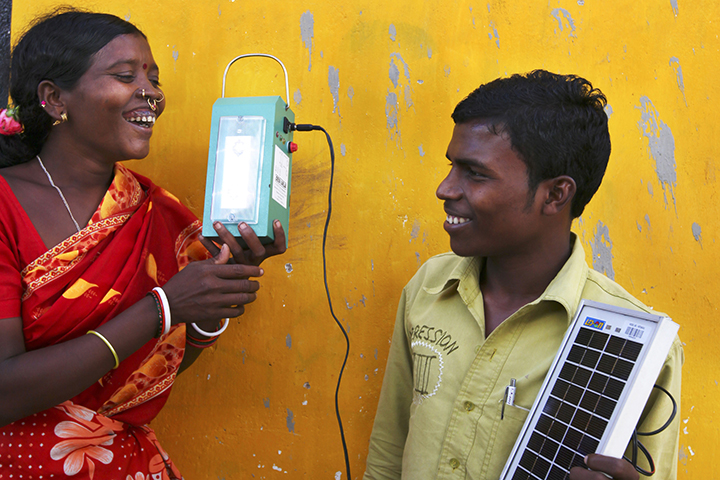
  • A range of off-grid solar products is now cheaper than kerosene over the lifespan of the technology. Surveys also indicate that people strongly prefer off-grid solar compared to kerosene, even if this means a reduction in the kerosene subsidy.
  • This report shares a plan for India to swap kerosene subsidies for solar subsidies through a six-step implementation plan with the end goal of an India where there is clean and reliable power for all.

Kerosene is not an ideal fuel: it has negative health impacts, gives poor lighting, emits greenhouse gases, raises the fire risk and causes subsidy costs to soar when international oil prices rise.

Millions of households in India, however, continue to use kerosene lamps. They may not be able to afford electricity or the electricity grid has not reached their community. Electricity blackouts also drive some households to ignite their lamps.

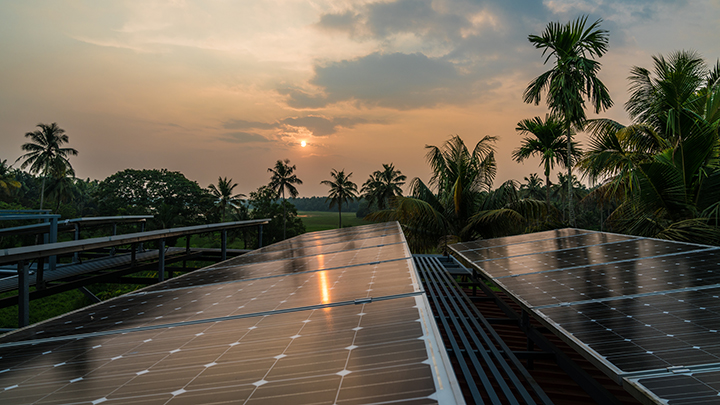
This independent study by the International Institute for Sustainable Development (IISD) and The Energy and Resources Institute (TERI) shows that switching subsidies from kerosene to off-grid solar products would improve electricity access for households that still rely on kerosene. The costs of solar products have fallen in recent years; by spreading the initial costs over a solar product's lifetime, there are clear cost savings for households and taxpayers that justify the switch to solar.

This report provides a six-step implementation plan for governments. The first three steps provide options on funding, targeting recipients and selecting solar products. The next steps are presented as three separate pathways depending on whether the government chooses to subsidize consumers, manufacturers or financial products. The goal for each pathway is the same: to assist India’s transition to clean and reliable power for all.

Report details

Insight

Prescribing the Right Medicine for India's Troubled Coal Sector

Instead of further subsidizing struggling coal infrastructure, India can begin to reallocate limited public funds to ensure a fair transition for workers and communities.

April 8, 2019

On March 7, 2019, the Cabinet approved what has been dubbed an Rs 31,560 crore (USD 4.6 billion) “prescription pill” for the power sector in India.

This includes investments worth Rs 21,528 crore (USD 3.1 billion) cleared for two coal projects to a combined capacity of 2,640 megawatt (MW) and a slew of measures to ease the 40,000 MW of coal power that is “stressed” and awaiting a Supreme Court ruling on insolvency proceedings.

India stranded coal assets
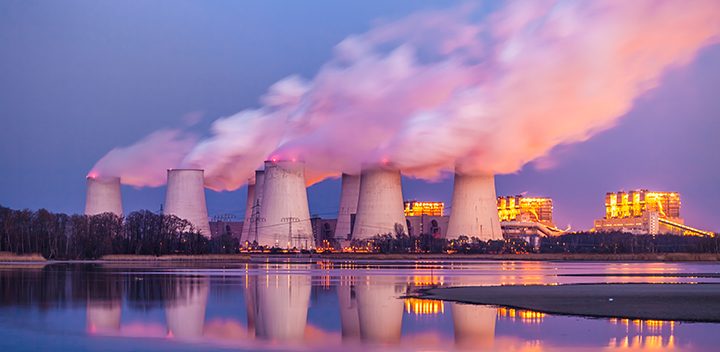
Factors that have led to 21 per cent of India’s coal-fired power plants to become financially "stressed" aren't going away.

But is this the cure for the challenges facing India’s energy system—or temporary pain relief that will rapidly wear off?

Cabinet is trying to relieve stressed assets by improving coal linkages and providing flexibility to power producers when distribution companies are not paying their dues. However, several drivers behind coal power stress are only set to grow, increasing risk of future stranding.

India’s citizens have grown discontent with air pollution. A study by the Health Effects Institute finds that coal will be the single-largest source of air pollution by 2050, responsible for 1.3 million deaths per year. New emissions regulations will add to the cost of coal power, increasing future stress.

Meanwhile, competition from renewables is expected to grow as solar and wind continue to offer tariff bids at rates lower than coal power.

Water availability will also have impacts on the coal sector’s viability, particularly where it overlaps with concentrations of coal asset stranding. A joint study by the International Institute for Sustainable Development and Overseas Development Institute finds the three states with the highest degree of stressed coal capacity today—Chhattisgarh (58 per cent), Odisha (55 per cent) and Jharkhand (27 per cent)—are supplied by water basins expected to be "water-stressed" by 2050.

India stranded coal assets
Uncertainty on future cost competitiveness of coal should worry decision-makers in both the public and private sector.

This isn’t a pleasant diagnosis. Uncertainty surrounding the future cost competitiveness of coal should worry decision-makers in both the public and private sector. It suggests the current intervention plan to triage assets and possible future capital infusions miss the bigger picture.

If coal becomes sufficiently costly, it is natural to assume some share of capacity can and should become stranded. The key question is not asset owners—but how any big shift might affect the estimated 1.6 million workers in the coal supply chain and their communities. Now is a golden opportunity to explore how government resources can be used—in the case of assets that cannot or should not be saved—to make sure no worker or community is left behind.

India faces concurrent structural challenges around employment and ensuring a sustainable and reliable energy supply for its people. It is becoming increasingly obvious how deeply linked these challenges are. Granted, the large number of jobs being created in the renewable energy sector is good news. At a macroeconomic level, it looks on track to more than compensate for any job losses. But the experiences of other countries show it will be just as important to ensure there is a fair deal for workers in the conventional energy sector—particularly when there is no easy way to match jobs from conventional to clean energy.

As things stand, taxpayers will foot the bill to prolong the lives of coal infrastructure projects; projects becoming increasingly financially unviable as the cost of renewables drops, air pollution legislation makes coal costlier to mine and burn, and water shortages leave power plants unable to run at capacity.

India stranded coal assets
Caption

With 21 per cent of India’s coal-fired power plants already financially "stressed" and this figure set to rise, policy-makers have a choice. Instead of further subsidizing struggling coal infrastructure, India—and particularly the states of Chhattisgarh, Odisha and Jharkhand—can begin to reallocate limited public funds to ensure a fair transition for workers and communities as the country shifts to a cleaner, healthier, lower-carbon energy system.

Previous signals from government suggested a portion of funds raised through the "coal cess" would indeed be allocated to a fair transition away from coal. This has failed to materialize so far. While this may seem far from the current practice of many policy-makers in India, the signs suggest coal’s symptoms may well worsen. It is important to think early and seriously about the right remedy in light of recent trends.

This editorial first appeared on ET Energyworld on April 4, 2019.

Insight details

Brief

India's Energy Transition: Stranded coal power assets, workers and energy subsidies

What is driving stressed coal power assets in India, and how do we ensure workers, not assets, are the focus of government interventions in the future?

April 2, 2019

What is driving stressed coal power assets in India, and how do we ensure workers, not assets, are the focus of government interventions in the future?

Key Messages

  • India's 2018 crisis of stressed coal power assets may rear its head in future years as various drivers suggest increased coal power costs in the future. Government interventions should not only focus on the short term, they also need to support a managed transition fair for all involved, including workers.
  • Current drivers of stressed assets include coal shortages and the financial distress of energy distribution companies (DISCOMs), while future drivers are likely to include water scarcity, air pollution regulations and cost-competitiveness of renewables.
  • Policy support mechanisms for coal artificially dampen market signals that affect coal power costs. These take the form of subsidies, public finance through loan preferential rates, or the delay or lack of enforcement of policies (such as air pollution regulations) that would otherwise increase costs to producers.
  • As part of an ongoing dialogue about labour in the coal sector, policy-makers should consider the complementary policies that can ensure that the burden of asset stranding does not fall on workers and communities. This might include general employment schemes, targeted social protection measures and financing mechanisms.

In the India Energy Transition 2018 update, the Global Subsidies Initiative (GSI) of the International Institute for Sustainable Development (IISD) and the Council on Energy, Environment and Water (CEEW) published updated estimates of the scale of energy subsidies in India for FY 2017, including partial data on the scale of subsidies for FY 2018.

One of the review's striking findings was government support measures for coal have remained largely unchanged since 2014, despite an ongoing crisis in the coal sector, where around 18 per cent of installed capacity is "stressed" and at risk of entering bankruptcy proceedings.

This issue brief takes a detailed look at why such a large share of coal power is struggling today and the drivers—including subsidies—that may cause similar crises to rear their heads in future. In light of this, it sets out some broad proposals from international literature on the topic of “just transition,” which encourages governments to recognize stranded workers and communities as much as stranded private or public assets. It builds on an analysis of the relationship between subsidies and coal power assets published by the GSI and the Overseas Development Institute in mid-2018, India’s Stranded Assets: How Government Interventions Are Propping Up Coal Power.

Brief details

Topic
Subsidies
Just Transition
Region
India
Project
IISD Global Subsidies Initiative
Impact area
Climate
Publisher
IISD
Copyright
IISD, 2019
Insight

Is GST stalling India's clean energy transition?

Is a newly introduced Goods and Sales Tax stalling India's move away from fossil fuels toward renewable energy?

March 8, 2019

India, the world’s third-largest energy consumer is undergoing a clean energy transition.

This transition must not only advance climate commitments but also development needs and economic priorities. This is a delicate balancing act. As we tread this tightrope, introduction of new macroeconomic policies could add further complexities.The goods and services tax (GST), introduced in July 2017, is one such example. The GST removed tax exemptions offered previously to solar photovoltaic (PV) and added much uncertainty during the first year of its introduction. How has the GST implementation impacted the cost of solar PV power?

India solar power
India's GST changes have increased the cost of solar photovoltaic (PV) power generation by almost 6 per cent.

According to a recent study published by the Council on Energy, Environment and Water (CEEW) and the International Institute for Sustainable Development (IISD), the introduction of GST has led to an increase in cost of generation of solar power by almost 6 per cent, while simultaneously reducing the cost of coal-based thermal power by nearly 2 per cent for existing plants.

Overall, it appears that the GST has implicitly widened the gap between coal-based power and solar PV, which has otherwise narrowed in the past few years, and could delay the onset of much needed ‘parity’ between the two sources. Combined with the imposition of safeguards duty (making majority of the PV panels used expensive) and the cap on solar power tariffs, the GST impact may have a bearing on profitability of companies in the sector.

Renewables deserve preferential treatment

The utility-scale solar power projects have become increasingly cost competitive against conventional energy sources. The scaling back of tax exemptions for solar PV under the GST regime and plans to further reduce subsidy support to renewables, suggests that the sector has already achieved critical mass to compete on its own merit.

Yet, it is also important to recognise that segments such as rooftop solar, microgrids, offshore wind, and floating solar continue to remain expensive or are too nascent to be deployed without adequate support in the short- and mid-term. The National Clean Energy and Environment Fund (NCEF), fed by the Clean Environment Cess applied on coal, was earmarked for supporting clean energy technology research and projects. With the GST, the Clean Environment Cess has been replaced with the GST Compensation Cess, which is no longer directed into the NCEF. This void must be plugged by the government through an alternative source. Policymakers should distinguish between emerging and mature renewable energy technologies and extend continued support to nascent but critical alternatives.

Another distinction that the GST regime must make is between the variety of contracting structures that exist for solar PV. According to a recent notification by the GST Council, 70 per cent of the gross value of the contract will attract 5 per cent GST, while the remaining 30 per cent will be treated as services and attract 18 per cent GST. This approach seems arbitrary since, for instance, the share of services in solar parks projects is close to 17 per cent. Ideally, services associated with installation of solar PV must be part of a composite supply and attract 5 per cent GST just as the solar power generating system.

It is also worth noting that the above clarification from the GST Council came after more than a year of implementation of GST. Until then, there was confusion on the GST rates applicable for solar power projects, with states differing from each other in their interpretation. The introduction of the safeguards duty on solar panels has only compounded the uncertainty, resulting in delays in deployment of solar projects.

The GST must increase relative competence of solar power with due consideration to second-order effects. One could argue that taxation on coal must reflect the health and environmental costs it imposes on the society but a higher tax on coal would make energy unaffordable for economically vulnerable groups. Hence, policymakers must focus on targeted subsidies, just as those being provided for LPG consumption under the Ujjwala scheme, to ensure that benefits accrue to the deserving, while also pursuing decarbonisation of India’s energy sector. Further, it is also important to evaluate the net impact of fiscal measures and budgetary support on promoting sustainable energy choices.

India GST changes
The GST was introduced to rein in inefficiencies in India's tax system–but it carries unintended consequences.

The GST was introduced with the intention of simplifying indirect taxes and reining in inefficiencies in the tax system. It is not surprising for a major shift in fiscal policy to have unintended consequences, which will be resolved over time. However, it is important to continuously monitor and examine if such fiscal measures are being effectively wielded, to support India’s larger national objectives with implications for sustainable development.

This article first appeared on Energyworld from The Economic Times on March 8, 2019.

Insight details

Brief

India's Energy Transition: The Impact of the Goods and Services Tax on Solar Photovoltaic and Coal Power Costs

One of the biggest changes in India's energy subsidy policy in FY18 was the introduction of the Goods and Services Tax (GST). How did this affect subsidies and costs for coal power and solar PV?

March 6, 2019

Key Messages

  • The Goods and Services Tax (GST) has increased the cost of solar photovoltaic (PV) power generation by almost 6 per cent and reduced the cost of coal thermal power generation by 1.6 per cent.
  • The absolute size of the subsidy to coal power generation remains INR 7,685 crore (USD 1.1 billion) higher than for solar PV in 2018.
  • It is important for policy-makers to evaluate the impacts of such tax reforms to make sure they do not send the wrong price signals on energy choices.

In India’s Energy Transition 2018 Update, the Global Subsidies Initiative (GSI) of the International Institute for Sustainable Development (IISD) and the Council on Energy, Environment and Water (CEEW) published updated estimates of the scale of energy subsidies in India for FY2017, including partial data on the scale of subsidies for FY2018.

FURTHER READING: India's Energy Transition: Subsidies for Fossil Fuels and Renewable Energy, 2018 Update

One of the biggest causes of changes in India’s energy subsidy policy between FY2017 and FY2018 was the introduction of the Goods and Services Tax (GST)—which overhauled a large share of India’s taxes, and, in doing so, its tax-related subsidies.

By removing exemptions and altering tax rates, the extent of preferential treatment for various energy sources has changed under the GST. Total tax subsidies to both solar PV and coal thermal power have been reduced, but the absolute size of the subsidy to coal-based power remains much higher than for solar PV.

By altering the net tax burden, the GST has also affected the cost of energy production. Our calculations show that, assuming all other factors are held constant, the GST is likely to lead to a significant increase in the cost of generation for new solar PV plants. In contrast, existing coal-fired thermal power plants are likely to experience reduced variable costs under the GST. A lack of data on the fixed costs of new coal plants makes it impossible to calculate the impact of the GST on the overall cost of new coal plants.

The introduction of the GST therefore appears to provide a relative bias in favour of coal-based power.

Detailed assessments of the implications of GST on other renewable energy types including wind are needed to determine unintended impact on relative cost against coal.

Brief details

Topic
Subsidies
Energy
Climate Change Mitigation
Region
India
Impact area
Climate
Publisher
IISD
Copyright
IISD, 2019
Insight

India's Energy Subsidies Moving in the Right Direction

India has become an outspoken proponent of renewable energy, but do the facts back up the rhetoric? Is the central government walking the talk when it comes to India's energy subsidies?

December 27, 2018

India has become an outspoken proponent of renewable energy, including at the just-concluded COP 24 in Poland and as champion of the International Solar Alliance (ISA).

But do the facts back up the rhetoric? Is the central government walking the talk?

Money, as they say, isn't everything, but an analysis of expenditure patterns reveals a lot about government priorities. And government subsidies affect energy prices, which drive investment and consumption decisions.

India's energy subsidies

A recent study of India's energy subsidies sheds light on exactly which energy types the government is backing. And it's no small amount—INR 151,484 crore (USD 23 billion) in the 2017–19 fiscal years (FYs). The report is an update of a comprehensive inventory released last year.

Consistent with the government's position has been its shift away from subsidizing fossil fuel and toward renewable energy. FY 21016/17 saw a record increase in support for renewable energy of INR 5,766 crore (USD 0.8 billion). At the same time, government support for coal, oil and gas fell by INR 13,418 crore and by INR 120,687 crore from 2014 to 2015, reflecting reform in consumer price subsidies for fuels such as petrol and diesel.

But this is not the full story. Subsidies for fossil fuels were still over three times those for renewables in FY 2017/18 at INR 52,982 crore. Coal alone received more than renewables at INR 15,992 crore and even increased by INR 1,148 crore.

Subsidies for coal can undermine the development of renewables by artificially reducing prices for coal-fired power, the renewables' main competitor. This contributes to air pollution and carbon emissions. Even where there are environmental standards for coal, they aren't always well enforced. One such example is non-compliance with coal washing laws, delivering a benefit of INR 980 crore in FY 2017/18 to coal companies—and incentivizing dirtier air for everyone.

Some energy subsidies are important to achieving certain policy objectives, such as access to energy. Around 70 per cent of India's energy subsidies aim to keep prices low for consumers or to connect households with modern energy, such as the Ujjwala program for cooking gas or the Saubhagya program for electricity.

The single largest support measure in FY 2017/18, accounting for almost half of all energy subsidies, was transfers to electricity companies to keep power prices low (INR 74,925).

Programs to improve access to clean, modern energy are vital for health and improving development outcomes across many areas, as recognized in the UN Sustainable Development Goals. But this does not mean that such programs should be exempt from review? On the contrary, evaluation is essential to ensuring they are effective and delivering value for money.

At the moment, most of India's spending on energy consumption, particularly electricity, is poorly targeted, with many benefits being captured by higher-income households. Efforts have been made to improve targeting, but given their high remaining costs, renewed efforts to direct support to the poor are critical.

India's energy subsidies

Looking at expenditure patterns, alternative ways of providing access to modern energy can also be considered. Kerosene, for example, is still used as the primary source of lighting for 30 per cent of households in some states and by many more as a backup during power outages. Subsidizing kerosene might seem like a lifeline to these households. But kerosene causes indoor air pollution and poses a fire risk, as well as providing low-quality light. Renewable alternatives such as solar lanterns or home systems are available for comparable costs to kerosene over time, but subsidies are needed to help poor households meet the initial upfront costs.

Further support may also be warranted for electric vehicles (EVs), which can help reduce pollution and de-link India's economy from volatile international oil prices. At the moment, when oil prices rise, the subsidy bill increases at the same time that revenues decline due to a variable fuel tax on petrol and diesel. Subsidies for EVs are only in their early stages in India, totalling INR 148 crore in FY 2017/18 and rising to INR 250 crore in FY 2018/19.

Looking forward, the central government's support for renewable electricity is likely to head in the opposite direction to EVs in coming years. Reforms associated with the Goods and Services Tax (GST) will see tax breaks for coal and renewables both decline by about INR 2,000 crore in FY 2018/19, but total tax breaks for coal will still be five times those for renewables. In addition, the largest subsidy for renewables, "viability gap funding," is likely to decline in line with increasingly competitive pricing for renewables.

Despite the increasing competitiveness of utility-scale solar and wind projects, certain clean technologies may continue to require budgetary support. They include offshore wind, energy storage and off-grid solutions. In addition, support for integration costs (such as energy storage) is likely to be needed to accelerate greater uptake of renewables. One potential source of funding is to shift savings from fossil fuel subsidy reform or better subsidy targeting.

Hard data, such as that in this review, provides a welcome anchor point in a debate that is frequently shrouded in spin by governments, interest groups and commentators. Greater transparency and reporting are needed to get the full picture.

Financial information is sorely lacking for many government energy policies, particularly at the state level. Only with full accounting and disclosure can there be the necessary evaluation of energy policies to ensure they are meeting their objectives and delivering value.

This article first appeared on Business Standard on December 20, 2018.

Insight details

Brief

India Energy Subsidy Briefing December 2018

The latest news on energy subsidy issues in India, including draft amendments to the Electricity Act 2003, India poised to exceed renewable energy target and oil subsidy burden potentially on the rise.

December 19, 2018

As part of its work on energy policy and sustainable development in India, the Global Subsidies Initiative publishes a regular briefing on issues related to energy subsidies.

Below are highlights from the December 2018 edition:

  • Draft amendments to the Electricity Act 2003 proposed in September 2018 include provisions to promote renewable energy, improve quality of power supply, impose stronger penalties for violations of Power Purchase Agreements (PPA), and initiate a direct benefit transfer for electricity subsidies to households.
  • Government says it is likely to exceed the renewable energy target of 175 GW by 2022 and may increase the target to 225 GW.
  • Oil subsidy burden on the rise with volatile crude oil prices; may cost the exchequer up to USD 7.4 billion in financial year 2018–19.
  • Supreme Court to hear pleas of owners of stressed power assets directed to declare insolvency by Reserve Bank of India.

For any additional or more detailed information, please do not hesitate to contact Christopher Beaton or Vibhuti Garg.

Brief details

Topic
Subsidies
Region
India
Impact area
Climate
Publisher
IISD
Copyright
IISD, 2018
Report

India's Energy Transition: Subsidies for Fossil Fuels and Renewable Energy, 2018 Update

How have India’s energy subsidy policies changed since 2016? Have they become more or less aligned with India’s desired energy future? How have India’s energy subsidy policies changed since 2016? Have they become more or less aligned with India’s desired energy future?

December 19, 2018

Pricing drives economic decision making, and subsidies (along with taxation) are one of the key tools that governments use to influence prices, and through them investment decisions and consumer behaviour.

This update highlights the most significant developments in the dynamic domain of India’s energy subsidy policies in FY 2017 and explores the role that subsidies play with respect to four themes: energy access; the role of coal; prospects for renewables; and a transport sector transition. It finds that the total value of quantified energy subsidies has declined from INR 2,15,974 crore (USD 35.7 billion) in FY2014 to INR 1,51,484 crore (USD 23 billion) in FY2017. Subsidies to fossil fuels have declined over this period, while subsidies to renewables and electric vehicles (EVs) have increased. However, the absolute value of subsidies to fossil fuels is much greater than those to renewables and EV.

Report details

Topic
Subsidies
Region
India
Impact area
Climate
Publisher
IISD
Copyright
IISD, 2018
Report

Support for Clean Cooking in India: Tracking the latest developments in LPG subsidies

An in-depth look at recent developments in India's subsidies for household cooking gas.

November 20, 2018

In order to promote the uptake of clean cooking, the Government of India has historically provided significant price subsidies for household liquefied petroleum gas (LPG), worth over INR 20,000 crore (USD 2.9 billion) in FY 2017/18.

This digital story takes an in-depth look at some of the most recent developments.

Report details

Topic
Subsidies
Region
India
Impact area
Climate
Publisher
IISD
Copyright
IISD, 2018
Report

Kerosene to Solar PV Subsidy Swap: The business case for redirecting subsidy expenditure from kerosene to off-grid solar

If kerosene subsidies are being gradually removed, can a share of the subsidy savings not be reinvested in helping the most vulnerable households access electric lighting through off-grid solar technologies? This paper explores the idea of a “kerosene to solar subsidy swap” or a “subsidy swap.”

July 18, 2018

Solar power has a key role in India's transition towards universal household electrification by March 2019. India has a growing market for off-grid products, recording its highest sales volume of off-grid products in 2017.

Despite recent progress and the wide range of on- and off-grid electricity and lighting options, a large number of marginalized households in India continue to remain without power and rely on subsidized kerosene.

Kerosene subsidies, originally provided as a way to promote access to affordable fuel for lighting and cooking, create negative health impacts and household pollution. They are also inefficient because it is easy for fuel to be illegally diverted in the distribution system. For many years, the Government of India has sought to gradually reduce kerosene subsidy expenditure by increasing product prices and restricting the volume of subsidized fuel supply.

If kerosene subsidies are being gradually removed, can a share of the subsidy savings not be reinvested in helping the most vulnerable households access electric lighting through off-grid solar technologies? This paper explores this idea in detail, referring to it as a “kerosene to solar subsidy swap” or a “subsidy swap.” The paper lists pico solar PV products currently available on the market to provide an affordable, reliable, direct replacement for lighting with kerosene. It then examines how the current business models and market structure for the suppliers of these products could enable a subsidy swap. The paper ends by reviewing the suitability of Uttar Pradesh and Odisha to host a subsidy swap pilot study, assessing the real-world impact of increased adoption of solar energy and a reduction in kerosene consumption.

Report details

Topic
Subsidies
Energy
Region
India
Impact area
Climate
Publisher
IISD
Copyright
IISD, 2018