
New EcoFilter System to Help Tackle Pollution in Johannesburg’s Jukskei River
A new nature-based EcoFilter system in Johannesburg is transforming how polluted urban rivers can be managed by combining water treatment, real-time data generation, and community benefits in a single solution.
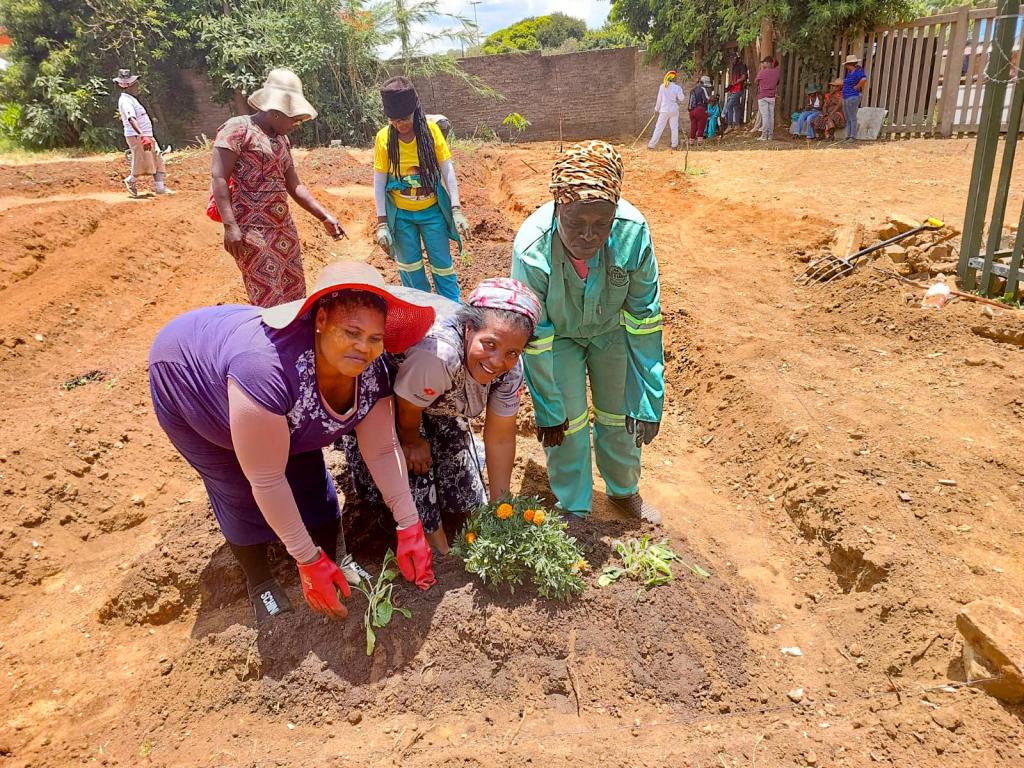
Installed in the Upper Jukskei River catchment, the EcoFilter system is designed to address persistent and chronic pollution challenges, including microbial contamination, excess nutrients, organic waste, and heavy metals. The system aims to provide accurate monitoring data, demonstrating the potential of nature-based solutions to improve water quality, while supporting the irrigation of women-led community gardens at Victoria Yards, in Johannesburg’s inner city.
Designed to function like a natural wetland, the system enables continuous water-quality monitoring, generating long-term datasets to assess performance and inform evidence-based decision making. These data will help document progress, highlighting both successes and ongoing challenges in catchment management while supporting learning and replication in other parts of Johannesburg and across sub-Saharan Africa.
The EcoFilter consists of modular 1,000-litre units arranged in a series of ecological treatment cells that support both anaerobic and aerobic processes for water purification. While its primary function is to support biophysical monitoring of the Jukskei River and to evaluate its benefits for improving water quality, it also delivers direct benefits to the local community by supplying water for the irrigation of community gardens in the area. It also provides a platform for education and research.
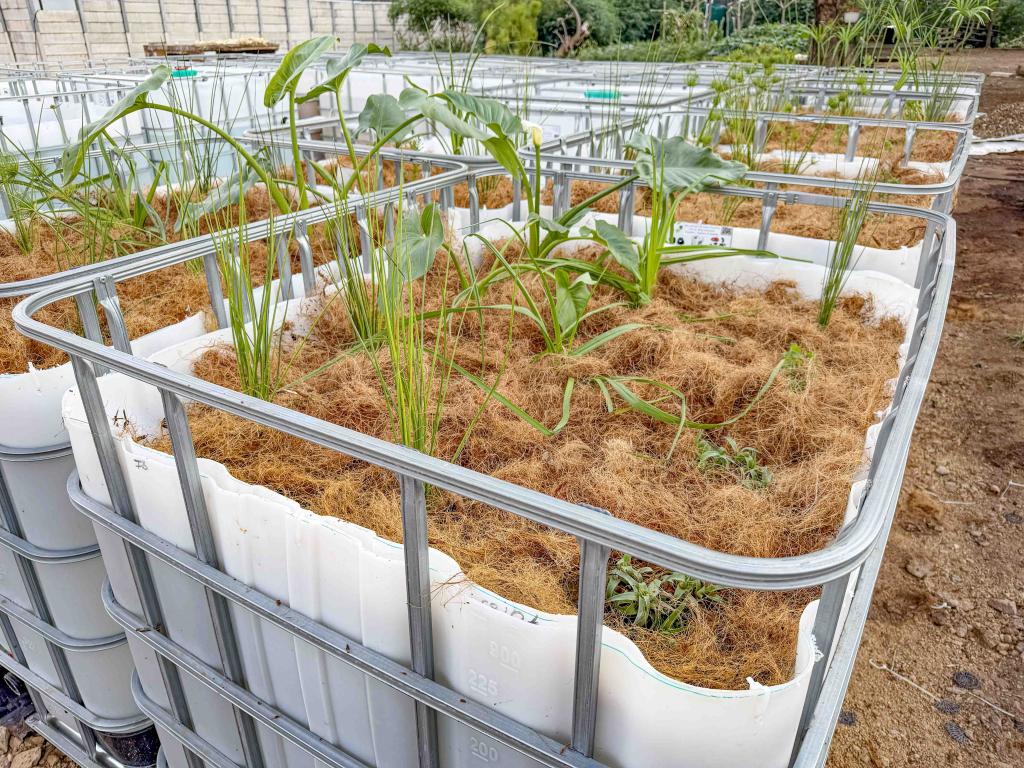
The system was developed under the SUNCASA project (Scaling Urban Nature-based Solutions for Climate Adaptation in Sub-Saharan Africa) through a collaboration between Isidima Design and Development, Water For The Future, Zutari, and the University of Johannesburg. The system is operated by trained staff from Water for the Future (WFTF).
SUNCASA works with local partners and communities to restore the Upper Jukskei River catchment through nature-based solutions. Interventions include removing invasive species and riverine waste, restoring riparian buffer zones, and expanding green spaces by planting indigenous vegetation. These interventions aim to strengthen the climate resilience of more than 1 million residents, particularly in relation to flooding, erosion, and water pollution.
QUOTES
“The City of Johannesburg is committed to transitioning from reactive pollution management to innovative, sustainable solutions that restore the health of our urban rivers. The implementation of the eco-filter system in the Upper Jukskei River catchment represents a significant step forward in integrating nature-based solutions with smart monitoring technologies.
This initiative not only improves water quality and strengthens our ability to respond to pollution in real time but also demonstrates how environmental interventions can deliver meaningful socio-economic benefits. By supporting community-led urban agriculture at Victoria Yards, the project contributes to food security, job creation, and inclusive development.
As a city, we see this as a scalable model for urban water resilience—one that aligns with our broader objectives of ecological restoration, climate adaptation, and sustainable service delivery.”— Daniel Masemola, Director of water management and biodiversity, City of Johannesburg
“The EcoFilter system offers an innovative approach to improving water quality while generating the data needed to support scaling, policy relevance, and learning across SUNCASA. While it is not designed to make Jukskei water potable or address catchment-wide pollution on its own, it provides a visible, monitored bioremediation node, reducing pollution loads and demonstrating the potential of integrated green infrastructure at scale. We believe this solution can be successfully replicated in other cities.”— Richard Grosshans, IISD and SUNCASA bioremediation lead
“Protecting communities and river ecosystems will require eco‑filters to move from pilots to city‑wide deployment as a core part of Johannesburg’s wastewater treatment strategy.”—Amanda Gcanga, WRI country lead for urban water resilience & senior urban policy analyst, and SUNCASA lead in Johannesburg
“Since 2017, WFTF has spearheaded the vision for a rehabilitated Jukskei, securing the land and pioneering the scientific partnerships—such as our work with Dr. Simon Lorentz (SRK Consulting) and UJ-PEETS—that ultimately made this EcoFilter possible. This system is the next evolution of our nature-based strategy, through which WFTF has transformed brownfields into thriving, women-led urban agricultural sites. By integrating years of river monitoring with community-driven action, we aren’t just filtering water; we are proving that local leadership is the essential catalyst for urban resilience. We are proud that our foundational work, including the water monitoring station established with Dr. Lorentz and continuous testing by Dr. Kousar Hoorzook and her team at UJ-PEETS, created the blueprint for SUNCASA to assist in scaling these vital interventions. For WFTF, this project represents the culmination of a community’s commitment to reclaiming their environment and securing a climate-resilient future for the Upper Jukskei.”— Romy Strander, Water for the Future
“We have been monitoring the Jukskei River discharge, water quality, and meteorology at Victoria Yards in collaboration with Water for the Future for the past 6 years to improve our knowledge of urban hydrology and provide information for remediation systems like the EcoFilter." — Dr Simon Lorentz, SRK Consulting (SA)
“The Jukskei River is in a poor state—and we should not accept that. This project is a demonstration, a practical step to show what works so we can do more of it across the city. It also needs to create opportunities for the people living closest to these conditions. What we’re learning is that nature-based solutions and placemaking are one system—when you repair the environment, you restore the place. ”— David van Niekerk, CEO, Johannesburg Inner City Partnership
MEDIA CONTACTS
Cesar Henrique Arrais, Senior Communications Officer, IISD; [email protected]
Bridget van Oerle, Marketing Manager, JICP; [email protected]
Muskaan Malik, Communications Manager, Water For The Future; [email protected]
About IISD
The International Institute for Sustainable Development (IISD) is a globally recognized think tank with 3 decades of experience working to solve the world’s most pressing sustainable development challenges. We combine deep expertise in a wide range of issues with a collaborative approach to research, policy advice, and hands-on support to ensure these solutions are brought to life. Headquartered in Winnipeg, Manitoba, we are a diverse team of over 300 professionals working from offices in Canada, Switzerland, and other locations around the world.

You might also be interested in
A Sustainable Asset Valuation Assessment of Nature-Based Solutions in the Jukskei River Catchment in Johannesburg, South Africa
This report assesses how nature-based solutions in the Jukskei River catchment reduce water pollution, flood damage, and health costs.
How Biophysical Monitoring Turns Data into Action for Nature-Based Solutions
Rigorous and consistent data analysis provides the feedback needed to refine strategies, attract investment, and strengthen natural infrastructure that delivers multiple social, environmental, and economic benefits.
How Sub-Saharan African Cities Are Building Climate Resilience Through Nature-Based Solutions
By combining community engagement and multistakeholder governance, nature-based solutions already enhancing communities’ resilience to climate change.
SUNCASA | Turning trash into treasures along the Jukskei River
SUNCASA and its local partners in Johannesburg, South Africa, launched a unique initiative that blends environmental action with artistic expression in the heart of Alexandra Township. Led by environmental artist and scientist Hannelie Coetzee, local artists have turned waste carried by the Jukskei River into thought-provoking sculptures and litter traps to tackle flooding and pollution in the region.