
Beyond the Price Tag: Redefining the just energy transition in Southeast Asia
In a bustling room in Jakarta, the conversation among policy-makers and experts wasn’t just about climate targets; it was about the “kitchen table stories” of Southeast Asia. Whether in Jakarta, Manila, or Hanoi, the questions are the same: Is this transition fair? Can our industries stay competitive? And where exactly does the money go?
These questions formed the heartbeat of a high-level gathering this week, where government officials, energy experts, and civil society leaders met to bridge the gap between ambitious climate policy and the lived reality of citizens in Southeast Asia.
The Hidden Barrier to Transition: The "negative" carbon price
The event opened with a presentation that shed light on Indonesia’s current energy support measures. A recent report by the International Institute for Sustainable Development (IISD) revealed that Indonesia spent IDR 713.5 trillion on energy subsidies in 2024, with nearly 90% going to oil, gas, coal, and fossil-fuel-based electricity.
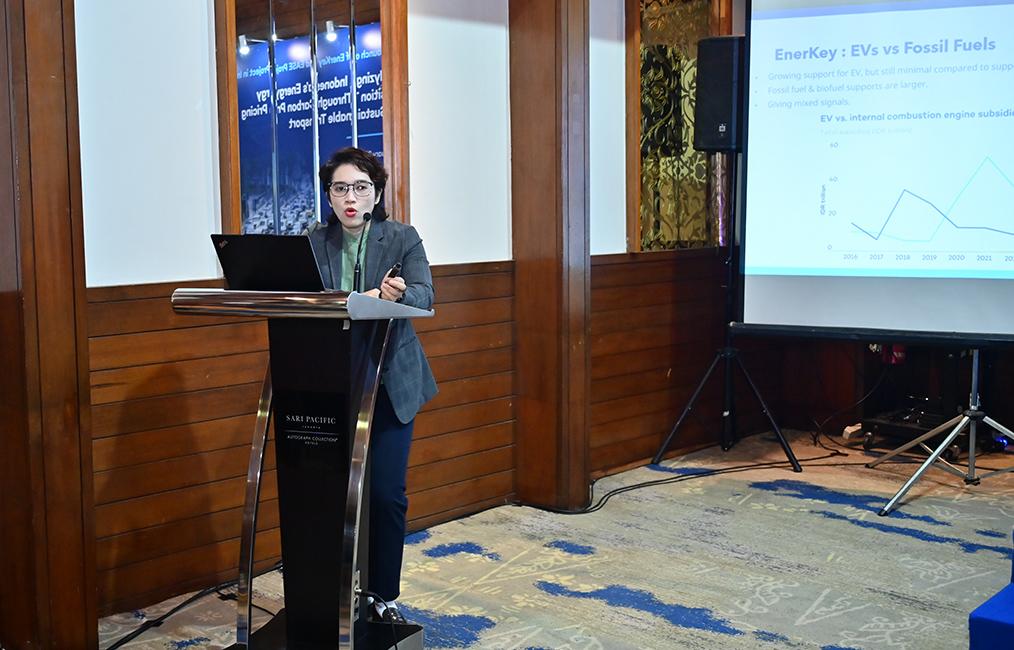
According to Anissa Suharsono, senior policy advisor at IISD, this effectively creates a “negative carbon price.” When subsidies for coal and gasoline are significantly larger than incentives for clean energy, and support for electric vehicles accounts for only about 1.5% of total subsidies, they create a powerful economic pull that makes it extremely difficult for green technologies, such as electric vehicles, to compete on a level playing field.
The Two Initiatives: Emissions Ambition for Sustainable Economies in Southeast Asia and Energy Is the Key to a Climate Stable Future
To counter this gravity, the event marked the launch of two strategic initiatives supported by the Government of Canada and implemented by IISD: the Emissions Ambition for Sustainable Economies (EASE) in Southeast Asia and Energy is the Key to a Climate Stable Future (EnerKey).
Focusing on Indonesia, the Philippines, and Viet Nam, EASE will advance the research and policy needed for credible, socially fair carbon pricing. Meanwhile, EnerKey will steer electric mobility strategies that support affordable and clean transport, local jobs, and low-carbon power systems across Indonesia and the Philippines.
More than just data, these initiatives offer a roadmap for a just, sustainable energy transition with gender equality and social inclusion (GESI) built in from the start. Supported by the Government of Canada and IISD, these projects mark a pivotal shift from testing ideas to "durable, scalable implementation."
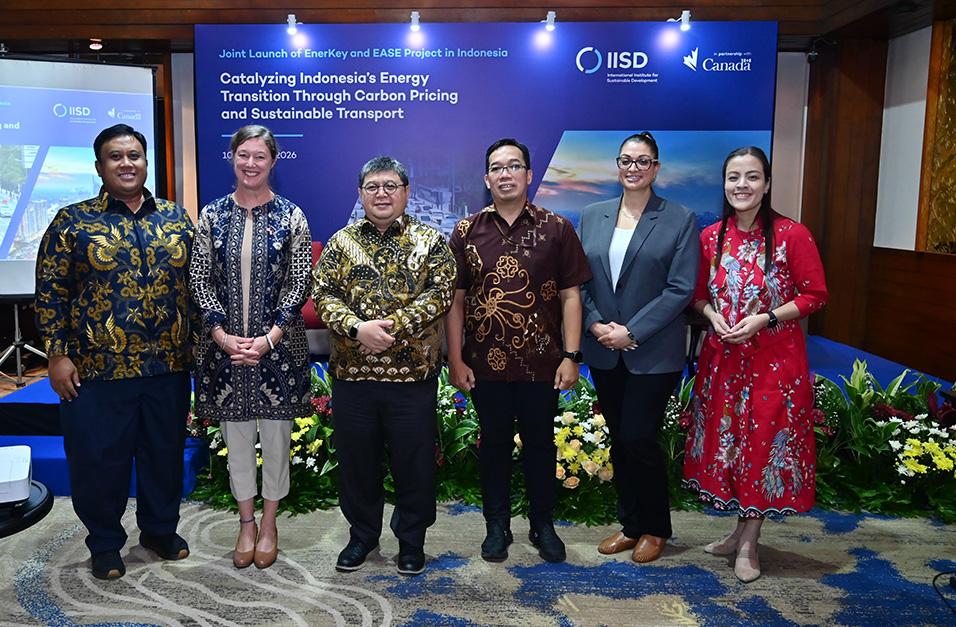
The shift toward this low-carbon future was echoed by Alice Birnbaum, Head of Cooperation at the Embassy of Canada to Indonesia and Timor-Leste. By aligning with national priorities, such as Indonesia’s ambitious 42.6 GW renewable energy target by 2034, these initiatives bridge the gap between high-level policy and hands-on technical cooperation. She noted that these programs were built on extensive consultations with civil society and marginalized communities, ensuring that the transition is as inclusive as it is innovative.
Reinforcing this vision, Ridha Yasser, Assistant Deputy for Energy and Telecommunications Infrastructure, Coordinating Ministry for Infrastructure and Regional Development, Indonesia, framed the transition as a total ecosystem transformation. He emphasized that for a nation at a critical turning point, decarbonizing transport is not just a climate goal but a core infrastructure priority. By aligning vehicle electrification with a cleaner power grid and using carbon pricing to mobilize private investment, Indonesia aims to turn climate risks into economic opportunities.
The Panel: Where policy meets reality
The highlight of the day was a candid panel discussion on how to align carbon pricing and energy transition in Indonesia. The conversation moved from high-level strategy to implementation, emphasizing that a successful transition must be both technically sound and socially protective.
Fajar Nuradi, Assistant Deputy for Food Production & Climate Change at the Coordinating Ministry for Food Affairs, opened by highlighting the "just" dimension of the shift. He argued that an equitable transition depends on revenue recycling, using carbon funds to make targeted cash transfers to protect low-income households. He also called for a paradigm shift for small islands, viewing them as the nation’s "front yard" rather than its backyard, ensuring that carbon pricing is aligned with the practicalities of how people live, eat, and afford basic necessities.
Building on these foundations, Bayu Nugroho, Coordinator for Electricity Environmental Protection, Directorate General of Electricity, Ministry of Energy and Mineral Resources, Indonesia, addressed the operational realities of the power sector. He underscored that setting a credible "cap" within a diverse energy mix is a vital learning process for driving real investment. For carbon pricing to work, he argued, it must be supported by a mandatory emissions trading system with predictable benchmarks to maintain a strong price signal. He also highlighted the urgent need for "price discovery" and grid modernization to support the coming wave of electric vehicles.
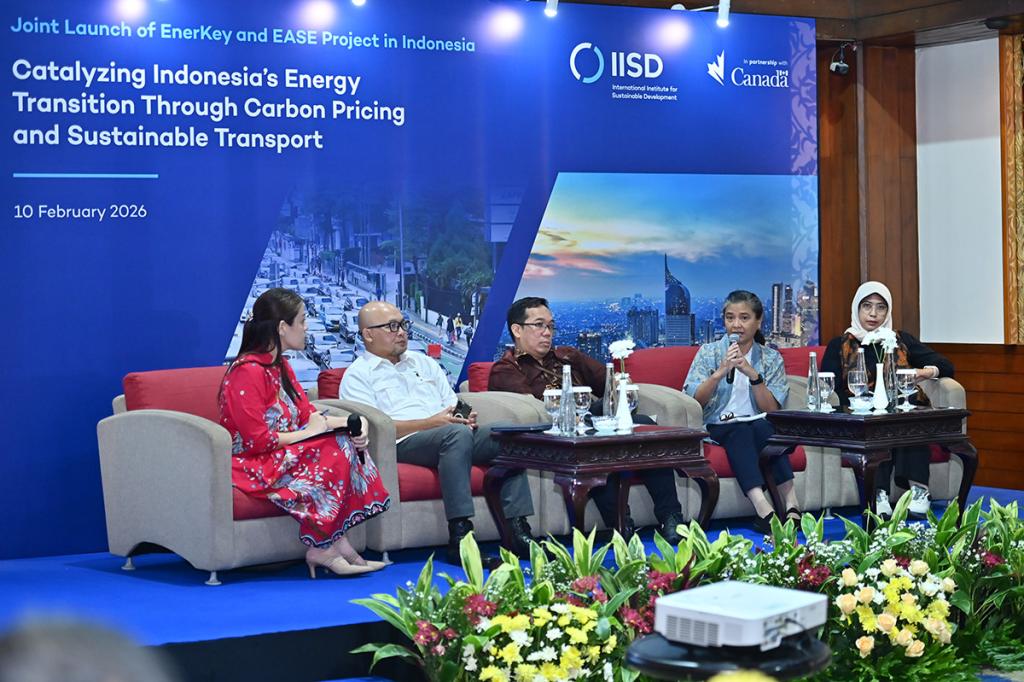
Moekti “Kuki” Soejachmoen, Executive Director of Indonesia Research Institute for Decarbonization, sharpened the focus on fairness by proposing a "threshold" approach. To prevent administrative burdens, she suggested that small-scale emitters participate as offset suppliers rather than being forced into mandatory trading. This turns local communities into active beneficiaries of carbon revenue. Beyond technicalities, she reminded that the transition is deeply political, requiring a dialogue that includes Parliament, labour unions, and consumer groups to ensure costs are shared equitably.
Looking at it from an economic perspective, Dr. Alin Halimatussadiah, Head, Green Economy and Climate Research Group, Lembaga Penyelidikan Ekonomi dan Masyarakat - Fakultas Ekonomi dan Bisnis, Universitas Indonesia (LPEM FEB UI) emphasized that a predictable carbon price pathway is essential for investor certainty. She advocated for replacing generalized energy subsidies with targeted support powered by robust digital public infrastructure. Warning against "zigzag" regulations that turn investment into a gamble, she stressed that the success of electric mobility depends on a stable roadmap to decarbonize the power grid, ensuring the shift is as scientifically sound as it is socially equitable.
Mai Duong, policy advisor at IISD, reflected on the strategic shift toward mandatory emissions trading and the need for clear frameworks to ensure carbon offsets remain effective. Drawing on lessons from the recent IISD-Pembina Institute report on Canada’s industrial pricing systems, she cautioned that an oversupply of credits can weaken investment signals, emphasizing the need to balance decarbonization with industrial competitiveness. Regarding transport, she noted the focus has shifted from "why" to "how," with subsidy reforms and carbon revenues now essential to closing the electrification cost gap. To support these efforts, she introduced Carbon Market Insights, a new IISD publication designed to ensure policy choices are grounded in market reality and data transparency.
The gathering demonstrated a shared recognition that a just transition is within reach, as long as ambition is matched by smart policies, targeted investments, and an understanding of the realities faced by households and industries. Initiatives like EASE and EnerKey signal a shift toward more coordinated and evidence-based approaches, linking carbon pricing, policy reform, and electric mobility with social protection and inclusion. As Southeast Asia moves forward, the focus will be on continuing to translate these plans into actions that are both economically viable and socially fair.
You might also be interested in
Solar Can Outcompete Grid Power in Rural India With the Right Planning
New research finds solar-based distributed renewable energy systems can generate electricity in rural India at a lower cost than conventional grid supply. Careful planning of local demand, storage, grid conditions, financing, and long-term operations is key to unlock these savings.
Carbon Pricing in the ASEAN Region: Moving from ambition to architecture
For ASEAN policy-makers, carbon pricing is no longer simply a domestic climate policy choice. It is increasingly linked to global economic integration, trade relationships, investment flows, and industrial competitiveness.
Bonn Climate Talks 2026: What to expect after Santa Marta
With UN climate talks starting in Bonn soon, the shift to implementation is being felt, especially in the transition away from fossil fuels.
Carbon Market Insights: Volume 1, Issue 1
A semi-annual report delivering practical, data-driven analysis on carbon markets in Southeast Asia, with a focus on Indonesia, the Philippines, and Viet Nam.