
The Compromiso de Sevilla and the Challenge of Financing Development: A reality check
As the dust settles in Seville, we look at where the conference made real progress, where it falls short, and the road ahead.
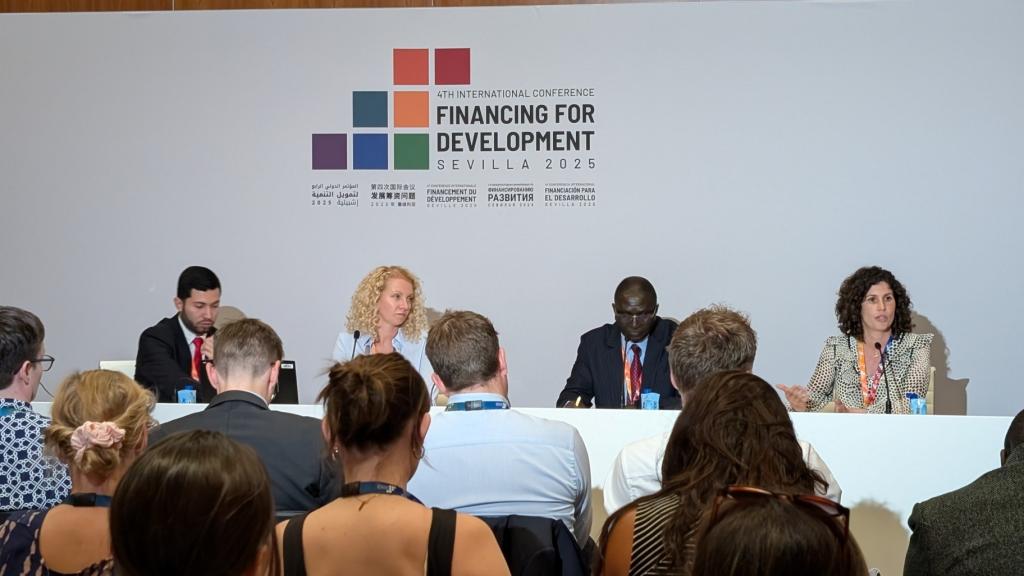
The Fourth International Conference on Financing for Development (FfD4) wrapped up yesterday. On day one, countries adopted the Compromiso de Sevilla, a year-long negotiated outcome aiming to close the widening gap in financing the Sustainable Development Goals. While the withdrawal of the United States highlighted deepening geopolitical fault lines, the agreement nevertheless signals that multilateralism remains possible, though shaped by compromise and the constraints of lowest-common-denominator consensus.
Though clearly present, the broader geopolitical dynamic often remained beneath the surface in discussions—perhaps due to time constraints demanding a forward-looking focus. Still, the conference carved out important space for deep, cross-cutting conversations on development finance. It was a rare chance to bring together voices from tax, debt, trade, and private finance, breaking down silos and sparking new ideas on how these tools can work hand in hand on the ground.

Domestic Resource Mobilization: A priority to bridge the aid gap?
Domestic resource mobilization (DRM) emerged as a priority at FfD4, with many countries viewing raising money at home as a necessary and pragmatic response to shrinking aid budgets.
Development partners pledged to collectively double DRM support to developing countries by 2030. A success was the call to increase taxation of natural resources, highlighting the significant revenue potential for resource-rich developing countries where extractives remain a major, but often under-taxed sector.
Tax expenditure reform also gained traction in Seville, with countries calling for greater transparency and oversight in how governments report tax benefits granted to companies. On the sidelines of the conference, IISD and partners launched the Global Coalition for Tax Expenditure Reform, a practical effort to turn those demands into action. The initiative is already endorsed by Brazil, France, Guinea, Nigeria, Rwanda, Senegal, Spain, and the United Kingdom.
African countries and G77 delegates also reaffirmed strong support for the UN Framework Convention on International Tax Cooperation, emphasizing the need for more inclusive and equitable global tax rules, a topic we’ll explore in depth in an upcoming webinar and report.
Despite these advances, the absence of a clear commitment to phase out fossil fuel subsidies is a major setback, representing a regression from the Addis Ababa Action Agenda.
It must also be noted that tax reforms alone won't close the gap and could risk deepening financial vulnerabilities if not balanced with growth in export revenues. Multilateral action—on debt relief, export growth, and targeted grant financing—still matters, and arguably more than ever.
Debt: Steps forward but no systemic relief at FfD4
Debt featured prominently throughout FfD4, with mounting fiscal pressures on development front and centre. The Compromiso stresses enhanced transparency, consolidated principles on responsible borrowing and lending, and improved data exchange, acknowledging that effective debt management hinges on coordinated action between creditors and debtors. At the conference, the “Borrowers’ Forum” was launched, a new platform to boost coordination among debt-distressed nations, amplifying their voice in global financial governance.
The conference also promoted state-contingent debt clauses to suspend payments during climate crises, helping build fiscal resilience in vulnerable countries going forward.
Such practical proposals can indeed support countries facing debt vulnerabilities. Calls to strengthen and systematize liquidity support—including through a proposed facility within existing institutions like the World Bank or International Monetary Fund—and efforts to improve the G20 Common Framework, including proposals to make it more predictable, inclusive and timely, also point to incremental progress.
However, they cannot replace a much-needed systemic response. Without a comprehensive solution, many heavily indebted countries will continue to have limited fiscal space and face weak external positions, struggling to finance their development priorities. Such a comprehensive initiative has not been adopted at the conference. In side events in Sevilla, IISD introduced the Debt for Resilience Initiative (D4R), a proposed framework for reforming the international debt architecture.
Trade: FfD4 falls short on bold commitments
Countries in Sevilla tackled wide-ranging trade issues but stopped short of agreeing on a clear direction regarding the most difficult questions concerning international trade policies. The Compromiso contains no real commitment to the conclusion of the World Trade Organization negotiations, on fisheries subsidies and agriculture, which would help the trade system deliver for sustainable development.
It does, however, point to important practical steps to help developing and least developed countries benefit from international trade. Particularly important is the commitment to enhance capacity building for governments to engage effectively in international trade negotiations.
With Sevilla now behind us, governments should look at how they can build trade, both in practice and policy, more effectively into their development cooperation strategies. In a period of real uncertainty in the global economy, this is a moment to build resilience and sustainability, not just efficiency, into trade's contribution to development.
Looking Ahead
FfD4 demonstrated that multilateralism still works —through compromise and despite pressure. The real test now is delivering on the agreements reached, even if they fall short on some expectations. With technical consensus on many important reforms, the focus must shift to turning commitments into concrete policy action over the coming decade.
You might also be interested in
A Guide to Guarantees for Sovereign Debtors
A guide to deploying sovereign guarantees to mobilize capital and support sustainable development while managing fiscal risks.
Navigating the European Union’s Carbon Border Adjustment Mechanism
A guide for exporters on navigating EU Carbon Border Adjustment Mechanism costs and reporting from 2026 onward—with a focus on steel and aluminum.
Leveraging Trade Policy for Climate Change Adaptation in Viet Nam’s Agricultural Sector
Identifying adaptation goods and services for Viet Nam's agriculture and strengthening coordination between trade and adaptation policy-makers.
Midpoint of the UN Tax Convention Negotiations: Where do talks stand?
The negotiations for a new UN Framework Convention on International Tax Cooperation have hit their halfway point. Here's a look at where things stand, what was on the table this round, and what's coming next.