
Midpoint of the UN Tax Convention Negotiations: Where do talks stand?
The negotiations for a new UN Framework Convention on International Tax Cooperation have hit their halfway point. Delegates were in New York for the fifth round earlier this month. This time, they were working with draft text on the table across all three tracks: the Convention itself as well as two early protocols, on cross-border services and on tax dispute prevention and resolution. Here's a look at where things stand, what was on the table this round, and what's coming next.
The United Nations Framework Convention on International Tax Cooperation ("Framework Convention") is a proposed international agreement that aims to create a fairer and more effective approach to global tax governance. The process emerged from calls to modernize global tax governance, reallocate taxing rights over multinational enterprises and digital services, and strengthen domestic resource mobilization for sustainable development.
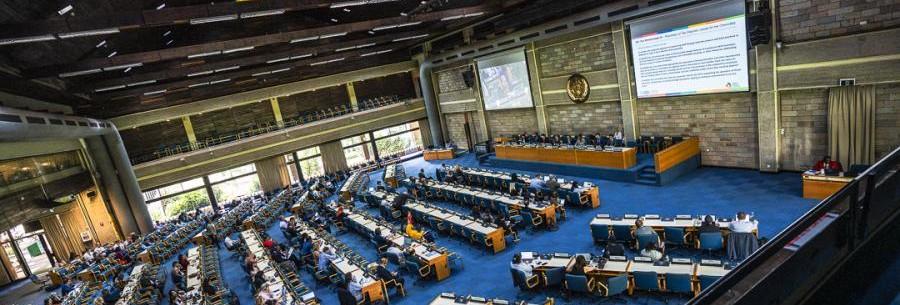
The conclusion of the fifth negotiating session in New York (August 3–13, 2026) marked a decisive shift from high-level commitments to line-by-line negotiation. Yet, while member states share a common roadmap, divisions persist over how taxing rights will ultimately be allocated. So, what actually happened in New York, and where do global tax negotiations stand today with the 2027 deadline looming?
Where do negotiations stand on the Framework Convention?
In the first week of the negotiations, delegates undertook an article-by-article discussion of the first full "Zero-Draft" of the Framework Convention.
Rather surprisingly, a number of delegates challenged the relevance of including the objectives and principles (articles 1–2) in the convention. These provisions had been taken from the previously agreed Terms of Reference for the negotiations. European countries like Ireland and Italy, for example, believed that the concepts used in the provisions were overly broad and, in some sense, incomplete. It was also difficult to ascertain the legal meaning of the concepts used. For these reasons, Mexico and a few others believed it was better to include objectives and principles in the Preamble of the convention. India and the African Group strongly opposed downgrading objectives and principles to preambular status, noting that there is an operational logic to having objectives and principles in a Framework Convention, as these connect to the actual deliverables under the commitments.
In relation to the commitments (articles 4–11), countries continued disagreeing on familiar themes, like the definition of illicit financial flows (article 7)—does it include aggressive tax avoidance or not?—or the proper combination of supply- and demand-side nexus rules that make up a fair allocation of taxing rights (article 5). Regarding administrative assistance (article 10) and exchange of information (article 11), Organisation for Economic Co-operation and Development (OECD) countries demanded that the convention recognize the existing frameworks, like the widely adopted Multilateral Convention on Mutual Administrative Assistance in Tax Matters and the work undertaken by the Global Forum on Transparency and Exchange of Information for Tax Purposes. African countries strongly rejected this stance. Kenya noted that the mandate of the negotiations is to establish fully inclusive and effective international tax cooperation, a standard the existing frameworks do not meet because many UN member countries were not in the room when those frameworks' rules were developed.
A common thread running through the debates is the exact legal nature of the commitments in the Framework Convention. On this point, delegates will need to strike a careful balance: phrasing the substantive provisions in such a way that a country’s signature compels meaningful action to improve tax cooperation, without making countries reconsider signing because of vague, open-ended obligations.
Where do negotiations stand on Early Protocol 1?
The second week of the negotiations was protocol week. Delegates started by discussing the much-awaited Zero Draft of the protocol on the taxation of cross-border services. The co-lead explained that the discussion draft differed significantly from alternative drafts that had been floated by European and African delegates because neither draft had gathered sufficient support. The co-lead reiterated that protocol negotiations strive for consensus, but if consensus cannot be found, decisions will be made by majority. The statement led to concern among some European delegates, who responded by requesting that the protocol incorporate optionality, so countries can choose which provisions apply in relation to which existing bilateral tax treaties.
On the issue of scope of "taxes covered" under the protocol (article 2), the co-lead reiterated her stance that the protocol should comprehensively resolve the issue of cross-border taxation. This implies that the protocol should cover both income taxes and taxes, with similar effects on income taxes. While delegates were not universally in support of the wide framing in the draft article, there did seem to be agreement that the protocol should cover digital services taxes, an indirect tax, unlike existing bilateral tax treaties and their formal scope, which is limited to income taxes.
The new distributional rules in the protocol for income from services (article 5) and from automated digital services (article 6), which sets out a hierarchy of connecting factors to decide which country should be treated as the source of income and receive the new taxing right, seemed to appeal to delegates on both sides of the aisle. Although countries have not yet agreed on which connections should take priority, there appeared to be broad support for the principle of avoiding overlapping source country claims.
There was general consensus among countries that the draft’s current net-taxation alternative (article 9) was inadequate. The net taxation alternative provides that the source country may levy tax based on "a reasonable allocation of profits." Switzerland and France believed that this rule was both unpredictable and unworkable in practice. Kenya, too, believed the rule was legally unsound and prone to abuse. Countries generally agreed there was more work to be done on the protocol's approach to net taxation.
There was less agreement on the draft’s approach to taxation methods under the protocol. Many OECD countries believed the draft leaned too much toward gross basis taxation, which they consider unacceptable for several reasons. The co-lead concluded from those countries’ focus on gross taxation that there was support for net taxation.

Where do negotiations stand on Early Protocol 2?
Toward the end of the second week, delegates focused on Early Protocol 2, an instrument focused on the prevention and resolution of tax disputes. The central question is how the Framework Convention can build multilateral consensus on tax dispute mechanisms while ensuring it remains accessible, balanced, and respectful of tax sovereignty.
The proposed Zero Draft for the protocol moves from broad conceptual debates to more concrete questions of design. A key cross-cutting issue in the discussion is the optionality of the mechanisms presented. The co-leads restated the previously agreed idea that some mechanisms, both for prevention and resolution, could be core mechanisms under which countries cannot opt out. However, there is no clear consensus on which mechanisms, if any, should be mandatory. Even dispute prevention mechanisms have been proposed as optional by some delegations in the debate.
A second issue is the level of detail that should be included in the protocol itself. Some countries have questioned whether the protocol should contain highly detailed procedural rules, or whether technical issues should be left to Memoranda of Understanding, guidance notes, or annexes. The co-leads explained that a more detailed approach may support countries that do not have extensive treaty networks or experience with tax dispute resolution. Some countries, however, opposed this approach, arguing that it could make the protocol too complex.
The most politically sensitive discussions revolved around tax arbitration. Many OECD countries believe the protocol should include mandatory binding arbitration among its options, as, in their experience, it has been key in compelling countries to resolve disputes via the Mutual Agreement Procedure. However, the African Group and other developing countries oppose its inclusion, even as an optional mechanism, with concerns over tax sovereignty and constitutional impediments.
The issue of tax-related investor–state dispute settlement (ISDS) was also raised. The African Group expressed opposition to tax cases increasingly going to investment arbitration and concern that the protocol remains silent on the issue. Mexico, supported by the United Kingdom, also acknowledged the challenges of investment arbitration for tax matters and proposed that the protocol take action by including language on a tax authority filter mechanism. This would mean that, if a tax-related case goes to ISDS, respondent states would have the option to refer the claim to the competent tax authorities, which would determine whether the claim is tax-related and should therefore not proceed to ISDS.
As with Early Protocol I, the debates over the Zero Draft furthered disagreements on which dispute management mechanisms should be included. While most countries agree that the protocol should remain flexible and provide a menu of options subject to domestic law, more consensus will be needed to determine the text of the instrument.
What happens next?
The road to 2027 leaves no margin for delay. With the Intergovernmental Negotiating Committee convening for its remaining rounds through late 2026 and 2027, member states face a shrinking window to reconcile structural divides before presenting the final convention and early protocols to the 82nd UN General Assembly. The benchmark of success will not simply be meeting this deadline but doing so without sacrificing regulatory substance. If negotiators can bridge divides over net taxation and dispute resolution without diluting commitments, the convention will mark a historic shift toward inclusive global economic governance.
Participating experts

Josefina del Rosario Lago
Policy Analyst, Tax and Investment
Josefina is a policy analyst working at the intersection of the tax and investment teams. She develops research and practical guidance for governments and delivers technical assistance programs on these issues. She has experience working on sustainable investment agreements.

Scott Emery
Communications Assistant
Scott is a communications assistant for the Economic Law and Policy program. Alongside his cross-programmatic work, Scott supports IISD’s Investment and Tax and Sovereign Debt teams. He brings communications experience from across the non-profit sector.
You might also be interested in
Inside the UN Tax Negotiations: Key outcomes and future challenges
Last week at the United Nations, countries endorsed new guidelines for an international tax system under the UN's umbrella. Our expert Kudzai Mataba, who observed the negotiations, provides an in-depth look at the progress, the divergent priorities of developed and developing nations, and the challenges ahead for global tax cooperation.
Why the Scope of Taxes Covered Will Determine the Success of the UN Framework Convention’s Services Protocol
This article analyzes the UNFCITC draft protocol on cross-border services and its ambitious proposal to cover digital service taxes and quasi-income levies.
Rising Investor-State Tax Arbitration Cases Threaten Fiscal Sovereignty: Here’s what the UN Tax Convention can do
Tax disputes are increasingly being brought before investor-state dispute settlement (ISDS) tribunals, undermining fiscal sovereignty and exposing governments to significant financial liabilities. The UN Framework Convention on Tax, currently under negotiation, offers a chance to stop this.
Arbitration and the United Nations Framework Convention on Tax
This brief examines the risks of using investor–state dispute settlement (ISDS) for cross-border tax disputes under the UN Framework Convention on Tax, showing why ISDS is ill-suited and offering a baseline for negotiators exploring alternative arbitration options in the protocol.