This briefing note is the second in the series Tracking the SDGs in Canadian Cities which reviews data from 14 Canadian cities found on the IISD-SDG Indicator Portal.
While all Canadians are fortunate to have access to universal health care, cities still play an important role in ensuring equal access to health services and promoting health education and access to the essential services that improve the physical and mental well-being of all residents.
The focus of the second brief in our series Tracking the SDGs in Canadian Cities is SDG 3, the health and well-being of all. This series reviews data from 14 Canadian cities found on the IISD-SDG Indicator Portal.
Clean Fuel Standard: Summary of stakeholder written comments on the Discussion Paper
The Government of Canada published the Clean Fuel Standard: Discussion Paper to seek stakeholder feedback and received comments from across economic sectors, environmental organizations, academia and the public.
Canada has committed to reducing its greenhouse gas (GHG) emissions by 30 per cent and developing solutions to achieve at least 80 per cent emissions reductions by 2030 and 2050, respectively, below 2005 levels.
(le français suit)
In November 2016, the Government of Canada announced that it would develop a Clean Fuel Standard (CFS) to increase the use of lower-carbon fuels and alternative technologies, such as electricity, hydrogen and renewable fuels, including renewable natural gas. The government further noted that the policy would have broad coverage and include liquid, solid and gaseous fuels in transportation, industry and buildings. The overall objective of the CFS is to achieve 30 megatonnes (Mt) of annual reductions in greenhouse gas (GHG) emissions by 2030.
The Government of Canada published the Clean Fuel Standard: Discussion Paper to seek stakeholder feedback and received comments from across economic sectors, environmental organizations, academia and the public. Overall, submissions noted strong support for the CFS and its objectives, including broad agreement on the importance of contributions from all economic sectors in emission reductions necessary to achieving Canada’s climate objectives.
Norme sur les carburants propres : Résumé des commentaires écrits des intervenants sur le document de travail
Le Canada s’est engagé à réduire ses émissions de gaz à effet de serre (GES) de 30 pour 100 d’ici 2030 et à élaborer des façons de parvenir à une réduction d’au moins 80 pour 100 des émissions d’ici 2050, sous les niveaux de 2005.
En novembre 2016, le gouvernement du Canada a annoncé qu’il allait mettre au point une norme sur les carburants propres (NCP) dans le but d’augmenter l’utilisation de carburants à faible teneur en carbone et des technologies de emplacement, notamment l’électricité, l’hydrogène et les carburants renouvelables, y compris le gaz naturel renouvelable. Le gouvernement a en outre énoncé que la politique aurait une portée très large de façon à inclure les carburants à l’état liquide, solide et gazeux utilisés dans les transports, le secteur industriel et le secteur du bâtiment. La NCP devrait permettre de réduire annuellement les émissions de GES de 30 mégatonnes (Mt) d’équivalent en dioxyde de carbone d’ici 2030.
Le gouvernement Canada a publié le document ayant pour titre Norme sur les carburants propres : Document de travail pour obtenir les réactions des intervenants et les commentaires provenant des différents secteurs économiques, des organismes non gouvernementaux, du monde universitaire et de la population en général. Dans l’ensemble, on a observé un fort soutien pour la NCP et ses objectifs, car on s’entend notamment sur l’importance de la contribution de tous les secteurs économiques dans la réduction des émissions nécessaire pour atteindre les objectifs du Canada en matière de changements climatiques.
IISD Experimental Lakes Area 2016-2017 Annual Report
In this year's annual report, we explore how IISD Experimental Lakes Area is innovating in the arena of freshwater science, to improve its own research, but also limnology across the world.
In a world where water and its health are under constant threat, it is up to the world’s freshwater laboratory to continually push the envelope when it comes to how we tackle those threats.
In this year's annual report, we explore how IISD Experimental Lakes Area is innovating in the arena of freshwater science, not just to improve its own research, but also to advance limnology across the world.
In 2011, 81 per cent of Canadians lived in urban centres. Cities are the epicentres of arts and culture as well as hubs for business and economic growth, and as such they are important stakeholders in achieving the Sustainable Development Goals (SDGs) by 2030.
To ensure that cities are on track to contribute to these goals, assessments of indicators aligned with the SDG framework are necessary to identify what is working and where more attention should be devoted. IISD’s SDG Indicator Portal tracks SDG progress in 13 cities across Canada. The first brief in this series provides an overview of SDG 1—ending poverty in all its forms everywhere—across cities in Canada.
Towards Sustainable Development in Manitoba: Recommendations for Manitoba's Watershed-Based Policy Framework
IISD's recommendations to strengthen proposed programs under Manitoba's Watershed-Based Policy Framework aim for net gains through geographic targeting, an evaluation framework to assess cumulative impacts and value for money, as well as coordination of local level-actions through aligned metrics with other programs related to land and water management.
The Province of Manitoba recently proposed a series of initiatives as part of a new watershed-based policy framework to streamline and coordinate provincial programs and initiatives in the geographic context of watersheds.
These include a proposed "GRowing Outcomes in Watersheds (GROW)" program focussed on obtaining ecological goods and services from the agricultural landscape; "Watershed-Based Drainage and Water Resource Management" for creating a streamlined approach for addressing drainage and water retention projects; and the "Modernization of Manitoba's Conservation Districts Program" to strengthen collaboration and delivery measurable outcomes.
IISD has been active in Manitoba-based research for close to three decades, providing technical and policy insight on provincial issues including climate change mitigation and adaptation, sustainable agriculture, watershed management, and water resources management in the context of Lake Winnipeg. IISD works to balance social, economic and environmental outcomes in policy design and implementation. In addition, IISD-Experimental Lakes Area provides world-class research on aquatic ecosystems and has provided evidence for global decisions around air and water pollution.
IISD is pleased to see the structure and content of the three consultation documents under the proposed watershed-based policy framework. We have long promoted a watershed approach to integrated land and water management as a means to greater impact, more measurable outcomes and stronger local-level engagement.
Watersheds provide us with a range of important benefits, and good management can mean better environmental, economic and social systems for Manitobans long into the future. The proposed programs are an opportunity to demonstrate strong, made-in-Manitoba solutions for coordinated, evidence-based watershed management resulting in multiple benefits for all Manitobans. In order for the proposed watershed-based programming to be impactful, achievable and sustainable, they must:
Aim for restoration or a net gain of identified, priority ecological goods and services (EGS) and water-retention capacity;
Target regions and ensure that the most effective actions are matched with them for the most impact and the least cost;
Include a robust, evidence-based evaluation framework focused on cumulative improvements and a value-for-money analysis;
Adopt effective measurement that takes into account conventional environmental monitoring, cost–benefit analyses, community-based monitoring, traditional and local knowledge, remote sensing and other analytical means available.
Strengthen coordination in the context of watershed management, particularly between geographies, impacts, agencies and processes.
Manitoba Prairie Lakes: Mass balance budget for nutrient management at Pelican Lake, Manitoba
This study documents the variance and relative importance of different nutrient sources and internal lake processes for a Prairie lake (Pelican Lake, Manitoba).
While the water quality of many prairie lakes is monitored and the extent of the eutrophication—and associated negative consequences—generally understood, information on the specific nutrient sources and in-lake processes is often insufficient to identify specific management options.
This study sought to conduct a water and nutrient mass balance, identifying the variance and relative importance of different nutrient sources and internal lake processes for a lake that could be used as a general model for other prairie lakes. As with many other shallow prairie lakes, the eutrophication of Pelican Lake has become increasingly pronounced over recent years.
Canada Must Do More to Adapt to Climate Change, Environment Commissioner Says
Canada’s Commissioner for Environment and Sustainable Development, Julie Gelfand, just called on the federal government to do more to prepare Canadians for the impacts of climate change. We explore how that needs to happen.
October 10, 2017
Canada’s Commissioner for Environment and Sustainable Development, Julie Gelfand, just released a report calling on the federal government to do more to prepare Canadians for the impacts of climate change.
“The federal government is not prepared to deal with the impacts of climate change that we are all feeling right now,” Commissioner Gelfand told the press on Tuesday.
“The report was a significant step, I think, in terms of highlighting the need for the federal government to be taking adaptation to climate change more seriously,” says Jo-Ellen Parry, IISD’s lead on climate change adaptation.
“We have seen some positive progress in recent years with the Pan-Canadian Framework process including the adaptation component within it,” Parry continued. “However, the commissioner’s report highlights that the federal government still has a long way to go to better understand how climate risks will impact its operations and make plans for addressing those risks.”
“The federal government is not prepared to deal with the impacts of climate change that we are all feeling right now,” Commissioner Gelfand told the press on Tuesday.
The commissioner’s report found that 14 departments have not assessed their climate change related risks.
“One of the things [the federal government] needs to do is go through a climate risk screening process for all of their operations,” explains Parry. “There’s a need to assess how the changes in our climate that are anticipated to occur—such as increases in temperature, changes in precipitation patterns, sea level rise along our coasts—could have impacts in terms of federal capacity to deliver benefits for Canadians.”
Parry says the next step is understanding what actions can be taken to reduce those risks and then proceeding to actually implement those actions that have been prioritized.
Canada's environment commissioner’s report on climate change adaptation in Canada found that 14 departments have not yet assessed their climate change related risks.
At the international level, many countries are taking action to adapt to climate change. One study found that of the 162 nationally determined contributions submitted to set out countries’ goals toward fulfilling the Paris Agreement, 87 per cent included a goal for adaptation.
Parry says there are many good examples for Canada to draw on.
“Under Barack Obama’s administration, there was a call for all federal agencies in the United States to undertake a comprehensive review of their climate risks and to develop adaptation plans in response to those risks,” she says. “They’ve also tied the provision of disaster assistance to having a disaster risk mitigation plan.”
Parry also notes that many low-income countries are making significant strides toward building their resilience to climate change despite limitations on their resources.
There’s a need to assess how the changes in our climate that are anticipated to occur could have impacts in terms of federal capacity to deliver benefits for Canadians.
“You can also look to any number of developing countries throughout the world that are in the process of developing national adaptation plans,” she says. “This is the process by which they’re bringing together the best knowledge that they have about their climate risks and engaging stakeholders within and outside of government to develop plans for how it is that they will mitigate those risks, and developing strategies for their implementation.”
“There are lessons there that Canadian governments, at the federal level but also at the provincial level, could learn from,” concludes Parry. “We’re hoping that there will be greater opportunity in the future for this type of knowledge sharing between countries and between regions.”
How Scientific Knowledge Can and Should Guide Policy-Making
Now that it is welcoming its first federal chief science advisor, Pauline Gerrard explains how Canada can best support and nurture its scientific community.
October 6, 2017
The connections between science, policy and democracy got a boost last week in Canada, when Dr. Mona Nemer was appointed as the new federal chief science advisor.
With this announcement, Canada joins the ranks of countries like the UK, New Zealand and Ireland in formally including a science office aimed at providing advice in support of good government decisions.
Dr. Nemer’s role is to ensure government science is accessible in the decision-making process, and that public and federal scientists have the freedom to speak out about their work and views. The appointment is an important part of this government’s pledge to advance evidence-based policy.
Dr. Mona Nemer's appointment is an important part of this government’s pledge to advance evidence-based policy.
But the details of how Dr. Nemer’s mandate will advance science remain to be seen. Bridging science with policy sounds logical and straightforward, but it isn’t always easy. Perhaps nothing shows that more clearly than a recent comment by Scott Pruitt, the head of the U.S. Environmental Protection Agency under President Trump, who said, “Science is not something that should just be thrown about to try to dictate policy in Washington, D.C.”
As Dr. Nemer steps into the role of the country’s chief science advisor, she will need to consider how best to support and nurture the Canadian scientific community.
One key challenge for Canada’s chief science advisor is to move from science being “thrown about” to a more systematic approach that uses scientific evidence to support good policies. This is hard. Science is often designed to focus on specific questions controlling for larger systems that can be critical in effective policy-making.
Science vocabulary and methodology can be inaccessible to the general public and often do not point to specific actions that can be taken by individuals. And in this world of fake news and quick Google searches, it is often challenging to know what is real and what isn’t and, in many cases, it is seems easier not to trust anything than to risk trusting information that could be false.
A first step to addressing these challenges is understanding how decision makers use scientific knowledge to guide policy-making and what factors facilitate its use. A recent study found that the most important factor influencing scientific impact was the legitimacy of knowledge. The researchers found that science that is perceived as unbiased and representative of multiple points of view is more strongly associated with impact than either the credibility or salience of the knowledge. This puts responsibility on researchers themselves to engage with stakeholders directly and incorporate multiple points of view into study design, delivery and communication.
In Canada, a critical part of incorporating multiple points of view is recognizing the wealth of traditional knowledge amongst elders and Indigenous knowledge keepers. Support for Indigenous-driven research and the incorporation of ndigenous perspectives and traditional knowledge into western approaches can strengthen the research itself and build legitimacy of findings. Indigenous perspectives can bring a holistic viewpoint to targeted studies and contribute generations of knowledge of the land and tradition in this country.
Traditional Native knowledge keepers and elders are a resource in seeing the world in a way that is rooted in the land.
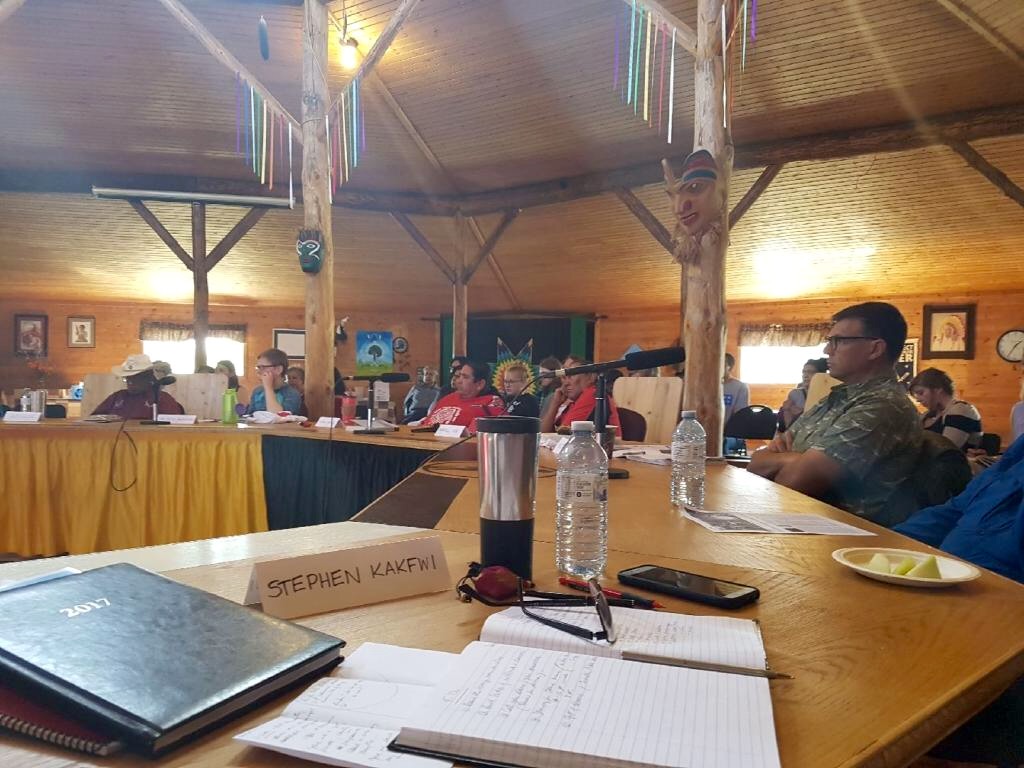
Pulling these perspectives together in a meaningful way often requires very different timelines, vocabularies and ways of looking at the world. As David Suzuki highlighted in a recent gathering of traditional knowledge keepers and scientists at the Turtle Lodge in Sagkeeng First Nation, Manitoba, “Traditional Native knowledge keepers and elders are a resource in seeing the world in a way that is rooted in the land.“
Dr. Nemer will need to focus on empowering and connecting indigenous leaders, public interest groups and scientists from academic, industrial and government agencies.
Bringing the positive tools from both sides together and using them in a newly formed paradigm of ecosystem-based science can greatly strengthen legitimacy and build commonly understood solutions for the future.
The limited role of non-government organizations (NGOs) in science in Canada is another factor that restricts our ability to pursue multi-sectoral research agendas that work in collaboration with different interest groups and stakeholders across the country. NGOs are currently not eligible to receive direct funding under most National Science and Engineering Research Council (NSERC) granting envelopes. This limits their ability to guide research and participate as equitable research partners. It is also in stark contrast to other OECD countries such as Norway and Switzerland where NGOs such as NIVA and EAWAG are leaders in basic and applied research on marine and freshwaters. NGO engagement and leadership in science of all kinds will contribute directly to legitimacy and strengthen the policy impact of science as a whole.
As Dr. Nemer steps into the role of the country’s chief science advisor, she will need to consider how best to support and nurture the Canadian scientific community. Foremost to this task will be entrenching approaches that build legitimacy. Because legitimacy depends on considering diverse voices, Dr. Nemer will need to focus on empowering and connecting Indigenous leaders, public interest groups and scientists from academic, industrial and government agencies. IISD is looking forward to being an active part of this exciting paradigm shift.
Canada’s electricity sector plays a central role in supporting the country’s economic, social and environmental needs.
In order to meet emerging trends, including supply and demand pressures, and to remain competitive in a world that is becoming increasingly carbon constrained, Canada’s electricity sector must modernize and make appropriate investment decisions. To this end, coming decades will be critical and lock-in effects in the electricity sector that can undermine mid-century decarbonization objectives should be avoided.
This report looks specifically at smart grids within the context of grid modernization and urban settings in Canada. In this context, we note that the rapidly aging electricity infrastructure provides a unique opportunity to achieve synergies found between grid modernization and climate objectives.
Behavioral responses to annual temperature variation alter the dominant energy pathway, growth, and condition of a cold-water predator
Canadian scientists at IISD Experimental Lakes Area have discovered that certain lake predators are altering their behaviour due to climate change, revealing what the future may hold for these fish and their food.
Canadian scientists have discovered that certain lake predators are altering their behaviour due to climate change, revealing what the future may hold for these fish and their food.
A recently completed 11-year study at IISD Experimental Lakes Area in northwestern Ontario, first published in the Proceedings of the National Academy of Sciences of the United States of America reveals that Lake Trout have a remarkable ability to adjust their behaviour in the face of changing water temperatures.