Report

Country Diagnostic Report: Nigeria

Ceres2030 Deep Dives into the Nexus of Food Systems, Climate Change, and Diets

This report provides an overview of the current economic, social, and climate (mitigation and adaptation) trends in Nigeria, as well as projections based on the Ceres2030 modelling framework. The report also includes a brief review of relevant policy documents addressing undernourishment and agricultural development, along with an overview of the approach and early findings from country consultations. The report concludes with a brief summary of relevant national trends and planned next steps in the country-level research and analyses.

May 17, 2022

The purpose of this report is to provide an overview of findings from the first round of activities for the four components of the project, namely the nutrition profile (Task 1), the data assessment (Task 2), relevant parts of the literature review (Task 3), and the findings of the first consultations (Task 4). Our research is based on diverse sources of information, including the relevant outcomes of the Ceres2030 project, public policy documents, peer-reviewed literature, and international databases. Using these sources of information, this report provides an overview of the current economic, social, and climate (mitigation and adaptation) trends in Nigeria, as well as projections based on the Ceres2030 project model. We also include a brief review of relevant policy documents addressing undernourishment and agricultural development, along with an overview of the approach and early findings from country consultations. The report concludes with a brief summary of relevant national trends and planned next steps in the country-level research and analyses.

Webinar

Deep Dives Into the Nexus of Food Systems, Climate Change, and Nutrition

July 28, 2021 8:00 am - 8:50 am CEST

(Open to public)

The 2021 UN Food Systems Summit is taking place in the context of the climate crisis and exacerbated global food insecurity resulting from the COVID-19 pandemic. While the world is facing these challenges and a global response will be needed, developing countries—and in particular African countries—are dealing with an even more extreme situation. Their development dynamics and needs involve an increase in food consumption and production to address the nutritional requirements of their populations in an approach that also ensures the environmental sustainability and resilience of their agricultural practices. Based on developed country experience, there is no evidence that such a transition could be achieved by relying on market economic forces alone, especially if the social inclusiveness of the process has to be guaranteed. Therefore, policy pathways must be identified and implemented that favour synergies and limit trade-offs within the nexus between climate change, food systems, and nutrition.

Speakers

  • Francine Picard, Senior Policy Advisor and Partnerships Lead, IISD 
  • Carin Smaller, Director of Agriculture, Trade and Investment, IISD 
  • Dr. Andrew Kwasari, Senior Special Assistant to the President on Agriculture, Office of the Vice President of Nigeria
  • Christel Weller-Molongua, Director of Rural Development and Agriculture Division in the Global Department at GIZ 
  • Dr. Felix Phiri, Department of Nutrition, HIV and AIDS of the Ministry of Health in Malawi  
  • Willem Olthof, Deputy Head of Unit, DEVCO C1 - Rural Development, Food Security, Nutrition, European Commission  

This session explains how we can influence consumption patterns through policy interventions that will lead to better environmental and nutritional outcomes in three countries—Malawi, Ethiopia, and Nigeria—in order to identify policy roadmaps to sustainable food system transformation. Specifically, by building on the Ceres2030 literature review and cost modelling exercise, this research supports analytical work to strengthen the evidence base for climate-smart nutrition interventions in the context of a sustainable food system. This aligns with the overarching transformative theme of the UN Food Systems Summit.

The purpose of this parallel session is to present the results from the country case studies, together with country focal points from the three countries: the Office of the Vice President of Nigeria, the Ministry of Public Health in Malawi, and the Federal Ministry of Health in Ethiopia. We aim to develop joint ownership of the final recommendations and enhance the utilization of the research in the Food Systems Summit, dialogues, and long-term country-level strategies.

Deep Dives Into the Nexus of Food Systems, Climate Change, and Nutrition in Malawi, Ethiopia, and Nigeria will provide examples of how to develop a country-level roadmap for food systems transformation that could serve as a blueprint for other countries and that is based on the best available evidence, economic modelling, and a deep engagement with national-level stakeholders working together with experts.

This event is the result of a collaboration between the International Food Policy Research Institute (IFPRI), the International Institute for Sustainable Development (IISD), Deutsche Gesellschaft für Internationale Zusammenarbeit (GIZ), the European Union, the Malawi Ministry of Public Health, and the Office of the Vice President of Nigeria.

Interpretation in French and in English will be available.

Insight

Are Countries Walking the Talk on Cutting Carbon?

In the race against climate change, increasing ambition over time is necessary to avoid catastrophic warming. However, revised commitments from parties to the Paris Agreement lack two critical components of ambitious climate action: carbon pricing and fossil fuel subsidy reform.

March 16, 2021

Since the Paris Agreement was signed in 2016, countries have committed to act on climate change through their Nationally Determined Contributions (NDCs), plans that set country mitigation and adaptation targets every five years to keep global warming in check. Yet the United Nations Environment Programme’s recent Emissions Gap report on climate ambition shows that, under current government pledges, NDCs are largely insufficient and will lead to at least a 3°C warming by the end of the century. The ratcheting mechanism of NDCs—in other words, their increasing ambition over time—is critical to avoid a climate crisis.

How Can Countries Increase the Ambition of Their Climate Action?

Two particularly important tools that countries have at their disposal are carbon pricing and fossil fuel subsidy reform. Working as two sides of the same coin, these tools raise fossil fuel prices to be more in line with their true cost, which promotes more efficient consumption and therefore combats climate change while directing investments toward clean energy alternatives. Both can not only keep emissions in check and help countries meet their climate targets, but they also raise much-needed revenue for a green recovery from COVID-19. Every country should include ambitious carbon pricing and subsidy reform targets in its NDC. So far, however, this is not the case.

In a 2019 report, the International Institute for Sustainable Development (IISD) and Deutsche Gesellschaft für Internationale Zusammenarbeit (GIZ) showed that, out of almost 200 NDCs, only 8% of countries (14 NDCs) explicitly pledged to reform fossil fuel subsidies, and only 12% of countries pledged to put a price on carbon (50 NDCs). (The EU is treated as a block, as it has submitted a single NDC.)

Every country should include ambitious carbon pricing and subsidy reform targets in its NDC. So far, however, this is not the case.

While all countries committed to submitting revised NDCs in 2020, only 71 countries did so. It is possible that several countries may have interpreted the postponement of the 2021 United Nations Climate Change Conference (COP26) as a reason to postpone NDC updates as well, but this is problematic as it further complicates tracking progress on subsidy reform and carbon pricing. For example, Canada recently decided to significantly increase its carbon pricing to CAD 170 a tonne by 2030 but did not submit an updated NDC last year.

Analyzing the text of all NDCs—including those updated in 2020—reveals very few new or more ambitious green fiscal policy commitments. Only 57 explicitly commit to carbon pricing (including emissions trading schemes) and 12 to fossil fuel subsidy reform. Furthermore, several of these pledges are aspirational rather than firm action plans. Perhaps most disconcertingly, looking at the 2020 batch of NDCs, we found at best no improvement on fossil fuel subsidy reform and, at worst, two countries that might have backtracked on their proposals.

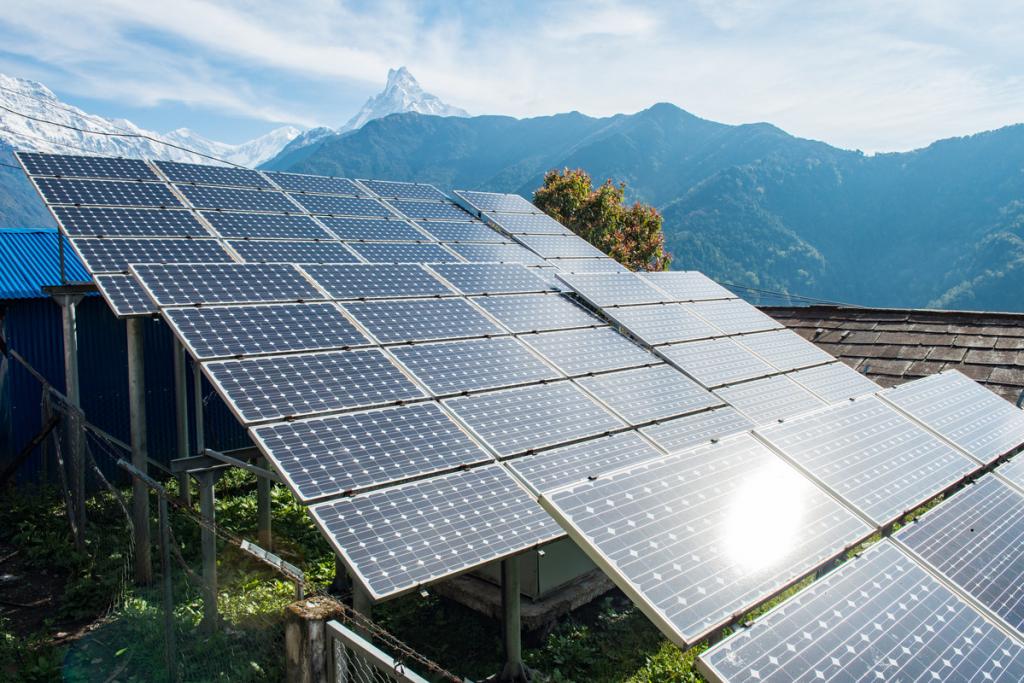
Solar panels in a field with mountains in the background
Solar panels in Nepal / Boyloso

Commitments to carbon pricing did increase, which is praiseworthy, but countries must openly acknowledge that fossil fuel subsidies are incompatible with climate action and begin to widely recognize and adopt fossil fuel subsidy reform as the powerful emissions reducing tool that it is.

Fossil Fuel Subsidy Reform and Carbon Pricing Are Still Underutilized in the 2020 Revised NDCs

Many countries make commitments to renewable energy subsidies as a means of meeting their mitigation targets, but fossil fuel taxation and subsidy reform remain underutilized. While renewable subsidies can incentivize deployment, their positive effects could be cancelled out if countries simultaneously continue underpricing fossil fuels.

Only a handful of countries link fossil fuel subsidy reform or carbon pricing to creating a fair playing field for renewables in their NDCs, including Burkina Faso, Colombia, Ethiopia, and Singapore. Ethiopia stands out for eliminating virtually all of its fossil fuel subsidies in 2008. Switzerland also acknowledges the importance of reviewing domestic fossil fuel subsidies while cooperating with other countries, including through the Friends of Fossil Fuel Subsidies Reform. However, these commitments are still exceptions rather than the norm.

What Is Missing From Most NDCs?

Some countries such as Armenia, Kiribati, and the Solomon Islands detail how revenues raised from carbon taxes or levies might or will be used. Armenia refers to the possibility of using carbon pricing revenues to fund climate change mitigation and adaptation projects. Despite these outlying positive examples, however, most NDCs remain vague on how the revenues from carbon pricing and subsidy reform will be used and on what compensation measures will be put in place to protect vulnerable groups. For instance, Nigeria pledges to reform subsidies to fossil fuel consumption and production, acknowledging that consumption subsidies benefit higher-income households most. Yet Nigeria falls short in detailing how these reforms might actually be accomplished or how vulnerable consumers might be protected in the process.

Most NDCs remain vague on how the revenues from carbon pricing and subsidy reform will be used and on what compensation measures will be put in place to protect vulnerable groups.

Several NDCs also send mixed signals by supporting fossil fuel subsidy reform but promoting natural gas as a bridge fuel, as in the case of Morocco. Surprisingly, still very few countries make a connection between green fiscal tools and green recovery despite the opportunities for large revenue gains and emissions reductions.

Where Are NDCs at Now, and Where Do Countries Need to Go From Here?

The biggest emitters, namely China, India, and the United States, have not yet submitted an updated NDC and have, particularly in the case of the United States and China, relied on a fossil fuel heavy recovery. But positively, we are seeing some of these trends start to change. India used low oil prices during the pandemic as an opportunity to raise excise duties on diesel and gasoline to help fund its COVID-19 recovery. China pledged to be carbon neutral by 2060 and recently launched an emissions trading scheme in the power sector. In the United States, the Biden administration has also shown an unprecedented willingness to tackle the fossil fuel industry head on, including by seeking to eliminate certain subsidies to fossil fuel producers.

Several NDCs revised in 2020 also make a case for a green recovery and building back better. But clearly, when it comes to fossil fuel subsidy reform and carbon pricing, there is a long way to go before countries’ promises match the level of ambition needed to limit climate change to 1.5°C.


Report

Gender and Fossil Fuel Subsidy Reform in Nigeria: Findings and recommendations

The report examines from a gender perspective the impact of kerosene subsidies and their reform in Nigeria, finding that kerosene subsidies did not work for poor women.

February 5, 2020
  • Households surveyed reported paying 2–6 times the official sales price for kerosene when it was subsidized.

  • Households surveyed prioritized jobs, health, financial support and education over energy subsidies—might the billions spent on an inefficient subsidy system be better spent on social protection programs?

  • In periods of fuel shortages, hardships increased for women as they queued for hours and sometimes all day to get fuel. 

Key Messages

  • The report examines the impact of kerosene subsidies and reform from a gender perspective in Nigeria and finds that they did not work well for poor women. None of the households surveyed reported paying the official price for kerosene when it was subsidized. In periods of fuel shortages, hardships increased for women as they queued for hours and sometimes all day to get fuel. 
  • It finds that women were negatively impacted by reforms when the kerosene subsidy was removed in 2016, as higher kerosene prices from reforms stressed household incomes. 
  • The report recommends against returning to subsidizing kerosene. Given the high dependence of households on fuel wood for cooking, financing support for clean-burning cookstoves may be necessary in the interim to provide cleaner alternatives.

The report examines from a gender perspective the impact of kerosene subsidies and their reform in Nigeria. Its research included secondary data, household surveys (1,000 households in 2017) and focus group discussions. 

The report finds that kerosene subsidy did not work well for poor women. None of the households surveyed reported paying the official price for kerosene when it was subsidized. Instead, households paid between two and six times the official sales price. Women also queued for hours and sometimes all day to get fuel, often resorting to informal dealers with the attendant problems of higher prices and health dangers of using adulterated fuel.

The report finds that women were negatively impacted by reforms when the kerosene subsidy was removed in 2016 and prices increased. Survey results found that women generally pay for kerosene and firewood. Higher prices for kerosene might therefore have a greater effect on women’s budgets and incomes. In Lagos, women coped with price increases mostly by saving fuel or shifting expenditures within their budgets. In rural areas, women appeared to have fewer financial strategies and resorted to using inferior fuels, especially firewood. Half of the households in Imo and 18% of households in Lagos said they would use more biomass to cope with price increases.

Women want to switch to cleaner modern energy sources. In Lagos and Imo, most women stated that switching to a preferred cooking fuel would enable them to save time spent on cooking. Yet, when asked what kind of government support they preferred, households do not prioritize energy subsidies over other kinds of support. Households chose jobs, health, financial support and education: their priorities and needs should be considered in policy development. This raises the question of whether the billions spent on an inefficient subsidy system might not be better spent on social protection programs. 

Kerosene subsidies did not work well, so the report strongly recommends against returning to subsidizing kerosene. Given the realities of most households’ high current dependence on fuel wood for cooking, financing support for clean-burning cookstoves may be necessary in the interim to provide cleaner alternatives. This is particularly relevant for low-income women predominantly using biomass for cooking in order to reduce their immediate exposure to indoor air pollution. Longer-term measures to address energy access can include investments in electrification infrastructure and renewable energy, supporting women's education and exploring affordable energy pricing for low-income households. 

Cover photo: Spaces for Change | S4C, Nigeria

Report details

Topic
Gender Equality
Subsidies
Energy
Region
Nigeria
Project
IISD Global Subsidies Initiative
Impact area
Climate
Publisher
IISD
Copyright
2020, 2020
Report

Compensation Mechanisms for Fuel Subsidy Removal in Nigeria

This study conducts a detailed analysis of the compensation mechanisms that could be used to mitigate the impact of fuel subsidy removal on weak and vulnerable segments of Nigerian society.

December 14, 2016

Since the end of 2015, the Buhari government has introduced major reforms to gasoline and kerosene subsidies, with a new “price modulation” policy that has seen upward adjustments in the price of both fuels—at the same time that major problems with supply continue, driving domestic prices above official levels in many areas.

This study conducts a detailed analysis of the compensation mechanisms that could be used to mitigate the impact of fuel subsidy removal on weak and vulnerable segments of Nigerian society. The study suggests actionable proposals that the government could pursue if it decides that it must mitigate the social impact of ongoing future price increases as well as pro-poor policies in which the government could invest as part of its general budgeting, given the fiscal space created by subsidy reforms.

Report details

Topic
Subsidies
Region
Nigeria
Impact area
Climate
Publisher
IISD
Copyright
IISD, 2016
Brief

One Fuel, Two Prices: International experiences with dual pricing of fuel

This briefing note sets out some basic information about international experiences with “dual pricing”: selling the same fuel product at two different prices to different types of consumers

August 16, 2016

This briefing note sets out some basic information about international experiences with “dual pricing”: selling the same fuel product at two different prices to different types of consumers.

It begins with a broad overview of information from international literature and then presents several detailed case studies. It finds that dual pricing is difficult to implement without prohibitively costly levels of leakage, illegal diversion and shortages. There are very few success stories—and effective implementation of dual pricing typically takes place where there is sufficient administrative capacity to employ other and better policies. If policy-makers decide that dual pricing must be adopted, it is essential to monitor leakage and diversion closely, choose a strong delivery mechanism and have strong enforcement capacity.

Brief details

Topic
Subsidies
Region
Nigeria
Impact area
Climate
Publisher
IISD
Copyright
2016, 2016
Brief

Making Subsidy Reform Work for Women in Nigeria

Kerosene subsidies in Nigeria are inefficient and wasteful—but will kerosene subsidy reform disproportionately affect women, due its primary use as a household lighting and cooking fuel? This policy brief explores principles for making subsidy reform work for women in Nigeria.

May 12, 2016

It is well understood that increasing fuel product prices can be a shock for low-income households, requiring careful mitigation strategies to ensure that subsidy reform does not harm the most vulnerable.

But little research has been conducted on understanding the gender disaggregated impacts of subsidy reform: How do price increases affect individual men and women? Do impacts differ in accordance with the linkages between gender roles and energy use? This policy brief summarizes initial research on this topic in Nigeria, focusing on how women may be affected by the reform of subsidies to kerosene, which is widely used across the country as a cooking and lighting fuel.

Brief details

Topic
Subsidies
Region
Nigeria
Impact area
Climate
Publisher
IISD
Copyright
IISD, 2016
Insight

Fuel Subsidies in Nigeria: There are better ways to help the poor (and the economy and the environment)

The downturn in oil prices over the past year has hit Nigeria’s public budget hard. When money is tight, it seems obvious that governments should first phase out programmes that are expensive and have low benefit to their intended beneficiaries.

July 22, 2015

The downturn in oil prices over the past year has hit Nigeria’s public budget hard.

When money is tight, it seems obvious that governments should first phase out programmes that are expensive and have low benefit to their intended beneficiaries. Subsidising gasoline fits the bill perfectly, and The Economist has been among a number of commentators urging the recently elected President Muhammad Buhari to reform these subsidies. But Buhari has rejected reform this quarter while promising to review the literature and information—what gives?

There are three main factors: efficiency; other pressing issues, such as corruption; and social welfare alternatives.

How efficient are fuel subsidies?

Like many other countries, Nigeria began controlling the price of gasoline and other fossil fuels decades ago, largely to provide stable and secure prices to families and small businesses. Also in common with other countries, these price controls became more expensive as demand—some of it driven by cheap, subsidised prices— grew exponentially, and as world oil prices increased, notably in the past decade. What started out as a relatively small programme ballooned, with Nigeria’s gasoline import subsidy alone costing over US$13 billion (Naira 2.19 trillion) in 2011.

The gasoline subsidy is also highly inefficient: the 85 per cent of Nigerians living on less than US$2/day gain little directly, given they do not consume much gasoline. And spending on health, education and development are sacrificed to pay for the costly fuel subsidy. Perhaps counter-intuitively, subsidies also lead to scarcity, with long queues at service stations earlier this year providing yet more evidence of how inefficient these policies are at helping people.

In short, the fuel subsidy doesn’t work very well at achieving its intended objectives. There are strong arguments in favour of re-directing the subsidy towards public expenditure that would more effectively lift millions of Nigerians out of poverty. But that is challenging.

The question of corruption

To get a sense of why reform is so difficult, let’s consider some recent history. Nigeria’s previous administration attempted to double gasoline prices overnight at the beginning of January 2012. The resultant public protests included a two week national strike and had a simple message: deal with corruption first. This argument—led by a broad grouping, including trade unions—was that there was no need for people to pay for holes in the national budget when this could be made up by reducing corruption, including for example when significant parts of Nigeria’s crude oil production disappears before it gets near the public purse.

President Buhari is attuned to that message. His election platform and subsequent statements have focused squarely on corruption more generally. In his words, “such an illegal yet powerful force soon comes to undermine democracy because its conspirators have amassed so much money that they believe they can buy government. We shall end this threat.”

Yet corruption and subsidies are tightly intertwined. Official and unofficial analyses of the 2011 gasoline import bill identified at least US$5bn of subsidies to imports which never existed, from ships which never landed their cargo to over-reporting and leakages through the whole supply chain. Justifiably, gasoline consumers do not see why they should pay more if such robbery persists. But trying to choose one problem to fix first—corruption or subsidies—will almost certainly be harder than tackling them both individually and immediately.

President Buhari noted that much had been written and advised on subsidy reform, but that it “lacked depth.” In effect, this reflects two concerns: that there may be significant impacts from subsidy reform on the poor and vulnerable; and, relatedly, that reforming subsidies may cause serious shocks to the economy through inflation, lower GDP and other economic indicators. These are serious concerns, but an examination of the scale of these impacts in Nigeria and across the world shows that when impacts are quantified they are often far lower than perception. In most cases, the rate of change (the size of any individual price increase) is more significant than the scale of the change (the total price adjustment that needs to be achieved over the long term). As such, a steady but gradual phase-out of subsidies is normally best.

What are the alternatives?

All of this leaves one pressing question: if subsidies are so costly and inefficient, what are the alternatives that can take their place, and can these alternatives be delivered? Protestors against reform admit that very little of the benefit goes to the poor and vulnerable they are representing. But tellingly they also hold to the view that at least the poor are getting something, and alternatives would not even deliver that. 

So what should President Buhari do next? The key is to recognise subsidies for what they are—a highly inefficient form of social assistance—and to work on developing better alternatives. Identifying and building on existing social spending programmes that are working well is a good first step, as is increased investment to enhance capacity for the development and implementation of new social programmes. Many countries have been down this path, even when corruption levels have been uncomfortably high. Subsidy reform in Indonesia, Thailand and Viet Nam has all proceeded in parallel with the development and implementation of better welfare systems, such increasingly well-targeted cash transfer programmes.   

Transitioning from subsidies to a targeted, efficient welfare system is a significant undertaking with major stakes involved. Investing in the expansion of existing programs, the creation of new programs and systems to identify the needy and deliver benefits will touch on themes as diverse as energy access, gender, urban-rural wealth divides and the differences in needs between states. Complex questions also exist about what share of resources should be invested in social assistance, to protect the poor, and what share into boosting and diversifying the economy, thereby lifting households out of poverty through economic growth. If he feels it is lacking, President Buhari is right to demand deep and rigorous analysis on these matters.

There is much that can be learned from international experience. It is now up to Nigerian and international policy-making communities to listen and to help deepen the information and options available.

Peter Wooders is director of IISD’s Energy Program and IISD’s Global Subsidies Initiative.

Insight details

Topic
Subsidies
Region
Nigeria
Report

A Citizens' Guide to Energy Subsidies in Nigeria

August 17, 2012

Most people in Nigeria see fuel subsidies as their share of wealth from the country's oil reserves.

However, evidence suggests that the subsidies—worth over NGN 2.19 trillion (US$ 13.6 billion) in 2011— mostly benefit the well-off. Significant amounts of expenditure have simply been lost to corruption. Moreover, the subsidies have increased reliance on fuel imports and contributed to the lack of investment in oil refining capacity.

The cost of under-pricing electricity has been in the range of NGN 232.5-356.5 billion (US$1.5-2.3 billion) between 2005-2009. This has caused insufficient maintenance and reinvestment in Nigeria's electricity supply, causing serious problems with access and reliability, at high cost to businesses and the broader economy. Plans are now underway to gradually increase tariffs to cover costs in full, while maintaining a cheaper tariff for low-income consumers.

This guide provides an accessible introduction to the best available information on the costs and benefits of these energy subsidies. It provides an overview of how various types of energy are subsidized; the implications of these subsidies on various aspects of sustainable development; and how they might be or are being reformed, including a summary of lessons learned from international experience

Report details

Topic
Subsidies
Region
Nigeria
Impact area
Climate
Publisher
IISD
Copyright
IISD, 2012