Press release

Health benefits far outweigh the costs of meeting China’s climate change goals, experts say

Geneva, January 30 - Researchers from the International Institute for Sustainable Development (IISD), together with experts from the World Health Organization (WHO), launched a report highlighting the substantial health gains expected from China’s national climate policies during a Special Event on Health & Climate Change in Geneva.

January 29, 2020

Geneva, January 30 - Researchers from the International Institute for Sustainable Development (IISD), together with experts from the World Health Organization (WHO), launched a report highlighting the substantial health gains expected from China’s national climate policies during a Special Event on Health & Climate Change in Geneva.

The report on “Health Co-benefits From NDC Implementation in China” analyzed the positive impact on air pollution of policies related to current China’s Nationally Determined Contributions (NDCs) aimed at controlling carbon emissions. Studies estimated that the improved air quality from China’s commitments could result in between 225,000–250,000 premature deaths avoided in the year 2050—as well as an economic benefit to society of between USD 18 billion to USD 700 billion from the lives saved.

“This study showcases that the phaseout of heavily polluting forms of energy, such as coal, and the reform of subsidies to fossil fuels can have direct benefits on health and climate change,” says Lourdes Sanchez, IISD expert and the main author of the report.

A more ambitious five-year workplan and updated NDC in 2020 could see further co-benefits through the prevention of premature deaths and millions in health care cost savings in China.

The authors of the report note that reforming subsidies to fossil fuels—which cost the Chinese government at least USD 44.4 billion in 2018—could unlock significant amounts of funding that could be reallocated to other development priorities such as renewable energy or health.

Global health benefits far outweigh the costs of meeting climate change goals, according to WHO experts. “The health impacts of air pollution alone cost many countries more than 4% of their GDP a year, while reaching the Paris Goals would only require an average investment of 1% of yearly GDP,” says Dr. Maria Neira, WHO Director of the Department of Public Health, Environment and Social Determinants of Health.

The 2020 Global Conference on Health and Climate Change will take place in Glasgow at the margin of COP 26. During this event, the WHO expert will present a compilation of healthy NDCs—recommendations for countries to strengthen their NDCs to the Paris Agreement by developing health-inclusive and health-promoting climate targets and policies.

Notes to editors

The report ‘“Health Co-benefits From NDC Implementation in China”’ is due to be launched during a Special Event on Health & Climate Change on the 30th of January 2020 at 3.00-5.00 pm at the International Environment House II, Geneva.

Please register here to participate in person.  
Please register to here for the remote connection.

For more information or to arrange an interview with one of the experts please contact:

WHO Arthur Wyns [email protected]; IISD Paulina Resich [email protected]
Press release details

Impact area
Climate
Press release

Global sustainable sugarcane production shows significant growth: report

Ottawa, January 29, 2020 – Corporate sustainable sourcing commitments of leading food manufacturing companies are increasing demand for voluntary sustainability standard (VSS)-compliant sugar, with the sector experiencing a compound annual growth rate of aboiut 52% from 2008 to 2016.

January 28, 2020

Ottawa, January 29, 2020 – Corporate sustainable sourcing commitments of leading food manufacturing companies are increasing demand for voluntary sustainability standard (VSS)-compliant sugar, with the sector experiencing a compound annual growth rate of about 52% from 2008 to 2016, accounting for over three per cent of total sugarcane production in 2016. This is according to a new report released today by the International Institute for Sustainable Development (IISD).

About 90 per cent of VSS-compliant sugarcane comes from Latin America, specifically Argentina, Brazil, Costa Rica, and Paraguay, with substantial volumes also deriving from Australia, India and Malawi. Developing countries account for about three-quarters of global sugar consumption. Asia and Africa are considered the top demanding regions due to population increases, urbanization and income growth, and dietary patterns shift. These demographic changes are expected to increase demand for sugar in the coming years, specifically in the form of caloric sweeteners, processed products, sugar-rich confectionery and soft drinks.

“The sugarcane industry is an important source of livelihoods for around 100 million people across the world,” said Steffany Bermudez, co-author of the report and IISD Associate.  Over one million are in Brazil, accounting for nearly 25 per cent of its rural workforce. In Thailand, the sugarcane supply chain provides jobs for 1.5 million people, including 107,000 smallholder farmers, and around a half million people in South Africa depend on the sugarcane industry for their livelihoods. 

However, the sector must overcome significant hurdles to produce VSS-compliant sugarcane. These include limiting air pollution and greenhouse gas emissions, conserving water resources, respecting labour rights and worker health and safety, and improving producer profitability.

Sales of VSS-compliant sugar have not kept up with production, posing another challenge for the growth of this commodity applying sustainable agriculture practices. This is likely due to consumers being unwilling to pay higher prices for their favourite foods and drinks coupled with companies wary of marketing VSS-compliant content due to the negative health perceptions of sugar.  “To combat these issues and contribute to the increase in consumer purchases of VSS-compliant sugar products, educational campaigns, price incentives and targeted procurement programs should be established,” added Bermudez. “Incentives should also be created for increased demand of VSS-compliant sugar within the largest producing countries, such as Brazil, China and India.”

The new report is the fourth in IISD’s Sustainable Commodities Marketplace Series, which presents sustainable production and consumption market information on agricultural commodities to foster transparency, knowledge and strategic decision making for sustainable development. The first three reports, focused on coffee, cocoa, and tea, are online. Future reports will focus on the production of bananas, cotton, palm oil and soybeans. 

Press release details

Impact area
Sustainable Economies
Press release

Fossil fuel subsidies undermine BC’s efforts on climate change

British Columbia has long held a reputation for being one of the most environmentally friendly provinces in Canada, but, according to a new report, it is also one of the country’s top supporters of the fossil fuel industry.

November 24, 2019

November 25, 2019, Winnipeg – British Columbia has long held a reputation for being one of the most environmentally friendly provinces in Canada, but, according to a new report, it is also one of the country’s top supporters of the fossil fuel industry.

The Global Subsidies Initiative of the International Institute for Sustainable Development found that BC’s subsidies to fossil fuel production and consumption reached CAD 830 million in 2017–2018. This makes BC the second highest provider of fossil fuel subsidies among Canada’s provinces and territories.

Experts warn that these subsidies undermine the CleanBC plan, a low-carbon energy strategy that was introduced by the provincial government in 2018. These subsidies also hold the province back from meeting its climate change targets to reduce greenhouse gas emissions.

“While BC tries to ramp up policy ambition to address climate change, fossil fuel subsidies are the elephant in the room,” says Vanessa Corkal, author of the report and Policy Analyst at IISD’s Global Subsidies Initiative. “There is no getting around it: these subsidies promote the production and consumption of fuels that cause climate change. They encourage increases in the same pollution that other policies aim to reduce.”

The authors of the report Locked In and Losing Out: British Columbia’s Fossil Fuel Subsidies note that fossil fuel producers are those benefiting the most. Oil and gas companies receive hundreds of millions each year in provincial tax exemptions, royalty reductions, direct investments and more.

“When fossil fuel producers receive millions in subsidies, vital government resources are pulled away from social services, renewable energy and other important areas. This means that other sectors of the economy have to compensate for the vast amounts of foregone government revenue because of subsidies—something that is neither fair nor efficient,” says Philip Gass, Senior Policy Advisor at IISD.

According to the study, a major issue in BC is the millions of dollars in credits that fossil fuel producers claim each year to reduce their royalty payments. Oil and gas royalties are intended to provide benefits to BC residents, but royalty credits reduce those benefits. In 2018–2019 alone, fossil fuel producers in BC claimed over CAD 631 million in deep well credits. The province has also accumulated between CAD 2.6 billion and 3.1 billion in outstanding credits—money that fossil fuel producers won’t be paying in future years, and therefore won’t be put toward social services and other areas.

BC has also been making moves to increase subsidies for the natural gas industry, particularly for Liquefied Natural Gas (LNG). The province recently signed an agreement with LNG Canada that sets a precedent for similar subsidies for other fossil fuel producers. The agreement also functions to lock in high-carbon infrastructure for decades, at the expense of more sustainable options.

The report recommends that BC identify and reform policies that undermine climate action, giving special attention to fossil fuel subsidies. Specifically, the researchers call on BC to:


  • Determine the size of the problem by completing a self-review of fossil fuel subsidies and publicly releasing all data related to government spending on subsidies.
  • Create an action plan to phase out subsidies and shift to new policies that achieve economic, environmental and social goals without promoting polluting fuels.
  • Coordinate with the Government of Canada as it completes a review of federal fossil fuel subsidies, making sure the federal process considers the provinces.
  • Ensure no new fossil fuel subsidies are created that jeopardize the transition to a low-carbon economy.

“British Columbia has a clear choice to make for its future,” says Corkal. “Either take bold action to spur a low-carbon transition that works for its residents or support a costly fossil fuel sector that worsens the effects of climate change.”


For media inquiries, please contact:

Vanessa Farquharson [email protected]
Paulina Resich [email protected]


Press release details

Impact area
Climate
Press release

New report reveals BRICS governments’ revenues from fossil fuels

Geneva, November 13, 2019 – As the BRICS leaders’ summit starts in Brazil, a new report is the first of its kind to bring together data on both revenues and subsidies related to fossil fuels in Brazil, Russia, India, China and South Africa.

November 12, 2019

Geneva, November 13, 2019 – As the BRICS leaders’ summit starts in Brazil, a new report is the first of its kind to bring together data on both revenues and subsidies related to fossil fuels in Brazil, Russia, India, China and South Africa.

Beyond Fossil Fuels: Fiscal Transition in BRICS, from the Global Subsidies Initiative (GSI) of the International Institute for Sustainable Development (IISD) and Leave it in the Ground (LINGO), estimates that, in 2017, taxes and other revenues from fossil fuel production and consumption amounted to 23.6 per cent of general government revenue in Russia, 17.8 per cent in India, 6.8 per cent in both Brazil and South Africa, and 4.2 per cent in China.

Experts warn that governments receiving a lot of revenue from fossil fuels—whether through their consumption or production—will see a sudden gap in their budgets if they don’t start adapting their fiscal policy to the clean energy transition.

“Moving away from fossil fuels will lead to a decrease in revenues for the BRICS governments in two ways: There will be a drop in fossil fuel prices and, over the longer term, less demand for and less supply of fossil fuels,” said Ivetta Gerasimchuk, co-author of the report and lead for Sustainable Energy Supplies at IISD. “These risks are especially noteworthy for fuel exporters among BRICS: Russia for all fossil fuels, India for refined oil products, Brazil for crude oil and South Africa for coal. China and India also have pockets of dependence on fossil fuel production in coal-extracting regions,” she added.

“The BRICS governments’ budgets are already being eroded by subsidies to both fossil fuel production and consumption,” said Kjell Kühne, the research co-author, founder and director of Leave it in the Ground. “As we enter the fossil fuel endgame and the fossil fuel industry becomes less profitable, coal, oil and gas producers are pressuring governments for subsidies even more. It’s a vicious circle.”

Researchers focus on BRICS as a group of countries that increasingly influence the future of the global clean energy transition due to their growing role in the world’s economy and energy markets. In turn, the clean energy transition also affects BRICS through international climate commitments, the plummeting costs of renewables and domestic efforts to improve energy efficiency, energy security and local air quality.

This report calls on the BRICS governments to foster economic and fiscal diversification and strategic use of the current revenues from fossil fuels. To improve their fiscal stability, governments should phase out fossil fuel subsidies. In the short-to-medium term, they can also increase taxes on fossil fuels and carbon. Such revenues should be used as a temporary bridge to help fund the costs of transition.

Researchers also stress the need to use a portion of ongoing revenues from fossil fuels to cover the social cost of the clean energy transition, including the costs of protecting vulnerable groups. All BRICS countries have significant income inequality, and large portions of their populations are vulnerable to energy price increases. For vulnerable consumers, as well as for communities and workers dependent on fossil fuels, it is necessary to implement targeted support programs such as cash transfers, social safety nets and reskilling training. For example, China runs the CNY 100 billion (USD 14.5 billion) Industrial Special Fund for employment restructuring in coal-dependent areas.

Finally, BRICS governments need to harness public finance institutions and state-owned enterprises as vehicles of economic diversification for a clean energy transition. There are some signs of such diversification already emerging through the BRICS’s New Development Bank, Coal India Limited, and the merger of state-owned enterprises Shenhua and Guodian in China.

“The earlier the fiscal and broader socioeconomic aspects of the clean energy transition are anticipated, the less disruptive, less costly and more constructive the change will be for BRICS,” says Ivetta Gerasimchuk.

For media inquiries, please contact

Paulina Resich [email protected]

About Global Subsidies Initiative (GSI)

The IISD Global Subsidies Initiative (GSI) supports international processes, national governments and civil society organizations to align subsidies with sustainable development.

Press release details

Impact area
Climate
Press release

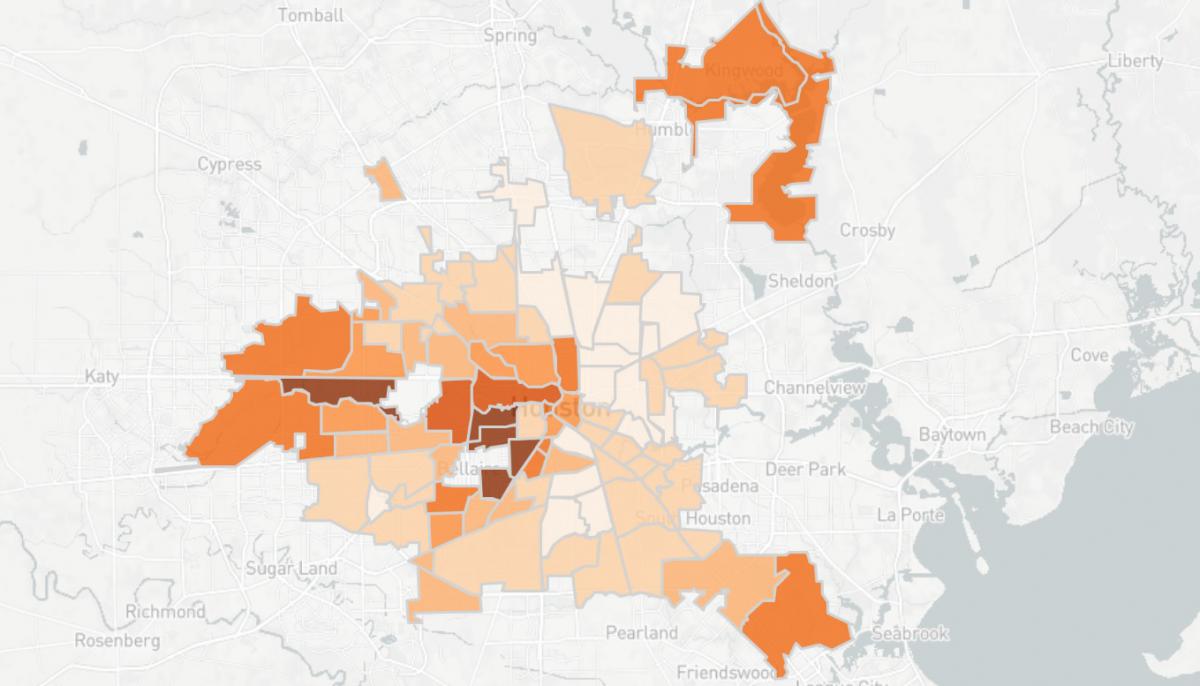
New data dashboard offers Houstonians tool to measure city progress

A new website allows residents of Houston to quickly visualize progress across the city and in their neighborhoods on factors such as income inequality, graduation rates, access to transit, proximity of waste sites and more.

October 28, 2019

OCTOBER 29, 2019, HOUSTON—A new website allows residents of Houston to quickly visualize progress across the city and in their neighborhoods on factors such as income inequality, graduation rates, access to transit, proximity of waste sites and more.

Houston Sustainability Indicators gathers data from multiple statistical sources on a comprehensive range of issues to answer: “Is Houston becoming a more sustainable city?”

The data dashboard is a collaboration between Rice University, Houston Sustainability Indicators Program (Rice-HSi) and the International Institute for Sustainable Development, a global sustainability think tank. The site charts and maps key data points in 17 categories that together represent community well-being and align with the International Sustainable Development Goals or SDGs.

Median income Houston Texas
Median income is just one measure of economic progress Houston Sustainability Indicators tracks.

A growing number of American cities—including New York City, Pittsburgh, and Baltimore—are using the SDGs as a framework to measure progress, says Stefan Jungcurt, IISD Lead for SDG Indicators and Data. That shift prompted his team to develop an easy-to-replicate platform that turns local data into powerful, interactive visualizations.

“North American cities are looking for more affordable, modern ways to monitor local development and engage citizens,” says Jungcurt. “In our head office city of Winnipeg, the civil service is redesigning their main municipal planning document to include SDG indicators after viewing a similar dashboard, while poverty reduction groups are using the data to refine their priorities. I’m excited to see how this tool helps Houston’s leaders advocate for data-driven policy.”

Dr. David Abraham, Research Director for the Rice-HSi team and Treasurer for the Community Indicators Consortium (CIC) coalition says, “The City of Houston will celebrate its 200-year birthday in 2036. That is just six years after the 2030 mark that countries all over the world have set for achieving the SDG targets. Through our work, Houston will join countries and cities across the world in tracking sustainability progress and improving quality of life for its people.”

“Every year until 2030, our team will report on Houston’s progress towards the 2030 SDG targets,” says Abraham. “We’ll also be reaching out nationally to support other cities in tracking their SDG Targets.”

Houston Sustainability Indicators: us-houston.tracking-progress.org


For interviews or a media walkthrough of Houston Sustainability Indicators, contact:

Matthew TenBruggencate, Communications Officer, IISD, [email protected] or 1-204-297-9779

David Abraham, Research Director, Rice-HSi, [email protected] or 713-348-1000


About Rice-HSI

The Houston Sustainability Indicators (HSI) program is a long-range effort to assist with the measurement and characterization of community sustainability and urban sustainability in Houston. Metrics for the chosen indicators were defined and are measured based on literature review; expert and advisory consultation; and data availability. The Houston Sustainability Indicators Program was funded by the Shell Center for Sustainability from 2010 - 2017. The Rice University, Sustainability Solutions Lab (Rice-SSL) group, currently manages the program.


Press release details

Press release

Governments should fight air pollution from fossil fuels as they fight tobacco: New report

NEW YORK, September 19, 2019—A new report launched today has challenged decision-makers, policymakers and political leaders to tackle fossil fuel production and consumption as a health control issue, in the same way that smoking has been reduced and regulated.

September 18, 2019

NEW YORK, September 19, 2019—A new report launched today has challenged decision-makers, policymakers and political leaders to tackle fossil fuel production and consumption as a health control issue, in the same way that smoking has been reduced and regulated.

The report, Burning Problems, Inspiring Solutions: Sharing Lessons on action against tobacco and fossil fuels, co-authored by the International Institute for Sustainable Development (IISD) and the Noncommunicable Diseases Alliance (NCD Alliance), was released today on the sidelines of the United Nations (UN) Climate Summit and UN High-Level Meeting on Universal Health Coverage taking place this week in New York.

Fossil fuel combustion is a major source of toxic air pollution that kills 7 million people every year, almost the same as the number of deaths caused by tobacco smoking. Burning fossil fuels releases a series of gases and tiny particles that have noxious effects for human health, leading to several respiratory and cardiovascular diseases and cancer. In 2018, the World Health Organization (WHO) recognized air pollution as a major health risk factor, alongside tobacco use, harmful use of alcohol, unhealthy diets and physical inactivity.

“Public information about the hazardous health effects of air pollution from fossil fuels is very limited and normally not high on public health agendas,” said Lourdes Sanchez, a Policy Advisor at IISD Global Subsidies Initiative and a co-author of the report.

“The Paris Agreement on climate change does not even mention fossil fuels—instead, it focuses on greenhouse gas emissions without naming their root causes. There is an urgent need to step up the pace. Perhaps it is time to come at the issue from more of a public health perspective, just as we have done in the fight against smoking.”

Through international forums such as the United Nations Framework Convention on Climate Change and domestic policies, many countries are already taking steps to reduce the noxious effects of producing and using fossil fuels, but progress is slow and predominantly led by environmental concerns.

Tobacco control on the other hand has been governed internationally by the only universal framework convention on health, the World Health Organization’s Framework Convention on Tobacco Control (WHO FCTC). The WHO FCTC has led to significant successes in both developed and developing countries and, importantly, prescribes a set of rules that signatory governments adhere to.

The battle against tobacco smoking is far from over, but anti-tobacco campaigns, smoke-free zones or additional taxes on tobacco products are now common and have, for many people, become accepted parts of our daily lives.

“Mindsets have changed when it comes to smoking and its social acceptability—how many of us can imagine going back to the days of smoky restaurants and offices?” said Nina Renshaw, Policy and Advocacy Director at the NCD Alliance and a co-author of the report.

“So why not draw lessons from the action against tobacco smoking to regulate fossil fuels? Can we imagine a time in the near future when it becomes commonplace to complain to a driver of a parked car who has left their engine running in the same normalized way we would react to someone smoking at a neighbouring table in a non-smoking area of a restaurant?

“Can we similarly arrive at the point someday where warning slogans such as ‘burning fossil fuels kills’ become as commonplace at gas stations or on electricity bills as health warnings found on cigarette packets all over the world?”

The report makes a series of recommendations, including:

  • Naming and addressing fossil fuels as the root cause of the issue, just as was done with tobacco. This also involves raising awareness among the population of the negative health effects, both locally and globally, of the combustion of fossil fuels, beyond the environmental ones.
    Regulating and implementing government measures to curb the production and use of fossil fuels through the many instruments available, such as getting market prices right through subsidy reform, taxation measures and the introduction of regulations banning the specific production and consumption of certain products.
  • Defining adequate, fair and just transition plans away from unhealthy commodities, recognizing the needs of those groups depending on oil, gas and coal, whether they be consumers or employees.

Further Information:

Michael Kessler
NCD Alliance Media Relations
Mobile: +34 655 792 699
Email: [email protected]

Paulina Mlynarska
International Institute for Sustainable Development (IISD), Global Subsidies Initiative (GSI)
Media & Communications Officer
Mobile: +33 620571517
Email: [email protected]

About the IISD Global Subsidies Initiative

The IISD Global Subsidies Initiative (GSI) supports international processes, national governments and civil society organizations to align subsidies with sustainable development. GSI does this by promoting transparency on the nature and size of subsidies; evaluating the economic, social and environmental impacts of subsidies; and, where necessary, advising on how inefficient and wasteful subsidies can best be reformed. GSI is headquartered in Geneva, Switzerland, and works with partners located around the world. Its principal funders have included the governments of Denmark, Finland, New Zealand, Norway, Sweden, Switzerland and the United Kingdom, as well as the KR Foundation.

About the NCD Alliance

The NCD Alliance (NCDA) is a unique civil society network, dedicated to improving NCD prevention and control worldwide. Today, our network includes NCDA members, national and regional NCD alliances, over 1,000 member associations of our founding federations, scientific and professional associations and academic and research institutions. Together with strategic partners, including the World Health Organization, United Nations and governments, NCDA is uniquely positioned to transform the global fight against NCDs through its core functions of global advocacy, accountability, capacity development and knowledge exchange

Press release details

Impact area
Climate
Press release

IISD Experimental Lakes Area and Genome Prairie Launch Unique Research to Explore How Wetlands Help Clean Up Oil Spills

Researchers at IISD Experimental Lakes Area, the world’s freshwater laboratory in northwestern Ontario, have launched a one-of-a-kind experiment to explore how to harness the power of wetlands to clean up oil spills.

August 29, 2019

WINNIPEG, August 30, 2019—Researchers at IISD Experimental Lakes Area, the world’s freshwater laboratory in northwestern Ontario, have launched a one-of-a-kind experiment to explore how to harness the power of wetlands to clean up oil spills.

The FLOating Wetland Treatments to Enhance Remediation (FLOWTER) project, generously funded by Genome Prairie through Genome Canada’s Genomic Applications Partnership Program (GAPP), will investigate how effective engineered floating wetlands (EFWs) are at cleaning up oil spills in freshwater lakes.

Awarded $1.1 million from Genome Canada over three years, and $333,333 from Mitacs and with other co-funder support, the FLOWTER project’s overall funding will total $4.4 million. Genome Prairie will be the lead administrative centre with oversight on project milestones and funding for all co-funders and participants. In collaboration with Génome Québec, and in addition to the main body of research being performed at IISD-ELA, labs in Québec, funded by Génome Québec, will also be active in the project.

FLOWTER co-funders include the Canadian Association of Petroleum Producers, the Canadian Energy Pipeline Association, Natural Resources Canada, Mitacs, TransMountain Corporation, Myera Group, Jacor LLC, and Stantec.

EFWs are small artificial platforms that allow aquatic plants to grow in water that is typically too deep for their growth. A network of roots spreads down through the floating island into the water column, stimulating the development of a ‘biofilm.’

During this multi-year project, researchers will explore the potential for microbes that degrade oil to flourish in that biofilm, and to remediate a situation where oil has spilled into a freshwater lake. FLOWTER is part of a larger project to explore and then inform regulators and industry on which methods are best to employ when cleaning oil spills in sensitive freshwater ecosystems.

“Engineered floating wetlands are a proven method for nutrient and contaminant treatment in many scenarios, but their ability to remediate oil and hydrocarbons from water is a growing area of research,” said Vince Palace, head research scientist, IISD Experimental Lakes Area.

“IISD-ELA is the only place on Earth where you can safely simulate an oil spill in a real lake within enclosures and study the interrelated impacts on the ecosystem. We are thrilled to cut the ribbon on this highly unique and critical piece of freshwater research,” added Palace.

“Protecting our environment from natural and man-made contamination is a responsibility we all carry. The passionate people at IISD Experimental Lakes Area are global leaders in developing ways to prevent and remediate damaged ecosystems. Genome Prairie, and Genome Canada, are very excited to work with Dr. Palace and his team on this innovative project,” said Reno Pontarollo, Genome Prairie’s president and CEO.

“Mitacs is pleased to be part of the supporting cast for this collaborative inter-provincial project,” said Brent Wennekes, Director, Business Development with Mitacs. “Several research interns will perform instrumental roles; these talented graduate students will be exposed to the whole-ecosystem research conducted at the IISD ELA, preparing them to make further contributions to this important field.”

IISD Experimental Lakes Area is the world’s freshwater laboratory. A series of 58 lakes and their watersheds in northwestern Ontario, Canada, IISD-ELA is the only place in the world where scientists can research on and manipulate real lakes to build a more accurate and complete picture of what human activity is doing to freshwater lakes. The findings from its 50 years of ground-breaking research have rewritten environmental policy around the world—from mitigating algal blooms to reducing how much mercury gets into our waterways—and aim to keep fresh water clean around the world for generations to come.

Genome Prairie, one of six independent Genome Canada centres, is a non-profit organization with offices in Saskatoon and Winnipeg that develops and manages genomics and related bioscience research projects, addressing key regional priorities including agriculture, human health, the environment, energy and mining. These efforts play a central role in building the Prairie region’s reputation as a location of choice for innovation and commercialization.

-30-

For more information, and to speak to a researcher, contact:

Sumeep Bath, Communications Manager, IISD Experimental Lakes Area,

[email protected] or +1 (204) 958 7700 ext. 740

Press release details

Impact area
Nature
Press release

India’s coal power sector dragging its feet to address avoidable air pollution

August 5, 2019

New Delhi, August 6, 2019 – Most coal-fired power plants in India have not installed pollution control technology, although the Central Government revised emissions standards almost four years ago.

A new analysis estimates the cost of installing technology to control for sulphur oxides, nitrogen oxides and particulate matter (among others) at between INR 73,000 crore (USD 10 billion) and INR 86,000 crore (USD 12 billion). The study, conducted by the Global Subsidies Initiative (GSI) of the International Institute for Sustainable Development (IISD) and the Council on Energy, Environment and Water (CEEW), delves into the details of why plants have not yet complied with the regulation.

“Society is bearing the costs of ongoing air pollution, while thermal power producers delay the cost of retrofitting the necessary equipment,” says Vibhuti Garg, Senior Energy Economist at GSI.

The research found that capital investments and operational costs would increase the cost of electricity generated by coal power plants between INR 0.32 and 0.72 per kWh. This represents an increase of between 9 and 21 per cent. But the report’s authors suggest the cost of not abating pollution from power plants is higher and will impact millions of people across the country.

“These costs include the cost of treating the health impacts of pollution, as well as the consequences on productivity of illness and premature deaths. There are non-health related costs too —air pollution corrodes infrastructure of all forms, impacts agricultural productivity, degrades waterways and reduced in-bound tourism,” says Garg.

Every day coal plants in India emit harmful gases and particulate matter into the atmosphere. These penetrate deep into the lungs, affecting respiratory and vascular systems. Recent air pollution studies suggest that non-compliance with emission norms would result in ~3-3.2 lakh premature deaths and 5.1 crore hospital admission cases due to respiratory disorders between now and 2030. Existing and proven pollution control technologies can remove between 90 to 99.6 per cent of harmful gases and particles that are emitted by power plants.

“Given the rising air pollution problem and its damaging and permanent impact on health, the government should have a zero-tolerance policy and impose strict penalties for power plants not adhering to emission standards,” says Karthik Ganesan, a Research Fellow at CEEW.

Experts recommend that the price of coal-based electricity reflects the cost of installing pollution control technology. This will mean that coal-based electricity prices would go up for consumers. In addition, this would also mean that plants that find it too expensive to comply will either be used sparingly or be completely phased-out.  To protect end-consumers, retail price subsidies must be directed to those who truly need them—the poor and vulnerable.

The Ministry of Power is advised to create a fund to independently carry out an assessment of feasibility and retrofit costs for all non-compliant plants, in order to ensure that private generators in particular are not able to continually play a game of cat and mouse and delay the implementation of the necessary retrofits. “Emissions data from monitoring devices placed in power plant stacks need to be made available to the wider public and must be placed on record before the electricity regulator, to ensure that tariff increases are passed on only after sufficient scrutiny and ensuring standards have indeed been met,” says Ganesan.  

Full report is available here.

Press release details

Impact area
Climate
Press release

Calcium levels in freshwater lakes declining in Europe and North America with negative impacts on some species, new study

A new global study of how calcium concentrations are changing in freshwater lakes around the world has revealed that in widespread areas in Europe and eastern North America, calcium levels are declining towards levels that can be critically low for the reproduction and survival of many aquatic organisms.

August 5, 2019

WINNIPEG, August 6, 2019—A new global study of how calcium concentrations are changing in freshwater lakes around the world has revealed that in widespread areas in Europe and eastern North America, calcium levels are declining towards levels that can be critically low for the reproduction and survival of many aquatic organisms.

The decline of calcium may have significant impacts on freshwater organisms that depend on calcium deposition, including integral parts of the food web, such as freshwater mussels and zooplankton.

In Widespread diminishing anthropogenic effects on calcium in freshwaters, published recently in Nature, researchers discovered that the global median calcium concentration was 4.0 mg L-1, with 20.7% of the water samples showing calcium concentrations ≤ 1.5 mg L-1.

≤ 1.5 mg L-1 is a threshold considered critical for the survival of many organisms that require calcium for their survival, therefore, some lakes are approaching levels of calcium that endanger organisms that rely on that calcium for structure and growth.

The study also attributes some of its results to freshwater lakes’ ongoing recovery from the impacts of acid rain.

“Given governmental and industry action in the last few decades to reduce sulphate deposition associated with acid rain, lakes are now subject to less calcium leaching from surrounding terrestrial areas,” said Gesa Weyhenmeyer, Professor at the Department of Ecology and Genetics/Limnology, at Uppsala University in Sweden and lead researcher on the study.

“Paradoxically, therefore, successful actions taken to address the harmful impacts of acid rain may have led a decline towards critically low levels of calcium for many aquatic organisms.”

The study drew on 440,599 water samples from 43,184 inland water sites from 57 countries and analyzed decadal trends in over 200 water bodies since the 1980s. It was a global study conducted by multiple researchers across Europe and North America.

IISD Experimental Lakes Area—the world's freshwater laboratory—contributed a significant amount of expertise and data from its unparalleled long-term monitoring dataset of over 50 years.

-30-

For more information, and to arrange an interview with the researchers, please contact:

Sumeep Bath,

Communications Manager.

IISD Experimental Lakes Area,

[email protected] or 1-204-958-7700 ext. 740

Press release details

Topic
Water
Impact area
Nature
Press release

Ontario provides roughly CAD 700 million annually to subsidize fossil fuels at a time of fiscal constraint, new report shows

Ontario, a province undergoing an aggressive push to balance its budget after projecting a deficit of CAD 11.7 billion in 2018/19, still provides roughly CAD 700 million in subsidies to fossil fuels that increase greenhouse gas emissions and contribute to climate change, according to a new study.

July 30, 2019

Ontario, a province undergoing an aggressive push to balance its budget after projecting a deficit of CAD 11.7 billion in 2018/19, still provides roughly CAD 700 million in subsidies to fossil fuels that increase greenhouse gas emissions and contribute to climate change, according to a new study by the International Institute for Sustainable Development (IISD)’s Global Subsidies Initiative.

In a new report, The (Public) Cost of Pollution: Ontario’s Fossil Fuel Subsidies, experts found that, in 2018/19, Ontario provided CAD 320 million in support through tax exemptions to fuels used by the aviation and rail industries, CAD 225 million to coloured fuels that are commonly used in agriculture, and it continues to spend millions to enable natural gas expansion.

“These subsidies represent large amounts of foregone public revenue that could be invested in everything from good jobs to education and health care. Spending money subsidizing fossil fuels encourages their use, increases pollution and hinders efforts to transition to a clean economy,” said Vanessa Corkal, Policy Analyst, IISD, and co-author of the report.

The report notes that some of these subsidies, such as agricultural fuel subsidies or fuel subsidies for remote communities, serve important social and economic goals. However, it also underlines that it is essential to consider alternative methods to meet these goals that do not contribute to climate change through subsidizing polluting fossil fuels with public funds.

 “With the combined urgency of the need to balance the provincial budget and the need to address climate change, it is crucial that the provincial government examine all opportunities to ensure efficiency in public spending, including a review of fossil fuel subsidies, to ensure that each taxpayer dollar is spent effectively with the best possible outcomes,” said Philip Gass, Senior Policy Analyst, IISD. “Ultimately, the goal should be to transition Ontario to non-subsidized cleaner energy sources.”

The authors of the report recommend that, as a first step, Ontario should undertake a transparent self-review of fossil fuel subsidies and identify areas to improve policy efficiency from economic, environmental and social perspectives. All subsidies must be evaluated to ensure that they are consistent with a low-carbon economy and ensure affordable energy access and competitiveness for Ontarians. This review should consider both climate change impacts and the need to ensure value for money in the use of taxpayer dollars in a time of fiscal restraint.

Further recommendations include developing an action plan to phase out subsidies and establishing clear guidelines to make sure that that no new fossil fuel subsidies are introduced.

The experts also underline the need for Ontario to proactively engage with the Government of Canada as it completes the G20 peer review of fossil fuel subsidies that is currently underway, to make sure that federal reform considers provincial impacts.

Press release details

Topic
Subsidies
Impact area
Climate