Natural Infrastructure for Water Quality
Water quality challenges are growing across the Prairies, and so are the costs for communities and industries. Working with nature can help.
Urban development, agricultural runoff, and land-use change are degrading water quality across the Prairies, introducing sediment, nutrients, and emerging contaminants into stormwater and surface water. Meeting stricter water quality standards—especially for wastewater and drinking water—is becoming more difficult and costly.
Traditional grey infrastructure, like stormwater systems, water treatment facilities, and lagoons, are designed to collect, treat, and distribute water to meet safety and environmental standards. These systems are costly to operate and upgrade, especially considering declining water quality and novel contaminants. But nature can help.
Soils, plants, and microbes naturally filter and break down pollutants, improving water quality in stormwater, wastewater, and even drinking water. It can reduce downstream pollution and often complement—or even replace—grey infrastructure at a lower cost.
Natural Infrastructure in Action for Water Quality
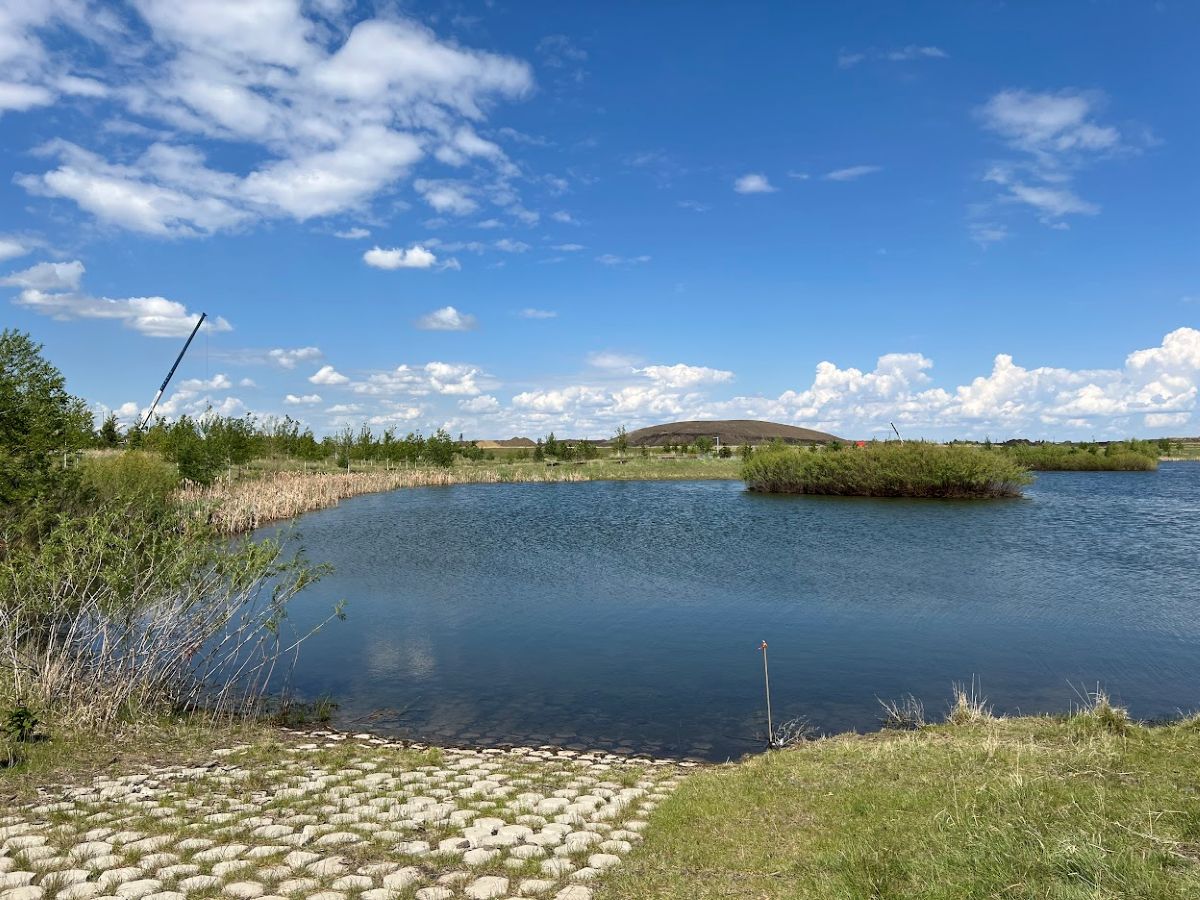
A constructed wetland enhances the conventional wastewater treatment facility, providing tertiary treatment. The wetland is planted with cattails, a native wetland species that removes nutrients, like phosphorus, making it a cost-effective approach to achieve Manitoba's requirements for discharge levels of phosphorus at less than 1 mg/l. Constructed wetlands can be used as an alternative or complement to conventional wastewater treatment facilities and can replace or supplement some processes. Constructed wetlands leverage natural processes with wetland vegetation, soils, and microbial life to effectively reduce organic matter, nutrients, and pathogens, helping to affordably meet regulatory requirements for effluent prior to discharge to the receiving rivers or lakes.
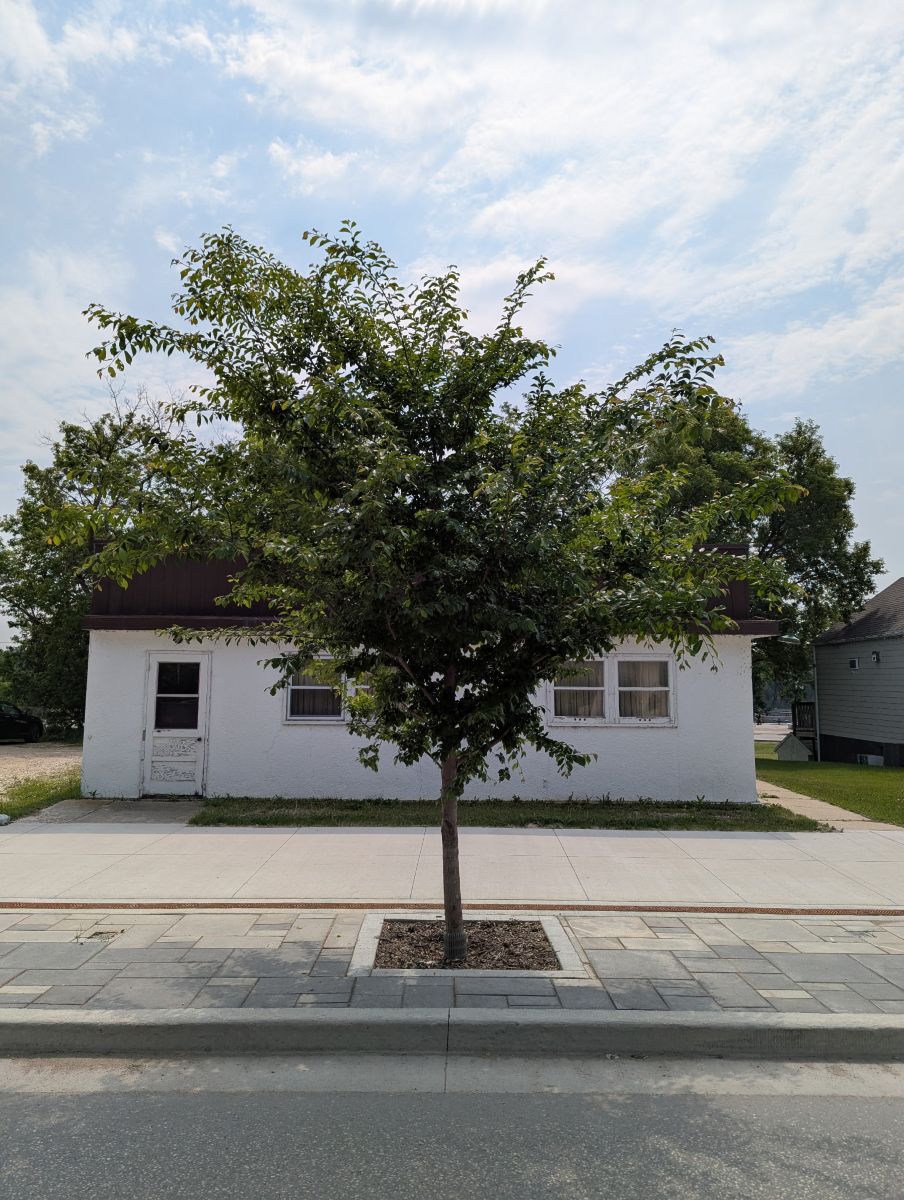
The City of Selkirk, Manitoba, installs soil cells during street retrofitting/upgrades. Soil cells are modular pavement systems that provide a space of uncompacted soil volume beneath the pavement and are connected to the stormwater system. The soil cells provide space for healthy tree growth that is passively watered by stormwater, improving the water quality and reducing the volume. Selkirk reports healthier and fast-growing trees, saving time and money on watering thanks to the use of stormwater as opposed to irrigation. (Photo credit: City of Selkirk, Manitoba)
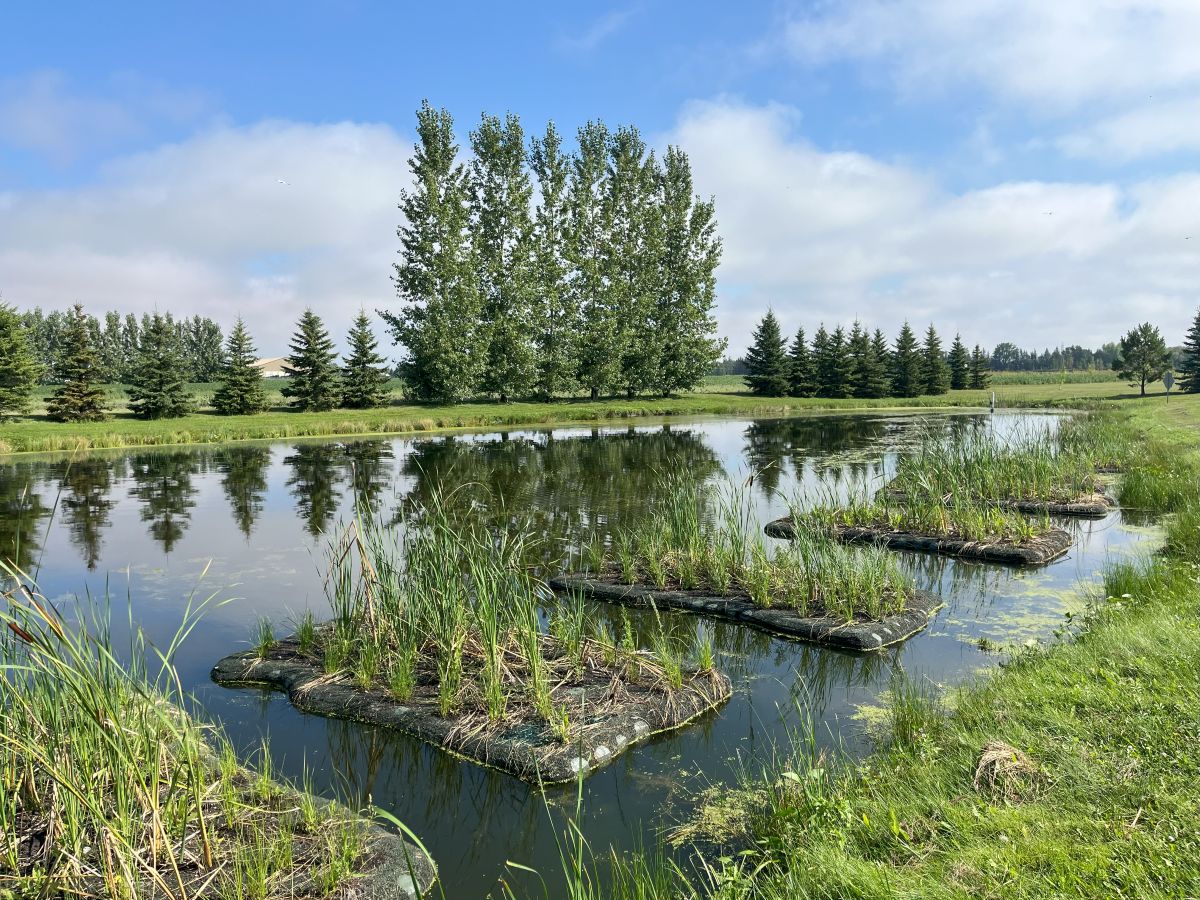
Floating treatment wetlands are installed in a conventional stormwater pond in the Rural Municipality of Springfield, Manitoba, which is prone to algal blooms, fuelled by excess nutrients. These are small artificial islands that let wetland plants (like cattail, sedge, and bulrush) grow in water that is otherwise too deep, improving water quality. Beneath the islands, a biofilm with algae, bacteria, and microbes grows on the plant roots, where most of the nutrient absorption and breakdown happens.
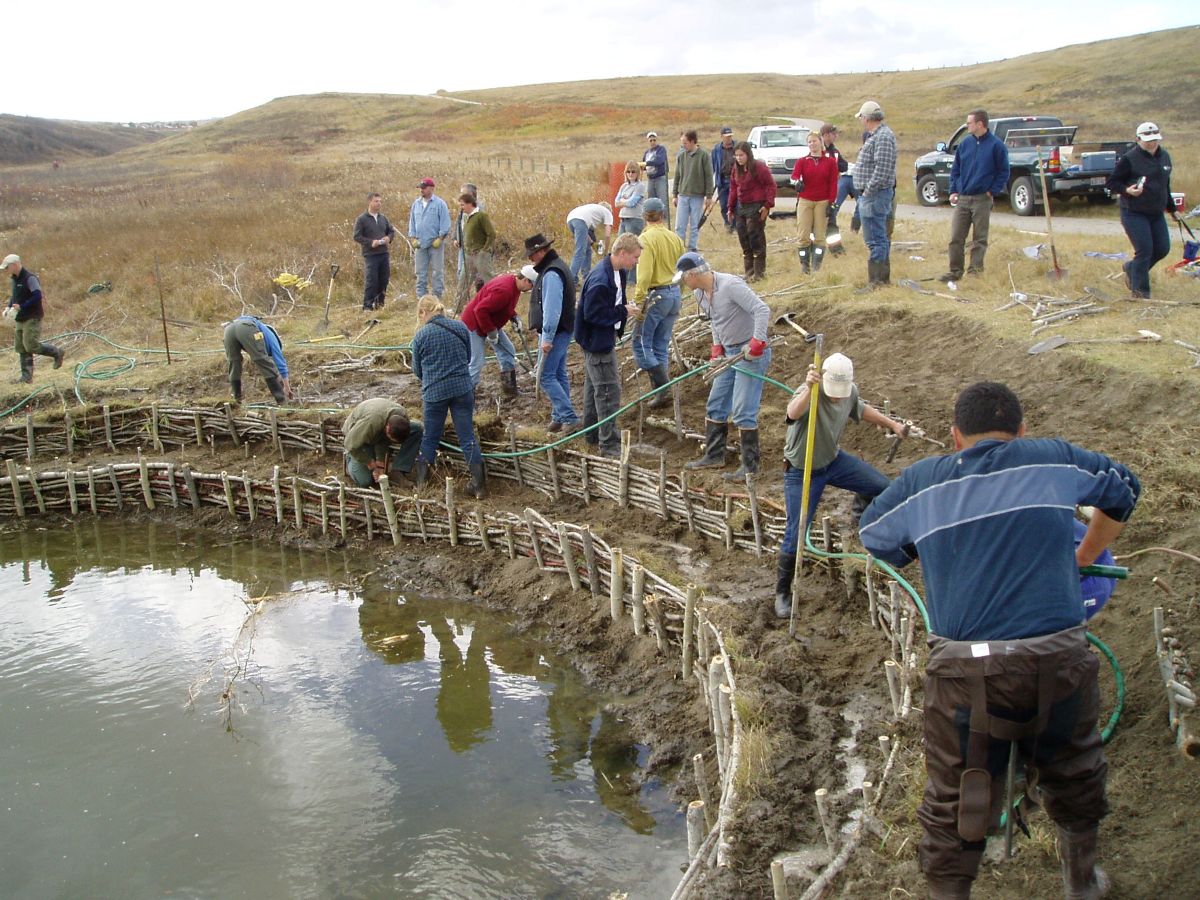
Streambank bioengineering uses different combinations of vegetation, rocks, and/or synthetic materials to restore riparian areas by establishing vegetation, stabilizing the streambank, and reducing erosion. Once established, riparian vegetation improves water quality by filtering sediment and contaminants, while the plant roots are key to preventing erosion and the resuspension of sediment. The City of Calgary recognizes that healthy riparian areas can help protect the source of potable water and reduce downstream treatment costs and is investing in restoring degraded riparian areas, often using streambank bioengineering techniques, like wattle fencing along West Nose Creek. (Photo credit: Bert van Duin)