
Flipping the Script: Three core considerations for community-based adaptation
Community-based adaptation (CBA) puts local communities impacted by climate change at the centre of resilience building. But how can we challenge existing power structures and achieve this at scale? Cameron Hunter from IISD's CBA SCALE+ project explores three key priorities for practitioners.
Community-based adaptation (CBA) is one approach to addressing the growing impacts of climate change. CBA places local communities at the centre of planning and implementing solutions and has been recognized as an effective way to reduce climate risks and generate sustainable changes for the most vulnerable.
But CBA is not without its challenges. Critics argue that it can result in fragmented, top-down, and short-term initiatives that fail to produce sustained change. Ensuring equitable and meaningful participation can present obstacles, as diverse perspectives, capacity gaps at the community level, and local power imbalances can complicate decision making. Additionally, there is a gap between realized and actual needs—often driven by a lack of accessible financial mechanisms, limited institutional capacity, and bureaucratic hurdles.
Through the Community-based Adaptation: Scaling-up Community Action for Livelihoods and Ecosystems (CBA SCALE+) project, the International Institute for Sustainable Development, CARE Deutschland (Germany), CARE Mozambique, CARE Zambia, and CARE Zimbabwe, along with International Union of Conservation of Nature; the Food, Agriculture & Natural Resources Policy Analysis Network; and local partners, are working to scale up CBA implementation in an inclusive, gender-responsive, and nature-based way in Mozambique, Zambia, and Zimbabwe.
As part of efforts to share lessons from this process and connect with the broader CBA community, the International Institute for Sustainable Development and its consortium partners attended the 19th International Conference on Community-Based Adaptation (CBA19) in Recife, Brazil, from May 12 to 16, 2025.
Twelve key messages came out of the conference, alongside a call to action to meaningfully advance CBA in line with locally led adaptation (LLA) principles to ensure the climate-resilient, just, and equitable future we all hope for.
Here, we dive into three key messages and provide insights into effectively advancing CBA planning and action by exploring the work of the CBA SCALE+ project.
Flipping the Script
Key message 1: "Communities should define success and shape learning."
Existing monitoring and evaluation systems are extractive and often fail to provide clarity on what is happening at the local level. Programs must enable communities to define what success looks like. We must shift away from technocratic assessments and toward human-centred approaches, designed by, with, and for communities and incorporating diverse experiences, knowledge, and learning.
Monitoring, evaluation, and learning (MEL) systems are how we track progress, evaluate the outcomes of CBA actions, and learn from these actions to ensure that adaptation efforts effectively reduce climate risks and provide equitable benefits.
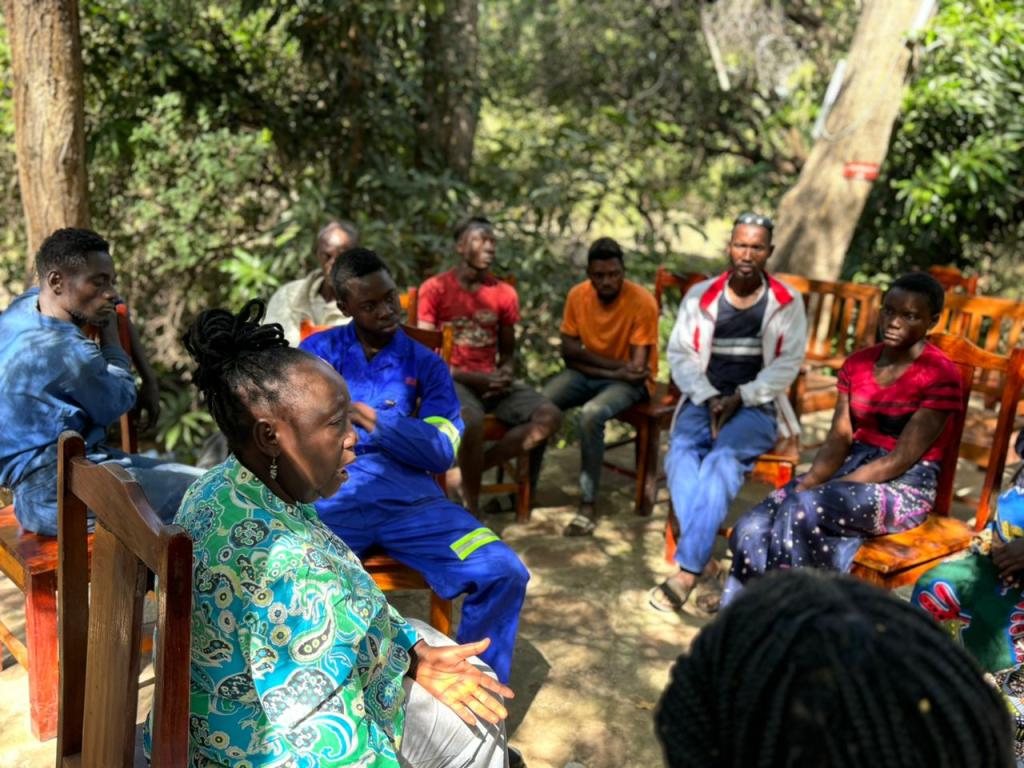
A common sentiment is that, too often, MEL efforts prioritize the needs of funders and implementing agencies over local communities in accounting for and measuring the success of adaptation work. This key message flips this script, placing local communities in a position to define what success looks like in their contexts and reorienting accountability for the CBA activities being implemented to the communities instead of the funder.
For example, the CBA SCALE+ project is approaching MEL through a participatory evaluation, reflection, and learning system. Through engagement with community members, local organizations, and government authorities, this system will define the intended outcomes of CBA in the targeted communities and, taking into account the perspectives of people of different genders and social groups, evaluate the outcomes of the CBA actions.
This approach to MEL is in line with the LLA principle of “giving local institutions and communities more direct access to finance and decision-making power over… how progress is monitored; and how success is evaluated.” It demonstrates how we can ensure that what constitutes effective CBA is determined by communities, based on their perceptions of and experiences with climate risks.
Deepening our Understanding
Key message 4: "Integration of diverse knowledge systems within climate action."
This step is fundamental for strengthening community resilience and just adaptation and needs to include bridging ancestral, Traditional, Indigenous, scientific, technical, intersectional, and popular knowledges, recognizing the deep understanding and adaptive capacities already held by Indigenous Peoples and local and Afrodescendent communities.
Effective CBA actions are built on the use and integration of diverse knowledge systems. Technical and scientific knowledge can provide important information on how the local climate will change and what communities need to be aware of and plan for. Local and Traditional knowledge systems can provide a deep understanding of the local environment. Both offer proven and effective management strategies for operating within that environment and can serve as resources that communities can lend to conversations about adapting to the impacts of climate change.
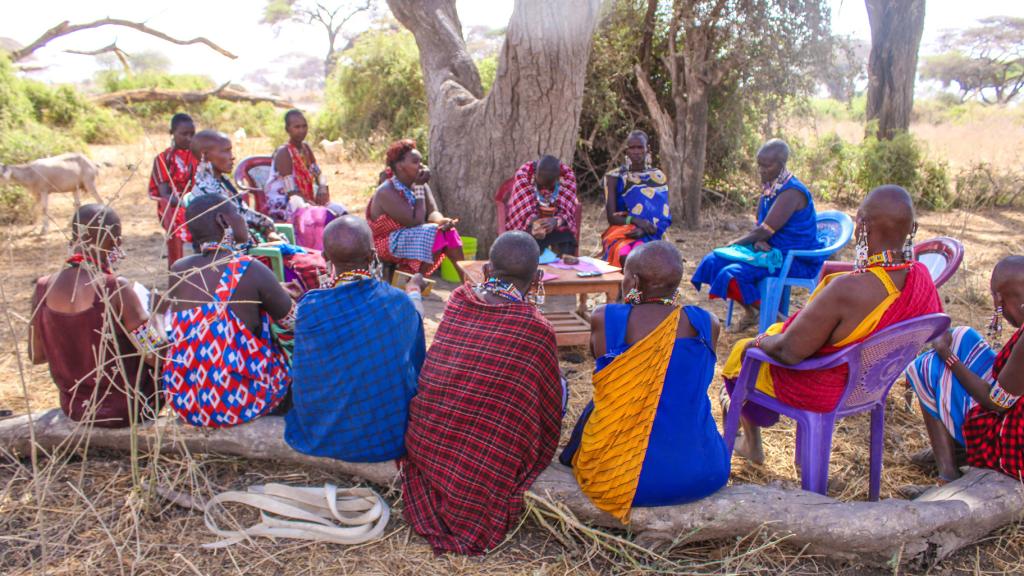
What we are learning from the consortium model of CBA SCALE+ is that the diverse actors provide access to a range of different knowledges, while participatory approaches bring scientific information together with local knowledge.
Tools like participatory climate vulnerability analysis, community adaptation action planning, and participatory scenario planning enable dialogue among local actors on climate science, how the impacts of climate change manifest in their context, and what this means for people and ecosystems.
Each partner in the consortium plays a unique role, from the interpretation and integration of technical and scientific knowledge on climate change impacts and ecosystems to building resilient agriculture and food systems, effective knowledge translation, and advocacy strategies.
Collaboration Is Critical
Key message 10: "Intermediary organizations have important roles to play in climate adaptation."
This includes bridging gaps between knowledge, policy, and practice, and addressing bureaucracy, translation, and requirements. Intermediary organizations can and must use their position, access, and influence to elevate community voices and advocate for the locally led adaptation agenda.
Collaboration is critical for successful CBA implementation, as outlined in the widely endorsed Principles for Locally Led Adaptation. Local communities face barriers to adapting to the impacts of climate change, many of which are beyond their control. As this key message shows, non-governmental organizations and other intermediaries are key players in successful CBA implementation.
At its core, CBA SCALE+ is built on the collaboration of multiple intermediary organizations brought together to support local communities in outlining and implementing their CBA priorities, while also working to create an enabling environment for CBA in broader policy and planning processes. The consortium includes local implementing organizations that are embedded in communities and have already built relationships and trust that enable the CBA processes to proceed. It also relies on national-level organizations in Mozambique, Zambia, and Zimbabwe, as well as regional and international non-governmental organizations, that are active in policy spaces and the global adaptation community. As the project works across multiple scales, we are finding that this collective of partners is really important for learning by doing and advancing the implementation of CBA at scale.
A Call to Challenge Power Structures
The CBA19 organizers and participants have developed key messages outlining changes that the CBA community clearly sees as necessary for CBA to effectively build resilience to climate change impacts in local communities.
Running through these key messages is a call to challenge power structures, put local communities—and their needs and priorities—at the centre of CBA implementation, and utilize communication platforms and advocacy efforts to elevate community voices and their adaptation needs.
CBA SCALE+ is intended to create the evidence base needed for scaling up inclusive, gender-responsive, and nature-based approaches to community-based adaptation. Its evidence-based approach to adaptation centres the communities’ priorities and builds on collaboration in the service of local communities, drawing together diverse knowledge systems.
Core to the project is also ensuring that, through CBA, local adaptation priorities are elevated into subnational and national development and climate plans. An overall strengthening of the enabling environment for CBA will ensure that the benefits outlive any one project or initiative and achieve success at scale.
It is also important to recognize that, while the CBA19, Recife Statement, and LLA principles explicitly call for centring the needs and experiences of local communities, this does not mean that these local communities are solely responsible for CBA actions.
Communities are important drivers of and actors in adaptation planning processes, but they can only do so much on their own. Systemic changes in governance, development planning processes, and allocation of resources are urgently needed to enable locally led action and build resilience where it is needed most.
The CBA SCALE+ project funder is the International Climate Initiative (IKI) of the German Federal Ministry for the Environment, Climate Action, Nature Conservation and Nuclear Safety (BMUKN). You can read more about the initiative here.

You might also be interested in
Why Is It So Hard to Engage Local Communities in Climate Vulnerability Assessments?
A new report shows why meaningfully engaging communities in climate vulnerability assessments remains harder than it seems, and what to do about it.
Engaging Communities in Climate Vulnerability Assessment
This report identifies six ways to make participatory climate vulnerability assessment processes more effective, timely, and respectful.
Leveraging Trade Policy for Climate Change Adaptation in Viet Nam’s Agricultural Sector
Identifying adaptation goods and services for Viet Nam's agriculture and strengthening coordination between trade and adaptation policy-makers.
From Theory to Practice
This briefing note presents two practical ways that conservation practitioners and managers of implementing nature-based solutions interventions can strengthen their monitoring, evaluation, and learning systems, with a focus on qualitative data to measure social outcomes.