Brief

Building a Climate-Resilient City: Water supply and sanitation systems

This policy brief examines ways to build resilience in the water supply and sanitation system as a contribution to urban resilience building.

April 24, 2017

This policy brief examines ways to build resilience in the water supply and sanitation system as a contribution to urban resilience building.

Its purpose is to highlight areas of best practice for developing a more resilient water supply and sanitation system.

Key Messages

  • Building and maintaining a water supply system resilient to climate shocks requires “multi-barrier” methods that strengthen all infrastructure components.
  • Redundancy in water supply should be a policy priority with the flexibility to shift between surface and groundwater options.
  • Highly decentralized water supply and sanitation options are now feasible; they provide resilience and complement centralized systems.
  • Water conservation and green infrastructure options for stormwater management are proven approaches for reducing climate risks.

The Building a Climate-Resilient City series was prepared for the City of Edmonton and the City of Calgary by the International Institute for Sustainable Development and the University of Winnipeg. This series looks makes recommendations for steps that cities can take as part of their municipal adaptation planning to build their resilience to climate change. It explores three key principles of resilience building: robustness (strong design), redundancy (building extra capacity into systems to act as fail-safe networks) and resourcefulness (citizen empowerment).

Brief details

Topic
Climate Change Adaptation
Region
Canada
Project
Building a Climate-Resilient City
Impact area
Climate
Publisher
IISD and the University of Winnipeg
Copyright
IISD and the University of Winnipeg, 2017
Brief

Building a Climate-Resilient City: Transportation infrastructure

This policy brief examines ways of building resilient urban transportation infrastructure to reduce exposure to natural hazards, decrease potential risks by implementing mitigation measures and enhance adaptive capacity in a changing climate.

April 24, 2017

This policy brief examines ways of building resilient urban transportation infrastructure to reduce exposure to natural hazards, decrease potential risks by implementing mitigation measures and enhance adaptive capacity in a changing climate. 

Key Messages

  • Urban transportation infrastructure (roads, bridges, railways and runways) is heavily exposed to climate impacts such as rising temperatures and more frequent and intense rainfall.
  • Sustainable transportation systems are physically resilient to climate impacts, provide options in case one mode is disrupted by a climate shock and reduce greenhouse gas emissions.
  • Urban densification reduces the amount of transportation infrastructure exposed to climate impacts and allows re-deployment of resources to strengthen existing infrastructure.
  • Complete communities where residents can easily access goods and services by foot or bicycle improve urban climate resilience.

The Building a Climate-Resilient City series was prepared for the City of Edmonton and the City of Calgary by the International Institute for Sustainable Development and the University of Winnipeg. This series looks makes recommendations for steps that cities can take as part of their municipal adaptation planning to build their resilience to climate change. It explores three key principles of resilience building: robustness (strong design), redundancy (building extra capacity into systems to act as fail-safe networks) and resourcefulness (citizen empowerment).

Brief details

Topic
Climate Change Adaptation
Region
Canada
Project
Building a Climate-Resilient City
Impact area
Climate
Publisher
IISD and the University of Winnipeg
Copyright
IISD and the University of Winnipeg, 2017
Brief

Building a Climate-Resilient City: Transformational adaptation

This policy brief focuses on how cities can build resilience to climate change through transformational adaptation.

April 24, 2017

This policy brief focuses on how cities can build resilience to climate change through transformational adaptation.

As opposed to incremental adaptation—which involves building on and improving the efficiency of conventional practices, approaches, technologies and governance structures for climate risk reduction and management—transformational adaptation may lead to the implementation of fundamentally different approaches to preparing for and responding to climate risks. Transformational adaptation involves a broader and more systemic look at the root causes of the vulnerability of a system (such as a city) to the impacts of climate change— and taking steps to reduce these sources of vulnerability.

Key Messages

  • Adaptation to climate change may be incremental or transformational in nature. Cities can choose to combine both approaches, depending on their needs and circumstances.
  • Transformational adaptation occurs when fundamentally new and innovative responses are required—typically upon realizing that historic approaches are insufficient for current or anticipated climate risks.
  • Governance systems that emphasize transparency, integration, flexibility, monitoring, continual learning and knowledge sharing increase the likelihood that transformational adaptation occurs at the necessary and appropriate time.

The Building a Climate-Resilient City series was prepared for the City of Edmonton and the City of Calgary by the International Institute for Sustainable Development and the University of Winnipeg. This series looks makes recommendations for steps that cities can take as part of their municipal adaptation planning to build their resilience to climate change. It explores three key principles of resilience building: robustness (strong design), redundancy (building extra capacity into systems to act as fail-safe networks) and resourcefulness (citizen empowerment).

Brief details

Topic
Climate Change Adaptation
Region
Canada
Project
Building a Climate-Resilient City
Impact area
Climate
Publisher
IISD and the University of Winnipeg
Copyright
IISD and the University of Winnipeg, 2017
Brief

Building a Climate-Resilient City: Urban ecosystems

This policy brief focuses on measures related to urban ecosystems that cities can take to build their resilience to climate change.

April 24, 2017

This policy brief focuses on measures related to urban ecosystems that cities can take to build their resilience to climate change.

It focuses on enhancing and using urban ecosystems to reduce exposure to natural hazards and enhance adaptive capacity in a changing climate, underpinning the qualities of a resilient city. It further explores the vast additional bene ts that are gained from using the multiple functions performed by urban ecosystems.

Key Messages

  • Ecosystems and green infrastructure provide human health benefits and critical environmental, social and economic services, and protect against climate shock.
  • Healthy and well-managed ecosystems are economic assets that enhance a city’s resilience to natural disturbances and extreme weather events. 
  • Investing in urban ecosystems and green infrastructure can provide lower-cost solutions to multiple challenges when compared to traditional infrastructure solutions. 

The Building a Climate-Resilient City series was prepared for the City of Edmonton and the City of Calgary by the International Institute for Sustainable Development and the University of Winnipeg. This series looks makes recommendations for steps that cities can take as part of their municipal adaptation planning to build their resilience to climate change. It explores three key principles of resilience building: robustness (strong design), redundancy (building extra capacity into systems to act as fail-safe networks) and resourcefulness (citizen empowerment).

Brief details

Topic
Climate Change Adaptation
Region
Canada
Project
Building a Climate-Resilient City
Impact area
Climate
Publisher
IISD and the University of Winnipeg
Copyright
IISD and the University of Winnipeg, 2017
Brief

Building a Climate-Resilient City: Agriculture and food security

This policy brief focuses on measures related to agriculture and food security that cities can take to build their resilience to climate change.

April 24, 2017

This policy brief focuses on measures related to agriculture and food security that cities can take to build their resilience to climate change. 

It examines ways to build resilience in urban agriculture and the food system as a contribution to urban resilience building. Its purpose is to identify elements of local food systems that can be strengthened, highlight best practices in the field and suggest interventions that local governments can use to build a more resilient food system. 

Key Messages

  • Strengthening local food systems increases resilience to supply shocks from climate change impacts on international supply chains.
  • Cities should protect available agricultural land both within and around municipal boundaries for food production using innovative methods such as aquaponics and vertical agriculture.
  • Small-scale food production and processing can bolster food security and provide employment, thereby strengthening local food systems and community cohesion, and should be encouraged through municipal policies, including procurement. 

The Building a Climate-Resilient City series was prepared for the City of Edmonton and the City of Calgary by the International Institute for Sustainable Development and the University of Winnipeg. This series looks makes recommendations for steps that cities can take as part of their municipal adaptation planning to build their resilience to climate change. It explores three key principles of resilience building: robustness (strong design), redundancy (building extra capacity into systems to act as fail-safe networks) and resourcefulness (citizen empowerment).

Brief details

Topic
Climate Change Adaptation
Region
Canada
Project
Building a Climate-Resilient City
Impact area
Climate
Publisher
IISD and the University of Winnipeg
Copyright
IISD and the University of Winnipeg, 2017
Brief

Building a Climate-Resilient City: Economics and finance

This policy brief focuses on economic and financial measures to build cities' resilience to climate change.

April 24, 2017

This policy brief focuses on economic and financial measures to build cities' resilience to climate change.

It explores how economic and financial measures can contribute to building a resilient city—or a city in which institutions, communities, businesses and individuals have the capacity to function and “survive, adapt and grow” in response to anticipated and unanticipated shocks and stresses. 

Key Messages

  • Climate change impacts such as damage to infrastructure, productivity losses and adverse health effects have large financial implications for municipalities.
  • Investment in climate resilience reduces exposure to climate risks, lowers liability costs, and improves investor confidence and credit ratings.
  • Multiple-bottom-line accounting methods embed climate risk awareness and the benefit of cost-effective adaptation benefits.
  • Monetizing the value of ecosystem services valuation allows cities to identify and prioritize high-value natural and green infrastructure climate solutions.

The Building a Climate-Resilient City series was prepared for the City of Edmonton and the City of Calgary by the International Institute for Sustainable Development and the University of Winnipeg. This series looks makes recommendations for steps that cities can take as part of their municipal adaptation planning to build their resilience to climate change. It explores three key principles of resilience building: robustness (strong design), redundancy (building extra capacity into systems to act as fail-safe networks) and resourcefulness (citizen empowerment).

Brief details

Topic
Climate Change Adaptation
Region
Canada
Project
Building a Climate-Resilient City
Impact area
Climate
Publisher
IISD and the University of Winnipeg
Copyright
IISD and the University of Winnipeg, 2017
Insight

Could Canada stay on course if the U.S. pulls a U-turn on vehicle fuel efficiency?

Amin Assadolahi takes a look at the implications of the Trump Administration reopening the mid-term review of the Corporate Average Fuel Economy standards, which would have seen vehicle fleet efficiency rise more than 50 miles per gallon by 2025.

March 16, 2017

Roughly a quarter of Canada’s greenhouse gas (GHG) emissions originate from the transportation sector. In Ontario and Québec, that number soars to a third, and for these provinces in particular transportation remains one of the most difficult sources of GHGs to tackle.

Provinces do have some levers to reduce emissions from the sector, such as potentially mandating zero-emission vehicles (ZEVs), as California has done. They could build their rapid-charging infrastructures around such mandates and become leaders in clean transportation.

However, a piecemeal set of policies can increase costs, both in terms of compliance but also in costs passed down to consumers. To make matters even more difficult, the Canadian automobile sector cannot be taken in isolation from its U.S. and Mexican counterparts. North American vehicle manufacturing is heavily integrated, and regulations can have cross-border implications. The three countries can introduce their own requirements (e.g., daytime running lights) but significant differences (e.g., fuel economy standards) are hard to imagine. If anything, demand and requirements in the United States effectively drive the vision for the sector.

Today, the Trump Administration threw a wrench in the mix by reopening the mid-term review of the Corporate Average Fuel Economy (CAFE) standards, which would have seen vehicle fleet efficiency rise more than 50 miles per gallon by 2025. The review was scheduled to end by April 2018, but the Environmental Protection Agency (EPA) wrapped it up before the new administration took power. In response, the auto industry called for its reopening. Alongside these rules are also state-level ZEV requirements, which can interact with federal fuel efficiency rules, and it remains uncertain how the two levels of government will navigate the road ahead. As Resources for the Future rightly notes, when it comes to designing vehicle fuel regulations it makes sense to take time to get it right. In this time of uncertainty, regulatory review and any changes to the regulations in the United States will have far-reaching consequences and will significantly affect the Canadian vehicle manufacturing sector.

Canada has passenger automobile and light truck GHG regulations that extend from 2017 to 2025. Canadian regulations do not include a mid-term review; however, they reference U.S. requirements for the 2022 to 2025 model years. In other words, by default, the results of the U.S. mid-term review affect Canadian vehicle regulations. Although Canada could make an amendment to remove this reference, this would be quite unlikely. Instead, Environment and Climate Change Canada can continue with its commitment to collaborate with its U.S. counterpart when informing the mid-term review.

While the sector again puts its case before the government, a few reminders are in order. Confronted with an increasingly changing climate and commitments under the Paris Agreement, governments will face increasing pressures to reduce emissions and strengthen their climate obligations. Getting ahead of the regulatory curve could result in increased economic opportunities and competitiveness. Regarding the Paris Agreement, some of the major players in the sector declared their commitment to “catalyze combined action and initiatives from the automotive industry sector” to maximize the benefits of mobility while mitigating its environmental impacts. It would be important to see this vision reflected in the mid-term review process, and to have the sector champion more ambitious targets rather than undoing progress already made.

More fuel-efficient vehicles mean more miles for less fuel, which could translate into saving for consumers in a future of higher oil prices. The electric vehicle revolution could also result in savings and lower pollution. Although it is important to improve the fuel efficiency of vehicles, solutions to the transportation sector’s emissions are often closer to home.

At the centre of emissions from the transportation sector lies the challenge of transportation itself. We have built and modified our cities around the car, with ever-expanding suburbs. Our large city centres, in a country as big as Canada, are far from one another and connected through a network of roads designed to accommodate vehicles. Canada and its subnational governments can still tackle the transportation emissions challenge irrespective of the outcomes of the mid-term review. To this end, sustainable solutions to the movement of people and goods—combined with integrating sustainability considerations more deeply into city planning—will be critical to any climate action plan and have far-reaching impacts as we build the cities of the future.

Insight details

Freshwater Stewardship in Canada: Another 150 years and beyond

Evidence-based freshwater stewardship lies at the heart of sustainable development. Freshwater science, transboundary basin management and technology innovation are all critical aspects of sustainable freshwater management.

Evidence-based freshwater stewardship lies at the heart of sustainable development. Freshwater science, transboundary basin management and technology innovation are all critical aspects of sustainable freshwater management.

In January 2017, IISD and the University of Ottawa convened a small group of experts to discuss fresh water in Canada, particularly as it relates to the federal regulatory regime. Discussions included the need for a pan-Canadian freshwater strategy, improved regulatory implementation and enforcement and coherent risk-based approaches to water management. Working with partners within Canada and internationally, IISD will focus on two follow-up themes to contribute to evidenced-based freshwater stewardship: 

  1. Ecosystem management: The Sustainable Development Goals and other aspects of the international agenda set out a significant challenge by referencing freshwater ecosystems to complement wastewater, sanitation and sewage issues. With partners, IISD will focus on identifying some key science aspects of freshwater ecosystem approaches, bringing lessons from different jurisdictions in identifying critical ecosystem processes and watershed ecosystem service. IISD will also identify methods to link ecosystem stewardship with economic analysis, including through comprehensive wealth analysis.  
  2. Open data and freshwater stewardship: A recurring gap in freshwater management across the globe is the lack of credible data and information: onsite water monitoring systems are expensive, while self-monitoring monitoring systems often face both public confidence and data comparability gaps.  At the same time, rapid advances both in big data and open data are creating new possibilities for innovative water management. With partners, IISD will assess current and emerging options in open data systems, including linking open data with freshwater regulatory compliance and enforcement. 

To help mark Canada’s 150th anniversary, IISD will hold an international meeting of experts on freshwater management in Winnipeg in November 2017 to further develop engagement around these two themes.  

Project details

Topic
Water
Region
Canada
Impact area
Nature
Insight

Citizen Science: Gathering rivers of information for the knowledge pool

Karla Zubrycki describes some of the exciting "citizen science" work happening in the Lake Winnipeg Basin and explains why it can be so important for governments and the scientific community.

February 23, 2017

There must be something in the water in the Lake Winnipeg Basin because an increasing number of groups, from non-governmental organizations to schools, are taking an interest in how citizen science can help us understand the one million-km2 basin.

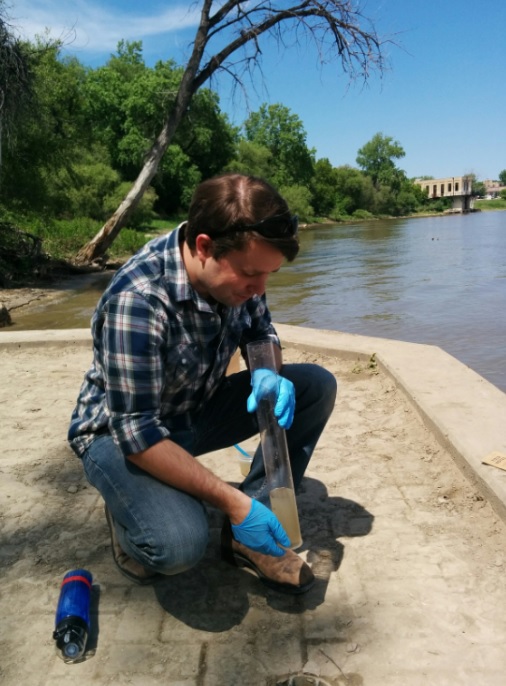
“Citizen science” is a term used to describe when members of the public collect—and even analyze— scientific data, often in collaboration with professional scientists. For example, a member of the public might collect samples of water from a stream close to his or her house, or take samples of soil from a nearby park. With its use of non-professional volunteers to help answer questions about the environment, citizen science employs engaged citizens interested in understanding their world.

IISD president Scott Vaughan has even suggested that citizen science can help increase compliance with environmental regulations and standards, through such things as air quality apps on smartphones and other user-friendly technologies.

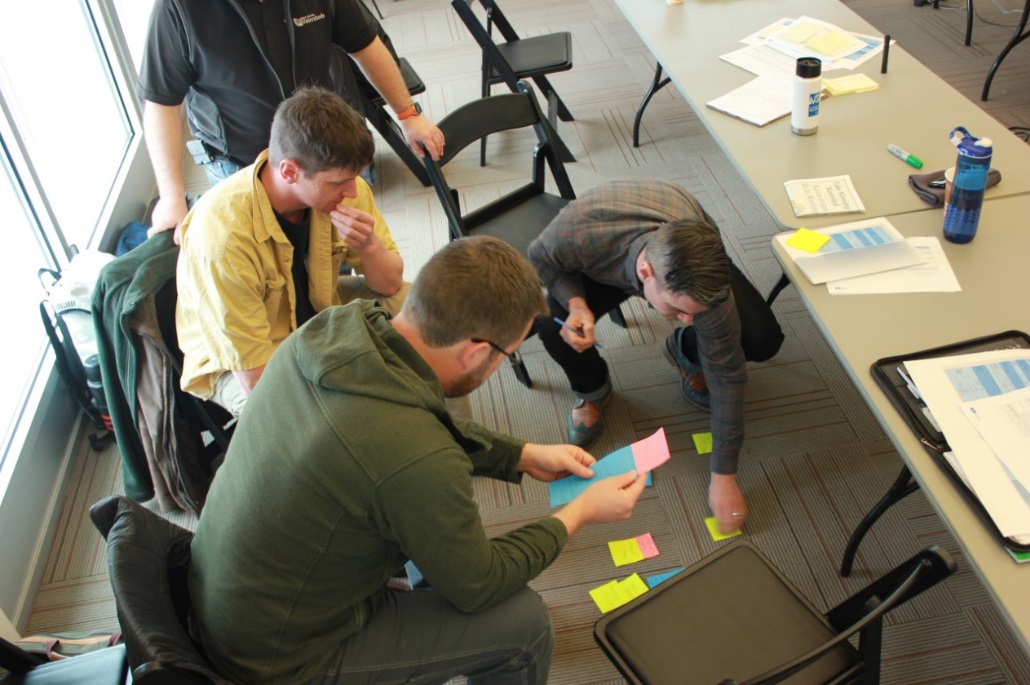
On January 24 and 25, 2017, groups from both sides of the Canada and U.S. border convened for a workshop at the International Peace Garden in Manitoba, Canada to discuss existing citizen science programs and the potential for collaboration—including on a transboundary basis.

Many of the organizations at the workshop are already engaged in citizen science in some way. The Lake Winnipeg Foundation has developed a new phosphorus monitoring approach to help it gather data on areas of southern Manitoba that are contributing the most phosphorus to Lake Winnipeg. The River Watch program of the Minnesota-based International Water Institute and Manitoba-based South Central Eco-Institute connect with students and other volunteers to monitor water quality in Minnesota, North Dakota and Manitoba. Here at IISD, we have partnered with Canadian Geographic Education to engage with schools in Manitoba, Saskatchewan, and North Dakota. These students explore land and water linkages by collecting aquatic and terrestrial (e.g., species) data that can be put in a larger context using the following established citizen science programs: Freshwater Watch, Community Collaborative Rain Hail and Snow Network (CoCoRaHS) and iNaturalist.

 

Citizen Science and Policy

Some citizen science initiatives form in reaction to the belief that governments and professional scientists have not—for varying reasons—gathered adequate data. At the same time, some governments are now recognizing that citizens can be a valuable resource; data collection can be time-consuming and, by harnessing the interest of volunteers more data can be collected, providing better information with which to make informed decisions.

The European Commission (EC) has recognized the value of citizen science in recent years, funding a two-year initiative to research and advise on the use of citizen science in the bloc. Two of the outputs, a green paper (2014) and white paper (2014) on citizen science in Europe, make links to large-scale European policies, such as the Europe 2020 Strategy focus on innovation—suggesting that citizen science is a "social innovation" that could help fuel the region’s growth.

Specific countries are also exploring citizen science as a tool. The Citizen Science Strategy 2020 for Germany makes a case for the "transformation potential" of citizen science. One of its recommendations encourages “incorporating citizen science results into decision-making processes,” suggesting that “scientific results from citizen science projects can provide evidence for decision-making policy and planning processes.” As with the EC papers, the German strategy also emphasizes the need to develop systems for volunteer training and data quality. However, it assumes that if project design is appropriate, credible data can be collected and used by scientists and governments for evidence-based decision-making. Data quality is one of the most common hesitations about citizen science, and it is a valid one. A recent article in Frontiers in Ecology and the Environment suggests additional measures for quality assurance and control can include iterative development of protocols, using standardized and properly calibrated equipment, data validation by experts, replication and calibration across multiple volunteers and statistical modelling of systematic errors. The authors comment that “each citizen-science dataset should therefore be judged individually, according to project design and application, and not assumed to be substandard simply because volunteers generated it.”

Yet not all locations in the world are as welcoming of citizen science. For instance, Wyoming brought in a data trespassing law in 2015 that, depending on the interpretation, may make citizen science illegal on federal lands. Notwithstanding such exceptions, citizen science is increasingly accepted in many places.

Water-Related Citizen Science

Canadians have grasped the value of citizen science, with initiatives growing across the country, from the Columbia Basin headwaters, where volunteers are collecting samples to help researchers understand climate change effects on the basin’s water balance, to Atlantic Canada’s Community-Based Environmental Monitoring Network , which has collected environmental data in eastern provinces since 2004.

Water-focused citizen science initiatives are also growing around the world. Since 2007, nearly 1 million people in the United Kingdom have participated in the Open Air Laboratories Network, a national initiative to collect a range of environmental data, from invertebrates in waterways to air quality (measured by lichens and fungus observed on trees). For an initiative called NETLAKE, participants are collecting data on 25 lakes across Europe to help scientists understand a range of water quality parameters, including the presence of microplastics. Volunteers in 17 countries monitor nearshore ocean ecosystems through Seagrass Watch, one goal of which is “to provide an early warning of major coastal environment changes.”

Citizen Science in the Lake Winnipeg Basin

It is important to monitor changes in the Lake Winnipeg Basin. We know major changes have occurred in recent decades—from increased nutrient loading, to the spread of invasive species to the emerging effects of climate change. The more information we have, the better our ability will be to identify and adapt to these changes.

The organizations and participants at January’s citizen science workshop realize it is not solely the government's role to track what is happening in our watersheds. Citizens can be an active part in their management, helping governments to identify what actions would be most effective to achieve desired outcomes such as reduced nutrient loading and climate change adaptation.

At the same time, these exciting initiatives that harness citizens’ enthusiasm for science also provide students with hands-on experiences, build the capabilities of communities, and encourage groups on both sides of the border to work together to improve their environment.

 

Insight details

Topic
Water
Region
Canada
Insight

Comprehensive Wealth in Canada: IISD's report launch

On December 1, 2016, IISD publicly released a report on measuring Comprehensive Wealth, an innovative approach, never before undertaken in Canada, to measuring wealth that looks beyond merely GDP.

February 22, 2017

On December 1, 2016, IISD publicly released a report on measuring Comprehensive Wealth, an innovative approach, never before undertaken in Canada, to measuring wealth that looks beyond merely GDP.

The report was launched at the Canadian Parliamentary Press Gallery, by Scott Vaughan, President-CEO, IISD and Canada’s former Environment Commissioner and Robert Smith, lead author of the report, IISD.

This is a recording of the press conference.