Insight

Achieving the SDGs: Can we manage the pace?

The suite of global agreements adopted last year mostly focused on the coming 15-year period. So the question arises—can the intergovernmental community manage the pace necessary for success in the short time frame available? 

October 7, 2016

The suite of global agreements adopted last year—the 2030 Agenda for Sustainable Development with its Sustainable Development Goals (SDGs), the Addis Ababa Action Plan on Financing for Development, and the Paris agreement on climate change—set targets and expectations mostly focused on the coming 15-year period.

Success in implementing all of them would advance the planet a long way through the transition to a sustainable world. Significant failure would squander what many believe to be the last realistic chance to stop short of the cliff’s edge.

Fifteen years is a significant span of time and a great deal can be achieved in that period given the political will and a shared determination across the international community. But it is also a short time given the momentum of past and present ill-development and the need to shift course fairly radically if there is any chance of the worst being avoided. In that connection, the traditional pace at which international consensus crystallizes must be considered a major preoccupation. It took over two decades to secure a set of global commitments to avoiding catastrophic climate change, 20 years in which other areas like stanching the haemorrhage of biodiversity loss have fallen well short of expectations. Multilateral trade negotiations have now been stalled for 15 years and the regional negotiations, once seen as a viable if less desirable alternative, are also in trouble.

So the question arises—can the intergovernmental community manage the pace necessary for success in the short time frame available? And, if not, are there any acceptable alternatives?

We all know that change can come about quickly when the conditions are right. The speed at which photovoltaic electricity has achieved grid parity—or better—with conventional energy is nothing short of miraculous. The expansion of the market for green bonds—which is likely to double this year compared to last and break through the $100 billion ceiling by the end of 2016—is similarly impressive, mobilizing funding for green priorities at a pace never seen before. We know that consumer movements can, in a short time, render unacceptable once-tolerated practices like sweatshop labour, and it is not inconceivable that institutional investors will manage, in the next few years, essentially to shut down the coal industry, at least in developed countries. With large-scale application of existing technology, the abandonment of other fossil fuels may not be far behind. 

How, then, can we bring such changes to scale without falling victim to the glacial pace at which international consensus gels? The answer, in my mind, is to depend less on intergovernmental process—at least on its own—and put our efforts behind those areas ripe for transformation, or that could be with a little additional push. The development of photovoltaic power had little to do with intergovernmental action, and it happened despite the many and persistent perverse incentives that fossil fuel lobbies maintain in place. The green bond market has developed through a concerted effort, over a period of years, led largely by a combination of NGOs and private sector actors.

Even in the intergovernmental world, the most successful initiatives—the treaty to ban land mines, the GAVI alliance for the development of vaccines, the UNEP Finance Initiative and its inquiry on sustainable finance—tend to be those that combine an intergovernmental platform with multistakeholder governance and that work across sectors. They benefit from the credibility and perceived legitimacy of the formal base organization but arrange to work outside their culture, political limitations and bureaucratic constraints. The pace at which intergovernmental process advances is simply too slow; there is essentially no hope that they can reach and sustain the pace needed to reach our common goals by 2030. 

Donors, foundations, corporations and rich individuals should put their money behind these unconventional alliances that have shown the way but, more important, have shown that they can make the pace without which our agendas will remain unrealized and the world will edge closer to the brink.  We need institutional experimentation such as IISD has tried to lead in Geneva, seeking to put together a “Geneva 2030 Ecosystem”—a  community of actors in the public and private sector with a shared commitment to succeed by 2030, and who are free of the constraints that prevent others from achieving the necessary pace of change. The Ecosystem is part “skunkworks,” part network, part hothouse, and part communications forum, all designed to unlock innovation and to find ways of achieving a whole–in this case with the players in the Geneva community—that is greater than the parts.

In reality, what determines the suitability of actors addressing the challenges of the 2030 Agenda, the Addis Action Agenda or the Paris agreement is their ability to meet the pace needed to address and resolve our present challenges one by one, until we can tip the scales and create the momentum for change that offers a genuine chance—this time—of meeting our targets.
Insight details

Insight

How Canada Can Be a Global Leader on the Sustainable Development Goals

In an opinion piece originally published in The Hill Times, Julia Sánchez (CCIC) and Scott Vaughan argue that other countries are voluntarily reporting on progress on the Sustainable Development Goals, while Canada has no clear plan.

October 5, 2016

All eyes were on the United Nations two weeks ago as Prime Minister Justin Trudeau made his inaugural speech to the General Assembly.

The speech was forward-looking, laying out a hopeful and ambitious case for building inclusive and diverse societies, and recognizing that Canadians are unavoidably affected by and linked to “what happens beyond our borders.”

The federal government now needs a framework and an action plan to implement its vision for Canada and the world.

Fortunately, a global framework such as this already exists: the Sustainable Development Goals.

Last week marked the first anniversary of when world leaders at the UN adopted Transforming our World: the 2030 Agenda for Sustainable Development, an agenda that lays out 17 Sustainable Development Goals (SDGs) for all countries—including Canada—to end global poverty and other pressing challenges.

Agenda 2030 represents a comprehensive and integrated approach to sustainable development. It looks to tackle many of the issues the prime minister identified in his speech: education and infrastructure, building a fair and inclusive economy, tackling inequality and climate change, and addressing the rights and needs of women and Canada’s Indigenous peoples, among others.

Many other countries have recognized that the SDGs represent a clear opportunity for generating greater coherence in government policy around issues of society, economy, and environment, and they are using the framework to shape their future policies. At the UN High-Level Political Forum on Sustainable Development last July, 22 countries voluntarily reported on progress towards implementing the SDGs.

Colombia has established a multistakeholder high-level commission to implement the 2030 Agenda, which reports to the president and works with civil society, the private sector, and local government on implementation.

China and Norway have assigned the 17 goals to specific departments and established a mechanism to coordinate efforts. In Switzerland, the cabinet has developed a multi-sector, multistakeholder, cross-ministerial strategy to implement the goals.

Germany has gone one step further, revising its National Sustainability Strategy to integrate all 17 SDGs, requiring all line ministries to align with and report against this overarching strategy to the German chancellery. Finland’s whole-of-society approach is similarly led by a National Commission on Sustainable Development housed in the prime minister’s office.

In Canada, however, we have yet to see high-level leadership on this issue. Though there have been welcome references to the SDGs in speeches by the prime minister and in documents for consultations on the Federal Sustainable Development Strategy and the International Assistance Review, there have yet to be clear, concrete, and bold steps to advance the SDGs within Canada.

The SDGs provide a compelling framework in which to shape Canada’s ambitious domestic and international agenda, including creating genuine partnerships with Indigenous communities, more actively engaging the provinces and municipalities, advancing social justice and gender equality, and ramping up low carbon pathways. So what can Canada do to improve its policy alignment in this area, and seize the opportunity to use the SDGs to advance its policy objectives on the domestic and global stage?

First, this fall Prime Minister Trudeau should establish an interministerial committee on the SDGs reporting directly to him. This can help better integrate the government’s social, economic, and environmental policies into a coherent approach to sustainable development both at home and abroad. The outcome of the International Assistance Review and the new sustainable development strategy, to be released in October, can be starting points for discussions, moving well beyond just issues of aid and environment to an approach that is fully inclusive of society and economy.

Second, Canada should establish a multistakeholder national roundtable or commission to engage Canadians around solutions to sustainable development and foster a whole-of-society approach to implementing the SDGs. This must actively engage with the three levels of government, Indigenous authorities, civil society, the private sector, and Canadians on implementing the SDGs both in Canada and overseas.

Third, Canada should volunteer to appear before the next meeting of the High-Level Political Forum in 2017 and present a voluntary national review that will indicate how it is implementing Agenda 2030.

Finally, to commemorate Canada’s 150th anniversary, the prime minister should announce an SDG action plan that matches the ambition of his vision and forges a new global path for Canada—one that is led by a whole-of-Canada approach to “transforming our world.”

The prime minister, including in his role as youth minister, has set a new course in building a more inclusive and sustainable Canada for current and future generations. Substantively embracing and implementing the SDGs will be a significant and lasting contribution to Canada’s own sustainable development, as well as helping to build a better world.

This article was originally posted on The Hill Times website on October 5, 2016, and is reprinted here with permission.

Insight details

Insight

Making Every Drop Count: Pakistan’s growing water scarcity challenge

Can climate change risks spur needed action?

September 29, 2016

Can climate change risks spur needed action?

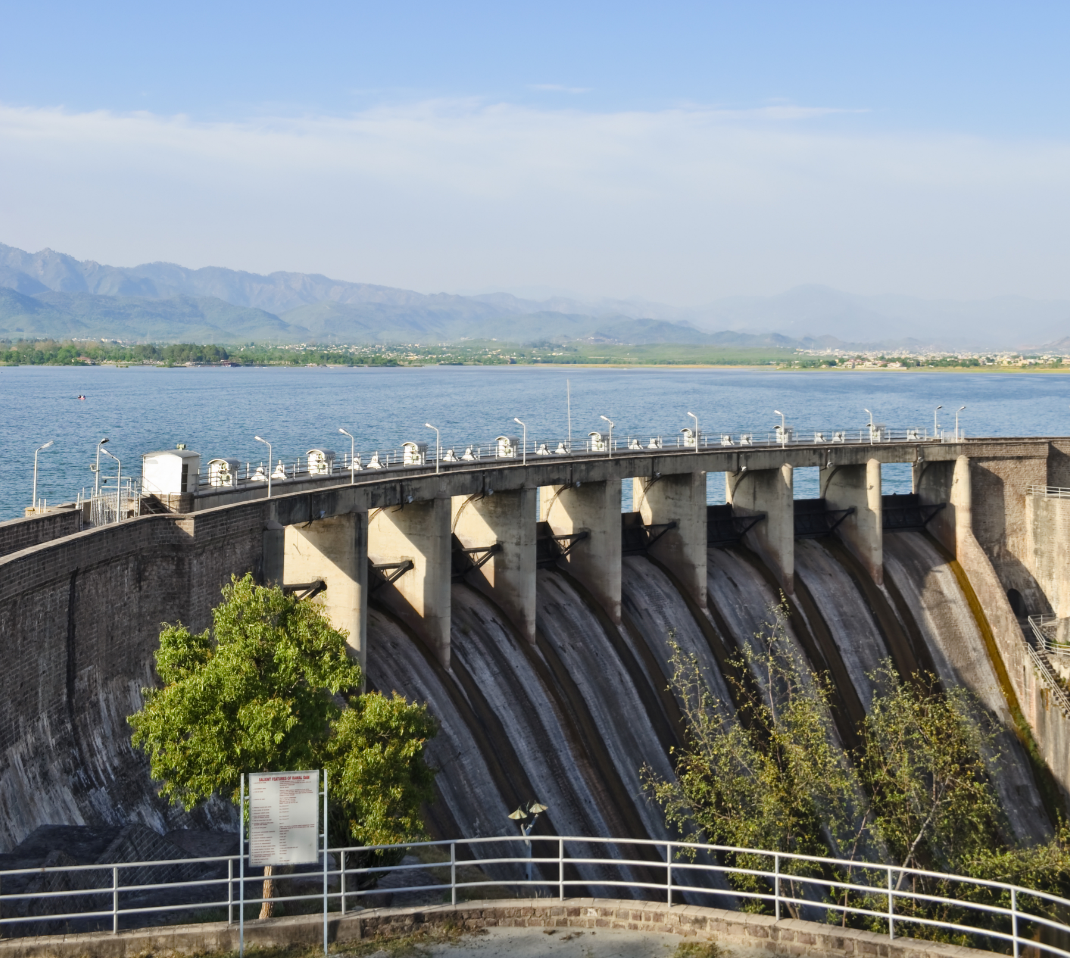
Pakistan is facing a serious water crisis. The country is rapidly moving from being classified as water “stressed” to water “scarce”—and with its annual water availability fall below 1,000 cubic metres per person, it may in fact have already crossed this threshold. For comparison, that means that the annual water available for each person in Pakistan would not even fill half of an Olympic swimming pool.

The scope of the crisis can be demonstrated by a few key facts:

  1. About 92 per cent of Pakistan is classified as semi-arid to arid, and the vast majority of Pakistanis are dependent on surface and groundwater sources from a single source—the Indus River basin.
  2. Since gaining independence in 1947, Pakistan's population has more than quadrupled; by 2100 its population will have increased by tenfold.
  3. About 90 per cent of the country's agricultural production comes from land irrigated by the Indus Basin Irrigation System (Qureshi, 2011), firmly linking national food security to water levels in the Indus River basin.
  4. Pakistan’s water storage capacity is limited to a maximum 30-day supply, far below the 1,000-day storage capacity recommended for a country with its climatic characteristics.

With water availability per person declining year by year, and demand for food production continuously increasing, Pakistan faces not only a water crisis but also serious concerns regarding its future food security.  This situation also has clear implications for the government's efforts to become an upper middle income country by 2025 and achieve long-term peace and security.

What Does Climate Change Mean for the Water Crisis?

Climate change is likely to only enhance Pakistan’s water crisis, although perhaps not in the way that many expect.

When climate change and its implications for Pakistan’s water resources are discussed, the conversation normally revolves around the expected decline in water flow in the Indus River basin as the glaciers of the Hindu Kush-Karakorum-Himalaya mountains retreat and are lost. This concern is understandable given that snow and ice melt runoff currently generates between 50 and 80 per cent (Yu et al., 2013) of average water flows in the Indus River basin. And there is in fact some evidence that the amount of water flowing into the Indus River basin has declined in recent years (but due to cooler and cloudier summers).

Inevitably, climate change will lead to significant changes in hydrologic patterns in the Indus River basin. But at least until 2050 the scientific evidence suggests that the volume of water flowing in the Indus River and its tributaries likely will remain relatively stable or even increase. The most significant change could be a shift in the timing of peak flow to slightly earlier in the year, along with a potential increase in variability from one year to the next. Such changes could in fact help to somewhat alleviate Pakistan’s growing water stress.

Largely overlooked in the discussions around water and climate change in Pakistan are the likely impacts of climate change on the country’s steadily growing water demand. Rising temperatures will increase the agriculture sector’s already substantial demand for water as evapotranspiration rates increase and soil moisture levels decline. Higher temperatures will also affect the country’s growing thermal power production sector, which provides approximately 65 per cent of the country's energy. The thermal sector is highly dependent on water for steam production and subsequently for cooling the steam. As higher air temperatures decrease the efficiency of the thermal conversion process (Makky & Kalash, 2013), greater volumes of water will be required by this sector to maintain production levels.

Better Management of Water Demand

The potential impacts of climate change on water demand have been highlighted in recent research completed by Amir & Habib (2015), and analyses completed by IISD as part of a larger project looking at the vulnerability of Pakistan's water sector to climate change undertaken in partnership with the Centre for Climate Research and Development, Pakistan's Ministry of Climate Change and UNDP-Pakistan. These studies suggest that higher temperatures will lead to a significant increase in water demand compared to a business-as-usual scenario.

The immediate threat posed by climate change to Pakistan’s water sector therefore is on the demand side. This finding reinforces the need for Pakistan to focus on improving the efficiency with which it uses its water—to make sure that every drop counts.

The recently completed studies also highlight the potential benefits of investing in efforts to improve the efficiency of water use—particularly in the irrigated agriculture sector, where the opportunities for improvement are significant. The Indus River Irrigation System is characterized by large inefficiencies at the canal, watercourse and field levels; only about 30 per cent of water flowing through the system is delivered to farms, and farmers at the tail end of the system rarely get water. Water management is weak; water prices and recovery rates don't generate the revenue needed to cover operation and maintenance costs; there is an absence of regulatory enforcement; and farmers continue to follow traditional flood irrigation practices that overwater crops and have led to waterlogging of soils in parts of the Indus Basin.

Greater effort to promote the uptake of high-efficiency irrigation systems by smallholder farmers, along with infrastructure investments such as canal upgrades and precision land levelling, would be important steps to improve the situation. At the same time, much more effort is needed to understand the water demand challenges facing Pakistan. There is a general absence of water demand data and analysis, particularly for different provinces and sectors. More research is also needed in areas such as water pricing to develop and implement systems that promote more efficient water use.

Next Steps Towards Preventing Water Scarcity

As Pakistan strives to respond to climate change and its associated risks—for example, by completing recently announced plans to develop a comprehensive climate change strategy—water demand solutions need to be at the forefront of its efforts. This focus will help to overcome the country’s immediate and growing water crisis. It will also help reduce Pakistan's vulnerability to more variable water flows and the inevitable longer-term impacts of climate change on the essential water resources of the Indus River basin.

Further Reading:

Amir, P. & Habib, Z., (2015). Estimating the impacts of climate change on sectoral water demand in Pakistan. Action on Climate Today.

Asian Development Bank (2013). Pakistan. In Asian Development Outlook 2013: Asia's Energy Challenge (pp. 203–208). Retrieved from


Makky, M. & Kalash, H. (2013). Potential risks of climate change on thermal power plants. Retrieved from https://www.researchgate.net/publication/236174007_Potential_Risks_of_Climate_Change_on_Thermal_Power_Plants

Qureshi, A. S. (2011). Water management in the Indus basin in Pakistan: Challenges and opportunities. Mountain Research and Development, 31(3), 252–260.

Yu, W., Yang, Y. C., Savitsky, A., Alford, D., Brown, C., Wescoat, J., & Debowicz, D. (2013). The Indus basin of Pakistan: The impacts of climate risks on water and agriculture. World Bank Publications.  

Insight

Bayer Tightens Control Over the World’s Food Supply

Bayer recently succeeded in a US$ 66 billion takeover bid of Monsanto—the biggest deal this year. While the public wants competitive prices, innovation and choice, these mergers block all three.

September 23, 2016

To many people, the German pharmaceutical company, Bayer, is a household name for medicines (they invented Aspirin, for example). It is less well known for the chemicals it produces to make pesticides, herbicides and insecticides.

Last week, Bayer, succeeded in a US$ 66 billion takeover bid of Monsanto—the biggest deal this year. According to reports, it is an unsolicited takeover, in the face of falling profits. Monsanto is the world’s largest seed company, controlling 23 percent of the global seed market.

This is the latest in a series of mergers and acquisitions of the major chemical, seed and fertilizer companies that are transforming the world’s food supply. Earlier this year, ChemChina, one of China’s largest state-run chemical companies acquired the Swiss agribusiness, Syngenta, for US$43 billion. Dupont and the Dow Chemical Company agreed to a merger at the end of 2015. And this month, two major Canadian fertilizer companies, Potash and Agrium, agreed to a merger.

These deals are significant for four reasons. First, they raise serious questions about anti-competitive and anti-trust practices. Fewer companies controlling an ever-growing share of the agricultural inputs market undermines competition and can thwart innovation. For example, the Bayer takeover of Monsanto merges a chemical giant with a seed giant and leaves the control of the world’s food supply in too few hands. The merger also links two key parts of agricultural production, reducing competition in the food chain. Bayer is now expected to control 29 per cent of the global seed market and 24 per cent of the global pesticide market. The Canadian fertilizer merger will allow the new company to control two-thirds of North America’s potash capacity and a third of phosphate and nitrogen capacity. The deals are currently being scrutinised by anti-trust boards and regulatory authorities in Europe and North America, which may reject the deals.

Second, there are serious concerns about increased farmer dependency on a smaller number of suppliers, and higher prices due to weak competition. Jim Benham, the president of the Indiana Farmers Union told the New York Times the “merger is going to hurt the farmer. The more consolidation we have on our inputs, the worse it gets.” And Professor Neil Harl, retired professor of the University of Iowa told ABC, “if a supplier of seeds wants to up the price all they need to do is just raise the price and if there’s no other reasonable substitutes then they’ll probably succeed.”

Third, the deal increases the power of an even smaller group of companies over the intellectual property, and patents that already lock up much of the world’s commercially produced food supply. The patents weaken farmers’ ability to use and reuse their own seeds. Shrinking seed diversity also threatens biodiversity, which is important to enable plants and crops to withstand diseases, pests and other threats, such as climate change.

Finally, there are ongoing food health and safety concerns related to the seeds and chemicals produced by these companies. Increasing their market share increases their power over the market and over the producers and consumers that use their products. In 2015, the World Health Organisation declared glyphosate, the active ingredient in Monsanto’s herbicide, Roundup, as "probably carcinogenic in humans," and its use is currently being assessed in the EU. A Bayer chemical, neonicotinoid, that is used in pesticides, has been linked to the harm to bee populations in Europe, and has recently been banned. And, while the evidence of harm to human health caused by GMOs is inconclusive, their use remains highly controversial in Europe, where a number of bans are in place. The issues will likely become inflamed now that a European company owns the largest GMO seed producer.

Is there anything to gain from the recent wave of mergers other than the potential of increased profits? The public wants competitive prices, innovation and choice. These mergers block all three. It’s time for a global discussion on how to protect the positive dimensions of competition while disciplining anti-competitive behavior. This includes providing open and universal access to information, working against collusion among companies, and providing economically disempowered groups (including farm workers and smallholder producers) with the tools and information they need to redress unequal market power.

Insight details

Insight

As Wind Power Expands in China—What's Been Learned?

Over the past decade, wind power has taken off in China. We explore the challenges China has faced linked this rapid growth. 

September 15, 2016

Over the past decade, wind power has taken off worldwide. From 2005 to 2015 global cumulative installed wind capacity grew from just less than 60 GW to over 430 GW. China has been a global leader in this exponential growth with an unprecedented deployment of wind power capacity growing from 1.26 GW in 2005 to over 145 GW by the end of 2015, over a third of the global total.[1]

IISD’s study Wind Power in China: A cautionary tale takes a closer look at the drivers behind the impressive development in China in order to understand the complex connection between the policy goals, policy measures and development impact. In particular, we considered how challenges related to curtailment of generation and delays in connection are being addressed. Our goal was to identify lessons in the hope that this will inform future policy measures in China and elsewhere.

With respect to delayed connection, the expansion of national wind power resources has outpaced the construction of transmission; construction plans for wind farms and grids are not aligned; and power operator supports are weaker than those for power development.

Challenges have also been experienced with curtailment, where the primary issue is a mismatch between supply and demand of power. Curtailment has occurred in areas when growth in power demand has not matched power supply growth and limited transmission capacity prevents moving energy to regions where demand is greatest. Technical issues with ramping up and down conventional coal power also mean that wind is often easier to curtail. Fixed payments also provide no additional reward for thermal generators to act as reserve to wind or act in a flexible manner to support increased wind power.

The government has taken steps to address these issues. The 2012 White Paper on China’s energy policy highlights the need to increase grid capacity. The 12th Five-Year Plan also refers to the need to coordinate development of grid and capacity, while there is a suggestion that the next Five-Year Plan will address the goal of resolving curtailment.

Lessons can be learned from China’s wind power challenges and attempts to address these issues of governance, economics and technology.

With respect to governance, these include:

  • System design: A system of guaranteed run hours provides little incentive for generators to scale back coal generation, and neglects the environmental impacts of fossil fuels.
  • Incentives for dispatch: When significant levels of renewable capacity are added to a system, the rules and incentives governing the dispatch of all sources need to be considered and adjusted to ensure renewables are prioritized.
  • Target setting: Setting targets in terms of capacity has helped to fulfil the objectives of wind turbine deployment, and facilitated the growth of a turbine industry.  Targets for energy production would give an incentive to ensure that all wind farms are connected to the grid and that all power generated is dispatched.
  • Planning: Delayed connection and curtailment reflect a need for effective planning.

Regarding the economics of wind power, China’s experience suggests that:

  • Pricing: A market-based system, where prices are higher at times of peak demand, would provide incentives for flexibility that renewable energy sources could provide, or a two-part tariff with part of the tariff dependent upon provision of capacity, would be an alternative to guaranteed run hours for thermal power that would be more effective in supporting renewables.
  • Subsidies: While the feed-in tariff system in China supported the deployment of wind energy, it also encouraged development in the resource-rich Three North Region beyond the level that could be accommodated by the grid. This experience points to a need for subsidy policy to be responsive to changing conditions.

Finally, on the technical side, China has learned that:

  • Capacity and infrastructure: The development of wind power capacity needs to be matched by the development of supporting infrastructure, especially where there is a mismatch between areas of resource supply and demand.
  • Linking and expanding balancing areas: Expanding balancing areas can facilitate the integration of renewable energy, since this smooths the variability of generation, and thus improves the accuracy of forecasting.
  • Energy system viewpoints: Renewable resources, in particular wind power and solar power, have been regarded as an add-on to the existing power system, rather than part of the system. This suggests the need to update policies and develop, where not present, an understanding that renewable energy is a crucial component of an energy system.

In some ways, China’s current challenges with wind power result from the country’s rapid successes. Capacity has expanded quickly, and the domestic industry has grown at an impressive rate. Rather than a lack of supply, the challenges of curtailment and delayed connection are issues of getting supply to demand. This could be seen as an enviable problem by many countries looking to expand renewables. The issues China has faced, as one of the global early-actors on wind power, provide important guidance for other countries and project developers looking to replicate their success and limit their challenges.


[1] These figures refer to the total installed capacity, of which some portion may not have been connected to the grid. See the Global Wind Energy Council for latest figures (http://www.gwec.net/global-figures/interactive-map/

Insight details

Topic
Energy
Region
China
Insight

Private Sector Investments in Climate Risk Management in Uganda

This video highlights the role of private sector investments in climate resilient rice value chains in Uganda. It focuses on the experiences of Equator Seeds Limited and Centenary Bank in the Eastern and Northern regions of Uganda.

September 13, 2016

This video highlights the role of private sector investments in climate resilient rice value chains in Uganda. It focuses on the experiences of Equator Seeds Limited and Centenary Bank in the Eastern and Northern regions of Uganda.

IISD is implementing the project Private Sector Investment in a Changing Climate: Resilient rice value chain development in Uganda in collaboration with Uganda's Ministry of Finance, Planning and Economic Development and the Economic Policy Research Center (EPRC).

Insight

Introducing the International Institute for Sustainable Development

We asked IISD's Board of Directors what they thought has made us one of the leading international think tanks for over 25 years. This is what they said...

September 13, 2016

We asked IISD's Board of Directors what they thought has made us one of the leading international think tanks for over 25 years. This is what they said...

Insight

China's Exceptional Commitment to Green Finance

Today China is the unquestioned world leader in green finance, and it is using its example to inspire and impress other countries worldwide. And all of this has taken place in a remarkably short period of time. 

September 4, 2016

One characteristic of China that has aroused envy in outside observers is its ability to change course quickly and resolutely. New directions appear to come from nowhere and, in no time at all, they dominate the scene. In fact, these changes are generally the third stage in a process that I have seen repeatedly.

First China, like many countries, tends to resist addressing an emerging issue, denying its relevance and even, in some cases, seeing it as an underhanded move to deny China its right to develop and compete on a level playing field. The second stage begins at the point when China agrees that the issue is genuine and relevant to China.  At that point they put considerable resources behind understanding the issue thoroughly. Research centres, think tanks and experts are harnessed to the task of working out what is and what isn’t in China’s interest. When it is ready, China tends to move quickly, resolutely and strategically. Absent only a few years before from the debate, Chinese policy-making often comes to dominate the scene in a short period of time.

When, over twenty years ago, IISD began work with China on the link between trade and sustainable development policy, Chinese officials tended to see environmental measures as part of a plot to keep Chinese goods out of Western markets—a form of “green” protectionism rushed into place to replace the tariff barriers that had slowly been dismantled. Once it was clear that this was, at best, a vast oversimplification, the Chinese policy research community swung into action with the aim to understand the issue thoroughly and in all its aspects. By the time they acceded to the World Trade Organization in 2001, they had a level of sophistication on the issue that was the envy of many established WTO members.

No issue, however, has proceeded through those three stages as quickly and as thoroughly as the subject of green finance. When in 2013 IISD and its Chinese partners began to look at how finance sector reform might speed the transition to green development, we anticipated that interest would gradually, over a period of years, overcome resistance and that innovations might begin emerging from China in the coming decade. What happened instead was akin to putting a match to dry straw. A presentation of preliminary findings in July 2014 led to the establishment of a Green Finance Task Force, led by Dr. Ma Jun of the People’s Bank of China. This Task Force, supported by IISD and the UNEP Inquiry into the Design of a Sustainable Financial System (a worldwide initiative) concluded its work in April 2015 and established a permanent Green Finance Committee. In October 2015, China announced that green finance would be a priority in its Presidency, this year, of the G20. A G20 Green Finance Study Group reported to the G20 summit in Hangzhou this week and is likely to continue working under the German presidency in 2017.

More important, immediately prior to the Hangzhou summit, Chinese President Xi Jinping announced a comprehensive set of guidelines for putting in place a green finance system for China. With such top-level official sanction, the entire nation is now scrambling to green every facet of the financial system, both on China’s domestic front and in its international undertakings—very prominently including the new multilateral funds for infrastructure development such as the Asian Infrastructure Investment Bank. 

Green bonds offer a good example. The IISD team identified these early on as a promising source of capital for green investment priorities. China set about drafting its own set of green bond guidelines, finally published in the latter half of 2015. These resulted in a first domestic Chinese green bond before year’s end. Less than a year later, China has overtaken the rest of the world, issuing more green bonds this year than any single other country. This has resulted in global green bond issuance exceeding, in July, the total from 2015. There is no reason to believe that this growth rate will slow any time soon.

China is, today, the unquestioned world leader in green finance, and it is using its example to inspire and impress other countries worldwide. And all of this has taken place in a remarkably short period of time. The seed IISD sowed just over three years ago has grown into a robust tree, its branches covering an increasing range of finance sector players and approaches. With the financial world coming into alignment with China’s green development needs, the country’s transition to green development, and through that to its vision of Eco-Civilization is well under-way. The consequences will be felt all over the world. It is, in many ways, the most significant positive development in the field of sustainable development since the turn of the Millennium, and IISD is proud to have been present at the creation.

Insight details

Topic
Sustainable Finance
Region
China
Insight

Mark Hanson Explains Why IISD-ELA is a Unique Educational Experience

August 17, 2016

Dr. Mark Hanson, University of Manitoba, brought a group of students from across Canada to IISD Experimental Lakes Area for a two week field course in the summer of 2016. He explains why IISD-ELA is such a great place for a unique educational experience on environmental protection and aquatic resource management.

Insight details

Topic
Water
Region
Canada
Insight

Subsidies to a Proposed Nuclear Power Plant Should Feature Large in UK Government’s Review

As the UK Government considers whether to proceed with Hinkley Point C—a proposed nuclear power plant—it should weigh the full cost of the project to the public purse.  By our calculation the subsidies are likely to be at least £40 billion.

August 2, 2016

As the UK Government considers whether to proceed with Hinkley Point C, it should weigh the full cost of the project to the public purse.  

On July 29th the UK government announced that the final decision to build Hinkley Point C—what could become the first nuclear power station to be constructed in the UK for more than two decades—will be postponed pending a review of the project. Earlier this year the French state-owned power company EDF received a green light from its board of directors to proceed with the project, despite the resignation of one board member and a significant minority of members voting against the project.

The project review has been called in part due to the publication of a recent report from the National Audit Office that estimated that the cost of the so-called Contract for Difference (CfD), which provides a guaranteed price for electricity produced by the plant for 35 years, has increased by up to 5 times. The reason for the increase is a fall in the long-term electricity price forecast, which has been revised since the key terms of the project were agreed in 2013. This price revision increased the value of the premium due to EDF from £6.1 billion to £29.7 billion.

Even though the guaranteed price for electricity represents a huge cost it is not the only subsidy to the project. The UK Government’s review should consider all other subsidies that will benefit the project. An IISD review of the project published in February 2016 identified five significant subsidies:

1.The Contract for Difference guaranteed price for electricity estimated by the National Audit Office as £29.7 billion;

2. The cost of loan guarantees that underwrite finance to the project estimated to reduce project borrowing costs by between £8.2 to 20.3 billion;

3. Waste disposal costs which are capped by the government. The true costs for long term geological storage are deeply uncertain;

4. Decommissioning costs, for which the government will be liable beyond the first £5 billion covered by the EDF. Current estimates for decommissioning the UK existing fleet are around £7 billion per site.[1]

5. De facto insurance against a nuclear accident provided by the government. EDF’s insurance covers only the first EUR 1.2 billion. The Fukushima disaster is estimated to have cost hundreds of billions.

When these subsidies are taken together the total cost is likely to be at least £40 billion. This is significantly more than the estimate for CfD from the National Audit Office.  

While the cost of nuclear energy has increased, renewable energy costs have been falling. Contracts for renewable generation are auctioned; in the February 2015 auction the “strike price”, the price that generators receive, was £50-79 per MWh for solar PV and £79-83 MWh for onshore wind. These are much less than the £92.5 per MWh that Hinkley Point C is due to receive. Moreover, renewable contracts last for 15 years rather than the 35 proposed for Hinkley Point C.

The key questions that the government’s review should address is why such a costly and risky project should be given the green light when the power from solar PV and wind power is estimated to be cheaper and renewable energy projects would not include anything like the same level of construction risk or operational risk.


[1] UK Nuclear Decommissioning Authority (NDA) Nuclear Provision corporate report, 13 July 2016. Estimates a total cost of £117 billion over 120 years for decommissioning 17 sites. 

Insight details