How Ireland Turned Green Public Procurement Into Standard Practice
Across Europe, governments spend over EUR 2 trillion every year on procurement—from public buildings and school meals to bridges and buses. Public procurers need to buy goods, services, and infrastructure that are good value for money for taxpayers. And through their spending power, they can help shift markets toward more sustainable technologies, products, and services.
Yet, many procurers struggle to maximize value for money amid broader systemic challenges in procurement. For example, too many tenders in the European Union attract only one bid, and more than half of all contracts are awarded to the cheapest offer, overlooking aspects like quality and long-term value. In addition, the use of environmental and social criteria remains optional, underused, or treated as add-ons rather than core parts of purchasing decisions.

Ireland offers a different story. Its procurement system performs relatively well on key indicators:
- Procurers routinely reward quality, so that only 11% of contracts are awarded on price alone.
- Competition is relatively healthy, with 21% of tenders attracting only a single bid—not ideal, but better than the European Union’s (EU’s) average of 33% and rates as high as 50% in some member states.
- 72% of contracts go to small and medium-sized enterprises (SMEs), an important backbone of Ireland’s economy.
- Green public procurement (GPP) is on the rise, with 53% of the central government procurement including environmental criteria in 2024.
Ireland’s GPP journey provides valuable lessons for ongoing procurement reform at the EU level. It shows that making GPP the norm is feasible and compatible with a strong procurement system and good value for money.
This case study examines how Ireland progressively transformed GPP from a voluntary practice into the standard approach across the public sector. It explores the key policy decisions and implementation tools that enabled this shift, as well as the results achieved to date. The case study concludes with lessons learned for other countries and the EU’s ongoing public procurement reform.
The Reasons Behind the Reform
Ireland’s first GPP efforts date back to as early as 2012. Like many EU member states, Ireland initially relied on voluntary guidance and encouragement to make public procurement greener and more sustainable. The country’s first GPP action plan was published in 2012, supported by official guidance from the Environmental Protection Agency (EPA). But uptake was slow and fell short of expectations. Many procurers had limited awareness of GPP, and there was no robust monitoring system to show whether the 50% GPP target had been met.
A turning point came around 2020, when a new government, which included the Green Party, identified procurement as a strategic lever for the green transition. Leaving Ireland’s procurement spending of about EUR 19 billion per year untapped represented a missed opportunity.
The 2020 Programme for Government therefore committed to making GPP mandatory in all public procurements. This marked the beginning of a new phase in Ireland’s procurement policy: GPP was no longer simply encouraged; it became a policy requirement, supported by practical tools and capacity building.
Over the following years, GPP increased, but the public sector was still not using its full potential to reduce environmental impacts and support sustainable companies. For example, stronger efforts were needed to help meet Ireland’s climate goals and build better infrastructure. In the latest phase of Ireland’s GPP journey, the government therefore integrated stronger GPP mandates in various sectoral policies, with the GPP action plan Buying Greener at its core.
Citizens need to be sure that what is purchased on their behalf has minimal harmful effects on the environment and society. At the same time, these goods, services and works must represent value for money.
Green Public Procurement has the potential to deliver wider economic benefits where significant savings can be made over the whole life cycle of a purchase both for public bodies and for society in general.
The main policy push for mandatory GPP took place within a single legislative term from 2020 to 2024. Efforts have continued under the new government that took office in 2025, which published new GPP guidance and embedded GPP requirements into hard law. The 2025 Programme for Government is less explicit on GPP than previously, but still pursues circular public procurement, value for money, and transparency, as well as a strong GPP role for the Office of Government Procurement.
How Do Ireland’s Procurement Policies Make GPP the Norm?
Ireland’s current GPP approach is built around a simple but powerful idea: public bodies should consider environmental sustainability when they decide what to buy, include green criteria in tenders by default, and provide a justification if they do not undertake GPP efforts.
This “comply-or-explain” approach is embedded in the core policy: Buying Greener: Green Public Procurement Strategy and Action Plan 2024–2027. This strategy turns GPP from a largely encouraged practice into a structured public sector obligation. In 11 priority sectors where national GPP criteria are available, these criteria must be used. If they are not available, public buyers must use the EU GPP criteria, international good practices, or minimum environmental criteria. The GPP mandate follows a comply-or-explain approach: if green criteria are not included, then public bodies must provide a justified explanation in their annual reporting.
This is important because it avoids two common weaknesses in GPP reform. First, it does not simply tell procurers to “buy green” and leave them to figure out what that means. Second, it does not impose a rigid one-size-fits-all rule. Instead, it creates a clear default—use GPP, ideally with the national GPP criteria—while still giving procurers flexibility.
The strategy is reinforced by a policy called Circular 17/2025, which provides updated GPP instructions for all public sector bodies. It operationalizes the Buying Greener strategy and gives contracting authorities a practical reference point. It explains the obligation to use Irish GPP criteria where available, requires annual reporting to the EPA, and reminds contracting authorities of sectoral GPP requirements—for instance, for food and low-carbon construction materials. It also makes whole-life costing mandatory for infrastructure contracts.
Ireland did not rely on a single strategy document or rules on paper. Instead, it aligned climate law, climate action plans, circular economy policy, procurement circulars, GPP guidance, sectoral requirements, and reporting arrangements. For public buyers and suppliers, that sends a consistent signal across all layers of government policy: GPP is not an add-on; it is the normal way the public sector functions.
This demand signal from the public sector has been heard by companies across Ireland. Over time, businesses of all sizes have improved their capacity to meet evolving environmental requirements in public procurement. The stepwise rollout of GPP, combined with a push for preliminary market engagement, supports GPP requirements that are meaningful and practical.
In 2024, the Irish government took a bold step towards a more sustainable future by mandating green procurement requirements for low-carbon cement. At Ecocem, we have been at the forefront of low-carbon solutions in the cement and concrete sector in Ireland for many years. By making green public procurement the default, the government now provides the critical demand signal for the industry to innovate and invest in low-carbon production.

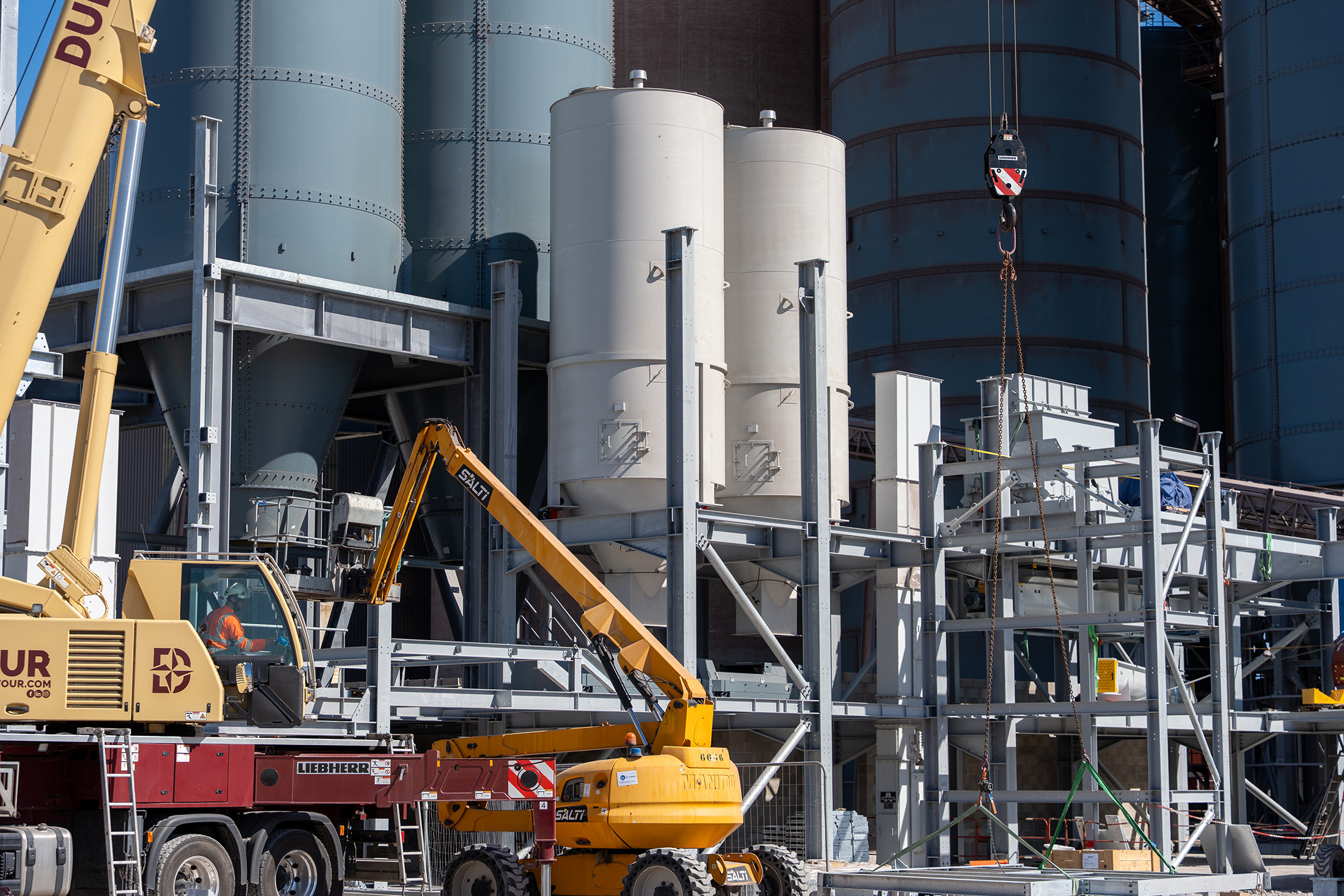
Ecocem is expanding its plant in Dunkirk to increase the production of its ACT low-carbon cement, which reduces CO₂ by up to 70% compared to conventional European cement. (Ecocem)
Skills and Tools for GPP
Procurement officials are often under pressure to run procedures quickly, avoid legal risks, and secure value for money. This means that GPP needs to be legally sound and practical, even without expert knowledge. Ireland’s approach addresses this by investing in implementation tools and professional development.
An important milestone was the launch of the GPP Criteria Search platform in 2022. The online tool features GPP criteria for 11 priority sectors. These criteria have been developed in a multistakeholder approach to adjust the EU’s GPP criteria to the Irish context. Such ready-made criteria reduce the effort for including environmental requirements in tenders and give procurers confidence that they are applying the GPP policies correctly.
Professionalization is another success factor in Ireland’s procurement reform. Buying Greener includes training and awareness actions, requires public bodies to set annual staff training commitments, and promotes the inclusion of GPP in general procurement education. The plan also strengthens templates, guidance, case studies, and knowledge-sharing.

What Are the Results?
Since the introduction of mandatory GPP, its uptake in Ireland’s central government procurement is increasing, although progress varies significantly across sectors and departments. The GPP monitoring results should be interpreted cautiously. The most recent monitoring report from the EPA covers only EUR 1.1 billion in central government procurement from 2024, compared to estimated total public procurement spending of around EUR 19 billion:
- In 2024, 48% of central government contracts included green criteria, up from 40% the previous year.
- By contract value, the trend is less stable, as annual results are strongly influenced by whether high-value contracts include GPP. While 82% of contract value included GPP in 2023, this fell to 53% in 2024.
- This volatility is particularly visible in the priority sectors subject to mandatory GPP. In 2023, 91% of contract value in these sectors included green criteria; in 2024, this dropped to 27%, mainly because several large contracts did not apply GPP. The “comply-or-explain” justifications for why these tenders did not include green criteria are not publicly available.
- Uptake also differs widely by sector: for example, all contracts for office building design, construction, and maintenance included GPP criteria, compared with only 29% of information and communications technology products and services contracts.
[In 2023,] sectors with published national GPP criteria had a significantly higher uptake of GPP (91% of total value of contracts, 49% of the total number of contracts) than those without (41% of the total value of contracts, 35% of the total number of contracts). This highlights the importance of national GPP criteria in driving GPP implementation.

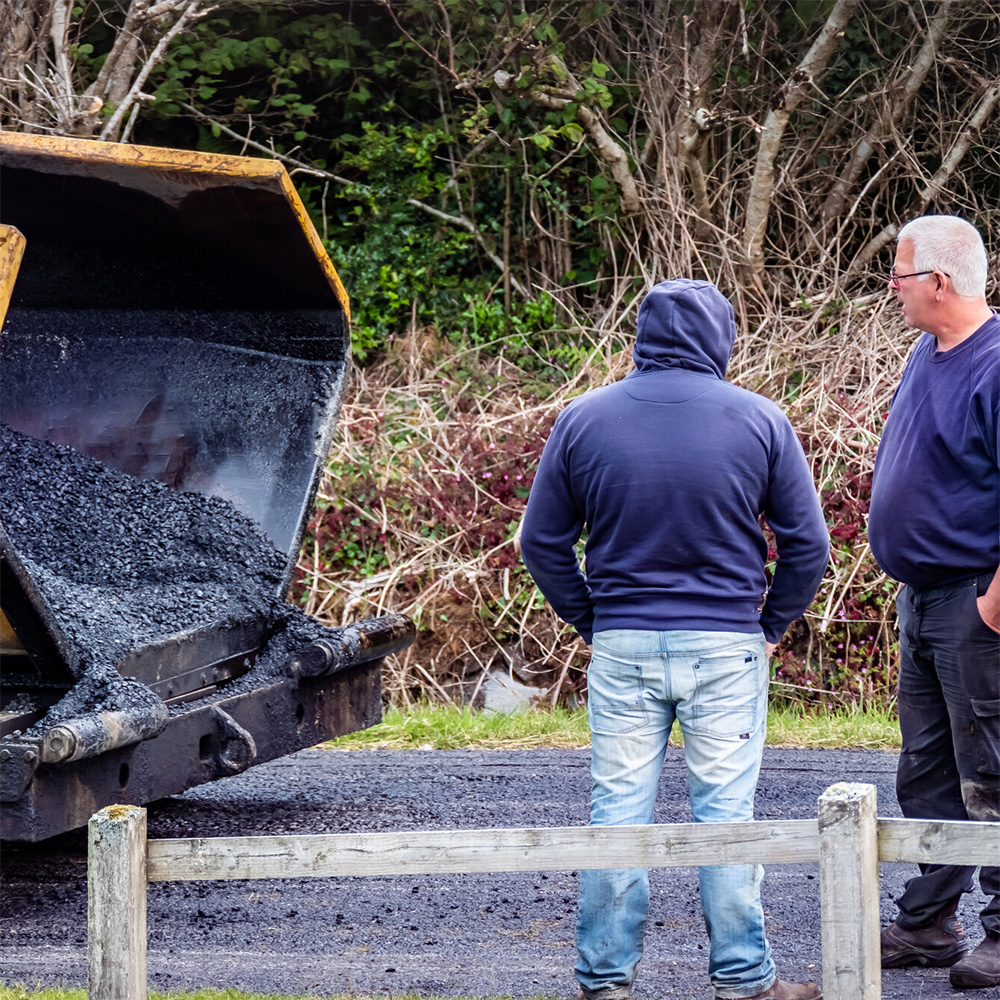
Motorway pavement renewal in a contract of TII using the CO₂ Performance Ladder as a GPP tool. (Irish Green Building Council)
GPP in Ireland offers tangible benefits, driven not only by national criteria but also by the ambitious efforts of contracting authorities. Many authorities go beyond the minimum requirements and engage closely with their suppliers to achieve measurable results.
A pilot project by Transport Infrastructure Ireland (TII) illustrates this impact. Using the CO₂ Performance Ladder in a motorway resurfacing contract, bidders could signal their level of ambition and receive an advantage in the award criteria. As a result, the selected company reduced CO₂ emissions by 21% in the contract through energy-efficient execution, lower-carbon asphalt, and reduced material and equipment emissions. Based on this success, TII is applying the CO₂ Performance Ladder in more contracts, and other companies got certified to have better chances in future green tenders
As another example of GPP, the Office of Public Works used Environmental Product Declarations in furniture procurement. This enabled transparent comparison of life-cycle impacts and reduced average carbon intensity of carpet tiles by more than half, demonstrating how transparent GPP criteria can deliver measurable environmental improvements.
Ireland’s reform has also contributed to a wider shift in how public bodies think about climate action and procurement. GPP reform has helped raise awareness and leadership attention to climate action and circularity in public bodies over recent years. It has also encouraged organizations to think beyond tender clauses and include environmental considerations in corporate procurement planning and staff training, as well as when assessing needs.
This matters because some of the largest environmental gains come before a tender is written. Public bodies can avoid unnecessary purchases, repair or reuse existing assets, share resources, choose lower-carbon materials, or design contracts around performance rather than simply buying more products.
Clear policy signals and obligations, together with support and leadership from the Department of Climate, Energy and the Environment, the Office of Government Procurement and the Environmental Protection Agency, have helped raise awareness and align the public sector around a common direction, making environmental considerations an integral part of procurement. In Ireland, the conversation on green public procurement is now clearly focused on effective implementation across the public sector.

What Challenges Remain?
Ireland’s GPP journey also shows the limits of policy reform. To date, GPP implementation can still be shallow. Some procurers may treat GPP as a checkbox exercise, while others use it more ambitiously to reshape markets and reduce environmental impacts.
GPP in standard procurement has become relatively easy with the national GPP criteria. However, integrating environmental considerations into more complex infrastructure projects remains challenging for many procurers.
Monitoring GPP remains challenging in Ireland. Current reporting appears fragmented across three separate systems with different scopes and often relies on manual processes. In addition, annual GPP data covers only central government procurement, leaving most subnational spending unaccounted for.
GPP monitoring also remains focused mainly on institutional arrangements for GPP and whether criteria were included, not yet on the full environmental benefits achieved, such as avoided emissions or reduced material use. It shows what the next generation of reform needs to address: not only whether green criteria are required and used in practice, but whether the GPP efforts are meaningful, ambitious, and delivering measurable results.
While Ireland has made some progress in mainstreaming GPP, practical implementation remains challenging for many procurers. There is a clear need for more training on how to integrate sustainability and drive innovation from the earliest design stages of a project, rather than focusing solely on the tender stage, in order to realize the full potential of GPP. This also includes setting and tracking targets, particularly in relation to life-cycle carbon, life-cycle costing, circularity, climate adaptation, and water use.
What Can Europe Learn?
Ireland’s GPP journey offers several lessons for the EU procurement reform and for national governments seeking to make green procurement the norm.
First, a coherent, harmonized policy package, as in Ireland, sends a clear market signal. Ireland embedded GPP across several mutually reinforcing and cross-referenced policies: climate action plans, circular economy policy, procurement circulars, the Buying Greener strategy, sectoral requirements, and public sector climate mandates. As the go-to resource, Circular 17/2025 describes all the GPP obligations that procurers should follow. This reduces ambiguity for contracting authorities and gives suppliers a clearer view of future demand. To make companies aware of upcoming green tenders and help procurers understand what the market can deliver, Ireland’s policies also explicitly encourage market engagement.
Second, political leadership matters. Ireland’s shift toward GPP accelerated when it became part of a broader government agenda on climate action and the circular economy. Clear political direction helped move GPP from a niche environmental topic to a mainstream procurement expectation. With the current revision of the EU’s procurement rules, the EU also has an opportunity to champion strategic procurement to help create lead markets in green innovation, a circular economy, and a clean industrial transformation.
Third, the comply-or-explain model is a practical way to make GPP the norm. It changes the starting point from “use GPP if you want to” to “use GPP unless there is a good reason not to.” This creates accountability without removing professional judgement. The approach needs a monitoring mechanism to create accountability and track implementation.

Fourth, easy access to criteria and tools is essential. The GPP Criteria Search platform highlights how governments can make green procurement easier—which is why several member states run such platforms. Ready-made criteria reduce transaction costs, support legal certainty, and help less experienced procurers act with confidence. Procurers across the EU would benefit if the EU’s GPP criteria were also available in such a user-friendly database.
Fifth, capacity building needs to accompany GPP mandates and any efforts for strategic public procurement. Ireland’s approach links GPP to staff training, procurement planning, templates, guidance, and reporting. This empowers procurers to understand GPP and use the available tools correctly.
Finally, monitoring mechanisms should be built in from the start. Ireland’s GPP monitoring shows progress, but it also underlines the need for better data and stronger impact measurement. For the EU, this is a critical lesson. If GPP becomes a stronger requirement under future EU procurement rules, data systems like eForms and the Public Procurement Data Space should track not only the use of green criteria but also their outcomes. At the same time, Ireland shows that policies can effectively accelerate GPP, even when monitoring systems are not yet perfect.
This case study was developed based on desktop research and interviews with Irish public procurement stakeholders, including the Office of Government Procurement, the Irish Green Building Council, and GPP expert Abby Semple.
Download reference list here.
You might also be interested in
Made in Europe Requirements in Public Procurement
“Made in Europe” procurement requirements can support clean lead markets and resilience but only if paired with ambitious green criteria.
Europe’s Sustainable Public Procurement Ambition Has a Measurement Problem. The data to fix it already exists.
Measuring the real environmental impact of EU public procurement is already possible using data that governments already collect.
Strengthening Public Procurement for Climate Action and Competitiveness
A roadmap to strengthen green public procurement across the European Union through mandatory green criteria, clearer rules, and better monitoring to support climate and competitiveness goals.
The European Union’s Public Procurement Directive review explained
This article explains how mandatory sustainability criteria in the EU’s procurement directive could cut emissions and deliver better value for taxpayers in Europe.