
Preview of NAP Trends: A platform analyzing the latest information and trends in National Adaptation Plans (NAPs)
NAP Trends is a brand-new platform that makes key information on National Adaptation Plans (NAPs) easily accessible and digestible for the adaptation community! On February 10, join the NAP Global Network’s soft launch of the platform and test your knowledge on NAP themes and key statistics by participating in our NAP Trends quiz.
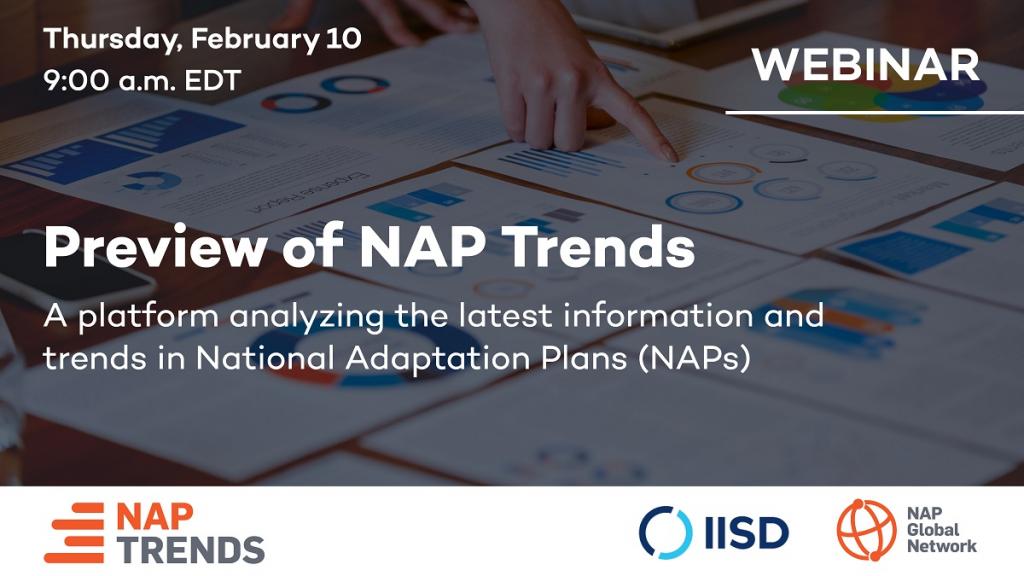
NAP Trends, an initiative of the NAP Global Network, aims to share key information on NAPs to make it easy to access for the adaptation community. The platform provides concise summaries of key information in NAP documents, as well as analysis of trends across countries. It is based on systematic reviews of NAP documents submitted to NAP Central, the portal for NAPs communicated to the United Nations Framework Convention on Climate Change (UNFCCC).
A total of 129 developing countries have initiated their NAP process. As more NAPs are submitted to the UNFCCC, we are systematically reviewing them, compiling summaries, and tracking trends in how countries are approaching different aspects of the NAP process.
On February 10, join the NAP Global Network’s soft launch of the platform and test your knowledge on NAP themes and key statistics by participating in our NAP Trends quiz.
Upcoming events
IGF 22nd Annual General Meeting
The 22nd IGF AGM will be held under the theme of Trust in an Interdependent World: Advancing inclusion and resilience in mineral value chains.
Trade Policy in Support of Climate Change Adaptation: Sharing results from a research collaboration in Viet Nam and the Pacific
A webinar to help trade and climate policy-makers understand how trade policy can support climate change adaptation, drawing on new IISD research from Viet Nam and the Pacific.
Understanding Climate Risks Through an Intersectional Approach: Final reflection workshop
The final reflection workshop brings together all of the partners involved in the Understanding Climate Risks Through an Intersectional Approach (iCRA) project to review and make sense of the findings, reflect on the research process, and identify future directions for intersectional climate risk assessment (CRA).