
Restoring Wetlands and Weaving Tradition: How Fijian coastal communities are building climate resilience
From reviving kuta weaving to patrolling coastal waters, Fijian communities are taking action to safeguard biodiversity, prevent illegal fishing, and build resilience in the face of climate change.
Most of Fiji’s coastal fisheries are experiencing overfishing and declining productivity. The impacts of climate change are increasingly being felt across coastal ecosystems, affecting the many people who depend on them for food security and income.
For many communities, marine resources serve as an important livelihood base. However, rising sea temperatures and increased frequency and intensity of climate-induced disasters are degrading ecosystems, leading to declines in fish stocks and other marine resources. These impacts have been compounded by unsustainable and destructive fishing practices, such as spearfishing with compressors and poaching within community-based marine protected areas (MPAs).
Additionally, terrestrial-based pressures from unsustainable land practices, such as land clearing, are resulting in pollutant runoff that further degrades coral reef systems.
In response to these challenges, WCS-Fiji, through the Climate Adaptation and Protected Areas Initiative, initiated community-based small-scale enterprises to reduce fishing pressure on traditional fishing grounds in the Bua District, Fiji. A locally viable, climate-resilient and nature-positive initiative was identified: kuta (a freshwater sedge used in traditional weaving).
The Kuta Story
The kuta (Eleocharis dulcis) is a native wetlands reed that is traditionally harvested and woven into mats, attire, and handicrafts by women in the provinces of Bua, Cakaudrove, and Macuata on Vanua Levu Island. Kuta is woven and worn as garments for weddings, birthdays, and other special occasions in Fiji. When an individual wears kuta, they are identified as having cultural links to one of the three provinces on Vanua Levu—Bua, Macuata, and Cakaudrove. Kuta’s unique weaving patterns increase its economic potential as it can also be woven into handbags, mats, and other household décor, making it a popular commodity both locally and overseas.

Recognizing the cultural and economic potential of kuta, WCS-Fiji is revitalizing this craft to provide sustainable income generation opportunities for women. Additionally, the project included restoring wetlands to ensure sustainable supply of the reed, while supporting the ecosystem function of these areas, acting as a natural sponge to reduce downstream impacts of pollution on coral reefs.
After securing permission to undertake the project through a formal Free Prior and Informed Consent process, WCS-Fiji met with women in the Bua District to gauge their interest in reviving kuta weaving. The response was overwhelmingly positive, confirming local interest and paving the way for the team to begin focused training and support.
Following the consultations, WCS-Fiji, through the Cooperative Business Unit of the Ministry of Trade, Cooperatives, and Small and Medium Enterprises, organized and delivered a training workshop on governance and cooperative registration, attended by 133 community members (98 female, 35 male), including 41 youth participants. This workshop aimed to establish a robust organizational framework for the creation of a kuta-focused cooperative, laying the groundwork for long-term sustainability and self-governance of the initiative. Notably, women's participation was high and active throughout the training. To support initial production efforts, WCS-Fiji distributed essential cultivation and harvesting equipment, including gloves, hats, knives, knife files, and gumboots to participants. These resources were critical to enabling safe harvesting of kuta and to ensuring the viability of the enterprise from the onset.
The Yasi Boi Yawa Women’s Cooperative was successfully formed and registered, with Maraia Bibi elected as chairperson. In Bibi’s words, “I am grateful for the awareness by WCS-Fiji for bringing to light some ideas in which kuta can be farmed and commercialized as a source of income generation for us women in this village.” She further emphasized the importance of resource sustainability and diversification, noting -
"I hope this does not end here; I hope that this women’s group finds alternative sources of livelihood and does not rely heavily on kuta, ensuring we do not run out of it as it holds cultural significance to us"

The WCS -Fiji team anticipates that the revitalization of kuta weaving will not only provide alternative income streams for women in Bua but also promote broader participation in nature-based solutions for ecosystem restoration, as the presence of kuta reeds is an indication of a healthy wetland. Kuta stabilizes r mud and silt, reducing erosion, which can be detrimental to downstream waterways. It is expected that this initiative will contribute to the re-establishment of traditional social ties across the participating communities and support the emergence of local women as environmental stewards and entrepreneurs.
How Fijian Communities Are Protecting Their Reefs From Illegal Fishing
Illegal fishing is a significant threat to Fiji's climate-resilient reefs and the food security of coastal communities. Importantly, the persistent occurrence of illegal fishing within customary fishing grounds has resulted in diminishing returns for subsistence and small-scale commercial fishers, eroding both food security and income streams.
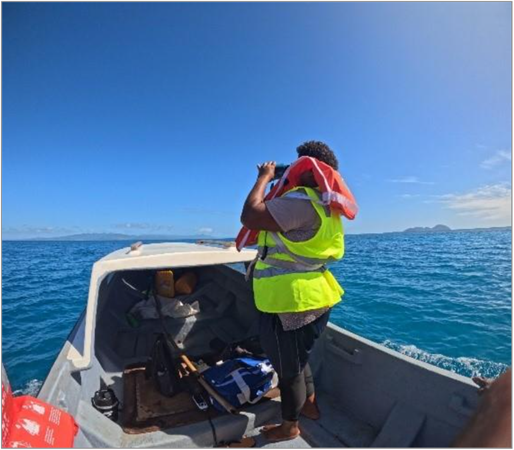
In response to these challenges, the communities of Bua, Bureta and Nakorotubu Districts are working with WCS-Fiji to undertake community surveillance and enforcement to enhance fisheries management and safeguard community-based MPAs. This initiative aligns with national priorities under the Ministry of Fisheries’ mandate to strengthen local governance of fisheries resources.
Community representatives participated in a structured training program encompassing the Boat Master Licence, Class 6 Restricted Licence, and Honorary Fish Warden certification in the districts.
The training, conducted in collaboration with the Maritime Safety Authority of Fiji and the Ministry of Fisheries, was designed to equip community members with a sound understanding of relevant legislation, including the Fisheries Act and associated regulations. The program also emphasized standard operating procedures for enforcement, documentation protocols, and mechanisms for reporting to relevant authorities. This foundational knowledge enables community Fish Wardens to conduct lawful patrols, identify breaches, and escalate incidents through official channels.
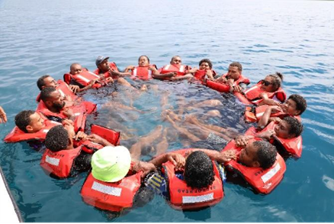
Following a participatory consultation process, each district established an Enforcement and Compliance group under the District Natural Resource Management Committees. These bodies are responsible for overseeing local enforcement activities and coordinating responses with government agencies. A 1-day workshop was convened to formalize these structures, clarify roles and responsibilities, and develop community-specific enforcement plans.
Initial patrols in Nakorotubu and Bua have already yielded results. Two separate incidents led to the apprehension of individuals engaged in unauthorized fishing activities. One case involved a fisher operating without the required permits in Nakorotubu waters, while another involved a licensed fisher violating the terms of their licence by fishing in non-consented areas in Bua. Both cases were processed and submitted to the Ministry of Fisheries for investigation and action. These enforcement successes have generated strong community awareness and deterrence effects. Word of the apprehensions spread rapidly, enhancing the effectiveness of the patrols and reinforcing community resolve to protect their marine resources.
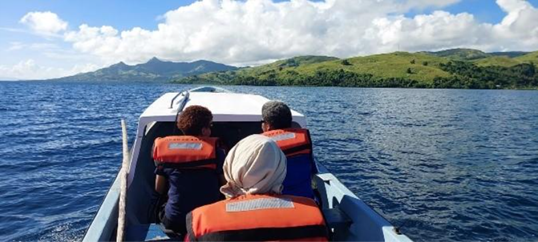
Community leaders have expressed strong support for the initiative. A Nakorotubu elder said: “I want to see the restoration of the Nakorotubu fisheries resources to how they were when I was young and ensure sustainable fishing methods are used at all times.” Similarly, Bua High Chief Ramakutu Nagagavoka emphasized the collective responsibility of the community -
“I want the Bua fishing grounds to be prosperous and healthy. Our communities must work together, even if it means holding our own villagers accountable through community patrols.”
By combining Traditional Knowledge, local engagement, and practical support, Fijian communities are building climate resilience in their own way and demonstrating how protecting the environment can go hand in hand with securing sustainable livelihoods.



You might also be interested in
Traditional Ecological Knowledge for Climate Change Adaptation and Disaster Risk Reduction in Fiji
This report examines how traditional ecological knowledge (TEK) assists in climate change adaptation and disaster risk reduction (DRR) in Fiji.
Climate Risk Profile: Fiji
This climate risk profile provides an overview of the Fiji's climate context, observed and projected climate change impacts, and a set of recommended NbS for adaptation actions and measures to promote gender-responsive and socially inclusive climate adaptation.
Nature-Based Solutions Inventory for Fiji
This inventory showcases the variety of nature-based solutions (NbS) projects (both completed and ongoing) being implemented in Fiji's ecosystems.
Inclusive Nature-Based Solutions for Climate Adaptation
Discover how climate change and biodiversity loss impact people differently and how inclusive nature-based solutions for adaptation can help.