The Organisation for Economic Co-operation and Development and the International Institute for Sustainable Development Sign an Agreement to Strengthen Cooperation on Domestic Resource Mobilization
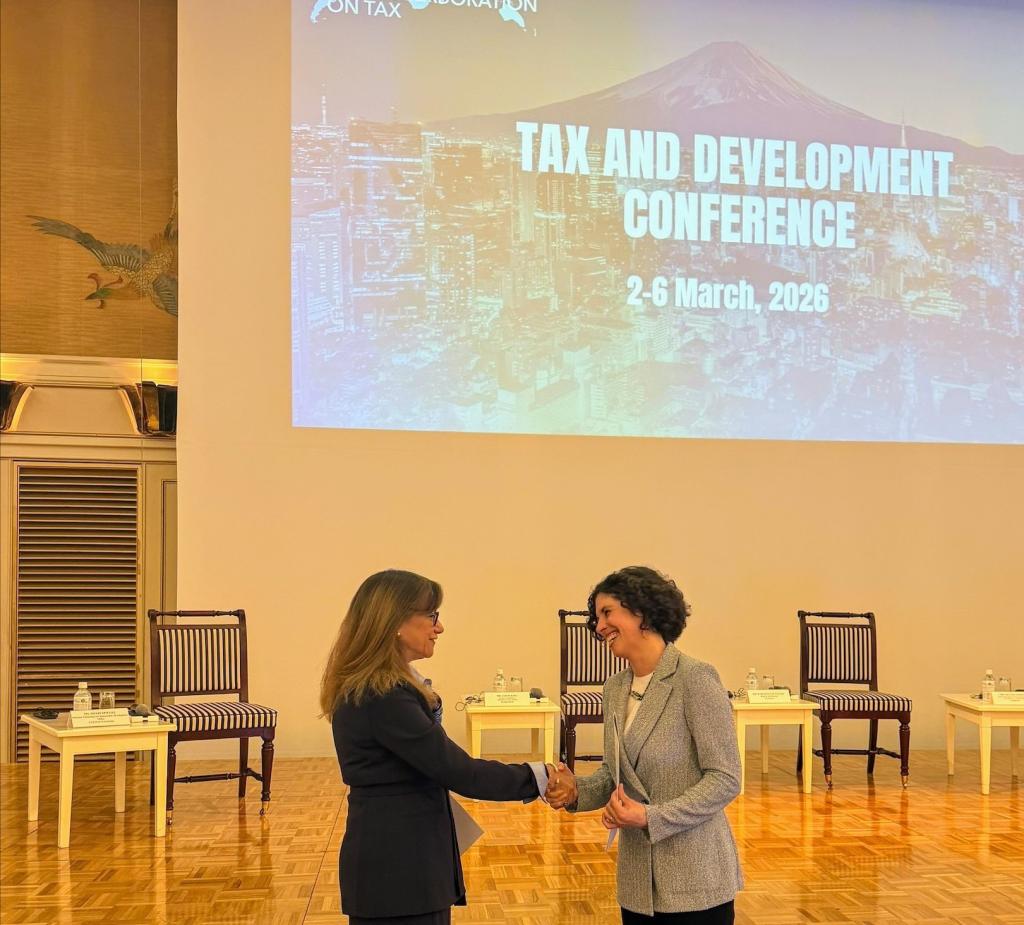
The Organisation for Economic Co-operation and Development (OECD) and the International Institute for Sustainable Development (IISD) have formalized their partnership with the signing of a memorandum of understanding (MoU) in the margins of the Platform for Collaboration on Tax’s 2026 Conference on Tax and Development, held on March 2-3, in Tokyo, Japan.
The agreement builds on a collaboration that began in 2018 under the Base Erosion and Profit Shifting (BEPS) in Mining Programme. The MoU provides a framework for IISD and the OECD to continue their support to developing countries in strengthening domestic resource mobilization, with a focus on the extractive sector and international taxation.
Under the MoU, the two organizations will deepen their work to address BEPS-related risks in mining, strengthen fiscal and administrative frameworks, and support countries in implementing international tax reforms. This work further covers the design and use of tax incentives, as well as emerging issues, such as environmental taxation and carbon pricing.
- “Our work with the OECD over many years has shown the real value of collaboration built on complementary expertise and a commitment to practical action. This agreement allows us to take that work further, and we look forward to deepening our partnership in support of more sustainable and robust tax systems,” said Alexandra Readhead, IISD Tax and Debt Director.
Through this formalized partnership, the OECD and IISD aim to advance more effective and sustainable tax systems and the management of natural resource revenues, supporting developing countries in strengthening domestic resource mobilization for sustainable development.
- “At a time of increasing fiscal pressure, strengthening international co-operation is essential. With the continuation of this partnership between the OECD and IISD, we are reinforcing our shared commitment to domestic resource mobilization. Our joint expertise will enhance our collective impact and better support countries in maximizing the benefits of their natural resources to secure long-term sustainable growth,” said Manal Corwin, Director of the OECD Centre for Tax Policy and Administration.
For more information, please visit https://www.oecd.org/en/about/programmes/beps-in-mining.html
Media Contact:
Lauren George
Communications Officer, IISD
[email protected]
0033682462094
About IISD
The International Institute for Sustainable Development (IISD) is a globally recognized think tank with 3 decades of experience working to solve the world’s most pressing sustainable development challenges. We combine deep expertise in a wide range of issues with a collaborative approach to research, policy advice, and hands-on support to ensure these solutions are brought to life. Headquartered in Winnipeg, Manitoba, we are a diverse team of over 300 professionals working from offices in Canada, Switzerland, and other locations around the world.
You might also be interested in
Permitting for Critical Minerals
This report examines how governments can streamline permitting for critical mineral mining projects while protecting communities, human health, and the environment. Drawing on case studies across five continents, it identifies the characteristics of efficient permitting systems and provides practical tools for improving processes.
From Voluntary to Binding
This report examines how sustainability standards and initiatives are integrated into public mining governance, from voluntary to mandatory use, with case studies from Brazil, Madagascar, and Sweden.
Preserving Tax Sovereignty
As countries negotiate the UN Framework Convention on International Tax Cooperation, this report examines how its provisions can be shaped to prevent tax disputes from being redirected into ISDS, ensuring they are addressed through tax-specific mechanisms.
Draft for Consultation | Voluntary Minimum Standards for Tax Expenditure Reporting
The Coalition on Tax Expenditure Reform (COATE) launches a public consultation on new voluntary minimum standards to improve worldwide reporting on tax expenditures, such as exemptions, deductions, credits, and reduced rates.