What Does It Take to Ensure a Just Energy Transition: Six insights from Indonesian civil society
The conference rooms where climate policy is debated are rarely filled with the people most affected by it. Farmers navigating unpredictable harvests caused by shifting rains, women-headed households absorbing the rising cost of living, and Indigenous communities managing forests under increasing pressure are often brought into the conversation only after key decisions have already been made.
Indonesia has committed to ambitious carbon pricing and electric vehicle (EV) targets as part of its climate agenda. These are important steps forward, but policy ambition doesn’t automatically translate into equitable outcomes. The gap between policy design and lived experience is where inequality often takes root.
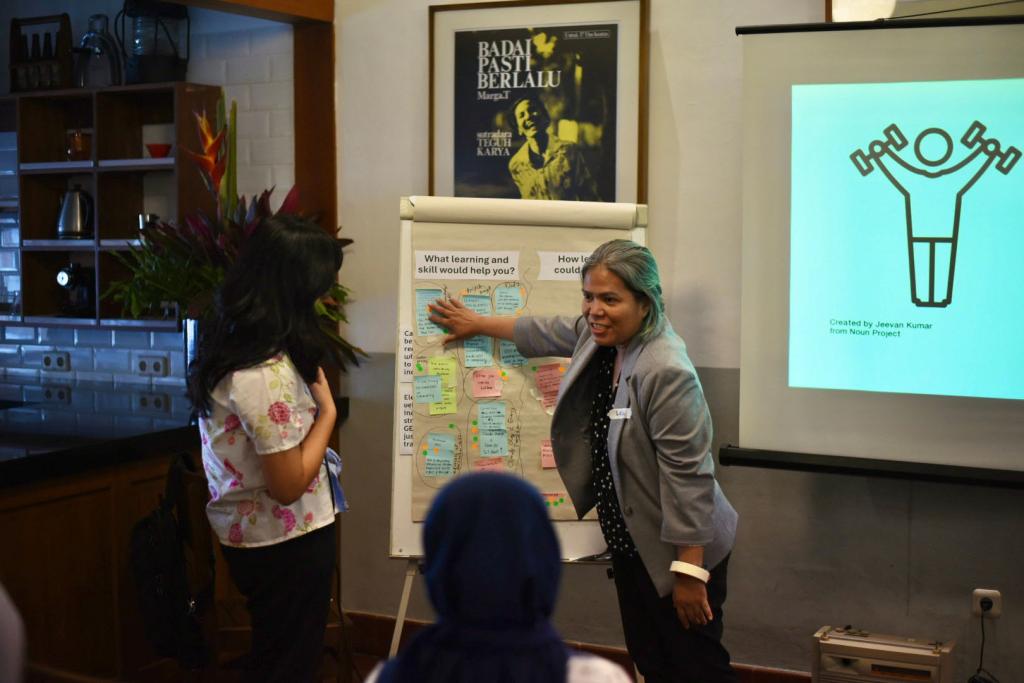
To better understand that gap, the International Institute for Sustainable Development gathered a group of Indonesian civil society organizations (CSOs) in Jakarta, including Women-Headed Household Empowerment, the Association for Assistance to Women’s Small Micro Enterprises, Indonesia Women Coalition, Humanis, and the Society for Renewable Energy. Representing women, low-income households, Indigenous Peoples, persons with disabilities, and youth, participants were invited not only to share perspectives but also to reflect on their own levels of awareness, confidence, and readiness to engage in policy processes related to carbon pricing and transport electrification.
Through a structured self-assessment and discussion, the activity explored how well CSOs understand carbon pricing, transport electrification and the general energy transition policy issues, how confident they feel in engaging with government processes, and the extent to which they see inclusive carbon pricing and gender equality and social inclusion (GESI)-responsive transport electrification as essential to a just energy transition. These reflections helped identify not only key risks and gaps but also opportunities for targeted capacity development, collaboration, and research.
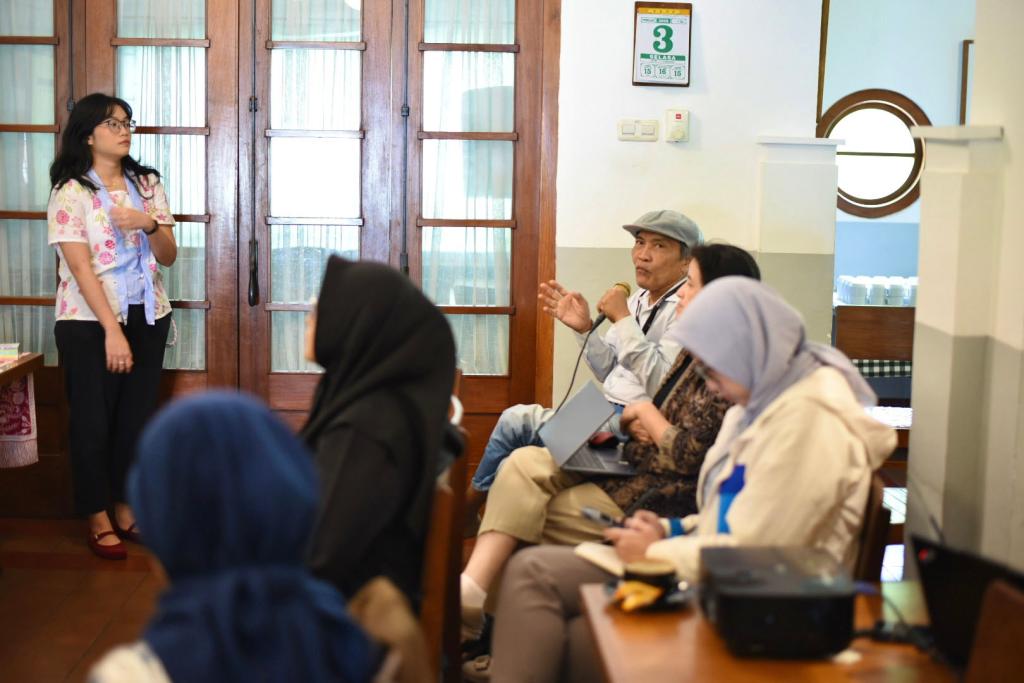
What risks do they see for the communities they represent? What would it take for them to engage meaningfully with these policy agendas? Six insights emerged from the conversation:
1. GESI Has to Be Designed In, Not Added Later
Fairness does not happen automatically, and neither does GESI. They emerge from deliberate design choices embedded in models, regulations, and fiscal decisions.
Carbon pricing, for example, can either reduce or reinforce inequality depending on how revenues are redistributed. If funds flow back into general government budgets or subsidies that disproportionately benefit urban consumers, the policy risks shifting costs onto those least able to absorb them.
The same applies to transport electrification. Without intentional design, the benefits of cleaner air and lower running costs tend to accrue to those already better off. Once these structural decisions are made, they are difficult to reverse. GESI can’t be retrofitted after the technical framework is set—it must be embedded from the start.
2. Communities Experience the Impacts Before They Know the Terminology
Communities in Indonesia are living climate change. Farmers adjust planting calendars as monsoon patterns shift, while fishing communities track changes in their catches as ocean temperatures rise.
They may not use terms like "just transition" or "carbon pricing mechanisms," but they carry detailed knowledge about the consequences of climate change and the limits of current energy systems.
This knowledge remains largely untapped in formal policy processes. Bridging this gap means starting policy engagement with lived experience, not technical frameworks.
3. Revenue Recycling Is a Make-or-Break Issue
Revenue recycling—how carbon revenues are collected, allocated, and distributed—is where equity is either delivered or denied.
Without transparent, accountable, and inclusive benefit-sharing mechanisms, revenues won’t reach the communities that need them most. Those revenues might even cycle back into systems that maintain fossil fuel dependency or concentrate benefits among already-privileged groups.
Key concerns include whether vulnerable groups will be explicitly prioritized, whether Indigenous communities will benefit from carbon credit systems tied to their lands, and whether low-income households will be protected from rising costs. Revenue recycling is where equity is either delivered or lost.
4. Transport Electrification Is not Clean or Inclusive by Default
EVs can reduce pollution and reliance on imported fuel, but only under the right conditions.
If the electricity powering these vehicles remains predominantly coal-generated, environmental gains are minimal. If charging infrastructure is concentrated in wealthy urban neighbourhoods, the mobility benefits remain inaccessible to the majority.
Affordability is another barrier. For many informal workers and low-income households who rely on motorcycles and small vehicles, EVs remain out of reach.
Accessibility also matters. Vehicles and infrastructure must account for differently abled users in mind. Charging stations must be accessible to people with mobility limitations. The issue is not whether electrification should proceed, but how to ensure it benefits a broad cross-section of society.
5. Participation Must Be Meaningful
Indonesia has formal mechanisms for public participation in policy-making, but access alone does not guarantee meaningful inclusion. Women and marginalized groups may be invited into consultations without the time, resources, or social latitude to engage substantively. Technical language can further exclude those without specialized knowledge.
Meaningful participation requires adequate notice and preparation time, materials in accessible language, forums where community knowledge is treated as legitimate evidence alongside technical data, and accountability mechanisms that show, transparently, how community input shaped final decisions.
Without this, consultation becomes extraction. Inclusive policy means safeguarding participation and enabling community-led solutions.
6. Evidence Alone Is Not Enough
Strong data and analysis are essential, but they don’t automatically create policy change. Evidence must be communicated in ways that are accessible and relevant to different audiences.
The skills to simplify complex mechanisms, communicate through storytelling, and facilitate exchange between technical experts and community members ensure that evidence is produced and used. They determine whether research reaches the audience who needs it and builds the public trust that policies rely on.
The Bottom Line
The six insights above point to a core principle: justice and fairness in climate policy are not boxes to be checked at the end, but design choices that must be made deliberately from the start. They need to be embedded in how policies are shaped, how problems are defined, whose knowledge is included, and how solutions are developed and decisions are made.
At the same time, the discussion revealed that while many CSOs are deeply connected to community realities, they are also still building their familiarity with technical policy instruments like carbon pricing, and their confidence to engage in formal policy spaces varies. This highlights a critical opportunity: with the right support, these organizations can play a much stronger role as change agents, translating community experiences into policy input, and policy developments back into community action.
Indonesia’s carbon pricing and electrification frameworks are advancing rapidly, but the window to shape them inclusively will not stay open indefinitely. What the discussion made clear is that the communities with the most at stake in how these systems are designed are also the ones whose knowledge, experience, and trust are essential to getting them right.
For development partners and policy actors, this means moving beyond consultation toward deliberate investment in CSO capacity through training, co-created research, and sustained engagement platforms. Strengthening CSOs as agents of change is not a parallel track to policy reform; it is a vital precondition for ensuring that just energy transition efforts are effective, inclusive, and equitable.
You might also be interested in
Indonesia spent IDR 713.5 trillion on energy subsidies in 2024
Indonesia needs a gradual, transparent reallocation of government spending from fossil fuels to clean energy.
Indonesia’s Shift to Induction Cooking Could Ease LPG Subsidy Costs While Improving Health
New research finds Indonesia could save up to IDR 12 trillion a year, cut reliance on imported fuel, improve public health, and unlock long-term savings by accelerating a shift from subsidized LPG to electric induction cooking.
Indonesia’s Next Cooking Transition
This report compares three alternatives—induction stoves, dimethyl ether (DME), and city gas—and finds that induction stoves are the most practical and viable option to support Indonesia’s shift to cleaner, non-fossil cooking.
Toward a More Responsible Critical Minerals Supply Chain Supporting Indonesia’s Energy Transition
Evidence-based policy brief on environmental, social, and governance (ESG) standards for Indonesia's nickel industry to support a responsible energy transition.