
Building a Competitive and Responsible Critical Minerals Sector in Indonesia: Key takeaways from Indonesia's national dialogue
With around 42% of the world's nickel reserves, Indonesia has a significant opportunity to supply materials needed for high-value nickel products, including electric vehicle (EV) batteries and clean energy technologies, such as energy storage systems. The challenge is ensuring that the policy design translates these resources into long-term economic value while meeting growing expectations around environmental, social, and governance (ESG) performance.
These issues were discussed during a national dialogue on critical minerals, which brought together representatives from government, industry, academia, and development partners to examine the policy choices that will shape the future of Indonesia's critical minerals industry.
Moving Beyond Raw Materials
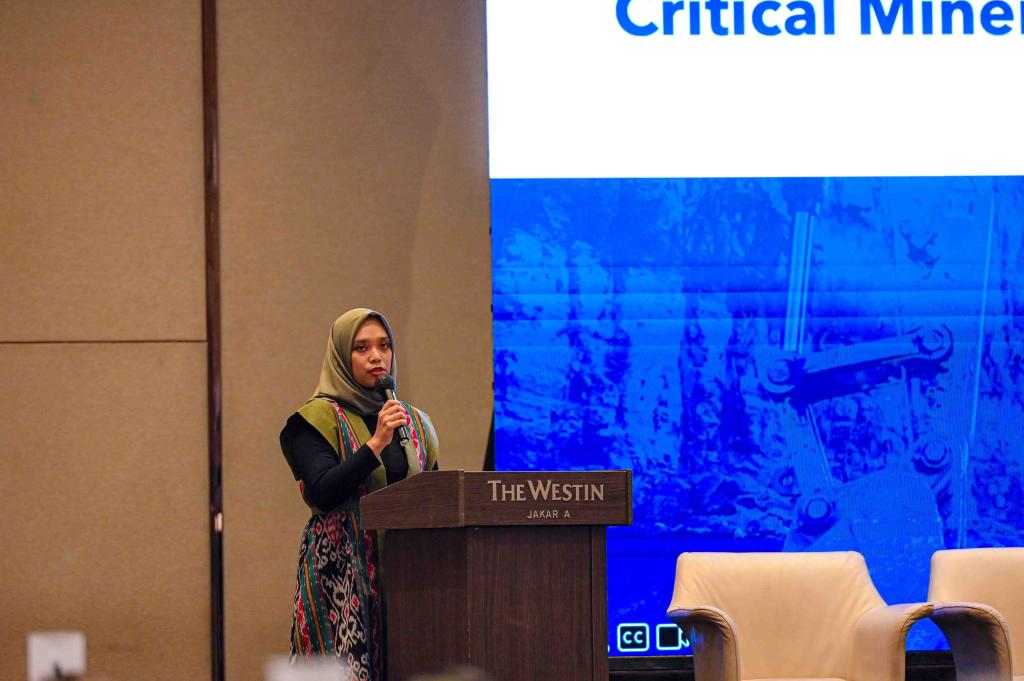
Opening the discussion, Yan Abrar, deputy director of Mineral and Coal Investment and Cooperation at the Ministry of Energy and Mineral Resources, said that Indonesia's downstreaming agenda, which seeks to move mineral production up the value chain through domestic processing and manufacturing, should be assessed not only by how much mineral is processed, but by its ability to generate higher-value industries, quality jobs, and stronger domestic supply chains.
He also reaffirmed the government's commitment to improving mining governance through greater transparency, stronger oversight of licensing and environmental standards, and the implementation of good mining practice. According to Yan, maintaining open dialogue across government, industry, and other stakeholders will be essential as the sector continues to develop.
Responding to Changes in the Global Market
Presenting IISD's upcoming analysis, Arzalia Wahida highlighted that while Indonesia controls around half of global nickel reserves, 95% of domestic nickel production remains Class 2 nickel, which is primarily used in stainless steel. Meanwhile, demand for Class 1 nickel, used in battery production, is expected to continue growing alongside the EV market.
She also noted that battery technology is changing quickly. Indonesia's downstream strategy has largely focused on batteries that use nickel or nickel manganese cobalt. But today, around 90% of EVs sold in Indonesia use lithium iron phosphate (LFP) batteries—a different type of battery that does not require nickel. This highlights the importance of keeping industrial policies aligned with market development. She also noted that Indonesia still depends on imported materials, such as lithium and graphite, to manufacture batteries.
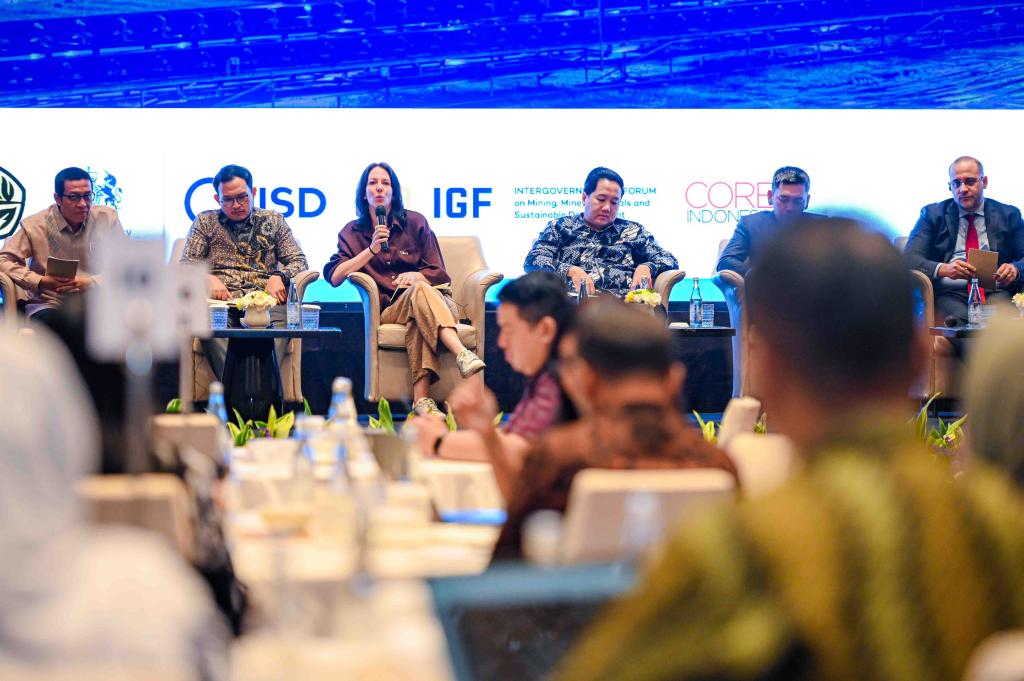
Building on this discussion, Carlo Starace, Associate at IISD, emphasized that Indonesia's downstream strategy should adopt a more diversified approach. While battery manufacturing remains an important opportunity, he suggested the country should also expand into higher-value stainless steel products, such as pipes and other finished goods. This approach will maximize domestic value creation and employment, especially since approximately 60% of future nickel demand is projected to remain in non-battery sectors. He noted that becoming a manufacturing hub will require Indonesia to think differently about its role in global supply chains, including accepting the need to import critical materials such as lithium while exporting higher-value manufactured products.
Competitiveness Depends on ESG
Several speakers noted that ESG considerations are becoming increasingly important in international investment decisions.
Indonesia's dependence on coal-powered mineral processing, together with environmental and social risks associated with mining expansion, contributes to a higher carbon footprint for nickel sulphate production than in countries such as Canada and Brazil.
Drawing on industry experience, Cindy Kroon, head of Sustainability at PT Vale Indonesia, discussed how sustainability is being integrated into business operations. She explained that the company monitors more than 6,000 sustainability indicators to meet different international ESG requirements.
She also shared examples of how operational changes can support social outcomes. Automated control room development has increased female representation in the mining industry workforce, with one command centre reaching up to 50% of women workers. The company has also expanded community engagement through multiple grievance channels, including WhatsApp and community "greeting houses.”
Putra Adiguna, managing director of Energy Shift Institute, argued that Indonesia should have the confidence to strengthen ESG standards, noting that global demand for Indonesian nickel is unlikely to disappear overnight. He also encouraged companies to begin decarbonizing where possible, noting that even incremental steps can improve environmental performance while larger renewable energy investments are being developed.
Building Domestic Capability
The discussion also examined how downstreaming can strengthen Indonesia's industrial base.
Gatot Putramas, from the Ministry of Industry's Battery-Based Electric Vehicle Working Group, explained that local content requirements are intended to encourage investment rather than act as a trade barrier. Indonesia is targeting 80% local content in EV batteries by 2030, which will require domestic production of battery cells in addition to battery packs.
Yudhistira, department head of Corporate Strategy at Indonesia Battery Corporation (IBC), shared updates on Indonesia's battery manufacturing industry. Though the global trend toward LFP has grown, IBC believes that nickel is a crucial source for the next generation of global battery production. For that, he noted that IBC's gigafactory in Karawang is already operating, with its initial production allocated entirely to the domestic market. He also highlighted efforts to build local expertise, including sending more than 600 Indonesian workers to China for 6 months of technical training, alongside research into sodium-ion batteries and other emerging technologies.
Shared Priorities
While speakers offered different perspectives on technology, industrial policy, and market development, there was broad agreement on several priorities. This included strengthening governance, improving ESG performance, developing domestic industrial capability, and ensuring that the downstreaming strategy creates lasting benefits for Indonesian workers and communities.
The dialogue underscored the value of continued engagement between government, industry, researchers, and development partners as Indonesia responds to changes in global critical mineral markets and advances its downstreaming agenda.
The national dialogue was held under the Critical Minerals Management for Sustainability (MAKMUR) project, implemented by IISD and the Intergovernmental Forum on Mining, Minerals, Metals and Sustainable Development (IGF), in partnership with Indonesia's Ministry of Energy and Mineral Resources and supported by UK’s Foreign, Commonwealth & Development Office. The MAKMUR project aims to support the development of responsible critical mineral value chains to promote inclusive growth and sustainable economic development in Indonesia.
You might also be interested in
Toward a More Responsible Critical Minerals Supply Chain Supporting Indonesia’s Energy Transition
Evidence-based policy brief on environmental, social, and governance (ESG) standards for Indonesia's nickel industry to support a responsible energy transition.
Permitting for Critical Minerals
This report examines how governments can streamline permitting for critical mineral mining projects while protecting communities, human health, and the environment. Drawing on case studies across five continents, it identifies the characteristics of efficient permitting systems and provides practical tools for improving processes.
Developing Sustainable Nickel-Based Battery Value Chains in Indonesia and the Philippines
This report assesses how Indonesia and the Philippines can benefit more from their nickel resources while managing emerging risks.
Mapping Indonesia’s Battery Electric Vehicle Ecosystem
In a closed-door discussion under Chatham House Rules, policy-makers, industry players, and researchers explored Indonesia’s battery electric vehicle (EV) ecosystem and the policies shaping it.