
Key Takeaways From Gender-Responsive Mangrove Restoration in Senegal
Biodiversity-mindful mangrove restoration can be a powerful tool for both environmental and social outcomes. We unpack lessons learned from a gender-responsive restoration project in Senegal.
Mangroves are among the most biodiverse and productive ecosystems in the world.
In Senegal's Sine Saloum and upper Casamance deltas, they support a rich diversity of fish, crustaceans, birds, and insects, acting as critical nurseries and feeding grounds. Their root systems trap sediment, stabilize coastlines, and offer a natural buffer against storm surges and rising sea levels.
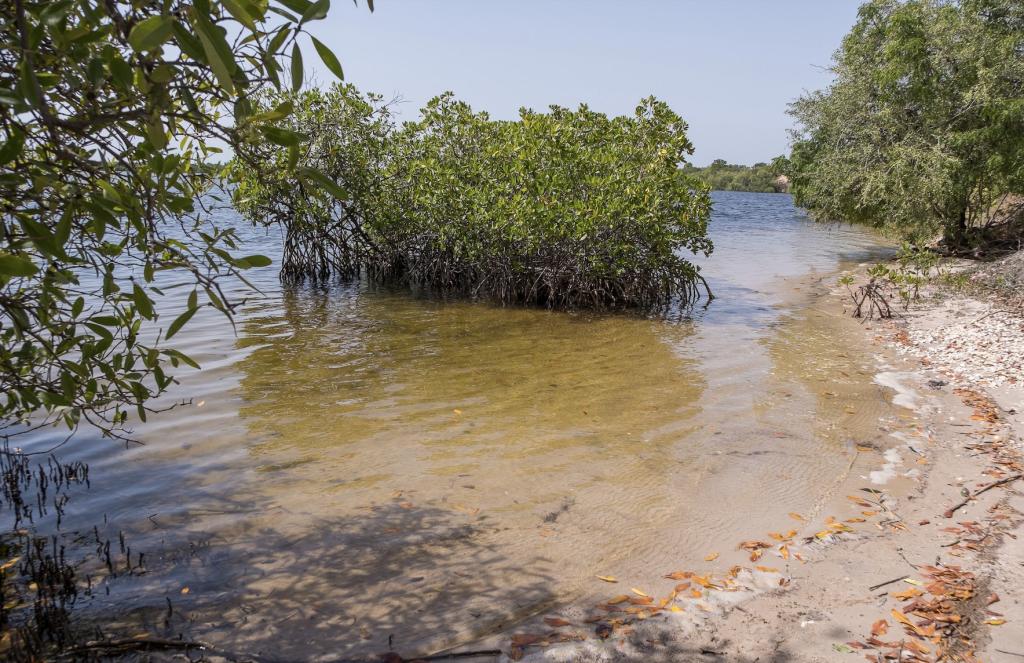
However, Senegal’s mangrove forests are increasingly threatened. Climate change impacts, overharvesting of resources, land-use conversion, and pollution have led to the severe degradation of mangroves in many parts of the country’s coastline. As mangroves degrade and disappear, the biodiversity and the services these ecosystems provide to local communities—and the planet—also decline.
In response to this challenge, through the Natur’ELLES project, local partners are working to demonstrate how biodiversity-mindful mangrove restoration that is co-designed with women at the community level can be a powerful tool for achieving better environmental and social outcomes.
Why Gender-Responsive Restoration?
In coastal communities in Senegal and around the world, women are deeply connected to mangrove ecosystems and the livelihoods derived from them. They are often engaged in unpaid or informal sector activities, such as gathering shellfish, producing mangrove-based crafts, collecting fuelwood, and managing nutrition for their families. As mangroves decline due to direct human intervention and human-induced climate change, so too do the resources that women rely on to sustain their households and generate income.
Many of these livelihood activities, such as small-scale fisheries, shellfish collection, and coastal agriculture, are sensitive to climate change impacts such as more frequent storms.
As mangroves decline, the protection that they offer against stronger sea surges and coastal erosion is increasingly lost—disproportionately affecting women’s livelihoods in vulnerable communities. Restoring the health and biodiversity of mangroves, therefore, enhances climate resilience, particularly for women-led households.
Through their informal management of mangrove ecosystems to support their livelihood activities, women have developed critical localized knowledge and skills that can be leveraged to ensure restoration work is long-lasting and effective. Despite this, women are frequently left out of decision making about resource use and ecosystem restoration at the local level. Ignoring gender dynamics in the restoration of ecosystems not only perpetuates inequality but also limits the effectiveness and sustainability of conservation efforts.
Gender-responsive restoration means ensuring that women are at the decision-making table, not just as beneficiaries but as leaders. It also means designing interventions that address their specific needs, strengthen their capacities, and create new opportunities for income, leadership, and resilience.
What Is Gender-Responsive Restoration?
Launched in 2023, the Natur’ELLES project is funded by Global Affairs Canada and implemented by SOCODEVI with support from the International Institute for Sustainable Development. Its ambition is to restore and conserve mangrove biodiversity while strengthening the climate resilience of women and their communities in Senegal's Sine Saloum and upper Casamance regions.
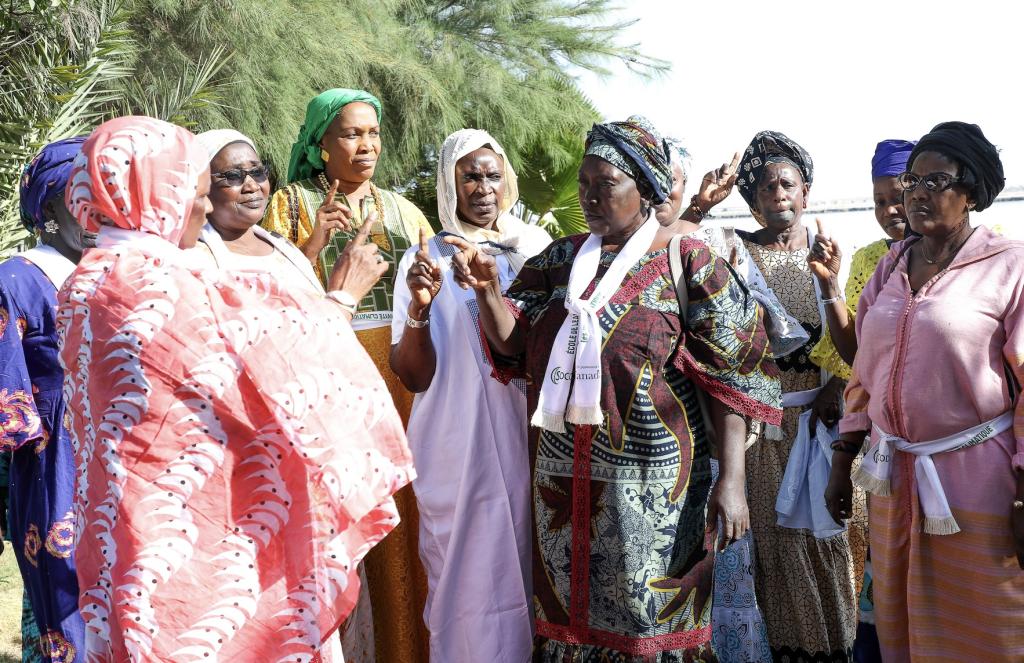
The project has aimed to adopt a community-based and gender-responsive approach to nature-based solutions for biodiversity conservation and climate adaptation. Restoration activities are co-designed with local women’s groups to ensure local relevance, ownership, and sustainability.
While biodiversity recovery is a central focus of the project, so too is women’s economic empowerment. Restoration sites are chosen based not only on their ecological potential—such as hydrological connectivity, which determines how well water can move through and connect ecosystems, or species regeneration capacity, which is the ability of plants or animals to naturally recover—but also for their socio-economic importance, particularly to the women who rely on mangrove resources for their livelihoods. This ensures that project activities lead to biodiversity improvements that directly support and enhance women’s existing incomes.
Restoration efforts are linked to livelihood activities that depend on flourishing biodiversity, from coastal fishing to the sustainable use of mangrove forests. For example, rather than relying on mono-species planting, the project promotes diverse species mixes that reflect natural ecosystem composition. This is heavily informed by local women, who contribute their knowledge of which species support fisheries, attract birds, or resist salinity alterations. By recovering species-rich habitats, women and their communities gain access to more resources to support their livelihoods.
Another key element of the project is capacity strengthening and training for women in sustainable livelihoods that depend on healthy mangrove ecosystems, such as oyster farming and mangrove honey production.
Lessons for Practitioners
Mangrove restoration efforts, like the natural and assisted regeneration methods implemented through the Natur’ELLES project, can encounter several challenges. For example, changes in salinity levels in water and soil—often driven by altered tidal flows or climate variability—can hinder mangrove growth and survival rates.
Poor natural regeneration can also pose difficulties for executing organizations, as degraded areas sometimes lack sufficient seeds, seedlings, or suitable conditions for mangroves to regrow naturally.
In addition, pressure from nearby land use, such as agriculture, infrastructure development, or wood harvesting, can degrade surrounding ecosystems and limit the success of restoration efforts.
Restrictive gender and social norms can also hinder women's participation in leadership roles.
But as global attention grows around nature-based solutions, the experience from Natur’ELLES offers important insights, and several priorities stand out.
First, it is essential to integrate biodiversity benefits and gender equity measures from the very beginning of restoration planning.
This means integrating gender analysis into participatory climate vulnerability and capacity assessments to more adequately consider gender and social norms and customary practices. This exercise can gather critical information that considers how women and communities use and benefit from ecosystems, as well as a better understanding of how local women participate in leadership and monitoring roles, such as in grassroots organizations and decision-making bodies.
Activities that encourage women’s participation in ecosystem management should not be limited to their inclusion in income-generating activities, but should also encourage their participation in leadership, planning and monitoring of ecosystems, where they can influence key decisions and restoration strategies.
Second, restoration outcomes are more sustainable when directly connected to livelihood benefits, particularly for women. Projects should therefore support women’s income-generating activities that benefit from healthy restored ecosystems, such as climate-resilient aquaculture, sustainable tree harvesting, or value-added processing of mangrove ecosystems, such as honey production.
Third, ecosystem service valuations (e.g., blue carbon, coastal protection services, fisheries productivity and non-monetary benefits, such as social and cultural practices) can be leveraged to make the case for restoration to communities, governments, and potential funders. They can also speak to the importance of women’s management of these ecosystem services.
Through the use of its SAVi tool, IISD is helping to quantify carbon sequestration of the restored mangroves to ensure that this “blue carbon” is accounted for when conducting cost-benefit analyses of projects situated on mangrove ecosystems.
The tool estimates the amount of CO₂ sequestered in mangrove biomass and sediments and then assigns an economic value to these climate benefits using carbon pricing or social cost of carbon estimates. By incorporating these values into cost-benefit analyses alongside other ecosystem services—such as fisheries productivity and coastal protection—SAVi helps demonstrate the full economic and environmental value of mangrove restoration and strengthens the case for investing in nature-based solutions in Senegal.
Finally, building local and institutional capacities is crucial for sustaining gender-responsive, biodiversity-rich restoration at scale. This includes training community members, particularly women, in restoration techniques and monitoring; improving women’s access to financial services and organizational skills; and supporting public-benefit institutions—such as local cooperatives, protected area community committees, and governmental agencies—to integrate gender equality and biodiversity considerations into relevant management plans, financing mechanisms, and policies.
In Senegal, women’s representation in protected area management committees has tripled thanks to the Feminist Environmental Leadership and Climate Agency Program, coupled with literacy and gender-focused initiatives, and nearly 1,500 women have modernized oyster farming using climate-smart techniques, boosting productivity while reducing physical workload. More than 150 women and men have been trained in nature-based solutions like reforestation, assisted natural regeneration, and over 190 hectares of mangroves and forests have been restored, enhancing ecosystem and community resilience. Building these capacities helps ensure restoration efforts can be scaled up effectively and remain inclusive and ecologically sound in the long run.


You might also be interested in
Advancing Gender-Responsive and Socially Inclusive Practices in Nature-Based Solutions for Adaptation
Get inspired by two nature-based solutions for climate adaptation projects that integrate gender equality and social inclusion considerations at various stages of implementation.
Climate Change Impacts on Women in Senegal: Here's how nature-based solutions can help
Senegal’s mangrove forests have been severely depleted, with devastating consequences: vanishing fish habitats, entire villages being washed away by floods, and women losing their main source of income. How can nature-based solutions address all these challenges at once?
Gender Equality in Action: Childcare program enables mothers to work on nature-based solutions in Kigali
SUNCASA partners from AVEGA Agahozo have established a childcare program for children aged 9 to 35 months at tree nurseries to support women by providing care while parents work.
“The howler monkeys are everywhere”: How women in Belize are harnessing the power of nature to conserve their community
The president of the Community Baboon Sanctuary Women’s Conservation Group in Belize River Valley talks about the environmental challenges facing their community, the group’s proudest achievements, and their aspirations for community-based conservation through nature-based solutions.