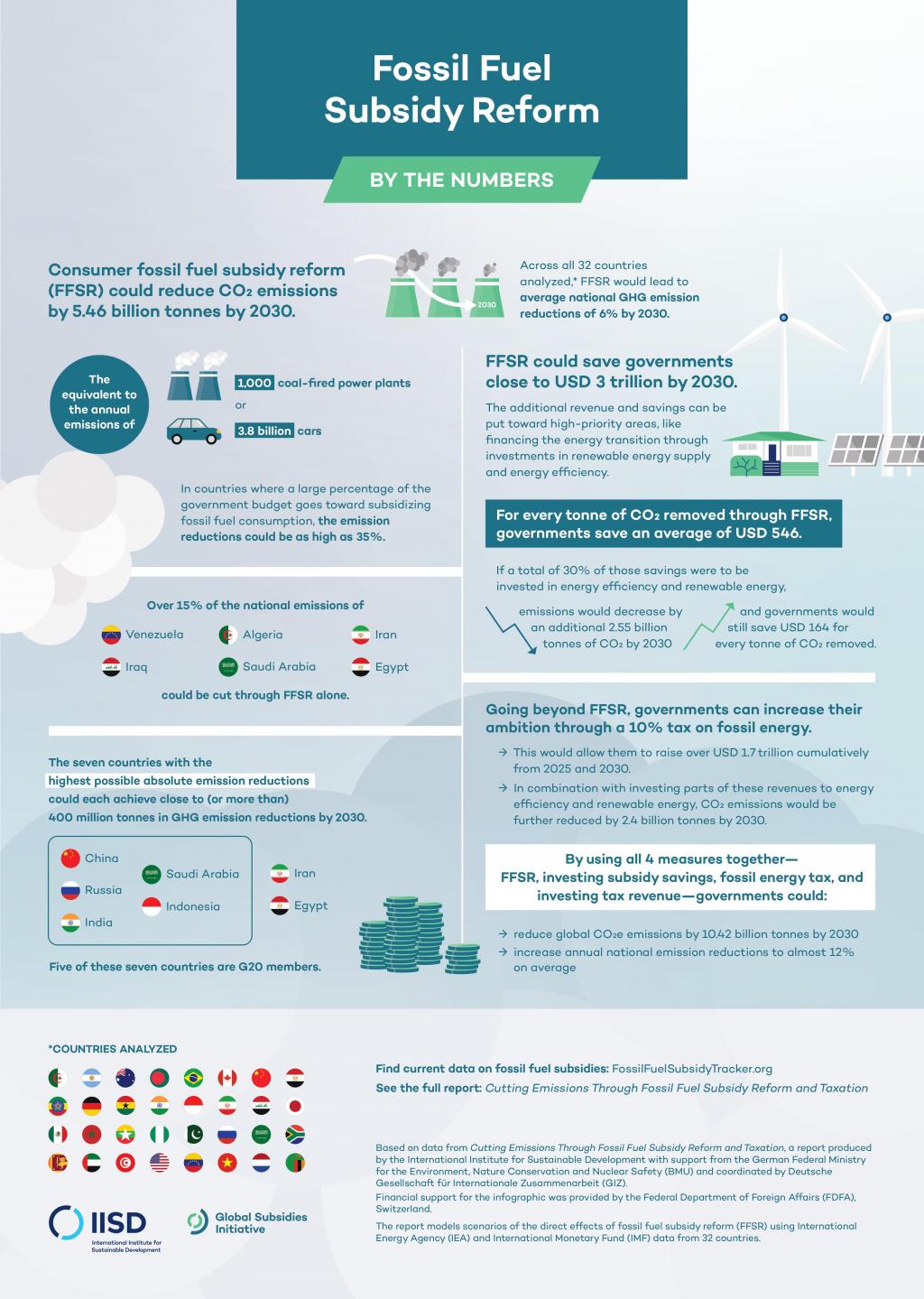
Fossil Fuel Subsidy Reform by the Numbers
Fossil fuel subsidies reduce the price of fossil fuels and distort energy markets, further fuelling the climate crisis. Reforming these harmful subsidies can not only reduce emissions, but also save governments money and free up funds to support clean energy transitions. In this infographic, we visualize the potential of this critical emission reductions tool—by the numbers.
This infographic is based on the report Cutting Emissions Through Fossil Fuel Subsidy Reform and Taxation.
Additional downloads
You might also be interested in
Governments are subsidizing the destruction of nature even as they promise to protect it
When dignitaries from 196 countries converge in Montreal next week to rub shoulders and hash out a new global agreement to save nature, money will be on the agenda.
The Strait of Hormuz Crisis Emphasizes Why Canada Should Move Away From Oil and Gas—Not Expand It
The closure of the Strait of Hormuz cut off roughly 25% of the world’s seaborne oil and 20% of LNG trade. In response, many countries are diversifying supply chains and increasingly ramping up domestic renewable capacity to improve energy security. Meanwhile, the Government of Canada has taken steps to expand oil and gas production.
Managing Energy Price Crises
This report outlines a strategic decision framework policy-makers can use when responding to fossil fuel price shocks.
Removing a Fossil Fuel Subsidy Is a Means, Not an End—The transition is the point
COFFIS is an international coalition working to phase out fossil fuel subsidies. Kim Solberg, part of the team that founded COFFIS, sits down to explain what made it possible—and why, in her view, a subsidy can only be removed as part of the wider transition it's meant to serve.