Workshop

Designing Responsible Agricultural Investment Contracts in Eastern and Southern Africa

This workshop discussed how IISD’s model contract clauses can help member states of the Common Market for Eastern and Southern Africa (COMESA) promote and facilitate responsible investment in agriculture.

April 18, 2024 9:00 am - 11:00 am GMT+2

(By invitation)

More investment is needed to modernize agriculture and food systems in Eastern and Southern Africa. But for agricultural investments to advance sustainable development in the region, they need to promote inclusive land governance, improve livelihoods and food security for local populations, and enhance the productivity, sustainability, and resilience of local food systems.

IISD and the COMESA Secretariat hosted a workshop for agricultural investment negotiators, state lawyers, and policy-makers in COMESA member countries on how to design responsible investment contracts. We presented IISD’s Model Contract Clauses for Responsible Investment in Agriculture and explained how they can be used to develop templates for agricultural investment contracts that are tailored to national or regional needs and contexts.

While comprehensive and well-enforced laws are the best way to ensure investments respect the rights of legitimate tenure holders, protect the environment, create quality jobs, and contribute positively to building climate resilience, there remains a lack of robust legal frameworks for land governance in the region. Enforceable investorstate investment contracts can help address these gaps in domestic legal frameworks.

Our model contract clauses distil international guidance and principles on responsible investment in agriculture and food systems into customizable, enforceable contractual obligations. They can also help to promote coherence between global, regional, and national laws and priorities by promoting international and regional development objectives that are tailored to national legal contexts. 

Interested in what IISD’s model contract clauses can offer other regions or countries?

If you are interested in learning more about how IISD’s model contract clauses can support your country’s investment governance framework or if you would like information or advice on how to reform laws, regulations, policies, and contracts in order to promote responsible investment in agriculture and food systems, we encourage you to request IISD’s advisory and capacity development services.
 

FERMA: Femmes Résilientes au Moyen-Atlas

Using an integrated approach to forest ecosystem management, the FERMA project works with twenty-five women's cooperatives in the Khénifra National Park region of Morocco, supporting their resilience in the face of climate change.

The Femmes Résilientes au Moyen-Atlas (FERMA) project promotes the use of Nature-Based Infrastructure (NBI), which produces ecosystem services benefiting 3000 people in the Khénifra National Park. Known as the 'water tower' of Morocco, the park is situated in the Middle Atlas Mountains, which feed the Oued Oum-Er-Rbia and Oued Sebou rivers, essential water sources that the country's agriculture depends on.

FERMA fosters an integrated approach to cedar ecosystem management, recognizing the key role of local communities in conserving forest biodiversity and maintaining environmental climate change adaptation services, particularly for women. Through community engagement, FERMA aims to strengthen the key role played by indigenous peoples, especially women and young women, in the management of natural resources and biodiversity conservation.

Increasing climate resilience in the region is a key goal of the project. The Middle Atlas Mountains region has been strongly impacted by the effects of climate change: rising temperatures, droughts and desertification. Without adequate protection and restoration measures, a 45% loss of Moroccan forests is envisaged by 2050.

Similarly, FERMA aims to protect this highly biodiverse region, home to more than 24,000 animal and 7,000 plant species. Under threat from climate change, nearly 1200 of these species are listed on the IUCN Red List, due to displacement from increasingly hot temperatures and dry land. Studies also suggest that around 20% of flora and fauna could disappear by 2050, if conservation measures are not implemented. The overall cost of climate-change related biodiversity loss is now estimated at more than USD 300 million, with the potential to reach more than USD 2 billion by 2030.

The project was conceived as a direct support to Agence Nationale des Eaux et Forêts (ANEF) Forests Strategy 2020-2030 and the Khénifra National Park Management and Development Plan and a contribution to the strategic objectives of the National Strategic Adaptation Plan 2020-2030 and Morocco’s National Biodiversity Strategy and Action Plan. The initiative also hopes to strengthen the management standards and governance of the Khénifra National Park, in order to promote its integration into the Green List of Protected Areas of the International Union for Conservation of Nature (IUCN), alongside ongoing programs in the Atlas Cedar Biosphere Reserve, in the Ifrane and Toubkal National Parks, also focused on the conservation of cedars in the Middle Atlas.

SOCODEVI will lead the project, with partners including the International Institute for Sustainable Development, IUCN and Ostrom Climate Solutions.

Project details

Workshop

Introductory Workshop on International Investment Law: Madagascar

On April 11-12, 2024, IISD will hold an introductory workshop on international investment law for government officials and negotiators from Madagascar.

April 11, 2024 10:00 am - April 12, 2024 5:00 pm

(By invitation)

The workshop will equip Madagascar officials with knowledge about international investment agreements, crucial provisions in investment treaties, and key developments at regional, continental, and international levels.

IISD's experts will assess Madagascar's current investment agreements, internal structure for handling negotiations, and challenges with ongoing negotiations. The participants will also discuss Madagascar's international investment policies and their connection to the country’s sustainable development goals.

The workshop is dedicated to Madagascar government officials involved in the development, negotiation, or management of investment treaties, investment promotion, and investor–state disputes.

IISD's team of international investment experts provides training courses, workshops, and a range of advisory services for developing economy officials—covering investment treaties, laws and contracts, negotiations, and dispute prevention and management. Read here (English) and here (French) to find out more.

Workshop

Workshop on Negotiating Bilateral Investment Treaties: Burkina Faso

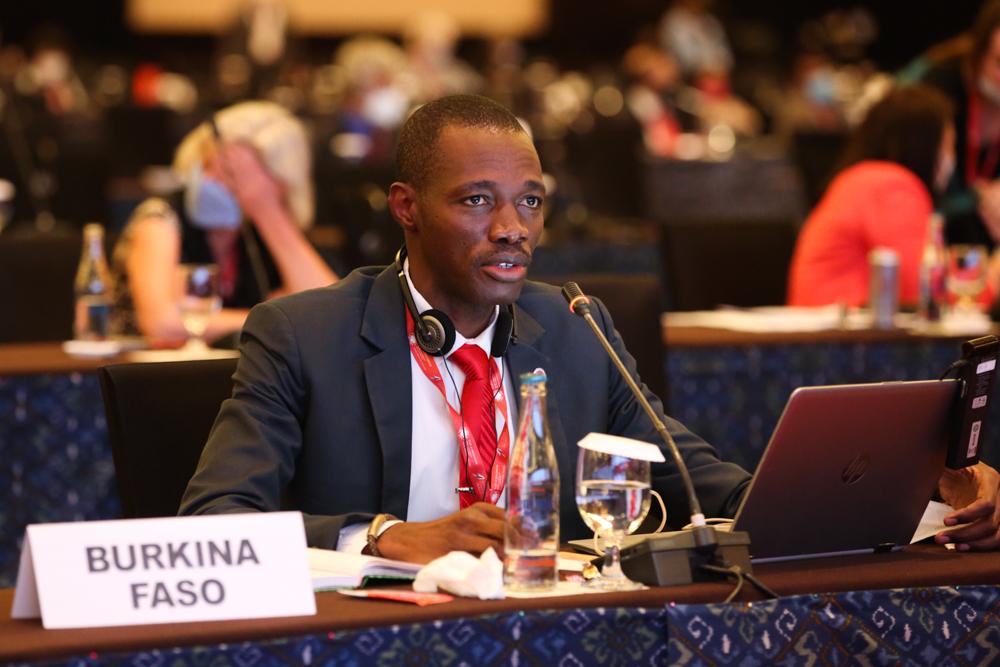
From December 18 to 20, 2023, IISD held an in-person workshop for Burkina Faso government officials. The workshop advanced the officials' ability to negotiate bilateral investment treaties (BITs) in support of sustainable development.

December 18, 2023 9:00 am - December 20, 2023 6:00 pm

(By invitation)

For several years, IISD has assisted Burkina Faso in creating an integrated national framework for negotiating BITs that promote socially and environmentally sustainable investments.

As part of the reform efforts, Burkina Faso has adopted a procedural guide for investment treaty negotiations and a national model BIT.

To ensure that these tools are fully utilized, IISD has recommended the establishment of a permanent, cross-cutting National Investment Treaty Negotiation Committee. The negotiation team will be responsible for coordination between the various ministries and agencies involved in the investment treaty negotiation process.

This workshop trained the members of the emerging National Investment Treaty Negotiation Committee—including representatives from Burkina Faso’s ministries responsible for industry, foreign affairs, the economy, and finance—on the country’s new tools for negotiating BITs.

The workshop’s specific objectives were to

  • increase the participants' foundational understanding of international investment law;
  • heighten the participants' awareness of the complexities involved in negotiating and finalizing investment treaties;
  • foster the participants' commitment to embracing Burkina Faso's new investment treaty negotiation system; and
  • strengthen a group of experts specializing in BIT negotiations in Burkina Faso.
Workshop

Introductory Workshop on International Investment Law: Algeria

On December 13–14, 2023, IISD held an introductory workshop on international investment law for government officials and negotiators from Algeria.

December 13, 2023 9:00 am - December 14, 2023 6:00 pm

(By invitation)

The 2-day session equipped Algerian officials with knowledge about international investment agreements, key investment treaty provisions, and important recent developments at regional, continental, and international levels.

This event assessed Algeria’s current investment agreements and challenges related to ongoing negotiations, as well as its institutional setup for treaty negotiations. The workshop also stimulated discussions on Algeria’s international investment policies and their connection to the country’s sustainable development goals.

Across the 2 days, the workshop aimed to:

  • Provide an overview of international investment agreements (IIASs), including key challenges and implications for developing countries.
  • Raise awareness of the status of IIAs signed by Algeria, including the number and type of treaties signed.
  • Facilitate dialogue among participants on potential issues related to existing IIAs and identify reform needs.
  • Explore Algeria's current approach to negotiating treaties, which agencies are involved in negotiations, and how inter-agency coordination is ensured.
  • Raise awareness among participants about practical ways to structure and prepare IIA negotiations to improve the chances of success.

This introductory workshop will be followed by in-depth technical training to be held in the first half of 2024.

The workshop was dedicated to Algerian government officials involved in the development, negotiation, or management of investment treaties, investment promotion, and investor–state disputes.

IISD's team of international investment experts provides training courses, workshops, and a range of advisory services for developing economy officials—covering investment treaties, laws and contracts, negotiations, and dispute prevention and management. Read here (English) and here (French) to find out more.
 

Brief

Brochure: IISD’s Sustainable Investment Advisory Services

Training, technical advice, and workshops

IISD's global team of sustainable investment experts provides customized training, workshops, and technical advice to government officials from developing countries, covering every stage of the investment life cycle.

November 21, 2023

IISD’s Sustainable Investment experts are based around the world, and we work with developing countries across Africa, Asia, Latin America, the Caribbean, and the Pacific. The tools and advice we provide cover every stage of the investment life cycle: promotion, facilitation, protection, dispute prevention, dispute management, and dispute resolution.

IISD’s sustainable investment experts work across a wide range of sectors, including agriculture and food systems, energy, and mining, as well as issues such as tax and voluntary sustainability standards. This breadth allows us to customize our services based on the investment priorities of your country.

Our advisory services are rooted in extensive practical knowledge of the local, national, and regional contexts in the countries where we work. The services benefit from IISD’s long-lasting relationships with government officials, academics, non-governmental organizations, and private practitioners across all the regions we work in.

IISD’s advisory services are informed by a deep understanding of global multilateral processes. Our team tracks or participates in all the key international investment reform initiatives—including in forums such as the United Nations Conference on Trade and Development, United Nations Commission on International Trade Law, World Trade Organization, Organisation for Economic Co-operation and Development, African Continental Free Trade Area, and Regional Comprehensive Economic Partnership—where we support developing country officials to navigate the negotiations and shape change within global investment governance.

Our Services

Rooted in this vision, know-how, and global presence, IISD’s team of international lawyers and policy experts provide in-person or virtual training, workshops, and technical advice to government officials from developing countries across a wide range of topics, including the

  • reform of investment treaties and contract negotiations, including the development of national and regional model instruments and negotiation strategies;
  • negotiation of investment treaties and contracts, including commentaries on negotiating text and the development of negotiating tools and processes;
  • adoption and revision of national investment laws, policies, and strategies;
  • adoption and revision of regional investment instruments and policies;
  • alignment of national and regional instruments with contemporary regional and international instruments and best practices, including regional investment treaties;
  • establishment of coordination mechanisms for enhancing coherence in investment governance and preventing investment disputes at the national level, including guidance on setting up inter-ministerial committees; and
  • preparation and adoption of national and regional strategies for investment governance reform processes at subregional, regional, and international levels. 

Please note that IISD cannot act for governments in live contract negotiations and dispute resolutions.

Our Expertise Is Available to Developing Countries Pro Bono

IISD offers training, workshops, and technical advice to developing countries pro bono. However, countries may be asked to contribute toward reasonable expenses. In case of insufficient funds, priority is given to least developed countries.

Reach Out for Other IISD Services

Upon request, we can work with your government or regional institution to design tailormade training, technical advice, and workshops to meet your needs, combining our investment services with insights from other IISD expert teams, including agriculture and food systems, mining, tax, trade, voluntary sustainability standards, and infrastructure.

Contact Us

If you are interested in discussing how IISD can support your government or regional institution, please email [email protected].
 

Conference

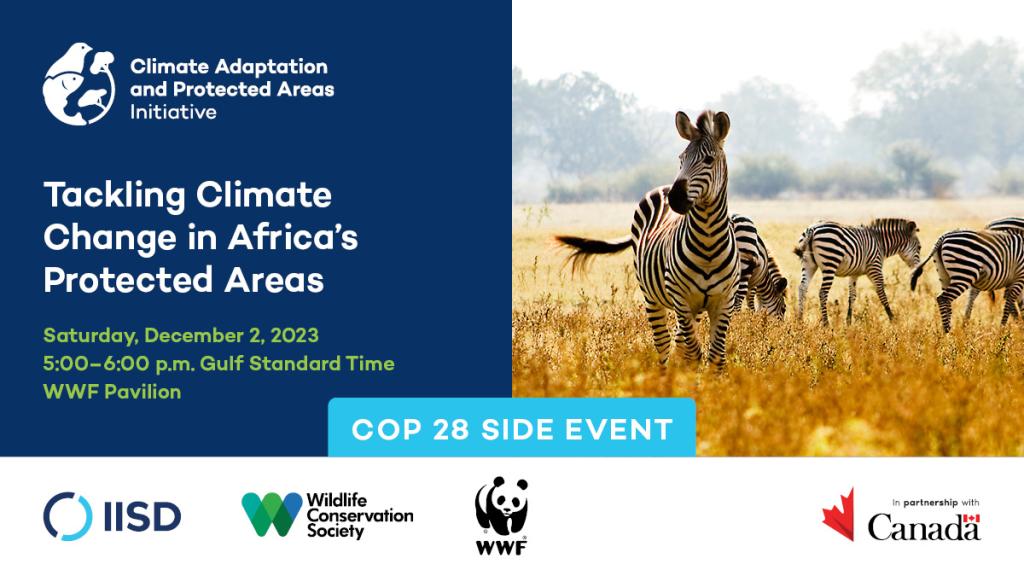
COP 28 Side Event | Tackling Climate Change in Africa's Protected Areas

December 2, 2023 5:00 pm - 6:00 pm GST (GMT+4)

WWF Pavillion

(Open to public)

Card announcing CAPA Event at COP 28

Taking place on Africa Day, this event, hosted jointly by WWF’s Regional Office for Africa and IISD, will focus on climate change challenges in protected areas, showcasing the Climate Adaptation and Protected Areas (CAPA) Initiative, funded by Canada’s Partnering for Climate Initiative. It will provide a space to unpack the complexity of climate change impacts and potential interventions, including through nature-based solutions. This event will also highlight the benefits of transboundary protected areas to enhance adaptation, biodiversity conservation, and development cooperation among neighbouring countries.

Speakers:

Evelyn Namubiru-Mwaura, Director, Program Quality and Resource Acquisition, WWF International

Andrew Hurst, Executive Director, Climate Finance, Global Affairs Canada

Alec Crawford, Director, Nature for Resilience, IISD

Harisoa Hasina Rakotondrazafy, WWF Madagascar and West Indian Ocean Programme Office

Her Worship Gladys Kamasanyu, Chief Magistrate, Uganda Wildlife Court

Conference

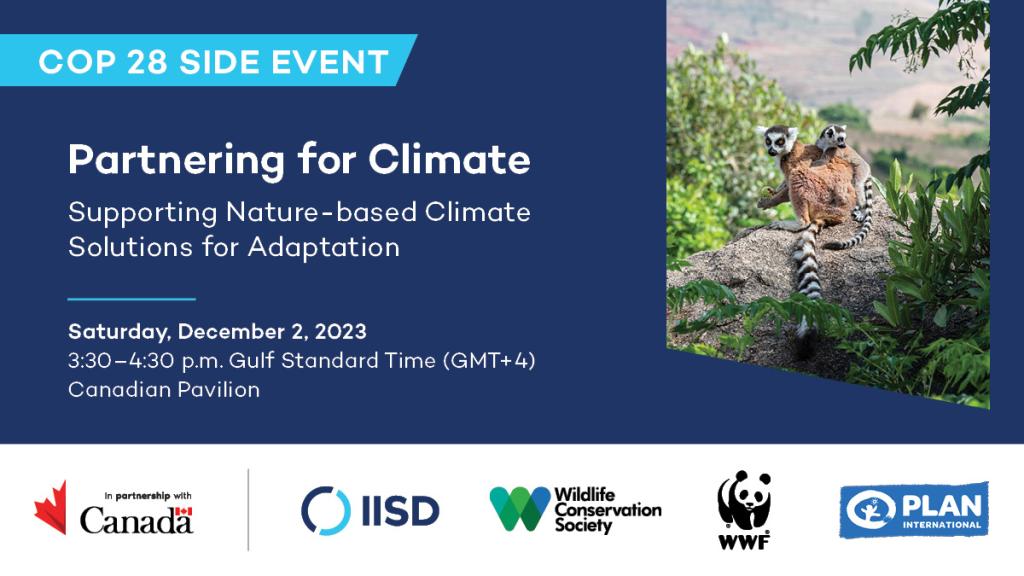
COP 28 Side Event | Partnering for Climate: Supporting Nature-based Climate Solutions for Adaptation

December 2, 2023 3:30 pm - 4:30 pm GST (GMT+4)

Canadian Pavilion

(Open to public)

Card announcing Partnering for Climate Event at COP 28

This event, hosted jointly by Global Affairs Canada and IISD, will highlight Canada’s leadership on climate finance through the Partnering for Climate initiative and include interactive exchanges between Partnering for Climate project hosts and an international audience. It will feature IISD-led projects, such as the Climate Adaptation and Protected Areas (CAPA) Initiative and the Scaling Urban Nature-Based Solutions for Climate Adaptation in sub-Saharan Africa (SUNCASA) initiative, as well as Plan International Canada’s project: Conservation and Sustainable Management of Coastal and Marine Ecosystems (COSME) in Kenya. This event seeks to demonstrate the implementation potential and stories of nature-based solutions for adaptation in Canada, sub-Saharan Africa, and Small Island Developing States, as well as Canada’s role in accelerating global climate action.

Speakers:

  • Andrew Hurst, Executive Director, Climate Finance, Global Affairs Canada
  • Alec Crawford, Director, Nature for Resilience, IISD
  • Evelyn Namubiru-Mwaura, Director, Program Quality and Resource Acquisition, WWF International
  • Jeffrey Qi, Policy Advisor, Resilience, IISD
  • Kristen Ostling, Senior Advisor, Policy and Advocacy, Plan International Canada

To learn more, visit the Canadian Pavilion event page here[Please note that the official page is being updated to reflect changes from Parks Canada to Plan International Canada]

Workshop

Redesigning Agricultural Investment Contracts to Meet a New African Investment Regulatory Landscape

November 21, 2023 2:15 pm - 3:45 pm EAT

Hybrid: Africa Union Headquarters.
Small Conference Room 1

(Open to public)

Conference on Land Policy in Africa (CLPA) Masterclass

Background

More investment is needed to transform Africa’s agriculture and food systems, boost production and productivity, and improve livelihoods and food security on the continent. Investments in agricultural production are also needed to take advantage of the opportunities for increased intra-African trade created by the establishment of the African Continental Free Trade Area (AfCFTA). But not all investment is equally beneficial. Some types of agricultural investments carry significant socioeconomic and environmental risks. What is really needed in Africa is more responsible investment in agriculture, the kind of investment that promotes inclusive land governance, improves food security for local populations, and enhances the productivity, sustainability, and resilience of local food systems. 

The Masterclass

In this Masterclass, IISD presented its new Model Contract Clauses for Responsible Investment in Agriculture, which distil regional guidance and international principles on responsible investment in agriculture and food systems into user-friendly, customizable contract clauses. The Masterclass was designed to help government policy-makers and agricultural investment negotiators understand key contract provisions and their overarching purpose, design, innovations, and limitations. In addition, it provided knowledge that can support civil society and community-based organizations to better advocate for responsible investment contracts that ensure agricultural investments further national and regional sustainable development objectives. 

The model clauses are designed to be used in investor-state agreements for agricultural investment projects (but they can be adapted and used by other tenure holders, including traditional owners and communities); by complementing national laws, managing project-specific issues, and putting into legal effect international and regional norms, standards, best practices, and principles. 

Objectives and outcomes 

  • Take a deep dive into IISD’s new Model Contract Clauses for Responsible Investment in Agriculture, identifying key provisions, their overarching purpose, design, innovations, and limitations. 
  • Demonstrate how to use IISD’s Model Contract Clauses to develop one's own template for agricultural investment contracts that are tailored to specific needs and contexts, and which distil regional and international principles of responsible investment in agriculture into enforceable contractual obligations. 
  • Provide knowledge that can support civil society and community-based organizations to better advocate for responsible investment contracts that ensure agricultural investments further national and regional sustainable development objectives. 
Insight

African Environmental Ministers Commit to Beyond GDP and Inclusive Wealth Measures

To deliver more effective and coordinated responses to the growing environmental concerns Africa faces, African environment ministers, international partners, and national stakeholders met from August 14 to 18 in Ethiopia’s capital, Addis Ababa, at the 19th session of the African Ministerial Conference on the Environment (AMCEN-19).

October 25, 2023

The ministerial segment was held on August 17 and 18 following several days of constructive dialogues and inputs from civil society and the group of ministerial experts.

Centred around the conference theme Seizing Opportunities and Enhancing Collaboration to Address Environmental Challenges in Africa, the plenary sessions and side events covered several critical issues for the region’s sustainability, including critical minerals, natural resources, pollution, climate finance, the SDGs, and regional and global partnerships.

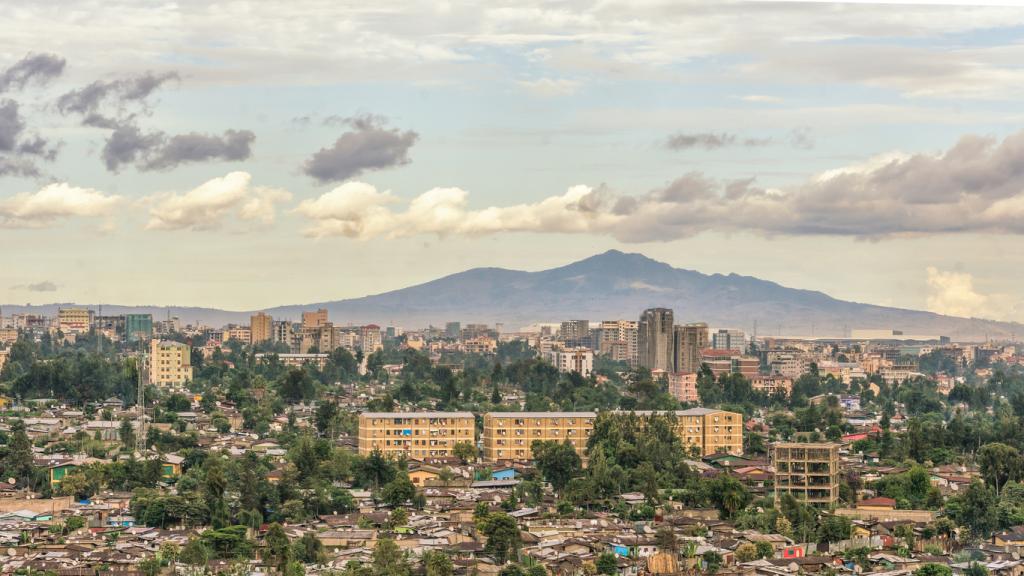
Addis Ababa
Addis Ababa hosted the 19th session of the African Ministerial Conference on the Environment (AMCEN) as climate change impacts and economic pressure mount for the continent.

The meeting concluded in the Addis Ababa declaration, in which member states showed strong commitment to work together with AMCEN as the key coordination channel to address the ongoing environmental challenges the continent is facing. The series of concerns and action plans laid out in the declaration reflect several important concerns on the region's trajectory:

  • African ministers' concerns regarding unsustainable economic activities and their impact on nature, climate, and pollution are growing.
  • The sustainability and well-being of the continent are at serious risk: as stated in the declaration, the region lost 65% of its productive land over the past 70 years. Meanwhile, the population has grown more than sixfold. 
  • Global and regional coordination, capacity-building, and financial resources are key to addressing the ongoing challenges.

Aware of these challenges and the necessity to urgently go beyond business as usual, the ministers see the adoption of inclusive wealth measures as an important step forward that can contribute to the well-being of the continent. The introductory segment of the declaration reads:

We African ministers for the environment … committed to continuing to take environment and climate action to unlock inclusive wealth creation that safeguards the socio-economic well-being of the people in Africa.

This statement, which is backed up by government officials’ warnings during the conference on the destructive nature of our activities, shows that environment ministers have strong incentives to move beyond GDP as the primary tool of policy-making and toward inclusive wealth measures. In his keynote speech during the Inter-Ministerial Dialogue on Green Jobs, Burkina Faso’s Minister of Environment, His Excellency Roger Baro, stated: “It's time we all review our growth models so that our progress doesn't jeopardize that of generations to come.”

Roger Baro
Roger Baro, Minister of Environment, Burkina Faso (Photo by IISD/ENB Kiara Worth)

African ministers’ concerns about the destructive nature of our activities set a good foundation for the Summit of the Future, where world leaders will agree on proposals to better address global challenges. The proposals include moving beyond GDP toward indicators such as inclusive/comprehensive wealth, as suggested by the Secretariat General. In response to the ambition of the Secretariat General and the findings from the 2023 Inclusive Wealth Report showing a declining wealth per capita in many African countries, what is needed for the continent is an accounting framework that will allow countries to measure and monitor wealth and use it for policy-making. There are several reasons why such a framework is important for the continent:

  • Because wealth is positively correlated with well-being, “unlock[ing] inclusive wealth creation that safeguards the socio-economic well-being” should begin with an assessment of the current national stock of wealth and how it evolved over time. Such an assessment will give countries a clear picture of their well-being path, opportunities, and bottlenecks.
  • With a natural capital measure, countries will be better equipped to monitor their natural resources and biodiversity and the contribution of revenue drawn from the extraction of these resources to the development process. Take minerals, for instance. The region hosts the world's rarest resources, such as cobalt, lithium, and diamonds. About 60% of the world's diamonds are supplied by Africa. Yet, on average, countries capture only 40% of natural resource revenues. This 60% revenue loss represents a significant resource for governments, which could contribute to investment in education and jobs, as well as closing the current biodiversity finance gap estimated at “USD 700 billion per year” (Declaration, point 5). 
  • Several promising environmental and climate initiatives taken by the region can positively drive different components of wealth and thereby well-being. As stated in point 33 of the Declaration, the Green Climate Fund invested around USD 4.9 billion across 92 projects in Africa. This initiative, including many others, such as the Great Green Wall or the African Green Stimulus Programme, can positively and simultaneously drive job creation (human capital), the preservation of biodiversity (natural capital) and infrastructure (produced capital).

The 19th ordinary session of the AMCEN was another important opportunity for policy-makers to decide what they want for the future of the continent. The Addis Ababa declaration tells us that the holistic well-being of Africans and the health of the planet are top of mind. Along with the existing initiatives the region is embarked on, a wealth accounting framework will play a key role in achieving those aspirations.

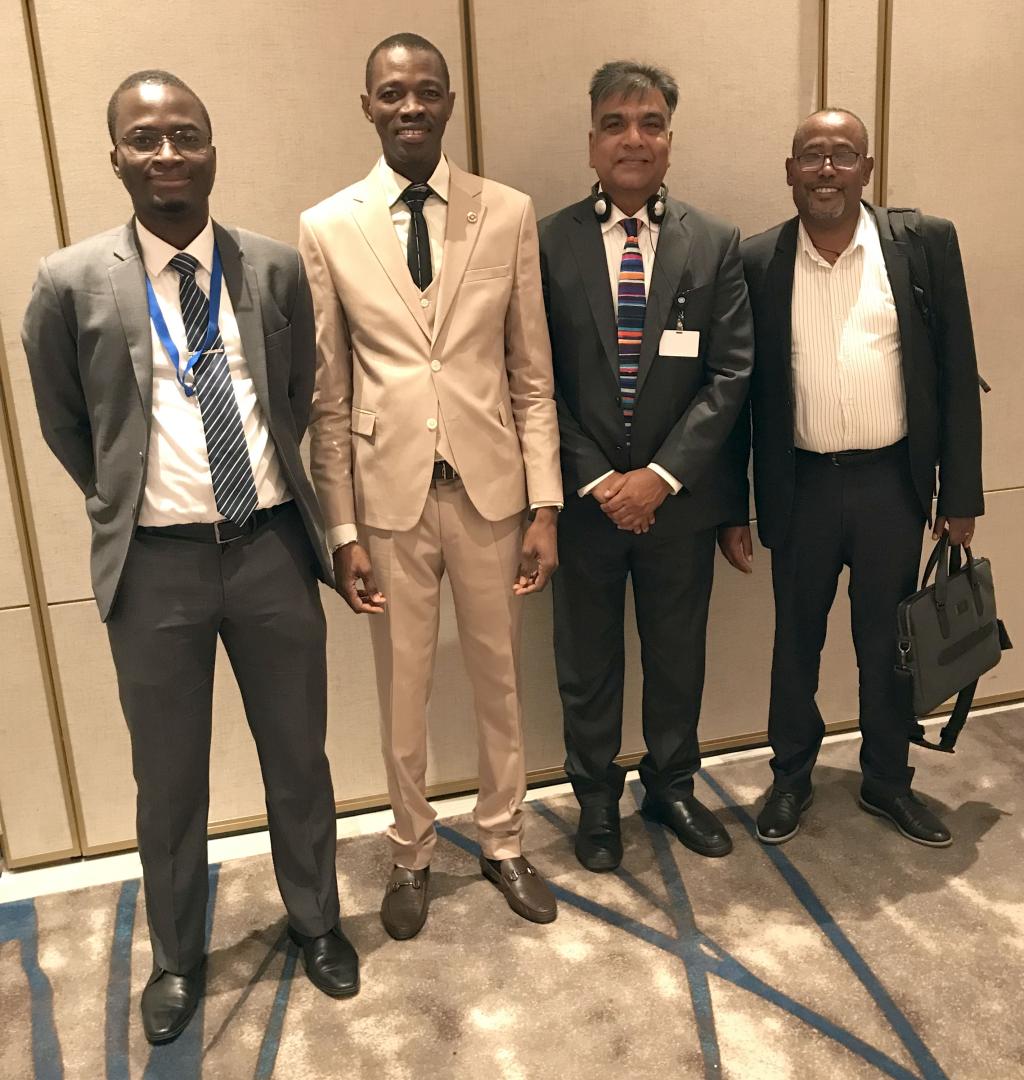
Zakaria Zoundi, Minister Roger Baro, Pushpam Kumar, Mesfin Tilahun Gelaye