
Exploring Innovative Financing Solutions for the Regional Green Infrastructure Network in Metro Vancouver
Quick Project Facts:
- Protecting and connecting ecosystems in a Regional Green Infrastructure Network will enhance biodiversity, improve climate resilience, and support community well-being in Metro Vancouver.
- IISD is advising on how to identify and implement sustainable financing solutions to support this initiative and ensure its success and longevity.
- Successful financing in a diverse and complex region such as Metro Vancouver, will require the leadership, engagement, and involvement of various stakeholders and rightsholders including governments, First Nations, and private sector actors to recognize the long-term benefits of protecting nature.
Exploring Sustainable Financing Options
The Regional Green Infrastructure Network (RGIN) is an initiative aimed at connecting and protecting natural ecosystems to enhance biodiversity, resilience, and health benefits in Metro Vancouver. It is guided by the Metro 2050, the Regional Growth Strategy, which set a target to increase the area of land protected for nature from 40% to 50% of the region by 2050.
IISD is currently working with the Metro Vancouver Regional District on a project exploring sustainable financing options for the RGIN.
Expanding nature protection in the region will involve a variety of collaborative conservation activities, such as purchasing private land, formally protecting previously unprotected public land, and incentivizing landowners to restore ecosystems. The success of the RGIN initiative depends on access to sustainable financing to undertake these activities.
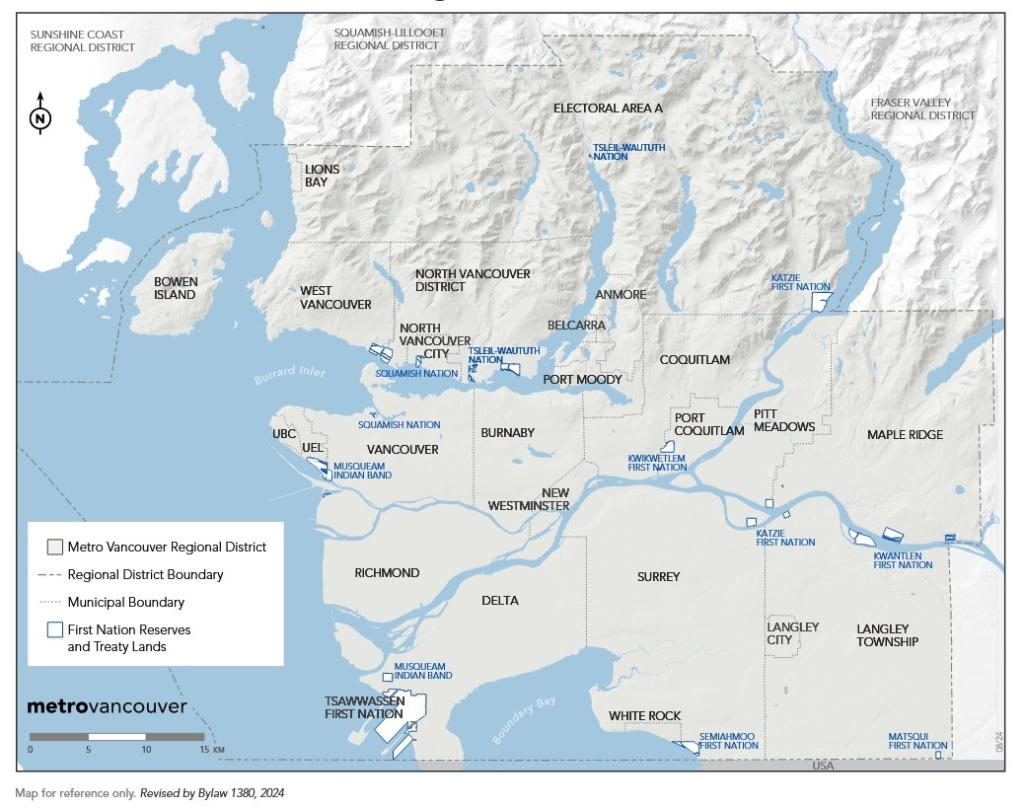
The Metro Vancouver region consists of 21 municipalities, one Electoral Area and one Treaty First Nation. Metro Vancouver respects the diverse and distinct histories, languages, and cultures of First Nations, Métis, and Inuit, which collectively enrich our lives and the region. The region is situated within the traditional territories of 10 local First Nations: q̓ic̓əy̓ (Katzie), q̓ʷɑ:n̓ƛ̓ən̓ (Kwantlen), kʷikʷəƛ̓əm (Kwikwetlem), máthxwi (Matsqui), xʷməθkʷəy̓əm (Musqueam), qiqéyt (Qayqayt), Semiahmoo, Sḵwx̱wú7mesh Úxwumixw (Squamish), scəw̓aθən məsteyəxʷ (Tsawwassen), and səlilwətaɬ (Tsleil-Waututh). As a result, its ecosystems often span multiple jurisdictions, each with varying capacities to generate revenue. The effective expansion and long-term management of the RGIN will require collaboration among stakeholders and rightsholders, including First Nations, municipalities, and other levels of government, to generate revenue and realize sustainable financing solutions.
Unlocking sustainable finance to support nature-based solutions
Access to long-term, sustainable finance is crucial for the success of nature conservation efforts. More organizations are recognizing the benefits of nature protection and taking action. Governments are setting conservation goals, businesses are recognizing the risks of climate change and the need for resilience through restoration, and Indigenous Peoples are leading nature stewardship efforts on their traditional lands.
This increased awareness and initiative can unlock new funding mechanisms, such as outcome-based financing. Financing structures can be designed to improve outcomes, transparency, and collaboration among municipalities, businesses, and Indigenous communities, fostering a shared vision for conservation and supporting reconciliation.
IISD advising on financing of nature-based infrastructure
Over the years, IISD researchers and IISD’s Nature-Based Infrastructure (NBI) Global Resource Centre has established a strong foundation for mobilizing capital for NBI, providing guidance on a diverse range of financing solutions from traditional public funding to innovative instruments. By engaging key stakeholders, including governments, local communities, and private sector actors, the NBI Centre has supported the development of customized financing strategies that promote ecosystem restoration and climate resilience.
In the context of the Metro Vancouver Regional District project, IISD aims to assess and recommend financing solutions that are both innovative and practical for implementation. IISD aims to demonstrate how to bridge the gap between environmental goals and financial realities, creating pathways for implementing nature-based infrastructure at scale.
Related Resources:
- Natural Infrastructure for Water Solutions (NIWS)
- Nature-Based Infrastructure (NBI) Global Resource Centre
- Metro Vancouver Metro 2050, the Regional Growth Strategy (.pdf)
- Metro Vancouver Connecting the Dots: Regional Green Infrastructure Network Resource Guide (.pdf)
- Metro Vancouver Climate 2050 Nature and Ecosystems Roadmap (.pdf)
- Outcomes-based Financing for Nature-based Infrastructure - Building Bridges 2023 (video)
- Nature-Based Investments: Insights & Opportunities - Building Bridges 2024 (video)



You might also be interested in
Financing for Natural Infrastructure Projects
This report shows how private capital can finance natural infrastructure to meet our water needs, making financing decisions, and investment benefits.
Sustainable Investing: Shaping the future of finance
A report on how sustainable investing will become mainstream in the financial industry.
Pathways to Financing Natural Infrastructure in Canada
This webinar about financing natural infrastructure discusses how to involve private investors, scaling up, and charting the path forward.
Unpacking Methods for Integrated Assessments of Nature-Based Solutions
This guideline offers a step-by-step approach for assessing nature-based solutions (NbS) in municipalities, from identifying benefits to communicating findings.