Aftershock in Groningen: Shell and ExxonMobil’s arbitration cases against the Netherlands
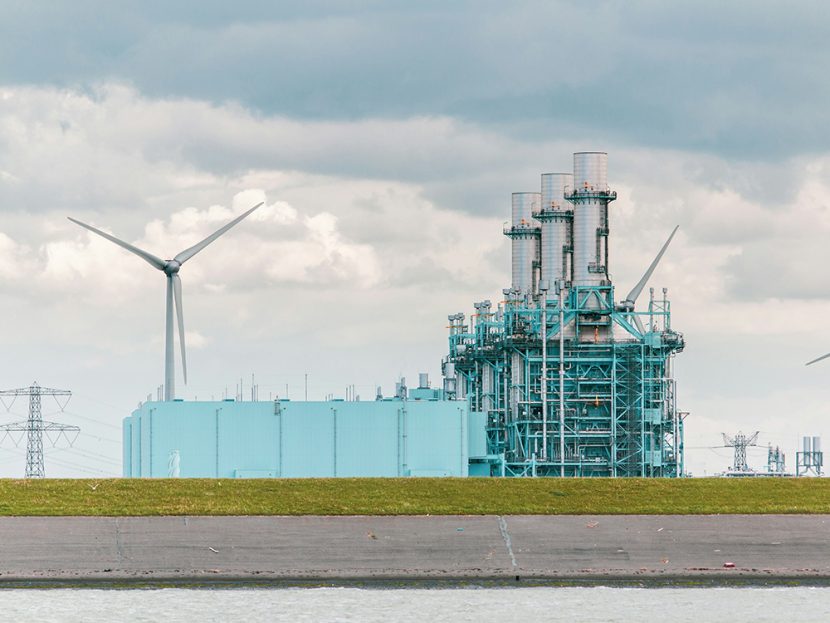
When the Netherlands decided to phase out gas extraction from the Groningen field, it marked the end of one of Europe’s most profitable fossil fuel projects—and the beginning of one of its most complex legal battles. The Dutch state now faces multiple arbitration cases brought by Shell and ExxonMobil, the two oil majors that operated the field for over six decades.
The Groningen dispute exposes how arbitration clauses—whether in contracts or treaties—can erode democratic accountability, amplify corporate power, and constrain governments’ ability to act in the public interest.
The Groningen gas field: From national pride to national trauma
Discovered in 1959, the Groningen field transformed the Netherlands into an energy powerhouse. It was operated by the Nederlandse Aardolie Maatschappij (NAM, Dutch Oil Company)—a joint venture between Shell and ExxonMobil—and in partnership with the state. Between 1963 and 2022, the field produced over 2,200 billion cubic metres of gas—yielding EUR 364 billion for the state and EUR 65 billion for the companies. For decades, the “Dutch Gasgebouw” was hailed as a success story of public–private partnership, financing the Dutch welfare state and underpinning much of Western Europe’s energy supply.
But decades of extraction triggered over 1,600 earthquakes, damaging thousands of homes and public buildings. Residents lived in fear of tremors and endured years of bureaucratic delay in securing repairs. Research by the University of Groningen found clear links between repeated damage, uncertainty about safety, and declining physical and mental health. An estimated 16 people die prematurely each year due to stress related to the quakes and their aftermath.
A 2023 parliamentary inquiry concluded that both the government and the companies shared “a debt of honour” toward the people of Groningen, citing systemic negligence and the prioritization of revenue and energy security over public safety. By the time parliament legislated the field’s permanent closure in 2024, public trust in the state had collapsed.
Scaling down gas extraction: A contentious path
The 2012 earthquake near the village of Huizinge—the strongest in Groningen’s history—marked a turning point. Damage reports surged from hundreds to thousands annually, forcing the government to acknowledge the risks. Gas extraction was gradually reduced following pressure from the official regulatory body (State Supervision of Mines), but decisions remained incremental and politically fraught, amid pressure from Shell and ExxonMobil to protect the project’s profitability.
The disputes revealed a flaw at the heart of the 1963 partnership agreement: no provisions had been made for a responsible wind-down of production. As output declined, disagreements flared over remaining reserves, with ExxonMobil even floating the idea of a claim to the unextracted gas (valued at around EUR 70 billion at the time), as well as disputes over cost-sharing for earthquake compensation and completion of the building reinforcement program. The absence of an exit strategy left financial responsibilities ambiguous, fuelling delays, disputes, and further harm to residents.
In 2018, the government signed a Heads of Agreement with Shell and ExxonMobil to manage the phase-out by 2030. The deal gave the state full control over production levels, a demand by Shell and ExxonMobil to avoid criminal liability linked to extraction-related damage during the wind-down period. The companies formally waived their claims over remaining reserves in exchange for a larger share of revenues. Crucially, the agreement included an arbitration clause, a legal tripwire that would later allow disputes to be resolved behind closed doors.
When the government accelerated the closure in 2019 due to mounting safety concerns, Shell and ExxonMobil demanded compensation for foregone profits, arguing that the accelerated wind-down was a unilateral decision. The government disagreed, pointing out that the Heads of Agreement baseline was an assumption, not a binding commitment, and that public safety made the reduction necessary. Negotiations over a final comprehensive agreement to complete the wind-down collapsed. Shell and ExxonMobil demanded up to EUR 3 billion, including EUR 1.8 billion for alleged lost revenues under the accelerated timeline. The government rejected the claim, offering around EUR 300 million. Officials described the companies’ demand as “well above any potential loss-making position” and “primarily intended to push the matter into arbitration.”
Disputing the scope of corporate accountability
In 2018, the government took over responsibility for handling damage claims and home reinforcements from NAM. This decision followed years of problems in which residents struggled to obtain fair compensation while NAM—both the cause of the damage and the entity assessing it—controlled the process. Legally, however, NAM remains financially liable for the damage caused by its operations, and the government now passes these costs on to NAM through levies. Under Article 52g of the Dutch Mining Law, this liability extends to the post-extraction phase, requiring NAM to prevent and mitigate harm and risks to people and the environment even after production has ended. International frameworks, such as the OECD Guidelines for Multinational Enterprises and the UN Guiding Principles on Business and Human Rights, likewise require companies to disengage responsibly. However, NAM continues to contest its liabilities.
NAM still owes EUR 550 million for home reinforcement costs and has stopped contributing to a EUR 500 million regional development fund. Meanwhile, it has distributed EUR 3 billion in dividends to its shareholders, Shell and ExxonMobil, while reserving only EUR 1.9 billion for damage repair, far below the government’s estimate of EUR 4.4 billion in expected costs for 2025. To date, Shell and ExxonMobil have also failed to provide adequate financial guarantees for NAM’s future cleanup obligations.
Instead of contributing to reparations, the companies have opted for confrontation to reduce or delay their financial responsibilities. Twenty disputes are now active between the companies and the Dutch state, including administrative appeals, court cases, and multiple arbitrations.
Private tribunals in a public crisis
At least four arbitration cases are currently pending, challenging key elements of the Dutch government’s management of the Groningen gas phase-out and compensation schemes.
- Two cases filed by NAM before the Netherlands Arbitration Institute (NAI), invoking arbitration clauses in payment agreements with the state. These concern the government’s demands that NAM cover the costs of damage repair and home reinforcement.
- A third NAI case, brought jointly by Shell and ExxonMobil under the arbitration clause in the 2018 Heads of Agreement, in which the companies seek compensation for alleged lost gas profits due to the accelerated closure potentially amounting to billions. The claim also[1] appears to contest the companies’ broader financial responsibilities for remediation. Although a final ruling is not expected before 2028, an interim decision in February 2025 already granted Shell and ExxonMobil—despite their role in causing the damage—greater oversight of how the government accounts for and audits their financial obligations.
- A fourth case, brought by ExxonMobil before the ICSID, was filed through a Belgian subsidiary under the ECT. The case remains confidential, but ExxonMobil has reportedly requested provisional measures, possibly to suspend its payment obligations—requests repeatedly rejected by Dutch courts. In response, the Dutch state has sought anti-suit injunctions in Belgian courts, contesting the validity of the arbitration in light of the Komstroy ruling, which prohibits intra-EU investor-state arbitration (discussed here). A second ExxonMobil request for provisional measures may target these Belgian proceedings directly.
Arbitration: An ill-suited forum for public interest disputes
Arbitration has long been used to resolve commercial disputes between private parties. But applying it to a public conflict of the political, social, and financial magnitude of the Groningen gas dispute raises profound concerns.
First, arbitration displaces public justice with private decision making. By outsourcing disputes to arbitral tribunals, governments sidestep domestic courts and democratic oversight, undermining the separation of powers and shielding crucial decisions from public scrutiny. This is particularly troubling in Groningen, where trust in public institutions is already deeply eroded.
Second, arbitration amplifies inequality before the law. Wealthy multinationals like Shell and ExxonMobil enjoy access to exclusive legal mechanisms unavailable to citizens, governments, or affected communities. Residents must pursue their claims through domestic processes, while the companies can take the state to private tribunals in The Hague or Washington, D.C.
Third, arbitration distorts accountability. Cases that touch on public safety, environmental remediation, and billions in taxpayer funds are treated as if they were commercial and contractual disputes rather than matters of social and moral responsibility. Justice unfolds behind closed doors, insulated from the democratic values of transparency, participation, and representation.
Finally, arbitration can produce perverse incentives. When governments know that any policy decision could trigger billion-dollar claims, they may delay regulation, settle on unfavourable terms, or refrain from acting altogether—a phenomenon known as regulatory chill.
Given the exceptional public stakes of the Groningen case, reliance on private arbitration is neither logical nor legitimate. Domestic courts—with their procedural safeguards, avenues for appeal, and public transparency—offer a far more appropriate venue.
Trading away democratic accountability
If arbitration so clearly weakens democratic control, why do governments continue to accept it? Testimonies from the Groningen parliamentary inquiry provide a rare window into this question.
Senior officials were acutely aware of the risks of arbitration looming large over the gradual phase-out and eventual closure of the Groningen gas field. From the outset, they feared that Shell and ExxonMobil might invoke the arbitration clause embedded in the original 1963 partnership agreement. Internal legal analyses warned that the companies could plausibly argue for a reallocation of costs and benefits once production was curtailed. Shell and ExxonMobil at times also actively threatened with arbitration when production scaled down and costs grew. To avoid an unfavourable outcome before an arbitral tribunal, the government sought to renegotiate the original partnership.
Yet in these negotiations, state representatives found themselves at a structural disadvantage. The oil majors, supported by vast legal teams and decades of experience in arbitration, were likely instrumental in pushing for the inclusion of arbitration clauses in the respective agreements. One senior official pointed to the asymmetry of expertise between public and corporate negotiators:
“Negotiating contracts like these is everyday business for oil companies. They do it every day, every hour. That is not the case for the State […] So that always puts you at a disadvantage. […] It is still a disadvantage not to be as seasoned in these kinds of contractual negotiations.”
In other words, even the Dutch government—a top-tier public administration in terms of expertise, resources, and institutional capacity—struggled to negotiate on equal footing with oil majors, underscoring how much greater these power imbalances must be for smaller or less-resourced states. Arbitration was seen as simply “common practice in the gas and oil industry,” a contractual reflex that states often accept, even when it runs counter to public accountability. Another senior official described the imbalance of power succinctly:
“Shell and ExxonMobil are, of course, commercial companies, and in principle they can simply walk away. The only party that can never walk away in these kinds of discussions is us—the State. We are always here, and we are always, rightly, accountable and responsible for what happens in the country. So, we cannot walk away. That creates a very unequal situation, and that’s something you have to take into account in the conversation. We therefore had a real interest in keeping Shell and ExxonMobil engaged and involved in the Gasgebouw, so that they would indeed pay for those risks and consequential damages for which they are also legally responsible.”
The inquiry also revealed a more political motivation. For ministers, outsourcing a dispute over compensation to a private tribunal reduced political exposure “because an amount determined by an arbiter is easier to explain to the House of Representatives than the costly result of negotiations by the Cabinet itself.” In other words, arbitration became a tool not just for resolving disputes but for avoiding political responsibility, creating perverse incentives for high-level decision-makers to defer or deflect accountability and depoliticize public conflicts.[2]
When governments move to closing harmful or high-risk projects, they inevitably depend on companies for cooperation, cleanup, or investment in new ventures. In such moments, the power imbalance is stark. Agreeing to arbitration may seem like a small concession, but it effectively transfers control over key public interest decisions to private hands, trading away democratic accountability for short-term political convenience.
Lessons for navigating the complex challenge of phasing out fossil fuels
The Groningen dispute is not an isolated case. Across the world, governments are trying to phase out fossil fuels and transition to clean energy, and often face resistance from the very companies that profited from extraction. When these companies invoke arbitration clauses to claim compensation for lost profits or stricter regulation, it directly undermines climate action and environmental justice.
ISDS, whether in treaties like the ECT or in bespoke contracts, allows companies to challenge democratic decisions under the guise of protecting investment. The result is a system where the polluter gets paid, while affected communities wait for justice.
For policy-makers, the Groningen case offers several lessons:
- avoid arbitration in contracts. Disputes involving environmental damage, corporate accountability, or public safety should be adjudicated by domestic courts, where transparency and accountability can be ensured.
- rebalance power in negotiations. Governments must strengthen their legal and institutional capacity to negotiate with large corporations, especially during transitions or closures.
- ensure public participation. Communities directly affected by extractive operations must have a voice in shaping remediation and compensation frameworks.
- exit outdated treaties. The Netherlands, like several other EU countries and the EU itself, has already withdrawn from the ECT. The Groningen case underscores why such actions are urgent, and why remaining bilateral investment treaties should also be reconsidered.
The story of Groningen is one of aftershocks, geological, political, and financial. The earth beneath Groningen is far from quiet, while the legal tremors continue. Through arbitration, Shell and ExxonMobil are not only seeking billions in compensation; they are also attempting to redefine the boundaries of corporate accountability and the state power to enforce that.
These cases illustrate how arbitration, far from being a neutral mechanism, is a site where power is exercised and inequality reproduced. When states delegate core public functions to private tribunals, they erode democratic oversight and weaken the very foundations of justice.
Author
Bart-Jaap Verbeek is Senior Researcher, Centre for Research on Multinational Corporations (SOMO).
[1] Subsequent to the submission of this article, the ICSID tribunal rejected ExxonMobil’s request for provisional measures to prevent future levies but granted its request regarding the Belgian proceedings, ordering the Netherlands to suspend that case until the tribunal rules on jurisdiction. In the parallel NAI case, the tribunal has likewise denied Shell and ExxonMobil’s provisional measures request to suspend payment obligations.
[2] Thanks to Lukas Schaugg for highlighting this.


