COFFIS | 2025 Spring Members’ Meeting
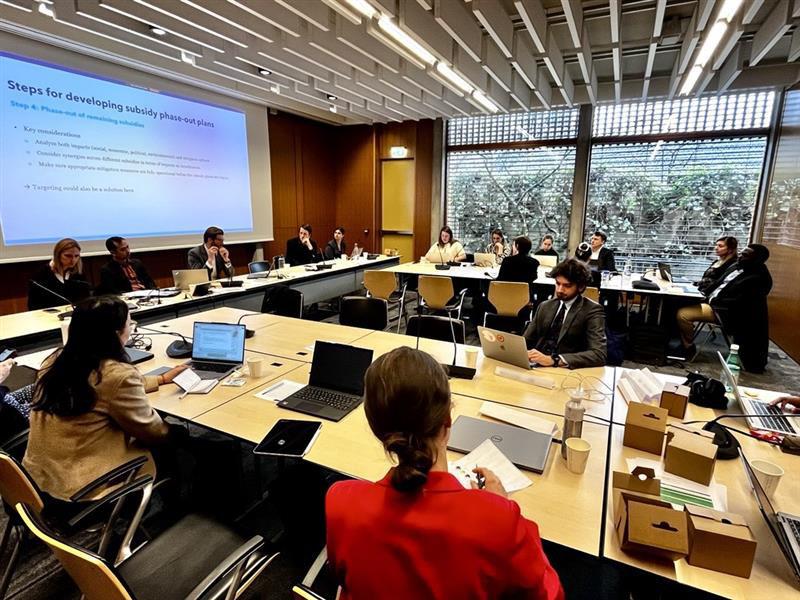
At a members’ meeting in March 2025, representatives from COFFIS countries met to discuss their work on fossil fuel subsidy inventories, phase-out plans, and further plans for 2025.
By joining the Coalition on Phasing Out Fossil Fuel Incentives Including Subsidies (COFFIS), countries committed to working together to improve transparency, remove barriers, and facilitate the phase-out of fossil fuel subsidies. Members of COFFIS met in Geneva for a spring members’ meeting on March 11-12, 2025. Discussions focused on what practical work is needed to advance delivering on their commitments to publish fossil fuel subsidy inventories and phase-out action plans. This served as an important opportunity for COFFIS members to share updates about their ongoing work, to highlight lessons learned and potential challenges to be addressed.
Fossil Fuel Subsidies Inventories
COFFIS members have committed to publishing a fossil fuel subsidy inventory one year after joining the coalition. Current inventories can be found here. Members discussed technical and practical issues related to inventories, based on a draft guidance note on subsidy inventory methodologies prepared by IISD.
Members also discussed how to work towards common denominators to fossil fuel subsidy inventories, noting that countries still have different methodological approaches.
Phase-Out Action Plans
COFFIS members have committed to submitting a national phase out plan two years after joining the coalition. For most members, this will be by COP 30. Phasing out subsidies is often complex due to potential impacts on affordability for vulnerable consumers. Specific industries may also be resistant due to concerns around competitiveness. As such action plans are quite a novel approach. At the spring meeting, members discussed what these plans could look like, considering past examples of successful reforms and government efforts that illustrate potential key components and design features of emerging planning towards phase-out plans.
Whole of Government Approach
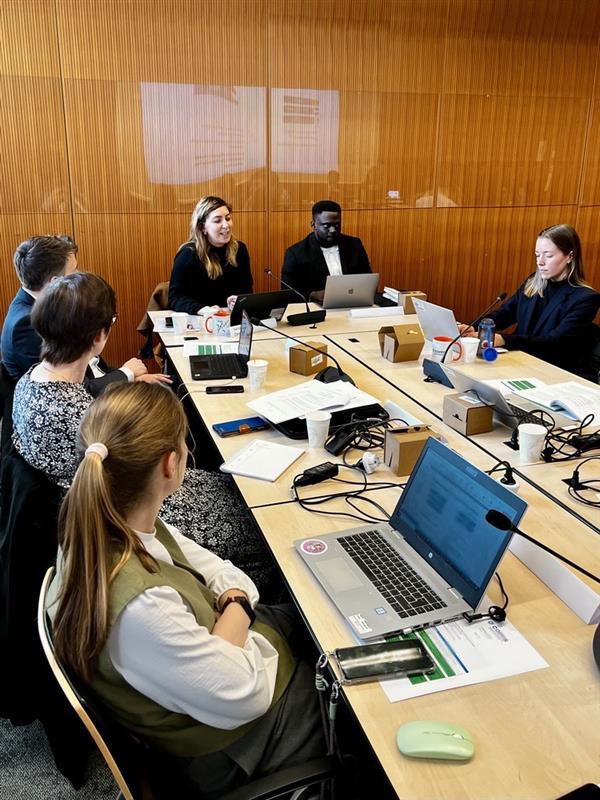
COFFIS members also discussed the importance of a whole of government approach to achieving fossil fuel subsidy reform. Efficient reform requires the involvement of several ministries, including ministries of finance, energy, environment, industry, and taxation authorities. This is most effective if there is a coordination platform and a clear political leadership.
To advance a whole of government approach, COFFIS members aim to continue engaging through a broad range of ministries and coordinating through relevant international platforms, such as the Coalition of Finance Ministers for Climate Action or the Clean Energy Ministerial. Members also emphasized that fossil fuel subsidy reform holds relevance across various ministries for diverse reasons. While COFFIS was launched at COP based on environmental concerns, fossil fuel subsidy reform is also key to energy security through diversification, to ensuring a level playing field between industrial sectors, and to increase the countries’ fiscal space in times of high budgetary deficits.
Upcoming events
IGF 22nd Annual General Meeting
The 22nd IGF AGM will be held under the theme of Trust in an Interdependent World: Advancing inclusion and resilience in mineral value chains.
2026 Investment Policy Forum
The 17th edition of IISD's Investment Policy Forum will take place from September 16 to 18, 2026, in Dar es Salaam, Tanzania.
Counting What Counts: Implementing beyond GDP metrics
This hybrid event will explore practical pathways for implementing Beyond GDP metrics at the national level.
How Sovereign Debt Really Works: Ask Me Anything live on Reddit
IISD's Sovereign Debt experts answer live questions for 3 hours on September 10, 2026. No question is too simple or complex, so join the conversation!