
How a National Organic Strategy is Connecting Malagasy Farming to the World
Farmers in Madagascar have been practicing organic methods for decades, but without formal certification, they have struggled to compete in international markets. New initiatives spearheaded by the Ministry of Agriculture and Food Sovereignty are providing opportunities for smallholder farmers to achieve the scale and integrity required to get their foot in the door—and more than 60,000 farmers are benefiting.
The Challenge: Bridging the gap between traditional farming and global markets
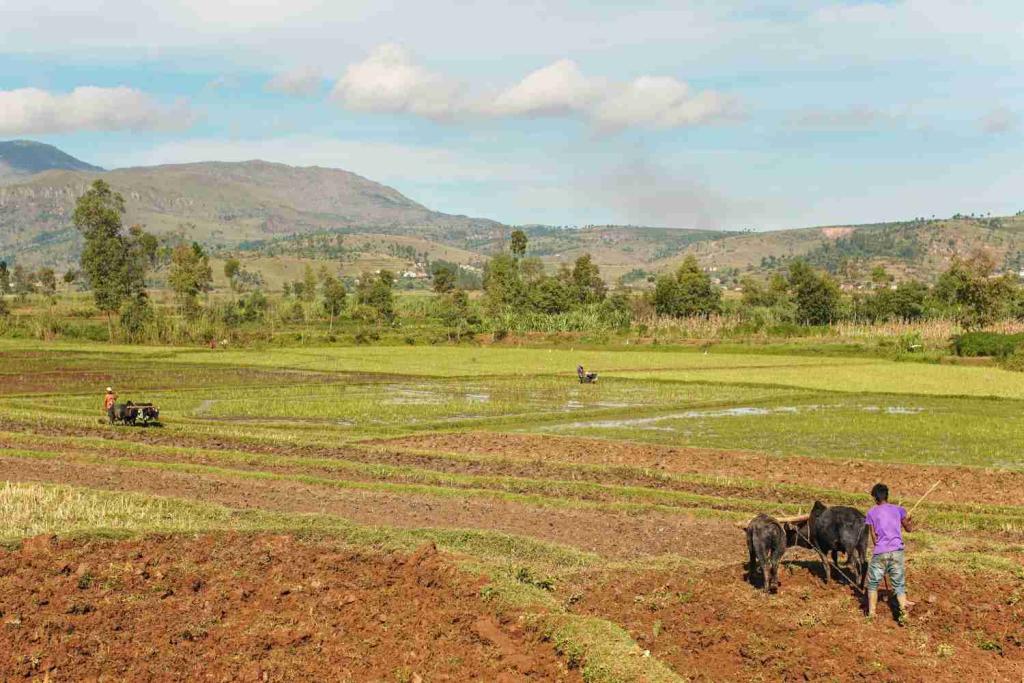
Madagascar possesses significant ecological wealth, yet its economy remains highly vulnerable. It is one of the world’s biodiversity hotspots, but with an economy dominated by agriculture, its people rely on its rich natural resources for income. Striking the right balance between protecting nature and enhancing food security and livelihoods is crucial—and organic farming is helping to bridge that gap.
For decades, many Malagasy producers have farmed without the expensive chemical fertilizers and pesticides typical of global industrial agriculture. But despite using naturally sustainable methods, most farmers lack the formal recognition and organic certifications required to access international markets. Without government-backed standards, producers are effectively penalized for the very practices that protect their topsoil. This lack of certification prevents traditional farming from having a competitive economic advantage.
To address this, Malagasy civil society advocated for the development of a new National Strategy for Organic Agriculture, spearheaded by the Ministry of Agriculture and Livestock (now the Ministry of Agriculture and Food Sovereignty). As part of its implementation, the initiative is piloting “organic territories”—areas designated exclusively for organic farming where local markets, consumer networks, and agrotourism can be developed and scaled up. This strategy aims to improve food security and public health, protect the environment, and secure the formal recognition of organic production needed to transform Madagascar’s agricultural sector into a driver of sustainable economic growth.
Addressing the Absence of a National Framework
Madagascar’s organic agriculture sector has been hampered by the absence of a national framework to drive growth. A lack of consolidated government strategy, limited resources, and a gap in technical and market data have prevented the nation from competing globally.
While certified organic agriculture has expanded in Madagascar in the last few years, it has not reached its full potential. Many producers have not had the support and incentives needed to transition to organic farming. Exporters of high-value crops—such as cocoa, vanilla, and spices—also face significant barriers to trade. Despite producing world-class goods, many producers do not have the capacity to comply with sustainability requirements needed to enter lucrative organic markets in Europe, North America, and Asia.
But the government saw this missed opportunity—and it took action. Under the leadership of Haintsoa Nirina Rakotomainty, head of the Organic Agriculture Department, and Marina Rakotoniaina, director of the Directorate of Support to Producers’ Organization and Agribusiness (DOPAB) at the Ministry of Agriculture and Food Sovereignty, it has launched a unique and ambitious implementation plan to expand organic farming to such an extent that it accounts for a fifth of its total agricultural land.
Defining Madagascar’s Value Proposition Through Technical Assessment
“IISD entered the picture in 2019 when we began engaging Malagasy stakeholders to support the development of the national strategy,” said Steffany Bermúdez, IISD’s sustainable markets expert. This included the Ministry of Agriculture and Food Sovereignty and the Syndicat Malgache de l'Agriculture Biologique (SYMABIO), the organization representing organic farmers in Madagascar. “We provided policy and market analysis and strategic recommendations while looking at opportunities for developing a national organic standard in Madagascar to support smallholders to adopt organic farming.”
Upon request from the Organic Agriculture Department at the Ministry of Agriculture and Food Sovereignty, IISD conducted a risk and opportunity assessment to evaluate the feasibility of developing a national organic standard and examine Madagascar’s market competitiveness for expanding organic farming and scaling up trade opportunities with traditional and emerging markets.
Following this assessment, a multistakeholder workshop—including policy officials, small- and medium-sized enterprises, and industry actors—was held in November 2020 to present the research findings and determine strategic pathways to develop the potential of Madagascar’s organic agriculture sector. The resulting technical report contributed to and enhanced the final version of Madagascar’s National Strategy for Organic Agriculture, officially launched in January 2021. The strategy aims to drive green growth; increase smallholder incomes; enhance their capacity to adopt organic farming practices; boost exports of high-value products such as spices, cocoa, and vanilla; and develop the domestic market. It establishes a regulatory and institutional framework for the organic sector, strengthens local value chains, and enhances climate resilience.
In 2020, the Malagasy government published Law No. 2020-003 on organic agriculture to promote organic farming in the country. This law reflected the national commitment to developing the sector through targeted research, technical support, and marketing of organic products for both export and the domestic market. It also included measures to prevent the contamination of organic crops and make participation more affordable for smallholders—for example, by recognizing Participatory Guarantee Systems as a valid method of certification. In short, it aimed to preserve Traditional Knowledge and biodiversity and protect both producers and soil health.
With the law and strategy in place, it was time to put them into practice. IISD’s collaboration with the Ministry of Agriculture and SYMABIO evolved to focus on implementation. They put their heads together on two main aspects: establishing organic territories and supporting producers with commercial development and market linkages.
The Territoires de l’Agriculture Biologique Model: Scaling production through organic hubs
First, Madagascar’s government wanted to pilot the feasibility of organic territories—or Territoires de l’Agriculture Biologique (TVABs)—in the Diana, Sava, and Analanjirofo regions. These hubs are designed to transition small-scale farming into a high-volume export model for organic products. By clustering producers, TVABs aim to achieve the economies of scale necessary for international trade, allowing farmers to share the costs of technical training, processing equipment, and certification. TVABs also aim to integrate other local actors that can help develop the organic sector, such as ecotourism businesses, farmers’ markets, and supermarkets.
The TVAB model also functions as an environmental buffer. Managing landscapes under collective organic protocols protects crops from chemical runoff and cross-contamination. This can ensure the traceability and integrity required by premium buyers, consolidating small plots into a competitive organic brand. These territories were formalized under the 2020 law.
IISD supported the establishment of the TVABs by developing roadmaps for their design, structure, and implementation. The process involved conducting interviews with international government and non-government actors who had implemented similar projects. Experts learned from their experiences and developed a roadmap outlining the different phases involved in establishing TVABs, such as generating a participatory territorial agricultural assessment, creating a committee to develop and implement the action plan, and planning for implementation, monitoring, and evaluation, as well as the conditions required for its operationalization. This analysis helped the Ministry of Agriculture and Livestock design the pilots, which are now a cornerstone of the government’s organic strategy.
“These territories will contribute to inclusive local development by integrating local farmers into value chains. This will facilitate capacity building and secure sustainable income sources for them. As a result, they will become more autonomous and better able to comply with regulatory requirements," said Rakotomainty. “Thanks to the support of IISD, the ministry has been able to refine the TVAB concept, avoiding mistakes that could compromise their operationalization.”
"These territories will contribute to inclusive local development by integrating local farmers into value chains. This will facilitate capacity building and secure sustainable income sources for them."
Connecting Malagasy Producers to Global Buyers
IISD also contributed by providing data and tailored market intelligence to Malagasy organic stakeholders on organic production, consumption, and trade opportunities in international and regional markets. For example, it helped the government define which organic certified commodities they should prioritize for export, such as vanilla, medicinal plants, spices, and cocoa. It also provided intel on where to target market expansion and addressed critical information gaps for policy planning and regulatory compliance in European and North American organic markets.
The Ministry of Agriculture and Food Sovereignty and SYMABIO confirmed that IISD’s analysis provided a primary source of organic market data, helping to guide informed decisions on where to focus efforts and strategies to open new markets. The findings will also help the Observatory of Organic Agriculture—a new national body established to monitor markets—to provide real-time information to local actors and shape policy and marketing strategies.
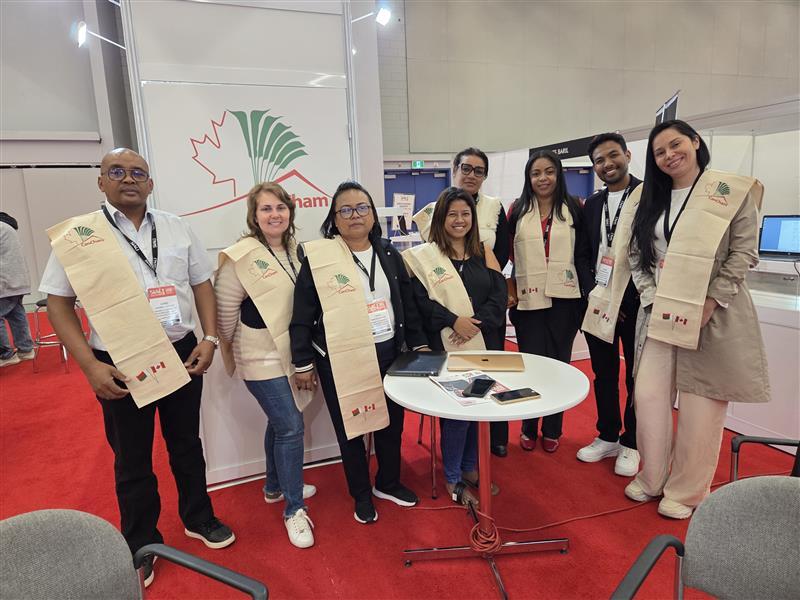
As part of this process, IISD facilitated a business-to-business roundtable in April 2025, connecting cocoa exporters with Canadian buyers, government agencies, and export bodies. Nomena Andoharijaona, an agronomist engineer and quality manager with exporter Les Aromatiques Bio du Sambirano, emphasized the value of such dialogues: "The main advantage lies in the trust and reliability they help build between buyers and suppliers. They provide a reassuring environment in which to establish an initial point of contact."
Potential buyers recognized Malagasy organic cocoa for its high quality, unique flavour profile, and low risk of cross-contamination. These direct interactions allowed buyers to engage with producers’ specific needs, which are typically filtered through intermediaries or brokers.
The Way Forward: Navigating global regulatory challenges
Since the launch of the strategy, Madagascar’s organic farming has increased by almost two thirds, from 103,817 hectares in 2020 to 169,893 hectares in 2024, representing approximately 0.4% of the total agricultural area. The number of organic producers has also grown, from 54,376 in 2020 to 62,000 in 2024. Despite this increase in organic farmland, further efforts are needed to support greater growth and ensure the long-term success of this transition. “The next step is strengthening producers’ capacities in internal control systems to ensure the integrity of organic certification, which currently represents one of the main bottlenecks for Malagasy producer organizations,” said Rakotomainty.
Other priorities include supporting the full implementation of organic territories to maximize geographic coverage, expanding business-to-business engagement, and providing updated intelligence on organic markets to inform trade decision-making.
Despite measurable progress, several challenges persist. These include mobilizing sufficient funding for continued international expansion and building government capacity to scale implementation. Madagascar must also adapt to evolving regulatory requirements in key markets. For example, the European Union’s Deforestation Regulation will require exporters to prove that their supply chains are deforestation-free in several commodity sectors, including cocoa. Navigating these requirements will require coordinated support from funders, government agencies, and international buyers.
“Through this project, we learned that sustained support delivered through strategic local partnerships—spanning research, strategy, and market access—is key for helping countries to move toward more sustainable and inclusive trade,” said Bermúdez. If you are interested in joining this partnership to support Madagascar’s efforts, please get in touch with us at [email protected].
__
IISD would like to thank the Ministry of Agriculture and Food Sovereignty for their support and collaboration throughout this project.

You might also be interested in
Voluntary Sustainability Standards and Export Promotion
How integrating voluntary sustainability standards into export measures can help producers adopt better practices and access key markets.
Global Market Report: Coffee and sustainability
This Global Market Report examines coffee production, trade, and consumption trends alongside the growth of sustainability-certified coffee.
Smallholders and the European Union Deforestation Regulation
This report examines smallholders’ compliance challenges related to the European Union Deforestation Regulation and identifies pathways to support their continued inclusion in deforestation-free supply chains.
New partnerships to strengthen the reliability of palm oil sustainability claims
IISD is partnering with Malaysia’s national palm oil certification scheme to strengthen the reliability and visibility of its sustainability claims to markets, regulators, and consumers.