Consent after denunciation—jurisdiction and damages
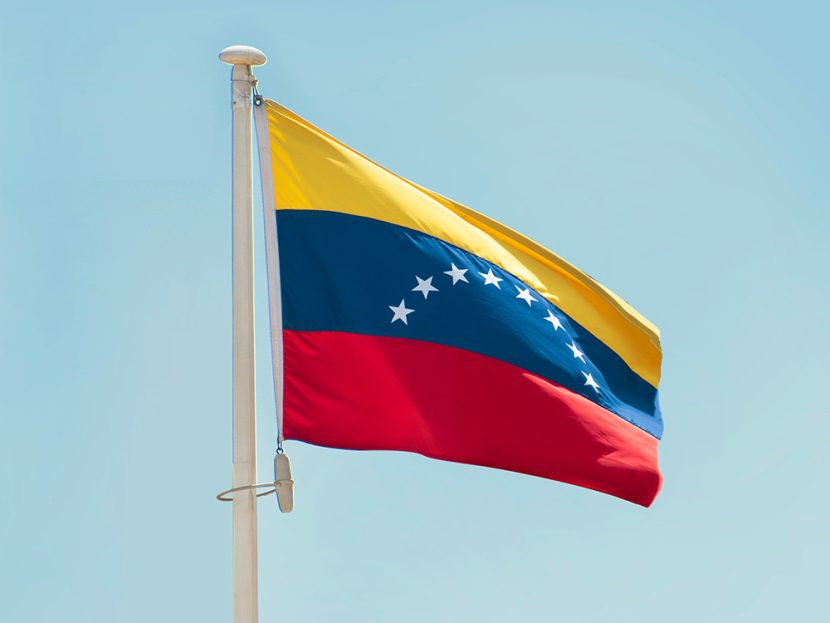
Smurfit Holdings B.V. v. Bolivarian Republic of Venezuela, ICSID Case No. ARB/18/49, Final Award dated 28 August 2024.
Introduction
In an award rendered in Smurfit Holdings B.V. v. Bolivarian Republic of Venezuela, an ICSID tribunal ordered Venezuela to pay ~USD 468.7 million in damages and costs for breaches of the Agreement on Encouragement and Reciprocal Protection of Investments between the Kingdom of the Netherlands and the Republic of Venezuela (“BIT”).
The award addresses two central issues in contemporary investment arbitration: a) the effect of a state’s denunciation of the ICSID Convention on investor consent to arbitration and b) the calculation of compensation for unlawful expropriation and related treaty breaches. The majority upheld jurisdiction and awarded substantial compensation. The dissenting arbitrator, Professor Howard Mann, concluded that the majority’s decision is fundamentally flawed and dissented in full (available here).
Background
The claimant, Smurfit Holdings B.V., a Netherlands-incorporated entity, held investments in Venezuela through subsidiaries engaged in the manufacture and sale of paper and packaging products.
From the mid-2000s onwards, Venezuela adopted a range of economic measures affecting foreign investors, including price controls, foreign exchange restrictions, and limitations on profit repatriation. These measures intensified during Venezuela’s prolonged economic crisis, characterized by hyperinflation, currency instability, and severe shortages of basic goods.
Venezuela notified its decision to terminate the BIT, effective from November 1, 2008, triggering the treaty’s 15-year survival clause. In September 2011, the claimant sent a letter to Venezuelan authorities expressing consent to submit current and future disputes to ICSID under the BIT (“2011 Letter”). Venezuela subsequently denounced the ICSID Convention on January 24, 2012, with the denunciation taking effect on July 25, 2012.
In 2018, Venezuelan authorities took control of the claimant’s Venezuelan subsidiaries. The claimant characterized this intervention as unlawful direct expropriation and initiated ICSID arbitration in December 2018.
Jurisdiction of the tribunal
Venezuela raised multiple objections on the jurisdiction of the tribunal ratione materiae, ratione temporis, and ratione voluntatis, as well as admissibility objections concerning the claimant’s indirect shareholding.
The majority view
Venezuela’s objections to jurisdiction and maintainability were rejected by a majority of the tribunal.
The tribunal rejected Venezuela’s objections on jurisdiction ratione temporis and ratione materiae. It found that the claimant’s investment predated the BIT’s termination and therefore remained protected under the treaty’s survival clause [paras. 205–227, Award]. The tribunal further held that the investment fell within the BIT’s broad asset-based definition and that treaty-based arbitration permits shareholders to claim for losses in share value caused by measures directed at the company [paras. 205–227, Award].
On jurisdiction ratione temporis, the issue was whether the claimant’s investment predated the BIT’s termination on November 1, 2008, and therefore fell within the 15-year sunset clause. Venezuela contended that the claimant failed to show ownership before termination and that post-2008 restructurings created new, unprotected investments. The tribunal held that the claimant’s ownership dated back to the late 1980s, that subsequent reorganizations did not break continuity, and that the investment was protected under the BIT [paras. 228–246, Award].
Venezuela’s objections on jurisdiction ratione voluntatis concerned its denunciation of the ICSID Convention. It contended that consent to arbitration had not been perfected before its denunciation and therefore ICSID jurisdiction could not arise. The majority rejected this objection. It held that Article 25 of the ICSID Convention requires only written consent and that Venezuela had already given unconditional consent to ICSID arbitration in Article 9 of the BIT. The claimant’s 2011 letter constituted a written acceptance of that offer before Venezuela’s denunciation. Accordingly, Article 72 of the ICSID Convention preserved the parties’ consent notwithstanding the subsequent withdrawal [paras. 262-335, Award].
Venezuela also argued that the claimant, as an indirect shareholder, could not bring claims for measures affecting assets held by its Venezuelan subsidiaries. It argued that such claims were derivative and, therefore, inadmissible. The tribunal concluded, however, that treaty-based investor–state arbitration permits shareholders to claim for loss in share value caused by measures directed at the company, and that the claimant’s claims fell squarely within this framework [paras. 247–261, Award].
The dissent
The dissenting arbitrator disagreed with the majority’s assumption of jurisdiction ratione voluntatis. In his view, the majority improperly conflated the two instruments (the ICSID Convention and BIT) rather than interpreting and applying them independently and cumulatively, as required by established ICSID jurisprudence.
He emphasized that ICSID jurisdiction depends on two distinct and cumulative elements—namely, the applicability of the ICSID Convention at the time of mutual consent and valid consent to arbitration under a separate instrument, here the BIT. Ratification of the ICSID Convention does not, by itself, constitute consent to arbitrate, which requires perfected mutual consent between the investor and the host state. In his view, the majority erred by adopting a “holistic” interpretative approach that effectively merged the BIT and the ICSID Convention into a single integrated regime, contrary to Article 31 of the Vienna Convention and prior ICSID jurisprudence.
The dissent accepted that generalized consent may satisfy the formal writing requirement under Article 25 of the Convention but concluded that the claimant’s 2011 letter did not constitute valid acceptance of Venezuela’s offer under the BIT. In his analysis, Article 9 of the BIT contemplated consent only in relation to a specific dispute. The letter merely expressed prospective consent to future disputes and therefore did not perfect mutual consent. Since no consent had been perfected before Venezuela’s denunciation of the ICSID Convention in 2012, the dissent concluded that the 2018 Request for Arbitration could not establish ICSID jurisdiction. In his view, Article 72 of the ICSID Convention preserves only rights and obligations arising out of consent already perfected before denunciation.
More broadly, the dissenting view rejects the majority’s “bridge” theory, under which the BIT’s survival clause effectively limits or overrides Venezuela’s right of denunciation under Article 71 of the ICSID Convention. In his view, this approach amounts to an impermissible amendment of a multilateral treaty through interpretation, contrary to Article 41 of the Vienna Convention and beyond the authority of arbitrators.
Findings on liability, damages, and compensation
The majority view
On the merits, the majority found that Venezuela had unlawfully expropriated certain landholdings and breached the FET standard and related treaty protections through a pattern of interference with the claimant’s operations [paras. 357–608, Award].
The claimant sought full reparation for the harm allegedly caused to its investments by Venezuela’s measures. It asserted that this included (i) historic damages for the taking of landholdings, delays in issuing VAT certificates, and restrictions on repatriating dividends; (ii) damages arising from Venezuela’s unlawful expropriation of Smurfit’s business in 2018; and (iii) moral damages for the treatment of Smurfit and its employees during and after the expropriation. The tribunal structured its damages analysis around four categories: a) the applicable standard of compensation, b) causation and contributory fault, c) damages calculation, and d) interest and ancillary adjustment.
Standard of compensation
The claimant sought full reparation for historic losses, the 2018 expropriation, and related treaty breaches, arguing that in the absence of an express standard for unlawful expropriation or FET violations, customary international law should apply. Venezuela maintained that Article 6(c) of the Netherlands–Venezuela BIT, providing for compensation at fair market value, served as the exclusive lex specialis standard for all expropriation-related claims and that non-expropriation losses were already subsumed within the expropriation valuation. Relying on Article 6(c) of the BIT and customary international law, the tribunal held that the relevant standard converged on the fair market value of the investment. It declined to adopt a differential approach propounded by the claimant, of calculating damages by comparing the actual financial position of the investor with the hypothetical position which it would have been in absent the wrongful act [paras. 609–620, Award].
Causation and contributory fault
Venezuela argued that the claimant failed to establish a causal link between the state’s measures and the losses claimed, emphasizing that compensation must rest on proven, non-speculative evidence and asserting that investors cannot shift the consequences of their own business decisions onto the state; it further sought a 75% reduction for contributory fault, alleging that the claimant’s conduct triggered recovery proceedings, regulatory actions, and even the loss of its business, and that the company failed to use domestic remedies for VAT refunds and dividend transfers. The claimant countered that causation under Article 31 of the International Law Commission’s Articles on Responsibility of States for Internationally Wrongful Acts requires only a “sufficient causal link” and proximate foreseeability, which it satisfied through expert evidence, and that contributory fault arises only in cases of serious investor wrongdoing, which was absent.
The tribunal rejected Venezuela’s arguments that the damages were speculative or that compensation should be reduced for contributory fault. It held that Venezuela’s measures directly caused the loss of the landholdings, business operations, VAT refunds, and dividend transfer. It also dismissed the contention that Article 9(3) of the BIT required the tribunal to trace losses through the corporate chain or examine the Dutch holding company’s financial statements, holding that the treaty does not mandate tracking specific dividend flows or banking operations up the investment chain [paras. 621–633, Award].
Damages calculation
The dispute gave rise to several categories of claimed damages, as indicated earlier. The tribunal adopted a differentiated approach depending on the asset.
For the landholdings, the tribunal rejected the respondent’s book-value approach for landholdings and instead adopted the claimant’s discounted‑cash‑flow-derived per-hectare valuation because it better reflected the land’s income-generating potential and market conditions relevant to the valuation date [paras. 634–642, Award].
For historic financial losses linked to Venezuela’s currency controls, the tribunal held that only the official exchange rates legally available at the relevant times could be used, and that the official rate applied during the brief 2017–2018 reopening period governed that segment of the calculation. It also decided that past losses should be updated using the Smurfit Group’s cost of borrowing, rather than broader financial benchmarks [paras. 643-665, Award].
On VAT credits, the tribunal considered a 30-business-day processing period to be reasonable, rejected Venezuela’s proposed steep discount and its argument that the credits should be treated like delayed dividends, and awarded USD 125.6 million for VAT-related losses [paras. 666–682, Award].
In the dividend transfer claim, the tribunal excluded certain items, such as adjustments linked to internal loans and an unproven 2009 dividend, because there was no evidentiary support for them. It awarded USD 218.6 million for the remaining losses arising from Venezuela’s restrictions on dividend transfers [paras. 683–693, Award].
Finally, for the business taken over by the state in 2018, the tribunal adopted Venezuela’s expert assumptions on economic risk, financing structure, expected growth, profit margins, and working capital needs. Relying on these inputs and rejecting the claimant’s market comparison approach, it valued the business at USD 47.3 million as of August 28, 2018 [paras. 694–730, Award].
The claimant also sought moral damages for the alleged mistreatment, intimidation, and unlawful detention of two senior employees during the state’s intervention in its operations, arguing that the conduct, including threats, humiliation, and detention under harsh conditions, caused serious physical and psychological harm and damaged the company’s reputation. The tribunal held that it had jurisdiction to award moral damages, notwithstanding the absence of an express reference in the BIT. It reasoned that Article 9(3), which refers generally to “damages” caused by a treaty breach, does not exclude moral damages, and that investment tribunals may award such damages in exceptional circumstances. The tribunal rejected the respondent’s suggestion that such mistreatment was “normal” or inconsequential. However, finding no grounding for the claimant’s 10% valuation methodology, the tribunal awarded symbolic moral damages of one Bolivar. [paras. 731–752, Award].
In total, the tribunal awarded USD 394.57 million (plus interest) across landholdings, VAT-related losses, dividend restrictions, and the expropriated business, and one Bolivar as moral damages, reflecting a granular and issue-by-issue quantification exercise rather than a single global valuation.
The dissent
The dissent concluded that even assuming jurisdiction over the claimant’s own claims under Article 1(b)(ii), the claimant did not prove damages “to the national concerned” as required by Article 9(3). The damages case rests entirely on assumptions that losses at the subsidiary level automatically flowed up the ownership chain, without producing financial statements, cash-flow evidence, share-valuation impacts, or any documentation showing losses to the claimant itself. The claimant’s own expert admitted to assuming, and not verifying, that the cash and dividends moved up to the Dutch entity, which was directly contradicted by the former CEO of the Venezuelan operations, who testified that dividends were paid to the Irish parent company, not to Smurfit Holdings. On this basis, the dissent concludes that the claimant did not meet its burden of proof for the award of damages.
Conclusion
The award reveals a fundamental divide over the relationship between treaty-based consent and a state’s withdrawal from the ICSID Convention. The majority adopted a systemic interpretation designed to preserve investor access to arbitration under the BIT’s survival clause, whereas the dissent insisted on strict adherence to the temporal limits of consent under the ICSID Convention, emphasizing that states remain free to curtail or end access to investor arbitration through withdrawal and termination mechanisms built into the treaty regime.
The decision is notable for the majority’s willingness to treat treaty-based consent and the ICSID Convention as part of a single interpretive framework. While this approach prioritizes the stability of investor protection mechanisms, it also raises questions about the extent to which tribunals may rely on treaty interpretation to sustain jurisdiction after a state has exercised its right to withdraw from the ICSID system. The case, therefore, highlights the continuing tension in investment arbitration between interpretative approaches aimed at preserving the effectiveness of treaty protections and those grounded in a stricter conception of state consent.
Note
The tribunal was composed of Ricardo Ramírez Hernández (President, Mexican national, appointed by the Chair of the ICSID Administrative Council), Elliot Polebaum (a U.S. national, appointed by the claimant), and Howard Mann (a Canadian national, appointed by the respondent). The dissenting opinion was rendered by Howard Mann.
Author
Meher Tandon is an India-qualified lawyer, specializing in international dispute settlement.


