Acts of the rural communities are attributable to the state
Lupaka Gold Corporation v Republic of Peru [ICSID Case No ARB/20/46, award dated June 30, 2025]
On June 30, 2025, an ICSID tribunal rendered an award in Lupaka v Peru, ordering the Republic of Peru (the “respondent” or “Peru”) to pay Lupaka Gold Corporation (the “claimant”) USD 40.4 million, plus interest and legal costs. The claim arose due to the alleged breach of Peru’s obligations under the Canada–Peru Free Trade Agreement, signed on May 29, 2008 and entered into force on August 1, 2009 (“FTA”).
Background
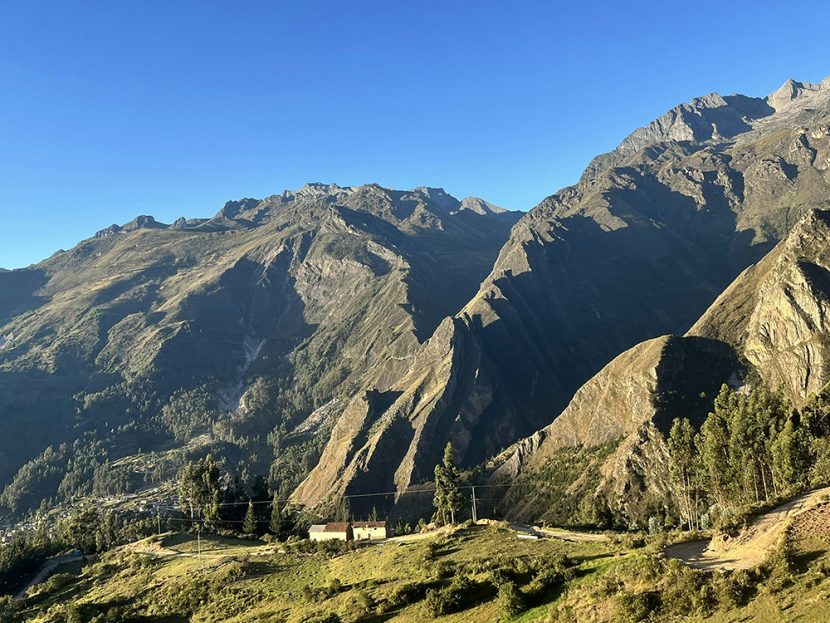
The claimant is a mineral exploration and mining company incorporated in Canada. The claimant, under its prior owners, applied for and received permits from the respondent’s Ministry of Energy and Mines authorizing a large surface mining project. The mining area is located in the highland region of Peru, which is primarily occupied by the Rural Communities (“RCs”) of Peru. These RCs are largely self-contained and self-governing groups.
The claim arises from the actions taken by the RC of Parán (“RCP”). The claimant contended that the mine was nearing commercial production in the fall of 2018 when RCP’s actions led to the claimant losing control of the mine. According to the claimant, the actions of RCP are attributable to the state. The claimant argued that these actions, along with the respondent’s inaction, constitute a breach of the FTA, making the respondent liable for damages.
The respondent disputed the claimant’s contention and argued that the claimant could not have begun production before July 2020, a delay that, in its view, would likely have resulted in foreclosure by the claimant’s lender and the loss of its investment. On merits, two central arguments of the respondent were: (i) that the action of RCP is not attributable to the state, since RCP is an autonomous entity, separate from the state and independent of its control, and (ii) that the state had exercised due diligence and done everything in its power to resolve the issues that arose between the claimant and the RCP. The respondent maintained that obtaining a “social license” from RCP was the claimant’s responsibility and that the investment loss stemmed from the claimant’s failure to secure it.
Jurisdiction
The respondent raised two jurisdictional objections. The respondent contended that the tribunal lacked ratione personae jurisdiction, because the claimant had disposed of its investment before commencing the arbitration (FTA, Art 847). The tribunal held that the FTA does not require the claimant’s continued ownership of the asset at the time it filed its claim. Therefore, the tribunal has jurisdiction even if the claimant has disposed of its investment (paras. 140-141, 143 & 631(i)).
The respondent also contended that the tribunal lacked ratione materiae jurisdiction due to the claimant’s failure to meet the waiver requirement under the terms of the FTA (FTA, Art 823(1)(e)). The tribunal held that the claimant was deprived of control over its investment by the respondent. Accordingly, the tribunal has jurisdiction since the exception to the waiver requirement under the FTA applied (paras. 150-151 & 631(i)).
Attribution under international law
The claimant argued that the RCP’s actions—such as occupying the mine for a day in June 2018, blocking the access road in October 2018, and ultimately seizing, occupying, and exploiting the mine—along with the respondent’s failure to respond as mandated by the FTA, constitute a breach of the respondent’s FTA obligations. The claimant contended that the RCP’s conduct was attributable to the respondent under customary international law (“CIL”) rules of attribution as set out in the International Law Commission’s (ILC’s) Articles on State Responsibility for Internationally Wrongful Acts (“ARSIWA”), as the RCP either qualified as a “State organ” under ARSIWA Article 4 or as an entity exercising “elements of governmental authority” under Article 5 of ARSIWA.
The respondent denied that the acts of RCP are attributable to it, emphasizing that RCP is an autonomous entity separate from the state and independent of its control. The RCP is neither an “organ of the State” nor is the RCP empowered to “exercise governmental authority.” Since the actions of RCP are akin to those of a private entity, any injury caused by RCP or its members is not attributable to the respondent. The respondent further contended that the national law of the state seeks to protect RCs. The government’s policies are aimed at avoiding or managing conflict between mining companies and RCs by emphasizing dialogue and obtaining and maintaining a “social license” from the RCs, which indicates an informal and unwritten acceptance and approval received from the RCs for the execution of the project.
Attribution under Article 4 of ARSIWA
The tribunal held that the RCP’s actions were attributable to the respondent under international law and that national law cannot excuse an international wrong (para. 206). The tribunal held that Article 4 of ARSIWA, read with Article 27 of the VCLT, affirms that “[a] party may not invoke the provisions of its internal law as justification for its failure to perform a treaty” and held that the actions of RCP are attributable to the respondent under international law (para. 206).
It found that RCs operate within, not outside, the respondent’s legal framework and exercise powers lawfully delegated to them (para. 213). Peruvian law integrates RCs into the state structure, granting them responsibilities such as policy-making, dispute resolution, law enforcement, and security—functions traditionally reserved for state organs (para. 227). The tribunal concluded that the RCs’ powers and responsibilities are inherently governmental in nature (para. 228).
Furthermore, under Article 4 of ARSIWA, even if the state does not have control over its organs, it is not exempt from being held internationally responsible for the actions of those organs (para. 235). The tribunal thus concluded that the respondent is internationally responsible for the actions of the RCP and its members under Article 4 of ARSIWA (para. 244).
Attribution under Article 5 of ARSIWA
The tribunal held that even if the RCP is not classified as a state organ, its actions would still be attributable to the respondent under Article 5 of ARSIWA. Article 5 states that the actions of an entity that is not a State organ but is empowered by the state’s law to exercise elements of governmental authority shall be regarded as acts of the state under international law, provided the entity is acting in that capacity in the specific case. The tribunal concluded that the attribution requirement under Article 5 of ARSIWA is satisfied because the RCP is authorized by Peruvian law to exercise governmental authority and was acting in that role (para. 256).
Attribution under Article 7 of ARSIWA
Additionally, the tribunal held that RCP and its members were acting in accordance with the decisions and guidance of the community and its leaders. The actions were not those of rogue individuals. Therefore, Article 7 of ARSIWA applies, which provides that the actions of a state organ or an entity empowered to exercise elements of governmental authority are attributable to the state, even if such actions exceed authority or contravene instructions (para. 243).
Interim conclusion on attribution
In view of the above, and after considering Articles 4, 5 and 7 of ARSIWA as well as Article 27 of the VCLT, the tribunal held that the acts of RCP were attributable to the respondent (para. 631(ii)).
Full protection and security [“FPS”]
Article 805 of the FTA provides that a party shall accord to investments treatment in accordance with the CIL minimum standard of treatment of aliens, including FPS. The claimant contended that the Respondent failed to accord FPS to its investment in terms of the FTA. The respondent insisted that it did act with due diligence, “as reasonable in the circumstances,” while dealing with social conflicts involving RCPs, which enjoy a special status in Peru.
The tribunal held that the actions of the RCP and the inaction of the respondent violated the respondent’s obligation to accord FPS under CIL as required under the FTA (para. 322). According to the tribunal, the respondent’s response, consisting of facilitating a dialogue between the RCP and the claimant, was inadequate considering the character, duration, gravity, and economic consequences of the RCP’s actions (para. 326). The tribunal held that the respondent neither acted with due diligence nor fulfilled the requirements of providing FPS under CIL as required under the FTA (para. 326). Instead, the respondent’s inaction raised doubts regarding its capacity or willingness to meet its obligations under the FTA. The tribunal thus held that the respondent violated the FTA obligation to accord FPS to the claimant’s investment (paras. 361 & 631(iii)).
FET
Article 805 of the FTA requires that investments receive FET consistent with the CIL minimum standard of treatment of aliens, including FET and FPS. The tribunal held that the RCP’s actions caused substantial injury to the claimant’s investment and, being attributable to the respondent, violated the respondent’s FET obligation under the FTA and CIL (para. 390). It found that the central authorities, through inaction and inadequate measures, allowed the RCP to block the claimant’s access, use lethal force against its security personnel, and seize the investment for its own benefit—conduct deemed grossly unfair, unjust, and incompatible with the FET standard under CIL (paras. 391 & 631(iv)).
Expropriation
Article 812(1) of the FTA prohibits nationalization or expropriation of covered investments except for a public purpose, in accordance with due process, on a non-discriminatory basis, and with prompt, adequate, and effective compensation. The tribunal found that the mine was seized for the RCP’s narrow economic benefit, rather than a public purpose, and that the claimant was denied due process, targeted by the RCP, and received no compensation (para. 435). The tribunal held that the respondent directly expropriated the claimant’s investment in violation of the FTA (para. 436). The tribunal further held that the respondent’s failure to provide FPS, resulting in the claimant’s loss of control over the mines, in any event, amounted to indirect expropriation under the FTA (para. 451).
Damages
The tribunal held that the claimant is entitled to compensation of USD 40.4 million, plus interest due to breaches of FTA obligations committed by the respondent (paras. 602 & 631(vii)). The tribunal found that the actions of RCP and the inaction of the respondent caused the claimant’s loss of its investment (para. 562). The tribunal rejected the respondent’s argument that the claimant’s conduct and failings to resolve the conflict with the RCP were willful or negligent or contributory towards the loss caused to the investment (para. 566).
Conclusion
At its core, this case turned on whether the RCP’s actions could be attributed to the state. This case underscores a broader lesson for host states: the importance of precision in drafting applicable law clauses in treaties. Clear carve-outs or specific provisions addressing disputes involving Indigenous or rural communities could help avoid similar outcomes. States may consider expressly requiring tribunals to apply national, rather than international, law in such contexts to preserve the intended balance between sovereignty, community autonomy, and treaty obligations.
Author
Deepti Panda is a Ph.D. candidate at Queen’s University, Canada and Founder & Principal Associate of the Litigation & Arbitration Chamber of Deepti Panda, Mumbai, India.
Note
The Tribunal was composed of Prof. John R. Crook, a national of the United States, President, appointed by the Secretary-General of ICSID pursuant to the parties’ agreed method; Mr. Oscar M. Garibaldi, a national of Argentina and the United States, who replaced Jonathan D. Schiller; and Dr. Gavan Griffith KC, a national of Australia, appointed by the respondent.


