
Laos' Tax Incentives Reform Seeks to Drive Sustainable Investment and Safeguard Revenue
For years, Laos has offered generous tax incentives to attract foreign investment, often at a cost exceeding the economic benefits of the investments. With support from the International Institute for Sustainable Development (IISD), the country has introduced an updated Investment Promotion Law that reforms how its tax incentives are designed and administered. The law narrows the scope of tax benefits granted to companies, ensuring they are targeted, efficient, and aligned with Laos’ long-term development priorities.
Over the past decade, Laos experienced slow but steady economic growth, driven by hydropower, mining, and infrastructure investments. But since the COVID pandemic, the picture has darkened: high public debt, inflation, and currency depreciation have strained government finances and squeezed household purchasing power.
Overly generous tax incentives, intended to attract foreign investment, have often been abused by investors, reducing government revenue and leaving fewer funds available for essential public services like education or health care.
In 2023, responding to a request from Laos' Investment Promotion Department (IPD) and building on years of collaboration, IISD stepped in to support the government in revising the country's Investment Promotion Law. This law serves as the primary legal framework for attracting investment, including through tax incentives granted to businesses.
Through the reform of incentive design and administration, the government seeks to promote investment that contributes to sustainable economic growth while strengthening revenue mobilization.
A Necessary Reform for the Country’s Financial Stability
When IISD experts began working with Laos in 2023, the country's tax-to-GDP ratio sat at just 13%, one of the lowest in the region. This ratio, which measures a country's total tax revenue as a percentage of its economic output, tells you how much of a nation's wealth the government can actually collect to fund public services.
IPD officials pinpointed those generous incentives as one of the key sources of revenue leakage.
IISD brought critical expertise at the right moment. Their analysis helped us understand how other countries in the region are managing similar challenges, and their recommendations provided concrete options for reforming our incentive framework. This partnership has strengthened our capacity to design policy that works for Laos' specific context.
Laos has made important efforts to leverage tax incentives as a tool to promote investment. But implementation challenges have emerged over time. In some cases, investors benefited from long-term tax holidays, especially those undertaking sectoral and zonal-based investments like agriculture and related value chains, who enjoyed import duty incentives for the entire duration of their projects.
While these incentives were intended to stimulate sustainable development, they reduced government revenue without consistently delivering the full range of expected economic benefits such as sustainable job creation, technology transfer, productivity improvements or economic spillovers to local businesses.
In other instances, import duty relief schemes intended to support domestic production were used in ways that did not fully realize their intended objectives, with some imported goods being re-exported to neighbouring countries without contributing to local value addition. These experiences highlight the importance of refining the design and monitoring of incentive schemes to ensure that they maximize economic development outcomes while safeguarding fiscal sustainability.
A report by the State Audit Organization, presented to the National Assembly, highlighted weaknesses in the administration of tax incentives, including gaps in compliance, monitoring, and project documentation. In some cases, incentives were granted without sufficient accountability measures to ensure that projects delivered meaningful economic benefits or justified the need for tax support.
These findings underscored the importance of strengthening oversight, clarifying eligibility requirements, and improving inter-agency coordination to ensure that tax incentives contribute effectively to national development goals.
The challenge for Laos, as for many developing countries, is balancing the need to attract foreign investment to tackle urgent development issues while making sure investors cannot use incentives to avoid fairly contributing to government revenue.
Supporting Investment Incentive Reform in Laos
IISD has been working with the IPD since 2016, initially providing advice on revising the country's national model Bilateral Investment Treaty (BIT). In November 2023, the IPD approached IISD with a new challenge: help rationalize tax incentives in the Investment Promotion Law.
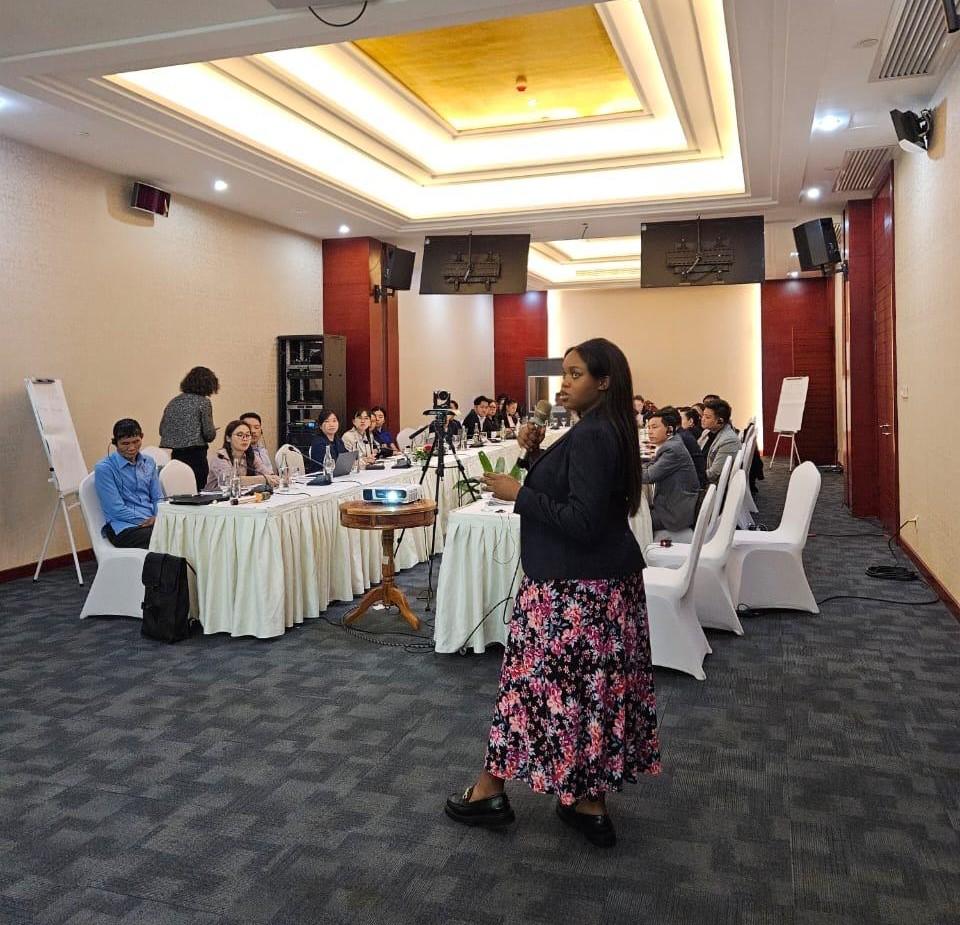
The team analyzed the 2016 Investment Promotion Law, producing a commentary that highlighted the limited effectiveness of tax incentives as an investment promotion tool. The analysis included recommendations on tightening these incentives if the government chose to continue using them, along with a regional perspective comparing Laos' approach with similar economies.
In January 2024, we travelled to Laos and met with multiple ministries directly involved in designing and administering tax incentives. It was very helpful to hear their perspectives on what is working, what isn't, and how incentives could be better targeted. Those discussions shaped our recommendations and made sure the updated law would be aligned with the country's priorities.
By June that year, a new draft Investment Promotion Law was presented to Parliament. The IPD again requested support to gather international and regional experience on tax incentive reform to strengthen their proposal. The law was passed in June 2024 and came into force in August 2024.
Making Investment Policy Work for Sustainable Development
Laos' government has made important improvements to its Investment Promotion Law to ensure that tax incentives are better targeted, more transparent, and aligned with national development priorities. The main changes include the following:
1. Narrower, More Focused Eligibility Criteria
The list of eligible business activities has been narrowed from broad categories like agriculture or health care to more specifically define the types of services or operations that qualify for tax incentives.
For example, instead of simply listing "agriculture," the law now specifies activities such as “clean agriculture”, “industrial crop cultivation”, or “environmental and biodiversity conservation”. This increased precision aligns incentives with the government’s strategic priorities: encouraging investment in environmentally sustainable practices, supporting value-added production, and ensuring investors’ compliance with social and environmental standards. At the same time, it reduces opportunities for the misuse of incentives.
2. Defined Time Periods for Incentives
The duration of tax incentives has now been capped at an initial period of 10 years, replacing the previous system where incentive periods were undefined. This reform aims to avoid long-term, unrevised revenue loss. Renewals for investors who reinvest profits will now be subject to sectoral compliance checks, in contrast to the previous law where renewals were granted automatically.
3. A Strengthened Investment Screening Process
New language has been added to enhance due diligence and screening of investment projects before granting tax incentives. Investors are now required to meet specific obligations and obtain approvals before moving forward with investment concession agreements. This screening process helps ensure that only compliant and strategically aligned projects benefit from fiscal support.
4. Increased Monitoring and Accountability
To improve transparency, investors must now submit financial reports to the Investment Promotion Division during and after receiving tax incentives. This allows the government to track whether incentives are delivering their intended benefits, assess their value, and identify any misuse. It also supports evidence-based policy-making for future incentive reforms.
5. Removal of Automatic International Arbitration
Provisions that previously allowed investors to automatically take disputes related to investment incentives to international arbitration have been removed. This change reduces legal and financial risks for the government while still allowing negotiated pathways for arbitration where appropriate. It also strengthens national legal systems by requiring disputes to be addressed through domestic legal and administrative processes before any escalation to international arbitration, thereby ensuring greater government oversight and control over how such disputes are managed and escalated.
6. Adjustment of Investment Requirements
Previously, low and uniform minimum investment thresholds allowed large-scale projects including agricultural and land-intensive investments to qualify for tax incentives without sufficient differentiation or risk-based safeguards. The reform introduces adjusted investment requirements that take into account the size, scale and nature of projects, including their potential environmental and social impacts. This approach ensures that incentives are more proportionate and better targeted, while applying stronger safeguards where fiscal exposure and sustainability risks are highest.
A Sustainable Path Forward
These reforms strengthen fiscal policy while promoting responsible investment that delivers tangible benefits for the country.
Moving forward, IISD remains committed to supporting the country in implementing these reforms, ensuring that investment policies contribute to long-term economic stability and shared prosperity. As Laos continues its journey toward fiscal sustainability, this policy change stands as a testament to the power of evidence-based decision making and international collaboration.
About the Authors

Kudzai Mataba
Policy Advisor, Tax and Investment
Kudzai Mataba is a policy advisor within IISD's Economic Law and Policy Program, working on tax and investment. She supports developing country governments to design and implement investment incentives frameworks that balance economic growth, environmental protection, and social justice.

Lauren George
Communications Officer
Lauren is a communications officer within the Economic Law and Policy Program and serves as the communications lead for IISD's tax and debt work. She supports IISD's work on tax and investment policy by translating technical research into accessible content for policymakers and wider audiences.
You might also be interested in
Rethinking Tax Incentives for Climate Finance: Lessons for COP 30
Our expert Kudzai Mataba explores how strategically designed tax incentives can help drive green investment ahead of COP 30.
What Drives Investment Policy-makers in Developing Countries to Use Tax Incentives?
The article explores the reasons behind the use of tax incentives in developing countries to attract investment, examining the pressures, challenges, and alternative strategies that exist.
A Roadmap for Negotiating the Protocols to the United Nations Framework Convention on Tax
This report outlines key challenges, ongoing efforts, and strategic recommendations for developing the protocols under the United Nations Framework Convention on International Tax Cooperation (UN FCITC).
Revisiting Tax Incentives as an Investment Promotion Tool: Q&A for investment policy-makers
Are tax incentives effective at attracting investment in developing countries?