
Ghana Establishes Independent Fiscal Council to Support Long-Term Debt Sustainability
Ghana has been rebuilding since its 2022 debt crisis. Restructuring its debt was a crucial first step, but lasting recovery demands strong institutions—ones that keep debt sustainable while protecting investment in schools, hospitals, and infrastructure. Working with Ghanaian think tank IMANI Africa, IISD provided analytical support for the design of the country's new Independent Fiscal Council and advocated its potential in strengthening transparency and trust in public finances, engaging parliamentarians, government officials, and civil society.
After Default, Ghana's Road to Debt Sustainability
After defaulting on much of its external debt in late 2022, Ghana embarked on one of the most complex sovereign debt restructurings in recent years, encompassing domestic and external debt.
By 2025, Ghana had restructured most of its eligible public debt—reaching a deal with international bondholders and signing bilateral agreements with official creditors under the G20 Common Framework for Debt Treatments. By December 2024, approximately 93% of the restructuring had been completed, including the successful implementation of the Domestic Debt Exchange Programme (DDEP) and the restructuring of Eurobonds.
These milestones, implemented in line with Ghana’s ongoing USD 3 billion IMF Extended Credit Facility program, have been reinforced by a series of positive economic shifts─stronger growth, declining inflation, improved reserves, ongoing fiscal consolidation and firm monetary policy stance─and have helped restore the country’s debt sustainability and boost its sovereign credit ratings.
While the debt restructuring has reduced immediate payment pressures, it has not automatically solved the deeper institutional challenges that allowed debt levels to become unsustainable in the first place. Ghana is still classified as being at high risk of external and overall debt distress, according to World Bank and IMF analysis.
This matters far beyond financial markets. When large shares of public revenue are used to service debt, there is less left over for everything else, like schools, hospitals, infrastructure, and climate resilience. For countries like Ghana, where development needs remain significant, the cost on humans and nature is very concrete.
Recognizing these risks, Ghana has begun strengthening the institutions that govern its public finances. In 2025, amendments to the country’s Public Financial Management Act introduced stronger fiscal rules─a public debt-to-GDP target of 45% by 2034 and an annual primary surplus of at least 1.5% of GDP on a commitment basis─and committed to establishing an Independent Fiscal Council.
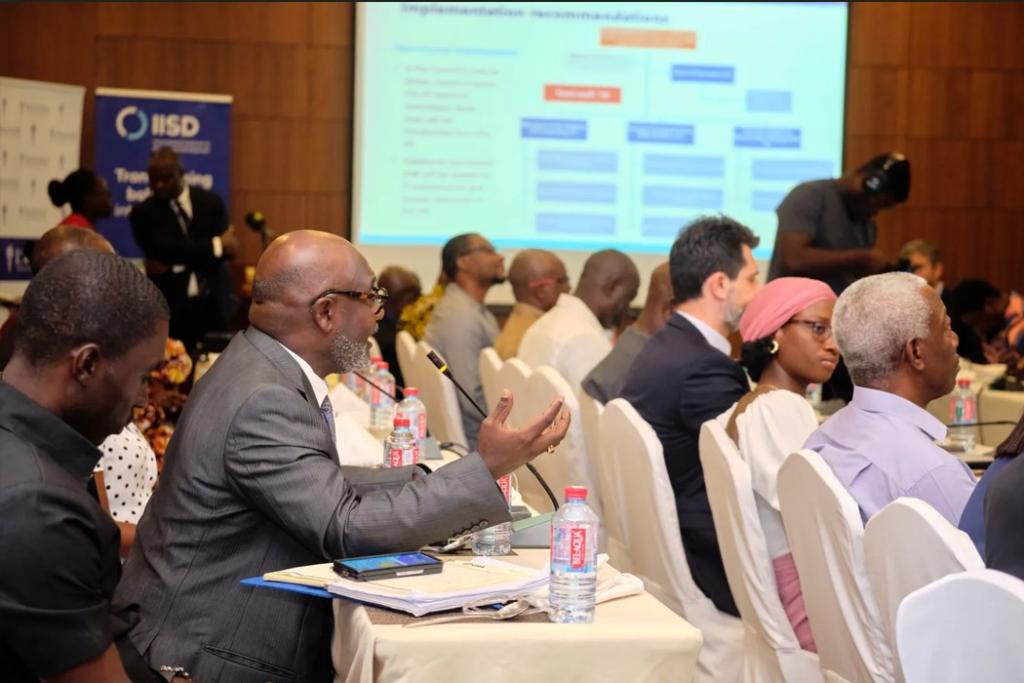
A Fiscal Council is a public institution that reviews government budgets and projections to promote transparency. When well-designed, it can play an important role in strengthening fiscal governance by providing independent, evidence-based analysis, improving budget and debt decisions, increasing transparency and accountability around government finances, and strengthening trust in fiscal policy among both citizens and in financial markets.
Building an Institution That Works for the Country
Since early 2025, IISD has been supporting the design of the new Independent Fiscal Council. The aim: build an institution that is effective, credible, and suited to Ghana’s institutional and economic context.
This work has been carried out in collaboration with IMANI Africa, a Ghanaian policy Think Tank with strong credibility across the country’s political ecosystem. Partnering with a respected local institution has helped ensure that the analysis and recommendations are grounded in Ghana’s political and institutional realities.
The IISD–IMANI work on institutional design choices provided a strong evidence-based foundation for our internal deliberations at the Ministry of Finance on the Fiscal Council’s structure and mandate.
The IISD-IMANI team conducted a comprehensive assessment of the council’s potential role and functions in Ghana. This included political economy analysis based on interviews with government officials, parliamentarians, and other stakeholders; a review of international experience with fiscal councils, particularly in emerging and developing economies; and macroeconomic analysis of Ghana’s fiscal and debt sustainability challenges.
Key recommendations on the council’s main objectives, design and operational structure were presented at a high-level stakeholder event that had representatives from the Ministry of Finance, Members of Parliament, the Bank of Ghana, and civil society attending. Recommendations included a specific vision for the council’s main aims, design, and operations.
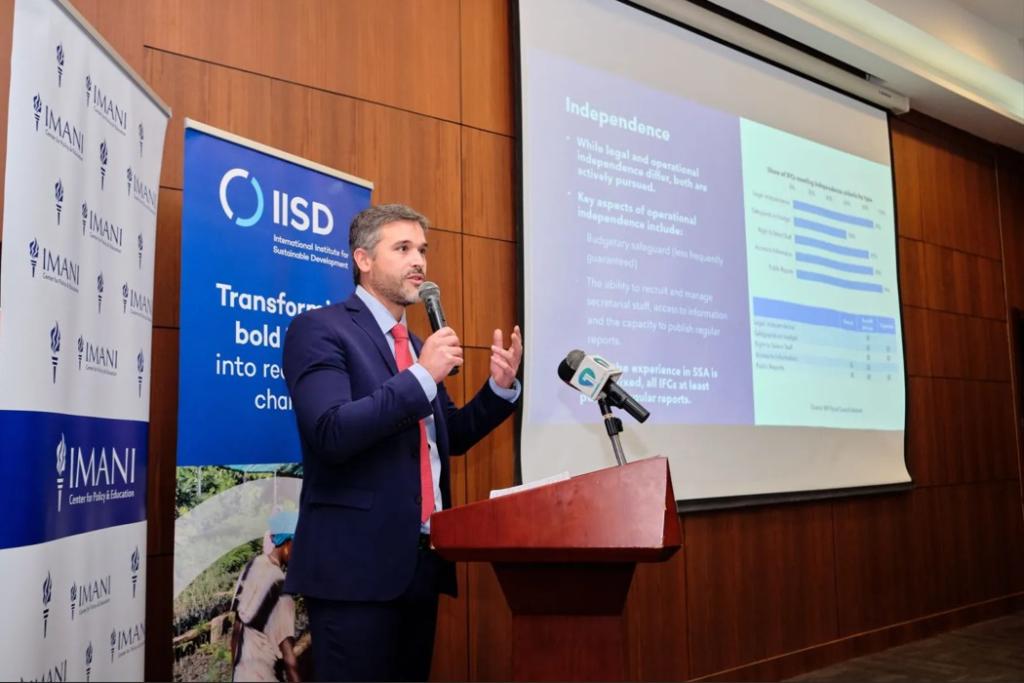
Designing the institution has required navigating different perspectives. Some stakeholders envisioned a relatively informal advisory body, while others favoured a stronger “watchdog” with the authority to rigorously scrutinize fiscal policy. Reconciling these views—while ensuring the institution remains practical and sustainable—has been an important part of the process.
Ghana's Fiscal Council Takes Shape
In early 2026, the Government of Ghana publicly announced the establishment of the new independent fiscal council, presenting it as a key institutional reform to strengthen fiscal transparency and improve decision-making after the country’s recent debt crisis.
This work was a valuable reference for us in clarifying the trade-offs across different institutional models and in informing our thinking on what design would be most credible, practical, and fit for Ghana’s fiscal governance needs.
The council’s core mandate is expected to center on communicating the long-term debt implications of government fiscal actions—clearly and technically—to the executive, the public, the Parliament, and investors. This emphasis matters because debt sustainability depends on more than following fiscal rules—it hinges on creditor and public trust. The council can help build that trust by showing how fiscal decisions shape the debt path over time.
This approach reflects IISD’s broader case for more flexible fiscal frameworks.
The council's governance structure, its supporting secretariat and its interaction with other institutions are also designed to ensure it can operate independently and effectively. The five professionals nominated by Ghana's president, whose expertise spans academia, public policy and financial governance, reflect that intent.
Ensuring Sustainable Pathways for the Country
As the council moves to operation, continued attention to its analytical capacity, data access, and public communication will be essential for ensuring that it can effectively fulfill its mandate.
Looking ahead, IISD and IMANI stand ready to support the next phase of this reform in the setup of the Fiscal Council with the government of Ghana. These include strengthening the council’s core technical analysis—such as selecting and assessing macroeconomic projection models aligned with fiscal rules and debt sustainability analysis; supporting the development of data-sharing arrangements between the council, the Ministry of Finance, other government departments, and national statistical authorities; and helping design effective public communication practices so the council’s analysis can reach and inform key stakeholders, including policy-makers, parliament, investors, and the public.
By continuing this partnership, IISD aims to help ensure that Ghana’s Fiscal Council becomes a credible and durable institution—one that can contribute to more transparent fiscal policy-making and support the country’s long-term development priorities.
You might also be interested in
How the Energy Shock Could Deepen Debt Risks in Developing Economies
For countries already carrying heavy debt loads, rising energy and food prices due to the conflict in the Middle East are now threatening to tip fragile macroeconomic positions over the edge. Fernando Morra and Anahí Wiedenbrüg ask who will pay the price and why the answer goes beyond the energy bill.
The International Monetary Fund and World Bank Are Reforming Their Main Debt Sustainability Assessment Tool—Here's why it matters
The International Monetary Fund and World Bank are about to revise their main tool for assessing how much low-income countries can borrow, and on what terms. Our experts unpack what’s at stake and why the reform matters for sustainable development.
Design Choices for Debt Sustainability
This report analyzes fiscal challenges in emerging markets and proposes a flexible, transparent framework for sustainable debt management and improved fiscal resilience.
Guidance Handbook for the Revised Common Investment Area
A practical guide to help member states of the Common Market for Eastern and Southern Africa (COMESA) translate the revised Common Investment Area (CCIA) Agreement into national legal and institutional action.