IISD Board Member Lloyd Axworthy Honoured with Canada's Pearson Peace Medal
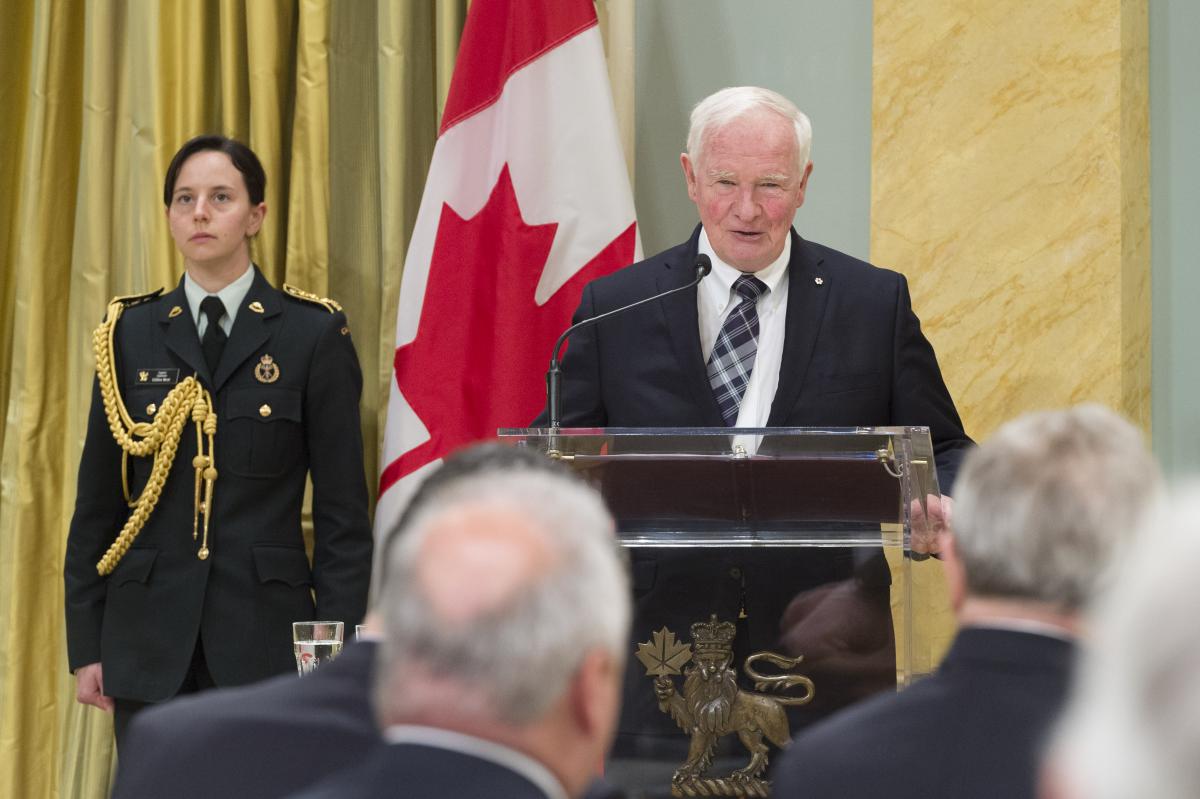
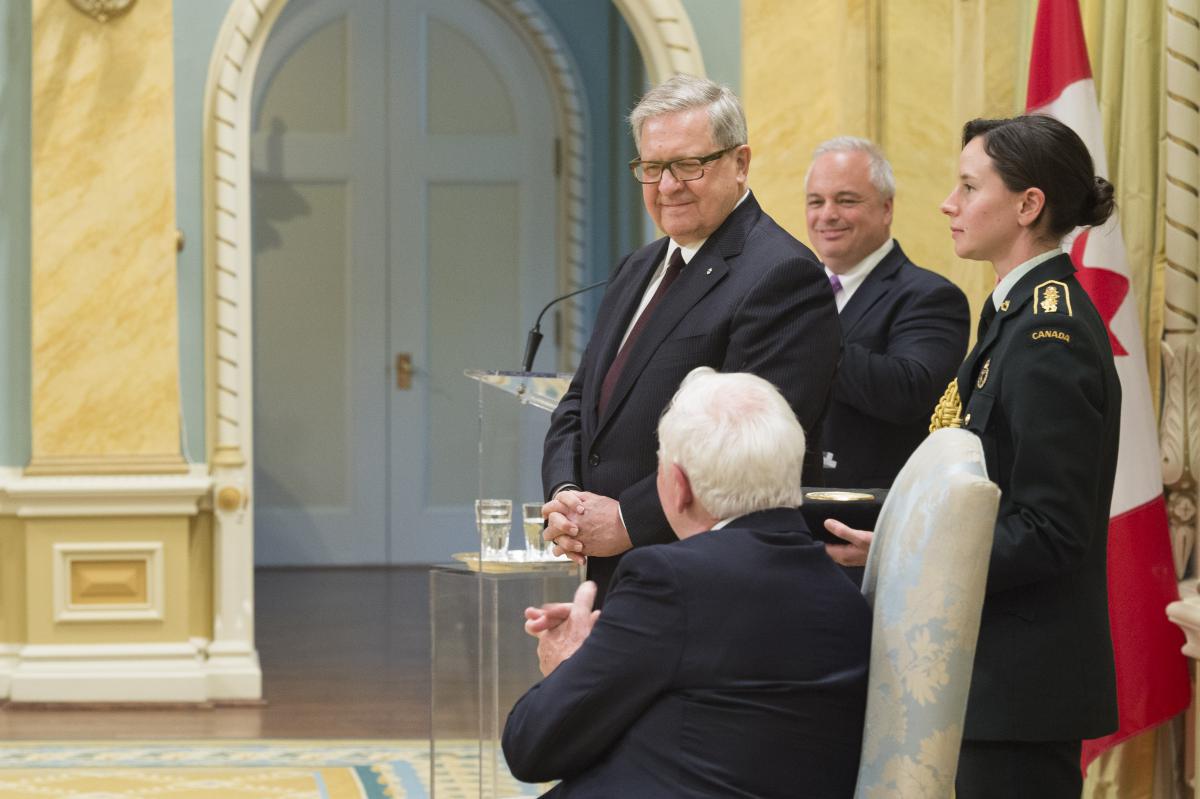
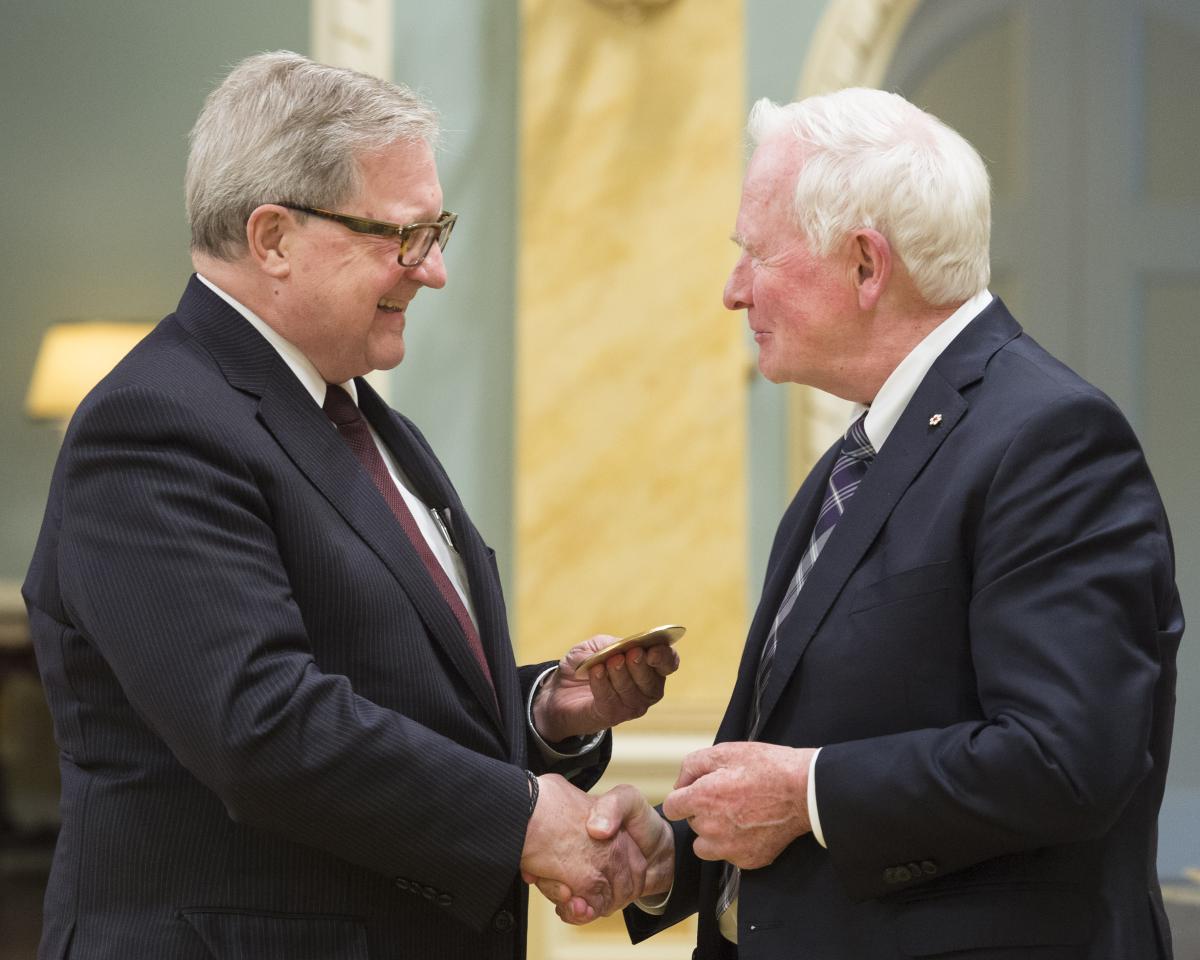
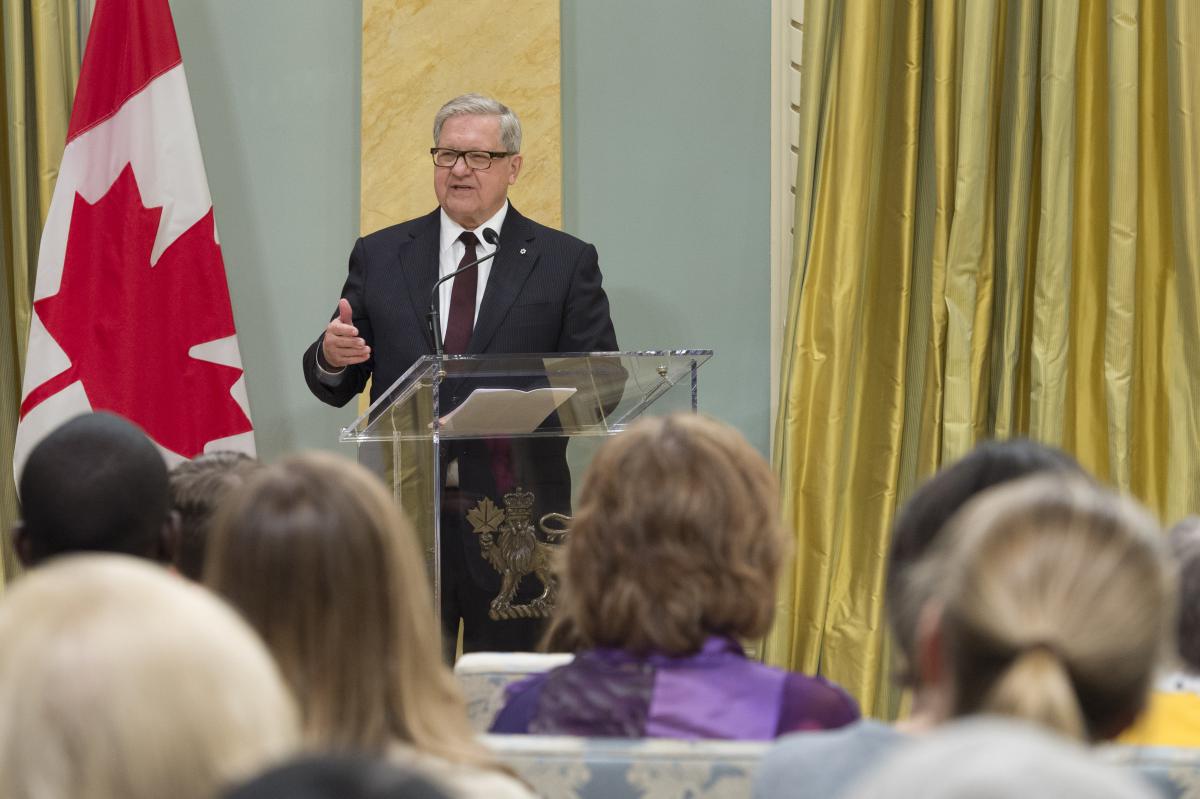
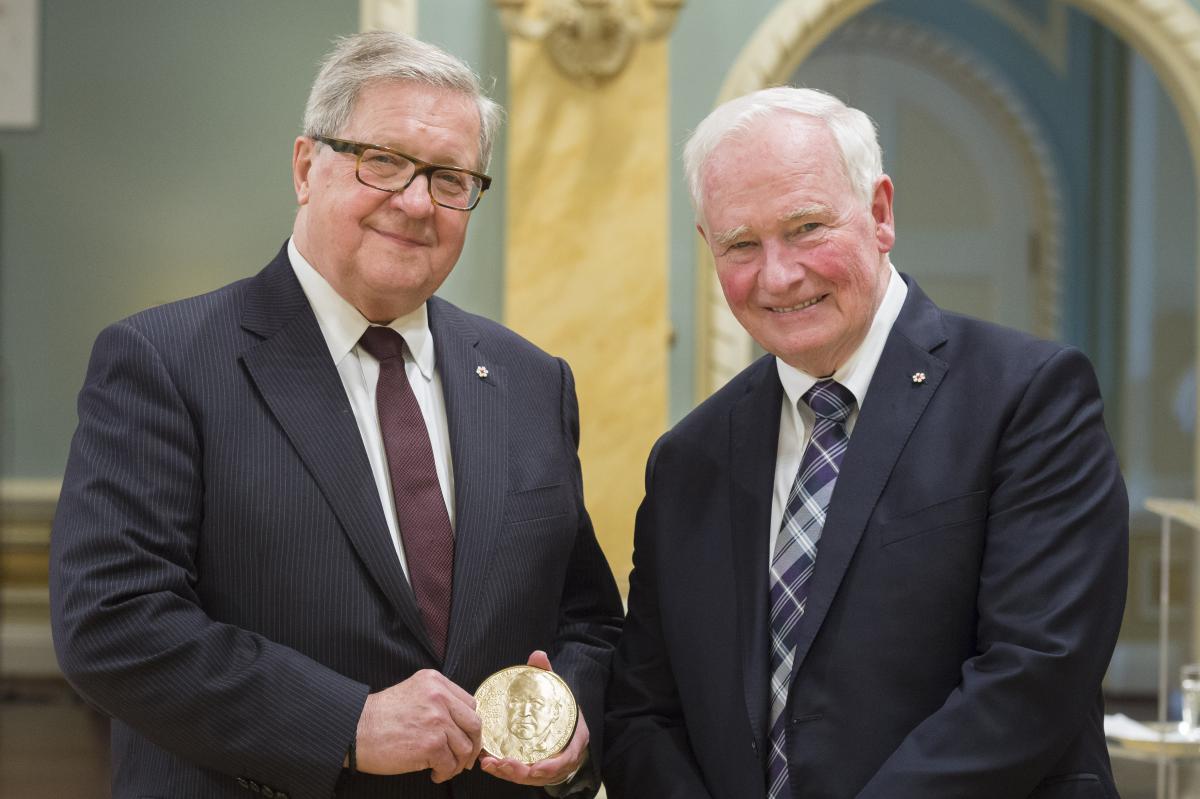
IISD is very pleased to announce that its board member Lloyd Axworthy was honoured with the 30th Pearson Peace Medal on Wednesday, May 24, 2017.
IISD is very pleased to announce that its board member Lloyd Axworthy was honoured with the 30th Pearson Peace Medal on Wednesday, May 24, 2017.
The event took place at Rideau Hall in Toronto, and the medal was presented to Axworthy by His Excellency the Right Honourable David Johnston, Governor General of Canada and honorary patron of the United Nations Association in Canada.
The Honourable Lloyd Axworthy has devoted his life’s work, in academia, politics and civil society, to highlighting and building the United Nations as a vehicle for peace and to promoting Canadian leadership and engagement in the UN. As a political leader and as minister of Foreign Affairs for Canada, he had a pivotal role in the development and strategic advancement of the Anti-Personnel Mine Ban Convention (often referred to as the Ottawa Treaty). At the time, his engagement of world leaders and civil society was innovative and ultimately successful in the adoption of this important treaty.
As an academic, both early in his career and later as the president and vice-chancellor of the University of Winnipeg, he instructed, led and wrote on the imperative of education on peace and of critical thinking, informed by ideals and ambitious aspirations for a better world. As a university leader, he focused attention and action on reconciliation with First Nations, launching important programs to reach and engage Indigenous students and communities, and to advance social justice.
About the Pearson Peace Medal
The Pearson Peace Medal is awarded to a Canadian who has personally contributed, through his or her working life and voluntary commitments, to those causes to which Lester B. Pearson devoted his distinguished career: aid to the developing world; mediation between those confronting one another with arms; succour to refugees and others in need; equal rights and justice for all humanity; and peaceful change through world law and world organization.
A jury of eminent Canadians selects the recipient of this honour. The medal is awarded by UNA‑Canada, a registered charity founded in 1946, with a mandate to educate and engage Canadians in support of the United Nations and its critical issues, which have a global impact.
Click here for more information.
(Credit for all the images below: Sgt Johanie Maheu, Rideau Hall © OSGG, 2017)
About IISD
The International Institute for Sustainable Development (IISD) is a globally recognized think tank with 3 decades of experience working to solve the world’s most pressing sustainable development challenges. We combine deep expertise in a wide range of issues with a collaborative approach to research, policy advice, and hands-on support to ensure these solutions are brought to life. Headquartered in Winnipeg, Manitoba, we are a diverse team of over 300 professionals working from offices in Canada, Switzerland, and other locations around the world.
You might also be interested in
Clean Energy Support is Saving Major Energy Importers Billions
New analysis finds public support for renewables and electrification is reducing dependence on imported fossil fuels, strengthening resilience to price shocks, and lowering energy costs.
At Least Seven BRICS+ Nations Shift EV Support to Buses and Two-Wheelers
New analysis finds that at least seven BRICS+ countries—Brazil, China, Ethiopia, India, Indonesia, Malaysia, and Thailand—are directing electric (EV) support toward two- and three-wheelers, as well as public and shared transport.
Midpoint of the UN Tax Convention Negotiations: Where do talks stand?
The negotiations for a new UN Framework Convention on International Tax Cooperation have hit their halfway point. Here's a look at where things stand, what was on the table this round, and what's coming next.
Canadian Exporters Face New Reporting Costs as Carbon Border Taxes Multiply
The European Union’s carbon border tax will add new compliance costs for Canadian businesses that trade certain products, especially steel and aluminum, to the bloc. The increased costs—linked to differing demands for measuring, reporting, and verifying a product’s greenhouse gas emissions across the growing number of countries adopting border carbon adjustment (BCA) mechanisms—“make it tough for any exporter to those markets,” Aaron Cosbey, senior associate at the International Institute for Sustainable Development (IISD), told The Energy Mix.