
How to Beat Pollution Before It Beats Us
Pollution—of our water, soil and air—is now the biggest killer on earth. Let’s make 2018 a year of action.
Pollution—of our water, soil and air—is now the biggest killer on earth.
A 2017 report in The Lancet shows that nine million people—roughly the population of New York City—die prematurely from causes related to pollution every year.
More than 80 per cent of the world's wastewater gets released straight into the environment without any treatment.
Over half of all premature deaths from pneumonia among children under the age of five are caused by indoor air pollution.
These statistics are staggering, and they don’t stop there. Pollution is a universal and mounting problem—no country is immune.
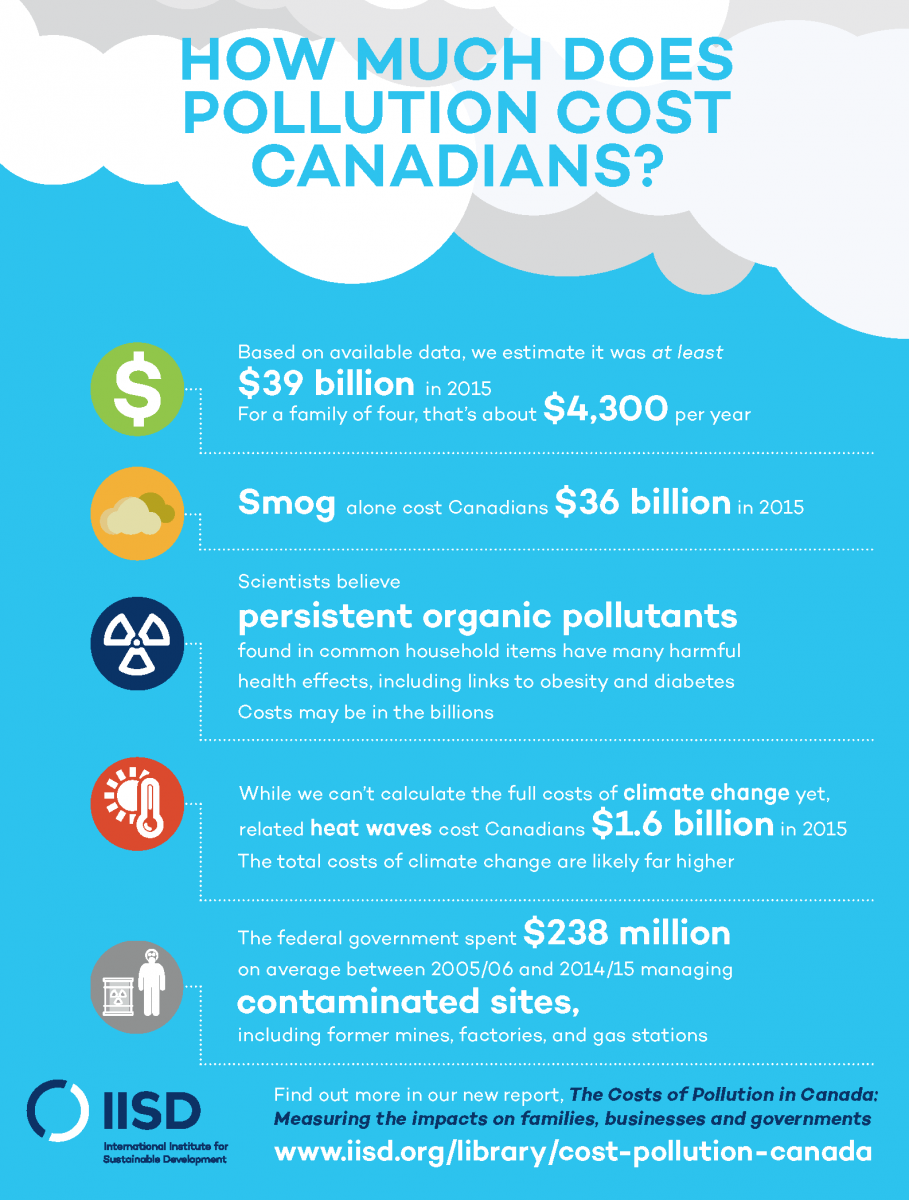
In Canada, pollution cost families, businesses and governments at least $39 billion in 2015.
Last month, government representatives from more than 100 countries met in Nairobi, Kenya at the United Nations Environment Assembly to come up with a global political declaration of actions to fight pollution in all its many forms, with an eye towards a “pollution-free planet."
The declaration aims to collect commitments to end pollution and safely manage chemicals and waste.
So as the United Nations calls on governments, businesses and civil society groups to #beatpollution, what can we as individuals do?
A lot, as it turns out. We can all make a difference with just a few small actions:
1 | Choose planet-friendly products
You may have noticed more products such as soaps and detergents on the shelves that advertise themselves as phosphorus-free. It may seem insignificant, but it’s not. Research has shown that when too much phosphorus enters the environment, there is an adverse effect on the environment. For example, excess phosphorus can lead to harmful algal blooms.
2 | Be a smart energy consumer
Turn off lights, computers and other electrical devices when they are not in use. Make sure you choose energy-efficient appliances for your house. Use cold water to wash your clothes – then hang them up to dry whenever you can. Pretty soon these actions will become habits that you won’t even have to think about.
3 | Switch to a clean energy provider
Find out if you there is an electricity option in your area offering renewable energy, or ask your current provider if the option exists. You may not even be aware of it! If there isn’t, tell your provider you are interested—and have your friends and neighbours tell them too.
4 | Reduce your own personal waste
Avoid single-use plastics, such as water bottles, straws and plastic bags. In the kitchen, buy and cook only what you know you and your family will eat. Compost your kitchen scraps and separate your recyclable materials. Bring your own shopping bags to the grocery store and let store managers know you are interested in products with minimal and/or recyclable packaging. Small choices make a big difference.
5 | Get informed—get involved
To learn more about how to beat pollution, check out organizations like UN Environment. Do your research to find out where political representatives in your area stand on pollution and other environmental issues. Contact them and tell them you want immediate action on climate change. Remind them that action on climate is not just good for the environment—it also improves our health, drives innovation and can create new jobs and grow the economy.
Let’s make 2018 a year of action.
You might also be interested in
At Least Seven BRICS+ Nations Shift EV Support to Buses and Two-Wheelers
New analysis finds that at least seven BRICS+ countries—Brazil, China, Ethiopia, India, Indonesia, Malaysia, and Thailand—are directing electric (EV) support toward two- and three-wheelers, as well as public and shared transport.
Midpoint of the UN Tax Convention Negotiations: Where do talks stand?
The negotiations for a new UN Framework Convention on International Tax Cooperation have hit their halfway point. Here's a look at where things stand, what was on the table this round, and what's coming next.
Canadian Exporters Face New Reporting Costs as Carbon Border Taxes Multiply
The European Union’s carbon border tax will add new compliance costs for Canadian businesses that trade certain products, especially steel and aluminum, to the bloc. The increased costs—linked to differing demands for measuring, reporting, and verifying a product’s greenhouse gas emissions across the growing number of countries adopting border carbon adjustment (BCA) mechanisms—“make it tough for any exporter to those markets,” Aaron Cosbey, senior associate at the International Institute for Sustainable Development (IISD), told The Energy Mix.
Experimental Lakes gets $2M for major facilities upgrade
A one-of-a-kind research station is studying small lakes to inform freshwater science all over the world is getting a new facility with more space for scientists and students. Located between Dryden and Kenora, the International Institute for Sustainable Development’s Experimental Lakes Area allows scientists and students to run experiments on 58 small lakes in the area.